×

Russia🇷🇺 | best regionsEssential 7 regions to Explore in Russia

When exploring the best regions in Russia, understanding the country’s vastness and diversity is crucial for any backpacker or independent traveler. Russia is not just a single destination; it’s a mosaic of landscapes, climates, and cultures that vary dramatically from one region to another. Each area offers distinct experiences shaped by its geography, history, and local customs.

The climate plays a significant role in defining your journey. From the icy expanses of Siberia to the temperate coasts of the Black Sea, seasonal variations can dictate not only what you can see but also how you can travel. For instance, summer in St. Petersburg is a bustling time filled with festivals, while winter in the same city reveals a quieter, more introspective charm.

Your choice of region directly impacts your budget and safety. Urban centers like Moscow and St. Petersburg may have higher costs but offer extensive infrastructure for travelers. In contrast, remote areas can provide a more immersive experience but may lack amenities and require careful planning.

Ultimately, selecting the right region shapes your overall vibe and cultural immersion. Whether you’re drawn to the historical richness of the Golden Ring or the rugged beauty of Kamchatka, understanding these regional nuances will enhance your journey and ensure you make the most of your time in this expansive country.

By Johan Kruseman 🇳🇱 | Updated September 5, 2026
Explore the best cities in Russia

Why go?What Makes Them Special

In exploring the best regions in Russia, understanding their unique attributes is crucial. Russia’s climatic diversity spans from the Arctic tundra to temperate forests, creating distinct environments that shape local cultures and lifestyles. This vast expanse means that travelers can experience a range of climates and ecosystems, from the icy landscapes of Siberia to the lush greenery of the Caucasus. However, this diversity also requires careful planning, as travel distances can be significant.

Culturally, Russia is a mosaic of ethnicities and traditions, each region offering its own flavor. The historical context is rich, with influences from the Mongol Empire to the Soviet era, which have left indelible marks on local customs and architecture. This cultural depth can be both a blessing … read more 👉
In exploring the best regions in Russia, understanding their unique attributes is crucial. Russia’s climatic diversity spans from the Arctic tundra to temperate forests, creating distinct environments that shape local cultures and lifestyles. This vast expanse means that travelers can experience a range of climates and ecosystems, from the icy landscapes of Siberia to the lush greenery of the Caucasus. However, this diversity also requires careful planning, as travel distances can be significant.

Culturally, Russia is a mosaic of ethnicities and traditions, each region offering its own flavor. The historical context is rich, with influences from the Mongol Empire to the Soviet era, which have left indelible marks on local customs and architecture. This cultural depth can be both a blessing and a challenge. While it enriches the travel experience, it also demands time and effort to truly appreciate the nuances. Rushing through regions may lead to a superficial understanding, while taking the time to delve deeper can yield rewarding insights.

Geographically, the sheer size of Russia presents a trade-off between accessibility and immersive experiences. Major cities like Moscow and St. Petersburg are well-connected, but venturing into remote areas often requires significant travel time. This can limit the number of regions one can realistically explore in a single trip. Travelers should weigh the desire for breadth against the potential for depth. A focused journey through fewer regions can lead to a more profound appreciation of local life, while a broader itinerary may dilute the experience.

Infrastructurally, Russia has made strides in improving transportation, yet challenges remain. The rail network is extensive, but delays and varying service quality can impact travel plans. Understanding these constraints is essential for maintaining energy and budget. For instance, overnight trains can save on accommodation costs but may not always provide the comfort expected.

Ultimately, Russia’s regions offer a wealth of experiences, but the key lies in balancing ambition with practicality. The journey through this vast country can be transformative, but it requires thoughtful consideration of the unique characteristics that define each region. By acknowledging these factors, travelers can navigate the complexities of Russia with greater ease, ensuring that the moments that truly matter are preserved.
Why These Made the Cut
The list of best regions in Russia is created based on landscapes, local culture, attractions, vibes, and overall appeal. If you feel a region is missing in this list, please let us know.

When to go?Timing Your Visit for the Best Experience

Climate Variation

Russia’s vastness means its climate varies dramatically across regions. The northern areas experience long, harsh winters, while southern regions enjoy milder conditions. Understanding these patterns is crucial for planning a visit.

Optimal Months to Visit

Generally, late spring to early fall is the most favorable time for travel. During these months, temperatures are more comfortable, allowing for outdoor activities and exploration. Summer offers the warmest weather, but it also attracts larger crowds and higher prices. Early fall can be particularly rewarding, as the weather remains pleasant while tourist numbers begin to dwindle.

Shoulder Seasons

Spring and fall serve as shoulder seasons, presenting a mixed bag of advantages and disadvantages. In spring, the thawing … read more 👉

Climate Variation

Russia’s vastness means its climate varies dramatically across regions. The northern areas experience long, harsh winters, while southern regions enjoy milder conditions. Understanding these patterns is crucial for planning a visit.

Optimal Months to Visit

Generally, late spring to early fall is the most favorable time for travel. During these months, temperatures are more comfortable, allowing for outdoor activities and exploration. Summer offers the warmest weather, but it also attracts larger crowds and higher prices. Early fall can be particularly rewarding, as the weather remains pleasant while tourist numbers begin to dwindle.

Shoulder Seasons

Spring and fall serve as shoulder seasons, presenting a mixed bag of advantages and disadvantages. In spring, the thawing landscape reveals a fresh vibrancy, but unpredictable weather can lead to rain and lingering cold. Fall showcases stunning foliage, yet temperatures can drop quickly, especially in the north. Traveling during these times often means lower costs and fewer tourists, but travelers should be prepared for variable conditions.

Peak Periods

Summer is peak season in many regions, driven by school holidays and favorable weather. This can lead to crowded attractions and inflated prices. However, certain festivals and events during this time can enhance the experience, offering unique cultural insights. If attending these events, advance planning is essential to secure accommodations and avoid disappointment.

Seasonal Constraints

Winter presents its own set of challenges. While it can be a magical time to experience Russia’s snowy landscapes, extreme cold can limit accessibility and comfort. Many outdoor activities may be curtailed, and some attractions may close. Travelers should weigh the allure of winter festivities against the potential for harsh conditions.

Trade-offs to Consider

Timing a visit to Russia requires balancing comfort, experience, and budget. High season offers vibrant energy but at a cost. Shoulder seasons provide a quieter experience but come with unpredictable weather. Understanding these dynamics will help preserve energy and budget for the moments that truly matter. Planning ahead, considering regional variations, and being flexible with dates can lead to a more rewarding journey through this expansive country.

region hoppingHow to Combine regions Into One Trip

Combining regions in Russia requires a strategic approach to maximize experiences while managing time and energy. Start by clustering regions based on geographical proximity and cultural similarities. For instance, consider grouping the Golden Ring cities with Moscow for a deep dive into Russian history and architecture. Then, head east to Siberia for a stark contrast in landscapes and lifestyles. This method not only saves travel time but also enriches the journey through thematic connections.

Travel infrastructure in Russia is generally robust, but it varies significantly by region. Major cities like Moscow and St. Petersburg have extensive public transport systems, including high-speed trains that can whisk travelers between them in just a few hours. However, once venturing into Siberia read more 👉
Combining regions in Russia requires a strategic approach to maximize experiences while managing time and energy. Start by clustering regions based on geographical proximity and cultural similarities. For instance, consider grouping the Golden Ring cities with Moscow for a deep dive into Russian history and architecture. Then, head east to Siberia for a stark contrast in landscapes and lifestyles. This method not only saves travel time but also enriches the journey through thematic connections.

Travel infrastructure in Russia is generally robust, but it varies significantly by region. Major cities like Moscow and St. Petersburg have extensive public transport systems, including high-speed trains that can whisk travelers between them in just a few hours. However, once venturing into Siberia or the Far East, options may dwindle to fewer flights or longer train rides. Plan for these differences by allowing extra time for transfers and potential delays. A good rule of thumb is to allocate at least two to three days in major cities and one to two days in smaller towns or rural areas.

Common planning mistakes often stem from overambition. Many travelers underestimate the distances involved and overestimate what can be accomplished in a short timeframe. Prioritize quality over quantity; it’s better to immerse in fewer locations than to rush through many. This approach not only enhances the experience but also reduces travel fatigue. Flexibility is key; allow for spontaneous detours or extended stays if a particular place resonates.

Trade-offs are inevitable. Speed may come at the cost of depth, while comfort can strain the budget. For instance, opting for overnight trains can save on accommodation costs but may lead to exhaustion. Weigh these factors carefully. If comfort is a priority, consider investing in higher-class train tickets or flights, especially for longer distances. Conversely, if the budget is tight, embrace the local experience by using public transport and staying in hostels or guesthouses.

Ultimately, a well-planned trip across Russia balances the desire to see as much as possible with the need for genuine experiences. Prioritize regions that intrigue you, and allow the journey to unfold naturally. This mindset not only preserves energy but also opens the door to unexpected adventures along the way.

The ListHighly Recommended regions of Russia

1 Volcanoes of Kamchatka

active volcanoes, geothermal fields, bear country

Trek across ash fields and steaming vents, watch salmon runs, and witness volcanic activity in a region shaped by constant geological change.

2 Elbrus Region

glaciated peaks, alpine meadows, high-altitude passes

Ascend through wildflower fields and past ancient villages to reach the snowfields and thin air surrounding Europe’s highest summit.

russia-region-elbrus-region
© Google | Iv An

3 Karelia

pine forests, labyrinthine lakes, wooden churches

Paddle through interconnected waterways, cross mossy islands, and encounter centuries-old wooden architecture scattered across the northern landscape.

4 Kola Peninsula

tundra plateaus, Arctic coastline, Sami settlements

Travel above the Arctic Circle for stark landscapes, midnight sun, and glimpses of indigenous culture along windswept shores and open tundra.

russia-region-kola-peninsula
© Google | Klim Mihailov

5 Putorana Plateau

basalt canyons, remote waterfalls, taiga wilderness

Venture into a vast, roadless expanse marked by sheer cliffs, deep lakes, and a silence broken only by rushing water.

russia-region-putorana-plateau v1
© Google |

6 Central Sikhote-Alin

dense temperate forest, Amur tiger habitat, rugged ridgelines

Navigate remote valleys and steep slopes where rare wildlife, persistent fog, and tangled forest create a sense of true wilderness.

russia-region-central-sikhote-alin v1
© Google |

7 Uvs Nuur Basin

steppe grasslands, saline lakes, nomadic camps

Cross open plains and skirt shallow lakes where shifting borders and traditional herding shape daily life at the edge of Siberia.

russia-region-uvs-nuur-basin
© Google | Vibungsan Global
Loading the map 🌍

Expert viewTips and Advice from Travelers

Geographic Diversity

Russia’s vastness is both a marvel and a challenge. Spanning eleven time zones, it’s a patchwork of landscapes, climates, and cultures. You can experience everything from the icy tundras of Siberia to the lush valleys of the Caucasus. This geographic diversity means that your travel experience will vary dramatically depending on where you go.

When planning your trip, consider visiting at least three to four distinct regions. This allows you to appreciate the contrasts without overwhelming yourself. Each region has its own rhythm and character, and the cultural shifts can be striking. However, be prepared for the reality that traveling between these regions can be time-consuming and may require significant planning. The infrastructure varies widely; some areas are well-connected … read more 👉

Geographic Diversity

Russia’s vastness is both a marvel and a challenge. Spanning eleven time zones, it’s a patchwork of landscapes, climates, and cultures. You can experience everything from the icy tundras of Siberia to the lush valleys of the Caucasus. This geographic diversity means that your travel experience will vary dramatically depending on where you go.

When planning your trip, consider visiting at least three to four distinct regions. This allows you to appreciate the contrasts without overwhelming yourself. Each region has its own rhythm and character, and the cultural shifts can be striking. However, be prepared for the reality that traveling between these regions can be time-consuming and may require significant planning. The infrastructure varies widely; some areas are well-connected by rail or air, while others might necessitate long drives or even boat trips.

Transport Between Regions

Navigating Russia’s transport system can be a double-edged sword. The Trans-Siberian Railway is iconic, offering a unique way to traverse the country, but it’s not the only option. Domestic flights can save you time, especially when moving between major hubs, but they can also strain your budget. Train travel, while scenic and often more affordable, can be slow. Factor in the time spent waiting for connections, and you may find that a well-planned itinerary is essential.

Consider the trade-off between speed and experience. A long train journey can immerse you in the landscape and local culture, but it will take a chunk of your travel time. If you’re short on days, prioritize regions that are geographically closer or better connected.

Cultural Variation

Cultural experiences in Russia are as diverse as its geography. Each region boasts its own traditions, cuisines, and dialects. For instance, the far east has a strong indigenous influence, while the central regions reflect a more Slavic heritage. This cultural richness is a major draw, but it also means you need to be mindful of local customs and etiquette.

When planning your itinerary, think about what cultural experiences resonate with you. If you’re drawn to folk traditions, you might prioritize regions known for their festivals or crafts. However, be aware that some areas may have limited English-speaking resources, which can complicate interactions. This is where a little research goes a long way. Familiarize yourself with basic phrases and local customs to enhance your experience and show respect for the culture.

Pacing Trade-offs

Pacing your trip is crucial in a country as expansive as Russia. It’s tempting to try to see as much as possible, but this can lead to fatigue and missed opportunities for deeper engagement. A well-paced itinerary allows for spontaneous exploration and relaxation, which are often the most rewarding aspects of travel.

Aim for a balance between busy days and downtime. If you plan to visit a bustling city, consider following it with a quieter region where you can recharge. This approach not only preserves your energy but also enhances your appreciation of each place.

Remember that travel in Russia can be unpredictable. Delays are common, whether due to weather or logistical issues. Build in buffer time to your schedule to accommodate these realities.

Safety & Cultural Considerations

Safety is a valid concern for travelers in Russia, as it is in any country. While major cities are generally safe, rural areas may present different challenges. Be aware of your surroundings and stay informed about local conditions.

Cultural sensitivity is equally important. Russia has a rich history and a complex social fabric. Understanding local attitudes toward foreigners can help you navigate interactions more smoothly. For example, in some regions, a friendly demeanor is appreciated, while in others, a more reserved approach is preferred.

Always respect local customs, especially in religious or traditional settings. Dress codes can vary, and what’s acceptable in one region may not be in another. A little research can prevent awkward situations and foster goodwill.

Planning and Prioritizing Regions

When planning your trip, prioritize regions based on your interests and the experiences you seek. If you’re keen on history, consider areas rich in heritage. For nature lovers, the vast wilderness of Siberia or the scenic beauty of the Altai Mountains may be calling.

Budget is another critical factor. Some regions are more affordable than others, particularly in terms of accommodation and food. Researching these aspects can help you allocate your funds wisely.

Ultimately, the key to a successful trip lies in thoughtful planning. Be realistic about your time and energy, and don’t hesitate to adjust your itinerary as needed. Flexibility can lead to unexpected joys, whether it’s a chance encounter with locals or a breathtaking view that wasn’t on your radar.

In summary, Russia offers a wealth of experiences, but navigating its complexities requires careful consideration. By understanding the geographic diversity, transport options, cultural variations, and pacing trade-offs, you can craft a journey that resonates with your interests while respecting the unique character of this vast country.

✈️ The backpacker research shortcutRussia Travel Guide

An offline-friendly backpacking guide with optimized travel routes, ranked highlights, transport advice, and the best areas to stay.
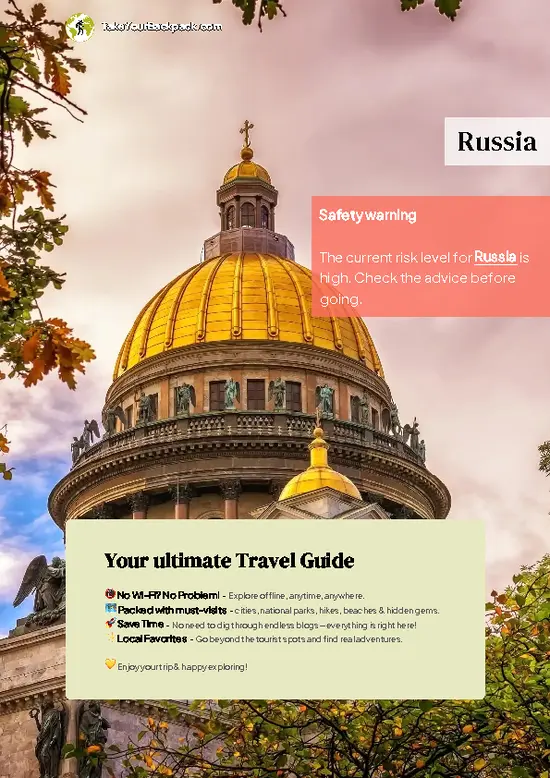
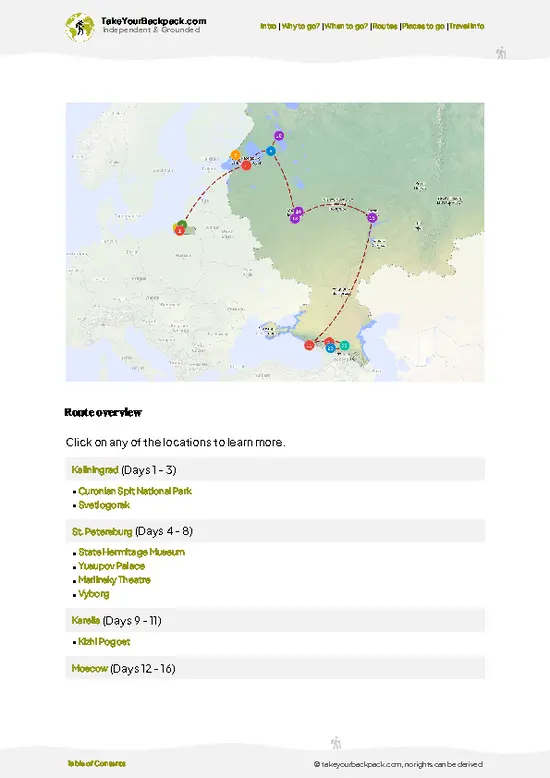
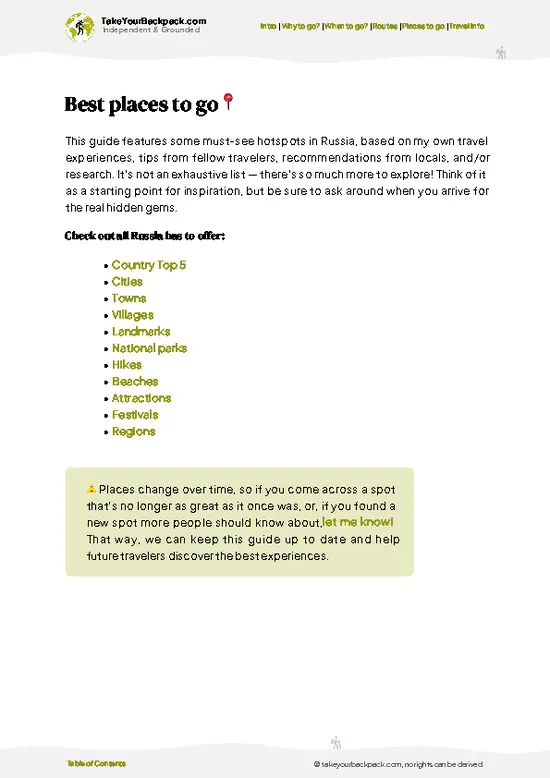
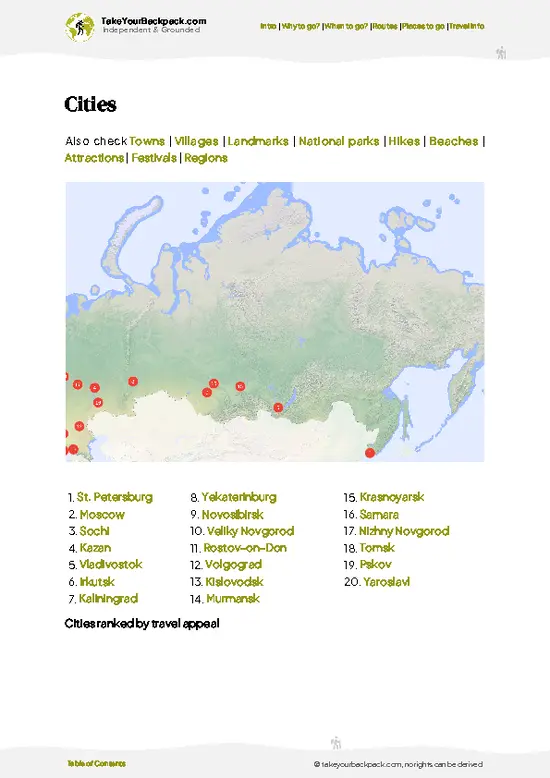
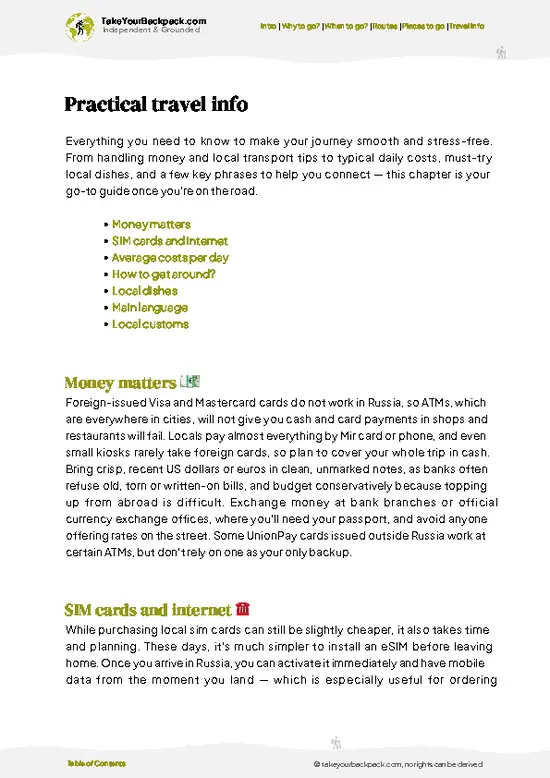
example page 0 from our offline Travel Guide for Russia
example page 1 from our offline Travel Guide for Russia
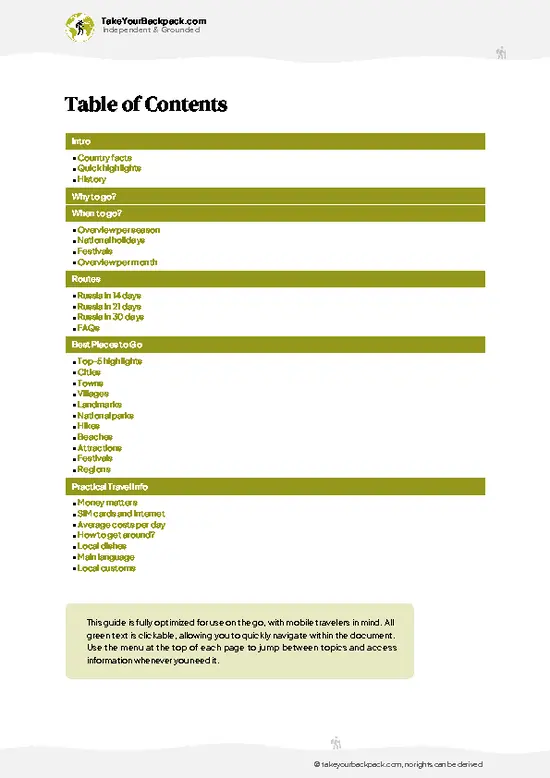
example page 2 from our offline Travel Guide for Russia
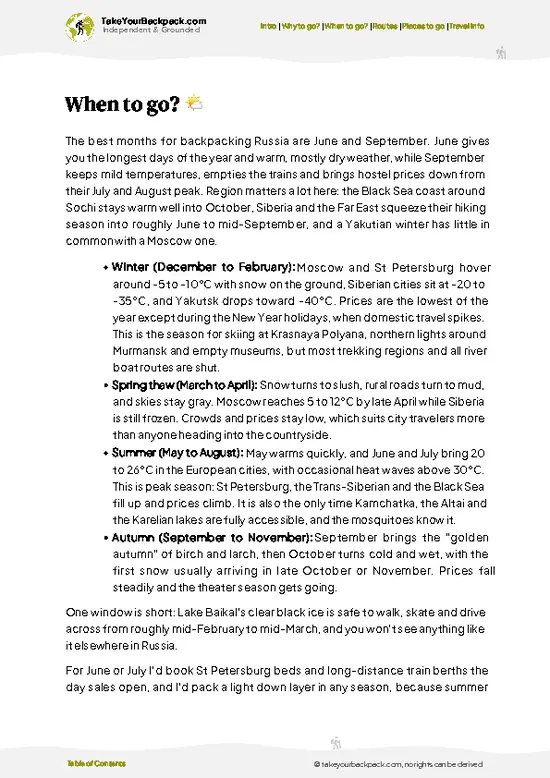
example page 3 from our offline Travel Guide for Russia
example page 4 from our offline Travel Guide for Russia
example page 5 from our offline Travel Guide for Russia
example page 6 from our offline Travel Guide for Russia
example page 7 from our offline Travel Guide for Russia
The digital guide (400 pages) contains:
109 highlights, ranked by travel appeal
Optimized 14, 21 & 30-day travel routes
Cities, national parks, landmarks, beaches
How to get around
Offline-friendly for travel without Wi-Fi
👉 Click to see all 30+ guide features

📅 Plan smarter in minutes, not weeks
Month by month travel advice
Festivals & national holidays
Budget expectations

🗺️ Go to the right places, skip the overrated ones
Honest pros & cons of destinations
Top hikes, parks & viewpoints
Lesser-known places most travelers miss
Clear “worth it vs skip it” guidance

🛏️ Travel smoothly without rookie mistakes
Best areas to stay
Transport systems explained simply
Common scams & safety advice
SIM cards, money & practical tips

🌍 Understand the country, not just visit it
Culture & traditions
52 Essential phrases & customs
Festivals worth planning around
Traveler-friendly historical context
Insights that make places more meaningful

📱 Built for real travel conditions
Fully downloadable PDF
Works completely offline
Optimized for phone use
Useful in remote areas & buses
Everything in one place
Save weeks of stressful planning
Get instant access to your full guide. 30‑day money-back guarantee.
+ Add another guide for just US$7.80

By proceeding you agree to our terms.
Sent to your inbox immediately after payment • 100% Secure Checkout
Best Backpacking Travel Advisor 2025 tourism awardBest Backpacking
Travel Advisor
2025
What others say about Take Your Backpack Guides:
⭐⭐⭐⭐⭐
Fantastic, amazing amount of information!
⭐⭐⭐⭐⭐
My goodness this is amazing, it's what I've been looking for hats off too you!
⭐⭐⭐⭐⭐
I think this is absolutely BRILLIANT
⭐⭐⭐⭐
Very complete and informative. It's still missing places, but I gotta to commend you
⭐⭐⭐⭐⭐
This is truly amazing, thank you, can't wait to explore it with my kids!
⭐⭐⭐⭐⭐
Awesome resource, thank you!
⭐⭐⭐⭐⭐
This is amazing! Can't wait to explore the ones I haven't seen
⭐⭐⭐⭐
I love this! Well done, great idea.
⭐⭐⭐⭐⭐
Thanks for taking the time to make this gem!
⭐⭐⭐⭐⭐
This might be the best website I've ever seen.
⭐⭐⭐⭐⭐
Congratulations, and thank you so much for your work; it's incredibly valuable.
⭐⭐⭐⭐
In all seriousness I think you did a great job pointing out the important spots
⭐⭐⭐⭐⭐
10/10 very good
⭐⭐⭐⭐⭐
As someone who's only just starting to visit regularly this is awesome, thank you.
⭐⭐⭐⭐
Thank you very much! I'm going to visit my dad, it's going to be very useful!
⭐⭐⭐⭐⭐
This is really cool! We'll be travelling for the first time and this definitely come in handy.
⭐⭐⭐⭐⭐
You are now our minister of culture, congratulations 👨‍💼
⭐⭐⭐⭐⭐
Just wanted to tell you that this is a pearl! Going to follow your recommendations.
⭐⭐⭐⭐⭐
This is so cool. I'll definitely be using the resource for my travels soon.
⭐⭐⭐⭐⭐
This is very impressive! Good work.
⭐⭐⭐⭐⭐
This is an amazing and informative site. Very well done!

🛏️ Where to stay?Top Areas to Stay

Yes — hostels and budget guesthouses are common in Russia’s main cities and tourist hubs such as Moscow, St. Petersburg, Kazan, Irkutsk (for Baikal) and Sochi, so backpackers can usually find cheap beds in city centres and near train stations.
In Moscow the densest options sit around Arbat, Kitai‑Gorod, Tverskaya and the rail‑terminal area near Komsomolskaya; in St. Petersburg most budget places cluster on Nevsky Prospekt, in Admiralteysky district and on Vasilievsky / Petrogradsky islands, while regional cities concentrate choices in central districts and beside main stations.
Pros and cons: Arbat/Kitai = best for Red Square access and tourist services but crowded and pricier; Tverskayaread more 👉
Yes — hostels and budget guesthouses are common in Russia’s main cities and tourist hubs such as Moscow, St. Petersburg, Kazan, Irkutsk (for Baikal) and Sochi, so backpackers can usually find cheap beds in city centres and near train stations.
In Moscow the densest options sit around Arbat, Kitai‑Gorod, Tverskaya and the rail‑terminal area near Komsomolskaya; in St. Petersburg most budget places cluster on Nevsky Prospekt, in Admiralteysky district and on Vasilievsky / Petrogradsky islands, while regional cities concentrate choices in central districts and beside main stations.
Pros and cons: Arbat/Kitai = best for Red Square access and tourist services but crowded and pricier; Tverskaya = excellent transport and nightlife, busier and less quiet; Komsomolskaya = cheapest and ideal for train connections but noisy; Nevsky/Admiralteysky = immediate museum/nightlife access yet very touristy; Vasilievsky/Petrogradsky = calmer and more local but a bit farther from flagship sights; central/station areas in regional towns = economical and practical for transit but often noisy and lower on atmosphere.

If you enjoy meeting fellow travelers, consider choosing hostels with high ratings for atmosphere. On the other hand, if you prefer having your own space, a hotel might be a better option.

RussiaDiscover the Country

👋 Meet the founderWho’s Behind Take Your Backpack?

Johan, backpacker and founder of TakeYourBackpackHi, I’m Johan (Netherlands 🇳🇱), the creator of TakeYourBackpack. Over the past decade, I’ve backpacked through 80+ countries across six continents, gaining extensive experience with independent travel, long-term trips, and overland routes.

This site is built on a combination of firsthand travel experience and carefully curated insights from other backpackers. Many guides are based on places I’ve personally visited, while others bring together tips, observations, and practical advice shared by trusted travelers I’ve met along the way.

The goal is to provide realistic, experience-driven guidance — not generic itineraries — so you can explore destinations with better context, clearer expectations, and more confidence.

Get full Russia guide •
Instant download • 109 highlights • Full Offline guide