
×

Russia🇷🇺 | regionsKareliapine forests, labyrinthine lakes, wooden churches | things to do and best time to go

Explore Elbrus RegionExplore Kola Peninsula

Backpacking in Karelia
🌟 Highlightregion ranked #3
By Johan Kruseman 🇳🇱 | Updated October 15, 2026

Everyone thinks Karelia is some unreachable Arctic wilderness where you need a helicopter and a fur coat. It’s not. It’s the lake-and-forest belt just north of St. Petersburg, running along the Finnish border in northwest Russia, and it’s surprisingly accessible if you play your cards right.

For backpackers, Karelia is that sweet spot between “wow, this is wild” and “okay, I can still catch a bus.” You get endless pine forests, mirror-flat lakes, wooden churches on Kizhi Island, and proper village life without the theme-park gloss you feel in parts of the Golden Ring. Petrozavodsk is the main hub: not pretty, but cheap, friendly, and practical for ferries and marshrutkas. Trains from St. Petersburg are affordable; getting between smaller towns can be slow and awkward, especially off-season, and English drops off fast. Compared with nearby Leningrad Oblast, Karelia feels rougher, quieter, more “real Russia,” but you trade nightlife and convenience for campfires and silence.

Discover everything you want to know in the 📖 Russia Travel Guide.
Safety warning

The current risk level for Russia is high. Check the advice before going.


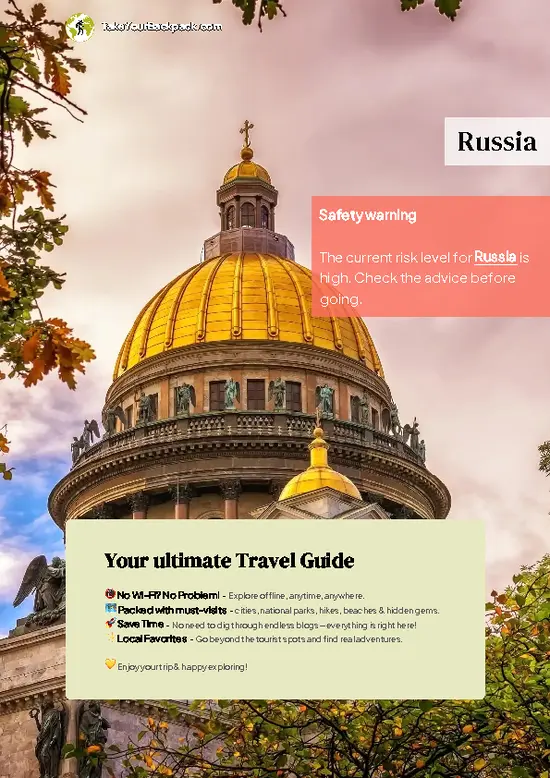
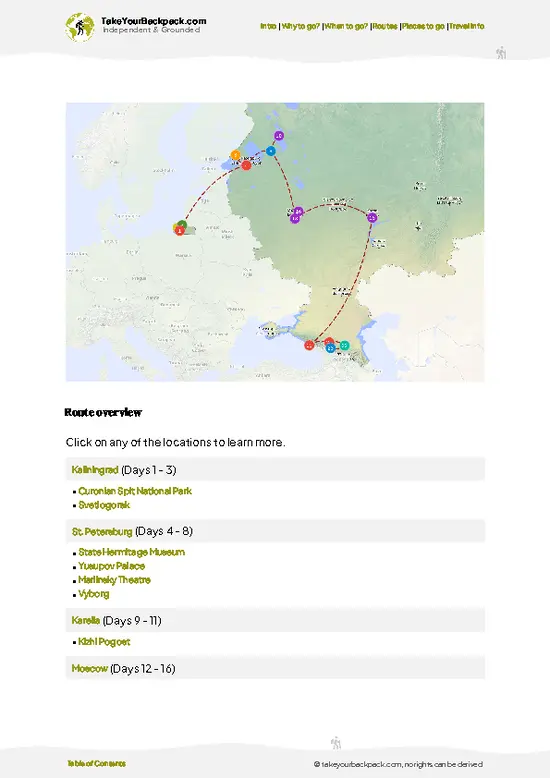
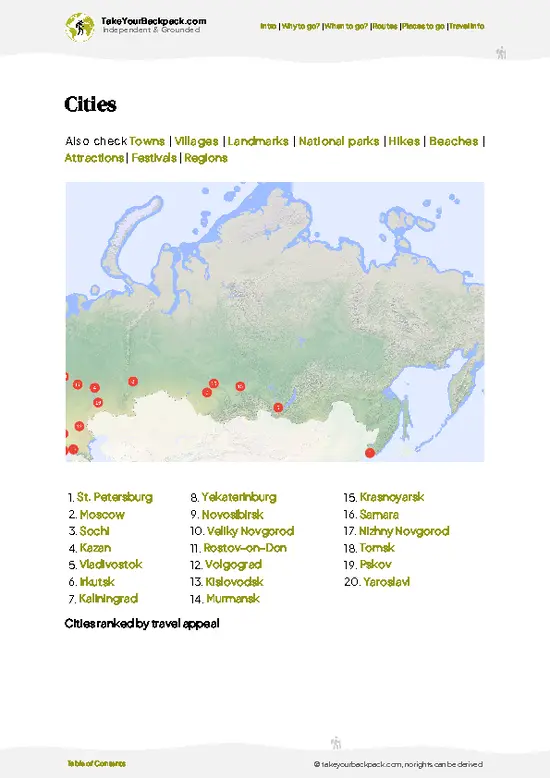
example page 0 from our offline Travel Guide for Russia
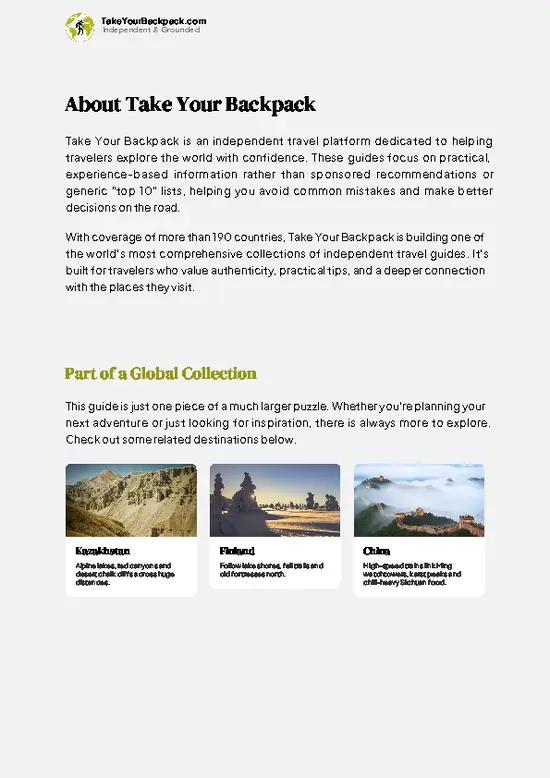
example page 1 from our offline Travel Guide for Russia
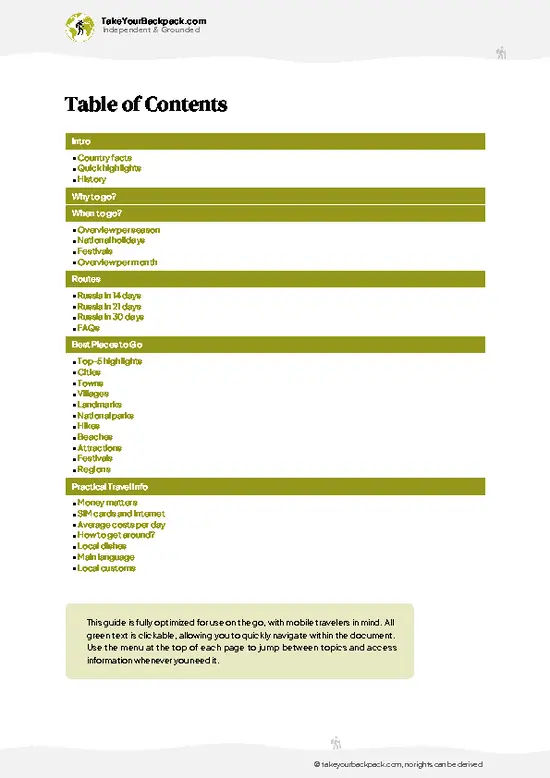
example page 2 from our offline Travel Guide for Russia
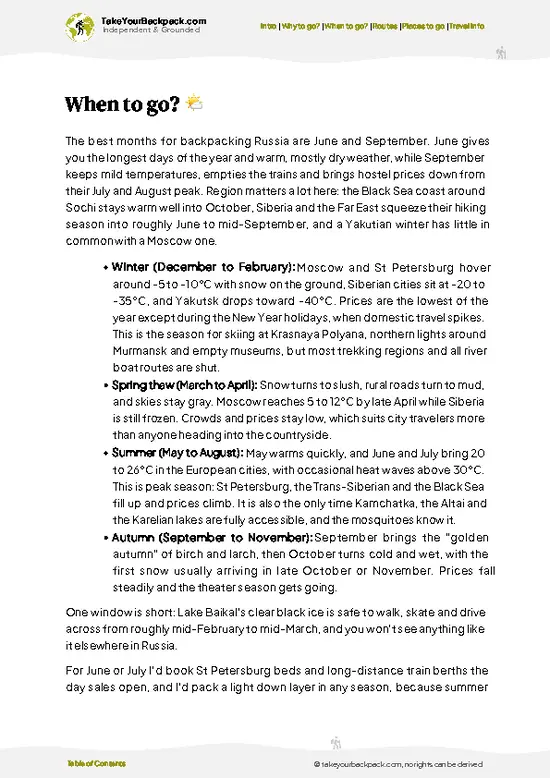
example page 3 from our offline Travel Guide for Russia
example page 4 from our offline Travel Guide for Russia
example page 5 from our offline Travel Guide for Russia
example page 6 from our offline Travel Guide for Russia
example page 7 from our offline Travel Guide for Russia
Loading the map 🌍
CLICK TO FILTER
cities
towns
villages
landmarks
national parks
hikes
beaches
attractions
festivals
regions
SHOW COUNTRY’S BESTSHOW ALL

✨ Why go?
Ranked #3 region in Russia
What makes it a must-see region

Karelia is a backpacker’s paradise that offers a unique blend of nature and culture. You can dive into varied landscapes—from dense forests to shimmering lakes—without the hassle of constant relocation. This region is perfect for those who want to soak in the scenery and experience the local vibe at a leisurely pace.

The transport flexibility here is a game-changer. You can hop on a train or bus to explore charming villages like Kizhi or Petrozavodsk, all while enjoying the stunning views. This means you can mix cultural experiences with outdoor adventures seamlessly. Imagine hiking through a national park in the morning and sipping local berry tea in a cozy café by afternoon.

Plus, the slower pace of travel allows you to connect with locals and truly understand their way of life. You’re … read more 👉
Karelia is a backpacker’s paradise that offers a unique blend of nature and culture. You can dive into varied landscapes—from dense forests to shimmering lakes—without the hassle of constant relocation. This region is perfect for those who want to soak in the scenery and experience the local vibe at a leisurely pace.

The transport flexibility here is a game-changer. You can hop on a train or bus to explore charming villages like Kizhi or Petrozavodsk, all while enjoying the stunning views. This means you can mix cultural experiences with outdoor adventures seamlessly. Imagine hiking through a national park in the morning and sipping local berry tea in a cozy café by afternoon.

Plus, the slower pace of travel allows you to connect with locals and truly understand their way of life. You’re not just a tourist; you’re part of the Karelian rhythm. So, if you’re looking for high-value experiences that balance time, money, and comfort, Karelia is where you want to be. Embrace the journey, and let the landscapes and culture unfold at your feet.

💡 HighlightsWhat this place is best known for

  1. Kizhi Pogost (Kizhi Island) — An impossible-looking cluster of wooden churches and chapels sitting on an island in Lake Onega; the 22-dome Transfiguration Church and the tiny Church of the Intercession are carved entirely of wood with no nails. It’s the single most Karelian experience for architecture and craft—timber building techniques and island rhythms you won’t find anywhere else.
  2. Valaam Archipelago and Valaam Monastery — Granite islands, misty pine shorelines and a centuries-old Orthodox monastery set in Lake Ladoga. Boat trips between the islets, monastic services, and the island’s austere landscape make this part spiritual retreat, part geological wonder—very different from mainland Russia’s cathedrals.
  3. Ruskeala Marble Canyon (Sortavala) — Former marble quarries now flooded with
… read more 👉
  1. Kizhi Pogost (Kizhi Island) — An impossible-looking cluster of wooden churches and chapels sitting on an island in Lake Onega; the 22-dome Transfiguration Church and the tiny Church of the Intercession are carved entirely of wood with no nails. It’s the single most Karelian experience for architecture and craft—timber building techniques and island rhythms you won’t find anywhere else.
  2. Valaam Archipelago and Valaam Monastery — Granite islands, misty pine shorelines and a centuries-old Orthodox monastery set in Lake Ladoga. Boat trips between the islets, monastic services, and the island’s austere landscape make this part spiritual retreat, part geological wonder—very different from mainland Russia’s cathedrals.
  3. Ruskeala Marble Canyon (Sortavala) — Former marble quarries now flooded with clear, turquoise water, sheer marble walls and echoing caverns; you can hike, kayak, swim in summer, and even do light climbing or zipline. It feels like a Nordic fjord tucked into Karelia—photogenic and unexpectedly cinematic.
  4. Kivach Waterfall and Nature Reserve — A broad, easy-to-reach cascade on the Suna River and one of Europe’s largest plain waterfalls, surrounded by old-growth taiga, boardwalks and interpretive trails. It’s a short, satisfying nature hit if you’re passing between Petrozavodsk and the northern parks.
  5. Paanajärvi National Park — Remote, northern taiga with glacial ridges, crystal lakes and jagged coastal cliffs on Lake Paanajärvi; trails lead to wild alpine-like viewpoints and quiet canoe routes. It’s Karelia’s wilder side—light on services, heavy on scenery and quiet wilderness camping.
  6. Vottovaara Mountain and Stone Fields — (Hidden gem) A strange, sacred-feeling hill strewn with massive boulders and stone patterns that locals and hikers treat like a mysterious open-air gallery. Reaching it involves a proper hike and some navigation, but the lunar rock landscapes and quiet make it oddly addictive and very Karelian.
  7. Kinerma Village — (Hidden gem) A tiny, lovingly restored Karelian village of traditional wooden houses, hand-carved details and local storytellers that feels frozen in time. It’s one of those off-route stops where you get real conversation, homemade pies and a sense of how rural Karelia used to live—no crowds, just good people.
  8. Belomorsk and the White Sea Coast — Rugged coastal villages, sea cliffs and fishing piers where the White Sea meets Karelia; Belomorsk is the gateway and has a raw, maritime atmosphere that’s very different from inland lakes. Go for coastal walks, seafood, and an honest look at local life—and to catch boats that ply remote stretches of the White Sea.
  9. Sortavala and the Lakeside Streets — A small town with Finnish-era wooden and stone architecture, a relaxed lakeside promenade and cafes serving Karelian food; use it as a base for Ruskeala or as a place to wander streets that still feel Scandinavian. It’s easy to like, and a good spot to taste local pies, beer and lakeside sunsets.
  10. Onega & White Sea Petroglyphs — (Hidden gem) Scattered prehistoric rock carvings along Lake Onega’s shores and parts of the White Sea coastline—ancient hunting and ritual scenes pecked into stone thousands of years ago. They require short hikes or local boat rides to reach, but they’re a genuinely ancient layer to Karelia’s landscape you won’t find replicated exactly anywhere else.
Spotted a mistake or missing something? Contact us.

⌛️ 5 daysA smart one-week plan

Day 1: Petrozavodsk
You’re kicking off in Petrozavodsk, the capital of Karelia. This city is your gateway, and it’s where you’ll get a feel for the local vibe. The transport system here is straightforward, with buses and trains connecting you to the rest of the region. Spend the day exploring the waterfront and checking out the Kizhi Island museum. The ferry ride is a must; it’s a scenic introduction to Karelia’s stunning landscapes.

Day 2: Kizhi Island
Head back to Kizhi Island for a deeper dive. The wooden churches and traditional Karelian architecture are mesmerizing. You’ll want to time your visit to catch the early ferry; it’s less crowded and gives you more time to soak in the atmosphere. This day is all about immersing yourself in the history and culture that define Karelia.

Day … read more 👉
Day 1: Petrozavodsk
You’re kicking off in Petrozavodsk, the capital of Karelia. This city is your gateway, and it’s where you’ll get a feel for the local vibe. The transport system here is straightforward, with buses and trains connecting you to the rest of the region. Spend the day exploring the waterfront and checking out the Kizhi Island museum. The ferry ride is a must; it’s a scenic introduction to Karelia’s stunning landscapes.

Day 2: Kizhi Island
Head back to Kizhi Island for a deeper dive. The wooden churches and traditional Karelian architecture are mesmerizing. You’ll want to time your visit to catch the early ferry; it’s less crowded and gives you more time to soak in the atmosphere. This day is all about immersing yourself in the history and culture that define Karelia.

Day 3: Sortavala
Next, you’re off to Sortavala. The train ride is about three hours, but it’s a beautiful journey through forests and lakes. Once there, hike to the Ruskeala Marble Canyon. The turquoise water and dramatic cliffs are Instagram gold. This is where you can feel the pulse of nature.

Day 4: Valaam Island
Take a boat to Valaam Island. This place is a spiritual haven with its monasteries and serene landscapes. The journey is part of the experience; the waters are calm, and the scenery is breathtaking. Spend the day wandering the island’s trails and soaking in the tranquility.

Day 5: Off-Path Reward - Olonets
On your way back, detour to Olonets. This small town is often overlooked but offers a glimpse into local life. Check out the local crafts and enjoy a meal at a family-run café. It’s a refreshing break from the tourist trail.

The must-do day? Day 3 in Sortavala. The combination of stunning nature and rich history makes it the highlight of your trip. You’ll leave with memories that linger long after you’ve returned home.

🌤️ When to go?Best time to visit Karelia

  • Weather: Karelia’s weather swings hard. Summer (June to August) is your best bet—expect highs around 18-22°C (64-72°F). Spring and fall are unpredictable, with sudden chills and rain. Winter is brutal, often below -15°C (5°F), but perfect if you’re into hardcore snow trekking.
  • Daylight Hours: Summer means endless light—up to 19 hours in June. This is a game-changer for long hikes and late-night campfires. Winter flips the script with barely 5-6 hours of daylight, making every minute precious but limiting your exploration window.
  • Crowds: Peak summer draws local tourists and some international backpackers, but nowhere near the crush of Europe’s hotspots. Shoulder seasons (late May, early September) offer quieter trails and a more intimate vibe, though some services may scale back.
  • Seasonal
… read more 👉
  • Weather: Karelia’s weather swings hard. Summer (June to August) is your best bet—expect highs around 18-22°C (64-72°F). Spring and fall are unpredictable, with sudden chills and rain. Winter is brutal, often below -15°C (5°F), but perfect if you’re into hardcore snow trekking.
  • Daylight Hours: Summer means endless light—up to 19 hours in June. This is a game-changer for long hikes and late-night campfires. Winter flips the script with barely 5-6 hours of daylight, making every minute precious but limiting your exploration window.
  • Crowds: Peak summer draws local tourists and some international backpackers, but nowhere near the crush of Europe’s hotspots. Shoulder seasons (late May, early September) offer quieter trails and a more intimate vibe, though some services may scale back.
  • Seasonal Activities: Summer is prime for kayaking, fishing, and forest trekking. Autumn paints the forests in fiery hues, ideal for photography and mushroom foraging. Winter’s for the brave—think snowshoeing and ice fishing, but gear up.
  • Prices: Summer sees a modest bump in accommodation and transport costs, but it’s still affordable compared to Western Europe. Off-season travel can save you money but expect fewer open hostels and limited transport options.
Pro-tip: Aim for late June to early July—days are long, the bugs haven’t hit full force, and you’ll dodge the small summer rush, scoring the perfect balance of comfort and adventure.


source: climatestotravel.comJANJanuary: fair for travelingFEBFebruary: fair for travelingMARMarch: fair for travelingAPRApril: good for travelingMAYMay: highly recommended for travelingJUNJune: excellent for travelingJULJuly: excellent for travelingAUGAugust: highly recommended for travelingSEPSeptember: highly recommended for travelingOCTOctober: good for travelingNOVNovember: fair for travelingDECDecember: fair for traveling

✈️ The backpacker research shortcutRussia Travel Guide

An offline-friendly backpacking guide with optimized travel routes, ranked highlights, transport advice, and the best areas to stay.
example page 0 from our offline Travel Guide for Russia
example page 1 from our offline Travel Guide for Russia
example page 2 from our offline Travel Guide for Russia
example page 3 from our offline Travel Guide for Russia
example page 4 from our offline Travel Guide for Russia
example page 5 from our offline Travel Guide for Russia
example page 6 from our offline Travel Guide for Russia
example page 7 from our offline Travel Guide for Russia
The digital guide (392 pages) contains:
✅ 104 highlights, ranked by travel appeal
✅ Optimized 14, 21 & 30-day travel routes
✅ Cities, national parks, landmarks, beaches
✅ How to get around
✅ Offline-friendly for travel without Wi-Fi
👉 Click to see all 30+ guide features

📅 Plan smarter in minutes, not weeks
✅ Month by month travel advice
✅ Festivals & national holidays
✅ Budget expectations

🗺️ Go to the right places, skip the overrated ones
✅ Honest pros & cons of destinations
✅ Top hikes, parks & viewpoints
✅ Lesser-known places most travelers miss
✅ Clear “worth it vs skip it” guidance

🛏️ Travel smoothly without rookie mistakes
✅ Best areas to stay
✅ Transport systems explained simply
✅ Common scams & safety advice
✅ SIM cards, money & practical tips

🌍 Understand the country, not just visit it
✅ Culture & traditions
✅ 52 Essential phrases & customs
✅ Festivals worth planning around
✅ Traveler-friendly historical context
✅ Insights that make places more meaningful

📱 Built for real travel conditions
✅ Fully downloadable PDF
✅ Works completely offline
✅ Optimized for phone use
✅ Useful in remote areas & buses
✅ Everything in one place
Stop searching, start planning
Get instant access to your full guide. 30‑day money-back guarantee.
+ Add another guide for just

By proceeding you agree to our terms.
Sent to your inbox immediately after payment • 100% Secure Checkout
Best Backpacking Travel Advisor 2025 tourism awardBest Backpacking
Travel Advisor
2025
What others say about Take Your Backpack Guides:
⭐⭐⭐⭐⭐
Fantastic, amazing amount of information!
⭐⭐⭐⭐⭐
My goodness this is amazing, it's what I've been looking for hats off too you!
⭐⭐⭐⭐⭐
I think this is absolutely BRILLIANT
⭐⭐⭐⭐
Very complete and informative. It's still missing places, but I gotta to commend you
⭐⭐⭐⭐⭐
This is truly amazing, thank you, can't wait to explore it with my kids!
⭐⭐⭐⭐⭐
Awesome resource, thank you!
⭐⭐⭐⭐⭐
This is amazing! Can't wait to explore the ones I haven't seen
⭐⭐⭐⭐
I love this! Well done, great idea.
⭐⭐⭐⭐⭐
Thanks for taking the time to make this gem!
⭐⭐⭐⭐⭐
This might be the best website I've ever seen.
⭐⭐⭐⭐⭐
Congratulations, and thank you so much for your work; it's incredibly valuable.
⭐⭐⭐⭐
In all seriousness I think you did a great job pointing out the important spots
⭐⭐⭐⭐⭐
10/10 very good
⭐⭐⭐⭐⭐
As someone who's only just starting to visit regularly this is awesome, thank you.
⭐⭐⭐⭐
Thank you very much! I'm going to visit my dad, it's going to be very useful!
⭐⭐⭐⭐⭐
This is really cool! We'll be travelling for the first time and this definitely come in handy.
⭐⭐⭐⭐⭐
You are now our minister of culture, congratulations 👨‍💼
⭐⭐⭐⭐⭐
Just wanted to tell you that this is a pearl! Going to follow your recommendations.
⭐⭐⭐⭐⭐
This is so cool. I'll definitely be using the resource for my travels soon.
⭐⭐⭐⭐⭐
This is very impressive! Good work.
⭐⭐⭐⭐⭐
This is an amazing and informative site. Very well done!

🛏️ Where to stay?Best areas and accommodation options

Karelia is a treasure trove for backpackers, and knowing where to stay can elevate your experience.

Start in Petrozavodsk, the capital. It’s a hub for travelers, with a lively waterfront and plenty of cafes where you can swap stories with fellow adventurers. The vibe is relaxed, and you’ll find locals eager to share tips about the region. Plus, it’s a great launchpad for exploring the stunning Kizhi Island.

Next, consider Sortavala. This charming town is your gateway to Lake Ladoga. The atmosphere is friendly, and you can easily connect with other backpackers. The surrounding nature is breathtaking, … read more 👉
Karelia is a treasure trove for backpackers, and knowing where to stay can elevate your experience.

Start in Petrozavodsk, the capital. It’s a hub for travelers, with a lively waterfront and plenty of cafes where you can swap stories with fellow adventurers. The vibe is relaxed, and you’ll find locals eager to share tips about the region. Plus, it’s a great launchpad for exploring the stunning Kizhi Island.

Next, consider Sortavala. This charming town is your gateway to Lake Ladoga. The atmosphere is friendly, and you can easily connect with other backpackers. The surrounding nature is breathtaking, so don’t miss the chance to hike or kayak.

Then there’s Kalevala, a small village steeped in folklore. It’s quieter, perfect for those seeking a more immersive experience. Engage with the local culture, and you might even catch a traditional music performance.

Lastly, Suoyarvi offers a unique blend of history and nature. It’s less touristy, which means you’ll feel like a local. The community is welcoming, and you can explore the nearby forests and lakes without the crowds.

Each of these spots has its own charm, so choose based on what kind of adventure you’re after.

🚌 Getting aroundMoving around without the hassle

Karelia is a land where time feels fluid, a place where rigid schedules clash with the whims of nature. Here, the rhythm of life ebbs and flows like the many lakes that dot the landscape. You might find yourself waiting for a bus that’s late or hopping on a local minibus that seems to leave whenever it feels like it. This isn’t a region for the overly structured traveler; it’s for those who embrace the unexpected. The charm lies in the spontaneity, where every delay could lead to a serendipitous encounter or a breathtaking view. So, let go of your watch and tune into the pulse of Karelia.
  • Minibus (Marshrutka): These are the lifeblood of local transport. They run frequently between towns and cities, often leaving when full. Expect to pay around 200-400 rubles for a ride, depending on distance.
… read more 👉
Karelia is a land where time feels fluid, a place where rigid schedules clash with the whims of nature. Here, the rhythm of life ebbs and flows like the many lakes that dot the landscape. You might find yourself waiting for a bus that’s late or hopping on a local minibus that seems to leave whenever it feels like it. This isn’t a region for the overly structured traveler; it’s for those who embrace the unexpected. The charm lies in the spontaneity, where every delay could lead to a serendipitous encounter or a breathtaking view. So, let go of your watch and tune into the pulse of Karelia.
  • Minibus (Marshrutka): These are the lifeblood of local transport. They run frequently between towns and cities, often leaving when full. Expect to pay around 200-400 rubles for a ride, depending on distance. They’re fast, but comfort can vary; be ready for a squeeze during peak times.
  • Train: The train system connects major cities like Petrozavodsk and Sortavala. Prices range from 500 to 1,500 rubles, depending on the class. The journey is scenic, taking about 2-4 hours. Book in advance for the best seats, especially during summer.
  • Bus: Long-distance buses are a solid option for budget travelers. They typically cost between 300 and 800 rubles and can take anywhere from 3 to 6 hours. Buses are generally comfortable, with scheduled departures, but check the timetable as they can be less frequent.
  • Car Rental: If you’re feeling adventurous, renting a car gives you the freedom to explore at your own pace. Prices start around 2,000 rubles per day. Just be aware of the road conditions; some rural routes can be a bit rough. Plus, you’ll want to brush up on your Russian for navigation.
  • Bicycle Rentals: For the more intrepid, renting a bike in towns like Petrozavodsk can be a fantastic way to explore the stunning landscapes. Rentals are usually around 500 rubles per day. Just be prepared for some hills and variable weather.

For efficient travel across Karelia, always check local schedules ahead of time, but don’t stress if things don’t go as planned. Embrace the local vibe and chat with residents; they often have the best tips for getting around and might even offer you a ride.

🍲 FoodLocal Cuisine & Drinks

In Karelia, food is a celebration of the land. You’ll want to dive into kalitki, those delightful little pastries filled with potatoes or rice. They’re a staple, often enjoyed hot from a roadside stand. Pair them with a cup of kefir, a tangy fermented drink that’s as refreshing as it is traditional.

For a true local experience, seek out bustling markets. The aroma of smoked fish wafts through the air, tempting you to try selyodka (herring) or pike perch. Don’t miss the chance to sample rye bread, dense and hearty, perfect for soaking up flavors.

Cafés here are cozy, often filled with locals catching up over steaming bowls of borscht. You might find a street vendor selling blini, thin pancakes stuffed with sweet or savory fillings. Grab one to go and enjoy it by the lakeside.

Dining customs … read more 👉
In Karelia, food is a celebration of the land. You’ll want to dive into kalitki, those delightful little pastries filled with potatoes or rice. They’re a staple, often enjoyed hot from a roadside stand. Pair them with a cup of kefir, a tangy fermented drink that’s as refreshing as it is traditional.

For a true local experience, seek out bustling markets. The aroma of smoked fish wafts through the air, tempting you to try selyodka (herring) or pike perch. Don’t miss the chance to sample rye bread, dense and hearty, perfect for soaking up flavors.

Cafés here are cozy, often filled with locals catching up over steaming bowls of borscht. You might find a street vendor selling blini, thin pancakes stuffed with sweet or savory fillings. Grab one to go and enjoy it by the lakeside.

Dining customs lean towards warmth and simplicity. Expect to share tables and stories, as meals are often communal. Remember, it’s polite to offer a toast with vodka before digging in. Embrace the moment; it’s all about connection and savoring the flavors of this rugged, beautiful region.

FAQFrequently asked questions about Karelia

5 to 7 days are sufficient to explore Karelia's main attractions, including Petrozavodsk, Kizhi Island, and the Ruskeala Marble Canyon. This allows time for hiking, boat trips, and cultural visits. Traveling in summer or early autumn is ideal for outdoor activities.
You can get around Karelia without a car using regional buses and ferries that connect major towns and tourist sites. Petrozavodsk serves as a transport hub with regular buses to places like Kizhi and Sortavala. For remote areas, organized tours or hitchhiking are common alternatives.
Karelia is known for its pristine lakes, dense forests, and unique wooden architecture, especially the Kizhi Pogost, a UNESCO World Heritage site. It is also famous for outdoor activities like hiking, fishing, and exploring natural parks such as the Ruskeala Marble Canyon.
⚠️ Things can change over time, so always validate details locally before you go.

Other Russian regions near Karelia

Explore more nearby:

  • Kola Peninsula—tundra plateaus, Arctic coastline, Sami settlements| 451 km away
  • Caucasian Mineral Waters—spa towns, gentle hills, mineral springs, parkland trails| 2288 km away
  • Elbrus Region—glaciated peaks, alpine meadows, high-altitude passes| 2365 km away

💡 Not sure where to go next?
Create a personalized itinerary for Russia including Karelia and the places that fit your trip.

Generate my itinerary

👉 Discover all regions

Or checkout all Russia has to offer (think cities, towns, villages, national parks, hikes, beaches, festivals)
Country photo of Russia

We 💚 feedbackIs it worth it?

Karelia is like stepping into a living postcard, with its endless lakes and lush forests. The tranquility here is unmatched—perfect for those seeking a true escape. But let’s be real: the infrastructure can be a bit rough. Expect long travel times and limited amenities. Embrace the adventure, but know that comfort might take a backseat. If you’re ready for that trade-off, the rewards are worth every moment.

✈️ When did I visit Russia?
Before visiting Georgia (September 2018), I had a stop-over in Moscow.

✍️ Help improve this page!
The information on this page is based on my own backpacking experience in Russia, supplemented with up-to-date research and feedback from other travelers. Travel details can change, so if you notice anything outdated or incomplete, feel free to let me know.


🙋‍♂️ Give feedback

👋 Meet the founderWho’s Behind Take Your Backpack?

Johan, backpacker and founder of TakeYourBackpackHi, I’m Johan (Netherlands 🇳🇱), the creator of TakeYourBackpack. Over the past 3 decades, I’ve backpacked through 90+ countries across six continents, gaining extensive experience with independent travel, long-term trips, and overland routes.

This site is built on a combination of firsthand travel experience and carefully curated insights from other backpackers. Many guides are based on places I’ve personally visited, while others bring together tips, observations, and practical advice shared by trusted travelers I’ve met along the way.

The goal is to provide realistic, experience-driven guidance — not generic itineraries — so you can explore destinations with better context, clearer expectations, and more confidence.