v2.webp)





Peter and Paul Cathedral
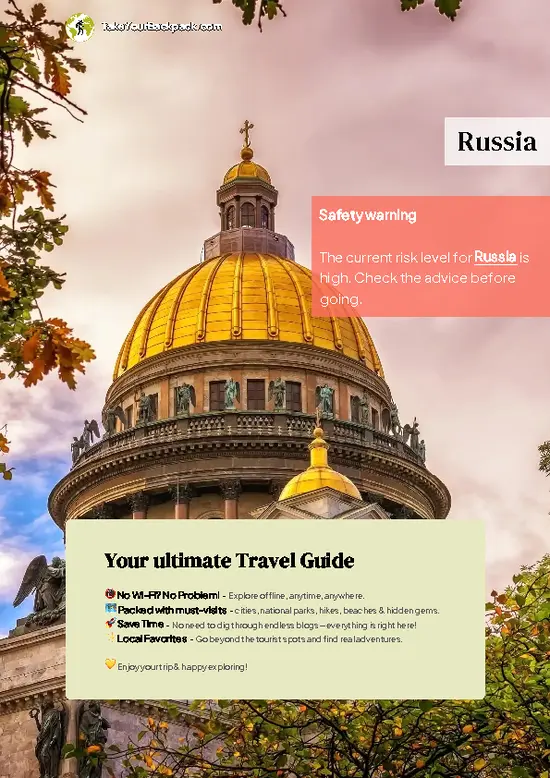
Let’s cut through the postcard haze: the cathedral’s golden spire is not just a pretty backdrop for selfies. This is the oldest church in St. Petersburg, and it’s the final resting place of nearly every Russian tsar from Peter the Great onward. The inside is a riot of baroque gold and iconography, but what really lands is the sense of history pressing in from every angle. You’re standing in the room where the Romanovs’ story ends—no velvet ropes, no glass cases. Just you and the ghosts of an empire.
The Fortress Walls and Bastions
Forget the drone shots—walk the ramparts. The walls are thick enough to swallow a cannonball, and you can actually climb up for a panoramic view that’s pure St. Petersburg: the Neva River, the city’s pastel skyline, and the wind that’ll … read more 👉
Let’s cut through the postcard haze: the cathedral’s golden spire is not just a pretty backdrop for selfies. This is the oldest church in St. Petersburg, and it’s the final resting place of nearly every Russian tsar from Peter the Great onward. The inside is a riot of baroque gold and iconography, but what really lands is the sense of history pressing in from every angle. You’re standing in the room where the Romanovs’ story ends—no velvet ropes, no glass cases. Just you and the ghosts of an empire.
The Fortress Walls and Bastions
Forget the drone shots—walk the ramparts. The walls are thick enough to swallow a cannonball, and you can actually climb up for a panoramic view that’s pure St. Petersburg: the Neva River, the city’s pastel skyline, and the wind that’ll … read more 👉
Peter and Paul Cathedral
Let’s cut through the postcard haze: the cathedral’s golden spire is not just a pretty backdrop for selfies. This is the oldest church in St. Petersburg, and it’s the final resting place of nearly every Russian tsar from Peter the Great onward. The inside is a riot of baroque gold and iconography, but what really lands is the sense of history pressing in from every angle. You’re standing in the room where the Romanovs’ story ends—no velvet ropes, no glass cases. Just you and the ghosts of an empire.
The Fortress Walls and Bastions
Forget the drone shots—walk the ramparts. The walls are thick enough to swallow a cannonball, and you can actually climb up for a panoramic view that’s pure St. Petersburg: the Neva River, the city’s pastel skyline, and the wind that’ll slap the phone out of your hand if you’re not careful. This is where the city began, literally. The sense of scale and the raw, utilitarian brickwork are a reminder that this place was built for war, not Instagram.
The Trubetskoy Bastion Prison
This is the fortress’s dark heart. The prison cells once held revolutionaries, writers, and political prisoners—Dostoevsky, Trotsky, Gorky, you name it. The corridors are cold, the doors are heavy, and the stories are heavier. It’s not a funhouse, but it’s unforgettable for the right reasons: you get a visceral sense of the paranoia and power that shaped Russian history. Skip the sugarcoating—this is the real deal.
Noon Cannon Firing
Every day at noon, the fortress fires a cannon over the Neva. It’s not a tourist gimmick; it’s a tradition that’s been going since the 18th century. The boom rattles your bones and startles the seagulls. Locals time their watches to it. It’s a jolt of living history—loud, unapologetic, and impossible to ignore. My personal favorite. There’s nothing like the collective flinch of a hundred people who thought they were ready for it.
Neva River Beach
Here’s the anti-Instagram moment: in summer, locals sunbathe on the fortress’s sandy spit, with the Hermitage across the water and the city humming behind you. The sand isn’t imported, and the water’s not exactly Caribbean, but the vibe is pure St. Petersburg—students with guitars, old men in Speedos, and a sense that you’re in on a city secret. It’s the best people-watching in town, and a reminder that the fortress isn’t just a relic; it’s still part of the city’s daily life.
Commandant’s House Museum
Skip the generic museum fatigue—this one’s all about the fortress itself. The exhibits are tactile and personal: blueprints, uniforms, and artifacts that tell the story of the city’s founding. You get the sense of St. Petersburg as a living project, not just a finished product. It’s the antidote to the “just another palace” syndrome.
Let’s cut through the postcard haze: the cathedral’s golden spire is not just a pretty backdrop for selfies. This is the oldest church in St. Petersburg, and it’s the final resting place of nearly every Russian tsar from Peter the Great onward. The inside is a riot of baroque gold and iconography, but what really lands is the sense of history pressing in from every angle. You’re standing in the room where the Romanovs’ story ends—no velvet ropes, no glass cases. Just you and the ghosts of an empire.
The Fortress Walls and Bastions
Forget the drone shots—walk the ramparts. The walls are thick enough to swallow a cannonball, and you can actually climb up for a panoramic view that’s pure St. Petersburg: the Neva River, the city’s pastel skyline, and the wind that’ll slap the phone out of your hand if you’re not careful. This is where the city began, literally. The sense of scale and the raw, utilitarian brickwork are a reminder that this place was built for war, not Instagram.
The Trubetskoy Bastion Prison
This is the fortress’s dark heart. The prison cells once held revolutionaries, writers, and political prisoners—Dostoevsky, Trotsky, Gorky, you name it. The corridors are cold, the doors are heavy, and the stories are heavier. It’s not a funhouse, but it’s unforgettable for the right reasons: you get a visceral sense of the paranoia and power that shaped Russian history. Skip the sugarcoating—this is the real deal.
Noon Cannon Firing
Every day at noon, the fortress fires a cannon over the Neva. It’s not a tourist gimmick; it’s a tradition that’s been going since the 18th century. The boom rattles your bones and startles the seagulls. Locals time their watches to it. It’s a jolt of living history—loud, unapologetic, and impossible to ignore. My personal favorite. There’s nothing like the collective flinch of a hundred people who thought they were ready for it.
Neva River Beach
Here’s the anti-Instagram moment: in summer, locals sunbathe on the fortress’s sandy spit, with the Hermitage across the water and the city humming behind you. The sand isn’t imported, and the water’s not exactly Caribbean, but the vibe is pure St. Petersburg—students with guitars, old men in Speedos, and a sense that you’re in on a city secret. It’s the best people-watching in town, and a reminder that the fortress isn’t just a relic; it’s still part of the city’s daily life.
Commandant’s House Museum
Skip the generic museum fatigue—this one’s all about the fortress itself. The exhibits are tactile and personal: blueprints, uniforms, and artifacts that tell the story of the city’s founding. You get the sense of St. Petersburg as a living project, not just a finished product. It’s the antidote to the “just another palace” syndrome.
Spotted a mistake or missing something? Contact us.

 Best Backpacking
.jpg) Hi, I’m Johan (Netherlands 🇳🇱), the creator of TakeYourBackpack. Over the past 3 decades, I’ve backpacked through 90+ countries across six continents, gaining extensive experience with independent travel, long-term trips, and overland routes.
Hi, I’m Johan (Netherlands 🇳🇱), the creator of TakeYourBackpack. Over the past 3 decades, I’ve backpacked through 90+ countries across six continents, gaining extensive experience with independent travel, long-term trips, and overland routes.