
×

Russia🇷🇺 | regionsPutorana Plateaubasalt canyons, remote waterfalls, taiga wilderness | things to do and best time to go

Explore Kola PeninsulaExplore Uvs Nuur Basin

Backpacking in Putorana Plateau
UNESCO World Heritage site
👀 For curious travelersregion ranked #6
By Johan Kruseman 🇳🇱 | Updated June 1, 2026

Most people online talk about the Putorana Plateau like it’s some abstract, unreachable wilderness, but here’s the twist: for backpackers who plan hard, it’s less “impossible” and more “expensive, logistically annoying multi-day side quest” out of Norilsk in northern Siberia, just east of the Yenisei River. Think gigantic basalt tableland, sheer canyons, and waterfall chains that make Iceland look a bit curated. The payoff is raw: almost no crowds, zero Instagram circus, and a feeling that you’ve stepped off the map. The downside is brutal costs for flights, permits, boats, and helicopters, plus almost no public transport between settlements and trailheads. You’re basically choosing one big, wild expedition instead of a varied Russia itinerary. Compared to Altai or Karelia, Putorana is harsher, pricier, and far more committing—but also way more bragging rights per ruble.

Discover everything you want to know in the 📖 Russia Travel Guide.
Safety warning

The current risk level for Russia is high. Check the advice before going.


Get your Russia guide
115 ranked highlights, routes & tips, works offline (425 pages)
Loading the map 🌍
CLICK TO FILTER
cities
towns
villages
landmarks
national parks
hikes
beaches
attractions
festivals
regions
SHOW COUNTRY’S BESTSHOW ALL

✨ Why go?
Ranked #6 region in Russia
Reasons people choose to visit here

The Putorana Plateau is a backpacker’s dream, offering a unique blend of landscapes and experiences that keep you rooted without the hassle of constant relocation. Imagine towering cliffs, pristine lakes, and sprawling tundra all within reach. You can hike, fish, or simply soak in the views—all without needing to pack up every few days.

Transport here is surprisingly flexible. You can hop on a local bus or even hitch a ride with friendly locals. This means you can explore at your own pace, diving into the culture of nearby villages while still being surrounded by nature’s grandeur.

The real kicker? You get to embrace slow travel. Spend time with the indigenous people, learn their stories, and savor the local cuisine. It’s not just about ticking boxes; it’s about immersing yourself in a … read more 👉
The Putorana Plateau is a backpacker’s dream, offering a unique blend of landscapes and experiences that keep you rooted without the hassle of constant relocation. Imagine towering cliffs, pristine lakes, and sprawling tundra all within reach. You can hike, fish, or simply soak in the views—all without needing to pack up every few days.

Transport here is surprisingly flexible. You can hop on a local bus or even hitch a ride with friendly locals. This means you can explore at your own pace, diving into the culture of nearby villages while still being surrounded by nature’s grandeur.

The real kicker? You get to embrace slow travel. Spend time with the indigenous people, learn their stories, and savor the local cuisine. It’s not just about ticking boxes; it’s about immersing yourself in a place that feels untouched. So, if you’re looking for a high-value experience that balances adventure and authenticity, the Putorana Plateau is calling your name.
Want to include Putorana Plateau in your Russia route?
Create a personalized Russia itinerary that includes Putorana Plateau and the places that fit your trip — based on your travel style, budget, and available time. Get your route in seconds.

Generate my trip

💡 HighlightsMust-see experiences and standout moments

  • Talnikovy Waterfall — One of the plateau’s signature sights: a huge, multi-step fall plunging off basalt cliffs into a remote gorge. It’s dramatic, photogenic and very “Putorana” — sheer basalt walls, thunder, and nobody around except the expedition crew that ferries you there.
  • Lake Lama — A vast, deep emerald lake ringed by sheer columnar basalt cliffs. The scale and clarity of the water, the islands, and the stone rims make it feel like another planet. Great for multi-day kayak or boat circuits and spotting Arctic char in shallow bays.
  • Lake Labaz and its archipelago — A sprawling lake system with peninsulas, flooded canyons and dozens of tiny islands. It’s quieter than Lama and offers superb shoreline hikes, fishing, and micro-landscapes you won’t find in ordinary lake country.
  • Basalt
read more 👉
  • Talnikovy Waterfall — One of the plateau’s signature sights: a huge, multi-step fall plunging off basalt cliffs into a remote gorge. It’s dramatic, photogenic and very “Putorana” — sheer basalt walls, thunder, and nobody around except the expedition crew that ferries you there.
  • Lake Lama — A vast, deep emerald lake ringed by sheer columnar basalt cliffs. The scale and clarity of the water, the islands, and the stone rims make it feel like another planet. Great for multi-day kayak or boat circuits and spotting Arctic char in shallow bays.
  • Lake Labaz and its archipelago — A sprawling lake system with peninsulas, flooded canyons and dozens of tiny islands. It’s quieter than Lama and offers superb shoreline hikes, fishing, and micro-landscapes you won’t find in ordinary lake country.
  • Basalt mesas and columnar cliffs (the tablelands) — Walking the rim of the table mountains is the Putorana signature: giant flat-topped plateaus, sharp escarpments, columnar basalt faces and miles of taiga-tundra transition. Those geological forms define the place: unique topography you can’t replicate elsewhere.
  • Deep river canyons and waterfall corridors — The plateau is threaded by steep, canyonized river valleys with dozens of waterfalls tucked into side gorges. Boat or pack-raft runs through these corridors give close-up views of cascades and basalt amphitheatres — very different from ordinary river trips.
  • Backcountry fishing for Arctic char and grayling — Fishing here is an experience in itself: pristine waters, patient locals or guides, and great chances to catch and cook Arctic char lakeside. It’s a real hands-on way to connect with the landscape and local food traditions.
  • Wildlife concentrations and bird colonies — The mosaic of cliffs, lakes and tundra attracts rare Arctic species: migrating waterfowl, raptors, and (with luck) reindeer or wolverine sightings. Birdwatching from cliff edges or quiet shores yields encounters you won’t get in more southerly reserves.
  • Hidden gem — Lama’s southern coves and island camps — Locals and repeat visitors have favorite sheltered bays on Lake Lama that serve as perfect micro-camps: calm waters for kayaking, salmon-char shoals, and quiet dawns. Most commercial trips skim the big sights; these coves are where the plateau’s mood comes alive.
  • Hidden gem — Little known waterfall amphitheatres off the main routes — Walk a few hours from the usual landing sites and you’ll find small, dramatic falls tucked in basalt bowls — excellent for scrambling and solitude. They’re not named on most maps and tend to be missed by standard itineraries.
  • Hidden gem — Alpine meadows above the lake rims (berrying and herb walks) — In summer the short highland meadows produce cloudberries, crowberries and wild herbs. Locals and guides prize these spots for late-afternoon walks and simple, delicious shore-side meals — a tiny, immediate way to taste Putorana.
Spotted a mistake or missing something? Contact us.

⌛️ 5 days5-day itinerary for Putorana Plateau

Day 1: Norilsk
The adventure kicks off in Norilsk, the gateway to the Putorana Plateau. You’ll want to arrive early to soak in the unique Soviet-era architecture and grab supplies. The transport system here is limited, so plan your departure to the plateau carefully. A local bus or shared taxi will take you to the base camp, but be ready for a bumpy ride. This is where the real journey begins, and you’ll want to be well-rested for the days ahead.

Day 2: Base Camp
Settle into Base Camp and take a moment to breathe in the wild air. This is your launchpad for exploration. Spend the day acclimatizing and mapping out your routes. The plateau’s vastness can be overwhelming, but the trails are well-marked. Use this time to connect with fellow adventurers; they often have invaluable tips about … read more 👉
Day 1: Norilsk
The adventure kicks off in Norilsk, the gateway to the Putorana Plateau. You’ll want to arrive early to soak in the unique Soviet-era architecture and grab supplies. The transport system here is limited, so plan your departure to the plateau carefully. A local bus or shared taxi will take you to the base camp, but be ready for a bumpy ride. This is where the real journey begins, and you’ll want to be well-rested for the days ahead.

Day 2: Base Camp
Settle into Base Camp and take a moment to breathe in the wild air. This is your launchpad for exploration. Spend the day acclimatizing and mapping out your routes. The plateau’s vastness can be overwhelming, but the trails are well-marked. Use this time to connect with fellow adventurers; they often have invaluable tips about hidden spots and local lore.

Day 3: Waterfalls of the Putorana
Today, you’ll hike to the breathtaking waterfalls. The trails are rugged, but the views are worth every step. The transport here is minimal, so expect to spend the entire day on foot. Bring snacks and plenty of water; you’ll want to linger at the falls, soaking in the serenity. This is where the magic happens, and you’ll feel the pulse of the plateau.

Day 4: Off-Path Reward – The Ancient Rock Art
Take a detour to see ancient rock art that few tourists know about. It’s a bit of a trek, but the stories etched into the stones are captivating. This experience adds depth to your trip, connecting you to the region’s history. The transport options are limited, so plan to return to Base Camp by sunset.

Day 5: Return to Norilsk
As you head back to Norilsk, reflect on the journey. The transport back can be slow, so leave early. This day is about closure, but also about savoring the memories you’ve made. The plateau has a way of leaving its mark on you, and you’ll carry that with you long after you leave.

The must-do day? Day 3, without a doubt. The waterfalls encapsulate the essence of the Putorana Plateau, making every effort worthwhile.
Turn your Putorana Plateau visit into an Russia adventure
Build a complete Russia route with Putorana Plateau, hidden gems, must-see destinations, and realistic travel times included.

Generate my trip

🌤️ When to go?Seasonal considerations and timing


  • Weather: The Putorana Plateau is a beast of extremes. Winters drag on with brutal cold, often below -30°C (-22°F), making backpacking a hardcore expedition only for the truly prepared. Summer, from late June to August, is your sweet spot—mild temperatures hover around 10-15°C (50-59°F), perfect for trekking without freezing or sweating buckets.

  • Daylight Hours: Summer days stretch long, with up to 20 hours of daylight in July. This means more time on the trail and less stress about rushing before dark. Conversely, winter days are painfully short, barely scraping a few hours of light.

  • Crowds: The plateau is remote enough that crowds are never a real problem. Still, summer sees a slight uptick in adventurous souls, mostly Russian hikers and a handful of international explorers. Winter?
read more 👉

  • Weather: The Putorana Plateau is a beast of extremes. Winters drag on with brutal cold, often below -30°C (-22°F), making backpacking a hardcore expedition only for the truly prepared. Summer, from late June to August, is your sweet spot—mild temperatures hover around 10-15°C (50-59°F), perfect for trekking without freezing or sweating buckets.

  • Daylight Hours: Summer days stretch long, with up to 20 hours of daylight in July. This means more time on the trail and less stress about rushing before dark. Conversely, winter days are painfully short, barely scraping a few hours of light.

  • Crowds: The plateau is remote enough that crowds are never a real problem. Still, summer sees a slight uptick in adventurous souls, mostly Russian hikers and a handful of international explorers. Winter? You’re basically alone with the snow and silence.

  • Seasonal Activities: Summer unlocks hiking, fishing, and boat trips on the plateau’s lakes and rivers. Winter is for ice fishing and extreme snow trekking, but that’s a whole different league of commitment.

  • Price Fluctuations: Expect higher costs in summer due to demand for guides and transport. Off-season, prices drop but so do services and accessibility. Winter logistics can get pricey because of the extreme conditions and specialized gear needed.


Pro-tip: Aim for early July—days are long, bugs are just waking up, and you’ll catch the plateau’s wildflowers in full swing without the peak-season price spike.


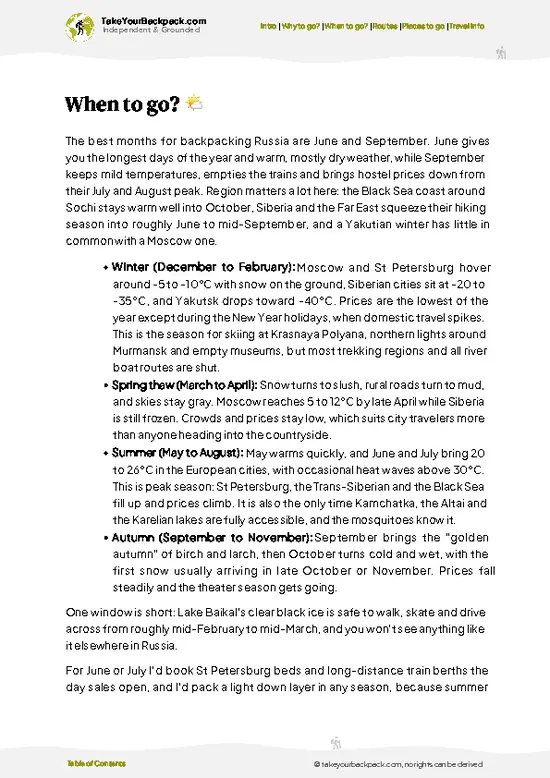
source: climatestotravel.comJANJanuary: below average for travelingFEBFebruary: below average for travelingMARMarch: below average for travelingAPRApril: fair for travelingMAYMay: fair for travelingJUNJune: highly recommended for travelingJULJuly: excellent for travelingAUGAugust: highly recommended for travelingSEPSeptember: good for travelingOCTOctober: fair for travelingNOVNovember: below average for travelingDECDecember: below average for traveling
russia-region-putorana-plateau v1
© Google |

✈️ The backpacker research shortcutRussia Travel Guide

An offline-friendly backpacking guide with optimized travel routes, ranked highlights, transport advice, and the best areas to stay.
example page 0 from our offline Travel Guide for Russia
example page 1 from our offline Travel Guide for Russia
example page 2 from our offline Travel Guide for Russia
example page 3 from our offline Travel Guide for Russia
example page 4 from our offline Travel Guide for Russia
example page 5 from our offline Travel Guide for Russia
example page 6 from our offline Travel Guide for Russia
example page 7 from our offline Travel Guide for Russia
The digital guide (425 pages) contains:
115 highlights, ranked by travel appeal
Optimized 14, 21 & 30-day travel routes
Cities, national parks, landmarks, beaches
How to get around
Offline-friendly for travel without Wi-Fi
👉 Click to see all 30+ guide features

📅 Plan smarter in minutes, not weeks
Month by month travel advice
Festivals & national holidays
Budget expectations

🗺️ Go to the right places, skip the overrated ones
Honest pros & cons of destinations
Top hikes, parks & viewpoints
Lesser-known places most travelers miss
Clear “worth it vs skip it” guidance

🛏️ Travel smoothly without rookie mistakes
Best areas to stay
Transport systems explained simply
Common scams & safety advice
SIM cards, money & practical tips

🌍 Understand the country, not just visit it
Culture & traditions
52 Essential phrases & customs
Festivals worth planning around
Traveler-friendly historical context
Insights that make places more meaningful

📱 Built for real travel conditions
Fully downloadable PDF
Works completely offline
Optimized for phone use
Useful in remote areas & buses
Everything in one place
Save weeks of stressful planning
Get instant access to your full guide. 30‑day money-back guarantee.


By proceeding you agree to our terms.
Sent to your inbox immediately after payment • 100% Secure Checkout
Best Backpacking Travel Advisor 2025 tourism awardBest Backpacking
Travel Advisor
2025
What others say about Take Your Backpack Guides:
⭐⭐⭐⭐⭐
Fantastic, amazing amount of information!
⭐⭐⭐⭐⭐
My goodness this is amazing, it's what I've been looking for hats off too you!
⭐⭐⭐⭐⭐
I think this is absolutely BRILLIANT
⭐⭐⭐⭐
Very complete and informative. It's still missing places, but I gotta to commend you
⭐⭐⭐⭐⭐
This is truly amazing, thank you, can't wait to explore it with my kids!
⭐⭐⭐⭐⭐
Awesome resource, thank you!
⭐⭐⭐⭐⭐
This is amazing! Can't wait to explore the ones I haven't seen
⭐⭐⭐⭐
I love this! Well done, great idea.
⭐⭐⭐⭐⭐
Thanks for taking the time to make this gem!
⭐⭐⭐⭐⭐
This might be the best website I've ever seen.
⭐⭐⭐⭐⭐
Congratulations, and thank you so much for your work; it's incredibly valuable.
⭐⭐⭐⭐
In all seriousness I think you did a great job pointing out the important spots
⭐⭐⭐⭐⭐
10/10 very good
⭐⭐⭐⭐⭐
As someone who's only just starting to visit regularly this is awesome, thank you.
⭐⭐⭐⭐
Thank you very much! I'm going to visit my dad, it's going to be very useful!
⭐⭐⭐⭐⭐
This is really cool! We'll be travelling for the first time and this definitely come in handy.
⭐⭐⭐⭐⭐
You are now our minister of culture, congratulations 👨‍💼
⭐⭐⭐⭐⭐
Just wanted to tell you that this is a pearl! Going to follow your recommendations.
⭐⭐⭐⭐⭐
This is so cool. I'll definitely be using the resource for my travels soon.
⭐⭐⭐⭐⭐
This is very impressive! Good work.
⭐⭐⭐⭐⭐
This is an amazing and informative site. Very well done!

🛏️ Where to stay?How to pick the right area

The Putorana Plateau is a wild, remote paradise, and finding the right base can make all the difference.

Start in Norilsk, the largest city nearby. It’s a gritty industrial hub, but it’s also a melting pot of travelers. You’ll find a mix of locals and backpackers swapping stories over a beer. The city’s unique Soviet architecture and the surrounding tundra offer a fascinating backdrop. Just be ready for the cold; it’s a tough climate, but that’s part of the adventure.

Next, consider Krasnoyarsk. It’s a bit further away but worth the trek. This city has a vibrant arts scene and a youthful vibe, … read more 👉
The Putorana Plateau is a wild, remote paradise, and finding the right base can make all the difference.

Start in Norilsk, the largest city nearby. It’s a gritty industrial hub, but it’s also a melting pot of travelers. You’ll find a mix of locals and backpackers swapping stories over a beer. The city’s unique Soviet architecture and the surrounding tundra offer a fascinating backdrop. Just be ready for the cold; it’s a tough climate, but that’s part of the adventure.

Next, consider Krasnoyarsk. It’s a bit further away but worth the trek. This city has a vibrant arts scene and a youthful vibe, thanks to its university. The locals are friendly, and you’ll find plenty of cafes to recharge. Plus, it’s a great launchpad for day trips into the plateau.

If you’re looking for something more off the beaten path, check out Tura. This small village is your gateway to the plateau’s natural wonders. It’s quieter, but you’ll connect with fellow adventurers and experience the raw beauty of the region.

Each spot offers a unique flavor of the Russian wilderness, so choose wisely based on your vibe.

🚌 Getting aroundHow to get from A to B

The Putorana Plateau is a wild, untamed expanse where nature reigns supreme and schedules are more of a suggestion than a rule. Here, the rhythm of life flows like the rivers carving through the rugged terrain. You won’t find the rigid timetables of urban transport; instead, expect a dance of intuition and spontaneity. The locals know that the weather can change on a dime, and so can your plans. Embrace the chaos, and you’ll discover the true essence of this remote paradise.


  • Charter Flights: These small planes zip you from Norilsk to the Plateau, with flights typically running from early morning until late afternoon. Prices hover around $150-$300, depending on the season. It’s fast—about an hour in the air—but comfort can vary, so brace yourself for a bumpy ride.


  • Boat Transfers: If you’re
read more 👉
The Putorana Plateau is a wild, untamed expanse where nature reigns supreme and schedules are more of a suggestion than a rule. Here, the rhythm of life flows like the rivers carving through the rugged terrain. You won’t find the rigid timetables of urban transport; instead, expect a dance of intuition and spontaneity. The locals know that the weather can change on a dime, and so can your plans. Embrace the chaos, and you’ll discover the true essence of this remote paradise.


  • Charter Flights: These small planes zip you from Norilsk to the Plateau, with flights typically running from early morning until late afternoon. Prices hover around $150-$300, depending on the season. It’s fast—about an hour in the air—but comfort can vary, so brace yourself for a bumpy ride.


  • Boat Transfers: If you’re feeling adventurous, hop on a boat from the nearby rivers. These can be arranged locally and usually cost around $50-$100. They’re not the quickest option, taking several hours, but the views are spectacular, and you’ll feel like a true explorer navigating the waterways.


  • All-Terrain Vehicles (ATVs): Renting an ATV is a game-changer for getting around the rugged terrain. Expect to pay about $80 for a full day. You can cover a lot of ground quickly, and the thrill of riding through the wild is unmatched. Just be ready for a bit of a jolt; comfort is secondary to adventure here.


  • Hiking: Yes, it’s a transport option! Many trails crisscross the Plateau, and they’re free. While it’s the slowest method, the experience is immersive. You’ll connect with the landscape in a way that no vehicle can replicate. Just pack smart and be prepared for the elements.


  • Local Buses: These run infrequently but can be a budget-friendly option if you’re patient. Prices are around $10, but schedules are erratic. It’s a gamble, but you might meet some locals who can share stories and tips.


For a tactical tip: always check the weather before heading out. Conditions can shift rapidly, affecting transport options. If you’re flexible and ready to pivot, you’ll navigate the Plateau like a pro.

🍲 FoodWhat to Eat & Drink

In the Putorana Plateau, food is a celebration of the land. You’ll find fresh fish from the surrounding rivers, particularly taimen, a local delicacy that melts in your mouth. Pair it with wild berries—think blueberries and cloudberries—picked right from the tundra. These flavors are vibrant, a true taste of the wild.

For a real local experience, hit up the markets in nearby towns. Vendors often sell smoked fish and homemade jams, perfect for snacking on the trail. If you’re feeling adventurous, try some street food—grilled meats skewered and seasoned with local herbs. It’s hearty and satisfying after a long day of hiking.

Dining here is casual and communal. Expect to share tables and stories with locals. Don’t be surprised if someone offers you a shot of vodka—it’s a sign of friendship. … read more 👉
In the Putorana Plateau, food is a celebration of the land. You’ll find fresh fish from the surrounding rivers, particularly taimen, a local delicacy that melts in your mouth. Pair it with wild berries—think blueberries and cloudberries—picked right from the tundra. These flavors are vibrant, a true taste of the wild.

For a real local experience, hit up the markets in nearby towns. Vendors often sell smoked fish and homemade jams, perfect for snacking on the trail. If you’re feeling adventurous, try some street food—grilled meats skewered and seasoned with local herbs. It’s hearty and satisfying after a long day of hiking.

Dining here is casual and communal. Expect to share tables and stories with locals. Don’t be surprised if someone offers you a shot of vodka—it’s a sign of friendship. Just remember to toast with “Za zdorovye!” (To health!).

Embrace the simplicity and warmth of the dining customs. It’s not just about the food; it’s about connecting with the land and the people.

Other Russian regions near Putorana Plateau

Explore more nearby:

  • Uvs Nuur Basin—steppe grasslands, saline lakes, nomadic camps| 1660 km away
  • Kola Peninsula—tundra plateaus, Arctic coastline, Sami settlements| 2342 km away
  • Karelia—pine forests, labyrinthine lakes, wooden churches| 2689 km away

💡 Not sure where to go next?
Create a personalized itinerary for Russia including Putorana Plateau and the places that fit your trip.

Generate my itinerary

👉 Discover all regions

Or checkout all Russia has to offer (think cities, towns, villages, national parks, hikes, beaches, festivals)
Country photo of Russia

We 💚 feedbackSumming up the experience

The Putorana Plateau is a wild, untouched paradise that feels like stepping into another world. The sheer isolation and breathtaking landscapes make every hike a revelation. But here’s the kicker: getting there isn’t a walk in the park. Expect long travel times and limited amenities. Embrace the challenge, though; the payoff is a raw beauty that’s hard to find elsewhere. Just be ready for some rugged moments along the way.

✈️ When did I visit Russia?
Before visiting Georgia (September 2018), I had a stop-over in Moscow.

✍️ Help improve this page!
The information on this page is based on my own backpacking experience in Russia, supplemented with up-to-date research and feedback from other travelers. Travel details can change, so if you notice anything outdated or incomplete, feel free to let me know.


🙋‍♂️ Give feedback

👋 Meet the founderWho’s Behind Take Your Backpack?

Johan, backpacker and founder of TakeYourBackpackHi, I’m Johan (Netherlands 🇳🇱), the creator of TakeYourBackpack. Over the past decade, I’ve backpacked through 80+ countries across six continents, gaining extensive experience with independent travel, long-term trips, and overland routes.

This site is built on a combination of firsthand travel experience and carefully curated insights from other backpackers. Many guides are based on places I’ve personally visited, while others bring together tips, observations, and practical advice shared by trusted travelers I’ve met along the way.

The goal is to provide realistic, experience-driven guidance — not generic itineraries — so you can explore destinations with better context, clearer expectations, and more confidence.

Get full Russia guide •
Instant download • 115 highlights • Full Offline guide