×

Rwanda🇷🇼 | beachesRubavu BeachPale sand, calm Lake Kivu, Gisenyi lakefront, Congo Nile Trail start | things to do and best time to go

Explore Caplaki Craft VillageExplore Gisenyi

Backpacking in Rubavu Beach
🏆 Top pickbeach ranked #1
By Johan Kruseman 🇳🇱 | Updated October 22, 2026

Rubavu Beach is best known for its strip of pale sand along Lake Kivu, where the water is calm enough for an easy swim and the hills of Congo sit low across the lake. It lies on the northern shore of the lake in western Rwanda, on the edge of Gisenyi town, right beside the Goma border. The lake has no surf, and snorkeling is poor, so this is a place for floating, kayaking and long lunches rather than sport. It is clean by East African standards, though weekends and holidays fill the sand with day-trippers from Kigali, and the better stretches belong to hotels and beach clubs that charge for access or expect you to buy a drink. Budget guesthouses and simple brochette grills sit a short walk back from the shore, and the lakefront road is flat and easy on foot. Before you go, ask at the club or hotel before spreading a towel on any fenced section, since the free public sand is limited.

Discover everything you want to know in the 📖 Rwanda Travel Guide.


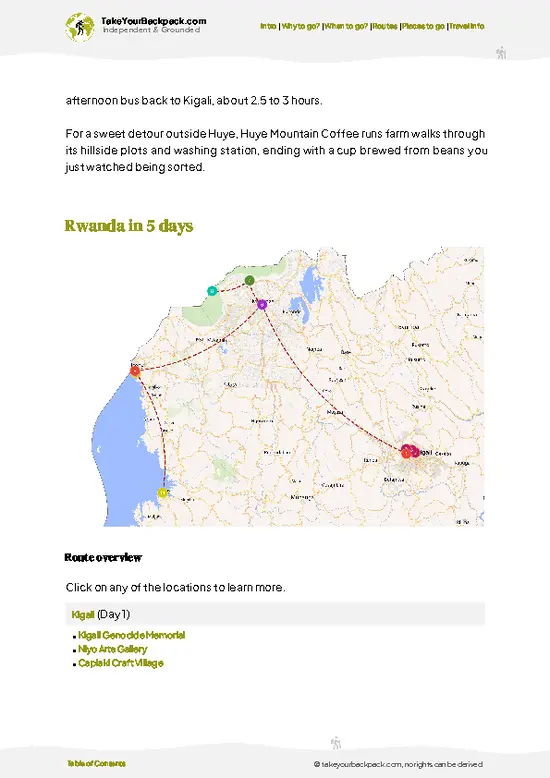
example page 0 from our offline Travel Guide for Rwanda
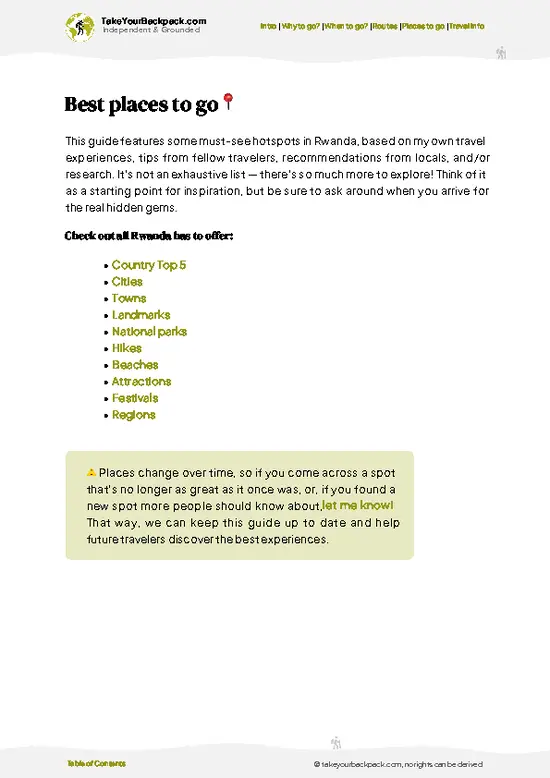
example page 1 from our offline Travel Guide for Rwanda
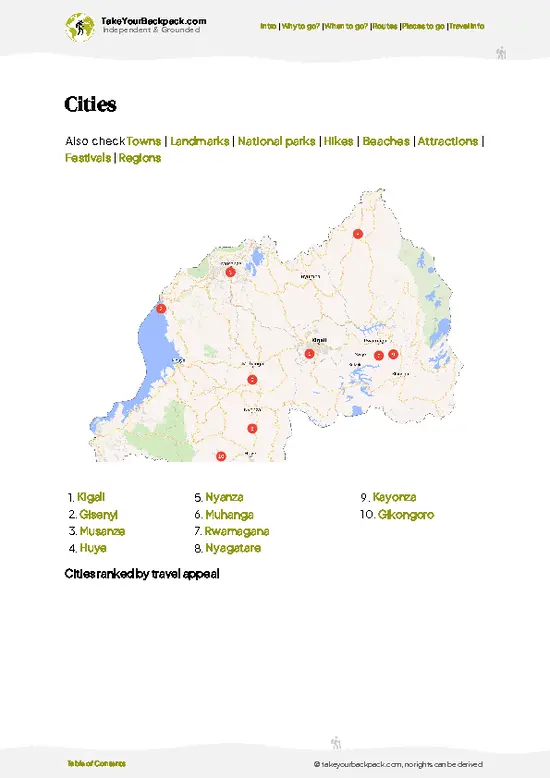
example page 2 from our offline Travel Guide for Rwanda
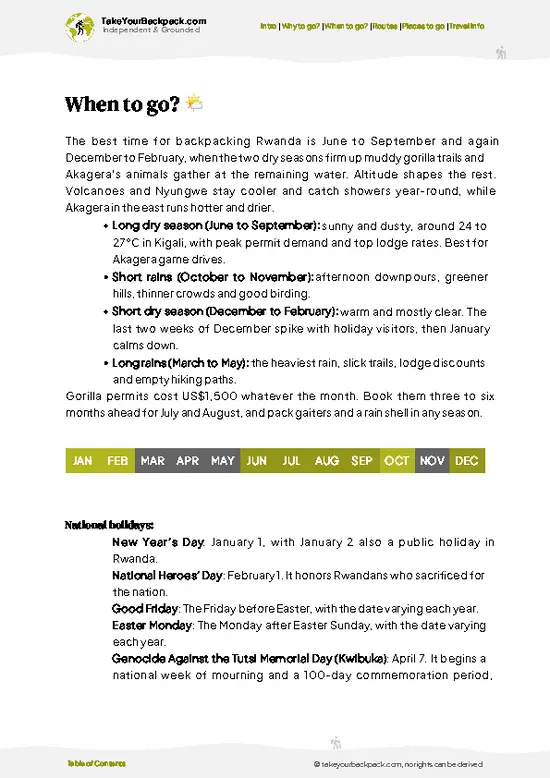
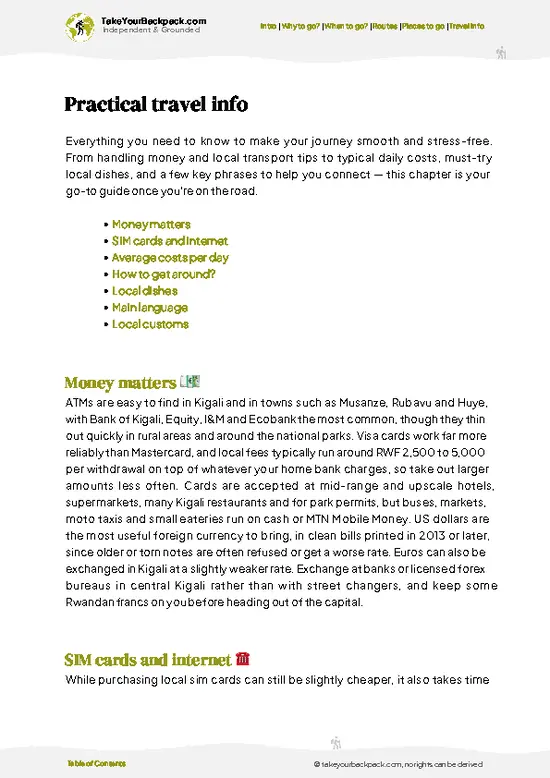
example page 3 from our offline Travel Guide for Rwanda
example page 4 from our offline Travel Guide for Rwanda
example page 5 from our offline Travel Guide for Rwanda
example page 6 from our offline Travel Guide for Rwanda
example page 7 from our offline Travel Guide for Rwanda
Loading the map 🌍
CLICK TO FILTER
cities
towns
landmarks
national parks
hikes
beaches
attractions
festivals
regions
SHOW COUNTRY’S BESTSHOW ALL

✨ Why go?
Ranked #1 beach in Rwanda
What makes it a must-see beach

Rubavu Beach earns its stop because Lake Kivu is one of the few big East African lakes where people swim without worrying about crocodiles or hippos. The water is cool, clear near the shore, and warmer than you expect at this altitude. That makes it a real rest day, not a photo stop.

The second reason is geography. Rubavu Beach is the northern end of the Congo Nile Trail, the lakeshore route that runs south toward Rusizi, and it is the natural place to buy supplies, rent a bike and sort out your gear before setting off. Many travelers also arrive here after the gorilla trekking in Musanze, so it works as a soft landing after steep, muddy days.

Then there is the border. The Goma skyline across the water and the busy crossing point nearby give the town a different feel from the rest of Rwanda, … read more 👉
Rubavu Beach earns its stop because Lake Kivu is one of the few big East African lakes where people swim without worrying about crocodiles or hippos. The water is cool, clear near the shore, and warmer than you expect at this altitude. That makes it a real rest day, not a photo stop.

The second reason is geography. Rubavu Beach is the northern end of the Congo Nile Trail, the lakeshore route that runs south toward Rusizi, and it is the natural place to buy supplies, rent a bike and sort out your gear before setting off. Many travelers also arrive here after the gorilla trekking in Musanze, so it works as a soft landing after steep, muddy days.

Then there is the border. The Goma skyline across the water and the busy crossing point nearby give the town a different feel from the rest of Rwanda, with traders, drivers and weekend crowds from both sides. Evenings are social, with cold drinks at the waterline and easy conversation with other travelers.

💡 HighlightsKey sights and experiences for travelers

  1. Swimming and lounging on the public sand. The main draw is the beach itself, a gently sloping stretch of pale sand with calm, cool Lake Kivu water. Swimming is easy and the lake is free of the big animals that rule out other African lakes. In the evening the sand stays busy with locals walking and kicking a ball, and the lights of Goma appear across the water.
  2. Kayaking and stand-up paddleboarding on Lake Kivu. Operators along the shore rent kayaks and paddleboards, and the water is flat most mornings before the wind picks up. Paddling a few hundred meters out gives you a view back over the town and the hills behind it, which you do not get from the sand.
  3. Napoleon Island boat trip. Small motorboats run from the Gisenyi shore to this tiny island, which is known for its colony of fruit bats hanging
… read more 👉
  1. Swimming and lounging on the public sand. The main draw is the beach itself, a gently sloping stretch of pale sand with calm, cool Lake Kivu water. Swimming is easy and the lake is free of the big animals that rule out other African lakes. In the evening the sand stays busy with locals walking and kicking a ball, and the lights of Goma appear across the water.
  2. Kayaking and stand-up paddleboarding on Lake Kivu. Operators along the shore rent kayaks and paddleboards, and the water is flat most mornings before the wind picks up. Paddling a few hundred meters out gives you a view back over the town and the hills behind it, which you do not get from the sand.
  3. Napoleon Island boat trip. Small motorboats run from the Gisenyi shore to this tiny island, which is known for its colony of fruit bats hanging in the trees. The ride crosses open lake water and takes in views of the shoreline villages. Go in daylight, when the bats are asleep and easy to spot.
  4. Start of the Congo Nile Trail. The long lakeshore route toward Rusizi begins in Rubavu. You do not need to commit to the whole thing. Renting a bike for a day and riding the first stretch of dirt road past terraced hillsides and fishing villages gives you a taste of the scenery and the lake from above.
  5. Nyamyumba hot springs. A short ride from the beach, these natural hot springs in the hills above the town are a popular local soak. The water is hot and mineral-heavy, a good contrast to the cool lake. Pairing a swim with a soak makes a full afternoon.
For a first visit, the public sand and a swim in Lake Kivu at Rubavu Beach is the item to start with, because it shows you why people come here.
Spotted a mistake or missing something? Contact us.

Things to do near Rubavu Beach

Ratings based on Tripadvisor reviews. When you book through this link, you support our work at no extra cost to you.

🌤️ When to go?When to go for the best experience

  • Long Dry Season (June to August): Clear skies and the most reliable beach weather. Highs reach 25 to 27°C (77 to 81°F), nights drop to 14 to 16°C (57 to 61°F). This is peak season, so lakefront rooms fill on weekends and prices run highest.
  • Short Dry Season (December to February): Mostly sunny with brief showers. Temperatures match the long dry season, and Rwandan and Congolese holiday crowds fill the lakeshore around Christmas and New Year.
  • Long Rains (March to May): The wettest stretch, with heavy afternoon downpours and gray, cool days around 22 to 24°C (72 to 75°F). The lake stays calm, beds are cheapest, and you’ll often have the sand to yourself.
  • Short Rains (September to November): Lighter, patchier rain, often in the evening. Mornings stay sunny enough for kayaking and swimming, and crowds
… read more 👉
  • Long Dry Season (June to August): Clear skies and the most reliable beach weather. Highs reach 25 to 27°C (77 to 81°F), nights drop to 14 to 16°C (57 to 61°F). This is peak season, so lakefront rooms fill on weekends and prices run highest.
  • Short Dry Season (December to February): Mostly sunny with brief showers. Temperatures match the long dry season, and Rwandan and Congolese holiday crowds fill the lakeshore around Christmas and New Year.
  • Long Rains (March to May): The wettest stretch, with heavy afternoon downpours and gray, cool days around 22 to 24°C (72 to 75°F). The lake stays calm, beds are cheapest, and you’ll often have the sand to yourself.
  • Short Rains (September to November): Lighter, patchier rain, often in the evening. Mornings stay sunny enough for kayaking and swimming, and crowds are thin.
  • Daylight: Days run close to 12 hours all year, so plan beach time for the morning, before clouds build.
Book weekend beds early in July, August and late December, or come midweek for quieter sand and lower rates.


source: climatestotravel.comJANJanuary: fair for travelingFEBFebruary: fair for travelingMARMarch: below average for travelingAPRApril: below average for travelingMAYMay: good for travelingJUNJune: excellent for travelingJULJuly: excellent for travelingAUGAugust: excellent for travelingSEPSeptember: excellent for travelingOCTOctober: good for travelingNOVNovember: fair for travelingDECDecember: fair for traveling
when-to-go

✈️ The backpacker research shortcutRwanda Travel Guide

An offline-friendly backpacking guide with optimized travel routes, ranked highlights, transport advice, and the best areas to stay.
example page 0 from our offline Travel Guide for Rwanda
example page 1 from our offline Travel Guide for Rwanda
example page 2 from our offline Travel Guide for Rwanda
example page 3 from our offline Travel Guide for Rwanda
example page 4 from our offline Travel Guide for Rwanda
example page 5 from our offline Travel Guide for Rwanda
example page 6 from our offline Travel Guide for Rwanda
example page 7 from our offline Travel Guide for Rwanda
The digital guide (233 pages) contains:
✅ 57 highlights, ranked by travel appeal
✅ Optimized 2, 3 & 5-day travel routes
✅ Cities, national parks, landmarks, beaches
✅ How to get around
✅ Offline-friendly for travel without Wi-Fi
👉 Click to see all 30+ guide features

📅 Plan smarter in minutes, not weeks
✅ Month by month travel advice
✅ Festivals & national holidays
✅ Budget expectations

🗺️ Go to the right places, skip the overrated ones
✅ Honest pros & cons of destinations
✅ Top hikes, parks & viewpoints
✅ Lesser-known places most travelers miss
✅ Clear “worth it vs skip it” guidance

🛏️ Travel smoothly without rookie mistakes
✅ Best areas to stay
✅ Transport systems explained simply
✅ Common scams & safety advice
✅ SIM cards, money & practical tips

🌍 Understand the country, not just visit it
✅ Culture & traditions
✅ 52 Essential phrases & customs
✅ Festivals worth planning around
✅ Traveler-friendly historical context
✅ Insights that make places more meaningful

📱 Built for real travel conditions
✅ Fully downloadable PDF
✅ Works completely offline
✅ Optimized for phone use
✅ Useful in remote areas & buses
✅ Everything in one place
Stop searching, start planning
Get instant access to your full guide. 30‑day money-back guarantee.
+ Add another guide for just

By proceeding you agree to our terms.
Sent to your inbox immediately after payment • 100% Secure Checkout
Best Backpacking Travel Advisor 2025 tourism awardBest Backpacking
Travel Advisor
2025
What others say about Take Your Backpack Guides:
⭐⭐⭐⭐⭐
Fantastic, amazing amount of information!
⭐⭐⭐⭐⭐
My goodness this is amazing, it's what I've been looking for hats off too you!
⭐⭐⭐⭐⭐
I think this is absolutely BRILLIANT
⭐⭐⭐⭐
Very complete and informative. It's still missing places, but I gotta to commend you
⭐⭐⭐⭐⭐
This is truly amazing, thank you, can't wait to explore it with my kids!
⭐⭐⭐⭐⭐
Awesome resource, thank you!
⭐⭐⭐⭐⭐
This is amazing! Can't wait to explore the ones I haven't seen
⭐⭐⭐⭐
I love this! Well done, great idea.
⭐⭐⭐⭐⭐
Thanks for taking the time to make this gem!
⭐⭐⭐⭐⭐
This might be the best website I've ever seen.
⭐⭐⭐⭐⭐
Congratulations, and thank you so much for your work; it's incredibly valuable.
⭐⭐⭐⭐
In all seriousness I think you did a great job pointing out the important spots
⭐⭐⭐⭐⭐
10/10 very good
⭐⭐⭐⭐⭐
As someone who's only just starting to visit regularly this is awesome, thank you.
⭐⭐⭐⭐
Thank you very much! I'm going to visit my dad, it's going to be very useful!
⭐⭐⭐⭐⭐
This is really cool! We'll be travelling for the first time and this definitely come in handy.
⭐⭐⭐⭐⭐
You are now our minister of culture, congratulations 👨‍💼
⭐⭐⭐⭐⭐
Just wanted to tell you that this is a pearl! Going to follow your recommendations.
⭐⭐⭐⭐⭐
This is so cool. I'll definitely be using the resource for my travels soon.
⭐⭐⭐⭐⭐
This is very impressive! Good work.
⭐⭐⭐⭐⭐
This is an amazing and informative site. Very well done!

🛏️ Where to stay?Choosing the right base

The most practical base is central Gisenyi, the lakeside part of Rubavu town, where you can walk from a dorm bed to the sand in 5 to 10 minutes. Budget travelers cluster here because the market, bus park, money changers, cafes and moto stands are all close together, and it’s easy to meet other travelers over a Primus on a lakefront terrace. Expect dorm beds at roughly US$10 to 20 a night, simple private rooms from about US$25 to 45, and camping for US$5 to 10 where gardens allow it.

The lakeshore strip along the public beach is the second option. It costs a bit more, but you wake up to the water, … read more 👉
The most practical base is central Gisenyi, the lakeside part of Rubavu town, where you can walk from a dorm bed to the sand in 5 to 10 minutes. Budget travelers cluster here because the market, bus park, money changers, cafes and moto stands are all close together, and it’s easy to meet other travelers over a Primus on a lakefront terrace. Expect dorm beds at roughly US$10 to 20 a night, simple private rooms from about US$25 to 45, and camping for US$5 to 10 where gardens allow it.

The lakeshore strip along the public beach is the second option. It costs a bit more, but you wake up to the water, can swim before breakfast, and the road is flat and well lit for evening walks. Rooms here book out on weekends.

For quieter nights, look south along the lake toward the villages on the road to Kibuye. These stays are more spread out, with garden camping, small guesthouses and lake views. They suit anyone starting or finishing the Congo Nile Trail, which begins in Rubavu. Moto rides back into town cost US$1 to 3, so social evenings stay within reach.

Stay on the Rwandan side of the lake. Gisenyi is compact and calm, and solo travelers find it easy to settle in.

🛡️ SafetyScams, Hazards, and Annoyances

Rubavu Beach on Lake Kivu is calm, tide-free and has almost no surf, so swimming is straightforward. The water is warm, usually around 21 to 24°C (70 to 75°F), and the bottom shelves gradually in most spots. Waves stay small, though wind can build a choppy surface in the afternoon. Lake Kivu is free of crocodiles and hippos, and the beaches near town are sandy rather than reef-lined. Swim where locals and families do, near the busy stretch of sand, and skip deep water far from shore if you’re alone.

Sun is the real hazard. At about 1,460 meters (4,800 ft) altitude the UV is strong even on hazy days, so bring sunscreen and a hat, and keep midday swims short. Afternoon thunderstorms can roll in quickly, so leave the water when the sky darkens.

Petty theft is uncommon, but don’t leave a phone … read more 👉
Rubavu Beach on Lake Kivu is calm, tide-free and has almost no surf, so swimming is straightforward. The water is warm, usually around 21 to 24°C (70 to 75°F), and the bottom shelves gradually in most spots. Waves stay small, though wind can build a choppy surface in the afternoon. Lake Kivu is free of crocodiles and hippos, and the beaches near town are sandy rather than reef-lined. Swim where locals and families do, near the busy stretch of sand, and skip deep water far from shore if you’re alone.

Sun is the real hazard. At about 1,460 meters (4,800 ft) altitude the UV is strong even on hazy days, so bring sunscreen and a hat, and keep midday swims short. Afternoon thunderstorms can roll in quickly, so leave the water when the sky darkens.

Petty theft is uncommon, but don’t leave a phone or bag unattended on the sand. The beach is busiest on weekends and quiet at dusk, when most people head into town. The Congolese border is close, so check current advice before considering any crossing.

FAQCommon questions from travelers

From Kigali, Rubavu Beach is a 3 to 4 hour road trip of about 150 kilometers, with buses leaving Nyabugogo station every hour or so for roughly US$4 to 6. The road via Musanze is paved and winding, and the final stretch drops down to Lake Kivu. From Gisenyi bus park, the beach is a 10 to 15 minute walk or a US$1 to 2 moto ride.
Rubavu Beach is best for swimming and paddling, as Lake Kivu is calm, tide-free and warm at about 21 to 24°C (70 to 75°F). There is no surf, so surfers should look elsewhere, though kayaks, stand-up paddleboards and small boat trips are available around the lakeshore, typically US$5 to 15 an hour or trip. Snorkeling is poor, since visibility is limited and the lake has little reef or fish life.
Yes, Rubavu Beach is a public stretch of lakeshore in Gisenyi with no entry fee, and you can walk on and swim any day. Private lakeside resorts nearby may ask you to buy a drink or pay a small day fee, usually US$3 to 10, to use their loungers or pool. Budget about US$1 to 3 for a beer or soda, and keep small notes handy for moto rides and snacks.
⚠️ Things can change over time, so always validate details locally before you go.

Other destinations worth considering

Rubavu Beach isn’t the only highlight in Rwanda. Explore all what Rwanda has to offer.
Country photo of Rwanda

We 💚 feedbackParting advice and final tips

Rubavu Beach suits travelers who want a slow few days between gorilla treks and long road days, and anyone who likes to walk a lakefront with a cold drink in hand. Families and cyclists will get plenty from it too. I would aim for a weekday, when the sand is quiet and the lake is yours, and I would bring a light layer for breezy evenings.

✍️ Help improve this page!
The information on this page is based on in-depth research, insights shared by experienced travelers, and feedback from the local travel community in Rwanda. While every effort is made to keep the information accurate and current, conditions can change — so if you spot anything incorrect or outdated, please get in touch.


🙋‍♂️ Give feedback

👋 Meet the founderWho’s Behind Take Your Backpack?

Johan, backpacker and founder of TakeYourBackpackHi, I’m Johan (Netherlands 🇳🇱), the creator of TakeYourBackpack. Over the past 3 decades, I’ve backpacked through 90+ countries across six continents, gaining extensive experience with independent travel, long-term trips, and overland routes.

This site is built on a combination of firsthand travel experience and carefully curated insights from other backpackers. Many guides are based on places I’ve personally visited, while others bring together tips, observations, and practical advice shared by trusted travelers I’ve met along the way.

The goal is to provide realistic, experience-driven guidance — not generic itineraries — so you can explore destinations with better context, clearer expectations, and more confidence.