
×

Rwanda🇷🇼 | citiesGisenyiLake Kivu shoreline, border town, hot springs, relaxed beach scene | things to do and best time to go

Explore Rubavu BeachExplore Huye

Backpacking in Gisenyi
🏆 Top pickcity ranked #2
By Johan Kruseman 🇳🇱 | Updated September 3, 2026

Most travelers realize too late that Gisenyi’s real advantage is its border-town flexibility: you can pivot between Rwanda and the DRC in a single afternoon, which unlocks spontaneous adventures (or escape routes) you simply don’t get in Kigali or Musanze. Gisenyi sits on Rwanda’s northwest edge, hugging the northern shore of Lake Kivu, with the Congolese city of Goma just a short walk away. For backpackers, Gisenyi is a paradox: it’s got the languid, lakeside calm of a beach town, but with the unpredictable energy of a frontier post. You’ll find colonial-era hotels with peeling grandeur, a lively public beach where locals play football at sunset, and the faint whiff of volcanic ash from nearby Nyiragongo. It’s cheap to eat and sleep here—cheaper than Kigali, less polished than Musanze, but more social if you’re willing to strike up a conversation over brochettes and Primus beer. Safety is solid by regional standards, but the border brings a bit of edge. Gisenyi isn’t for everyone, but if you like your travel with a dash of unpredictability and a side of lake breeze, it’s a high-value stop.

Discover everything you want to know in the 📖 Rwanda Travel Guide.


Get your Rwanda guide
61 ranked highlights, routes & tips, works offline (246 pages)
Loading the map 🌍
CLICK TO FILTER
cities
towns
landmarks
national parks
hikes
beaches
attractions
festivals
SHOW COUNTRY’S BESTSHOW ALL

✨ Why go?
Ranked #2 city in Rwanda
Why visitors keep coming back

Gisenyi is a strategic stop for backpackers weaving through Rwanda. Its basecamp value is hard to beat; you can launch into stunning day trips without the hassle of constant packing. The walkability of the city makes it easy to explore on foot, with vibrant markets and lakeside paths that invite you to linger.

When it comes to accommodation, Gisenyi offers a range of hostels that cater to budget travelers, providing a social atmosphere where you can swap stories over a cold drink. The food scene is a delightful mix of local flavors and international options, ensuring you won’t go hungry after a day of adventures.

As for nightlife, it’s laid-back but lively enough to enjoy a night out without the overwhelming crowds found in bigger cities. Plus, Gisenyi’s location near the border makes … read more 👉
Gisenyi is a strategic stop for backpackers weaving through Rwanda. Its basecamp value is hard to beat; you can launch into stunning day trips without the hassle of constant packing. The walkability of the city makes it easy to explore on foot, with vibrant markets and lakeside paths that invite you to linger.

When it comes to accommodation, Gisenyi offers a range of hostels that cater to budget travelers, providing a social atmosphere where you can swap stories over a cold drink. The food scene is a delightful mix of local flavors and international options, ensuring you won’t go hungry after a day of adventures.

As for nightlife, it’s laid-back but lively enough to enjoy a night out without the overwhelming crowds found in bigger cities. Plus, Gisenyi’s location near the border makes for easy onward travel to neighboring countries, allowing you to keep your journey fluid.

In essence, Gisenyi is more than just a pit stop; it’s a place that enhances your overall experience, making it a worthy addition to your itinerary or a comfortable layover.
Want to include Gisenyi in your Rwanda route?
Create a personalized Rwanda itinerary that includes Gisenyi and the places that fit your trip — based on your travel style, budget, and available time. Get your route in seconds.

Generate my trip

💡 HighlightsTop highlights of Gisenyi

  1. Gisenyi public beach & lakeshore promenade — Palm-lined stretch of Lake Kivu where locals swim, sunbathe and sell snacks; best for slow afternoons, striking sunsets and watching fishermen bring in their catch.
  2. Gisenyi jetty / boat landing — The waterfront hub where fishermen and boatmen operate; a noisy, colorful place to catch a local boat, watch loading/unloading, or arrange a short lake trip.
  3. Rubavu Central Market (Marché de Rubavu) — Bustling market in town center selling fresh fish, fruit, spices and everyday goods; it’s the fastest way to get a feel for daily life and pick up cheap local snacks.
  4. Lake Kivu fishermen’s landing — Early-morning scene of local fishers unloading tilapia and small boats; great for photos, chatting with crews and buying literally minutes-old grilled fish
read more 👉
  1. Gisenyi public beach & lakeshore promenade — Palm-lined stretch of Lake Kivu where locals swim, sunbathe and sell snacks; best for slow afternoons, striking sunsets and watching fishermen bring in their catch.
  2. Gisenyi jetty / boat landing — The waterfront hub where fishermen and boatmen operate; a noisy, colorful place to catch a local boat, watch loading/unloading, or arrange a short lake trip.
  3. Rubavu Central Market (Marché de Rubavu) — Bustling market in town center selling fresh fish, fruit, spices and everyday goods; it’s the fastest way to get a feel for daily life and pick up cheap local snacks.
  4. Lake Kivu fishermen’s landing — Early-morning scene of local fishers unloading tilapia and small boats; great for photos, chatting with crews and buying literally minutes-old grilled fish from a lakeside stall.
  5. Bralirwa brewery (Rubavu/Gisenyi) — Rwanda’s main brewery has a large plant near town; you can usually arrange a visit to see local production and get a grounded sense of industry and drinking culture here (book ahead).
  6. Lakeside hotel gardens and bars (e.g., Kivu Serena’s public areas) — Even if you’re not staying, the hotels’ lakeside lawns, cafés and bars are relaxed places to sip, people-watch and enjoy panoramic views of the lake and distant volcanoes.
  7. Congo-Nile Trail access point — Gisenyi is a common start/stop for sections of this lakeside trail; you can rent a bike, hire a guide and ride short, scenic stretches right from town.
  8. Shoreline viewpoints toward Goma and Nyiragongo — Several spots along the town’s edge give direct, dramatic views across the water to Goma and the silhouette of Nyiragongo; powerful at sunrise or sunset and easy to reach on foot.
  9. Lake Kivu craft stalls and small artisan pockets — Scattered around the market and the lakefront: handwoven baskets, recycled-metal art and wooden souvenirs made by local artisans — quieter, cheaper and more authentic than tourist shops in bigger cities.
  10. Neighborhood walks & lakeside community life — Stroll the residential streets off the main strip to see local food stalls, churches, small cafés and daily rhythms that tell the real story of Gisenyi beyond the hotels.
A few excellent day trips just outside Gisenyi: boat trips to Napoleon Island on Lake Kivu, the twin lakes (Burera and Ruhondo) and the Musanze/Volcanoes area (for crater viewpoints and mountain hikes) are all nearby and easily done from town.
Spotted a mistake or missing something? Contact us.

Things to do in Gisenyi

Ratings based on Tripadvisor reviews. When you book through this link, you support our work at no extra cost to you.

🏘️ NeighborhoodsNeighborhood guide to Gisenyi

Gisenyi is a vibrant lakeside town that offers a unique blend of relaxation and adventure. Here’s how the neighborhoods stack up for backpackers:

Central Gisenyi: This is the heartbeat of the town. You’ll find budget-friendly hostels and local eateries. The vibe is lively, especially in the evenings when the streets buzz with activity. Walkability is excellent; everything is within a short stroll. Ideal for short stays, you can easily hop on local transport to explore nearby attractions.

Nyundo: A bit quieter, Nyundo offers a more laid-back atmosphere. It’s home to some charming guesthouses and a few cafes with stunning views of Lake Kivu. While it’s not as bustling as Central Gisenyi, it’s perfect for longer stays. The transport access is decent, but you might need to rely on taxis for … read more 👉
Gisenyi is a vibrant lakeside town that offers a unique blend of relaxation and adventure. Here’s how the neighborhoods stack up for backpackers:

Central Gisenyi: This is the heartbeat of the town. You’ll find budget-friendly hostels and local eateries. The vibe is lively, especially in the evenings when the streets buzz with activity. Walkability is excellent; everything is within a short stroll. Ideal for short stays, you can easily hop on local transport to explore nearby attractions.

Nyundo: A bit quieter, Nyundo offers a more laid-back atmosphere. It’s home to some charming guesthouses and a few cafes with stunning views of Lake Kivu. While it’s not as bustling as Central Gisenyi, it’s perfect for longer stays. The transport access is decent, but you might need to rely on taxis for late-night returns.

Rubavu: Just a short distance from Gisenyi, Rubavu has a more local feel. It’s less touristy, which means lower prices on food and accommodations. The nightlife is subdued, making it great for those seeking peace. Walkability is moderate; you’ll want to plan your outings. This area suits longer stays where you can immerse yourself in local culture.

Lakefront: If you want to be right by the water, this is the spot. The views are breathtaking, and you’ll find a mix of upscale lodges and budget options. The nightlife here can be lively, especially during weekends. It’s walkable, but expect to spend a bit more for the prime location. Perfect for both short and longer visits, especially if you enjoy water activities.

⌛️ 1 day1-day itinerary for Gisenyi

Gisenyi, a charming lakeside town on the shores of Lake Kivu, offers a unique blend of Rwandan culture and stunning natural beauty. It’s a place where the vibrant local life meets the tranquility of the water, making it perfect for a day of exploration.

Start your morning with a stroll along the lakefront promenade. The fresh breeze and the sound of waves set a peaceful tone. Grab a cup of Rwandan coffee at a local café, like the cozy Café Neo, where you can soak in the morning sun and watch fishermen casting their nets. After your caffeine fix, head to the nearby Gisenyi Market. This bustling spot is often overlooked by tourists, but it’s a fantastic way to experience local life. Browse through stalls filled with fresh produce, colorful fabrics, and handmade crafts. Don’t hesitate to chat … read more 👉
Gisenyi, a charming lakeside town on the shores of Lake Kivu, offers a unique blend of Rwandan culture and stunning natural beauty. It’s a place where the vibrant local life meets the tranquility of the water, making it perfect for a day of exploration.

Start your morning with a stroll along the lakefront promenade. The fresh breeze and the sound of waves set a peaceful tone. Grab a cup of Rwandan coffee at a local café, like the cozy Café Neo, where you can soak in the morning sun and watch fishermen casting their nets. After your caffeine fix, head to the nearby Gisenyi Market. This bustling spot is often overlooked by tourists, but it’s a fantastic way to experience local life. Browse through stalls filled with fresh produce, colorful fabrics, and handmade crafts. Don’t hesitate to chat with vendors; they’re often eager to share stories about their goods.

In the afternoon, make your way to the iconic Nyamyumba Hot Springs. A short drive from the town center, these natural springs are a hidden treasure. Soak in the warm waters while enjoying views of the surrounding hills. It’s a refreshing break that feels like a mini-retreat. Afterward, return to Gisenyi and explore the local art scene at the Inema Arts Center. This vibrant space showcases the work of Rwandan artists and often hosts workshops.

As evening approaches, treat yourself to dinner at the upscale Lake Kivu Serena Hotel. Their restaurant offers a delightful mix of local and international cuisine, all with a stunning view of the sunset over the lake.

Wrap up your day with a leisurely walk along the shore, reflecting on the rich experiences you’ve gathered. Gisenyi may be small, but it’s packed with moments that linger long after you leave.
Turn your Gisenyi visit into an Rwanda adventure
Build a complete Rwanda route with Gisenyi, hidden gems, must-see destinations, and realistic travel times included.

Generate my trip

🌤️ When to go?Choosing the right time of year


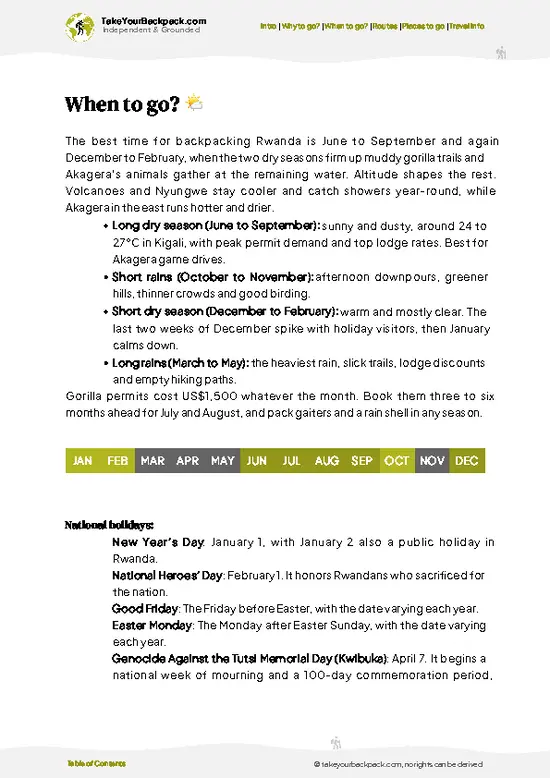
  • Weather: Gisenyi experiences a tropical highland climate. The dry seasons, from June to September and December to February, offer the most reliable weather for backpacking—expect minimal rain and clearer skies. The wet seasons, especially March to May, bring heavy rains that can turn trails muddy and unpredictable.

  • Temperature: Daytime highs hover around 24-27°C (75-81°F) year-round, with cooler nights dropping to 15-18°C (59-64°F). The temperature is stable, but humidity spikes during the rainy season, making it feel warmer and less comfortable for hiking.

  • Daylight Hours: Near the equator, Gisenyi enjoys roughly 12 hours of daylight year-round, with sunrise around 6:30 AM and sunset near 6:30 PM. This consistency means you can plan your days without worrying about shifting daylight.
read more 👉

  • Weather: Gisenyi experiences a tropical highland climate. The dry seasons, from June to September and December to February, offer the most reliable weather for backpacking—expect minimal rain and clearer skies. The wet seasons, especially March to May, bring heavy rains that can turn trails muddy and unpredictable.

  • Temperature: Daytime highs hover around 24-27°C (75-81°F) year-round, with cooler nights dropping to 15-18°C (59-64°F). The temperature is stable, but humidity spikes during the rainy season, making it feel warmer and less comfortable for hiking.

  • Daylight Hours: Near the equator, Gisenyi enjoys roughly 12 hours of daylight year-round, with sunrise around 6:30 AM and sunset near 6:30 PM. This consistency means you can plan your days without worrying about shifting daylight.

  • Crowds: Tourist traffic peaks during the dry months, especially July and August, when international travelers flock to Rwanda. Visiting just before or after these months means fewer people on trails and more authentic local interactions.

  • Seasonal Activities: Dry months are prime for lake activities on Lake Kivu and hiking nearby volcanoes. The rainy season limits outdoor options but offers lush landscapes and fewer tourists, ideal if you prefer solitude and don’t mind wet gear.

  • Price Fluctuations: Accommodation and transport costs rise during the dry season due to demand. Booking in shoulder months (May or October-November) can save money while still avoiding the worst weather.


Pro-tip: Aim for the shoulder dry season—May or October—to balance good weather, manageable crowds, and better prices, turning your trip into a strategic win.


source: climatestotravel.comJANJanuary: excellent for travelingFEBFebruary: excellent for travelingMARMarch: fair for travelingAPRApril: fair for travelingMAYMay: highly recommended for travelingJUNJune: excellent for travelingJULJuly: highly recommended for travelingAUGAugust: highly recommended for travelingSEPSeptember: excellent for travelingOCTOctober: highly recommended for travelingNOVNovember: highly recommended for travelingDECDecember: excellent for traveling
when-to-go

✈️ The backpacker research shortcutRwanda Travel Guide

An offline-friendly backpacking guide with optimized travel routes, ranked highlights, transport advice, and the best areas to stay.
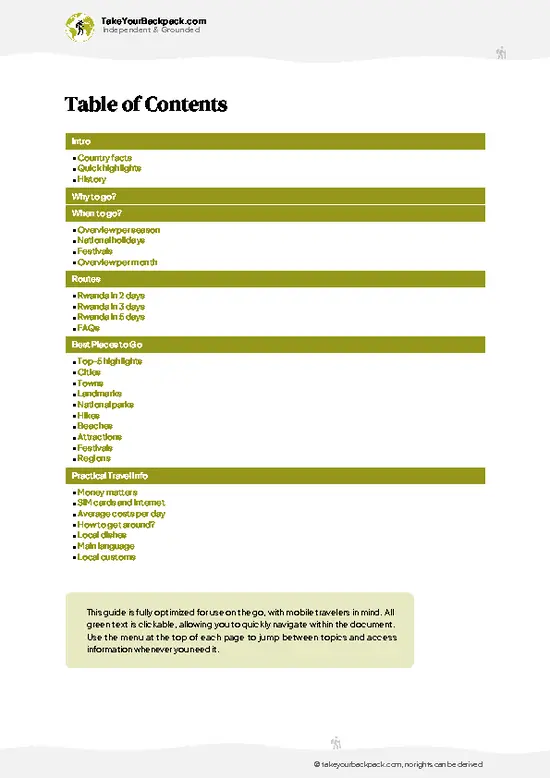
example page 0 from our offline Travel Guide for Rwanda
example page 1 from our offline Travel Guide for Rwanda
example page 2 from our offline Travel Guide for Rwanda
example page 3 from our offline Travel Guide for Rwanda
example page 4 from our offline Travel Guide for Rwanda
example page 5 from our offline Travel Guide for Rwanda
example page 6 from our offline Travel Guide for Rwanda
example page 7 from our offline Travel Guide for Rwanda
The digital guide (246 pages) contains:
61 highlights, ranked by travel appeal
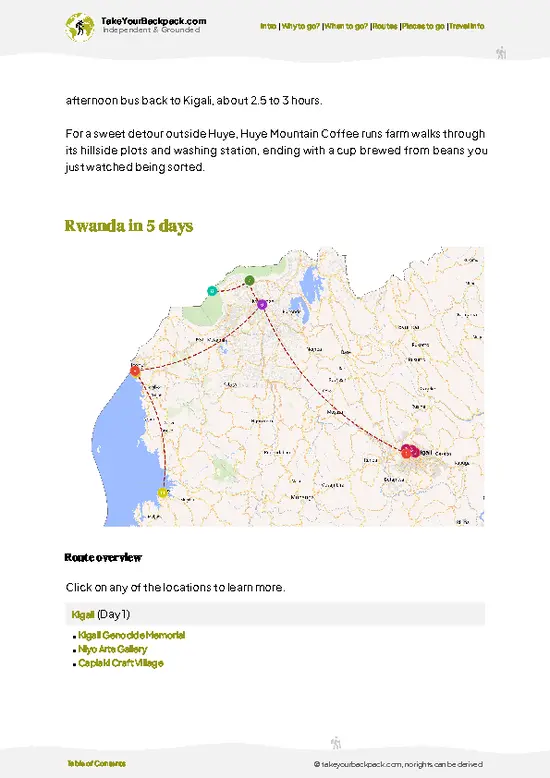
Optimized 2, 3 & 5-day travel routes
Cities, national parks, landmarks, beaches
How to get around
Offline-friendly for travel without Wi-Fi
👉 Click to see all 30+ guide features

📅 Plan smarter in minutes, not weeks
Month by month travel advice
Festivals & national holidays
Budget expectations

🗺️ Go to the right places, skip the overrated ones
Honest pros & cons of destinations
Top hikes, parks & viewpoints
Lesser-known places most travelers miss
Clear “worth it vs skip it” guidance

🛏️ Travel smoothly without rookie mistakes
Best areas to stay
Transport systems explained simply
Common scams & safety advice
SIM cards, money & practical tips

🌍 Understand the country, not just visit it
Culture & traditions
52 Essential phrases & customs
Festivals worth planning around
Traveler-friendly historical context
Insights that make places more meaningful

📱 Built for real travel conditions
Fully downloadable PDF
Works completely offline
Optimized for phone use
Useful in remote areas & buses
Everything in one place
Save weeks of stressful planning
Get instant access to your full guide. 30‑day money-back guarantee.
+ Add another guide for just US$7.80

By proceeding you agree to our terms.
Sent to your inbox immediately after payment • 100% Secure Checkout
Best Backpacking Travel Advisor 2025 tourism awardBest Backpacking
Travel Advisor
2025
What others say about Take Your Backpack Guides:
⭐⭐⭐⭐⭐
Fantastic, amazing amount of information!
⭐⭐⭐⭐⭐
My goodness this is amazing, it's what I've been looking for hats off too you!
⭐⭐⭐⭐⭐
I think this is absolutely BRILLIANT
⭐⭐⭐⭐
Very complete and informative. It's still missing places, but I gotta to commend you
⭐⭐⭐⭐⭐
This is truly amazing, thank you, can't wait to explore it with my kids!
⭐⭐⭐⭐⭐
Awesome resource, thank you!
⭐⭐⭐⭐⭐
This is amazing! Can't wait to explore the ones I haven't seen
⭐⭐⭐⭐
I love this! Well done, great idea.
⭐⭐⭐⭐⭐
Thanks for taking the time to make this gem!
⭐⭐⭐⭐⭐
This might be the best website I've ever seen.
⭐⭐⭐⭐⭐
Congratulations, and thank you so much for your work; it's incredibly valuable.
⭐⭐⭐⭐
In all seriousness I think you did a great job pointing out the important spots
⭐⭐⭐⭐⭐
10/10 very good
⭐⭐⭐⭐⭐
As someone who's only just starting to visit regularly this is awesome, thank you.
⭐⭐⭐⭐
Thank you very much! I'm going to visit my dad, it's going to be very useful!
⭐⭐⭐⭐⭐
This is really cool! We'll be travelling for the first time and this definitely come in handy.
⭐⭐⭐⭐⭐
You are now our minister of culture, congratulations 👨‍💼
⭐⭐⭐⭐⭐
Just wanted to tell you that this is a pearl! Going to follow your recommendations.
⭐⭐⭐⭐⭐
This is so cool. I'll definitely be using the resource for my travels soon.
⭐⭐⭐⭐⭐
This is very impressive! Good work.
⭐⭐⭐⭐⭐
This is an amazing and informative site. Very well done!

🛏️ Where to stay?Choosing the right base

In Gisenyi, the real backpacker buzz centers around the lakeside neighborhoods hugging Lake Kivu’s shores. This area isn’t just about views—it’s where the city’s pulse feels right for budget travelers and solo adventurers. Safety here is a given, thanks to a steady local presence and a community vibe that naturally discourages trouble. You’ll find a cluster of hostels and guesthouses that cater specifically to the backpacker crowd, making it easy to plug into social scenes without the touristy gloss.

Compared to the quieter, more residential parts of Gisenyi, the lakeside zone offers a lively … read more 👉
In Gisenyi, the real backpacker buzz centers around the lakeside neighborhoods hugging Lake Kivu’s shores. This area isn’t just about views—it’s where the city’s pulse feels right for budget travelers and solo adventurers. Safety here is a given, thanks to a steady local presence and a community vibe that naturally discourages trouble. You’ll find a cluster of hostels and guesthouses that cater specifically to the backpacker crowd, making it easy to plug into social scenes without the touristy gloss.

Compared to the quieter, more residential parts of Gisenyi, the lakeside zone offers a lively mix of cafes, bars, and informal gathering spots where you can swap stories and plan your next move. It’s the kind of place where comfort doesn’t mean luxury but a genuine, relaxed atmosphere that encourages connection. Venturing into the city center or industrial outskirts might save a few bucks, but you’ll trade off that social energy and the safety net of fellow travelers.

Choosing to stay lakeside means you’re investing in experience over just accommodation. You’re buying into a rhythm that makes your time in Gisenyi feel less like a stopover and more like a chapter in your journey. It’s a smart trade-off: a bit more comfort and community for a modest bump in cost, and the payoff is a trip that sticks with you.

🚌 Getting aroundMoving around without the hassle

Gisenyi moves at its own rhythm—neither a frantic rush nor a slow crawl, but a blend of laid-back intuition and pockets of punctuality. The city’s pulse is shaped by Lake Kivu’s steady waves and the ebb and flow of locals balancing daily chores with moments of leisure. Here, time bends around social connections and practical needs rather than strict timetables. You’ll find that transit options reflect this: some run like clockwork, others are more about catching the right vibe and hopping on when the moment feels right. Understanding this flow is your key to mastering Gisenyi’s transit game—knowing when to prioritize speed, when to save money, and when to lean into comfort.


  • Walking: The ultimate budget option and the best way to soak in Gisenyi’s lakeside charm. Distances between key spots
read more 👉
Gisenyi moves at its own rhythm—neither a frantic rush nor a slow crawl, but a blend of laid-back intuition and pockets of punctuality. The city’s pulse is shaped by Lake Kivu’s steady waves and the ebb and flow of locals balancing daily chores with moments of leisure. Here, time bends around social connections and practical needs rather than strict timetables. You’ll find that transit options reflect this: some run like clockwork, others are more about catching the right vibe and hopping on when the moment feels right. Understanding this flow is your key to mastering Gisenyi’s transit game—knowing when to prioritize speed, when to save money, and when to lean into comfort.


  • Walking: The ultimate budget option and the best way to soak in Gisenyi’s lakeside charm. Distances between key spots are manageable, and walking costs nothing but your time and energy. It’s slow but reliable, with no schedules to worry about. Ideal for short trips or when you want to explore the city’s nooks and crannies at your own pace.


  • Motorcycle Taxis (Motos): Fast, flexible, and everywhere. Motos dart through traffic and can get you across town in minutes. Expect to pay around 200-500 Rwandan francs per ride, depending on distance. They operate from dawn until late evening, but be ready to negotiate fares upfront. Comfort is minimal—think open air and a bumpy ride—but the speed and convenience make them a solid choice when time is tight.


  • Minibus Taxis: The backbone of local transit, these shared vans run fixed routes connecting Gisenyi with surrounding neighborhoods and towns. They start early, around 6 AM, and run until dusk. Fares are low, typically under 1,000 RWF, but expect crowding and frequent stops. They’re slower than motos but more comfortable and economical for longer distances. Timing can be unpredictable, so build in buffer time if you have a schedule to keep.


  • Boat Ferries: For crossing Lake Kivu or reaching islands, boats are a unique option. Departures aren’t always on a strict timetable—more about filling seats and weather conditions. Prices vary but are generally affordable. The ride offers a comfortable break from road travel and a chance to experience the lake’s atmosphere firsthand. Not a daily commute option, but a memorable way to move when your itinerary allows.


  • Private Car Hire: If you want to maximize comfort and control your schedule, renting a car with a driver is the way to go. It’s the priciest option but offers door-to-door service and the freedom to explore beyond Gisenyi’s limits. Rates vary widely, so negotiate based on your itinerary. This choice sacrifices budget but gains you time and ease, especially if you’re traveling with gear or a group.

👛 Costs (as of 3 September 2026)How expensive it really is

Backpacking in Gisenyi, Rwanda, involves a clear set of trade-offs between time, money, and comfort, and understanding the daily costs helps you play this game smartly.
  • Dorm Accommodation (High Season): Expect to pay around $10 to $15 per night. High season drives prices up due to demand, especially near Lake Kivu’s shores where views come at a premium.
  • Dorm Accommodation (Off-Season): Prices drop to about $6 to $10 per night. You’ll sacrifice some social buzz and peak weather but gain budget breathing room.
  • Meals: Street food and local eateries offer meals for $2 to $5. Western-style or tourist-targeted restaurants push that to $7 or $8. Cooking your own food can cut costs but costs time and access to facilities.
  • Local Transport: Motorcycle taxis (motos) are the go-to, costing roughly
read more 👉
Backpacking in Gisenyi, Rwanda, involves a clear set of trade-offs between time, money, and comfort, and understanding the daily costs helps you play this game smartly.
  • Dorm Accommodation (High Season): Expect to pay around $10 to $15 per night. High season drives prices up due to demand, especially near Lake Kivu’s shores where views come at a premium.
  • Dorm Accommodation (Off-Season): Prices drop to about $6 to $10 per night. You’ll sacrifice some social buzz and peak weather but gain budget breathing room.
  • Meals: Street food and local eateries offer meals for $2 to $5. Western-style or tourist-targeted restaurants push that to $7 or $8. Cooking your own food can cut costs but costs time and access to facilities.
  • Local Transport: Motorcycle taxis (motos) are the go-to, costing roughly $0.50 to $1 per short trip. They’re fast but less comfortable and require negotiation skills.
  • City Transport Pass: Gisenyi doesn’t have a formal city transport pass system. Budget around $1 to $2 daily if you rely on multiple moto rides or shared minibuses.
  • Basic Activities/Entry Fees: Entry to local attractions like hot springs or cultural sites ranges from $2 to $5. Guided tours or boat rentals on Lake Kivu can push this higher, around $10 to $20.
  • Miscellaneous Expenses: Include essentials like bottled water, snacks, or occasional internet access. Budget $1 to $3 daily here, depending on your habits.

Add it all up, and you’re looking at a daily budget between $15 and $35. The lower end means tighter choices on comfort and convenience, while the higher end buys you ease and a few extras. Knowing these trade-offs lets you decide where to lean—whether it’s saving cash or upgrading your experience.


source: visitrwanda.com
⚠️ Prices can change and everyone travels differently, so take this as a rough guide. Hope it helps you plan your adventure!

🚌 Day tripsExploring the surroundings

Gisenyi, Rwanda, is a fantastic launchpad for day trips that blend adventure with cultural immersion. The beauty of this region lies not just in its stunning landscapes but in the rich experiences waiting just a short ride away.

Kigali City
A day trip to Kigali is a must. Just a two-hour bus ride from Gisenyi, you’ll find a city that pulses with energy and resilience. Visit the poignant Genocide Memorial to understand Rwanda’s history, then explore the vibrant local markets. Street food is a highlight—try the brochettes and fresh fruit. Budget around $15 for transport and meals. The best time to visit is during the dry season (June to September) when the weather is pleasant. A common mistake? Skipping the memorial; it’s crucial for grasping the country’s spirit.
👉 Explore Kigali

Nyungwe … read more 👉
Gisenyi, Rwanda, is a fantastic launchpad for day trips that blend adventure with cultural immersion. The beauty of this region lies not just in its stunning landscapes but in the rich experiences waiting just a short ride away.

Kigali City
A day trip to Kigali is a must. Just a two-hour bus ride from Gisenyi, you’ll find a city that pulses with energy and resilience. Visit the poignant Genocide Memorial to understand Rwanda’s history, then explore the vibrant local markets. Street food is a highlight—try the brochettes and fresh fruit. Budget around $15 for transport and meals. The best time to visit is during the dry season (June to September) when the weather is pleasant. A common mistake? Skipping the memorial; it’s crucial for grasping the country’s spirit.
👉 Explore Kigali

Nyungwe National Park
For nature lovers, Nyungwe National Park is a gem. About a three-hour drive from Gisenyi, this lush rainforest is home to diverse wildlife, including chimpanzees. Opt for a guided trek to maximize your chances of spotting them. Expect to spend around $30 for transport and park fees. The dry season is ideal for trekking, as trails can get muddy during the rainy months. Many first-timers underestimate the time needed for the trek; plan for a full day to soak it all in.


Lake Kivu Islands
Take a boat trip to the islands on Lake Kivu, just a short ride from Gisenyi. Spend your day swimming, hiking, or simply lounging on the beach. The boat ride itself is scenic and costs around $10. The best time to go is early morning when the water is calm. A common pitfall is not checking the boat schedule; they can be infrequent, so plan ahead to avoid long waits.


Rubavu Market
If you want a taste of local life, head to Rubavu Market. It’s only a 15-minute walk from Gisenyi and offers an authentic experience. Browse through colorful stalls filled with fresh produce, textiles, and crafts. You can easily spend a few hours here, and it won’t cost you more than $5 for snacks and souvenirs. The market is bustling on weekends, so aim for Saturday for the full experience. First-timers often miss the chance to interact with vendors—don’t be shy; they love to share their stories.
Want to know what more Rwanda offers?
The Rwanda Travel Guide describes 61 highlights, from cities to national parks, from beaches to hikes

Get the Travel Guide -

🍲 FoodLocal Flavors for Backpackers

In Gisenyi, the food scene is a vibrant tapestry of local flavors and communal experiences. Start with ugali, a staple made from maize flour, often served alongside sukuma wiki (collard greens) or isombe (cassava leaves). These dishes are not just meals; they’re a way to connect with the culture.

Street food is where the magic happens. Vendors line the bustling markets, grilling brochettes (skewered meat) that sizzle with spices, filling the air with mouthwatering aromas. Pair that with a cold Primus beer, a local favorite, and you’re in for a treat. The casual atmosphere invites you to share tables, swapping stories with locals and fellow travelers alike.

Don’t miss out on akabenz, a deliciously spiced pork dish, often enjoyed during gatherings. Eating is a communal affair here; it’s customary … read more 👉
In Gisenyi, the food scene is a vibrant tapestry of local flavors and communal experiences. Start with ugali, a staple made from maize flour, often served alongside sukuma wiki (collard greens) or isombe (cassava leaves). These dishes are not just meals; they’re a way to connect with the culture.

Street food is where the magic happens. Vendors line the bustling markets, grilling brochettes (skewered meat) that sizzle with spices, filling the air with mouthwatering aromas. Pair that with a cold Primus beer, a local favorite, and you’re in for a treat. The casual atmosphere invites you to share tables, swapping stories with locals and fellow travelers alike.

Don’t miss out on akabenz, a deliciously spiced pork dish, often enjoyed during gatherings. Eating is a communal affair here; it’s customary to share plates, fostering a sense of togetherness.

When it comes to drinks, try ikigage, a traditional sorghum beer that’s slightly sour and uniquely refreshing. Just remember, it’s often served in a communal bowl, so be ready to dive in with your hands. Embrace the quirks of dining here; it’s all part of the experience.

🛡️ SafetyTraveler Safety Guide

Gisenyi is generally safe for backpackers, but a few situational awareness tips can enhance your experience. The lakeside area is lively, especially during the day, but as night falls, it’s wise to stick to well-lit paths and avoid wandering too far from your accommodation. Solo travelers should feel comfortable, but it’s always smart to blend in. Keep your valuables discreetly stowed; flashy gear can attract unwanted attention.

Common scams are rare, but be cautious of overly friendly locals who might offer unsolicited guidance with an expectation of payment. If someone approaches you with a deal that seems too good to be true, trust your instincts. Everyday annoyances can include persistent vendors; a polite but firm “no, thank you” usually does the trick.

Overall, carry yourself with … read more 👉
Gisenyi is generally safe for backpackers, but a few situational awareness tips can enhance your experience. The lakeside area is lively, especially during the day, but as night falls, it’s wise to stick to well-lit paths and avoid wandering too far from your accommodation. Solo travelers should feel comfortable, but it’s always smart to blend in. Keep your valuables discreetly stowed; flashy gear can attract unwanted attention.

Common scams are rare, but be cautious of overly friendly locals who might offer unsolicited guidance with an expectation of payment. If someone approaches you with a deal that seems too good to be true, trust your instincts. Everyday annoyances can include persistent vendors; a polite but firm “no, thank you” usually does the trick.

Overall, carry yourself with confidence, stay aware of your surroundings, and you’ll navigate Gisenyi like a pro, enjoying its charm without unnecessary hassle.

FAQTraveler FAQ

2 to 3 days are sufficient to explore Gisenyi. This allows time to enjoy Lake Kivu's beaches, visit local markets, and take a boat trip to nearby islands. Additional days can be spent hiking or relaxing at lakeside resorts.
Yes, Gisenyi is generally safe for solo backpackers. Basic precautions like avoiding isolated areas at night and securing belongings are advised. The town has a friendly atmosphere and a low crime rate compared to larger cities.
Gisenyi is known for its scenic location on the shores of Lake Kivu. It is famous for its volcanic beaches, water sports, and proximity to the Congo border. The town also serves as a gateway to Nyungwe Forest National Park.
⚠️ Things can change over time, so always validate details locally before you go.

Other Rwandan cities near Gisenyi

Explore more nearby:

  • Rubavu—border town, beach bars, volcanic backdrop| 4 km away
  • Rutsiro—coffee farms, forested hills, lake views| 33 km away
  • Nyabihu—potato farms, misty valleys, park gateway| 33 km away

💡 Not sure where to go next?
Create a personalized itinerary for Rwanda including Gisenyi and the places that fit your trip.

Generate my itinerary

👉 Discover all cities

Or checkout all Rwanda has to offer (think cities, towns, villages, national parks, hikes, beaches, festivals)
Country photo of Rwanda

We 💚 feedbackSumming up the experience

Gisenyi has this laid-back charm that feels like a warm hug after a long trek. The lakeside vibe is perfect for unwinding, but don’t miss the local markets; they’re a sensory feast. The best surprise? The sunset over Lake Kivu—it’s a showstopper. Just a heads-up: the roads can be bumpy, so brace yourself for a bit of a jolt. Embrace the ride; it’s all part of the adventure. You’ll leave with stories and a heart full of memories.

✍️ Help improve this page!
The information on this page is based on in-depth research, insights shared by experienced travelers, and feedback from the local travel community in Rwanda. While every effort is made to keep the information accurate and current, conditions can change — so if you spot anything incorrect or outdated, please get in touch.


🙋‍♂️ Give feedback

👋 Meet the founderWho’s Behind Take Your Backpack?

Johan, backpacker and founder of TakeYourBackpackHi, I’m Johan (Netherlands 🇳🇱), the creator of TakeYourBackpack. Over the past decade, I’ve backpacked through 80+ countries across six continents, gaining extensive experience with independent travel, long-term trips, and overland routes.

This site is built on a combination of firsthand travel experience and carefully curated insights from other backpackers. Many guides are based on places I’ve personally visited, while others bring together tips, observations, and practical advice shared by trusted travelers I’ve met along the way.

The goal is to provide realistic, experience-driven guidance — not generic itineraries — so you can explore destinations with better context, clearer expectations, and more confidence.

Get full Rwanda guide •
Instant download • 61 highlights • Full Offline guide