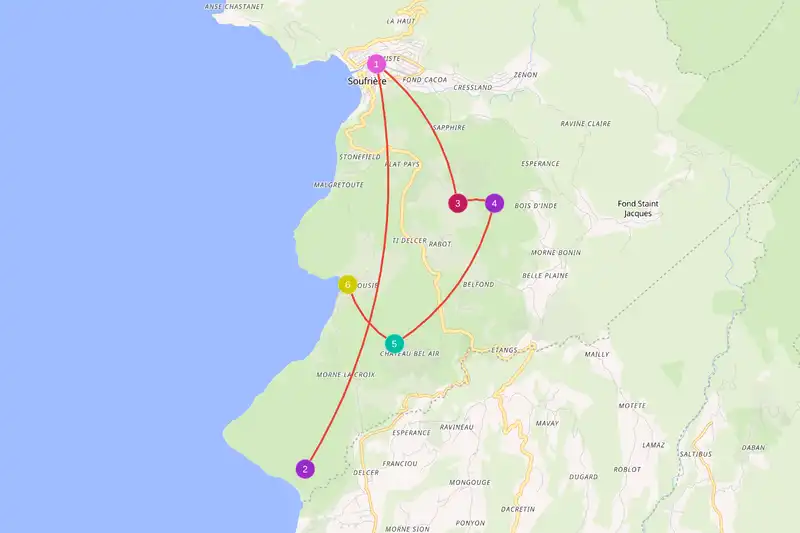
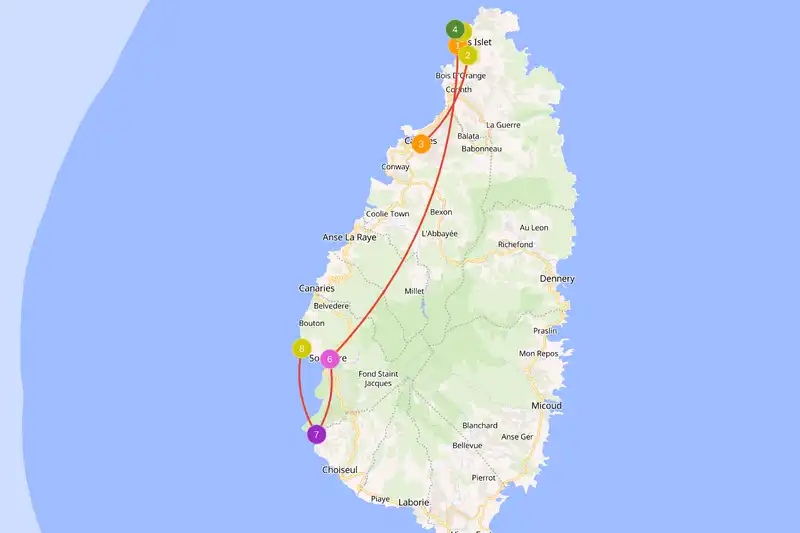
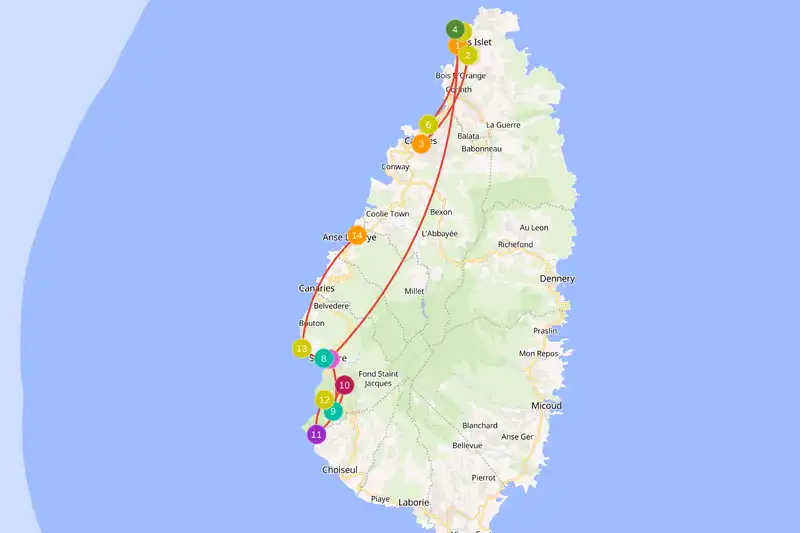
Saint Lucia is doable to backpack independently, but it’s not Southeast Asia-easy. Think: safe and friendly, but infrastructure is built more for resort guests than for backpackers. You can absolutely wing it with a backpack and a bit of patience, especially if you’re used to Caribbean or Central American travel. The main challenges are higher prices, limited hostels, and slower public transport. English is widely spoken, people are generally helpful, and crime against tourists is usually opportunistic (petty theft), so standard street smarts go a long way: don’t flash cash or phones, avoid wandering drunk down dark lanes, and use guesthouse safes. The island is small enough that you can base yourself in 2–3 spots and day-trip around. Independent backpacking works best if you’re flexible with accommodation (guesthouses, small inns, homestays, Airbnb-style rooms) and willing to eat where locals eat (roadside grills, bakeries, roti shops) instead of resort restaurants. If you expect cheap dorm beds on every corner and frequent buses to every beach, you’ll be frustrated; if you treat it like a semi-rural island with pockets of tourism, you’ll be fine.
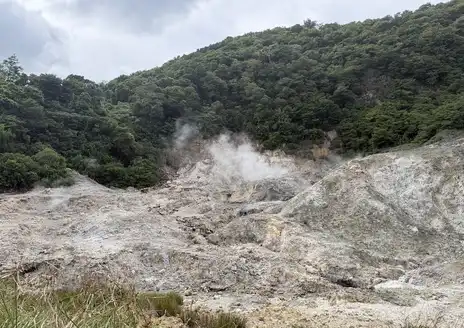
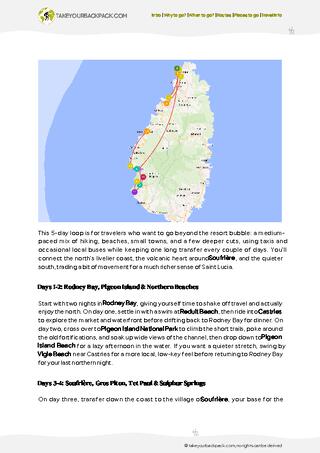
For a budget traveler, 5–7 days is the sweet spot; 10–12 days if you want to slow down and not torch your wallet. Under 4 days, you’ll spend more time in transit and logistics than actually relaxing or hiking. With 5–7 days you can: spend 2–3 nights in the north (Castries/Gros Islet/Rodney Bay) for markets, cheap eats, and a couple of beaches; then 3–4 nights in the south (Soufrière area) for the Pitons, hot springs, and coastal views. With 8–12 days you can add: a couple of nights on the east coast or in a quieter village for cheaper stays and more local feel; extra hiking days (Tet Paul, Gros Piton, rainforest trails) and more time just hanging at free beaches instead of paying for tours. Longer than 2 weeks only makes sense if you’re working remotely, diving a lot, or really leaning into slow travel, because daily costs add up. If you’re on a tight budget, it’s better to go slightly shorter and do the key areas properly than to stretch to 2 weeks and stress about money.
You can get around Saint Lucia without a car, but you trade comfort and speed for savings. Public minibuses (shared vans) run between major towns in daylight hours and are the backbone of budget travel: they’re cheap, reasonably frequent on main routes (Castries–Gros Islet, Castries–Soufrière, Castries–Vieux Fort), and a good way to meet locals. They don’t run late at night, they can be crowded, and they don’t always go right to beaches or trailheads, so you may need to walk a bit or grab a short taxi ride. For airport transfers, you can sometimes use buses (especially from Hewanorra in the south via Vieux Fort), but with a big backpack and odd arrival times, a shared taxi or pre-arranged ride is often worth the extra cost. Hitchhiking happens informally, but you should treat it as a backup, not a plan. If you’re staying in one area and doing day trips, you can combine: minibuses for the main leg, then walking, cheap local taxis, or joining group tours for specific hikes or attractions. No car means you’ll move slower and need to plan around daylight, but it’s absolutely workable for a patient backpacker.
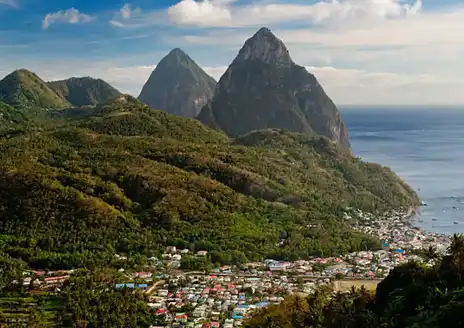
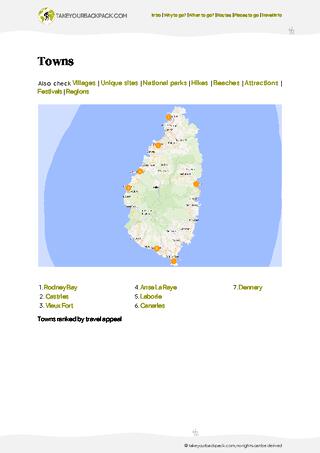
For backpackers, the must-visits are the places that give you big views and local flavor without forcing you into resort pricing. Top picks: Soufrière and the Pitons area – the island’s signature view, plus access to Gros Piton hike (more expensive but iconic) and the cheaper Tet Paul Nature Trail, which gives you a huge payoff for less effort and money. Soufrière town itself has a scruffy charm, local food, and cheaper guesthouses than the luxury resorts nearby. Gros Islet and Rodney Bay (north) – not for the malls, but for the mix of local life and easy beaches. Gros Islet’s Friday night street party (when running) is one of the best budget nights out: street food, music, and rum instead of overpriced cocktails. Rodney Bay gives you supermarkets, cheap eats, and a decent base for buses. Castries – worth a half-day for the market, street food, and a look at everyday city life; it’s not polished, but it’s real. Free or low-cost beaches – Reduit Beach (Rodney Bay), some stretches near Soufrière, and smaller local beaches where you just pay for a bus and maybe a chair if you want one. If you have extra time and cash: a rainforest hike or zipline, or a boat/snorkel trip from Soufrière, but prioritize hikes and viewpoints first if you’re counting coins.
If you’re short on time or money, skip anything that charges resort-level prices for something you can experience more cheaply elsewhere. You can skip: multiple paid viewpoints of the Pitons – pick Tet Paul or one solid hike instead of paying for every lookout or pricey boat tour just to see the same peaks from a slightly different angle. High-end resort day passes – they’re nice, but you’re paying a lot for pools and loungers when free public beaches and cheap rum exist. Overpriced catamaran cruises if your budget is tight – they’re fun, but that money can cover several days of food and buses; you can still see the coast from land and swim at public beaches. Long, rushed island-wide tours – they cram in stops, but you mostly see places from a van window; better to focus on one region (north or south) and actually enjoy it. Duty-free shopping and fancy malls in the north – unless you specifically need electronics or luxury goods, they add nothing to a backpacking trip. If you’re really squeezed for time, you can also skip deep exploration of Castries beyond the market and main streets; use that time for a hike or a beach session instead.
v2.webp)



 Best Backpacking