×

Samoa🇼🇸 | national parksFalealupo Rainforest ReserveBanyan canopy walkway, western cape, lava footprint, cyclone-ruined church | things to do and best time to go

Explore Cape Fatuosofia National ParkExplore O Le Pupu-Puʿe National Park

Backpacking in Falealupo Rainforest Reserve
👌 Worth visitingnational park ranked #3
By Johan Kruseman 🇳🇱 | Updated October 15, 2026

Your sandals sink into wet leaf litter, the canopy swallows the light into green shafts, and somewhere above you a flying fox shifts on its branch with a papery rustle. That is the first ten minutes at Falealupo Rainforest Reserve, on the far western tip of Savai’i in Samoa. The forest is thick, humid and loud with birdsong, and the ocean is never far. The trade-off is that this is not a park of long loop hikes. Walks are short, the famous canopy walkway is the main draw, and wildlife is mostly birds and bats rather than anything dramatic. Crowds are rare, which is the charm. Getting here takes a long drive from the ferry, so go with a rental car or a driver rather than counting on buses, because services thin out fast past the villages. Bring cash, since the reserve is community-run and the family or village guardians collect small fees in person.

Discover everything you want to know in the 📖 Samoa Travel Guide.


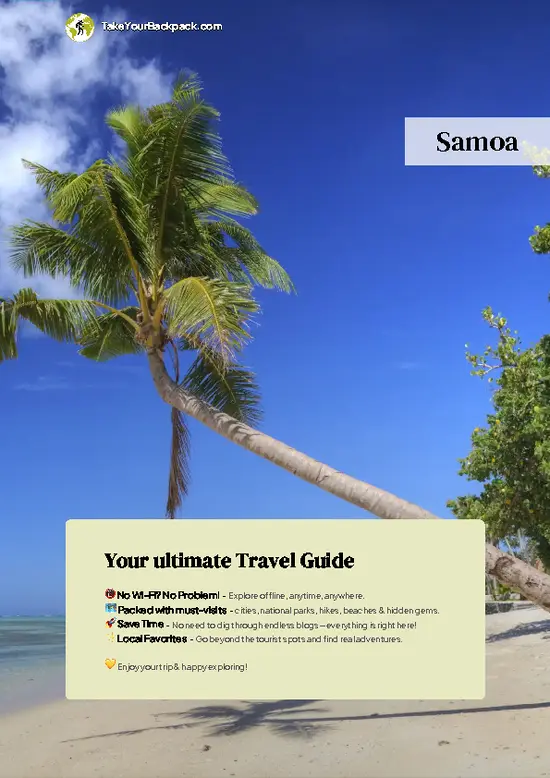
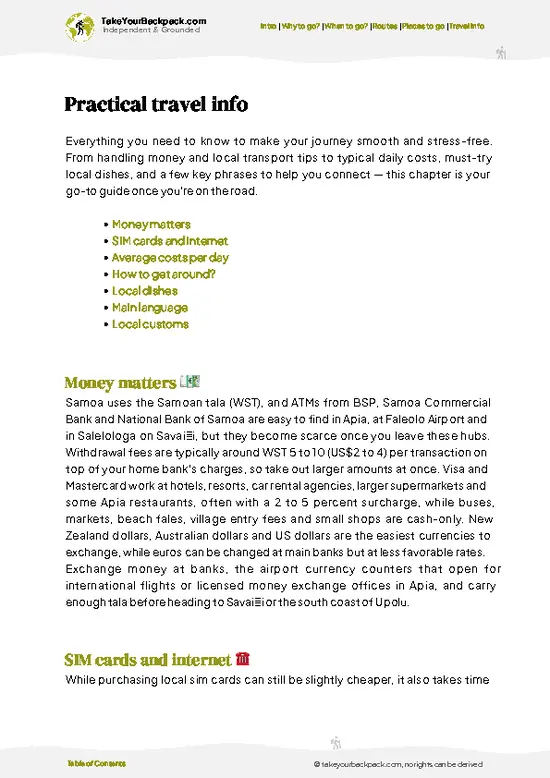
example page 0 from our offline Travel Guide for Samoa
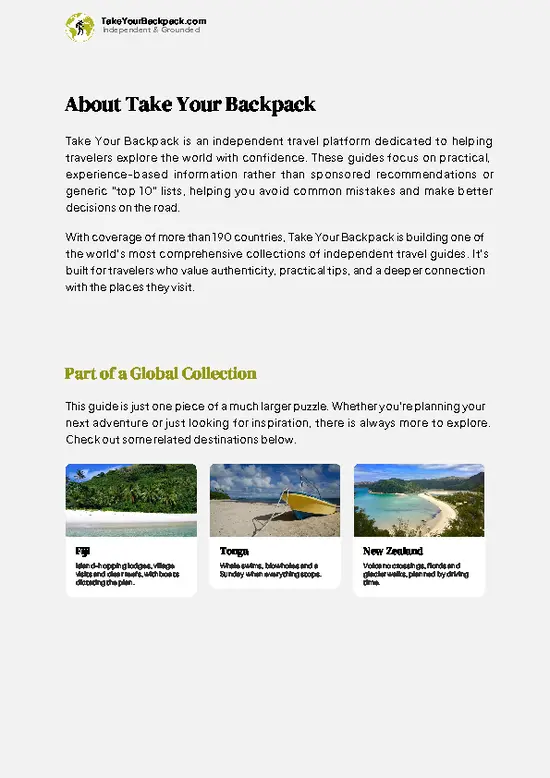
example page 1 from our offline Travel Guide for Samoa
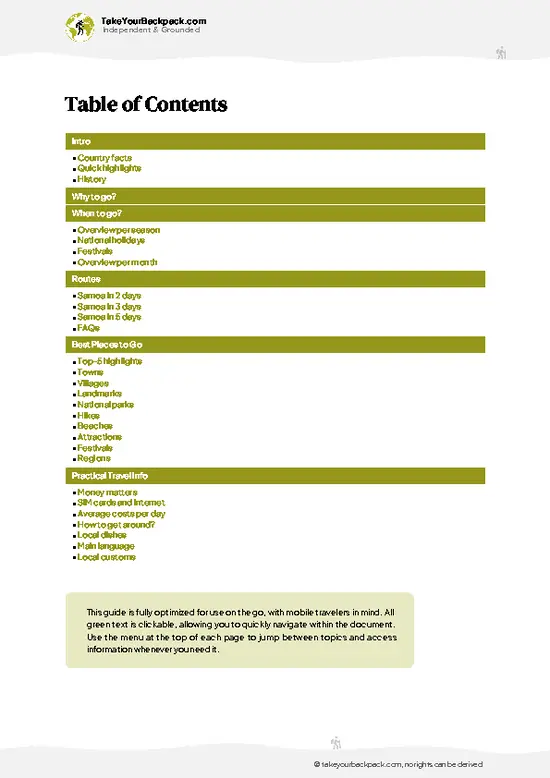
example page 2 from our offline Travel Guide for Samoa
example page 3 from our offline Travel Guide for Samoa
example page 4 from our offline Travel Guide for Samoa
example page 5 from our offline Travel Guide for Samoa
example page 6 from our offline Travel Guide for Samoa
example page 7 from our offline Travel Guide for Samoa
Loading the map 🌍
CLICK TO FILTER
towns
villages
landmarks
national parks
hikes
beaches
attractions
festivals
regions
SHOW COUNTRY’S BESTSHOW ALL

✨ Why go?
Ranked #3 national park in Samoa
The unique appeal for travelers

Backpackers come to Falealupo because it is one of the few places in Samoa where you deal directly with the village that protects the forest. The reserve was saved from logging in the late 1980s by the village elder Chief Fuiono Senio, who traded the rights to his forest for conservation help, and that story is still told on the spot. You pay locals, not a tour company, and that is worth more than any brochure line. The second reason is the canopy walkway, a rope bridge system strung high up a giant banyan tree, which you can do on your own schedule without a booked group. And the western tip itself, with its lava coast and the Sunset at Cape Falealupo feel of a place at the edge of the world, gives you a full day that needs no guide. Fales on the beach nearby are simple, cheap and run by … read more 👉
Backpackers come to Falealupo because it is one of the few places in Samoa where you deal directly with the village that protects the forest. The reserve was saved from logging in the late 1980s by the village elder Chief Fuiono Senio, who traded the rights to his forest for conservation help, and that story is still told on the spot. You pay locals, not a tour company, and that is worth more than any brochure line. The second reason is the canopy walkway, a rope bridge system strung high up a giant banyan tree, which you can do on your own schedule without a booked group. And the western tip itself, with its lava coast and the Sunset at Cape Falealupo feel of a place at the edge of the world, gives you a full day that needs no guide. Fales on the beach nearby are simple, cheap and run by families, so you can stay put and wander at your own pace.

💡 HighlightsEssential experiences to have while exploring Falealupo Rainforest Reserve

  1. Falealupo Canopy Walkway: A series of rope bridges and platforms up a huge banyan, with views over the treetops and out to the sea. It is the sight most travelers search for, and a small fee is paid at the site.
  2. Rainforest trails: Short, humid paths under tall trees, with fallen leaves, vines and the chance to spot native birds and fruit bats.
  3. Moso’s Footprint: A large hollow in the lava rock that local legend says was made by a giant. It is a quick, easy stop with a good story from the family who look after it.
  4. Cape Falealupo and the western shore: Black lava rock, crashing surf and a wide horizon at the westernmost edge of Samoa, good for late afternoon light.
  5. Ruins of the old church at Falealupo: The shell of a church toppled by the cyclones of 1990 and 1991 stands as a reminder of what the
… read more 👉
  1. Falealupo Canopy Walkway: A series of rope bridges and platforms up a huge banyan, with views over the treetops and out to the sea. It is the sight most travelers search for, and a small fee is paid at the site.
  2. Rainforest trails: Short, humid paths under tall trees, with fallen leaves, vines and the chance to spot native birds and fruit bats.
  3. Moso’s Footprint: A large hollow in the lava rock that local legend says was made by a giant. It is a quick, easy stop with a good story from the family who look after it.
  4. Cape Falealupo and the western shore: Black lava rock, crashing surf and a wide horizon at the westernmost edge of Samoa, good for late afternoon light.
  5. Ruins of the old church at Falealupo: The shell of a church toppled by the cyclones of 1990 and 1991 stands as a reminder of what the village endured.
  6. House of the Dead: A small, quiet legendary spot at the coast where, according to local belief, spirits of the dead depart toward the sea.
  7. Fruit bat colonies: Flying foxes hang from trees around the reserve and take to the air at dusk, a large and slow silhouette against the sky.
Most visitors skip the coastal stops near the cape and miss the House of the Dead, which is brief, free and the most atmospheric corner of the whole western tip.
Spotted a mistake or missing something? Contact us.

Things to do near Falealupo Rainforest Reserve

Ratings based on Tripadvisor reviews. When you book through this link, you support our work at no extra cost to you.

🌤️ When to go?When to go for the best experience

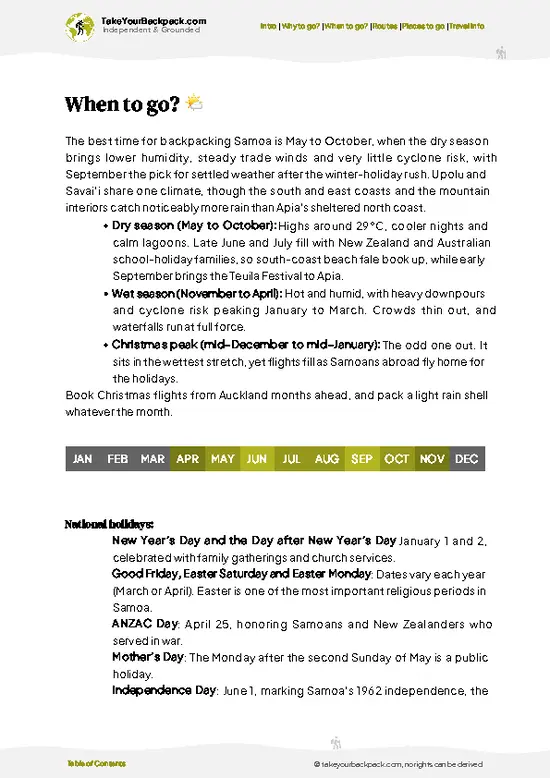
May to October is the best window for Falealupo, with less rain and lower humidity on the western tip of Savai’i.
  • Dry Season (May to October): Days run 27 to 30°C (81 to 86°F), nights 22 to 24°C (72 to 75°F). Showers still pass through, but the canopy walkway and forest tracks stay firmer underfoot. Daylight lasts roughly 11.5 to 12.5 hours, and this is when the few guesthouses fill up, especially July and August.
  • Wet Season (November to April): Expect 28 to 31°C (82 to 88°F), heavy downpours, muddy tracks and sticky air. Crowds thin out and some beach fales drop their rates slightly. Cyclone risk peaks from December to March, and ferry crossings from Upolu can be canceled in rough seas.
  • Cultural Events: The Teuila Festival in Apia falls in early September, and many travelers pair it with a Savai’i
… read more 👉
May to October is the best window for Falealupo, with less rain and lower humidity on the western tip of Savai’i.
  • Dry Season (May to October): Days run 27 to 30°C (81 to 86°F), nights 22 to 24°C (72 to 75°F). Showers still pass through, but the canopy walkway and forest tracks stay firmer underfoot. Daylight lasts roughly 11.5 to 12.5 hours, and this is when the few guesthouses fill up, especially July and August.
  • Wet Season (November to April): Expect 28 to 31°C (82 to 88°F), heavy downpours, muddy tracks and sticky air. Crowds thin out and some beach fales drop their rates slightly. Cyclone risk peaks from December to March, and ferry crossings from Upolu can be canceled in rough seas.
  • Cultural Events: The Teuila Festival in Apia falls in early September, and many travelers pair it with a Savai’i trip, so beds get tighter then.
  • Sunsets: Year-round, the western cliffs and Cape Falealupo face the Pacific, so evenings are good in any month.
Book your Savai’i ferry and first night of accommodation early if you travel in July or August.


source: climatestotravel.comJANJanuary: fair for travelingFEBFebruary: fair for travelingMARMarch: fair for travelingAPRApril: fair for travelingMAYMay: highly recommended for travelingJUNJune: excellent for travelingJULJuly: excellent for travelingAUGAugust: excellent for travelingSEPSeptember: highly recommended for travelingOCTOctober: excellent for travelingNOVNovember: fair for travelingDECDecember: fair for traveling
samoa-national-park-falealupo-rainforest-reserve
© Google | Tanner Manwaring

✈️ The backpacker research shortcutSamoa Travel Guide

An offline-friendly backpacking guide with optimized travel routes, ranked highlights, transport advice, and the best areas to stay.
example page 0 from our offline Travel Guide for Samoa
example page 1 from our offline Travel Guide for Samoa
example page 2 from our offline Travel Guide for Samoa
example page 3 from our offline Travel Guide for Samoa
example page 4 from our offline Travel Guide for Samoa
example page 5 from our offline Travel Guide for Samoa
example page 6 from our offline Travel Guide for Samoa
example page 7 from our offline Travel Guide for Samoa
The digital guide (138 pages) contains:
✅ 37 highlights, ranked by travel appeal
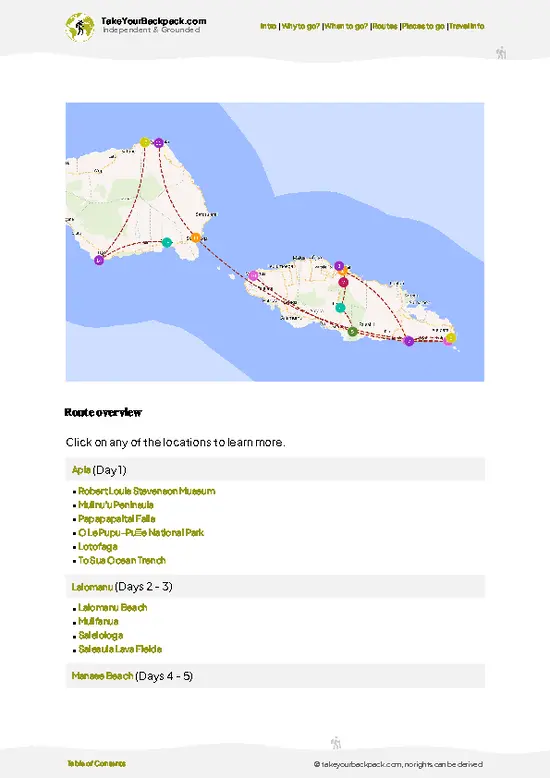
✅ Optimized 2, 3 & 5-day travel routes
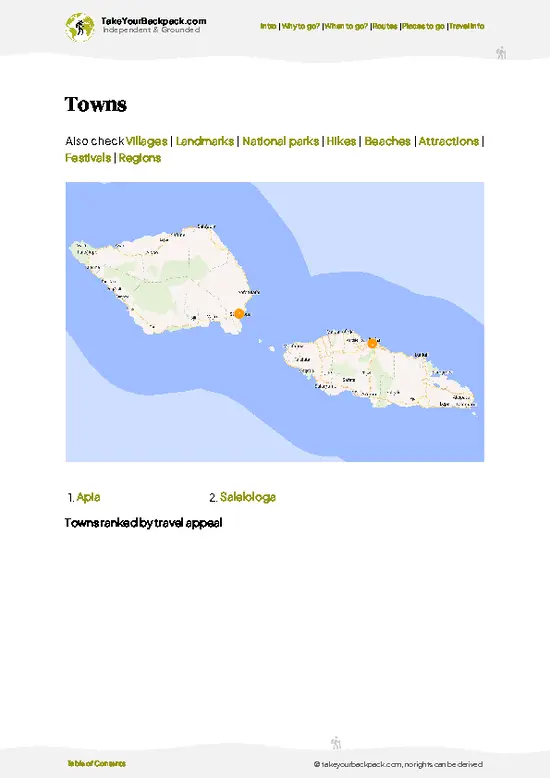
✅ Cities, national parks, landmarks, beaches
✅ How to get around
✅ Offline-friendly for travel without Wi-Fi
👉 Click to see all 30+ guide features

📅 Plan smarter in minutes, not weeks
✅ Month by month travel advice
✅ Festivals & national holidays
✅ Budget expectations

🗺️ Go to the right places, skip the overrated ones
✅ Honest pros & cons of destinations
✅ Top hikes, parks & viewpoints
✅ Lesser-known places most travelers miss
✅ Clear “worth it vs skip it” guidance

🛏️ Travel smoothly without rookie mistakes
✅ Best areas to stay
✅ Transport systems explained simply
✅ Common scams & safety advice
✅ SIM cards, money & practical tips

🌍 Understand the country, not just visit it
✅ Culture & traditions
✅ 52 Essential phrases & customs
✅ Festivals worth planning around
✅ Traveler-friendly historical context
✅ Insights that make places more meaningful

📱 Built for real travel conditions
✅ Fully downloadable PDF
✅ Works completely offline
✅ Optimized for phone use
✅ Useful in remote areas & buses
✅ Everything in one place
Stop searching, start planning
Get instant access to your full guide. 30‑day money-back guarantee.
+ Add another guide for just

By proceeding you agree to our terms.
Sent to your inbox immediately after payment • 100% Secure Checkout
Best Backpacking Travel Advisor 2025 tourism awardBest Backpacking
Travel Advisor
2025
What others say about Take Your Backpack Guides:
⭐⭐⭐⭐⭐
Fantastic, amazing amount of information!
⭐⭐⭐⭐⭐
My goodness this is amazing, it's what I've been looking for hats off too you!
⭐⭐⭐⭐⭐
I think this is absolutely BRILLIANT
⭐⭐⭐⭐
Very complete and informative. It's still missing places, but I gotta to commend you
⭐⭐⭐⭐⭐
This is truly amazing, thank you, can't wait to explore it with my kids!
⭐⭐⭐⭐⭐
Awesome resource, thank you!
⭐⭐⭐⭐⭐
This is amazing! Can't wait to explore the ones I haven't seen
⭐⭐⭐⭐
I love this! Well done, great idea.
⭐⭐⭐⭐⭐
Thanks for taking the time to make this gem!
⭐⭐⭐⭐⭐
This might be the best website I've ever seen.
⭐⭐⭐⭐⭐
Congratulations, and thank you so much for your work; it's incredibly valuable.
⭐⭐⭐⭐
In all seriousness I think you did a great job pointing out the important spots
⭐⭐⭐⭐⭐
10/10 very good
⭐⭐⭐⭐⭐
As someone who's only just starting to visit regularly this is awesome, thank you.
⭐⭐⭐⭐
Thank you very much! I'm going to visit my dad, it's going to be very useful!
⭐⭐⭐⭐⭐
This is really cool! We'll be travelling for the first time and this definitely come in handy.
⭐⭐⭐⭐⭐
You are now our minister of culture, congratulations 👨‍💼
⭐⭐⭐⭐⭐
Just wanted to tell you that this is a pearl! Going to follow your recommendations.
⭐⭐⭐⭐⭐
This is so cool. I'll definitely be using the resource for my travels soon.
⭐⭐⭐⭐⭐
This is very impressive! Good work.
⭐⭐⭐⭐⭐
This is an amazing and informative site. Very well done!

🛏️ Where to stay?Best areas and accommodation options

Stay in a beach fale in or near Falealupo village, because the reserve itself has no hotels or campsites.
The village area on the far western tip of Savai’i has a handful of family-run beach fales, open-sided thatched huts with a mattress and mosquito net, usually sold with dinner and breakfast included. They sit within a few minutes’ drive of the canopy walkway and the Moso’s Footprint area, and you wake to waves and roosters. Power and Wi-Fi are patchy, so bring cash and a headlamp.
For more choice, look to the northwest and southwest coasts. Manase, on the north coast, has the widest range of … read more 👉
Stay in a beach fale in or near Falealupo village, because the reserve itself has no hotels or campsites.
The village area on the far western tip of Savai’i has a handful of family-run beach fales, open-sided thatched huts with a mattress and mosquito net, usually sold with dinner and breakfast included. They sit within a few minutes’ drive of the canopy walkway and the Moso’s Footprint area, and you wake to waves and roosters. Power and Wi-Fi are patchy, so bring cash and a headlamp.
For more choice, look to the northwest and southwest coasts. Manase, on the north coast, has the widest range of backpacker fales and small guesthouses, plus a long white beach and a few cafés. It is roughly 1.5 to 2 hours by road from Falealupo. Salelologa, the ferry town on the southeast, has basic motels and a market, handy for a late arrival. It is around 1.5 hours away.
Satuiatua on the south coast has a few simple beachfront options with easier road links, good if you want to split the island across several nights. Renting a car in Salelologa makes any of these bases practical, since buses to Falealupo run infrequently and thin out after midday.

👛 Costs (as of 15 October 2026)Typical daily expenses

A day at Falealupo Rainforest Reserve on Savai’i runs about US$62 for a backpacker staying in a beach fale in high season, including the canopy walk fee and a rental car share.
CategoryBudget RangeLocal Reality
Canopy walk and reserve feesUS$10 to 15The Canopy Walk, a rope bridge up a giant banyan tree, is paid per person at the village. Local families collect the fees, and the money goes to the village.
Accommodation (high season, May to October)US$25 to 40Open-sided beach fales near Falealupo and along the western coast, often with meals included. Rates dip a little in the wetter months.
Accommodation (low season, November to April)US$20 to 32Same fales, a bit easier to bargain, though cyclone season can disrupt plans.
Local transportUS$8 to 20Buses on Savai’i run from Salelologa toward the west,
… read more 👉
A day at Falealupo Rainforest Reserve on Savai’i runs about US$62 for a backpacker staying in a beach fale in high season, including the canopy walk fee and a rental car share.
CategoryBudget RangeLocal Reality
Canopy walk and reserve feesUS$10 to 15The Canopy Walk, a rope bridge up a giant banyan tree, is paid per person at the village. Local families collect the fees, and the money goes to the village.
Accommodation (high season, May to October)US$25 to 40Open-sided beach fales near Falealupo and along the western coast, often with meals included. Rates dip a little in the wetter months.
Accommodation (low season, November to April)US$20 to 32Same fales, a bit easier to bargain, though cyclone season can disrupt plans.
Local transportUS$8 to 20Buses on Savai’i run from Salelologa toward the west, but they are infrequent and stop by mid-afternoon. A taxi or shared rental car costs more and gives you flexibility for the Moso Lava Field and the Cape Mulinu’u area.
Food and suppliesUS$10 to 18Village shops sell tinned fish, bread and crackers. Fale hosts cook taro, fish, and coconut cream dishes. Bring snacks and water from Salelologa because stock is thin out west.
Total Daily BudgetUS$62 to 93Per person, per day, in high season.
⚠️ Prices can change and everyone travels differently, so take this as a rough guide. Hope it helps you plan your adventure!

🥾 TrailsTrail guide for Falealupo Rainforest Reserve national park

Falealupo is a place for short walks, not multi-day treks, so plan on a half day inside the forest and the rest along the coast.
  • Canopy Walkway: Allow about 30 to 60 minutes to climb the ladder and cross the bridges. It is easy but needs a head for heights, and the platforms can feel springy underfoot.
  • Forest paths: Short marked walks, usually under an hour, over roots and damp leaf litter. Wear closed shoes, since the ground stays slick for much of the year.
  • Coastal lava walks: Easy strolls over black rock near the cape, with views of the surf. Good sandals or light shoes are enough, and the rock
… read more 👉
Falealupo is a place for short walks, not multi-day treks, so plan on a half day inside the forest and the rest along the coast.
  • Canopy Walkway: Allow about 30 to 60 minutes to climb the ladder and cross the bridges. It is easy but needs a head for heights, and the platforms can feel springy underfoot.
  • Forest paths: Short marked walks, usually under an hour, over roots and damp leaf litter. Wear closed shoes, since the ground stays slick for much of the year.
  • Coastal lava walks: Easy strolls over black rock near the cape, with views of the surf. Good sandals or light shoes are enough, and the rock is sharp in places.
  • Wildlife: Expect fruit bats, native pigeons and honeyeaters, plus the odd lizard on the trail. Early morning is the best time for birds.
Public transport is limited. Buses run from the main ferry wharf at Salelologa toward the west, but they are slow, infrequent and may not run late in the day, so most travelers hire a car or a driver. Roads on the western tip can be rough and signs are few, so ask villagers for directions. There is no formal park gate. The reserve is village-managed, so you pay small fees in cash at the walkway or to family guardians at sites. Crowds are light, and you may be the only visitor on a weekday. Respect village customs by dressing modestly in settlements, and avoid walking through at prayer time on Sundays.
⚠️ Hiking info can sometimes be outdated or inaccurate. Before you hit the trail, check the latest conditions with locals. If you do spot anything that's off, I'd love to hear from you, so I can update it for fellow travelers.

🛡️ SafetyTraveler Safety Guide

Falealupo is a low-risk reserve, with a short canopy walkway, village-managed trails and no dangerous large wildlife.
The main hazards are heat and humidity, so carry at least 2 liters of water and start walks early. Rain turns forest paths and lava rock into slippery surfaces, so wear shoes with grip rather than sandals. Trails are short and fairly easy to follow, but a local guide from the village is worth having for the lava tubes and coastal sites, where footing is uneven and sharp.
Mosquitoes carry dengue in Samoa, so use repellent at dawn and dusk and cover up in the evening. Village dogs roam freely and are mostly harmless if you stay calm. Respect village protocol: ask before swimming or walking on private land, dress modestly, and avoid wandering around during Sunday church hours. Surf … read more 👉
Falealupo is a low-risk reserve, with a short canopy walkway, village-managed trails and no dangerous large wildlife.
The main hazards are heat and humidity, so carry at least 2 liters of water and start walks early. Rain turns forest paths and lava rock into slippery surfaces, so wear shoes with grip rather than sandals. Trails are short and fairly easy to follow, but a local guide from the village is worth having for the lava tubes and coastal sites, where footing is uneven and sharp.
Mosquitoes carry dengue in Samoa, so use repellent at dawn and dusk and cover up in the evening. Village dogs roam freely and are mostly harmless if you stay calm. Respect village protocol: ask before swimming or walking on private land, dress modestly, and avoid wandering around during Sunday church hours. Surf on the exposed western coast has strong currents, so swim only in sheltered spots. Cyclone warnings are rare but worth checking in the wet season.

FAQTraveler FAQ

One full day is enough for Falealupo itself, though two days lets you pair it with the rest of western Savai’i. The canopy walkway takes about an hour, and the lava tubes, Moso’s Footprint and cliff viewpoints fill a half day. Most travelers sleep one or two nights nearby after the ferry from Upolu, which takes about 1 hour.
It is possible but slow, because buses to Falealupo are infrequent and run mostly in the morning from Salelologa, taking roughly 1.5 to 2 hours. Most travelers rent a car in Salelologa for about WST 150 to 250 a day, which makes the reserve and nearby beaches easy to reach. Taxis can be arranged through guesthouses but cost more.
There is no national park ticket, but villages charge small cash fees for sites in the reserve. Expect roughly WST 20 to 40 (US$7 to 15) for the canopy walkway and nearby attractions, with guides extra. No permit is needed for walking the main paths, though you should ask the village before heading onto land off the usual routes.
⚠️ Things can change over time, so always validate details locally before you go.

Other Samoan national parks near Falealupo Rainforest Reserve

Explore more nearby:


💡 Not sure where to go next?
Create a personalized itinerary for Samoa including Falealupo Rainforest Reserve and the places that fit your trip.

Generate my itinerary

👉 Discover all national parks

Or checkout all Samoa has to offer (think cities, towns, villages, national parks, hikes, beaches, festivals)
Country photo of Samoa

We 💚 feedbackSumming up the experience

Pair Falealupo with the blowholes of Savai’i’s southern coast, then loop back past the lava fields on the north shore, so the western tip becomes the dramatic middle of a round-island drive. I would arrive in the afternoon, do the canopy walk first, and save the cape for sunset. Bring small bills and bug spray.

✍️ Help improve this page!
The information on this page is based on in-depth research, insights shared by experienced travelers, and feedback from the local travel community in Samoa. While every effort is made to keep the information accurate and current, conditions can change — so if you spot anything incorrect or outdated, please get in touch.


🙋‍♂️ Give feedback

👋 Meet the founderWho’s Behind Take Your Backpack?

Johan, backpacker and founder of TakeYourBackpackHi, I’m Johan (Netherlands 🇳🇱), the creator of TakeYourBackpack. Over the past 3 decades, I’ve backpacked through 90+ countries across six continents, gaining extensive experience with independent travel, long-term trips, and overland routes.

This site is built on a combination of firsthand travel experience and carefully curated insights from other backpackers. Many guides are based on places I’ve personally visited, while others bring together tips, observations, and practical advice shared by trusted travelers I’ve met along the way.

The goal is to provide realistic, experience-driven guidance — not generic itineraries — so you can explore destinations with better context, clearer expectations, and more confidence.