×

Samoa🇼🇸 | best national parksYour Guide to the 3 Best national parks in Samoa

Samoa’s national parks are small, wet and green, and most sit on land owned by villages rather than the state. On Upolu, rainforest trails and swimming holes are a short bus ride from Apia, with modest fees. Savai’i is rougher: lava fields, blowholes and long, dusty coast roads. Independent travelers should expect humidity, red mud and fale stays instead of ranger stations.

By Johan Kruseman 🇳🇱 | Updated October 18, 2026
Explore the best hikes in Samoa

Why go?Understanding Their Importance

Samoa is a poor fit for the classic big-park model and an excellent one for village-owned conservation. Under fa’a Samoa, customary land belongs to families and chiefs, so nearly every reserve, trail and waterfall is hosted by the community that holds it. That means small access fees paid in cash at a village gate, plus the expectation of respectful dress and no wandering off-trail. Geography does the rest. These are volcanic islands with steep rainforest interiors, lava fields on Savai’i, and coral lagoons within a short drive. The air is thick, the soil stains everything red, and the forest rings with birdsong and the thud of fruit bats at dusk. Infrastructure is basic. Signage is sparse, ATMs are scarce outside Apia, and few places take cards. Come for community-run nature, not polished visitor centers.
Why These Made the Cut
The list of best national parks in Samoa is created based on landscapes, wildlife, adventure opportunities, facilities, and overall experience. If you feel a national park is missing in this list, please let us know.

When to go?When to Plan Your Trip

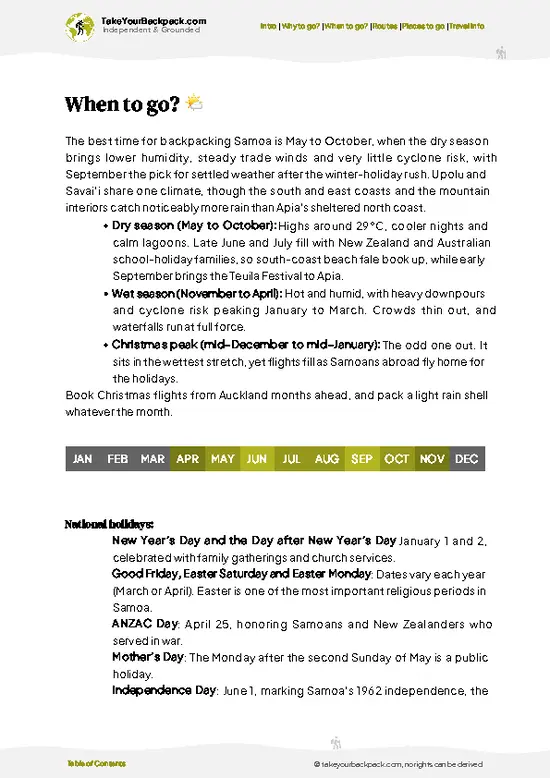
Best months for Samoa’s national parks: The best months are May to October, the dry season, when rainfall drops sharply, trails firm up and daytime temperatures sit around 28 to 30°C with lower humidity. From November to April the wet season brings heavy downpours, red mud on forest tracks, swollen rivers and a risk of cyclones, especially January to March. Waterfall pools can turn brown and unsafe to enter after rain.
Shoulder seasons and crowds: The shoulder months of April and November can be good value, with fewer visitors and quieter villages, though showers arrive without warning. July and August bring the most visitors, including Samoans returning from abroad, so book fale stays and rental cars ahead. Rain is usually heavier on Upolu’s and Savai’i’s southeast-facing slopes, while the … read more 👉
Best months for Samoa’s national parks: The best months are May to October, the dry season, when rainfall drops sharply, trails firm up and daytime temperatures sit around 28 to 30°C with lower humidity. From November to April the wet season brings heavy downpours, red mud on forest tracks, swollen rivers and a risk of cyclones, especially January to March. Waterfall pools can turn brown and unsafe to enter after rain.
Shoulder seasons and crowds: The shoulder months of April and November can be good value, with fewer visitors and quieter villages, though showers arrive without warning. July and August bring the most visitors, including Samoans returning from abroad, so book fale stays and rental cars ahead. Rain is usually heavier on Upolu’s and Savai’i’s southeast-facing slopes, while the northwest coasts stay a little drier. Entry fees do not change by season.

national park hoppingSuggested Travel Strategies

How many days to combine several parks: A trip combining several national parks in Samoa needs 5 to 8 days, enough to cover both main islands without rushing. Upolu’s parks cluster around Apia and the south coast, so base there first for 2 to 4 days, with 2 to 4 hours per stop including a swim and village stops. Then cross to Savai’i, which has a longer, slower loop.
Direction and transfers: Start on Upolu, then take the Mulifanua ferry to Salelologa, a crossing of roughly 60 to 90 minutes. Sailing times are fixed, so check them and arrive early with a car if you have one. On Savai’i, allow 3 to 5 hours of driving to circle between far-apart stops, with slow village speed limits.
Planning mistakes: The usual error is cramming both islands into three days. Roads are narrow, buses run on island … read more 👉
How many days to combine several parks: A trip combining several national parks in Samoa needs 5 to 8 days, enough to cover both main islands without rushing. Upolu’s parks cluster around Apia and the south coast, so base there first for 2 to 4 days, with 2 to 4 hours per stop including a swim and village stops. Then cross to Savai’i, which has a longer, slower loop.
Direction and transfers: Start on Upolu, then take the Mulifanua ferry to Salelologa, a crossing of roughly 60 to 90 minutes. Sailing times are fixed, so check them and arrive early with a car if you have one. On Savai’i, allow 3 to 5 hours of driving to circle between far-apart stops, with slow village speed limits.
Planning mistakes: The usual error is cramming both islands into three days. Roads are narrow, buses run on island time, and rain can close a track. Leave one buffer day, and fuel up before heading to remote coasts.

The ListHighly Recommended national parks of Samoa

1 O Le Pupu-Puʿe National Park

Togitogiga pools, lava sea cliffs, coastal track, fruit pigeons

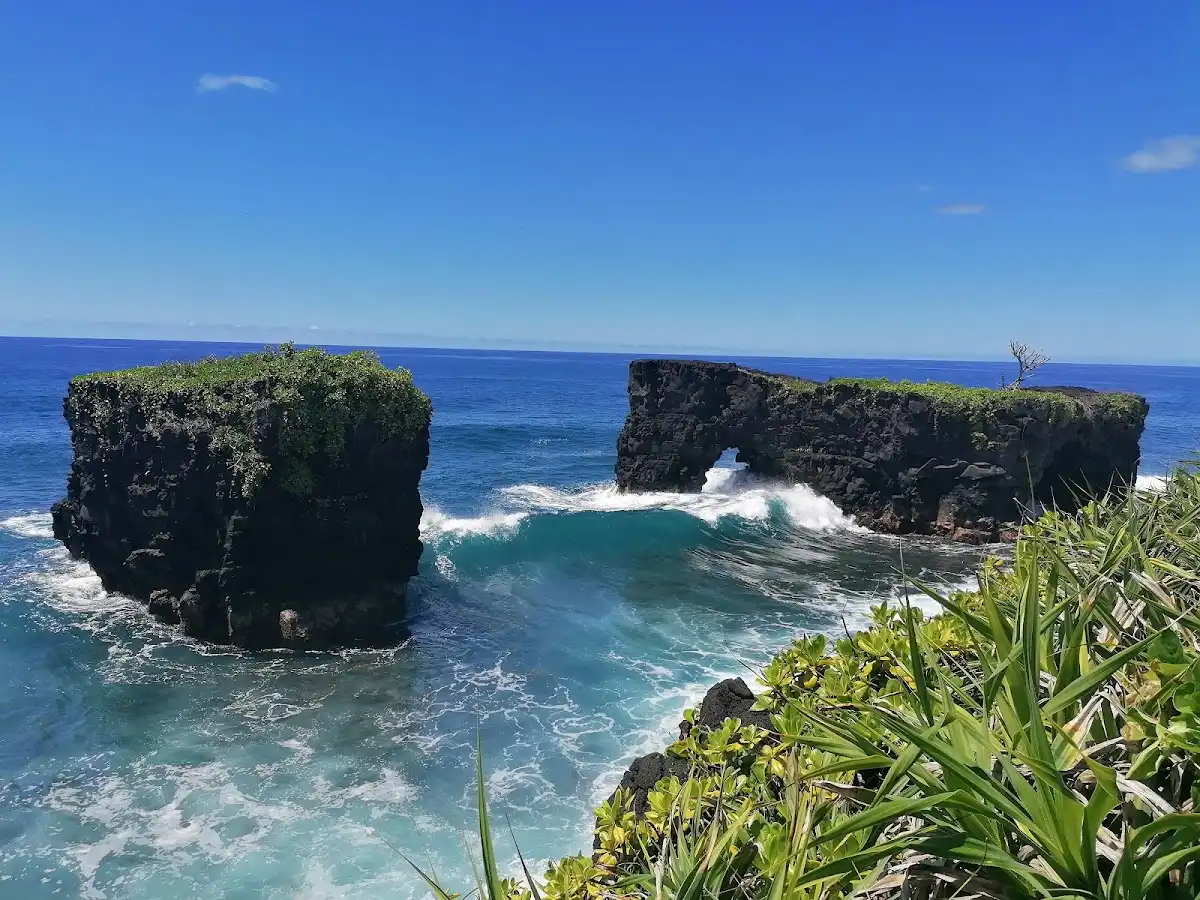
Swim in shaded plunge pools, then hike through rainforest to black cliffs where surf explodes against volcanic rock below.

samoa-national-park-o-le-pupu-pue-national-park
© Google |

2 Lake Lanoto’o National Park

Crater lake, goldfish, muddy forest track, Cross Island Road

Slog up a slippery highland track to a murky crater lake where orange goldfish flash beneath floating plant mats.

samoa-national-park-lake-lanotoo-national-park
© Google |

3 Falealupo Rainforest Reserve

Banyan canopy walkway, western cape, lava footprint, cyclone-ruined church

Climb rope bridges into a giant banyan, then follow short humid trails to black lava shores at Samoa’s westernmost edge.

samoa-national-park-falealupo-rainforest-reserve
© Google | Tanner Manwaring
Loading the map 🌍

Expert viewWhat You Should Know

How many parks to visit: I advise three to four parks in total, mixing one rainforest or waterfall site, one coastal or lava site and one marine reserve. Samoa’s sites are small, and each takes only half a day, so more than four tends to blur into a repeat of mud, ferns and swimming. Fewer than three misses the contrast between the islands.
Which kind for your style: Hikers and swimmers should prioritize rainforest and waterfall sites on Upolu, where trails are shaded, loud with cicadas and cool underfoot. Those who like geology should put lava and blowhole country on Savai’i first, where black rock radiates heat and spray shoots skyward. Snorkelers should favor marine reserves, where clear shallows and coral are the payoff. Families and first-timers do best on Upolu, where access is easier. … read more 👉
How many parks to visit: I advise three to four parks in total, mixing one rainforest or waterfall site, one coastal or lava site and one marine reserve. Samoa’s sites are small, and each takes only half a day, so more than four tends to blur into a repeat of mud, ferns and swimming. Fewer than three misses the contrast between the islands.
Which kind for your style: Hikers and swimmers should prioritize rainforest and waterfall sites on Upolu, where trails are shaded, loud with cicadas and cool underfoot. Those who like geology should put lava and blowhole country on Savai’i first, where black rock radiates heat and spray shoots skyward. Snorkelers should favor marine reserves, where clear shallows and coral are the payoff. Families and first-timers do best on Upolu, where access is easier.
What it costs: Expect US$25 to 50 a day for a budget traveler, including fale beds, local buses and meals. Village entry fees run roughly WST 5 to 20 per person (about US$2 to 7). Local guides, where used, cost around WST 30 to 80 (US$11 to 29), and hire cars about WST 120 to 200 a day (US$43 to 72). Bring plenty of cash in small notes, because card machines are rare.
Safety and culture: Dress modestly, with shoulders and knees covered in villages, and swimwear only at pools. Never enter a village or swimming hole without permission, and skip Sunday visits, when church services dominate and many sites close. Rivers rise fast in rain, so avoid pools after downpours. Wear shoes with grip, carry water, and pack insect repellent against daytime mosquitoes. A polite greeting and the fee paid in full open doors, and often bring a cold coconut.

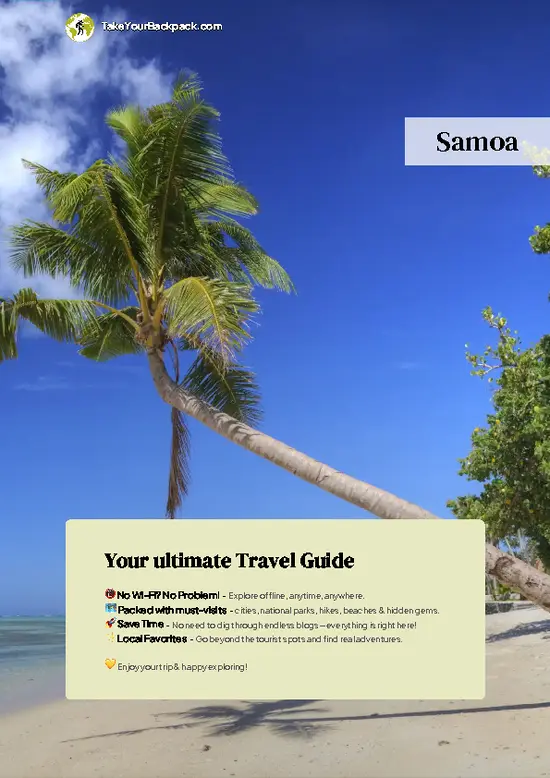
✈️ The backpacker research shortcutSamoa Travel Guide

An offline-friendly backpacking guide with optimized travel routes, ranked highlights, transport advice, and the best areas to stay.
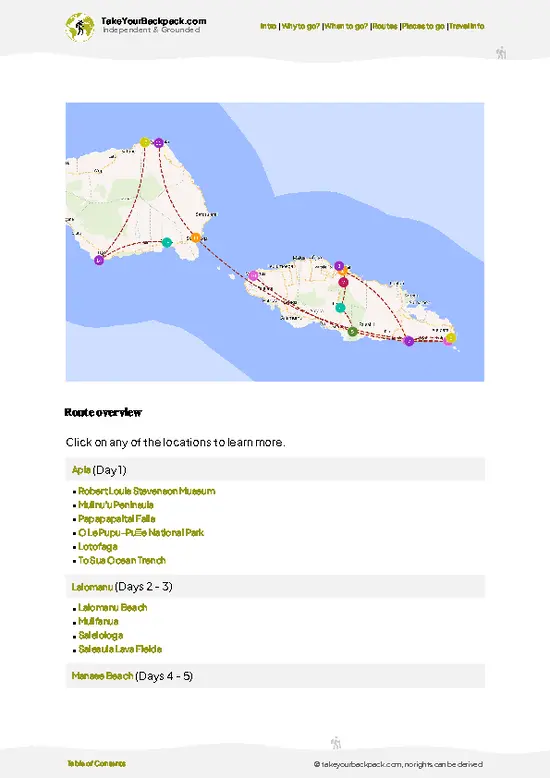
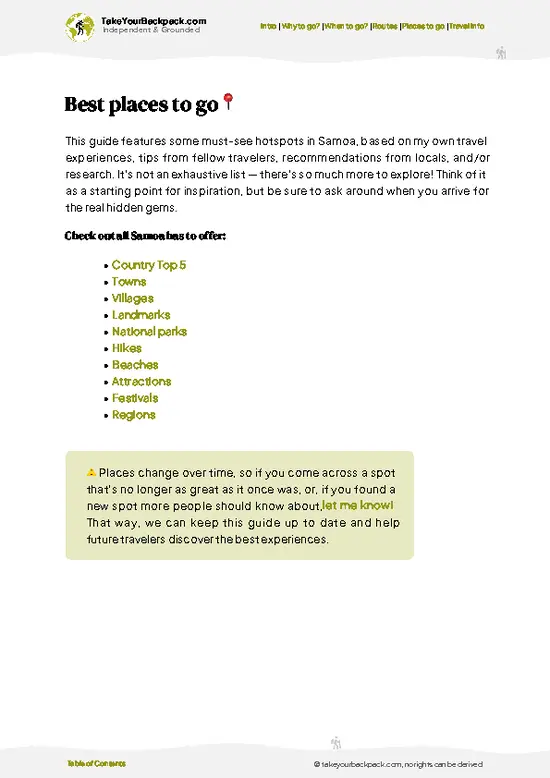
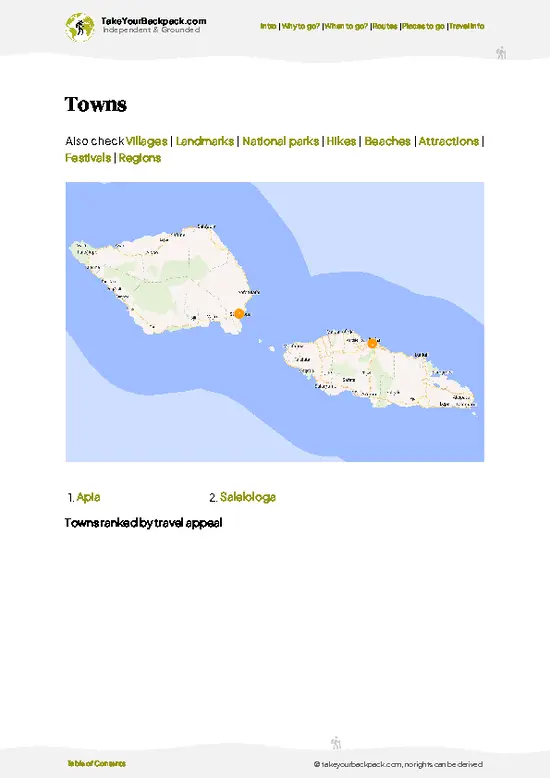
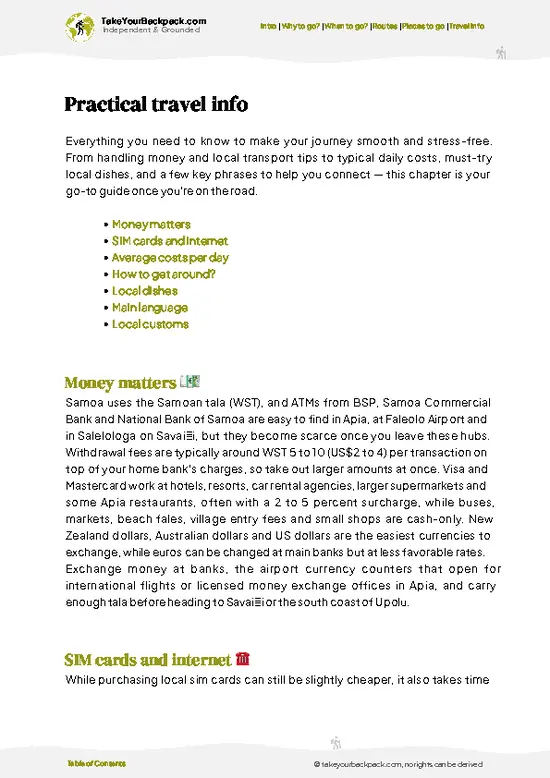
example page 0 from our offline Travel Guide for Samoa
example page 1 from our offline Travel Guide for Samoa
example page 2 from our offline Travel Guide for Samoa
example page 3 from our offline Travel Guide for Samoa
example page 4 from our offline Travel Guide for Samoa
example page 5 from our offline Travel Guide for Samoa
example page 6 from our offline Travel Guide for Samoa
example page 7 from our offline Travel Guide for Samoa
The digital guide (138 pages) contains:
✅ 37 highlights, ranked by travel appeal
✅ Optimized 2, 3 & 5-day travel routes
✅ Cities, national parks, landmarks, beaches
✅ How to get around
✅ Offline-friendly for travel without Wi-Fi
👉 Click to see all 30+ guide features

📅 Plan smarter in minutes, not weeks
✅ Month by month travel advice
✅ Festivals & national holidays
✅ Budget expectations

🗺️ Go to the right places, skip the overrated ones
✅ Honest pros & cons of destinations
✅ Top hikes, parks & viewpoints
✅ Lesser-known places most travelers miss
✅ Clear “worth it vs skip it” guidance

🛏️ Travel smoothly without rookie mistakes
✅ Best areas to stay
✅ Transport systems explained simply
✅ Common scams & safety advice
✅ SIM cards, money & practical tips

🌍 Understand the country, not just visit it
✅ Culture & traditions
✅ 52 Essential phrases & customs
✅ Festivals worth planning around
✅ Traveler-friendly historical context
✅ Insights that make places more meaningful

📱 Built for real travel conditions
✅ Fully downloadable PDF
✅ Works completely offline
✅ Optimized for phone use
✅ Useful in remote areas & buses
✅ Everything in one place
Stop searching, start planning
Get instant access to your full guide. 30‑day money-back guarantee.
+ Add another guide for just

By proceeding you agree to our terms.
Sent to your inbox immediately after payment • 100% Secure Checkout
Best Backpacking Travel Advisor 2025 tourism awardBest Backpacking
Travel Advisor
2025
What others say about Take Your Backpack Guides:
⭐⭐⭐⭐⭐
Fantastic, amazing amount of information!
⭐⭐⭐⭐⭐
My goodness this is amazing, it's what I've been looking for hats off too you!
⭐⭐⭐⭐⭐
I think this is absolutely BRILLIANT
⭐⭐⭐⭐
Very complete and informative. It's still missing places, but I gotta to commend you
⭐⭐⭐⭐⭐
This is truly amazing, thank you, can't wait to explore it with my kids!
⭐⭐⭐⭐⭐
Awesome resource, thank you!
⭐⭐⭐⭐⭐
This is amazing! Can't wait to explore the ones I haven't seen
⭐⭐⭐⭐
I love this! Well done, great idea.
⭐⭐⭐⭐⭐
Thanks for taking the time to make this gem!
⭐⭐⭐⭐⭐
This might be the best website I've ever seen.
⭐⭐⭐⭐⭐
Congratulations, and thank you so much for your work; it's incredibly valuable.
⭐⭐⭐⭐
In all seriousness I think you did a great job pointing out the important spots
⭐⭐⭐⭐⭐
10/10 very good
⭐⭐⭐⭐⭐
As someone who's only just starting to visit regularly this is awesome, thank you.
⭐⭐⭐⭐
Thank you very much! I'm going to visit my dad, it's going to be very useful!
⭐⭐⭐⭐⭐
This is really cool! We'll be travelling for the first time and this definitely come in handy.
⭐⭐⭐⭐⭐
You are now our minister of culture, congratulations 👨‍💼
⭐⭐⭐⭐⭐
Just wanted to tell you that this is a pearl! Going to follow your recommendations.
⭐⭐⭐⭐⭐
This is so cool. I'll definitely be using the resource for my travels soon.
⭐⭐⭐⭐⭐
This is very impressive! Good work.
⭐⭐⭐⭐⭐
This is an amazing and informative site. Very well done!

🛏️ Where to stay?Best Places to Stay in Samoa

Samoa has only a handful of true dorm hostels, but budget beds are easy to find: open-sided beach “fale” huts run by local families typically cost WST 80 to 150 (about US$30 to 55) per person a night, usually with breakfast and dinner included, alongside simple guesthouses from roughly WST 120 to 200 a room. Apia has the widest choice of guesthouses, plus the country’s only real nightlife, ATMs and bus terminal, though it is hot and traffic-noisy and has no swimmable beach of its own. For beach fales, Lalomanu on Upolu’s southeast coast and Manase on Savai’i’s north shore have the most options and are safe, quiet and right on the sand, but evenings end by about 10 pm, meals are limited to what … read more 👉
Samoa has only a handful of true dorm hostels, but budget beds are easy to find: open-sided beach “fale” huts run by local families typically cost WST 80 to 150 (about US$30 to 55) per person a night, usually with breakfast and dinner included, alongside simple guesthouses from roughly WST 120 to 200 a room. Apia has the widest choice of guesthouses, plus the country’s only real nightlife, ATMs and bus terminal, though it is hot and traffic-noisy and has no swimmable beach of its own. For beach fales, Lalomanu on Upolu’s southeast coast and Manase on Savai’i’s north shore have the most options and are safe, quiet and right on the sand, but evenings end by about 10 pm, meals are limited to what your host serves and getting anywhere means an infrequent bus or a hired car.

If you enjoy meeting fellow travelers, consider choosing hostels with high ratings for atmosphere. On the other hand, if you prefer having your own space, a hotel might be a better option.

SamoaExplore Samoa

👋 Meet the founderWho’s Behind Take Your Backpack?

Johan, backpacker and founder of TakeYourBackpackHi, I’m Johan (Netherlands 🇳🇱), the creator of TakeYourBackpack. Over the past 3 decades, I’ve backpacked through 90+ countries across six continents, gaining extensive experience with independent travel, long-term trips, and overland routes.

This site is built on a combination of firsthand travel experience and carefully curated insights from other backpackers. Many guides are based on places I’ve personally visited, while others bring together tips, observations, and practical advice shared by trusted travelers I’ve met along the way.

The goal is to provide realistic, experience-driven guidance — not generic itineraries — so you can explore destinations with better context, clearer expectations, and more confidence.