×

São Tomé and Príncipe🇸🇹 | regionsPríncipeVolcanic spires, empty beaches, cocoa estates, biosphere forest | things to do and best time to go

Explore Parque Natural do PríncipeExplore São João dos Angolares

Backpacking in Príncipe
🏆 Top pickregion ranked #2
By Johan Kruseman 🇳🇱 | Updated October 22, 2026

Not long ago Príncipe was a sleepy plantation island where the main sounds were roosters, generators and the sea, and getting a bed meant knocking on a family’s door. Today a handful of eco-lodges and guesthouses sit among the same cocoa-scented forest, yet the island still smells of wet earth, wood smoke and drying fish. It lies in the north of São Tomé and Príncipe, a small volcanic island of jagged green spires, empty beaches and one tiny capital, Santo António. Nature is the draw: this is a UNESCO Biosphere Reserve with forest down to the sand. The downside is thin transport and few places to eat, so planning matters and nothing is fast. Walking is free but slow and hot. Motorbike taxis save hours for modest money but jolt over potholes. A hired 4x4 is the most comfortable and costs the most, so for a solo backpacker, motorbikes for far beaches and feet for everything else give the best return. Start with a slow morning loop around Santo António’s pastel streets, then a swim as the afternoon light softens.

Discover everything you want to know in the 📖 São Tomé and Príncipe Travel Guide.


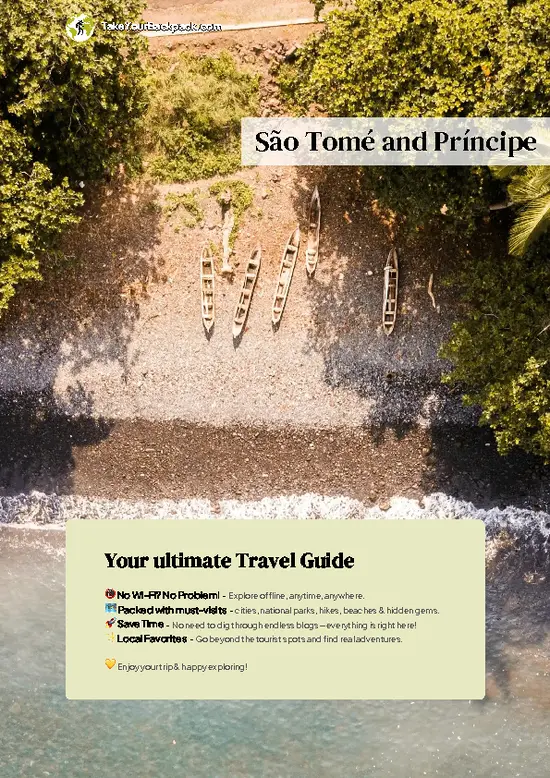
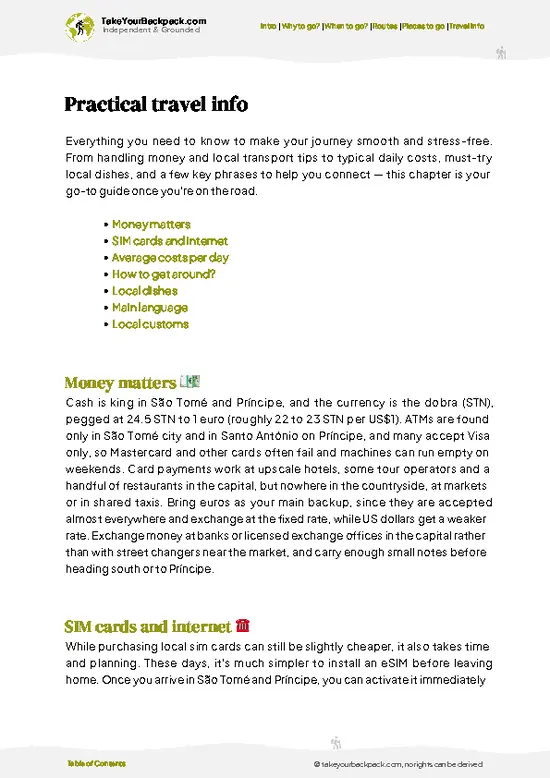
example page 0 from our offline Travel Guide for São Tomé and Príncipe
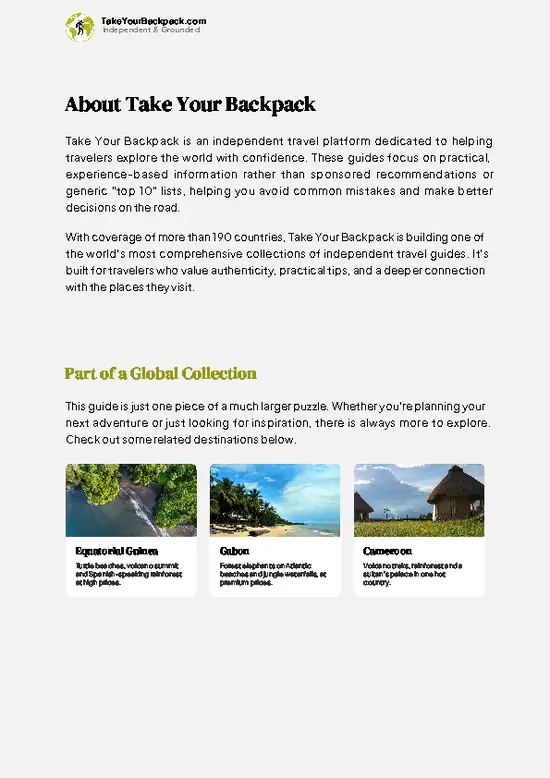
example page 1 from our offline Travel Guide for São Tomé and Príncipe
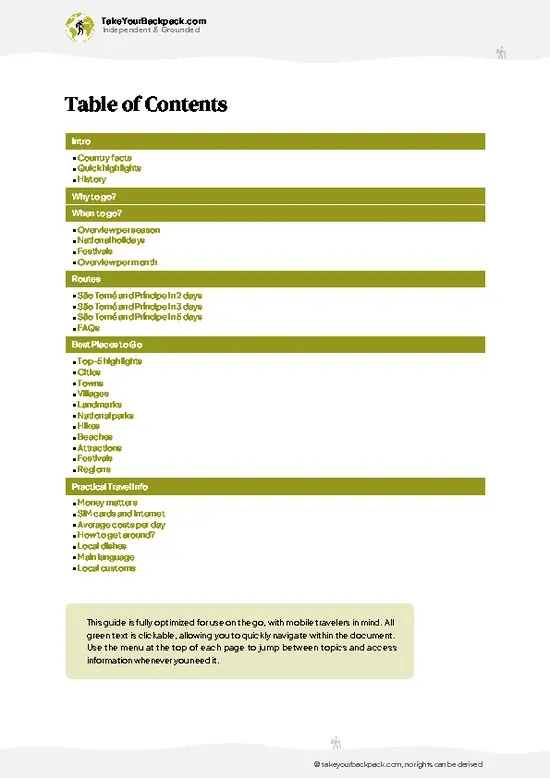
example page 2 from our offline Travel Guide for São Tomé and Príncipe
example page 3 from our offline Travel Guide for São Tomé and Príncipe
example page 4 from our offline Travel Guide for São Tomé and Príncipe
example page 5 from our offline Travel Guide for São Tomé and Príncipe
example page 6 from our offline Travel Guide for São Tomé and Príncipe
example page 7 from our offline Travel Guide for São Tomé and Príncipe
Loading the map 🌍
CLICK TO FILTER
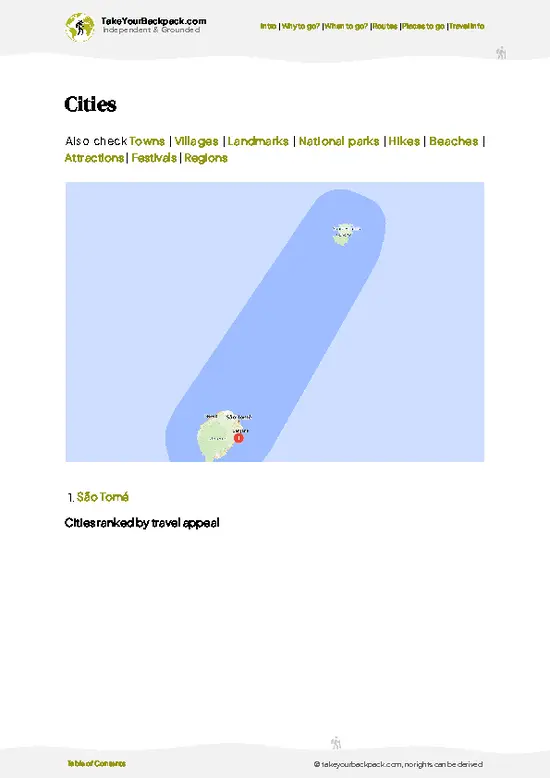
cities
towns
villages
landmarks
national parks
hikes
beaches
attractions
festivals
regions
SHOW COUNTRY’S BESTSHOW ALL

✨ Why go?
Ranked #2 region in São Tomé and Príncipe
Why Príncipe should be on your travel list

Príncipe rewards backpackers because the island is small enough to combine rainforest, plantation history and empty beaches without ever packing up for a long transfer. A single base near Santo António lets you reach most of it on foot, by motorbike or by boat, so the days feel unhurried instead of logistical.
The landscapes change fast. In one afternoon you can leave the phonolite spires of Pico Papagaio behind, walk through shaded cocoa and coffee growth, and end up on sand with no footprints. Nature is protected rather than staged, which means monkeys, parrots and sea turtles are part of the ordinary day, not a ticketed show.
The culture is just as tangible. Old roças (plantation estates) still house families, and Roça Sundy, where a scientific eclipse expedition set up in 1919, shows how … read more 👉
Príncipe rewards backpackers because the island is small enough to combine rainforest, plantation history and empty beaches without ever packing up for a long transfer. A single base near Santo António lets you reach most of it on foot, by motorbike or by boat, so the days feel unhurried instead of logistical.
The landscapes change fast. In one afternoon you can leave the phonolite spires of Pico Papagaio behind, walk through shaded cocoa and coffee growth, and end up on sand with no footprints. Nature is protected rather than staged, which means monkeys, parrots and sea turtles are part of the ordinary day, not a ticketed show.
The culture is just as tangible. Old roças (plantation estates) still house families, and Roça Sundy, where a scientific eclipse expedition set up in 1919, shows how this island sat on the edge of world history. Slow travel here means talking to the people who live in those buildings, eating what the fishermen landed that morning and letting the weather set the plan.

💡 HighlightsMust-see experiences and standout moments

  1. Praia Banana: the island’s postcard beach, a curved bay of pale sand under coconut palms and rocks, reached by a short forest descent. Go early for calm water and an empty shoreline.
  2. Santo António: the tiny capital, with colonial-era buildings, a quiet waterfront and a market where you can see what locals actually eat. It takes an easy half day on foot.
  3. Roça Sundy: a former cocoa estate where a plaque recalls the 1919 eclipse observations that tested Einstein’s theory. Peeling buildings and village life make it feel lived in.
  4. Baía das Agulhas: a rugged stretch of coast whose tall volcanic needles rise straight out of the forest. A boat trip gives the best view.
  5. Pico Papagaio: a steep volcanic plug with a rewarding lookout over the island. It is a demanding, humid climb, so a local guide helps.
… read more 👉
  1. Praia Banana: the island’s postcard beach, a curved bay of pale sand under coconut palms and rocks, reached by a short forest descent. Go early for calm water and an empty shoreline.
  2. Santo António: the tiny capital, with colonial-era buildings, a quiet waterfront and a market where you can see what locals actually eat. It takes an easy half day on foot.
  3. Roça Sundy: a former cocoa estate where a plaque recalls the 1919 eclipse observations that tested Einstein’s theory. Peeling buildings and village life make it feel lived in.
  4. Baía das Agulhas: a rugged stretch of coast whose tall volcanic needles rise straight out of the forest. A boat trip gives the best view.
  5. Pico Papagaio: a steep volcanic plug with a rewarding lookout over the island. It is a demanding, humid climb, so a local guide helps.
  6. Praia Macaco: a wild beach backed by thick forest, where the sound of waves mixes with birdsong. Swim with care when the surf is up.
  7. Praia Grande: a long, quiet stretch of sand where you may see only fishermen. Few visitors make the effort, which is its charm.
  8. Roça Paciência: a lesser-known plantation settlement inland, with old drying terraces and houses still occupied. Walk slowly and greet people first.
  9. Praia Abade: a small, secluded bay locals use for swimming and fishing, with almost no facilities, which keeps it peaceful.
  10. Ilhéu Caroço: a rocky islet offshore where seabirds nest in large numbers. Boats go out when the sea is calm.
Príncipe can be covered in about four to five unhurried days, more if the weather delays the boats.
Spotted a mistake or missing something? Contact us.

🏘️ NeighborhoodsUnderstanding the local layout

Príncipe is a lush paradise where nature and culture intertwine, offering a unique backdrop for your backpacking adventure. Each neighborhood has its own character, making it essential to choose wisely.

São António: This is the island’s capital and the hub of activity. The vibe here is lively, with local markets and street vendors filling the air with the scent of grilled fish and fresh fruit. It’s walkable, so you can easily explore on foot. Accommodations range from budget hostels to mid-range guesthouses, making it suitable for both short and longer stays. Nightlife is low-key, with a few bars where you can sip on local beer while listening to live music.

Praia do Cão: If you’re after tranquility, this area is your go-to. The beach is stunning, with soft sand and clear waters. It’s less … read more 👉
Príncipe is a lush paradise where nature and culture intertwine, offering a unique backdrop for your backpacking adventure. Each neighborhood has its own character, making it essential to choose wisely.

São António: This is the island’s capital and the hub of activity. The vibe here is lively, with local markets and street vendors filling the air with the scent of grilled fish and fresh fruit. It’s walkable, so you can easily explore on foot. Accommodations range from budget hostels to mid-range guesthouses, making it suitable for both short and longer stays. Nightlife is low-key, with a few bars where you can sip on local beer while listening to live music.

Praia do Cão: If you’re after tranquility, this area is your go-to. The beach is stunning, with soft sand and clear waters. It’s less developed, so expect fewer amenities, but that means a more authentic experience. Perfect for longer stays, you can find cozy bungalows that let you soak in the island’s natural beauty. Walkability is limited, but the peace is worth it.

Roça Sundy: This former plantation is a fascinating glimpse into the island’s history. The atmosphere is serene, surrounded by lush greenery and the sounds of nature. It’s a bit off the beaten path, making it ideal for those looking to escape the crowds. While transport options are limited, the experience of staying here is unique. Perfect for longer stays, you can immerse yourself in the local culture and history.

Trindade: A small fishing village with a laid-back vibe. It’s a great spot for budget travelers, with simple accommodations and local eateries serving up fresh seafood. The beach is a short walk away, and the area is quiet, making it perfect for relaxation. Ideal for short stays, you can enjoy the local charm without the hustle of the capital.

⌛️ 5 days5-day itinerary for Príncipe

Pace is set by the island’s thin road network and weather: you walk around town, hop on motorbike taxis for longer stretches, and rest through the sticky midday heat before moving again in the cooler afternoon.
Day 1: Santo António: Spend the first day on foot in the capital. It lets you meet local guides, sort out motorbike rides and learn which beaches are calm. A swim and an early dinner suit the jet-lagged traveler.
Day 2: Praia Banana: Take a motorbike to the trailhead and walk down through the forest. Beaches on this side are far enough apart that grouping them saves time, so continue to Praia Macaco and return in the late afternoon.
Day 3: Roça Sundy: Visit the old plantation and the eclipse plaque, then talk with residents about the estate’s past. Cooler hours suit the inland roads, … read more 👉
Pace is set by the island’s thin road network and weather: you walk around town, hop on motorbike taxis for longer stretches, and rest through the sticky midday heat before moving again in the cooler afternoon.
Day 1: Santo António: Spend the first day on foot in the capital. It lets you meet local guides, sort out motorbike rides and learn which beaches are calm. A swim and an early dinner suit the jet-lagged traveler.
Day 2: Praia Banana: Take a motorbike to the trailhead and walk down through the forest. Beaches on this side are far enough apart that grouping them saves time, so continue to Praia Macaco and return in the late afternoon.
Day 3: Roça Sundy: Visit the old plantation and the eclipse plaque, then talk with residents about the estate’s past. Cooler hours suit the inland roads, and midday is best spent resting in the shade.
Day 4: Praia Grande: Go for the quieter shore, then add Praia Abade if the tide is right. The detour off the main route is Roça Paciência, an inland settlement that adds history without needing extra transfers, because it sits near the road back.
Day 5: Baía das Agulhas: Book a boat early. The cliffs, spires and open water make this the single day that justifies the trip, and the island’s wildness shows best from the sea, so keep it for last in case weather forces a swap.

🌤️ When to go?When to go for the best experience

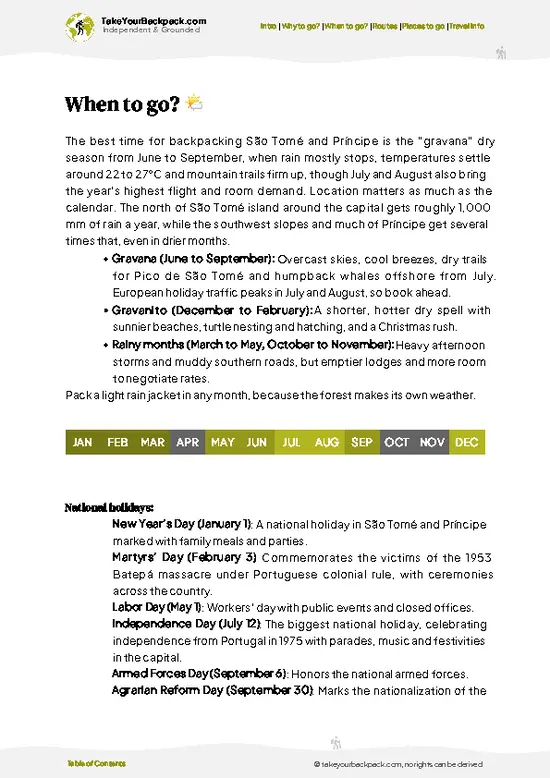
  • Gravana (June to September): The dry season is the easiest window for hiking, with mostly clear mornings and daytime highs of 24 to 28°C (75 to 82°F). Nights are cooler and the sea can run choppy, so boat trips get bumpy. Flights fill and lodging prices climb, especially in July and August.
  • Short Dry Spell (December to January): Rain eases and trails dry out, with 26 to 30°C (79 to 86°F) and calmer seas. Visitors are few, and this stretch suits anyone chasing quiet beaches.
  • Main Rains (October to May): Downpours turn forest paths to red mud and rivers swell, but the island turns intensely green. Temperatures sit at 26 to 31°C (79 to 88°F) with high humidity. Turtle nesting runs roughly from October to April, and daylight stays near 12 hours all year.
Book flights and the few guesthouses early … read more 👉
  • Gravana (June to September): The dry season is the easiest window for hiking, with mostly clear mornings and daytime highs of 24 to 28°C (75 to 82°F). Nights are cooler and the sea can run choppy, so boat trips get bumpy. Flights fill and lodging prices climb, especially in July and August.
  • Short Dry Spell (December to January): Rain eases and trails dry out, with 26 to 30°C (79 to 86°F) and calmer seas. Visitors are few, and this stretch suits anyone chasing quiet beaches.
  • Main Rains (October to May): Downpours turn forest paths to red mud and rivers swell, but the island turns intensely green. Temperatures sit at 26 to 31°C (79 to 88°F) with high humidity. Turtle nesting runs roughly from October to April, and daylight stays near 12 hours all year.
Book flights and the few guesthouses early if you aim for July or August, and pack a light rain shell whatever the month.


source: climatestotravel.comJANJanuary: fair for travelingFEBFebruary: fair for travelingMARMarch: fair for travelingAPRApril: fair for travelingMAYMay: highly recommended for travelingJUNJune: excellent for travelingJULJuly: excellent for travelingAUGAugust: excellent for travelingSEPSeptember: excellent for travelingOCTOctober: highly recommended for travelingNOVNovember: fair for travelingDECDecember: fair for traveling
when-to-go

✈️ The backpacker research shortcutSão Tomé and Príncipe Travel Guide

An offline-friendly backpacking guide with optimized travel routes, ranked highlights, transport advice, and the best areas to stay.
example page 0 from our offline Travel Guide for São Tomé and Príncipe
example page 1 from our offline Travel Guide for São Tomé and Príncipe
example page 2 from our offline Travel Guide for São Tomé and Príncipe
example page 3 from our offline Travel Guide for São Tomé and Príncipe
example page 4 from our offline Travel Guide for São Tomé and Príncipe
example page 5 from our offline Travel Guide for São Tomé and Príncipe
example page 6 from our offline Travel Guide for São Tomé and Príncipe
example page 7 from our offline Travel Guide for São Tomé and Príncipe
The digital guide (151 pages) contains:
✅ 38 highlights, ranked by travel appeal
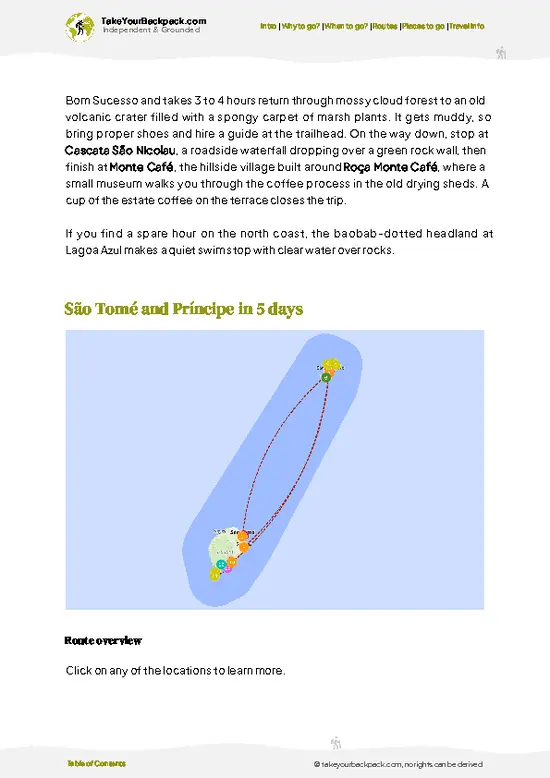
✅ Optimized 2, 3 & 5-day travel routes
✅ Cities, national parks, landmarks, beaches
✅ How to get around
✅ Offline-friendly for travel without Wi-Fi
👉 Click to see all 30+ guide features

📅 Plan smarter in minutes, not weeks
✅ Month by month travel advice
✅ Festivals & national holidays
✅ Budget expectations

🗺️ Go to the right places, skip the overrated ones
✅ Honest pros & cons of destinations
✅ Top hikes, parks & viewpoints
✅ Lesser-known places most travelers miss
✅ Clear “worth it vs skip it” guidance

🛏️ Travel smoothly without rookie mistakes
✅ Best areas to stay
✅ Transport systems explained simply
✅ Common scams & safety advice
✅ SIM cards, money & practical tips

🌍 Understand the country, not just visit it
✅ Culture & traditions
✅ 52 Essential phrases & customs
✅ Festivals worth planning around
✅ Traveler-friendly historical context
✅ Insights that make places more meaningful

📱 Built for real travel conditions
✅ Fully downloadable PDF
✅ Works completely offline
✅ Optimized for phone use
✅ Useful in remote areas & buses
✅ Everything in one place
Stop searching, start planning
Get instant access to your full guide. 30‑day money-back guarantee.
+ Add another guide for just

By proceeding you agree to our terms.
Sent to your inbox immediately after payment • 100% Secure Checkout
Best Backpacking Travel Advisor 2025 tourism awardBest Backpacking
Travel Advisor
2025
What others say about Take Your Backpack Guides:
⭐⭐⭐⭐⭐
Fantastic, amazing amount of information!
⭐⭐⭐⭐⭐
My goodness this is amazing, it's what I've been looking for hats off too you!
⭐⭐⭐⭐⭐
I think this is absolutely BRILLIANT
⭐⭐⭐⭐
Very complete and informative. It's still missing places, but I gotta to commend you
⭐⭐⭐⭐⭐
This is truly amazing, thank you, can't wait to explore it with my kids!
⭐⭐⭐⭐⭐
Awesome resource, thank you!
⭐⭐⭐⭐⭐
This is amazing! Can't wait to explore the ones I haven't seen
⭐⭐⭐⭐
I love this! Well done, great idea.
⭐⭐⭐⭐⭐
Thanks for taking the time to make this gem!
⭐⭐⭐⭐⭐
This might be the best website I've ever seen.
⭐⭐⭐⭐⭐
Congratulations, and thank you so much for your work; it's incredibly valuable.
⭐⭐⭐⭐
In all seriousness I think you did a great job pointing out the important spots
⭐⭐⭐⭐⭐
10/10 very good
⭐⭐⭐⭐⭐
As someone who's only just starting to visit regularly this is awesome, thank you.
⭐⭐⭐⭐
Thank you very much! I'm going to visit my dad, it's going to be very useful!
⭐⭐⭐⭐⭐
This is really cool! We'll be travelling for the first time and this definitely come in handy.
⭐⭐⭐⭐⭐
You are now our minister of culture, congratulations 👨‍💼
⭐⭐⭐⭐⭐
Just wanted to tell you that this is a pearl! Going to follow your recommendations.
⭐⭐⭐⭐⭐
This is so cool. I'll definitely be using the resource for my travels soon.
⭐⭐⭐⭐⭐
This is very impressive! Good work.
⭐⭐⭐⭐⭐
This is an amazing and informative site. Very well done!

🛏️ Where to stay?Where staying makes the most sense

Santo António is the one base that makes sense for most backpackers, and a bed there costs roughly €25 to 60 a night. It is the island’s capital and its only town, so you find the market, small grocery shops, simple restaurants, the airport road and the departure points for tours all within a short walk. Evenings are social in a low-key way. Guesthouses and family-run homestays tend to put solo travelers at shared tables, and it is easy to find others to split a driver or boat.

Safety is excellent. Streets are calm after dark, locals greet you in passing, and the main nuisance is the occasional … read more 👉
Santo António is the one base that makes sense for most backpackers, and a bed there costs roughly €25 to 60 a night. It is the island’s capital and its only town, so you find the market, small grocery shops, simple restaurants, the airport road and the departure points for tours all within a short walk. Evenings are social in a low-key way. Guesthouses and family-run homestays tend to put solo travelers at shared tables, and it is easy to find others to split a driver or boat.

Safety is excellent. Streets are calm after dark, locals greet you in passing, and the main nuisance is the occasional stray dog. Santo António also gives you the most choice for booking guides, which matters because many trails and beaches need local knowledge.

If you want quiet, look to the northern and eastern coasts near Praia Banana and the stretches around Praia Sundy, where a few small stays sit among forest and sand. These are more remote and pricier, but the nights are loud with insects, frogs and surf rather than motorbikes. Small villages such as Porto Real, on the northeast coast, offer a calm taste of local life with a handful of homestays, though facilities are minimal. Sleeping in town and visiting the rest by day is the sensible default.

🚌 Getting aroundTransportation options and practical tips

Príncipe’s only real town, Santo António, is small enough to cross on foot in about 15 minutes, with its pastel colonial facades, chickens in the lanes and the smell of woodsmoke and grilled fish drifting from doorways. Walking stops making sense beyond the edge of town, where beaches, plantations and trailheads sit 5 to 25 kilometers apart along roads that are partly paved and partly red dirt. Most backpackers combine shared taxis, motorbike rentals and the odd boat, and it works, though schedules are loose and you plan around the island’s pace.
  • Walking: Free and the best way to take in Santo António, with its market stalls and seafront. It costs only time and sweat in the humid heat, so it wins inside town and loses everywhere else.
  • Shared taxis and pickup trucks: Fares run about €1 to 4 depending
… read more 👉
Príncipe’s only real town, Santo António, is small enough to cross on foot in about 15 minutes, with its pastel colonial facades, chickens in the lanes and the smell of woodsmoke and grilled fish drifting from doorways. Walking stops making sense beyond the edge of town, where beaches, plantations and trailheads sit 5 to 25 kilometers apart along roads that are partly paved and partly red dirt. Most backpackers combine shared taxis, motorbike rentals and the odd boat, and it works, though schedules are loose and you plan around the island’s pace.
  • Walking: Free and the best way to take in Santo António, with its market stalls and seafront. It costs only time and sweat in the humid heat, so it wins inside town and loses everywhere else.
  • Shared taxis and pickup trucks: Fares run about €1 to 4 depending on distance, and you squeeze in with villagers, sacks of produce and the occasional goat. They are slow and infrequent on remote routes, and comfort is basic, but they are the cheapest way to reach the south and the villages.
  • Motorbike rental: Roughly €15 to 25 a day where available, giving freedom to reach Praia Banana, Praia Macaco or Praia Sundy at your own pace. Mud after rain and potholed stretches demand care, yet for a confident rider this gives the most for the money.
  • Private driver or 4x4 with guide: About €40 to 80 a day, shared between several people. You get air through open windows, a guide who knows the forest tracks and dry seats in the rain, a good splurge for the Pico Papagaio area or the southern plantations.
  • Boat transfers: Local fishermen and tour operators run trips to the Boi islet or to isolated beaches for roughly €30 to 100 per boat, split among passengers. Salt spray, engine fumes and a rolling swell come with it, but some coves have no road at all.
Agree fares in advance, carry small euro notes or dobras for taxis, and set off early, since afternoon showers soften the tracks and make rides slower.

👛 Costs (as of 22 October 2026)What things cost and how to budget

Backpacking in Príncipe, São Tomé and Príncipe, means embracing a slow, intimate pace with costs that reflect its remote island vibe and limited infrastructure.
  • Dorm Accommodation: Expect to pay around €10 to €20 per night for a bed in a basic guesthouse dorm. Options are sparse and often rustic, so the price reflects simple comfort rather than luxury. Booking ahead is wise, especially in peak season.
  • Meals: Local eateries serve fresh seafood and tropical fruits, with meals costing between €3 and €7. Street food and small local restaurants offer the best value, where you can enjoy dishes like grilled fish or rice with beans, often accompanied by the scent of coconut and spices.
  • Local Transport: Getting around Príncipe is mostly by shared taxis or motorbike rentals. Shared taxis cost about
… read more 👉
Backpacking in Príncipe, São Tomé and Príncipe, means embracing a slow, intimate pace with costs that reflect its remote island vibe and limited infrastructure.
  • Dorm Accommodation: Expect to pay around €10 to €20 per night for a bed in a basic guesthouse dorm. Options are sparse and often rustic, so the price reflects simple comfort rather than luxury. Booking ahead is wise, especially in peak season.
  • Meals: Local eateries serve fresh seafood and tropical fruits, with meals costing between €3 and €7. Street food and small local restaurants offer the best value, where you can enjoy dishes like grilled fish or rice with beans, often accompanied by the scent of coconut and spices.
  • Local Transport: Getting around Príncipe is mostly by shared taxis or motorbike rentals. Shared taxis cost about €1 to €2 per trip within the main village areas. Renting a motorbike runs around €10 to €15 per day, giving you freedom but requiring caution on uneven roads.
  • Basic Activities/Entry Fees: Nature reserves and beaches are the main draws. Entry fees to protected areas like the Obo National Park are roughly €5 to €10. Guided tours, which are highly recommended to navigate the island’s dense forest and wildlife, can cost €15 to €30 depending on length and group size.
  • Miscellaneous Expenses: Budget around €2 to €5 for essentials like bottled water, snacks, or occasional internet access. Electricity can be intermittent, so charging devices might require a small fee at guesthouses.

The daily cost to backpack in Príncipe typically falls between €30 and €60. This range covers basic comfort and access to the island’s unique natural beauty without cutting corners on essential experiences or safety. It’s a price that respects the island’s pace and infrastructure while rewarding you with a genuine, off-the-beaten-path adventure.
⚠️ Prices can change and everyone travels differently, so take this as a rough guide. Hope it helps you plan your adventure!

🚌 Day tripsExploring the surroundings

Príncipe is a backpacker’s dream, offering a vibrant base for unforgettable day trips. The island’s lush landscapes and rich culture make every excursion feel like a treasure hunt. Here are some standout adventures that will elevate your experience.

Roça Sundy
A visit to Roça Sundy is like stepping into a living museum of cocoa production. The old plantation buildings whisper stories of the past, and the scent of rich chocolate lingers in the air. It’s about a 30-minute drive from the main town, and you can expect to pay around $10 for transportation. Spend a few hours exploring the grounds, and don’t miss the chance to sample some local chocolate. The best time to go is early morning when the light dances through the trees, illuminating the vibrant greens. A common mistake? Rushing through … read more 👉
Príncipe is a backpacker’s dream, offering a vibrant base for unforgettable day trips. The island’s lush landscapes and rich culture make every excursion feel like a treasure hunt. Here are some standout adventures that will elevate your experience.

Roça Sundy
A visit to Roça Sundy is like stepping into a living museum of cocoa production. The old plantation buildings whisper stories of the past, and the scent of rich chocolate lingers in the air. It’s about a 30-minute drive from the main town, and you can expect to pay around $10 for transportation. Spend a few hours exploring the grounds, and don’t miss the chance to sample some local chocolate. The best time to go is early morning when the light dances through the trees, illuminating the vibrant greens. A common mistake? Rushing through without taking the time to chat with the locals; their stories add depth to the experience.


Praia Banana
This beach is a slice of paradise, with golden sands and clear waters that beckon you to dive in. It’s about a 45-minute hike from the town, but the journey is half the fun, winding through lush vegetation and the occasional coconut palm. Bring a picnic, as the only cost is your transport—around $5 for a shared taxi. The best time to visit is during the dry season, from June to September, when the sun is at its peak. Many first-timers forget to pack enough water; trust me, you’ll want to stay hydrated while soaking up the sun.


Ilhéu das Rolas
A short boat ride from Príncipe, this tiny island is where you can stand on the equator. The trip takes about an hour, costing around $15 for the round trip. Once there, explore the trails that lead to stunning viewpoints and secluded beaches. The best time to go is in the morning to avoid the afternoon heat. A common pitfall is underestimating the sun; wear sunscreen and a hat to keep your energy up for the hike.


São Tomé City
While not on Príncipe, a day trip to São Tomé City is worth the effort. A quick flight or ferry ride gets you there in about an hour. Expect to spend around $50 for transport and meals. The city buzzes with life—visit the bustling markets and sample local dishes like calulu. The best time to visit is during the cooler months, from June to September. Many backpackers miss out on the local cuisine by sticking to familiar foods; don’t make that mistake. Dive into the flavors, and you’ll leave with a full belly and a happy heart.

🍲 FoodLocal Cuisine & Drinks

Seafood is the heart of eating on Príncipe. Look for grilled fish straight off the boats, often swordfish, tuna or barracuda, served with banana, breadfruit (fruta-pão) or cassava, and spooned over with a fiery piri-piri sauce. Calulu, a slow-cooked stew of fish or chicken with okra, palm oil and herbs, fills a room with a deep, earthy smell, and it is worth ordering whenever a family kitchen offers it. Look for cacao too: Príncipe grows some of the world’s most prized beans, and the dark chocolate is bitter and fruity.

For drinks, locals pour palm wine, tangy and slightly fizzy, and aguardente style spirits distilled from sugarcane. Local coffee is strong and short, and you can find fresh coconut water at roadside stalls for under €1.

Backpackers eat mostly at small family-run restaurants … read more 👉
Seafood is the heart of eating on Príncipe. Look for grilled fish straight off the boats, often swordfish, tuna or barracuda, served with banana, breadfruit (fruta-pão) or cassava, and spooned over with a fiery piri-piri sauce. Calulu, a slow-cooked stew of fish or chicken with okra, palm oil and herbs, fills a room with a deep, earthy smell, and it is worth ordering whenever a family kitchen offers it. Look for cacao too: Príncipe grows some of the world’s most prized beans, and the dark chocolate is bitter and fruity.

For drinks, locals pour palm wine, tangy and slightly fizzy, and aguardente style spirits distilled from sugarcane. Local coffee is strong and short, and you can find fresh coconut water at roadside stalls for under €1.

Backpackers eat mostly at small family-run restaurants and snack counters in Santo António, where meals run about €6 to 15, and at the market, where you can pick up fruit like mango, papaya and passion fruit, plus fresh bread. Beach shacks serve simple grilled fish and cold beer.

Service is unhurried, so order, settle in and let the meal arrive in its own time. Call ahead at remote places, since kitchens often cook only what is booked. Greet people with a friendly “bom dia” before ordering.

🛡️ SafetyStaying Safe: What Travelers Should Know

Príncipe is generally a safe haven for backpackers, but a few practical tips can enhance your experience. The town itself feels laid-back, but keep your wits about you in crowded markets or busy streets. Vendors can be persistent, and while haggling is part of the culture, it’s easy to get swept up in the moment. Approach negotiations with a smile and a relaxed demeanor; it’s all part of the dance.

If you’re traveling solo, especially at night, stick to well-lit areas and avoid wandering too far from your accommodations. The streets can be quiet, and while locals are friendly, it’s wise to maintain a low profile.

Scams are rare, but be cautious of overly eager guides offering tours at inflated prices. Always ask for recommendations from fellow travelers or your hotel. Carry your belongings … read more 👉
Príncipe is generally a safe haven for backpackers, but a few practical tips can enhance your experience. The town itself feels laid-back, but keep your wits about you in crowded markets or busy streets. Vendors can be persistent, and while haggling is part of the culture, it’s easy to get swept up in the moment. Approach negotiations with a smile and a relaxed demeanor; it’s all part of the dance.

If you’re traveling solo, especially at night, stick to well-lit areas and avoid wandering too far from your accommodations. The streets can be quiet, and while locals are friendly, it’s wise to maintain a low profile.

Scams are rare, but be cautious of overly eager guides offering tours at inflated prices. Always ask for recommendations from fellow travelers or your hotel. Carry your belongings close, and use a money belt if you’re out and about. This way, you can soak in the island’s beauty without unnecessary distractions.

FAQTraveler FAQ

Three to five days covers Príncipe well. That gives you a day in Santo António, a day or two hiking toward Pico Papagaio or the southern forest, and a day at beaches such as Praia Banana and Praia Macaco. Add another day or two if you want a boat trip to Boi islet or time at a cacao plantation.
Príncipe works without a car through a mix of walking, shared taxis and rented motorbikes. Santo António is walkable in about 15 minutes, while shared pickups to villages cost around €1 to 4. For beaches and trails, hire a driver or guide for roughly €40 to 80 a day, or rent a motorbike for about €15 to 25.
Príncipe is known for its UNESCO Biosphere Reserve status, covering the whole island, and for its dense rainforest, volcanic peaks and empty beaches. Birdwatchers come for endemic species such as the Príncipe sunbird, and sea turtles nest on its beaches from about October to April. The island also produces some of the world’s finest cacao, and tours of former plantations show how it is grown and processed.
⚠️ Things can change over time, so always validate details locally before you go.

Where to go next

Príncipe isn’t the only highlight in São Tomé and Príncipe. Explore all what São Tomé and Príncipe has to offer.
Country photo of São Tomé and Príncipe

We 💚 feedbackIs it worth it?

Príncipe trips go wrong when travelers cram in too many beaches by motorbike and arrive exhausted and sunburned. Pick one or two a day, ask your guesthouse about tides and sea conditions, and book the boat trip first so weather can shift it. I would carry cash in euros, insect repellent and a dry bag.

✍️ Help improve this page!
The information on this page is based on in-depth research, insights shared by experienced travelers, and feedback from the local travel community in São Tomé and Príncipe. While every effort is made to keep the information accurate and current, conditions can change — so if you spot anything incorrect or outdated, please get in touch.


🙋‍♂️ Give feedback

👋 Meet the founderWho’s Behind Take Your Backpack?

Johan, backpacker and founder of TakeYourBackpackHi, I’m Johan (Netherlands 🇳🇱), the creator of TakeYourBackpack. Over the past 3 decades, I’ve backpacked through 90+ countries across six continents, gaining extensive experience with independent travel, long-term trips, and overland routes.

This site is built on a combination of firsthand travel experience and carefully curated insights from other backpackers. Many guides are based on places I’ve personally visited, while others bring together tips, observations, and practical advice shared by trusted travelers I’ve met along the way.

The goal is to provide realistic, experience-driven guidance — not generic itineraries — so you can explore destinations with better context, clearer expectations, and more confidence.