×

Saudi Arabia🇸🇦 | townsWajhRed Sea coastline, old town district, maritime history | things to do and best time to go

Explore Al WajhExplore Muwaileh

Backpacking in Wajh
By Johan Kruseman 🇳🇱 | Updated June 13, 2026

Everyone talks about Wajh’s Red Sea coastline as if the water alone is the reason to come, but the real payoff is how the town feels when you step off the bus: the air is salted, the pace is slow, and the old coral-stone houses seem to hold the afternoon heat like secrets. Wajh sits halfway up Saudi Arabia’s western edge, a little north of the Red Sea’s midpoint, far from the showy sprawl of Jeddah or the tourist polish of AlUla. For backpackers, Wajh is less a destination and more a hinge—perfect for catching your breath between the ancient drama of Mada’in Saleh and the reefs of the Tabuk coast. The old town is walkable, but the real action is outside: empty beaches, faded Ottoman facades, and the kind of fish market where you haggle with your hands. Transport is basic—buses, shared taxis, and not much English—but that’s part of the charm. You won’t find hostels or a party scene, but you will find cheap eats, safe streets, and a sense of being somewhere that hasn’t been staged for Instagram. Compared to Yanbu or Umluj, Wajh is quieter, less polished, and more honest—a place for travelers who want the Red Sea without the crowds or the hype.

Discover everything you want to know in the 📖 Saudi Arabia Travel Guide.
Safety warning

The current risk level for Saudi Arabia is high. Check the advice before going.


Get your Saudi Arabia guide
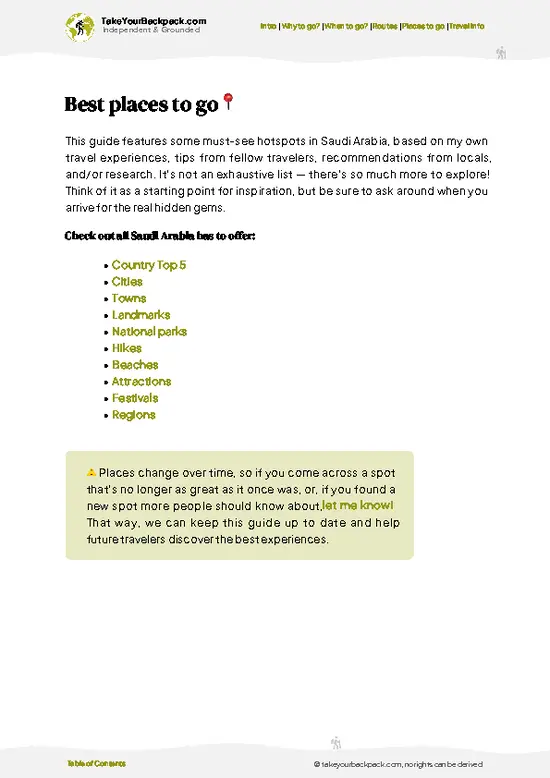
101 ranked highlights, routes & tips, works offline (373 pages)
Loading the map 🌍
CLICK TO FILTER
cities
towns
landmarks
national parks
hikes
beaches
attractions
festivals
regions
SHOW COUNTRY’S BESTSHOW ALL

✨ Why go?
Ranked #99 town in Saudi Arabia
What makes it a must-see town

Wajh draws backpackers primarily because it’s a practical gateway to the Red Sea’s quieter corners and rugged coastal hikes. The town itself isn’t about flashy attractions; it’s about setting a rhythm for what’s next. You’ll find small, no-frills guesthouses where the air carries the scent of salt and grilled fish, perfect for those who want to recharge without the noise of bigger cities. Streets are easy to navigate on foot, with local markets offering fresh dates and coffee that invite slow mornings. Most travelers stay briefly—usually a night or two—using Wajh as a launchpad for nearby snorkeling spots or the challenging trails that trace the coastline’s cliffs. The vibe is low-key and welcoming, with enough locals and fellow backpackers to share tips but not so many that it feels crowded … read more 👉
Wajh draws backpackers primarily because it’s a practical gateway to the Red Sea’s quieter corners and rugged coastal hikes. The town itself isn’t about flashy attractions; it’s about setting a rhythm for what’s next. You’ll find small, no-frills guesthouses where the air carries the scent of salt and grilled fish, perfect for those who want to recharge without the noise of bigger cities. Streets are easy to navigate on foot, with local markets offering fresh dates and coffee that invite slow mornings. Most travelers stay briefly—usually a night or two—using Wajh as a launchpad for nearby snorkeling spots or the challenging trails that trace the coastline’s cliffs. The vibe is low-key and welcoming, with enough locals and fellow backpackers to share tips but not so many that it feels crowded or touristy. If you’re a solo traveler or part of a small group who values authentic encounters over nightlife, Wajh fits like a well-worn hiking boot: reliable, comfortable, and quietly rewarding. It’s not a place to linger for weeks, but it’s a smart pause that smooths the transition between desert roads and sea adventures, making your journey feel intentional rather than rushed.
Want to include Wajh in your Saudi Arabia route?
Create a personalized Saudi Arabia itinerary that includes Wajh and the places that fit your trip — based on your travel style, budget, and available time. Get your route in seconds.

Generate my trip

💡 HighlightsKey sights and experiences for travelers

Al-Balad (Old Town Wajh)
Wajh’s old quarter isn’t a museum piece—it’s a living, breathing maze of coral-stone houses and crumbling Ottoman-era facades, where the Red Sea breeze carries the scent of salt and cardamom. Walk at dusk, when the light turns the sandstone honey-gold and the call to prayer echoes through alleys that haven’t changed much in a century. The real magic is in the details: carved wooden doors, faded turquoise shutters, and the quiet pride of locals who might invite you for tea if you linger. Free to wander; allow 1-2 hours. Early evening is best, when the heat fades and the town’s pulse slows to something timeless.


Al-Wajh Corniche
This isn’t your average seaside promenade. The Corniche is where Wajh’s families gather at sunset, kids darting between palm trees and fishermen … read more 👉
Al-Balad (Old Town Wajh)
Wajh’s old quarter isn’t a museum piece—it’s a living, breathing maze of coral-stone houses and crumbling Ottoman-era facades, where the Red Sea breeze carries the scent of salt and cardamom. Walk at dusk, when the light turns the sandstone honey-gold and the call to prayer echoes through alleys that haven’t changed much in a century. The real magic is in the details: carved wooden doors, faded turquoise shutters, and the quiet pride of locals who might invite you for tea if you linger. Free to wander; allow 1-2 hours. Early evening is best, when the heat fades and the town’s pulse slows to something timeless.


Al-Wajh Corniche
This isn’t your average seaside promenade. The Corniche is where Wajh’s families gather at sunset, kids darting between palm trees and fishermen hauling in the day’s catch. The Red Sea here is impossibly blue, and the air smells of brine and grilled fish from the food stalls. Bring a picnic or grab a plate of fresh samak mashwi (grilled fish) from a vendor. The vibe is relaxed but deeply local—no tourist gloss, just real life unfolding by the water. Free to access; food from 10-30 SAR. Best visited late afternoon through evening. Give yourself an hour, but you’ll want to linger.


Al-Wajh Castle (Qasr Al-Wajh)
Perched above the port, this 19th-century Ottoman fortress is all thick walls and weathered battlements, with a view that sweeps from the old harbor to the endless desert beyond. The castle’s history is layered: once a defensive outpost, later a government seat, now a silent witness to the town’s shifting fortunes. Climb the ramparts for a salty breeze and a sense of how strategic this spot once was. Entry is usually free, though hours can be irregular—mid-morning is best for light and solitude. Plan for 30-45 minutes.


Wajh Fish Market
If you want to feel the town’s heartbeat, come early—before 8 a.m.—when the market is loud with bargaining and the floor is slick with seawater. This is where the Red Sea’s bounty arrives: glistening grouper, spiny lobster, and the occasional oddity pulled from the deep. Even if you’re not buying, the spectacle is worth it. The market is gritty, noisy, and utterly authentic. Free to enter; bring small bills if you want to sample or buy. Allow 30 minutes, and wear shoes you don’t mind getting wet.


Al-Wajh Mosque (Masjid Al-Wajh)
This modest mosque, with its squat minaret and simple whitewashed walls, is a quiet anchor in the town center. It’s not grand, but it’s old—dating back to the Ottoman period—and stepping inside (outside prayer times, respectfully) offers a cool, tranquil pause from the sun. The scent of incense lingers, and the hush is a welcome contrast to the bustle outside. Free; 10-15 minutes is enough, but the peace might tempt you to stay longer.


Wajh is compact, but its spirit is outsized. If you’re craving more, the ancient Nabatean ruins of Al-Bad’, the surreal rock formations of Al Disah Valley, and the Red Sea’s coral reefs are all within striking distance for day trips—each one a different chapter in the story of this overlooked corner of Saudi Arabia.
Spotted a mistake or missing something? Contact us.
🏘️ NeighborhoodsUnderstanding the local layout

Wajh is a coastal town where the Red Sea’s salty breeze mixes with the scent of fresh fish markets and the hum of daily life. Knowing where to drop your pack can make your stay feel less like a scramble and more like a smooth dive into local rhythm.

Old Town (Al Balad)
This is where Wajh’s soul hangs out—narrow alleys, traditional stone houses, and the call of fishermen mending nets. It’s a sensory overload in the best way: the sun slants through wooden shutters, and the air carries a mix of sea salt and spices. It’s quiet after sunset, perfect if you want to soak in local culture without the buzz of nightlife. Walkability is excellent; everything you need is within a 10-minute stroll. Budget travelers will appreciate the affordable guesthouses here. Ideal for short stays focused on authentic … read more 👉
Wajh is a coastal town where the Red Sea’s salty breeze mixes with the scent of fresh fish markets and the hum of daily life. Knowing where to drop your pack can make your stay feel less like a scramble and more like a smooth dive into local rhythm.

Old Town (Al Balad)
This is where Wajh’s soul hangs out—narrow alleys, traditional stone houses, and the call of fishermen mending nets. It’s a sensory overload in the best way: the sun slants through wooden shutters, and the air carries a mix of sea salt and spices. It’s quiet after sunset, perfect if you want to soak in local culture without the buzz of nightlife. Walkability is excellent; everything you need is within a 10-minute stroll. Budget travelers will appreciate the affordable guesthouses here. Ideal for short stays focused on authentic immersion.

New Wajh District
Modern buildings, wider streets, and a more structured feel define this area. It’s where you’ll find supermarkets, cafes, and some of the few spots with Wi-Fi strong enough to upload your photos without a hitch. The vibe is low-key but livelier than Old Town, with a handful of casual eateries open late. It’s less atmospheric but more convenient for longer stays or if you want a base with reliable amenities. Public transport options start here, making it easier to plan day trips.

Seaside Promenade
Stretching along the coast, this area is a mix of open-air markets and seafood shacks. The breeze here is constant, cutting through the heat with a refreshing edge. It’s the spot for sunset views and casual evening strolls, but accommodation options are limited and pricier. Not the best for long stays unless you’re chasing that sea breeze and don’t mind paying a premium. Walkability is good, but it’s quieter during the day, picking up only as locals come out to eat.

Each area offers a distinct slice of Wajh life. Choose based on whether you want to dive deep into tradition, balance comfort with local flavor, or savor the sea air with a side of sunset.

⌛️ 1 day1-day itinerary for Wajh

Wajh is a coastal town on the Red Sea that feels like a quiet secret, where the air carries a salty tang and the horizon stretches wide and blue. It’s not a flashy tourist hub, but that’s exactly why it’s worth your time. The town’s charm lies in its laid-back pace, the gentle rhythm of fishing boats bobbing in the harbor, and the way the sun hits the coral reefs just right in the morning.

Start your day early by wandering through the old quarter near the waterfront. The narrow streets here are lined with low, whitewashed buildings that catch the morning light, casting soft shadows and filling the air with the scent of fresh bread from local bakeries. Grab a cup of strong Saudi coffee and a warm khubz from a street vendor. Watching fishermen unload their catch at the port is a quiet spectacle—raw, … read more 👉
Wajh is a coastal town on the Red Sea that feels like a quiet secret, where the air carries a salty tang and the horizon stretches wide and blue. It’s not a flashy tourist hub, but that’s exactly why it’s worth your time. The town’s charm lies in its laid-back pace, the gentle rhythm of fishing boats bobbing in the harbor, and the way the sun hits the coral reefs just right in the morning.

Start your day early by wandering through the old quarter near the waterfront. The narrow streets here are lined with low, whitewashed buildings that catch the morning light, casting soft shadows and filling the air with the scent of fresh bread from local bakeries. Grab a cup of strong Saudi coffee and a warm khubz from a street vendor. Watching fishermen unload their catch at the port is a quiet spectacle—raw, unfiltered life that sets the tone for the day.

By midday, head toward the less-visited Al-Mahjar neighborhood, a short drive inland. This area offers a glimpse into traditional Najdi architecture, with its mud-brick houses and wooden lattice windows. It’s a peaceful spot to explore on foot, away from the coastal breeze, where you can feel the weight of history in the thick walls and the cool shade of narrow alleys. Stop at a small café here for a simple lunch—think grilled fish or spiced rice—where the locals gather and stories flow as easily as the tea.

As the afternoon fades, make your way back to the coast for a walk along the beach near the Wajh Corniche. The light softens, turning the sea a deeper shade of turquoise, and the breeze carries the faint aroma of frankincense from nearby stalls. This stretch is less crowded than other Red Sea resorts, giving you space to breathe and watch the sun dip low. Finish your day with a visit to a modest seafood restaurant where the catch of the day is grilled over open flames, served with fresh herbs and a squeeze of lemon. The flavors are simple but vivid, a perfect end to a day spent soaking in the authentic pulse of Wajh.
Turn your Wajh visit into an Saudi Arabia adventure
Build a complete Saudi Arabia route with Wajh, hidden gems, must-see destinations, and realistic travel times included.

Generate my trip

🌤️ When to go?Choosing the right time of year


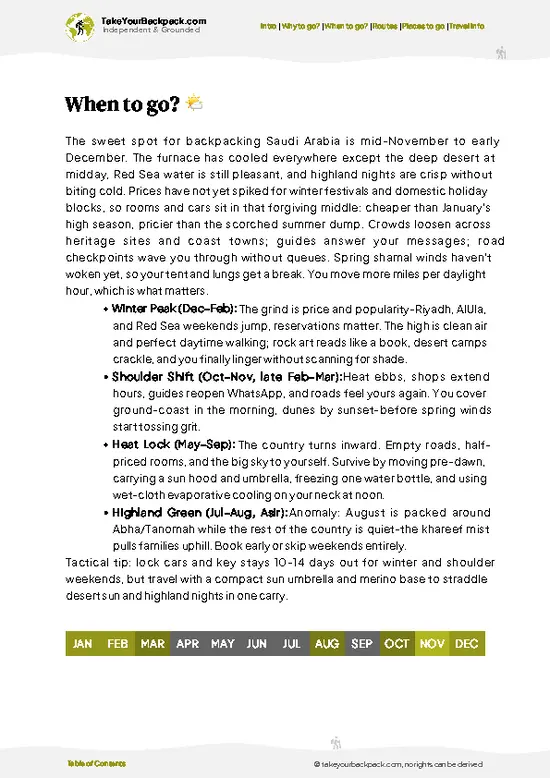
  • Weather: Wajh’s coastal desert climate means scorching summers and mild winters. From June to August, temperatures soar above 40°C (104°F), making daytime trekking a sweat-drenched slog. The best window is between November and March when highs hover around a comfortable 25°C (77°F), and nights dip to a refreshing 15°C (59°F).

  • Temperature: The sharp contrast between day and night in winter months means layering is key. Early mornings and evenings can feel crisp, especially December and January, so pack a light jacket. Avoid the shoulder months of April and October when temperatures can unpredictably spike into the mid-30s°C (mid-90s°F), catching you off guard.

  • Daylight Hours: Between November and February, daylight stretches roughly from 6:30 AM to 5:30 PM. This shorter window means
read more 👉

  • Weather: Wajh’s coastal desert climate means scorching summers and mild winters. From June to August, temperatures soar above 40°C (104°F), making daytime trekking a sweat-drenched slog. The best window is between November and March when highs hover around a comfortable 25°C (77°F), and nights dip to a refreshing 15°C (59°F).

  • Temperature: The sharp contrast between day and night in winter months means layering is key. Early mornings and evenings can feel crisp, especially December and January, so pack a light jacket. Avoid the shoulder months of April and October when temperatures can unpredictably spike into the mid-30s°C (mid-90s°F), catching you off guard.

  • Daylight Hours: Between November and February, daylight stretches roughly from 6:30 AM to 5:30 PM. This shorter window means planning hikes early to maximize light and avoid the chill settling in after sunset.

  • Crowds: Wajh remains off the beaten path year-round, but winter months attract local tourists escaping Riyadh’s chill. Expect a livelier atmosphere in December and January, especially around weekends, which can add a social buzz without overwhelming the town’s laid-back vibe.

  • Seasonal Activities: Winter brings mild sea breezes perfect for exploring Wajh’s coral reefs and fishing spots. Spring (March) offers blooming desert flora, but the rising heat can sap energy quickly. Summer activities are limited to early mornings or late evenings due to intense heat.

  • Price Fluctuations: Accommodation and transport costs peak slightly in the cooler months (December to February) as demand rises. Booking ahead during this period secures better rates and availability, while the off-season (May to September) offers bargains but at the cost of comfort.


Pro-tip: Aim for late November to early March to balance cool, breathable air with longer daylight, and book your stay early to dodge the subtle winter rush without sweating through your gear.


source: climatestotravel.comJANJanuary: excellent for travelingFEBFebruary: excellent for travelingMARMarch: highly recommended for travelingAPRApril: fair for travelingMAYMay: below average for travelingJUNJune: below average for travelingJULJuly: below average for travelingAUGAugust: below average for travelingSEPSeptember: fair for travelingOCTOctober: fair for travelingNOVNovember: highly recommended for travelingDECDecember: excellent for traveling
when-to-go

✈️ The backpacker research shortcutSaudi Arabia Travel Guide

An offline-friendly backpacking guide with optimized travel routes, ranked highlights, transport advice, and the best areas to stay.
example page 0 from our offline Travel Guide for Saudi Arabia
example page 1 from our offline Travel Guide for Saudi Arabia
example page 2 from our offline Travel Guide for Saudi Arabia
example page 3 from our offline Travel Guide for Saudi Arabia
example page 4 from our offline Travel Guide for Saudi Arabia
example page 5 from our offline Travel Guide for Saudi Arabia
example page 6 from our offline Travel Guide for Saudi Arabia
example page 7 from our offline Travel Guide for Saudi Arabia
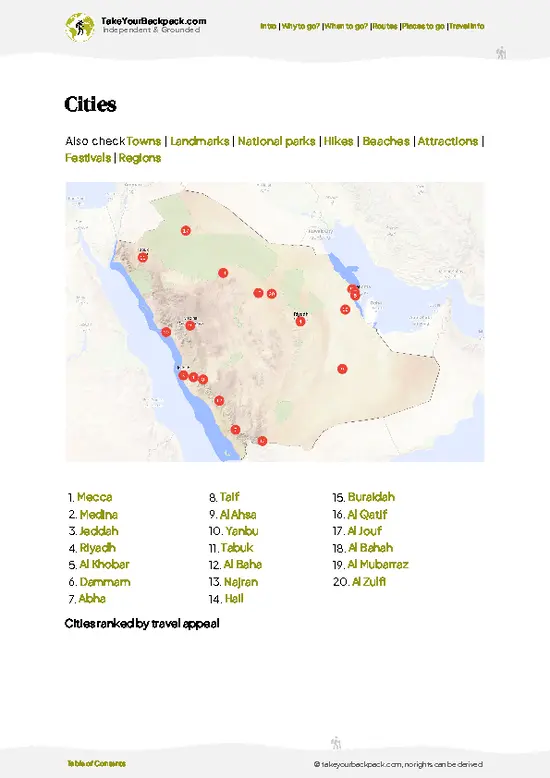
The digital guide (373 pages) contains:
101 highlights, ranked by travel appeal
Optimized 5, 10 & 15-day travel routes
Cities, national parks, landmarks, beaches
How to get around
Offline-friendly for travel without Wi-Fi
👉 Click to see all 30+ guide features

📅 Plan smarter in minutes, not weeks
Month by month travel advice
Festivals & national holidays
Budget expectations

🗺️ Go to the right places, skip the overrated ones
Honest pros & cons of destinations
Top hikes, parks & viewpoints
Lesser-known places most travelers miss
Clear “worth it vs skip it” guidance

🛏️ Travel smoothly without rookie mistakes
Best areas to stay
Transport systems explained simply
Common scams & safety advice
SIM cards, money & practical tips

🌍 Understand the country, not just visit it
Culture & traditions
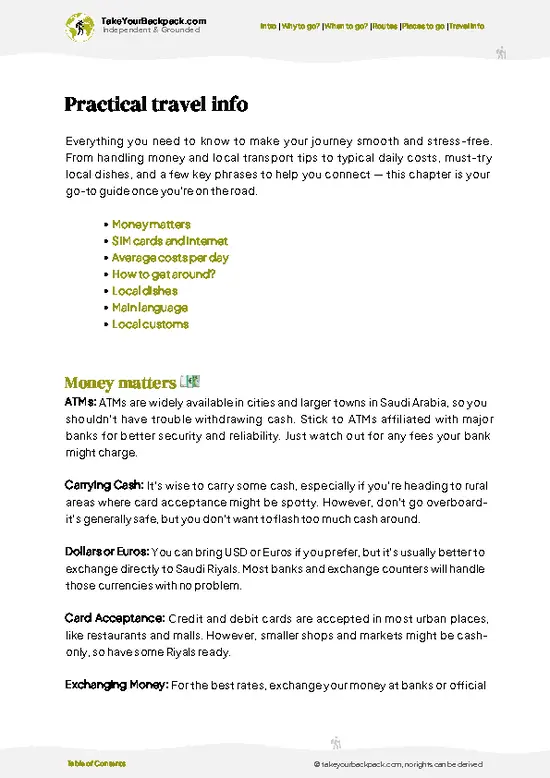
52 Essential phrases & customs
Festivals worth planning around
Traveler-friendly historical context
Insights that make places more meaningful

📱 Built for real travel conditions
Fully downloadable PDF
Works completely offline
Optimized for phone use
Useful in remote areas & buses
Everything in one place
Save weeks of stressful planning
Get instant access to your full guide. 30‑day money-back guarantee.


By proceeding you agree to our terms.
Sent to your inbox immediately after payment • 100% Secure Checkout
Best Backpacking Travel Advisor 2025 tourism awardBest Backpacking
Travel Advisor
2025
What others say about Take Your Backpack Guides:
⭐⭐⭐⭐⭐
Fantastic, amazing amount of information!
⭐⭐⭐⭐⭐
My goodness this is amazing, it's what I've been looking for hats off too you!
⭐⭐⭐⭐⭐
I think this is absolutely BRILLIANT
⭐⭐⭐⭐
Very complete and informative. It's still missing places, but I gotta to commend you
⭐⭐⭐⭐⭐
This is truly amazing, thank you, can't wait to explore it with my kids!
⭐⭐⭐⭐⭐
Awesome resource, thank you!
⭐⭐⭐⭐⭐
This is amazing! Can't wait to explore the ones I haven't seen
⭐⭐⭐⭐
I love this! Well done, great idea.
⭐⭐⭐⭐⭐
Thanks for taking the time to make this gem!
⭐⭐⭐⭐⭐
This might be the best website I've ever seen.
⭐⭐⭐⭐⭐
Congratulations, and thank you so much for your work; it's incredibly valuable.
⭐⭐⭐⭐
In all seriousness I think you did a great job pointing out the important spots
⭐⭐⭐⭐⭐
10/10 very good
⭐⭐⭐⭐⭐
As someone who's only just starting to visit regularly this is awesome, thank you.
⭐⭐⭐⭐
Thank you very much! I'm going to visit my dad, it's going to be very useful!
⭐⭐⭐⭐⭐
This is really cool! We'll be travelling for the first time and this definitely come in handy.
⭐⭐⭐⭐⭐
You are now our minister of culture, congratulations 👨‍💼
⭐⭐⭐⭐⭐
Just wanted to tell you that this is a pearl! Going to follow your recommendations.
⭐⭐⭐⭐⭐
This is so cool. I'll definitely be using the resource for my travels soon.
⭐⭐⭐⭐⭐
This is very impressive! Good work.
⭐⭐⭐⭐⭐
This is an amazing and informative site. Very well done!

🛏️ Where to stay?Best areas and accommodation options

Wajh’s charm for backpackers lies in its coastal simplicity and the quiet pulse of everyday life. The best place to drop your pack is the area around the town center, near the Corniche. This stretch is where the sea breeze carries the scent of salt and grilled fish, and locals gather in the evenings. It’s safe, well-lit, and offers a handful of budget guesthouses and small hostels that cater to solo travelers and those who want to connect without the fuss of high-end resorts.

Why this area? Because it’s the social heart of Wajh. You’ll find street vendors selling fresh dates and coffee, and the … read more 👉
Wajh’s charm for backpackers lies in its coastal simplicity and the quiet pulse of everyday life. The best place to drop your pack is the area around the town center, near the Corniche. This stretch is where the sea breeze carries the scent of salt and grilled fish, and locals gather in the evenings. It’s safe, well-lit, and offers a handful of budget guesthouses and small hostels that cater to solo travelers and those who want to connect without the fuss of high-end resorts.

Why this area? Because it’s the social heart of Wajh. You’ll find street vendors selling fresh dates and coffee, and the rhythm of daily prayers punctuates the calm. Staying here means you’re a short walk from the waterfront, where the light shifts from harsh midday sun to a soft, golden glow that makes the Red Sea shimmer like liquid glass. It’s a natural meeting point for travelers and locals alike, so you get a genuine feel for the town’s pace without the isolation of more residential or industrial zones.

Avoid the outskirts where accommodation options are sparse and the vibe is quieter, almost deserted after sunset. Those areas lack the social buzz and easy access to eateries and transport. In contrast, the town center’s mix of modest hostels and lively street life gives you a smoother, more immersive experience—perfect for backpackers who want to feel the pulse of Wajh without breaking the bank or losing their sense of adventure.

🚌 Getting aroundGetting around like a local

Wajh moves at the pace of the Red Sea breeze—steady, deliberate, but never rushed. The town’s rhythm isn’t dictated by strict timetables or flashing neon signs; it’s a dance between the sun’s arc and the ebb of daily life. Mornings start with the scent of fresh bread and the distant call to prayer, while afternoons stretch lazily under the sharp, dry light. Streets hum with the low murmur of locals weaving between shops and cafes, where time feels elastic—long enough to savor a cardamom coffee, short enough to keep the day’s errands flowing. This isn’t a place where you’ll find a clock dictating your every move. Instead, Wajh rewards those who read its subtle cues: the opening of a market stall, the arrival of a shared taxi, the shift in shadows along the waterfront. Understanding this flow … read more 👉
Wajh moves at the pace of the Red Sea breeze—steady, deliberate, but never rushed. The town’s rhythm isn’t dictated by strict timetables or flashing neon signs; it’s a dance between the sun’s arc and the ebb of daily life. Mornings start with the scent of fresh bread and the distant call to prayer, while afternoons stretch lazily under the sharp, dry light. Streets hum with the low murmur of locals weaving between shops and cafes, where time feels elastic—long enough to savor a cardamom coffee, short enough to keep the day’s errands flowing. This isn’t a place where you’ll find a clock dictating your every move. Instead, Wajh rewards those who read its subtle cues: the opening of a market stall, the arrival of a shared taxi, the shift in shadows along the waterfront. Understanding this flow is your first step to moving like a local, turning what might seem like chaos into a smooth, intuitive journey.


  • Walking: The heart of Wajh is compact and best explored on foot. Streets are narrow and shaded by low buildings, making walking not just practical but a sensory experience—feel the warm stone underfoot, catch the scent of spices from open-air markets, and hear the chatter spill from small cafes. Walking is free, naturally, and the best way to absorb the town’s texture at your own pace.


  • Shared Taxis (Service Taxis): These are the lifeblood of local transit, running on flexible routes rather than fixed schedules. They gather passengers until full, then head off, so timing is unpredictable but frequent—expect waits of 10 to 20 minutes during the day. Fares are low, usually under 10 SAR for short hops, and the ride offers a chance to eavesdrop on local conversations and watch the town’s pulse from the back seat.


  • Local Buses: Buses connect Wajh to nearby towns and the regional hub of Tabuk. They run mostly in the early morning and late afternoon, aligning with work shifts and market hours. Tickets are affordable, around 15-30 SAR depending on distance, but buses can be crowded and less comfortable than taxis. Still, they’re a budget-friendly way to cover longer distances and experience daily life beyond Wajh’s center.


  • Rental Motorbikes: For those comfortable on two wheels, renting a motorbike offers speed and flexibility. Rentals cost about 50-70 SAR per day, and you can explore coastal roads or nearby villages at your own pace. The dry air and open road bring a different kind of freedom, but be prepared for dust and the occasional gust of wind carrying the salty tang of the sea.


  • Bicycle Rentals: A quieter, slower alternative to motorbikes, bicycles cost roughly 20-40 SAR per day. The flat terrain and light traffic make cycling a pleasant way to cover more ground than walking without losing touch with the environment. Early mornings and late afternoons are best to avoid the midday heat, when the sun bakes the asphalt and the air shimmers with heat.

👛 Costs (as of 19 June 2026)Travel costs and budget guide for Wajh

Backpacking in Wajh, Saudi Arabia, involves modest daily expenses that suit independent travelers well.
  • Dorm accommodation: Budget hostels or guesthouses typically cost between USD10 to 20 per night, offering basic but comfortable lodging.
  • Meals: Local eateries and street food options range from USD5 to 10 per day, with traditional dishes providing good value and filling portions.
  • Local transport: Public transport and shared taxis usually cost around USD2 to 5 daily, enough to get around town and nearby areas.
  • Basic activities/entry fees: Minimal or no fees for most local attractions; budget USD3 to 7 for occasional cultural or natural site entries.
  • Miscellaneous expenses: This includes water, snacks, and small purchases, averaging USD5 to 10 daily.
Overall, you can expect a total daily budget … read more 👉
Backpacking in Wajh, Saudi Arabia, involves modest daily expenses that suit independent travelers well.
  • Dorm accommodation: Budget hostels or guesthouses typically cost between USD10 to 20 per night, offering basic but comfortable lodging.
  • Meals: Local eateries and street food options range from USD5 to 10 per day, with traditional dishes providing good value and filling portions.
  • Local transport: Public transport and shared taxis usually cost around USD2 to 5 daily, enough to get around town and nearby areas.
  • Basic activities/entry fees: Minimal or no fees for most local attractions; budget USD3 to 7 for occasional cultural or natural site entries.
  • Miscellaneous expenses: This includes water, snacks, and small purchases, averaging USD5 to 10 daily.
Overall, you can expect a total daily budget of approximately USD30 to 60, balancing comfort and economy while exploring Wajh.


source: numbeo.com
⚠️ Prices can change and everyone travels differently, so take this as a rough guide. Hope it helps you plan your adventure!

🚌 Day tripsExploring the surroundings

Wajh is a surprisingly practical hub for exploring the Red Sea coast of northwestern Saudi Arabia. Its compact size means you can easily return each evening to a quiet, affordable base with local eateries and a laid-back vibe. The town’s location on the coast opens up several day trips that reward you with raw desert landscapes, coral reefs, and historic sites without the hassle of overnight logistics.

Coral Reefs Snorkeling at Al Lith

A 90-minute drive south from Wajh, Al Lith offers some of the most accessible coral reefs along the Red Sea. The water here is clear and warm, perfect for snorkeling without needing a guide if you’re confident. Renting gear locally costs around 50 SAR, and a shared taxi will set you back about 70 SAR each way. The reefs are best visited between October and … read more 👉
Wajh is a surprisingly practical hub for exploring the Red Sea coast of northwestern Saudi Arabia. Its compact size means you can easily return each evening to a quiet, affordable base with local eateries and a laid-back vibe. The town’s location on the coast opens up several day trips that reward you with raw desert landscapes, coral reefs, and historic sites without the hassle of overnight logistics.

Coral Reefs Snorkeling at Al Lith

A 90-minute drive south from Wajh, Al Lith offers some of the most accessible coral reefs along the Red Sea. The water here is clear and warm, perfect for snorkeling without needing a guide if you’re confident. Renting gear locally costs around 50 SAR, and a shared taxi will set you back about 70 SAR each way. The reefs are best visited between October and April when the sea is calm and visibility peaks. Many first-timers underestimate the sun’s strength here—bring a rash guard and plenty of water to avoid a midday burn. The payoff is swimming alongside vibrant fish and coral formations that feel miles away from the usual tourist crowds.

Historic Fort of Al-Bad’

Roughly an hour’s drive inland, the Al-Bad’ Fort stands as a testament to the region’s tribal history. The fort’s weathered stone walls and narrow watchtowers offer a tactile connection to centuries of desert life. Entry is free, and local drivers will charge about 100 SAR round trip. Visiting in the late afternoon gives you softer light for photos and cooler temperatures. Many visitors rush through, missing the small museum nearby that explains the fort’s role in regional trade routes. Taking your time here lets you absorb the quiet strength of the place and imagine the harsh desert winds that shaped it.

Red Sea Beach at Wajh Corniche

If you want to stay close but still feel like you’ve escaped, the Wajh Corniche is a short walk from town center. The beach here is a mix of sand and rocky outcrops, with tide pools that reveal colorful marine life at low tide. It’s free, and you can pack a picnic from the local market to enjoy on the shore. Early mornings or late afternoons are best to avoid the harsh midday sun and catch the golden light reflecting off the water. Many overlook this spot, but it’s a perfect introduction to the Red Sea’s quieter side without the crowds or cost.

Jebel Al-Lawz Hiking

For a more demanding day, Jebel Al-Lawz, about two hours east, offers rugged hiking with sweeping views of the desert and distant mountains. The trail is best tackled in the cooler months, from November to March, and requires sturdy shoes and plenty of water. Hiring a local guide for around 150 SAR is wise to navigate the less-marked paths and learn about the area’s geology and Bedouin culture. The climb is tough but rewarding, with a silence that feels almost sacred once you reach the summit. Many backpackers skip this because of the effort, but the panoramic views and sense of isolation make it a standout experience.
Want to know what more Saudi Arabia offers?
The Saudi Arabia Travel Guide describes 101 highlights, from cities to national parks, from beaches to hikes

Get the Travel Guide -

🛡️ SafetyTraveler Safety Guide

Wajh is a place where the pace slows, and the Red Sea breeze carries a salty calm that puts most travelers at ease. It’s broadly safe, but like anywhere, a bit of situational awareness smooths your stay. The town’s quieter streets and waterfront cafes invite evening strolls, but solo travelers should keep to well-lit areas after dark—stick near the marina or main squares where locals gather. The occasional overenthusiastic vendor might try to upsell souvenirs or services; a polite but firm “no, thank you” usually ends the conversation without fuss. Unlike bigger cities, aggressive scams are rare here, but always count your change and keep your belongings close in crowded spots like markets. The key is to blend in—dress modestly and move with purpose. When you do, the town’s relaxed rhythm … read more 👉
Wajh is a place where the pace slows, and the Red Sea breeze carries a salty calm that puts most travelers at ease. It’s broadly safe, but like anywhere, a bit of situational awareness smooths your stay. The town’s quieter streets and waterfront cafes invite evening strolls, but solo travelers should keep to well-lit areas after dark—stick near the marina or main squares where locals gather. The occasional overenthusiastic vendor might try to upsell souvenirs or services; a polite but firm “no, thank you” usually ends the conversation without fuss. Unlike bigger cities, aggressive scams are rare here, but always count your change and keep your belongings close in crowded spots like markets. The key is to blend in—dress modestly and move with purpose. When you do, the town’s relaxed rhythm feels less like a challenge and more like a welcome invitation to slow down and soak in the genuine local vibe.

Other Saudi towns near Wajh

Explore more nearby:

  • Al Wajh—Red Sea port, coral architecture, fishing harbor
  • Muwaileh—desert oasis, ancient wells, caravan routes| 189 km away
  • Al Bukayriyah—date farms, traditional souqs, palm groves| 717 km away

💡 Not sure where to go next?
Create a personalized itinerary for Saudi Arabia including Wajh and the places that fit your trip.

Generate my itinerary

👉 Discover all towns

Or checkout all Saudi Arabia has to offer (think cities, towns, villages, national parks, hikes, beaches, festivals)
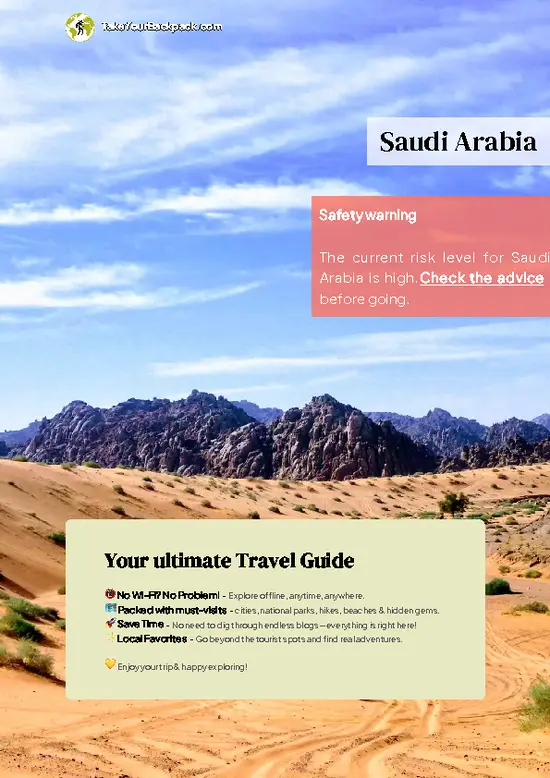
Country photo of Saudi Arabia

We 💚 feedbackIs it worth it?

Wajh isn’t about flashy sights or crowds—it’s the kind of place where the salty breeze off the Red Sea mixes with the scent of fresh fish grilling nearby, and time slows down just enough for you to catch your breath. The best surprise? The quiet mornings when fishermen haul in their catch, and you can sip sweet cardamom coffee while watching the town wake up. Just a heads-up: the heat can sneak up fast, so pace yourself and stay hydrated. Trust me, the calm here rewards the effort.

✍️ Help improve this page!
The information on this page is based on in-depth research, insights shared by experienced travelers, and feedback from the local travel community in Saudi Arabia. While every effort is made to keep the information accurate and current, conditions can change — so if you spot anything incorrect or outdated, please get in touch.


🙋‍♂️ Give feedback

👋 Meet the founderWho’s Behind Take Your Backpack?

Johan, backpacker and founder of TakeYourBackpackHi, I’m Johan (Netherlands 🇳🇱), the creator of TakeYourBackpack. Over the past decade, I’ve backpacked through 80+ countries across six continents, gaining extensive experience with independent travel, long-term trips, and overland routes.

This site is built on a combination of firsthand travel experience and carefully curated insights from other backpackers. Many guides are based on places I’ve personally visited, while others bring together tips, observations, and practical advice shared by trusted travelers I’ve met along the way.

The goal is to provide realistic, experience-driven guidance — not generic itineraries — so you can explore destinations with better context, clearer expectations, and more confidence.

Get full country guide •
Instant download • 101 highlights • Full Offline guide