×

Senegal🇸🇳 | citiesRufisqueindustrial port, colonial remnants, local bakeries, commuter town | things to do and best time to go

Explore KaolackExplore Richard Toll

Backpacking in Rufisque
🌟 Highlightcity ranked #7
By Johan Kruseman 🇳🇱 | Updated September 3, 2026

Most travelers realize too late that Rufisque’s proximity to Dakar lets you dodge the capital’s chaos without sacrificing access—think: Dakar’s energy, minus the gridlock and inflated prices. Rufisque sits just east of Dakar, hugging the Atlantic, and it’s a city that feels lived-in rather than staged for tourists. The colonial-era train station and faded warehouses hint at its port-town past, but don’t expect a museum circuit or curated nightlife. Backpackers find basics cheap and street food honest, but English is rare and hostels are nearly nonexistent—French helps, and so does flexibility. Safety is typical for Senegal: watch your pockets, but the vibe is more neighborly than nervy. Compared to Dakar or Saint-Louis, Rufisque is rawer, quieter, and refreshingly unpolished.

Discover everything you want to know in the 📖 Senegal Travel Guide.


Get your Senegal guide
93 ranked highlights, routes & tips, works offline (380 pages)
Loading the map 🌍
CLICK TO FILTER
cities
towns
villages
landmarks
national parks
hikes
beaches
attractions
festivals
regions
SHOW COUNTRY’S BESTSHOW ALL

✨ Why go?
Ranked #7 city in Senegal
Reasons people choose to visit here

Rufisque is a strategic basecamp for backpackers exploring Senegal. It offers a blend of affordable hostels and local eateries, making it easy to stretch your budget while enjoying authentic flavors. The city’s walkability allows you to soak in the vibrant street life without the hassle of transport. Plus, its proximity to Dakar means easy onward travel for those looking to dive deeper into the region. While Rufisque may not have the same number of highlights as larger cities, it serves as a gateway for day trips and a chance to experience local culture, making it a worthwhile stop on your journey.
Want to include Rufisque in your Senegal route?
Create a personalized Senegal itinerary that includes Rufisque and the places that fit your trip — based on your travel style, budget, and available time. Get your route in seconds.

Generate my trip

💡 HighlightsTop highlights of Rufisque

  • Centre historique (quartier colonial) — Walk the old streets where French colonial-era houses, faded façades and small cafés give a real feel for Rufisque’s layered history; great for wandering and street photography.
  • La gare de Rufisque (ancienne gare ferroviaire) — The old railway station building and platform are tangible reminders of the colonial rail line; peek inside, stand on the platform and imagine the town’s role in coastal transport history.
  • Le port artisanal et marché aux poissons — Dawn is prime: fishermen bring in their catches, sellers haggle, and you can watch boats unloaded and nets mended—raw, lively and very local.
  • Marché central de Rufisque (marché municipal) — A hub of everyday life where you can buy produce, spices, fabrics and watch the choreography of commerce;
read more 👉
  • Centre historique (quartier colonial) — Walk the old streets where French colonial-era houses, faded façades and small cafés give a real feel for Rufisque’s layered history; great for wandering and street photography.
  • La gare de Rufisque (ancienne gare ferroviaire) — The old railway station building and platform are tangible reminders of the colonial rail line; peek inside, stand on the platform and imagine the town’s role in coastal transport history.
  • Le port artisanal et marché aux poissons — Dawn is prime: fishermen bring in their catches, sellers haggle, and you can watch boats unloaded and nets mended—raw, lively and very local.
  • Marché central de Rufisque (marché municipal) — A hub of everyday life where you can buy produce, spices, fabrics and watch the choreography of commerce; ideal for picking up cheap snacks and practicing bargaining.
  • La grande mosquée centrale — The city’s main mosque anchors daily life; visiting outside prayer times lets you appreciate its architecture and the rhythms of the neighborhood around it (remember respectful dress and behavior).
  • Ancien cimetière colonial — Quiet, shaded and historically revealing, the old cemetery holds colonial-era graves and epitaphs that tell stories about Rufisque’s past in a way a guidebook can’t.
  • Front de mer et plages de Rufisque — A working coastline rather than a resort strip: fishermen, kids playing, and long, walkable beaches that are perfect for sunset watching and seeing local coastal life up close.
  • Hôtel de Ville et la place centrale — The town hall and the adjoining square are the administrative and social heart; good spotting ground for events, local officials, and everyday community bustle.
  • Ateliers d’artisans et métiers traditionnels — Small shops and workshops where tailors, metalworkers and carpenters practice crafts passed down generations—watching and chatting with makers is one of Rufisque’s most authentic experiences.
  • Stade municipal / scène football locale — Catching a local match is entertaining and social: cheap, loud and a genuine way to join the town’s energy and meet locals over a shared passion.
A few excellent day trips nearby: Lac Rose (Lac Retba) for the pink lake experience, Gorée Island for its history and museums, and Dakar’s Plateau/IFAN area for museums and markets.
Spotted a mistake or missing something? Contact us.

Things to do near Rufisque

Ratings based on Tripadvisor reviews. When you book through this link, you support our work at no extra cost to you.

🏘️ NeighborhoodsNeighborhood guide to Rufisque

Rufisque offers a unique blend of local culture and accessibility, making it a fascinating stop for backpackers.

Centre Ville: The heart of Rufisque, this area buzzes with local markets and street vendors. It’s affordable and walkable, perfect for short stays. Nightlife is low-key, with local bars offering a taste of Senegalese music.

Plage de Rufisque: If you crave beach vibes, head here. It’s a bit quieter, ideal for relaxation. Costs can vary, but you’ll find budget-friendly options. The beach is a short walk, and public transport connects you to the city.

Ngor: A lively neighborhood with a youthful energy. Great for longer stays, it offers a mix of hostels and guesthouses. The nightlife is vibrant, with plenty of cafes and bars. Walkability is high, and transport links are solid, making it easy to explore further.

⌛️ 1 day1-day itinerary for Rufisque

Rufisque, Senegal, is a vibrant blend of history and local life, often overlooked by travelers. This coastal city pulses with the rhythm of daily life, offering a genuine glimpse into Senegalese culture.

Start your morning at the bustling Marché de Rufisque. The air is thick with the scent of spices and fresh produce. Grab a breakfast of warm, flaky pastries from a local vendor. Afterward, stroll through the nearby neighborhood of Thiaroye, where you can admire colorful murals that tell stories of the community.

In the afternoon, head to the beach at Plage de Rufisque. It’s less crowded than other coastal spots, giving you space to relax. Enjoy a leisurely lunch at a beachfront eatery, where you can savor grilled fish caught that morning.

As the sun sets, wander through the historic streets … read more 👉
Rufisque, Senegal, is a vibrant blend of history and local life, often overlooked by travelers. This coastal city pulses with the rhythm of daily life, offering a genuine glimpse into Senegalese culture.

Start your morning at the bustling Marché de Rufisque. The air is thick with the scent of spices and fresh produce. Grab a breakfast of warm, flaky pastries from a local vendor. Afterward, stroll through the nearby neighborhood of Thiaroye, where you can admire colorful murals that tell stories of the community.

In the afternoon, head to the beach at Plage de Rufisque. It’s less crowded than other coastal spots, giving you space to relax. Enjoy a leisurely lunch at a beachfront eatery, where you can savor grilled fish caught that morning.

As the sun sets, wander through the historic streets of the old town. Stop by the Maison de la Culture, a cultural center that often hosts local performances. This isn’t on the typical tourist path, but it’s a chance to connect with the local arts scene.

End your day with a stroll along the waterfront, soaking in the vibrant atmosphere as the city winds down. Rufisque is not just a destination; it’s an experience that invites you to engage and explore.
Turn your Rufisque visit into an Senegal adventure
Build a complete Senegal route with Rufisque, hidden gems, must-see destinations, and realistic travel times included.

Generate my trip

🌤️ When to go?Weather, crowds, and seasonal trade-offs


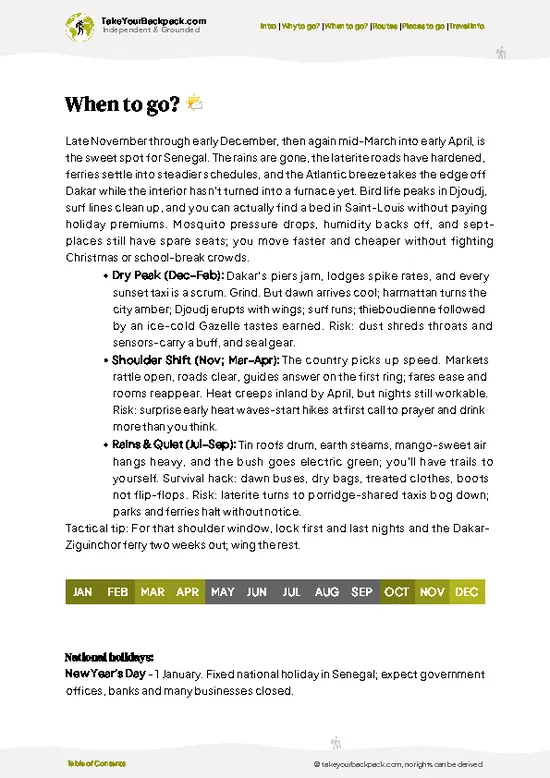
  • Weather: Rufisque’s climate swings between a hot, humid rainy season from June to October and a drier, cooler stretch from November to May. The dry season is your best bet for clear skies and less mud.

  • Temperature: Expect highs around 28-32°C (82-90°F) during the dry months, which is manageable for trekking and exploring. The rainy season pushes temps higher, often above 33°C (91°F), with sticky humidity.

  • Daylight Hours: Daylight stays fairly consistent year-round, roughly 11 to 12 hours, so no drastic shifts in your daily schedule.

  • Crowds: Tourist traffic peaks in the dry season, especially December to February, when international travelers flock to Senegal. Rufisque remains quieter than Dakar but expect more local activity then.

  • Seasonal Activities: Dry months bring cultural festivals
read more 👉

  • Weather: Rufisque’s climate swings between a hot, humid rainy season from June to October and a drier, cooler stretch from November to May. The dry season is your best bet for clear skies and less mud.

  • Temperature: Expect highs around 28-32°C (82-90°F) during the dry months, which is manageable for trekking and exploring. The rainy season pushes temps higher, often above 33°C (91°F), with sticky humidity.

  • Daylight Hours: Daylight stays fairly consistent year-round, roughly 11 to 12 hours, so no drastic shifts in your daily schedule.

  • Crowds: Tourist traffic peaks in the dry season, especially December to February, when international travelers flock to Senegal. Rufisque remains quieter than Dakar but expect more local activity then.

  • Seasonal Activities: Dry months bring cultural festivals and fishing events, adding authentic local flavor. The rainy season limits outdoor options but offers lush landscapes if you’re into green scenery.

  • Price Fluctuations: Accommodation and transport costs rise during the dry season’s peak months. Off-season travel means better deals but prepare for occasional rain disruptions.


Pro-tip: Aim for the shoulder months of November or May to balance pleasant weather, fewer crowds, and reasonable prices—smart timing that maximizes comfort and value.


source: climatestotravel.comJANJanuary: highly recommended for travelingFEBFebruary: highly recommended for travelingMARMarch: highly recommended for travelingAPRApril: good for travelingMAYMay: highly recommended for travelingJUNJune: fair for travelingJULJuly: fair for travelingAUGAugust: fair for travelingSEPSeptember: fair for travelingOCTOctober: fair for travelingNOVNovember: highly recommended for travelingDECDecember: highly recommended for traveling
when-to-go

✈️ The backpacker research shortcutSenegal Travel Guide

An offline-friendly backpacking guide with optimized travel routes, ranked highlights, transport advice, and the best areas to stay.
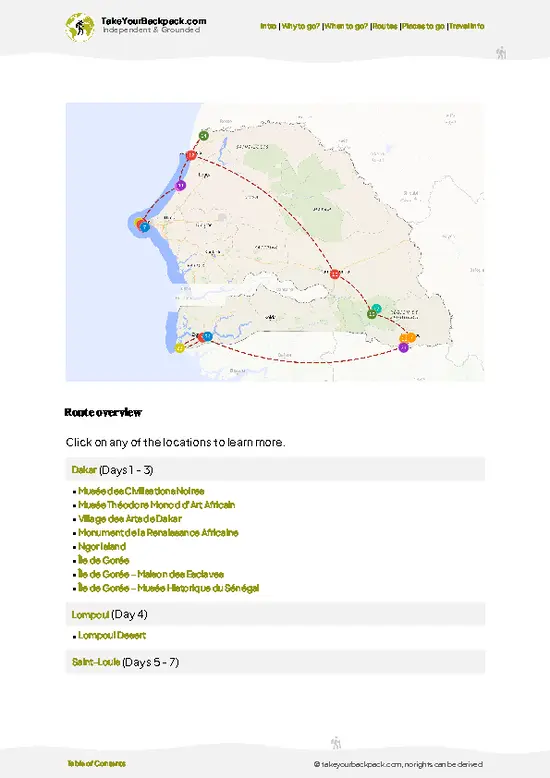
example page 0 from our offline Travel Guide for Senegal
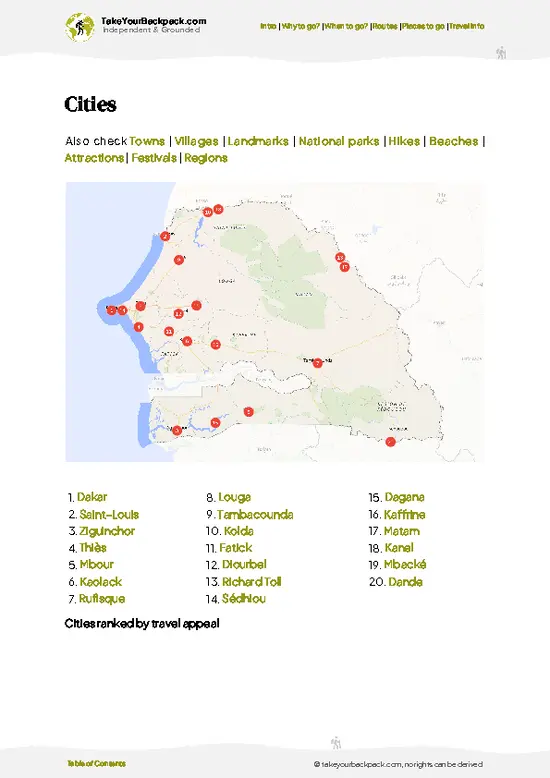
example page 1 from our offline Travel Guide for Senegal
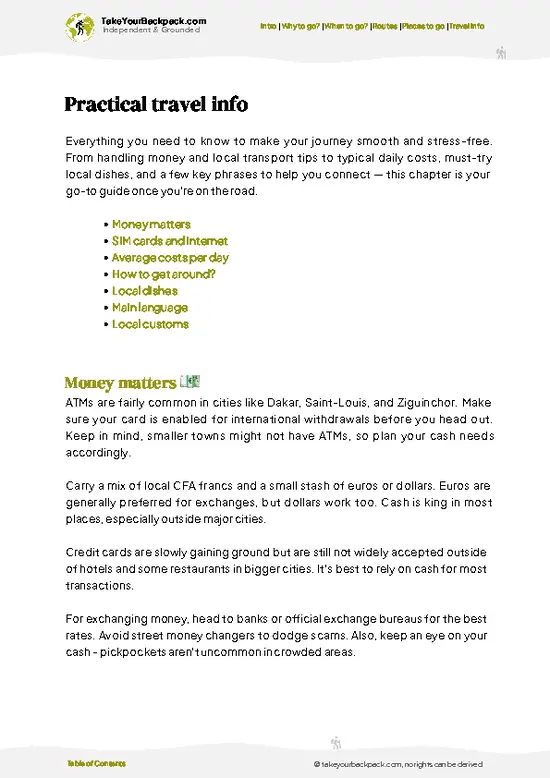
example page 2 from our offline Travel Guide for Senegal
example page 3 from our offline Travel Guide for Senegal
example page 4 from our offline Travel Guide for Senegal
example page 5 from our offline Travel Guide for Senegal
example page 6 from our offline Travel Guide for Senegal
example page 7 from our offline Travel Guide for Senegal
The digital guide (380 pages) contains:
93 highlights, ranked by travel appeal
Optimized 5, 10 & 15-day travel routes
Cities, national parks, landmarks, beaches
How to get around
Offline-friendly for travel without Wi-Fi
👉 Click to see all 30+ guide features

📅 Plan smarter in minutes, not weeks
Month by month travel advice
Festivals & national holidays
Budget expectations

🗺️ Go to the right places, skip the overrated ones
Honest pros & cons of destinations
Top hikes, parks & viewpoints
Lesser-known places most travelers miss
Clear “worth it vs skip it” guidance

🛏️ Travel smoothly without rookie mistakes
Best areas to stay
Transport systems explained simply
Common scams & safety advice
SIM cards, money & practical tips

🌍 Understand the country, not just visit it
Culture & traditions
52 Essential phrases & customs
Festivals worth planning around
Traveler-friendly historical context
Insights that make places more meaningful

📱 Built for real travel conditions
Fully downloadable PDF
Works completely offline
Optimized for phone use
Useful in remote areas & buses
Everything in one place
Save weeks of stressful planning
Get instant access to your full guide. 30‑day money-back guarantee.
+ Add another guide for just US$7.80

By proceeding you agree to our terms.
Sent to your inbox immediately after payment • 100% Secure Checkout
Best Backpacking Travel Advisor 2025 tourism awardBest Backpacking
Travel Advisor
2025
What others say about Take Your Backpack Guides:
⭐⭐⭐⭐⭐
Fantastic, amazing amount of information!
⭐⭐⭐⭐⭐
My goodness this is amazing, it's what I've been looking for hats off too you!
⭐⭐⭐⭐⭐
I think this is absolutely BRILLIANT
⭐⭐⭐⭐
Very complete and informative. It's still missing places, but I gotta to commend you
⭐⭐⭐⭐⭐
This is truly amazing, thank you, can't wait to explore it with my kids!
⭐⭐⭐⭐⭐
Awesome resource, thank you!
⭐⭐⭐⭐⭐
This is amazing! Can't wait to explore the ones I haven't seen
⭐⭐⭐⭐
I love this! Well done, great idea.
⭐⭐⭐⭐⭐
Thanks for taking the time to make this gem!
⭐⭐⭐⭐⭐
This might be the best website I've ever seen.
⭐⭐⭐⭐⭐
Congratulations, and thank you so much for your work; it's incredibly valuable.
⭐⭐⭐⭐
In all seriousness I think you did a great job pointing out the important spots
⭐⭐⭐⭐⭐
10/10 very good
⭐⭐⭐⭐⭐
As someone who's only just starting to visit regularly this is awesome, thank you.
⭐⭐⭐⭐
Thank you very much! I'm going to visit my dad, it's going to be very useful!
⭐⭐⭐⭐⭐
This is really cool! We'll be travelling for the first time and this definitely come in handy.
⭐⭐⭐⭐⭐
You are now our minister of culture, congratulations 👨‍💼
⭐⭐⭐⭐⭐
Just wanted to tell you that this is a pearl! Going to follow your recommendations.
⭐⭐⭐⭐⭐
This is so cool. I'll definitely be using the resource for my travels soon.
⭐⭐⭐⭐⭐
This is very impressive! Good work.
⭐⭐⭐⭐⭐
This is an amazing and informative site. Very well done!

🛏️ Where to stay?How to pick the right area

Rufisque’s Old Town is the go-to for backpackers who want to dive into the city’s pulse without breaking the bank. It’s compact, walkable, and packed with local markets and street food stalls where you can stretch your budget while soaking in authentic daily life. Safety here is decent during the day, but like any bustling area, keep your wits about you after dark. The vibe is lively but not overwhelming—perfect for solo travelers looking to connect with locals and other backpackers. Hostels and budget guesthouses cluster around this area, offering basic but clean accommodations that prioritize … read more 👉
Rufisque’s Old Town is the go-to for backpackers who want to dive into the city’s pulse without breaking the bank. It’s compact, walkable, and packed with local markets and street food stalls where you can stretch your budget while soaking in authentic daily life. Safety here is decent during the day, but like any bustling area, keep your wits about you after dark. The vibe is lively but not overwhelming—perfect for solo travelers looking to connect with locals and other backpackers. Hostels and budget guesthouses cluster around this area, offering basic but clean accommodations that prioritize social spaces over luxury.

In contrast, the newer parts of Rufisque lean more residential and quieter, which means fewer backpacker hangouts and less chance to meet fellow travelers. They’re safer but less social and often pricier for what you get. If your priority is comfort and calm, these neighborhoods work, but for the classic backpacker experience—community, culture, and cost-efficiency—Old Town wins hands down.

🚌 Getting aroundMoving around without the hassle

Rufisque moves at a pace that’s more instinct than clockwork. It’s a city where schedules exist on paper but rarely dictate your day. The rhythm here is set by the ebb and flow of people—vendors calling out, shared taxis filling up, and the occasional lull when the sun beats down hard. You’ll find that time bends to the city’s pulse, not the other way around. Understanding this flow is your first win: it means you can lean into flexibility and make smart choices about when and how to move.


  • Walking: The most reliable and cost-free way to navigate Rufisque’s compact center. Streets are lively but uneven, so wear sturdy shoes. Walking lets you soak in the city’s texture at your own pace, though it’s not ideal for long hauls or midday heat.


  • Car Rapide (Shared Minibus): These minibuses
read more 👉
Rufisque moves at a pace that’s more instinct than clockwork. It’s a city where schedules exist on paper but rarely dictate your day. The rhythm here is set by the ebb and flow of people—vendors calling out, shared taxis filling up, and the occasional lull when the sun beats down hard. You’ll find that time bends to the city’s pulse, not the other way around. Understanding this flow is your first win: it means you can lean into flexibility and make smart choices about when and how to move.


  • Walking: The most reliable and cost-free way to navigate Rufisque’s compact center. Streets are lively but uneven, so wear sturdy shoes. Walking lets you soak in the city’s texture at your own pace, though it’s not ideal for long hauls or midday heat.


  • Car Rapide (Shared Minibus): These minibuses are the backbone of Rufisque’s transit, running roughly from 6 AM to 9 PM. Fares hover around 100-200 CFA francs, making them a budget traveler’s best friend. They’re fast when full but can get cramped and chaotic—comfort is minimal, but the speed and price are unbeatable.


  • Taxis: Metered taxis exist but are rare and often more expensive than shared options. Expect to negotiate fares upfront, especially if you’re heading outside the city center. They offer door-to-door convenience and air conditioning, but the cost can quickly add up.


  • Bicycle Rentals: A flexible middle ground if you want to cover more ground than walking but avoid the unpredictability of public transit. Rentals are affordable, around 1000 CFA francs per day, and give you control over your schedule. The downside: Rufisque’s roads can be rough and traffic unpredictable.


Mastering Rufisque’s transit means balancing your priorities: save money by embracing the shared minibus and your own two feet, or spend a bit more for comfort and speed with taxis or bikes. The city rewards those who read its tempo and choose their moves like a chess player—each choice a calculated trade-off between time, money, and comfort.

👛 Costs (as of 3 September 2026)How expensive it really is

Backpacking in Rufisque, Senegal, offers a clear trade-off between cost and comfort, with prices reflecting the city’s modest pace and local lifestyle. Here’s how your daily expenses typically break down:
  • Dorm Accommodation (High Season): Expect to pay around €10-€15 per night. High season sees a slight bump due to demand, but Rufisque remains affordable compared to bigger cities.
  • Dorm Accommodation (Off-Season): Prices drop to about €7-€10 per night. Less tourist traffic means better deals and more room to negotiate.
  • Meals: Local eateries serve filling meals for €2-€5 each. Street food and small restaurants dominate, offering authentic flavors without the tourist markup.
  • Local Transport: Shared taxis and minibuses cost roughly €0.30-€0.50 per ride. It’s cheap but expect crowded conditions
read more 👉
Backpacking in Rufisque, Senegal, offers a clear trade-off between cost and comfort, with prices reflecting the city’s modest pace and local lifestyle. Here’s how your daily expenses typically break down:
  • Dorm Accommodation (High Season): Expect to pay around €10-€15 per night. High season sees a slight bump due to demand, but Rufisque remains affordable compared to bigger cities.
  • Dorm Accommodation (Off-Season): Prices drop to about €7-€10 per night. Less tourist traffic means better deals and more room to negotiate.
  • Meals: Local eateries serve filling meals for €2-€5 each. Street food and small restaurants dominate, offering authentic flavors without the tourist markup.
  • Local Transport: Shared taxis and minibuses cost roughly €0.30-€0.50 per ride. It’s cheap but expect crowded conditions and variable schedules.
  • City Transport Pass: Rufisque doesn’t have a formal city transport pass system; daily transport costs are usually paid per ride.
  • Basic Activities/Entry Fees: Most cultural or historical sites charge minimal fees, typically under €2. This keeps exploration budget-friendly.
  • Miscellaneous Expenses: Budget around €1-€3 for essentials like bottled water, snacks, or small tips. These add up but remain manageable.

In total, a backpacker in Rufisque can expect to spend between €15 and €25 per day, depending on the season and personal comfort preferences. This range balances basic needs with enough flexibility to enjoy the city’s character without overspending.


source: senegal-tourism.com
⚠️ Prices can change and everyone travels differently, so take this as a rough guide. Hope it helps you plan your adventure!

🚌 Day tripsEasy escapes and nearby places

Rufisque, Senegal, is a fantastic launchpad for day trips that blend culture, nature, and adventure. Here’s how to make the most of your time.

Lac Rose
Just a short 30-minute ride from Rufisque, Lac Rose is famous for its striking pink waters, especially during the dry season. The lake’s unique color comes from algae, and it’s a photographer’s dream. You can stroll along the shore, meet local fishermen, or even take a dip. Budget around $5 for transport and a few more for snacks. The best time to visit is between November and May. A common mistake? Arriving too late in the day when the light fades, missing that perfect shot.
👉 Explore Lac Rose

Gorée Island
A 45-minute ferry ride takes you to Gorée Island, a UNESCO World Heritage site steeped in history. Explore the Maison des Esclaves … read more 👉
Rufisque, Senegal, is a fantastic launchpad for day trips that blend culture, nature, and adventure. Here’s how to make the most of your time.

Lac Rose
Just a short 30-minute ride from Rufisque, Lac Rose is famous for its striking pink waters, especially during the dry season. The lake’s unique color comes from algae, and it’s a photographer’s dream. You can stroll along the shore, meet local fishermen, or even take a dip. Budget around $5 for transport and a few more for snacks. The best time to visit is between November and May. A common mistake? Arriving too late in the day when the light fades, missing that perfect shot.
👉 Explore Lac Rose

Gorée Island
A 45-minute ferry ride takes you to Gorée Island, a UNESCO World Heritage site steeped in history. Explore the Maison des Esclaves and wander the colorful streets filled with art and local crafts. The round trip will cost about $15, including the ferry. Aim for a morning visit to avoid the crowds and soak in the atmosphere. Many first-timers overlook the island’s poignant history, so take time to engage with local guides for deeper insights.


Bandia Reserve
For a taste of wildlife, head to Bandia Reserve, about an hour from Rufisque. This private reserve is home to giraffes, zebras, and rhinos. A guided safari costs around $30, but it’s worth every penny for the chance to see these animals up close. The best time to go is early morning when the animals are most active. A common pitfall is not booking a guide, which can limit your experience.


Saly Portudal
If you crave some beach time, Saly Portudal is just an hour away. Known for its sandy beaches and vibrant atmosphere, it’s perfect for relaxation or water sports. Expect to spend about $10 on transport and a bit more for beachside meals. The best months are from November to April for pleasant weather. Many backpackers forget to check for local events, which can add a fun twist to your beach day.


Each of these trips offers a unique slice of Senegal, making your base in Rufisque a strategic choice for adventure.
Want to know what more Senegal offers?
The Senegal Travel Guide describes 93 highlights, from cities to national parks, from beaches to hikes

Get the Travel Guide -

🍲 FoodWhat to Eat & Drink

In Rufisque, local cuisine is a vibrant tapestry of flavors. Dive into thieboudienne, a hearty fish and rice dish, often cooked with vegetables and a rich tomato sauce. The smoky aroma wafting from street vendors is irresistible.

For a quick bite, try yassa, marinated chicken or fish grilled to perfection, served with tangy onions. Markets buzz with energy, where you can grab bissap, a refreshing hibiscus drink, or gingembre, a spicy ginger beverage.

Dining here is communal; sharing food is the norm. Don’t be surprised if locals invite you to join their meal. Embrace the slow pace of eating; savor each bite and the lively conversations around you.

🛡️ SafetyStaying Safe: What Travelers Should Know

Rufisque is generally safe, but like any city, it has its quirks. Stay alert in crowded markets, where pickpockets might lurk. If you’re solo, avoid wandering too far after dark; stick to well-lit areas and main streets.

Common scams include overly friendly locals offering unsolicited help, which often leads to a request for payment. A polite but firm “no, thank you” usually suffices. Carry your belongings close and keep your phone tucked away when not in use. Embrace the local vibe, but trust your instincts.

FAQFrequently asked questions about Rufisque

2 to 3 days are sufficient to explore Rufisque, allowing time to visit its colonial architecture, local markets, and nearby beaches. This duration also gives you a chance to experience the town's cultural sites without rushing.
Yes, Rufisque is generally safe for solo backpackers, especially during daylight hours. Standard precautions like avoiding poorly lit areas at night and keeping valuables secure are advised.
Rufisque is known for its colonial heritage, vibrant fishing port, and traditional markets. It is also recognized for its role in Senegal's history as one of the oldest towns and its proximity to Dakar.
⚠️ Things can change over time, so always validate details locally before you go.

Other Senegalese cities near Rufisque

Explore more nearby:

  • Dakar—Atlantic coastline, contemporary art, bustling markets, nightlife| 21 km away
  • Thiès—railway junction, craft workshops, tree-lined avenues, regional hub| 37 km away
  • Mbour—fishing port, beachside stalls, daily fish market, boat landings| 46 km away

💡 Not sure where to go next?
Create a personalized itinerary for Senegal including Rufisque and the places that fit your trip.

Generate my itinerary

👉 Discover all cities

Or checkout all Senegal has to offer (think cities, towns, villages, national parks, hikes, beaches, festivals)
Country photo of Senegal

We 💚 feedbackFinal thoughts on visiting Rufisque

Rufisque has a raw energy that’s hard to shake off. The best surprise? The local markets pulse with life and flavor—don’t skip the street food. Just a heads-up: the heat can be relentless, so hydrate and take it slow. Embrace the chaos; it’s part of the charm.

✍️ Help improve this page!
The information on this page is based on in-depth research, insights shared by experienced travelers, and feedback from the local travel community in Senegal. While every effort is made to keep the information accurate and current, conditions can change — so if you spot anything incorrect or outdated, please get in touch.


🙋‍♂️ Give feedback

👋 Meet the founderWho’s Behind Take Your Backpack?

Johan, backpacker and founder of TakeYourBackpackHi, I’m Johan (Netherlands 🇳🇱), the creator of TakeYourBackpack. Over the past decade, I’ve backpacked through 80+ countries across six continents, gaining extensive experience with independent travel, long-term trips, and overland routes.

This site is built on a combination of firsthand travel experience and carefully curated insights from other backpackers. Many guides are based on places I’ve personally visited, while others bring together tips, observations, and practical advice shared by trusted travelers I’ve met along the way.

The goal is to provide realistic, experience-driven guidance — not generic itineraries — so you can explore destinations with better context, clearer expectations, and more confidence.

Get full Senegal guide •
Instant download • 93 highlights • Full Offline guide