×

Senegal🇸🇳 | citiesDakarAtlantic coastline, contemporary art, bustling markets, nightlife | things to do and best time to go

Explore Îles de la MadeleineExplore Saint-Louis

Backpacking in Dakar
🏆 Top pickcity ranked #1
By Johan Kruseman 🇳🇱 | Updated July 26, 2026

Dakar used to be a city you could drift through on instinct—no smartphone, no Google Translate, just the pulse of the street and the rhythm of the Atlantic. Now, the city’s grown sharper edges: traffic snarls, digital hustle, and a backpacker scene that’s more plugged-in but less spontaneous. You’ll find Dakar on the westernmost tip of Senegal, where the continent juts into the ocean and the air tastes like salt and diesel fumes. For backpackers, Dakar is a paradox: the faded grandeur of colonial facades on Place de l’Indépendance, the raw history of Gorée Island’s slave house, and the kinetic swirl of Sandaga Market. The nightlife is legendary—thumping mbalax clubs, rooftop bars, and street food that’s both cheap and bold. It’s easy to meet other travelers, but harder to escape the city’s relentless energy. Costs are moderate for West Africa, but comfort comes at a premium. Safety is mostly about street smarts; compared to Saint-Louis or Ziguinchor, Dakar is faster, louder, and less forgiving, but it rewards curiosity with real character.

Discover everything you want to know in the 📖 Senegal Travel Guide.


Get your Senegal guide
93 ranked highlights, routes & tips, works offline (380 pages)
Loading the map 🌍
CLICK TO FILTER
cities
towns
villages
landmarks
national parks
hikes
beaches
attractions
festivals
regions
SHOW COUNTRY’S BESTSHOW ALL

✨ Why go?
Ranked #1 city in Senegal
Why Dakar should be on your travel list

Dakar is a backpacker’s hub that balances time, money, and comfort seamlessly. It’s a city where you can dive into a rich culture without breaking the bank. The hostel scene is vibrant, offering affordable options that foster a sense of community. You’ll find travelers swapping stories over local dishes, which are both delicious and budget-friendly.

The city’s walkability makes it easy to explore on foot, allowing you to soak in the atmosphere without the hassle of public transport. You can wander through bustling markets or chill at the beach, all while keeping your expenses low.

Dakar also serves as a basecamp for day trips to stunning nearby locations, maximizing your experience without wasting time on logistics. The nightlife is lively, with plenty of bars and music venues that keep … read more 👉
Dakar is a backpacker’s hub that balances time, money, and comfort seamlessly. It’s a city where you can dive into a rich culture without breaking the bank. The hostel scene is vibrant, offering affordable options that foster a sense of community. You’ll find travelers swapping stories over local dishes, which are both delicious and budget-friendly.

The city’s walkability makes it easy to explore on foot, allowing you to soak in the atmosphere without the hassle of public transport. You can wander through bustling markets or chill at the beach, all while keeping your expenses low.

Dakar also serves as a basecamp for day trips to stunning nearby locations, maximizing your experience without wasting time on logistics. The nightlife is lively, with plenty of bars and music venues that keep the energy high, making it a great place to unwind after a day of exploration.

If you’re looking for a city that offers a mix of authentic experiences and easy onward travel, Dakar fits the bill. It’s not just a stopover; it’s a place that enriches your journey, making it a worthy addition to your backpacking route.
Want to include Dakar in your Senegal route?
Create a personalized Senegal itinerary that includes Dakar and the places that fit your trip — based on your travel style, budget, and available time. Get your route in seconds.

Generate my trip

💡 HighlightsPlaces and moments you shouldn't skip

  • Monument de la Renaissance Africaine (African Renaissance Monument) — A massive bronze statue on a hill with sweeping views over Dakar and the sea; stop for the panorama, the photo ops and to see a symbol that still sparks lively conversation among locals.
  • Musée des Civilisations Noires — Thoughtfully curated exhibits about African histories and the diaspora in a modern building; it’s one of the best places to get historical and cultural context beyond the street-level bustle.
  • IFAN / Musée Théodore Monod d’Art Africain — A venerable ethnographic collection with masks, textiles and objects from across West Africa; quieter than the big museums and full of depth if you care about material culture.
  • Le Plateau (downtown) & Place de l’Indépendance — The administrative and colonial heart of
read more 👉
  • Monument de la Renaissance Africaine (African Renaissance Monument) — A massive bronze statue on a hill with sweeping views over Dakar and the sea; stop for the panorama, the photo ops and to see a symbol that still sparks lively conversation among locals.
  • Musée des Civilisations Noires — Thoughtfully curated exhibits about African histories and the diaspora in a modern building; it’s one of the best places to get historical and cultural context beyond the street-level bustle.
  • IFAN / Musée Théodore Monod d’Art Africain — A venerable ethnographic collection with masks, textiles and objects from across West Africa; quieter than the big museums and full of depth if you care about material culture.
  • Le Plateau (downtown) & Place de l’Indépendance — The administrative and colonial heart of the city: broad avenues, pastel buildings, the presidential palace façade and loud street life. Great for walking, people-watching and cheap cafés.
  • Soumbédioune Fish Market (Corniche) — Fishermen haul in the catch, buyers haggle, and the beachfront grills serve fish seconds after it’s landed. Honest, loud, and delicious — a very Dakar experience.
  • Marché Sandaga — The archetypal chaotic West African market: fabrics, electronics, phone repair stalls, street-food and a constant energy. Bring patience, small bills and a willingness to barter.
  • Marché Kermel — A colonial-era covered market that’s calmer and better for crafts, spices and woven goods; useful when you want authentic souvenirs without the full-on Sandaga frenzy.
  • Village des Arts — A cluster of artists’ studios and small galleries where local painters, sculptors and designers work; you can often chat with artists, see works in progress and buy original pieces.
  • Pointe des Almadies & the Corniche Ouest — The westernmost tip of the peninsula with surfers, seafood shacks and one of Dakar’s best sunsets. Good for a long shoreline walk and to feel the city’s coastal pulse.
  • Parc Forestier et Zoologique de Hann (Hann Park & Zoo) — A surprisingly green escape inside the city: shady paths, birds, small enclosures and families picnicking. Handy when you need a breather from urban noise.
A few excellent day trips just outside Dakar: Gorée Island for the House of Slaves and island streets, Lac Rose (Lake Retba) for its pink waters, and Bandia Reserve for wildlife viewing.
Spotted a mistake or missing something? Contact us.

Things to do in Dakar

Ratings based on Tripadvisor reviews. When you book through this link, you support our work at no extra cost to you.

🏘️ NeighborhoodsUnderstanding the local layout

Dakar is a vibrant city where the pulse of West Africa beats strong. Each neighborhood offers a unique flavor, making it essential to choose wisely based on your travel style.

Plateau: This is the business hub, buzzing with energy. You’ll find a mix of modern cafes and local eateries. It’s walkable, with easy access to public transport. Perfect for short stays, but it can be pricier. Nightlife is lively, with bars and clubs that cater to a younger crowd.

Gorée Island: A short ferry ride away, this area is steeped in history. The vibe is relaxed, with cobblestone streets and colonial architecture. Ideal for those seeking a quieter experience. Accommodations can be a bit more expensive, but the cultural richness makes it worth it. Great for a day trip or a peaceful overnight stay.

Yoff: Known … read more 👉
Dakar is a vibrant city where the pulse of West Africa beats strong. Each neighborhood offers a unique flavor, making it essential to choose wisely based on your travel style.

Plateau: This is the business hub, buzzing with energy. You’ll find a mix of modern cafes and local eateries. It’s walkable, with easy access to public transport. Perfect for short stays, but it can be pricier. Nightlife is lively, with bars and clubs that cater to a younger crowd.

Gorée Island: A short ferry ride away, this area is steeped in history. The vibe is relaxed, with cobblestone streets and colonial architecture. Ideal for those seeking a quieter experience. Accommodations can be a bit more expensive, but the cultural richness makes it worth it. Great for a day trip or a peaceful overnight stay.

Yoff: Known for its beaches, Yoff is a laid-back neighborhood popular with surfers and sunbathers. It’s budget-friendly, with hostels and guesthouses. The walkability is decent, but you might want to use local transport for longer distances. Nightlife is low-key, making it suitable for longer stays if you prefer a chill atmosphere.

Saint-Louis: A bit further afield, this UNESCO World Heritage site offers a glimpse into colonial history. It’s less touristy, which means lower prices and a more authentic experience. Walkability is good, but transport options can be limited. Ideal for those wanting to immerse themselves in local culture for a few days.

Ngor: This coastal area is a blend of local life and expat vibes. It’s affordable, with a mix of accommodations. The beach scene is vibrant, and nightlife is more relaxed. Great for both short and longer stays, especially if you enjoy a mix of activity and downtime.

⌛️ 1 dayA smart one-day plan

Dakar, the vibrant capital of Senegal, pulses with a unique blend of history, culture, and energy. From its bustling markets to the serene coastline, the city offers a rich tapestry of experiences that can easily fill a day. The key is to focus on a couple of neighborhoods to truly soak in the local vibe without feeling rushed.

Start your morning in the Plateau district, where you can grab a coffee at a local café. The aroma of freshly brewed Senegalese coffee fills the air, and the lively chatter of locals sets the tone for the day. After your caffeine fix, stroll over to the African Renaissance Monument. This towering statue offers panoramic views of the city and the Atlantic Ocean, making it a perfect backdrop for some early-morning photos.

As the sun climbs higher, head to the bustling … read more 👉
Dakar, the vibrant capital of Senegal, pulses with a unique blend of history, culture, and energy. From its bustling markets to the serene coastline, the city offers a rich tapestry of experiences that can easily fill a day. The key is to focus on a couple of neighborhoods to truly soak in the local vibe without feeling rushed.

Start your morning in the Plateau district, where you can grab a coffee at a local café. The aroma of freshly brewed Senegalese coffee fills the air, and the lively chatter of locals sets the tone for the day. After your caffeine fix, stroll over to the African Renaissance Monument. This towering statue offers panoramic views of the city and the Atlantic Ocean, making it a perfect backdrop for some early-morning photos.

As the sun climbs higher, head to the bustling Sandaga Market. Here, you can immerse yourself in the local culture, navigating through vibrant stalls filled with textiles, spices, and handcrafted goods. Don’t shy away from haggling; it’s part of the experience. While you’re in the area, take a detour to the nearby neighborhood of Médina. This area is often overlooked by tourists but is home to colorful murals and local artisans. A visit here gives you a genuine taste of daily life in Dakar.

For lunch, find a spot at a local eatery and try some thieboudienne, Senegal’s national dish. The combination of fish, rice, and vegetables is a must-try.

In the afternoon, make your way to Gorée Island. A short ferry ride from the city, this UNESCO World Heritage site is steeped in history. Explore the Maison des Esclaves, a poignant reminder of the transatlantic slave trade, and wander through the island’s charming streets.

As evening approaches, return to Dakar and head to the vibrant neighborhood of Yoff. Here, you can relax on the beach, watching the sunset paint the sky in hues of orange and pink. For dinner, indulge in fresh seafood at a beachside restaurant, where the sound of waves complements the flavors of your meal.

This day in Dakar, with its mix of iconic sights and local experiences, showcases the city’s heart and soul. You’ll leave feeling enriched, having navigated the delicate balance of time, money, and comfort, all while creating lasting memories.
Turn your Dakar visit into an Senegal adventure
Build a complete Senegal route with Dakar, hidden gems, must-see destinations, and realistic travel times included.

Generate my trip

🌤️ When to go?When to go for the best experience


  • Weather: Dakar’s climate is tropical with a distinct wet season from July to October. Heavy rains can flood streets and disrupt plans, so avoid these months if you want dry trails and smooth city strolls.

  • Temperature: Expect highs around 28-32°C (82-90°F) year-round. The coolest months are December to February, with lows dipping to 18°C (64°F) at night—perfect for comfortable hiking and exploring without overheating.

  • Daylight Hours: Dakar enjoys roughly 11 to 12 hours of daylight year-round, with sunrise around 6:30 AM and sunset near 6:30 PM. This steady rhythm means you can plan full days without worrying about early darkness.

  • Crowds: Peak tourist season aligns with the dry, cooler months (November to February). Expect more visitors, especially around holidays, which means busier
read more 👉

  • Weather: Dakar’s climate is tropical with a distinct wet season from July to October. Heavy rains can flood streets and disrupt plans, so avoid these months if you want dry trails and smooth city strolls.

  • Temperature: Expect highs around 28-32°C (82-90°F) year-round. The coolest months are December to February, with lows dipping to 18°C (64°F) at night—perfect for comfortable hiking and exploring without overheating.

  • Daylight Hours: Dakar enjoys roughly 11 to 12 hours of daylight year-round, with sunrise around 6:30 AM and sunset near 6:30 PM. This steady rhythm means you can plan full days without worrying about early darkness.

  • Crowds: Peak tourist season aligns with the dry, cooler months (November to February). Expect more visitors, especially around holidays, which means busier hostels and higher prices but also more social opportunities.

  • Seasonal Activities: The dry season hosts cultural festivals like the Dakar Biennale (every two years) and music events that bring the city alive. The wet season is quieter but lush, ideal if you prefer solitude and green landscapes.

  • Price Fluctuations: Accommodation and flights spike during the dry season and holidays. Traveling just before or after this window can save you money without sacrificing weather quality.


Pro-tip: Aim for November or February—just outside peak crowds but still dry and comfortable—maximizing your time, money, and comfort in Dakar.


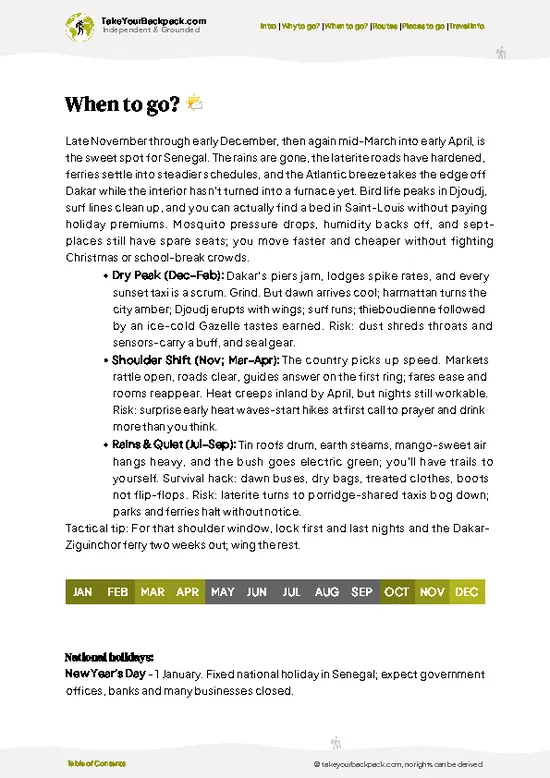
source: climatestotravel.comJANJanuary: excellent for travelingFEBFebruary: excellent for travelingMARMarch: highly recommended for travelingAPRApril: good for travelingMAYMay: fair for travelingJUNJune: fair for travelingJULJuly: below average for travelingAUGAugust: below average for travelingSEPSeptember: below average for travelingOCTOctober: fair for travelingNOVNovember: excellent for travelingDECDecember: excellent for traveling
when-to-go

✈️ The backpacker research shortcutSenegal Travel Guide

An offline-friendly backpacking guide with optimized travel routes, ranked highlights, transport advice, and the best areas to stay.
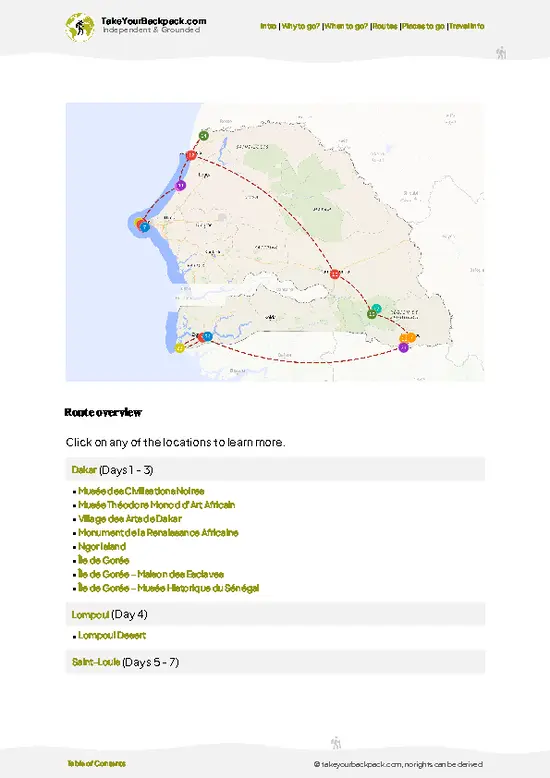
example page 0 from our offline Travel Guide for Senegal
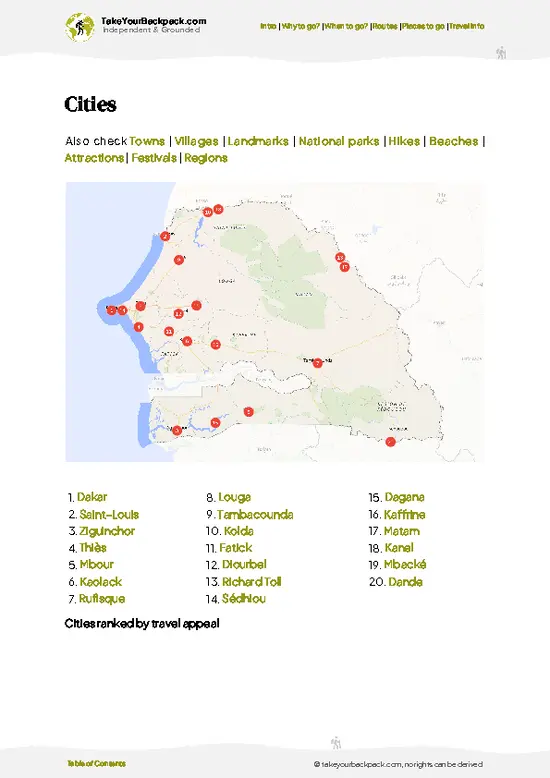
example page 1 from our offline Travel Guide for Senegal
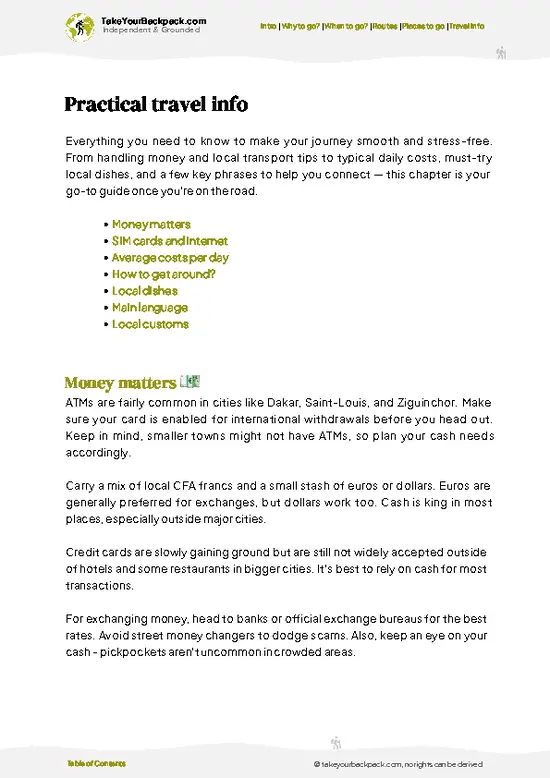
example page 2 from our offline Travel Guide for Senegal
example page 3 from our offline Travel Guide for Senegal
example page 4 from our offline Travel Guide for Senegal
example page 5 from our offline Travel Guide for Senegal
example page 6 from our offline Travel Guide for Senegal
example page 7 from our offline Travel Guide for Senegal
The digital guide (380 pages) contains:
93 highlights, ranked by travel appeal
Optimized 5, 10 & 15-day travel routes
Cities, national parks, landmarks, beaches
How to get around
Offline-friendly for travel without Wi-Fi
👉 Click to see all 30+ guide features

📅 Plan smarter in minutes, not weeks
Month by month travel advice
Festivals & national holidays
Budget expectations

🗺️ Go to the right places, skip the overrated ones
Honest pros & cons of destinations
Top hikes, parks & viewpoints
Lesser-known places most travelers miss
Clear “worth it vs skip it” guidance

🛏️ Travel smoothly without rookie mistakes
Best areas to stay
Transport systems explained simply
Common scams & safety advice
SIM cards, money & practical tips

🌍 Understand the country, not just visit it
Culture & traditions
52 Essential phrases & customs
Festivals worth planning around
Traveler-friendly historical context
Insights that make places more meaningful

📱 Built for real travel conditions
Fully downloadable PDF
Works completely offline
Optimized for phone use
Useful in remote areas & buses
Everything in one place
Save weeks of stressful planning
Get instant access to your full guide. 30‑day money-back guarantee.


By proceeding you agree to our terms.
Sent to your inbox immediately after payment • 100% Secure Checkout
Best Backpacking Travel Advisor 2025 tourism awardBest Backpacking
Travel Advisor
2025
What others say about Take Your Backpack Guides:
⭐⭐⭐⭐⭐
Fantastic, amazing amount of information!
⭐⭐⭐⭐⭐
My goodness this is amazing, it's what I've been looking for hats off too you!
⭐⭐⭐⭐⭐
I think this is absolutely BRILLIANT
⭐⭐⭐⭐
Very complete and informative. It's still missing places, but I gotta to commend you
⭐⭐⭐⭐⭐
This is truly amazing, thank you, can't wait to explore it with my kids!
⭐⭐⭐⭐⭐
Awesome resource, thank you!
⭐⭐⭐⭐⭐
This is amazing! Can't wait to explore the ones I haven't seen
⭐⭐⭐⭐
I love this! Well done, great idea.
⭐⭐⭐⭐⭐
Thanks for taking the time to make this gem!
⭐⭐⭐⭐⭐
This might be the best website I've ever seen.
⭐⭐⭐⭐⭐
Congratulations, and thank you so much for your work; it's incredibly valuable.
⭐⭐⭐⭐
In all seriousness I think you did a great job pointing out the important spots
⭐⭐⭐⭐⭐
10/10 very good
⭐⭐⭐⭐⭐
As someone who's only just starting to visit regularly this is awesome, thank you.
⭐⭐⭐⭐
Thank you very much! I'm going to visit my dad, it's going to be very useful!
⭐⭐⭐⭐⭐
This is really cool! We'll be travelling for the first time and this definitely come in handy.
⭐⭐⭐⭐⭐
You are now our minister of culture, congratulations 👨‍💼
⭐⭐⭐⭐⭐
Just wanted to tell you that this is a pearl! Going to follow your recommendations.
⭐⭐⭐⭐⭐
This is so cool. I'll definitely be using the resource for my travels soon.
⭐⭐⭐⭐⭐
This is very impressive! Good work.
⭐⭐⭐⭐⭐
This is an amazing and informative site. Very well done!

🛏️ Where to stay?Best areas to stay in Senegal

Dakar’s backpacker sweet spot is undeniably the Plateau and Medina neighborhoods. Plateau is the city’s administrative and commercial heart, offering a straightforward, no-nonsense base with easy access to transport hubs and markets. It’s safe enough during the day, and its grid-like streets make navigation simple, which is a huge plus when you’re juggling a backpack and a map. Hostels here lean toward the budget-friendly side, often doubling as social hubs where you can swap stories with fellow travelers over a cold drink. The vibe is practical but lively—think street vendors, local cafés, and … read more 👉
Dakar’s backpacker sweet spot is undeniably the Plateau and Medina neighborhoods. Plateau is the city’s administrative and commercial heart, offering a straightforward, no-nonsense base with easy access to transport hubs and markets. It’s safe enough during the day, and its grid-like streets make navigation simple, which is a huge plus when you’re juggling a backpack and a map. Hostels here lean toward the budget-friendly side, often doubling as social hubs where you can swap stories with fellow travelers over a cold drink. The vibe is practical but lively—think street vendors, local cafés, and a steady hum of city life.

Medina, just a short walk from Plateau, is where Dakar’s pulse quickens. It’s a bit more chaotic, with narrow streets and a denser local population, but that’s exactly why solo backpackers find it magnetic. It’s a neighborhood where you can immerse yourself in daily Senegalese life without the tourist gloss. Hostels here tend to be smaller, more intimate, and often run by locals who know the city inside out. Safety is generally good if you stick to well-trodden paths and avoid wandering after dark alone.

Compared to the more upscale, quieter neighborhoods like Almadies or the sprawling suburbs, Plateau and Medina offer the best trade-off: you sacrifice some comfort and polish for unbeatable access, affordability, and a genuine, social atmosphere. It’s where you get the most bang for your buck—and the richest stories to take home.

🚌 Getting aroundMoving around without the hassle

Dakar moves at its own rhythm—part clockwork, part improvisation. The city’s pulse is a blend of strict timetables and spontaneous detours, where the official schedule often bows to the hustle of street vendors, the honk of shared taxis, and the chatter of locals negotiating fares. Time here is elastic; you can plan down to the minute, but expect the unexpected. Comfort is a flexible concept, too—sometimes it means air conditioning, other times it’s just the relief of a seat after a long day. Money? It’s the lever that shifts your experience from cramped and chaotic to smooth and swift. Understanding these trade-offs is your key to mastering Dakar’s transit game.


  • Walking: The purest way to absorb Dakar’s neighborhoods, especially the Plateau and Medina. Free, obviously, but expect heat
read more 👉
Dakar moves at its own rhythm—part clockwork, part improvisation. The city’s pulse is a blend of strict timetables and spontaneous detours, where the official schedule often bows to the hustle of street vendors, the honk of shared taxis, and the chatter of locals negotiating fares. Time here is elastic; you can plan down to the minute, but expect the unexpected. Comfort is a flexible concept, too—sometimes it means air conditioning, other times it’s just the relief of a seat after a long day. Money? It’s the lever that shifts your experience from cramped and chaotic to smooth and swift. Understanding these trade-offs is your key to mastering Dakar’s transit game.


  • Walking: The purest way to absorb Dakar’s neighborhoods, especially the Plateau and Medina. Free, obviously, but expect heat and dust. Walking is slow but unbeatable for spontaneous discoveries and zero cost. Best for short distances under 3 km.


  • Car Rapide: These shared minibuses are the backbone of budget transit. They run roughly from 6 a.m. to 10 p.m., cost around 150-300 CFA (about $0.25-$0.50), and cover most city routes. Speed varies wildly—rush hour can turn a 20-minute trip into an hour-long ordeal. Comfort is minimal: expect packed interiors, open windows, and a lively soundtrack of bargaining and local radio. The trade-off here is clear: you save money but sacrifice personal space and predictability.


  • Taxi: Metered taxis start at about 500 CFA ($0.85) and can climb depending on distance and negotiation skills. They offer door-to-door convenience and relative comfort, especially if you snag a newer model with air conditioning. Taxis run 24/7 but beware of surcharges at night or for airport runs. If you value time and comfort over strict budget limits, taxis are your best bet, especially for early mornings or late nights when Car Rapides thin out.


  • Bus Dakar Dem Dikk: The official city bus service is more reliable on schedules than Car Rapides, with fares around 300 CFA ($0.50). Buses run from about 6 a.m. to 8 p.m., covering major routes with fewer stops than Car Rapides. They offer a middle ground: more comfort and predictability than shared minibuses, but less flexibility and slower than taxis. Ideal for budget travelers who want a bit more structure without breaking the bank.


  • Bicycle: Not widespread but growing, especially among younger locals and expats. Renting a bike costs roughly 1,500-3,000 CFA per day ($2.50-$5). It’s a fast, flexible way to navigate traffic jams and explore at your own pace, with zero emissions and decent exercise. Comfort depends on your stamina and the weather—Dakar’s heat and occasional dust storms can turn a pleasant ride into a sweaty slog. Best for short to medium distances if you’re up for a bit of physical effort.


Mastering Dakar’s transit is about balancing these three currencies—time, money, and comfort—against your priorities. Want to save cash and soak in the city’s raw energy? Car Rapides and walking are your allies. Need to get somewhere fast and hassle-free? Taxis will cost you but deliver. Craving a middle path with some predictability? The city buses offer a solid compromise. And if you want freedom and a bit of adventure, the bicycle is your secret weapon. Your choices here shape not just how you move, but how you experience Dakar itself.

👛 Costs (as of 31 July 2026)How expensive it really is

Backpacking in Dakar, Senegal, involves a clear balancing act between your budget and the comfort you want. Here’s how the daily costs typically break down for an independent traveler navigating this vibrant West African city.
  • Dorm Accommodation (High Season): Expect to pay around €12-€18 per night in popular hostels. High season drives prices up due to demand, especially from November to February.
  • Dorm Accommodation (Off-Season): Prices drop to about €8-€12 per night when fewer tourists are around, offering a chance to save without sacrificing basic comfort.
  • Meals: Street food and local eateries keep costs low, with typical meals ranging from €2-€5. If you opt for mid-range restaurants, budget closer to €7-€12 per meal.
  • Local Transport: Using shared taxis or minibuses (known as ”car rapides”)
read more 👉
Backpacking in Dakar, Senegal, involves a clear balancing act between your budget and the comfort you want. Here’s how the daily costs typically break down for an independent traveler navigating this vibrant West African city.
  • Dorm Accommodation (High Season): Expect to pay around €12-€18 per night in popular hostels. High season drives prices up due to demand, especially from November to February.
  • Dorm Accommodation (Off-Season): Prices drop to about €8-€12 per night when fewer tourists are around, offering a chance to save without sacrificing basic comfort.
  • Meals: Street food and local eateries keep costs low, with typical meals ranging from €2-€5. If you opt for mid-range restaurants, budget closer to €7-€12 per meal.
  • Local Transport: Using shared taxis or minibuses (known as ”car rapides”) costs roughly €0.30-€0.50 per ride. It’s cheap but expect crowded conditions and variable schedules.
  • City Transport Pass: Dakar doesn’t have a unified city transport pass system, so daily transport costs depend on your travel frequency. Budget around €2-€4 if you plan multiple trips.
  • Basic Activities/Entry Fees: Museums and cultural sites typically charge between €1-€5. Guided tours or special experiences can push this higher, but casual visits stay affordable.
  • Miscellaneous Expenses: Include small costs like bottled water (€0.50-€1), SIM cards with data (€5-€10 for a decent package), and occasional snacks or tips. These add up to about €2-€4 daily.

Add it all up, and your daily budget for backpacking in Dakar ranges roughly from €20 on a tight, off-season plan to about €40 if you lean toward more comfort and convenience. This spread lets you decide where to tighten or loosen the purse strings, making your trip both manageable and memorable.


source: senegal-tourism.com
⚠️ Prices can change and everyone travels differently, so take this as a rough guide. Hope it helps you plan your adventure!

🚌 Day tripsBest day trips from Dakar

Dakar is a fantastic launchpad for day trips that blend culture, history, and stunning landscapes. Here’s how to make the most of your time without breaking the bank.

Gorée Island
A short ferry ride from Dakar, Gorée Island is steeped in history. This UNESCO World Heritage site was a key stop in the transatlantic slave trade. Walking through the cobblestone streets, you’ll find poignant museums and vibrant local art. The ferry costs around $5 round trip, and the journey takes about 20 minutes. Aim for a morning visit to beat the crowds and soak in the atmosphere. A common mistake is to rush through; take your time to absorb the stories and the art.


Lake Retba (Lac Rose)
Just an hour’s drive from Dakar, Lake Retba is famous for its striking pink waters, especially during the dry season … read more 👉
Dakar is a fantastic launchpad for day trips that blend culture, history, and stunning landscapes. Here’s how to make the most of your time without breaking the bank.

Gorée Island
A short ferry ride from Dakar, Gorée Island is steeped in history. This UNESCO World Heritage site was a key stop in the transatlantic slave trade. Walking through the cobblestone streets, you’ll find poignant museums and vibrant local art. The ferry costs around $5 round trip, and the journey takes about 20 minutes. Aim for a morning visit to beat the crowds and soak in the atmosphere. A common mistake is to rush through; take your time to absorb the stories and the art.


Lake Retba (Lac Rose)
Just an hour’s drive from Dakar, Lake Retba is famous for its striking pink waters, especially during the dry season from November to June. The lake is a saltwater body, and you can watch local salt harvesters at work. Expect to spend around $10 for transport and a small fee for a guided tour. Bring your camera; the colors are surreal! Many first-timers forget to check the season, so plan accordingly for the best views.


Bandia Wildlife Reserve
If you’re craving a taste of the wild, Bandia is a mere 70 kilometers from Dakar. This reserve is home to giraffes, zebras, and various antelope species. A guided safari costs about $30, including transport, and the drive takes around an hour. The best time to visit is early morning or late afternoon when animals are most active. A common pitfall is underestimating the time needed for the safari; plan for at least half a day to fully enjoy the experience.
👉 Explore Bandia Wildlife Reserve

Saint-Louis
About three hours north of Dakar, Saint-Louis is a charming colonial town with a rich cultural scene. Known for its vibrant music and arts, it’s a great place to explore on foot. Expect to spend around $15 on transport and a few dollars for local snacks. The best time to visit is during the Festival of Saint-Louis in May, when the town comes alive with music and dance. Many backpackers overlook this gem, so don’t miss out!
👉 Explore Saint-Louis

The Pink Lake and Surroundings
For a unique experience, consider a day trip to the lesser-known areas around Lake Retba. You can explore local villages and enjoy traditional meals. This trip can be done for under $20, including transport and food. The best time is during the dry season, when the landscape is vibrant. A common mistake is not trying the local cuisine; the fish dishes are a must!
Want to know what more Senegal offers?
The Senegal Travel Guide describes 93 highlights, from cities to national parks, from beaches to hikes

Get the Travel Guide -

🍲 FoodEating & Drinking in Dakar

In Dakar, the culinary scene is a vibrant tapestry of flavors and aromas that beckon you to dive in. Start with thieboudienne, the national dish. This hearty mix of rice, fish, and vegetables is a must-try, often seasoned with a medley of spices that dance on your palate. Pair it with a refreshing bissap, a hibiscus drink that’s both tart and sweet, perfect for cooling off in the warm Senegalese sun.

Backpackers will find their culinary adventures in markets and on bustling street corners. The Sandaga Market is a sensory overload, where vendors sell everything from fresh produce to grilled skewers. Don’t miss the chance to grab some yassa, a tangy chicken or fish dish marinated in lemon and onions, served with rice. Street food is where the real magic happens; the sizzling sounds and enticing … read more 👉
In Dakar, the culinary scene is a vibrant tapestry of flavors and aromas that beckon you to dive in. Start with thieboudienne, the national dish. This hearty mix of rice, fish, and vegetables is a must-try, often seasoned with a medley of spices that dance on your palate. Pair it with a refreshing bissap, a hibiscus drink that’s both tart and sweet, perfect for cooling off in the warm Senegalese sun.

Backpackers will find their culinary adventures in markets and on bustling street corners. The Sandaga Market is a sensory overload, where vendors sell everything from fresh produce to grilled skewers. Don’t miss the chance to grab some yassa, a tangy chicken or fish dish marinated in lemon and onions, served with rice. Street food is where the real magic happens; the sizzling sounds and enticing smells create an atmosphere that’s hard to resist.

When it comes to drinking customs, sharing is key. You might find yourself sipping from the same cup of attaya, a sweet mint tea, as locals engage in lively conversation. It’s a ritual that fosters connection, so don’t shy away from joining in. Embrace the communal spirit, and you’ll leave with more than just a full belly; you’ll carry stories and friendships that linger long after your trip.

🛡️ SafetyStaying Safe: What Travelers Should Know

Dakar is generally safe for backpackers, but a few situational awareness tips can enhance your experience. Stick to well-populated areas, especially around the vibrant markets and the Corniche. While solo travel is common, be mindful when wandering after dark; the atmosphere shifts, and it’s best to travel in groups or use reliable transportation.

Scams can pop up, particularly around tourist hotspots. Be cautious of overly friendly locals offering unsolicited help or guiding you to shops where they earn a commission. A simple “no, thank you” usually suffices.

Everyday annoyances include aggressive street vendors and taxi drivers who may not use meters. Agree on a fare before hopping in, and don’t hesitate to walk away if it feels off. Carry yourself confidently, and engage with locals … read more 👉
Dakar is generally safe for backpackers, but a few situational awareness tips can enhance your experience. Stick to well-populated areas, especially around the vibrant markets and the Corniche. While solo travel is common, be mindful when wandering after dark; the atmosphere shifts, and it’s best to travel in groups or use reliable transportation.

Scams can pop up, particularly around tourist hotspots. Be cautious of overly friendly locals offering unsolicited help or guiding you to shops where they earn a commission. A simple “no, thank you” usually suffices.

Everyday annoyances include aggressive street vendors and taxi drivers who may not use meters. Agree on a fare before hopping in, and don’t hesitate to walk away if it feels off. Carry yourself confidently, and engage with locals when it feels right; they can be warm and welcoming. With a little awareness, you’ll navigate Dakar’s rhythm smoothly, turning potential pitfalls into enriching interactions.

Other Senegalese cities near Dakar

Explore more nearby:

  • Rufisque—industrial port, colonial remnants, local bakeries, commuter town| 21 km away
  • Thiès—railway junction, craft workshops, tree-lined avenues, regional hub| 58 km away
  • Mbour—fishing port, beachside stalls, daily fish market, boat landings| 63 km away

💡 Not sure where to go next?
Create a personalized itinerary for Senegal including Dakar and the places that fit your trip.

Generate my itinerary

👉 Discover all cities

Or checkout all Senegal has to offer (think cities, towns, villages, national parks, hikes, beaches, festivals)
Country photo of Senegal

We 💚 feedbackFinal thoughts on visiting Dakar

Dakar pulses with energy, a blend of chaos and creativity that’s hard to shake off. The best surprise? The street art scene—vivid murals that tell stories you won’t find in guidebooks. Spend an afternoon wandering the Medina; it’s a sensory overload in the best way. Just a heads-up: the heat can be relentless, so stay hydrated and pace yourself. Embrace the rhythm of the city, and you’ll find moments that linger long after you leave.

✍️ Help improve this page!
The information on this page is based on in-depth research, insights shared by experienced travelers, and feedback from the local travel community in Senegal. While every effort is made to keep the information accurate and current, conditions can change — so if you spot anything incorrect or outdated, please get in touch.


🙋‍♂️ Give feedback

👋 Meet the founderWho’s Behind Take Your Backpack?

Johan, backpacker and founder of TakeYourBackpackHi, I’m Johan (Netherlands 🇳🇱), the creator of TakeYourBackpack. Over the past decade, I’ve backpacked through 80+ countries across six continents, gaining extensive experience with independent travel, long-term trips, and overland routes.

This site is built on a combination of firsthand travel experience and carefully curated insights from other backpackers. Many guides are based on places I’ve personally visited, while others bring together tips, observations, and practical advice shared by trusted travelers I’ve met along the way.

The goal is to provide realistic, experience-driven guidance — not generic itineraries — so you can explore destinations with better context, clearer expectations, and more confidence.

Get full Senegal guide •
Instant download • 93 highlights • Full Offline guide