×

Senegal🇸🇳 | best citiesBest 10 cities in Senegal

In Senegal, cities pulse with life, each offering a unique blend of culture, history, and atmosphere. Dakar, the bustling capital, is a hub for nightlife and transport connections, making it ideal for backpacking and independent travel. In contrast, smaller urban centers like Saint-Louis and Ziguinchor provide a more intimate experience, rich in local traditions and slower-paced living.

Seasonal nuances affect everything from safety to budget; for instance, the dry season invites more travelers, while the rainy season can limit access to certain areas. Choosing the right city impacts your immersion in Senegalese culture, shaping your journey into a vibrant tapestry of experiences.

By Johan Kruseman 🇳🇱 | Updated September 4, 2026
Explore the best towns in Senegal

Why go?Why These city Stand Out

Senegal’s cities pulse with a cultural diversity that sets them apart in West Africa. Each urban center reflects a rich tapestry of historical depth, shaped by centuries of trade, colonialism, and migration. The regional identities are palpable, from the vibrant markets to the rhythmic sounds of local music echoing through the streets. This diversity is not just a backdrop; it influences daily life, cuisine, and social interactions, creating an urban experience that is both dynamic and layered.

However, navigating these cities requires an understanding of their transport networks. While some areas are well-connected, others demand patience and adaptability. Travel time can be a trade-off for deeper exploration. The bustling streets of Dakar may offer quick access to cultural hotspots, but … read more 👉
Senegal’s cities pulse with a cultural diversity that sets them apart in West Africa. Each urban center reflects a rich tapestry of historical depth, shaped by centuries of trade, colonialism, and migration. The regional identities are palpable, from the vibrant markets to the rhythmic sounds of local music echoing through the streets. This diversity is not just a backdrop; it influences daily life, cuisine, and social interactions, creating an urban experience that is both dynamic and layered.

However, navigating these cities requires an understanding of their transport networks. While some areas are well-connected, others demand patience and adaptability. Travel time can be a trade-off for deeper exploration. The bustling streets of Dakar may offer quick access to cultural hotspots, but venturing into smaller towns often means longer journeys that reward with authenticity and connection.

Senegal’s geographic and climatic factors also play a role. The coastal cities benefit from a temperate climate, making them more accessible year-round. Yet, the interior regions can be challenging during the rainy season, impacting travel plans. Understanding these constraints is crucial for travelers seeking to immerse themselves fully in the local culture. The payoff is a richer, more nuanced experience that reveals the soul of Senegal, making the effort worthwhile.
Our Approach to Ranking
The list of best cities in Senegal is created based on culture, vibe, attractions, transport ease, and local charm. If you feel a city is missing in this list, please let us know.

When to go?When to Plan Your Trip

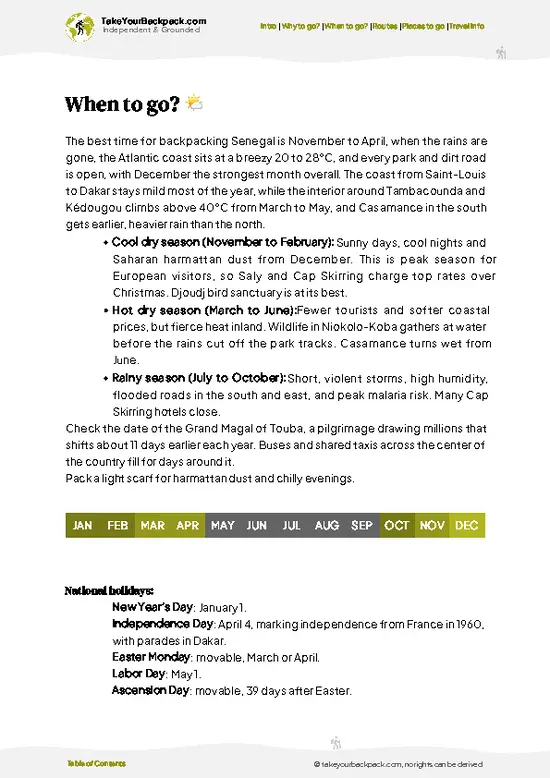
Seasonality plays a crucial role in shaping the experience of cities in Senegal. The dry season, typically from November to April, brings comfortable temperatures and lower humidity. This is when the streets buzz with energy, as both locals and visitors enjoy outdoor activities. However, this peak period also attracts larger crowds, especially around major festivals.

Shoulder seasons, like late October and early May, offer a sweet spot. The weather remains pleasant, but the tourist numbers drop. This means more space to explore and engage with local life. Prices for accommodations may also be lower, making it a budget-friendly option.

Rainy season from June to October transforms the landscape. While the heat can be intense, the rains cool things down and bring vibrant greenery. However, … read more 👉
Seasonality plays a crucial role in shaping the experience of cities in Senegal. The dry season, typically from November to April, brings comfortable temperatures and lower humidity. This is when the streets buzz with energy, as both locals and visitors enjoy outdoor activities. However, this peak period also attracts larger crowds, especially around major festivals.

Shoulder seasons, like late October and early May, offer a sweet spot. The weather remains pleasant, but the tourist numbers drop. This means more space to explore and engage with local life. Prices for accommodations may also be lower, making it a budget-friendly option.

Rainy season from June to October transforms the landscape. While the heat can be intense, the rains cool things down and bring vibrant greenery. However, heavy downpours can disrupt travel plans and make some areas less accessible. Crowds thin out, but the trade-off is missing out on cultural events that thrive in the dry months.

Understanding these seasonal rhythms helps in planning a visit. Balancing the desire for ideal weather with the chance to immerse in local culture is key. Each season offers a unique lens through which to experience the cities, making the effort to time a visit well worth it.

city hoppingPlanning Your Route Efficiently

Traveling through Senegal requires a strategic approach to maximize the experience. Start in Dakar, the bustling capital, where the vibrant markets and rich history set the tone. From there, head to Saint-Louis, about a four-hour drive north. This city offers a slower pace, with colonial architecture and a unique blend of cultures.

Next, consider Kaolack, a central hub that connects to both the south and east. The journey from Saint-Louis takes roughly three hours. Here, the local markets pulse with life, and the scent of spices fills the air.

For those venturing east, Tambacounda is a key stop, about five hours from Kaolack. It serves as a gateway to the Niokolo-Koba National Park, where the thrill of wildlife encounters awaits.

Travelers often rush through these connections, missing … read more 👉
Traveling through Senegal requires a strategic approach to maximize the experience. Start in Dakar, the bustling capital, where the vibrant markets and rich history set the tone. From there, head to Saint-Louis, about a four-hour drive north. This city offers a slower pace, with colonial architecture and a unique blend of cultures.

Next, consider Kaolack, a central hub that connects to both the south and east. The journey from Saint-Louis takes roughly three hours. Here, the local markets pulse with life, and the scent of spices fills the air.

For those venturing east, Tambacounda is a key stop, about five hours from Kaolack. It serves as a gateway to the Niokolo-Koba National Park, where the thrill of wildlife encounters awaits.

Travelers often rush through these connections, missing the nuances of each city. Balancing speed with depth is crucial. Allocate at least two days in each city to soak in the atmosphere, but remain flexible.

Common pitfalls include underestimating travel times and overpacking the itinerary. Prioritize experiences over quantity. The reward lies in savoring the local flavors, engaging with the people, and witnessing the landscapes unfold. Each stop is a chapter in a larger story, best enjoyed at a thoughtful pace.

The ListThe Best cities of Senegal

1 Dakar

Atlantic coastline, contemporary art, bustling markets, nightlife

Experience Senegal’s capital through its ocean views, creative energy, and a daily rhythm shaped by music, commerce, and diverse neighborhoods.

2 Saint-Louis

colonial architecture, island bridges, jazz heritage, riverfront

Wander through narrow streets lined with faded facades, cross iron bridges, and discover a city shaped by river trade and cultural festivals.

3 Ziguinchor

Casamance river, mango groves, ferry port, relaxed pace

Travel south for a slower tempo, where riverside life, lush greenery, and a blend of cultures create a distinct regional identity.

4 Thiès

railway junction, craft workshops, tree-lined avenues, regional hub

Visit a crossroads city known for its artisanal tapestries, transport links, and a mix of urban energy and local tradition.

5 Mbour

fishing port, beachside stalls, daily fish market, boat landings

Watch fishermen haul in the day’s catch, stroll sandy beaches, and sample fresh seafood in a town defined by its coastal economy.

6 Kaolack

peanut trade, salt flats, central market, river crossing

Navigate busy streets near the Saloum River, explore sprawling markets, and see how commerce and agriculture intersect in this regional center.

7 Rufisque

industrial port, colonial remnants, local bakeries, commuter town

Trace the city’s industrial roots, sample fresh bread, and observe daily life in a place balancing old structures and modern growth.

8 Louga

cattle markets, Wolof heartland, dry plains, music traditions

Experience a town where livestock trade, local music, and open landscapes reflect the rhythms of northern Senegal.

9 Tambacounda

railway terminus, gateway to parks, roadside stalls, transit hub

Pause in a city that links east and west, serving as a launch point for journeys into national parks and rural villages.

10 Kolda

savanna landscape, Fulani villages, weekly market, agricultural center

Venture inland to a town surrounded by fields and herds, where rural life and local markets shape the daily experience.

11 Fatick

Serer culture, salt marshes, religious sites, crossroads town

Discover a town where spiritual traditions, salt harvesting, and local festivals reveal the region’s deep cultural layers.

12 Diourbel

peanut processing, Sufi shrines, railway stop, agricultural trade

Explore a city shaped by religious gatherings, crop markets, and the steady movement of goods along the railway.

13 Richard Toll

Sugar plantations, canal system, French-era chateau

Tour vast sugar fields, follow irrigation canals, and visit a chateau that hints at the town’s colonial agricultural ambitions.

14 Sédhiou

Casamance River, mango orchards, local crafts

Cross the Casamance River, sample fresh mangoes in season, and browse handmade goods in a town shaped by river trade.

15 Dagana

River border, colonial fort, market gardens

Stand at the river border with Mauritania, tour a small fort, and see vegetables grown in irrigated plots along the water.

16 Kaffrine

Peanut farming, transport junction, rural market

Travel through a peanut-growing region, stop at a busy crossroads, and experience a market that serves surrounding farming villages.

17 Matam

Sahel riverbank, Fulani culture, weekly market

Travel along the Senegal River, meet Fulani herders, and browse a market that draws rural communities from across the arid region.

18 Kanel

Sahel town, Fulani settlements, dry season markets

Travel through a dry region dotted with Fulani hamlets, and visit during market days when the town briefly comes alive.

19 Mbacké

Religious neighbor, transport hub, local commerce

Use Mbacké as a base for visiting Touba, navigate busy streets, and observe the town’s role as a commercial center.

20 Dande

Remote plateau, cattle herding, seasonal migration

Travel across a sparsely populated plateau where herders move with the seasons and the landscape shifts between dry and green.

Think you know Senegal?

Prove you’re a true local — uncover 10 lesser-known cities in Senegal that locals tend to keep to themselves.
Loading the map 🌍

Expert viewInsights from Locals and Experts

Transport Hubs
Senegal’s transport network is a patchwork of bustling hubs and local routes. Dakar stands as the primary gateway, with its chaotic bus stations and vibrant taxi scene. The energy here is palpable; the air thick with the scent of grilled fish and spices. From Dakar, you can hop on a sept-place—those shared taxis that crisscross the country, squeezing in as many passengers as possible. Expect a lively atmosphere, but be prepared for delays. The trade-off? You’ll save money while soaking in local life, but your schedule may stretch longer than anticipated.

Urban Pacing
Cities in Senegal pulse with a unique rhythm. The pace can feel frenetic, especially in urban centers, where the streets are alive with vendors, music, and the chatter of locals. If you’re looking to dive deep … read more 👉
Transport Hubs
Senegal’s transport network is a patchwork of bustling hubs and local routes. Dakar stands as the primary gateway, with its chaotic bus stations and vibrant taxi scene. The energy here is palpable; the air thick with the scent of grilled fish and spices. From Dakar, you can hop on a sept-place—those shared taxis that crisscross the country, squeezing in as many passengers as possible. Expect a lively atmosphere, but be prepared for delays. The trade-off? You’ll save money while soaking in local life, but your schedule may stretch longer than anticipated.

Urban Pacing
Cities in Senegal pulse with a unique rhythm. The pace can feel frenetic, especially in urban centers, where the streets are alive with vendors, music, and the chatter of locals. If you’re looking to dive deep into the culture, consider spending at least three days in each major city. This allows you to explore beyond the tourist spots, engaging with local traditions and savoring the street food. However, if you’re on a tighter schedule, you might be tempted to rush through. The downside? You’ll miss the nuances—the laughter shared over a bowl of yassa or the stories exchanged with a local artisan.

Local Costs
Budgeting in Senegal is a balancing act. Street food is incredibly affordable, with meals costing just a few dollars, while dining in restaurants can vary widely. Accommodations range from budget hostels to mid-range hotels, but expect to pay more in tourist-heavy areas. If you’re keen to stretch your budget, consider staying in local guesthouses. This not only saves money but also offers a more authentic experience. The trade-off here is comfort; guesthouses may lack some amenities, but the warmth of local hospitality often makes up for it.

Exploring More Cities vs. Deeper Immersion
You might be tempted to tick off multiple cities in a short time, but this often leads to a superficial experience. Senegal is rich in culture and history, and each city has its own unique flavor. If you can, focus on two or three cities. This allows for a more meaningful connection with the people and places. You’ll find that the slower pace reveals hidden layers—like the sound of drums echoing through the night or the aroma of fresh bread wafting from a local bakery. The trade-off is clear: a rushed itinerary may save time but at the cost of genuine experiences.

Safety & Cultural Considerations
While Senegal is generally safe for travelers, it’s wise to stay aware of your surroundings, especially in crowded areas. Dress modestly to respect local customs, particularly in rural regions. Engaging with locals can enhance your experience, but be mindful of cultural sensitivities. A simple greeting in Wolof can open doors and foster goodwill. The trade-off here is the balance between being a curious traveler and respecting local norms.

Navigating Senegal’s cities is a rewarding challenge. Each step, each conversation, and each meal is a piece of the larger puzzle. Embrace the grit of the streets and the warmth of the people, and you’ll find that the effort pays off in ways you never expected.

✈️ The backpacker research shortcutSenegal Travel Guide

An offline-friendly backpacking guide with optimized travel routes, ranked highlights, transport advice, and the best areas to stay.
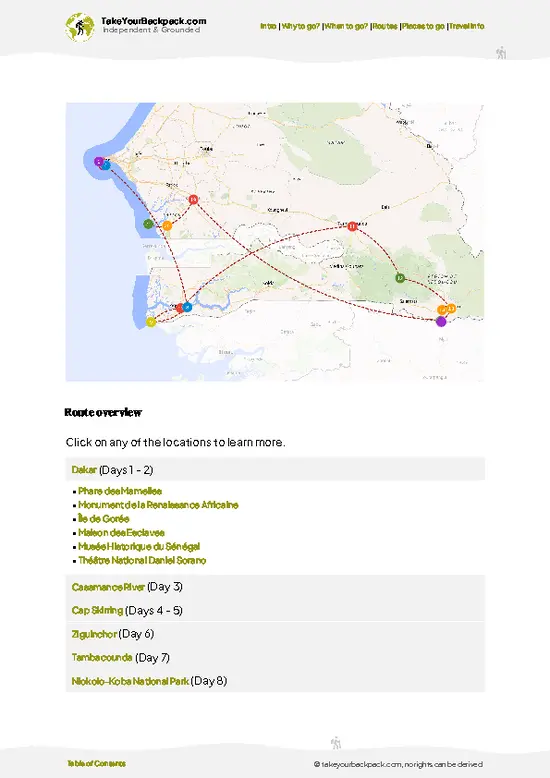
example page 0 from our offline Travel Guide for Senegal
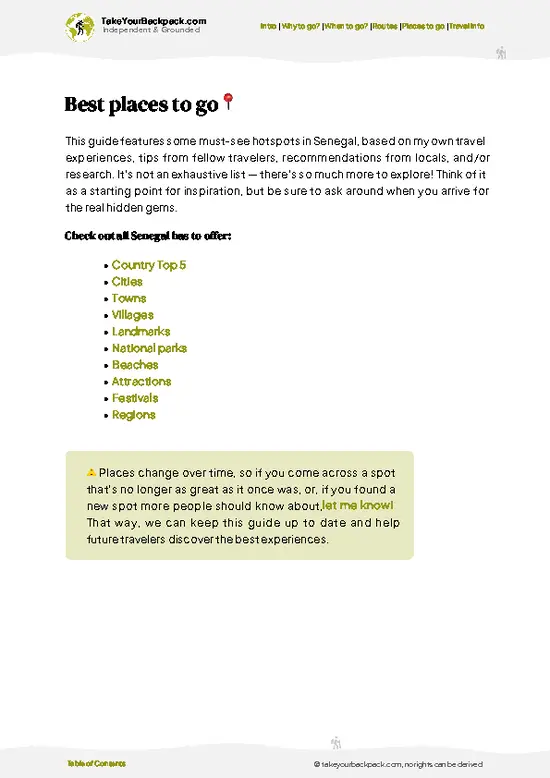
example page 1 from our offline Travel Guide for Senegal
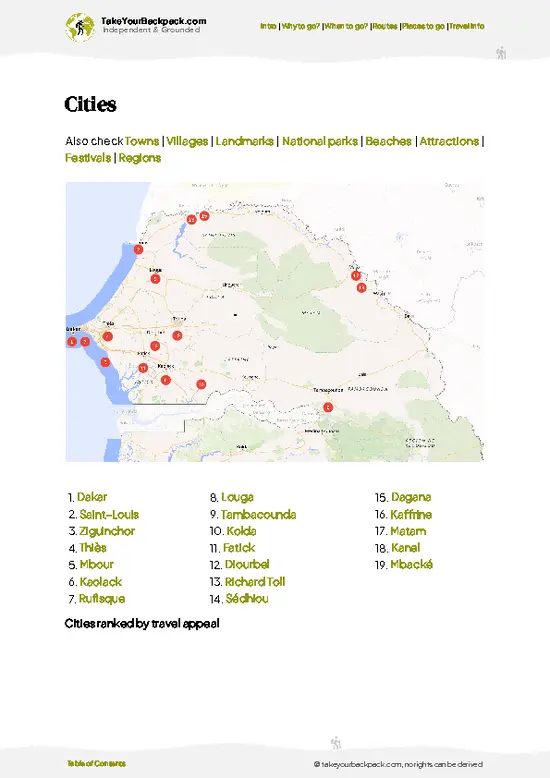
example page 2 from our offline Travel Guide for Senegal
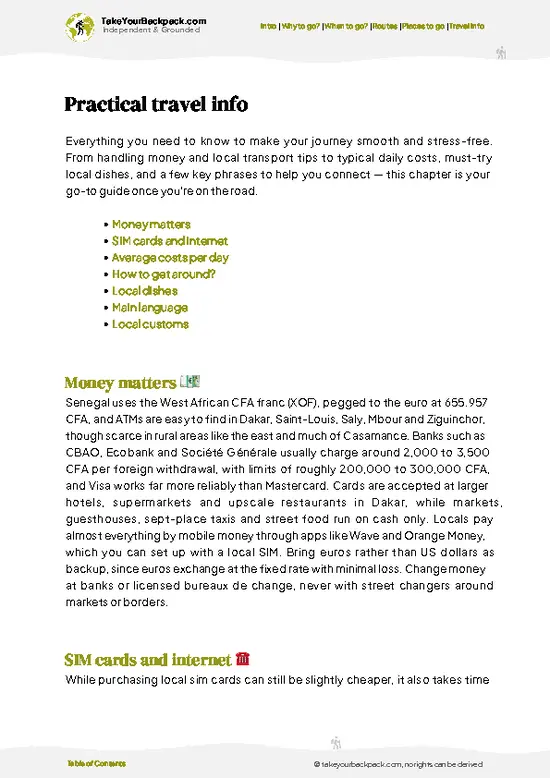
example page 3 from our offline Travel Guide for Senegal
example page 4 from our offline Travel Guide for Senegal
example page 5 from our offline Travel Guide for Senegal
example page 6 from our offline Travel Guide for Senegal
example page 7 from our offline Travel Guide for Senegal
The digital guide (380 pages) contains:
93 highlights, ranked by travel appeal
Optimized 5, 10 & 15-day travel routes
Cities, national parks, landmarks, beaches
How to get around
Offline-friendly for travel without Wi-Fi
👉 Click to see all 30+ guide features

📅 Plan smarter in minutes, not weeks
Month by month travel advice
Festivals & national holidays
Budget expectations

🗺️ Go to the right places, skip the overrated ones
Honest pros & cons of destinations
Top hikes, parks & viewpoints
Lesser-known places most travelers miss
Clear “worth it vs skip it” guidance

🛏️ Travel smoothly without rookie mistakes
Best areas to stay
Transport systems explained simply
Common scams & safety advice
SIM cards, money & practical tips

🌍 Understand the country, not just visit it
Culture & traditions
52 Essential phrases & customs
Festivals worth planning around
Traveler-friendly historical context
Insights that make places more meaningful

📱 Built for real travel conditions
Fully downloadable PDF
Works completely offline
Optimized for phone use
Useful in remote areas & buses
Everything in one place
Save weeks of stressful planning
Get instant access to your full guide. 30‑day money-back guarantee.
+ Add another guide for just US$7.80

By proceeding you agree to our terms.
Sent to your inbox immediately after payment • 100% Secure Checkout
Best Backpacking Travel Advisor 2025 tourism awardBest Backpacking
Travel Advisor
2025
What others say about Take Your Backpack Guides:
⭐⭐⭐⭐⭐
Fantastic, amazing amount of information!
⭐⭐⭐⭐⭐
My goodness this is amazing, it's what I've been looking for hats off too you!
⭐⭐⭐⭐⭐
I think this is absolutely BRILLIANT
⭐⭐⭐⭐
Very complete and informative. It's still missing places, but I gotta to commend you
⭐⭐⭐⭐⭐
This is truly amazing, thank you, can't wait to explore it with my kids!
⭐⭐⭐⭐⭐
Awesome resource, thank you!
⭐⭐⭐⭐⭐
This is amazing! Can't wait to explore the ones I haven't seen
⭐⭐⭐⭐
I love this! Well done, great idea.
⭐⭐⭐⭐⭐
Thanks for taking the time to make this gem!
⭐⭐⭐⭐⭐
This might be the best website I've ever seen.
⭐⭐⭐⭐⭐
Congratulations, and thank you so much for your work; it's incredibly valuable.
⭐⭐⭐⭐
In all seriousness I think you did a great job pointing out the important spots
⭐⭐⭐⭐⭐
10/10 very good
⭐⭐⭐⭐⭐
As someone who's only just starting to visit regularly this is awesome, thank you.
⭐⭐⭐⭐
Thank you very much! I'm going to visit my dad, it's going to be very useful!
⭐⭐⭐⭐⭐
This is really cool! We'll be travelling for the first time and this definitely come in handy.
⭐⭐⭐⭐⭐
You are now our minister of culture, congratulations 👨‍💼
⭐⭐⭐⭐⭐
Just wanted to tell you that this is a pearl! Going to follow your recommendations.
⭐⭐⭐⭐⭐
This is so cool. I'll definitely be using the resource for my travels soon.
⭐⭐⭐⭐⭐
This is very impressive! Good work.
⭐⭐⭐⭐⭐
This is an amazing and informative site. Very well done!

🛏️ Where to stay?Best Stay Options in Senegal

Yes. Hostels and budget guesthouses are available across Senegal, concentrated in Dakar (Plateau, Medina, Almadies, Yoff), in historic Saint‑Louis, on Île de Gorée and in Casamance beach towns like Cap Skirring.

Plateau is central and close to transport and markets but has limited nightlife and some petty‑theft risk after dark; Medina is the cheapest and very local but noisy and less secure at night; Almadies offers beaches and nightlife with safer streets but higher prices; Yoff is quiet and ideal for early flights with few evening options; Saint‑Louis is walkable to colonial sights and quiet after sunset with fewer beds; Île de Gorée is scenic and safe by day but has limited budget beds and … read more 👉
Yes. Hostels and budget guesthouses are available across Senegal, concentrated in Dakar (Plateau, Medina, Almadies, Yoff), in historic Saint‑Louis, on Île de Gorée and in Casamance beach towns like Cap Skirring.

Plateau is central and close to transport and markets but has limited nightlife and some petty‑theft risk after dark; Medina is the cheapest and very local but noisy and less secure at night; Almadies offers beaches and nightlife with safer streets but higher prices; Yoff is quiet and ideal for early flights with few evening options; Saint‑Louis is walkable to colonial sights and quiet after sunset with fewer beds; Île de Gorée is scenic and safe by day but has limited budget beds and depends on ferry schedules; Cap Skirring gives beachfront budget bungalows and camps but requires longer, less frequent transport and basic facilities.

If you enjoy meeting fellow travelers, consider choosing hostels with high ratings for atmosphere. On the other hand, if you prefer having your own space, a hotel might be a better option.

SenegalWhere to Go Next

👋 Meet the founderWho’s Behind Take Your Backpack?

Johan, backpacker and founder of TakeYourBackpackHi, I’m Johan (Netherlands 🇳🇱), the creator of TakeYourBackpack. Over the past decade, I’ve backpacked through 80+ countries across six continents, gaining extensive experience with independent travel, long-term trips, and overland routes.

This site is built on a combination of firsthand travel experience and carefully curated insights from other backpackers. Many guides are based on places I’ve personally visited, while others bring together tips, observations, and practical advice shared by trusted travelers I’ve met along the way.

The goal is to provide realistic, experience-driven guidance — not generic itineraries — so you can explore destinations with better context, clearer expectations, and more confidence.

Get full Senegal guide •
Instant download • 93 highlights • Full Offline guide