×

Sierra Leone🇸🇱 | regionsBunce Islandfort ruins, mangrove channels, river crossing, colonial relics | things to do and best time to go

Explore Kono DistrictExplore Kailahun

Backpacking in Bunce Island
🌟 Highlightregion ranked #2
By Johan Kruseman 🇳🇱 | Updated August 2, 2026

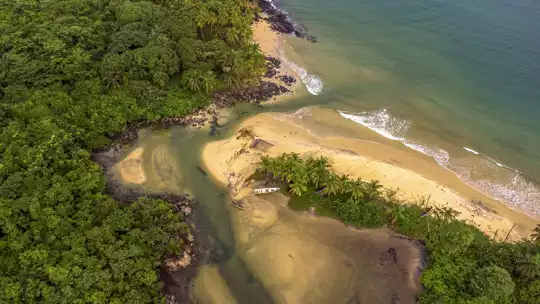
Everyone lands on Bunce Island expecting a somber history lesson—the infamous slave fort, the heavy silence, the sense of standing at a crossroads of human cruelty. But here’s the real secret: what actually sticks with you isn’t just the past, but the raw, living present. Bunce Island sits in the Sierra Leone River, a short, choppy boat ride from Freetown, and the journey there is half the adventure—think mangrove-fringed waterways, fishermen waving from dugouts, and a breeze that smells like rain and woodsmoke.

For backpackers, this isn’t a region built for comfort or convenience. Transport is slow, muddy, and sometimes baffling. Costs are low if you’re patient and flexible, but you’ll trade comfort for authenticity—no polished resorts, just real villages and wild, tangled forest. The vibe is honest, sometimes gritty, never overrun by crowds. Compared to the beaches of the Freetown Peninsula or the wildlife of Outamba-Kilimi, Bunce Island is quieter, more reflective, and deeply human. If you want a place that feels unfiltered, this is it.

Discover everything you want to know in the 📖 Sierra Leone Travel Guide.
Loading the map 🌍
CLICK TO FILTER
cities
towns
landmarks
national parks
hikes
beaches
attractions
festivals
regions
SHOW COUNTRY’S BESTSHOW ALL

✨ Why go?
Ranked #2 region in Sierra Leone
What makes it a must-see region

Bunce Island is a backpacker’s paradise in Sierra Leone, offering a unique blend of nature and culture that keeps you engaged without the hassle of constant relocation. The island is rich in history, once a key site in the transatlantic slave trade, and you can explore its remnants while soaking in the lush surroundings.

You’ll find a variety of landscapes here. From pristine beaches to dense mangroves, it’s a feast for the senses. This diversity means you can easily switch from a relaxing beach day to a hiking adventure without packing up your gear every time.

Transport is surprisingly flexible. You can hop on a local boat or take a short ride to nearby towns, making it easy to mix and match experiences. Want to dive into local culture? Spend a day in a nearby village, savoring traditional … read more 👉
Bunce Island is a backpacker’s paradise in Sierra Leone, offering a unique blend of nature and culture that keeps you engaged without the hassle of constant relocation. The island is rich in history, once a key site in the transatlantic slave trade, and you can explore its remnants while soaking in the lush surroundings.

You’ll find a variety of landscapes here. From pristine beaches to dense mangroves, it’s a feast for the senses. This diversity means you can easily switch from a relaxing beach day to a hiking adventure without packing up your gear every time.

Transport is surprisingly flexible. You can hop on a local boat or take a short ride to nearby towns, making it easy to mix and match experiences. Want to dive into local culture? Spend a day in a nearby village, savoring traditional dishes and chatting with locals.

This is slow travel at its best. You’re not just passing through; you’re immersing yourself in the rhythm of life here. Each moment spent on Bunce Island is a chance to connect deeply, making it a high-value stop on your journey.
Want to include Bunce Island in your Sierra Leone route?
Create a personalized Sierra Leone itinerary that includes Bunce Island and the places that fit your trip — based on your travel style, budget, and available time. Get your route in seconds.

Generate my trip

💡 HighlightsKey sights and experiences for travelers

  1. Bunce Island Slave Castle (the ruins) — The island’s main draw and a visceral, physical piece of history: crumbling walls, cell blocks and foundations that were part of a major British slave-trading post. Walking among the stones gives a real sense of scale and brutality you won’t get from a book or plaque back in town.
  2. Castle ramparts and gun emplacements — Stroll the thick stone ramparts to see the river from the same defensive vantage points used centuries ago. The low tide silhouette of the walls against the water makes for haunting photos and a very particular atmosphere you can only find here.
  3. Governor’s House and merchant warehouse foundations — Scattered foundations and floor outlines reveal where European administrators and traders lived and worked. It’s archaeology you can walk
read more 👉
  1. Bunce Island Slave Castle (the ruins) — The island’s main draw and a visceral, physical piece of history: crumbling walls, cell blocks and foundations that were part of a major British slave-trading post. Walking among the stones gives a real sense of scale and brutality you won’t get from a book or plaque back in town.
  2. Castle ramparts and gun emplacements — Stroll the thick stone ramparts to see the river from the same defensive vantage points used centuries ago. The low tide silhouette of the walls against the water makes for haunting photos and a very particular atmosphere you can only find here.
  3. Governor’s House and merchant warehouse foundations — Scattered foundations and floor outlines reveal where European administrators and traders lived and worked. It’s archaeology you can walk through: compact, readable ruins that show the island’s commercial layout in one tight space.
  4. Mangrove creeks and tidal channels — The island sits in a dense mangrove maze; paddling or skiffing through the channels feels nothing like a mainland forest. The roots, tidal mudflats and the smell of the sea make this ecosystem an essential, very local part of the Bunce Island visit.
  5. Local fishermen landing and smokehouses — (Hidden gem) Small clusters of fishing activity on the island are where locals repair nets, smoke fish and barter. Showing up with a respectful curiosity gets you conversation, the chance to watch traditional smoking techniques and maybe fresh grilled fish straight off the rack.
  6. Oyster beds and intertidal foraging spots — (Hidden gem) At low tide you can see the island’s oysters and shell middens where people harvest shellfish. It’s a tactile, salty slice of island life — bring gloves and ask permission before collecting anything, but don’t skip watching the harvesters at work.
  7. Mudflat and shore birdwatching — The island’s shallow estuary feeds flocks of waders, kingfishers and sea-birds. For quiet, patient observation you’ll see species and behaviors that aren’t common in the city — a calming, nature-forward part of the Bunce Island experience.
  8. Less-visited ruin niches and cisterns — (Hidden gem) Away from the main castle rooms there are narrow alleys, storage pits and rain cisterns that most day-trippers miss. These small, tucked-away features reward slow exploration and tell quieter stories about daily life on the island.
  9. Western-shore sunset vantage point — The ruined silhouette of Bunce Island against a setting sun is dramatic and oddly peaceful. Sit on the rocks or a low wall, watch the tide glide by, and you’ll understand why photographers and locals linger here at dusk.
  10. Boat approach through the Sierra Leone River estuary — The approach is part of the attraction: a short river ride through mangroves and mudflats with local boatmen who often narrate history and point out wildlife. The waterway arrival frames the island in a way nothing on land can replicate — it’s transport and storytelling rolled into one.
Spotted a mistake or missing something? Contact us.

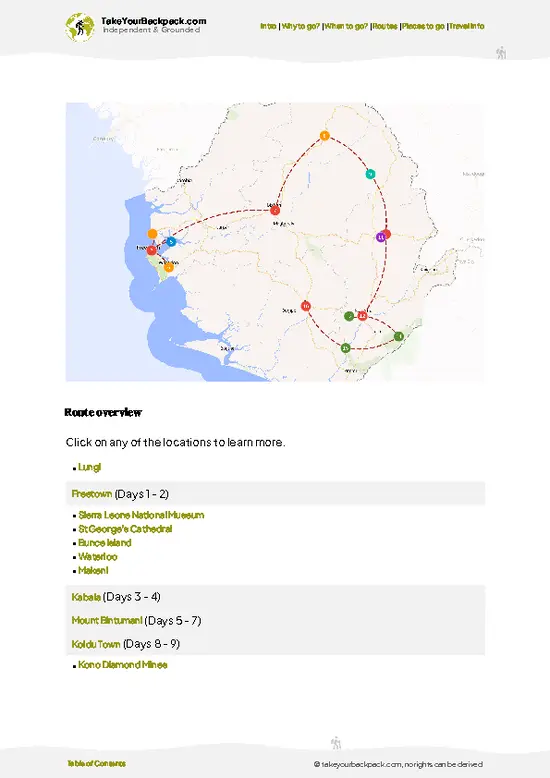
⌛️ 5 daysWhat you can realistically do in a week

Day 1: Freetown
Start your adventure in Freetown, the bustling capital. The ferry ride to Bunce Island is your first taste of local life. It’s about an hour across the water, but the views of the coastline are worth every second. Arrive early to beat the crowds and snag a good spot on the deck. The ferry schedule can be unpredictable, so flexibility is key. Spend the afternoon exploring the local markets; the energy is infectious, and you’ll find everything from fresh fruit to handmade crafts.

Day 2: Bunce Island
Today, dive into the history of Bunce Island. The remnants of the slave trading post are haunting yet essential to understand Sierra Leone’s past. Guided tours are available, and they’re invaluable for context. You’ll want to spend a good chunk of the day here, absorbing the … read more 👉
Day 1: Freetown
Start your adventure in Freetown, the bustling capital. The ferry ride to Bunce Island is your first taste of local life. It’s about an hour across the water, but the views of the coastline are worth every second. Arrive early to beat the crowds and snag a good spot on the deck. The ferry schedule can be unpredictable, so flexibility is key. Spend the afternoon exploring the local markets; the energy is infectious, and you’ll find everything from fresh fruit to handmade crafts.

Day 2: Bunce Island
Today, dive into the history of Bunce Island. The remnants of the slave trading post are haunting yet essential to understand Sierra Leone’s past. Guided tours are available, and they’re invaluable for context. You’ll want to spend a good chunk of the day here, absorbing the stories and the atmosphere. The island is small, so you can take your time. Bring a picnic; the views from the ruins are stunning, and you’ll want to linger.

Day 3: River Cruise
Take a break from land and hop on a river cruise. This isn’t just about relaxation; it’s a chance to see the lush landscapes and wildlife. The cruise can take a few hours, so plan for a leisurely day. You might spot monkeys or birds, making it a perfect photo op. This is your ‘Off-Path Reward’—a detour that enriches your experience without straying too far from your base.

Day 4: Return to Freetown
Head back to Freetown for a day of exploration. Visit the National Museum and soak in the local culture. The transport back can be slow, so factor in some buffer time. Spend your evening at a local eatery; the jollof rice here is legendary.

Day 5: Must-Do Day
Your final day is a must-do: hike up to the Cotton Tree and explore the surrounding hills. The views are breathtaking, and the sense of accomplishment is unbeatable. This day encapsulates the spirit of Sierra Leone—rich in history, culture, and natural beauty. It’s the perfect way to wrap up your journey.
Turn your Bunce Island visit into an Sierra Leone adventure
Build a complete Sierra Leone route with Bunce Island, hidden gems, must-see destinations, and realistic travel times included.

Generate my trip

🌤️ When to go?Seasonal considerations and timing


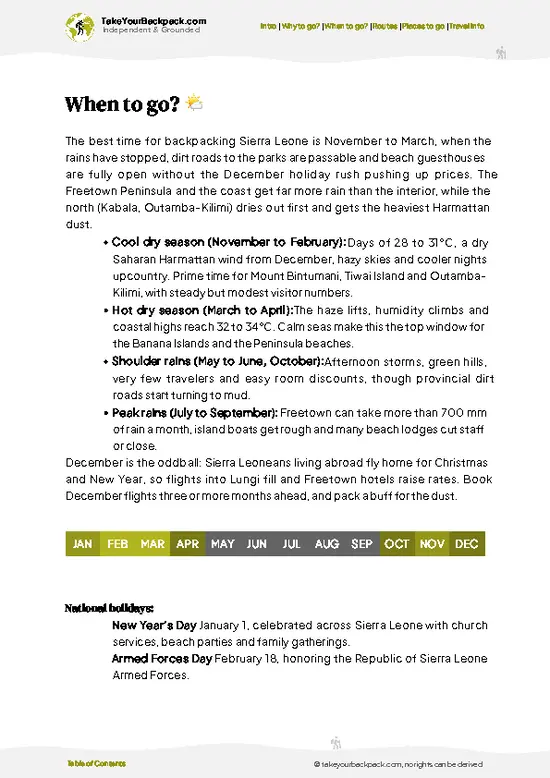
  • Weather: The dry season from November to May is your best bet. Expect clear skies and minimal rain, perfect for trekking around Bunce Island’s ruins without getting bogged down in mud or mosquitoes.

  • Temperature: Daytime highs hover around 28-32°C (82-90°F) during the dry months, which feels warm but manageable with a breeze off the Atlantic. The wet season cools things slightly but brings humidity that can sap your energy fast.

  • Daylight Hours: Roughly 11 to 12 hours of daylight year-round, but the dry season offers more consistent sunshine, so you can plan longer explorations without racing the sunset.

  • Crowds: Bunce Island isn’t exactly a tourist hotspot, but the dry season attracts the few who do come, mostly history buffs and researchers. Visiting just before or after peak dry months
read more 👉

  • Weather: The dry season from November to May is your best bet. Expect clear skies and minimal rain, perfect for trekking around Bunce Island’s ruins without getting bogged down in mud or mosquitoes.

  • Temperature: Daytime highs hover around 28-32°C (82-90°F) during the dry months, which feels warm but manageable with a breeze off the Atlantic. The wet season cools things slightly but brings humidity that can sap your energy fast.

  • Daylight Hours: Roughly 11 to 12 hours of daylight year-round, but the dry season offers more consistent sunshine, so you can plan longer explorations without racing the sunset.

  • Crowds: Bunce Island isn’t exactly a tourist hotspot, but the dry season attracts the few who do come, mostly history buffs and researchers. Visiting just before or after peak dry months means fewer people and a more personal vibe.

  • Seasonal Activities: Dry months are prime for boat trips and guided tours around the island. Wet season often cancels these due to rough seas and slippery trails, so timing is key if you want the full experience.

  • Price Fluctuations: Expect slightly higher prices for local guides and transport during the dry season when demand peaks. Off-season rates drop but come with the risk of weather disruptions.


Pro-tip: Aim for late November or early May—right on the edge of the dry season—to snag good weather, fewer crowds, and better prices. It’s the insider sweet spot.


source: climatestotravel.comJANJanuary: excellent for travelingFEBFebruary: excellent for travelingMARMarch: excellent for travelingAPRApril: excellent for travelingMAYMay: highly recommended for travelingJUNJune: fair for travelingJULJuly: below average for travelingAUGAugust: below average for travelingSEPSeptember: fair for travelingOCTOctober: good for travelingNOVNovember: highly recommended for travelingDECDecember: excellent for traveling
when-to-go

✈️ The backpacker research shortcutSierra Leone Travel Guide

An offline-friendly backpacking guide with optimized travel routes, ranked highlights, transport advice, and the best areas to stay.
example page 0 from our offline Travel Guide for Sierra Leone
example page 1 from our offline Travel Guide for Sierra Leone
example page 2 from our offline Travel Guide for Sierra Leone
example page 3 from our offline Travel Guide for Sierra Leone
example page 4 from our offline Travel Guide for Sierra Leone
example page 5 from our offline Travel Guide for Sierra Leone
example page 6 from our offline Travel Guide for Sierra Leone
example page 7 from our offline Travel Guide for Sierra Leone
The digital guide (275 pages) contains:
63 highlights, ranked by travel appeal
Optimized 5, 10 & 15-day travel routes
Cities, national parks, landmarks, beaches
How to get around
Offline-friendly for travel without Wi-Fi
👉 Click to see all 30+ guide features

📅 Plan smarter in minutes, not weeks
Month by month travel advice
Festivals & national holidays
Budget expectations

🗺️ Go to the right places, skip the overrated ones
Honest pros & cons of destinations
Top hikes, parks & viewpoints
Lesser-known places most travelers miss
Clear “worth it vs skip it” guidance

🛏️ Travel smoothly without rookie mistakes
Best areas to stay
Transport systems explained simply
Common scams & safety advice
SIM cards, money & practical tips

🌍 Understand the country, not just visit it
Culture & traditions
52 Essential phrases & customs
Festivals worth planning around
Traveler-friendly historical context
Insights that make places more meaningful

📱 Built for real travel conditions
Fully downloadable PDF
Works completely offline
Optimized for phone use
Useful in remote areas & buses
Everything in one place
Save weeks of stressful planning
Get instant access to your full guide. 30‑day money-back guarantee.


By proceeding you agree to our terms.
Sent to your inbox immediately after payment • 100% Secure Checkout
Best Backpacking Travel Advisor 2025 tourism awardBest Backpacking
Travel Advisor
2025
What others say about Take Your Backpack Guides:
⭐⭐⭐⭐⭐
Fantastic, amazing amount of information!
⭐⭐⭐⭐⭐
My goodness this is amazing, it's what I've been looking for hats off too you!
⭐⭐⭐⭐⭐
I think this is absolutely BRILLIANT
⭐⭐⭐⭐
Very complete and informative. It's still missing places, but I gotta to commend you
⭐⭐⭐⭐⭐
This is truly amazing, thank you, can't wait to explore it with my kids!
⭐⭐⭐⭐⭐
Awesome resource, thank you!
⭐⭐⭐⭐⭐
This is amazing! Can't wait to explore the ones I haven't seen
⭐⭐⭐⭐
I love this! Well done, great idea.
⭐⭐⭐⭐⭐
Thanks for taking the time to make this gem!
⭐⭐⭐⭐⭐
This might be the best website I've ever seen.
⭐⭐⭐⭐⭐
Congratulations, and thank you so much for your work; it's incredibly valuable.
⭐⭐⭐⭐
In all seriousness I think you did a great job pointing out the important spots
⭐⭐⭐⭐⭐
10/10 very good
⭐⭐⭐⭐⭐
As someone who's only just starting to visit regularly this is awesome, thank you.
⭐⭐⭐⭐
Thank you very much! I'm going to visit my dad, it's going to be very useful!
⭐⭐⭐⭐⭐
This is really cool! We'll be travelling for the first time and this definitely come in handy.
⭐⭐⭐⭐⭐
You are now our minister of culture, congratulations 👨‍💼
⭐⭐⭐⭐⭐
Just wanted to tell you that this is a pearl! Going to follow your recommendations.
⭐⭐⭐⭐⭐
This is so cool. I'll definitely be using the resource for my travels soon.
⭐⭐⭐⭐⭐
This is very impressive! Good work.
⭐⭐⭐⭐⭐
This is an amazing and informative site. Very well done!

🛏️ Where to stay?Best areas to stay in Sierra Leone

Bunce Island isn’t just a destination; it’s a doorway into Sierra Leone’s rich history and vibrant culture. When you’re backpacking in this region, you want to stay where the vibe is right and the connections are easy.

Start in Freetown, the capital. It’s bustling, with a mix of locals and travelers. The beach areas, especially around Lumley Beach, are where you’ll find a lively scene. Grab a cold drink at a beach bar and chat with fellow backpackers. The energy here is infectious, and you’ll find plenty of opportunities for group outings to Bunce Island itself.

Next, consider Tokeh Beach. … read more 👉
Bunce Island isn’t just a destination; it’s a doorway into Sierra Leone’s rich history and vibrant culture. When you’re backpacking in this region, you want to stay where the vibe is right and the connections are easy.

Start in Freetown, the capital. It’s bustling, with a mix of locals and travelers. The beach areas, especially around Lumley Beach, are where you’ll find a lively scene. Grab a cold drink at a beach bar and chat with fellow backpackers. The energy here is infectious, and you’ll find plenty of opportunities for group outings to Bunce Island itself.

Next, consider Tokeh Beach. It’s a bit quieter but still social. The laid-back atmosphere is perfect for unwinding after a day of exploration. You can meet fellow travelers around bonfires or during beach volleyball games. The sunsets here are worth the trip alone.

If you’re feeling adventurous, head to Bo. This town is a hub for cultural experiences. You’ll find local markets and friendly faces eager to share stories. It’s a great base for day trips to nearby attractions, and the community vibe makes it easy to connect with others.

Each of these spots offers a unique slice of Sierra Leone, balancing comfort, social interaction, and budget-friendly options. Choose wisely, and you’ll create memories that stick.

🚌 Getting aroundHow to get from A to B

Bunce Island is a place where time feels fluid, like the ebb and flow of the tide. Schedules? They’re more like suggestions here. You’ll find yourself navigating a vibrant mix of local intuition and the occasional burst of organized chaos. The island’s transport scene is a dance of spontaneity, where you might hop on a boat with a group of locals or wait for a bus that seems to run on its own clock. Embrace the unpredictability; it’s part of the charm. You’re not just traveling; you’re immersing yourself in the rhythm of life here.


  • Boat Taxi: These are your lifelines to the mainland and other nearby islands. Expect to pay around 10,000 to 20,000 Leones for a ride, depending on your destination. Boats typically run from dawn until dusk, but don’t be surprised if they leave when they’re full.
read more 👉
Bunce Island is a place where time feels fluid, like the ebb and flow of the tide. Schedules? They’re more like suggestions here. You’ll find yourself navigating a vibrant mix of local intuition and the occasional burst of organized chaos. The island’s transport scene is a dance of spontaneity, where you might hop on a boat with a group of locals or wait for a bus that seems to run on its own clock. Embrace the unpredictability; it’s part of the charm. You’re not just traveling; you’re immersing yourself in the rhythm of life here.


  • Boat Taxi: These are your lifelines to the mainland and other nearby islands. Expect to pay around 10,000 to 20,000 Leones for a ride, depending on your destination. Boats typically run from dawn until dusk, but don’t be surprised if they leave when they’re full. Speedy and breezy, they offer a unique view of the coastline.


  • Local Buses: The buses are colorful and packed with character. Fares are usually between 5,000 to 10,000 Leones. They run sporadically, so be prepared for a wait. Comfort is basic, but you’ll get a taste of local life as you share the space with friendly faces and lively chatter.


  • Bicycle Rentals: If you’re feeling adventurous, renting a bike can cost around 15,000 Leones for the day. It’s a great way to explore the island at your own pace. Just be ready for some bumpy roads and a few hills. The freedom to stop wherever you want is worth it.


  • Motorbike Taxis: For a quick and exhilarating ride, hop on a motorbike taxi. Fares are generally around 10,000 Leones for short distances. They’re fast and can weave through traffic, but hold on tight! It’s a thrilling way to get around.


  • Walking: Don’t underestimate the power of your own two feet. Strolling around Bunce Island is free and lets you soak in the sights and sounds. Just be mindful of the heat and stay hydrated.


Here’s the insider tip: always ask locals about the best times to catch a boat or bus. They know the rhythms of the island better than any schedule. If you can, aim for early morning or late afternoon; that’s when you’ll find the most reliable transport and fewer crowds. Embrace the flow, and you’ll find your way around Bunce Island like a local.

🍲 FoodLocal Flavors for Backpackers

Bunce Island isn’t just a historical site; it’s a feast for the senses. The aroma of grilled fish wafts through the air, mingling with the scent of spicy jollof rice simmering in nearby pots. This West African classic, with its rich tomato base and a kick of chili, is a must-try. Pair it with groundnut stew, a creamy concoction that’s both comforting and flavorful.

Street food stalls are where the magic happens. Grab a plate of fufu, a starchy staple, and watch as locals dip it into savory soups. The vibrancy of the market scene is infectious; vendors shout out their specials, and the laughter of children fills the air. Don’t miss the chance to sip on palm wine, a local favorite that’s sweet and slightly effervescent, perfect for cooling off after a day of exploration.

Dining here is casual … read more 👉
Bunce Island isn’t just a historical site; it’s a feast for the senses. The aroma of grilled fish wafts through the air, mingling with the scent of spicy jollof rice simmering in nearby pots. This West African classic, with its rich tomato base and a kick of chili, is a must-try. Pair it with groundnut stew, a creamy concoction that’s both comforting and flavorful.

Street food stalls are where the magic happens. Grab a plate of fufu, a starchy staple, and watch as locals dip it into savory soups. The vibrancy of the market scene is infectious; vendors shout out their specials, and the laughter of children fills the air. Don’t miss the chance to sip on palm wine, a local favorite that’s sweet and slightly effervescent, perfect for cooling off after a day of exploration.

Dining here is casual and communal. Expect to share tables and stories with locals. It’s customary to eat with your hands, so dive in! Just remember to wash your hands first—water is often provided in a communal bowl. This isn’t just a meal; it’s a connection to the culture, a taste of the island’s heart.

Other Sierra Leonean regions near Bunce Island

Explore more nearby:

  • Freetown Peninsula—urban beaches, hillside neighborhoods, cotton tree, city markets| 6 km away
  • Kono District—diamond fields, forested hills, rural villages, mining settlements| 218 km away

💡 Not sure where to go next?
Create a personalized itinerary for Sierra Leone including Bunce Island and the places that fit your trip.

Generate my itinerary

👉 Discover all regions

Or checkout all Sierra Leone has to offer (think cities, towns, villages, national parks, hikes, beaches, festivals)
Country photo of Sierra Leone

We 💚 feedbackFinal thoughts on visiting Bunce Island

Bunce Island is a slice of raw history that’ll hit you hard. The vibe? It’s haunting yet beautiful, with remnants of the slave trade echoing through the ruins. The best surprise? The local guides—they’re passionate storytellers who’ll pull you into the island’s past. Just a heads-up: the boat ride can be a bit bumpy, so brace yourself. But trust me, the experience is worth every wave. You’ll leave with a deeper understanding and a heavy heart, but that’s what makes it real.

✍️ Help improve this page!
The information on this page is based on in-depth research, insights shared by experienced travelers, and feedback from the local travel community in Sierra Leone. While every effort is made to keep the information accurate and current, conditions can change — so if you spot anything incorrect or outdated, please get in touch.


🙋‍♂️ Give feedback

👋 Meet the founderWho’s Behind Take Your Backpack?

Johan, backpacker and founder of TakeYourBackpackHi, I’m Johan (Netherlands 🇳🇱), the creator of TakeYourBackpack. Over the past decade, I’ve backpacked through 80+ countries across six continents, gaining extensive experience with independent travel, long-term trips, and overland routes.

This site is built on a combination of firsthand travel experience and carefully curated insights from other backpackers. Many guides are based on places I’ve personally visited, while others bring together tips, observations, and practical advice shared by trusted travelers I’ve met along the way.

The goal is to provide realistic, experience-driven guidance — not generic itineraries — so you can explore destinations with better context, clearer expectations, and more confidence.

Get full country guide •
Instant download • 63 highlights • Full Offline guide