×

Sierra Leone🇸🇱 | citiesMakenicentral mosque, regional crossroads, educational centers, open-air gatherings | things to do and best time to go

Explore Koidu TownExplore Moyamba

Backpacking in Makeni
👍 Recommendedcity ranked #5
By Johan Kruseman 🇳🇱 | Updated July 20, 2026

Forget the idea that Makeni is just a pit stop on the way to Sierra Leone’s beaches or game parks. It’s the country’s fourth-largest city, right in the heart of the Northern Province, and it’s got a pulse all its own. Makeni isn’t polished—think more lively crossroads than curated destination—but that’s exactly its charm. You’ll find the clock tower at the city center, a few colonial-era buildings, and the always-busy Wusum Hotel bar where locals and expats actually mingle. Backpackers won’t find a museum crawl or a string of Instagram-ready cafes, but you will get a genuine slice of Sierra Leonean daily life, with street food, open-air markets, and the kind of spontaneous football matches that pull you in. It’s cheaper and friendlier than Freetown, but less cosmopolitan. Safety is decent by regional standards, though you’ll want to keep your wits about you after dark. Meeting other travelers is hit-or-miss—Makeni’s not on the classic backpacker circuit, but that’s part of the appeal if you’re after real connection over crowd-chasing. The vibe? Unfiltered, energetic, and refreshingly unpretentious.

Discover everything you want to know in the 📖 Sierra Leone Travel Guide.
Loading the map 🌍
CLICK TO FILTER
cities
towns
landmarks
national parks
hikes
beaches
attractions
festivals
regions
SHOW COUNTRY’S BESTSHOW ALL

✨ Why go?
Ranked #5 city in Sierra Leone
Why Makeni should be on your travel list

Makeni is a strategic stop for backpackers weaving through Sierra Leone. It’s not just about the highlights; it’s about how the city fits into your journey. The basecamp value here is impressive. You can easily launch day trips to nearby attractions without the hassle of long travel times.

Accommodations are budget-friendly, with several hostels offering a mix of comfort and community. You’ll find a vibrant atmosphere where fellow travelers share stories over local food that’s both delicious and affordable. The city is walkable, making it easy to explore on foot, which adds to the charm.

When the sun sets, the nightlife offers a relaxed vibe, perfect for unwinding after a day of exploration. Plus, Makeni serves as a convenient hub for onward travel to other destinations in Sierra Leone, … read more 👉
Makeni is a strategic stop for backpackers weaving through Sierra Leone. It’s not just about the highlights; it’s about how the city fits into your journey. The basecamp value here is impressive. You can easily launch day trips to nearby attractions without the hassle of long travel times.

Accommodations are budget-friendly, with several hostels offering a mix of comfort and community. You’ll find a vibrant atmosphere where fellow travelers share stories over local food that’s both delicious and affordable. The city is walkable, making it easy to explore on foot, which adds to the charm.

When the sun sets, the nightlife offers a relaxed vibe, perfect for unwinding after a day of exploration. Plus, Makeni serves as a convenient hub for onward travel to other destinations in Sierra Leone, making it a practical choice for those on the move.

Ultimately, if you’re looking for a place that balances comfort and adventure, Makeni is worth considering—whether for a longer stay or a quick pit stop.
Want to include Makeni in your Sierra Leone route?
Create a personalized Sierra Leone itinerary that includes Makeni and the places that fit your trip — based on your travel style, budget, and available time. Get your route in seconds.

Generate my trip

💡 HighlightsKey sights and experiences for travelers

  1. University of Makeni (UNIMAK) — The city’s main university campus: a low-key cultural hub where lectures, student events, and a tidy campus library make for great people-watching and a peek at local student life. You can often sit in on public talks or find campus cafés to meet students and faculty.
  2. Makeni Central Market — The beating heart of the city. Fresh produce, dried fish, fabrics, phone shops and stalls selling everything from peanuts to truck tires — markets are where everyday Makeni life unfolds and where you learn the best bargaining rhythm.
  3. Makeni Central Mosque — A key communal place for the city’s Muslim majority. Visiting outside of prayer times is respectful and gives you a look at local religious architecture and community networks; Friday prayers are a powerful local
read more 👉
  1. University of Makeni (UNIMAK) — The city’s main university campus: a low-key cultural hub where lectures, student events, and a tidy campus library make for great people-watching and a peek at local student life. You can often sit in on public talks or find campus cafés to meet students and faculty.
  2. Makeni Central Market — The beating heart of the city. Fresh produce, dried fish, fabrics, phone shops and stalls selling everything from peanuts to truck tires — markets are where everyday Makeni life unfolds and where you learn the best bargaining rhythm.
  3. Makeni Central Mosque — A key communal place for the city’s Muslim majority. Visiting outside of prayer times is respectful and gives you a look at local religious architecture and community networks; Friday prayers are a powerful local experience if you observe respectfully from outside.
  4. Diocesan Cathedral (seat of the Roman Catholic Diocese of Makeni) — The Catholic diocese is active here; the cathedral compound offers insight into the town’s Christian community, charity and education programs, and often hosts concerts or community events worth timing your visit for.
  5. Wusum Stadium — The local sports ground where football matches and community events draw noisy, passionate crowds. If you can catch a match, it’s one of the most authentic and social experiences in town.
  6. Makeni City Centre / Town Hall area — Walkable streets, small shops and government offices concentrate civic life here. It’s the easiest neighbourhood to feel the pulse of the city, watch daily commerce, and find local minibuses and moto routes.
  7. Traditional Chiefs’ Compound (Paramount Chief’s area) — The traditional council seat is part of Makeni’s cultural backbone. With permission and a guide, you can learn about local governance, ceremonies, and the role of customary authorities in everyday life.
  8. Tailors’ and Craft Lanes — Small workshops and tailors cluster in parts of town where handmade clothes, repairs and simple wood or metal crafts are produced. It’s low-cost, tactile, and the place to commission a fitted item or watch a craft skill up close.
  9. Local Eateries and Street-food Corridors — Not a single landmark but an essential circuit: try roti, accra (fried balls), spicy stews and grilled street meat at busy food stretches. Eating where locals eat gives you both flavor and conversation worth more than any museum.
  10. Community and Youth Centres — Spaces run by local NGOs, the university or churches that host workshops, music nights and exhibitions. They’re great for catching grassroots arts, meeting young locals, and plugging into volunteer-run events.
A few good day-trip options near Makeni include the Wusum Hills viewpoint and surrounding Bombali chiefdom villages for short hikes and village visits, the nearby town of Lunsar for a different market and mining-town vibe, and short drives into the Bombali countryside to visit local farming communities and seasonal markets.
Spotted a mistake or missing something? Contact us.

🏘️ NeighborhoodsNeighborhood guide to Makeni

Makeni, a vibrant hub in Sierra Leone, offers a mix of local culture and practical amenities for backpackers. Here’s how the neighborhoods stack up:

Central Makeni: This is the heartbeat of the city. You’ll find markets, shops, and eateries buzzing with life. It’s walkable, making it easy to explore on foot. Costs are moderate, with plenty of budget-friendly options. Nightlife is lively but not overwhelming, perfect for those who want a taste of local life without the chaos. Ideal for short stays.

Makeni Town Center: A bit more laid-back, this area has a quieter vibe. It’s still close to the action but offers a more relaxed atmosphere. Transport access is good, with taxis readily available. Prices are slightly lower than Central Makeni, making it a solid choice for longer stays where you … read more 👉
Makeni, a vibrant hub in Sierra Leone, offers a mix of local culture and practical amenities for backpackers. Here’s how the neighborhoods stack up:

Central Makeni: This is the heartbeat of the city. You’ll find markets, shops, and eateries buzzing with life. It’s walkable, making it easy to explore on foot. Costs are moderate, with plenty of budget-friendly options. Nightlife is lively but not overwhelming, perfect for those who want a taste of local life without the chaos. Ideal for short stays.

Makeni Town Center: A bit more laid-back, this area has a quieter vibe. It’s still close to the action but offers a more relaxed atmosphere. Transport access is good, with taxis readily available. Prices are slightly lower than Central Makeni, making it a solid choice for longer stays where you want to settle in.

Wusum Street: Known for its restaurants and cafes, this street is a great spot for foodies. The vibe is casual and friendly, with a mix of locals and travelers. It’s walkable, but you might want to grab a taxi at night. Costs can vary, but you can find affordable eats. Best for those looking to enjoy a longer culinary experience.

Grafton Road: This area is quieter and more residential. It’s less touristy, giving you a chance to see daily life in Makeni. Walkability is decent, but you’ll need to rely on taxis for longer distances. Prices are low, making it a budget-friendly option for extended stays. Perfect for those seeking a more immersive experience.

⌛️ 1 dayHow to make the most of one day

Makeni, Sierra Leone, is a vibrant hub of culture and community, where the warmth of the locals matches the sun-soaked streets. This city, often overlooked by travelers, offers a genuine glimpse into the heart of Sierra Leonean life. You can experience a day here that balances exploration with relaxation, all while immersing yourself in the local rhythm.

Start your morning in the bustling center of town, where the aroma of street food fills the air. Grab a breakfast of “akara” (bean cakes) from a local vendor. Pair it with a cup of sweet, milky tea, and you’re set for the day. After breakfast, stroll through the lively market in the heart of the city. The colors, sounds, and chatter create a sensory feast. Engage with vendors selling everything from fresh produce to handmade crafts. This … read more 👉
Makeni, Sierra Leone, is a vibrant hub of culture and community, where the warmth of the locals matches the sun-soaked streets. This city, often overlooked by travelers, offers a genuine glimpse into the heart of Sierra Leonean life. You can experience a day here that balances exploration with relaxation, all while immersing yourself in the local rhythm.

Start your morning in the bustling center of town, where the aroma of street food fills the air. Grab a breakfast of “akara” (bean cakes) from a local vendor. Pair it with a cup of sweet, milky tea, and you’re set for the day. After breakfast, stroll through the lively market in the heart of the city. The colors, sounds, and chatter create a sensory feast. Engage with vendors selling everything from fresh produce to handmade crafts. This is not just shopping; it’s a chance to connect with the community.

In the afternoon, head to the nearby Lunsar River. It’s a peaceful spot where you can unwind and take in the natural beauty. Bring a book or simply enjoy the sounds of nature. If you’re feeling adventurous, consider a short hike in the surrounding hills for panoramic views of the city.

As evening approaches, return to the city center and visit the local cultural center. Here, you might catch a dance performance or a local music session. It’s a fantastic way to experience Sierra Leone’s rich traditions. For dinner, seek out a local eatery in the Kamakwie neighborhood. Try “jollof rice” paired with grilled chicken, a dish that’s both comforting and delicious.

By the end of the day, you’ll have woven through the fabric of Makeni, experiencing its essence in a way that’s both enriching and memorable.
Turn your Makeni visit into an Sierra Leone adventure
Build a complete Sierra Leone route with Makeni, hidden gems, must-see destinations, and realistic travel times included.

Generate my trip

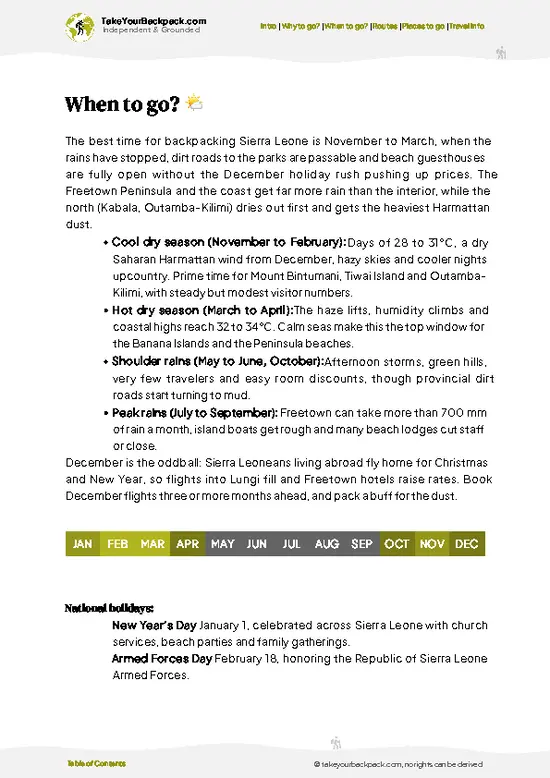
🌤️ When to go?Seasonal considerations and timing


  • Weather: Makeni’s climate swings between a wet season (May to October) and a dry season (November to April). The dry season offers clear skies and less humidity, making trekking and exploring more comfortable. The wet season, while lush, brings heavy rains that can turn trails into mudslides and disrupt plans.

  • Temperature: Expect daytime highs around 28-32°C (82-90°F) during the dry months, cooling off at night to a pleasant 20-22°C (68-72°F). The wet season is slightly cooler but stickier, with highs around 26-29°C (79-84°F).

  • Daylight Hours: Daylight remains fairly consistent year-round, roughly 11 to 12 hours per day. This steadiness means you can plan hikes and activities without worrying about drastically shifting sunset times.

  • Crowds: Makeni isn’t a tourist hotspot, so crowds
read more 👉

  • Weather: Makeni’s climate swings between a wet season (May to October) and a dry season (November to April). The dry season offers clear skies and less humidity, making trekking and exploring more comfortable. The wet season, while lush, brings heavy rains that can turn trails into mudslides and disrupt plans.

  • Temperature: Expect daytime highs around 28-32°C (82-90°F) during the dry months, cooling off at night to a pleasant 20-22°C (68-72°F). The wet season is slightly cooler but stickier, with highs around 26-29°C (79-84°F).

  • Daylight Hours: Daylight remains fairly consistent year-round, roughly 11 to 12 hours per day. This steadiness means you can plan hikes and activities without worrying about drastically shifting sunset times.

  • Crowds: Makeni isn’t a tourist hotspot, so crowds are minimal year-round. However, local festivals and market days during the dry season can bring a lively buzz, offering cultural immersion without the tourist crush.

  • Seasonal Activities: The dry season is prime for outdoor adventures—hiking, village visits, and market exploration. The wet season invites a different rhythm, with vibrant greenery and fewer travelers, but some trails may be inaccessible.

  • Price Fluctuations: Accommodation and transport prices dip slightly in the wet season due to lower demand, but the trade-off is less reliable travel conditions. The dry season commands a modest premium but rewards with smoother logistics and more options.


Pro-tip: Aim for the shoulder months of November or April to balance fewer crowds, manageable weather, and better prices—getting the best bang for your backpacking buck.


source: climatestotravel.comJANJanuary: excellent for travelingFEBFebruary: excellent for travelingMARMarch: excellent for travelingAPRApril: highly recommended for travelingMAYMay: fair for travelingJUNJune: fair for travelingJULJuly: fair for travelingAUGAugust: fair for travelingSEPSeptember: fair for travelingOCTOctober: fair for travelingNOVNovember: highly recommended for travelingDECDecember: excellent for traveling
when-to-go

✈️ The backpacker research shortcutSierra Leone Travel Guide

An offline-friendly backpacking guide with optimized travel routes, ranked highlights, transport advice, and the best areas to stay.
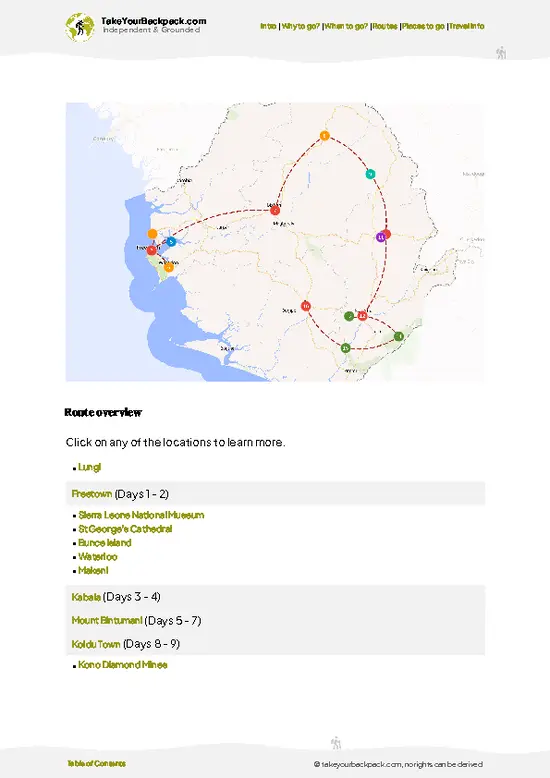
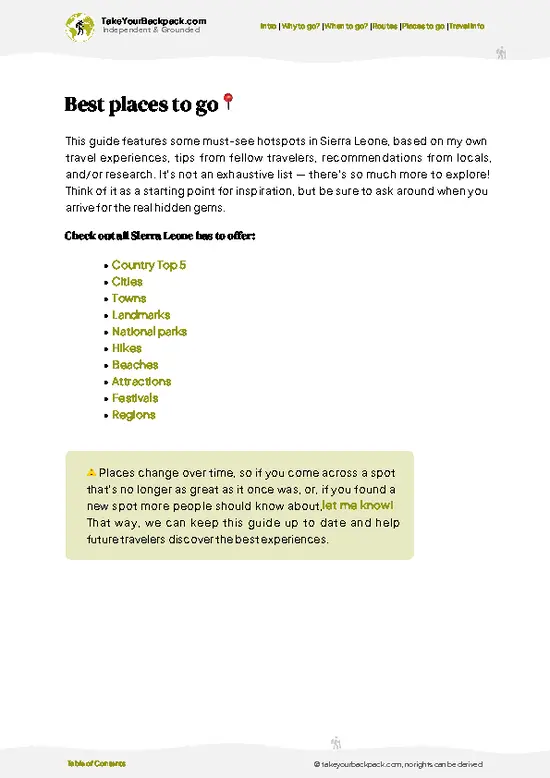
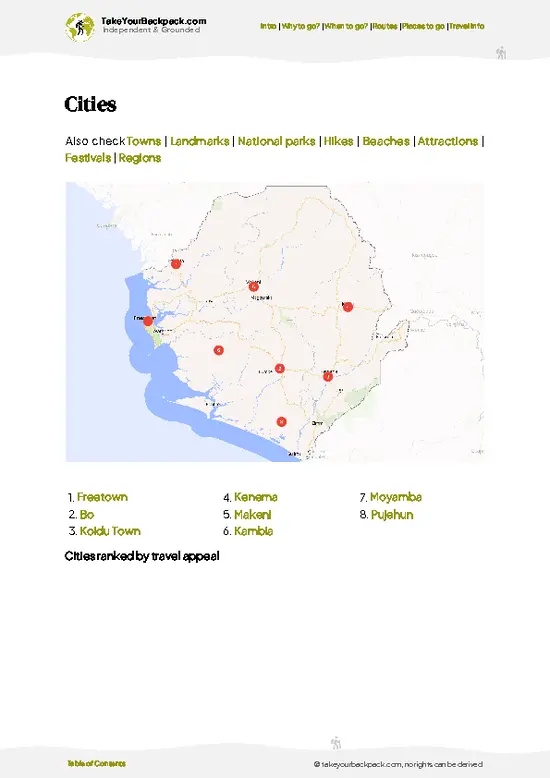
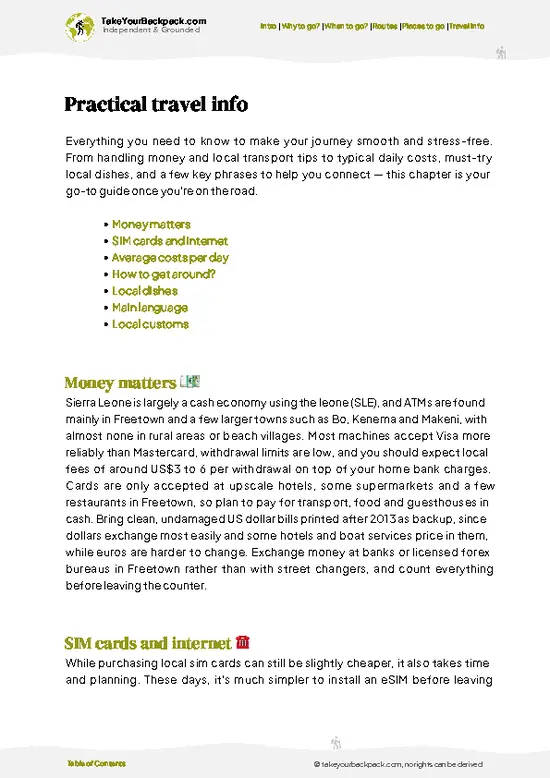
example page 0 from our offline Travel Guide for Sierra Leone
example page 1 from our offline Travel Guide for Sierra Leone
example page 2 from our offline Travel Guide for Sierra Leone
example page 3 from our offline Travel Guide for Sierra Leone
example page 4 from our offline Travel Guide for Sierra Leone
example page 5 from our offline Travel Guide for Sierra Leone
example page 6 from our offline Travel Guide for Sierra Leone
example page 7 from our offline Travel Guide for Sierra Leone
The digital guide (275 pages) contains:
63 highlights, ranked by travel appeal
Optimized 5, 10 & 15-day travel routes
Cities, national parks, landmarks, beaches
How to get around
Offline-friendly for travel without Wi-Fi
👉 Click to see all 30+ guide features

📅 Plan smarter in minutes, not weeks
Month by month travel advice
Festivals & national holidays
Budget expectations

🗺️ Go to the right places, skip the overrated ones
Honest pros & cons of destinations
Top hikes, parks & viewpoints
Lesser-known places most travelers miss
Clear “worth it vs skip it” guidance

🛏️ Travel smoothly without rookie mistakes
Best areas to stay
Transport systems explained simply
Common scams & safety advice
SIM cards, money & practical tips

🌍 Understand the country, not just visit it
Culture & traditions
52 Essential phrases & customs
Festivals worth planning around
Traveler-friendly historical context
Insights that make places more meaningful

📱 Built for real travel conditions
Fully downloadable PDF
Works completely offline
Optimized for phone use
Useful in remote areas & buses
Everything in one place
Save weeks of stressful planning
Get instant access to your full guide. 30‑day money-back guarantee.


By proceeding you agree to our terms.
Sent to your inbox immediately after payment • 100% Secure Checkout
Best Backpacking Travel Advisor 2025 tourism awardBest Backpacking
Travel Advisor
2025
What others say about Take Your Backpack Guides:
⭐⭐⭐⭐⭐
Fantastic, amazing amount of information!
⭐⭐⭐⭐⭐
My goodness this is amazing, it's what I've been looking for hats off too you!
⭐⭐⭐⭐⭐
I think this is absolutely BRILLIANT
⭐⭐⭐⭐
Very complete and informative. It's still missing places, but I gotta to commend you
⭐⭐⭐⭐⭐
This is truly amazing, thank you, can't wait to explore it with my kids!
⭐⭐⭐⭐⭐
Awesome resource, thank you!
⭐⭐⭐⭐⭐
This is amazing! Can't wait to explore the ones I haven't seen
⭐⭐⭐⭐
I love this! Well done, great idea.
⭐⭐⭐⭐⭐
Thanks for taking the time to make this gem!
⭐⭐⭐⭐⭐
This might be the best website I've ever seen.
⭐⭐⭐⭐⭐
Congratulations, and thank you so much for your work; it's incredibly valuable.
⭐⭐⭐⭐
In all seriousness I think you did a great job pointing out the important spots
⭐⭐⭐⭐⭐
10/10 very good
⭐⭐⭐⭐⭐
As someone who's only just starting to visit regularly this is awesome, thank you.
⭐⭐⭐⭐
Thank you very much! I'm going to visit my dad, it's going to be very useful!
⭐⭐⭐⭐⭐
This is really cool! We'll be travelling for the first time and this definitely come in handy.
⭐⭐⭐⭐⭐
You are now our minister of culture, congratulations 👨‍💼
⭐⭐⭐⭐⭐
Just wanted to tell you that this is a pearl! Going to follow your recommendations.
⭐⭐⭐⭐⭐
This is so cool. I'll definitely be using the resource for my travels soon.
⭐⭐⭐⭐⭐
This is very impressive! Good work.
⭐⭐⭐⭐⭐
This is an amazing and informative site. Very well done!

🛏️ Where to stay?Choosing the right base

In Makeni, the backpacker’s sweet spot is the central district around the main market and the university area. This zone strikes a rare balance between safety, social buzz, and budget-friendly options. It’s where you’ll find the handful of hostels and guesthouses that cater to solo travelers and those who want to connect without breaking the bank. The vibe here is low-key but lively—locals and students mingle, street vendors shout their wares, and you get a genuine slice of daily life without the chaos of the city’s outskirts.

Compared to the more residential neighborhoods, which can feel isolated … read more 👉
In Makeni, the backpacker’s sweet spot is the central district around the main market and the university area. This zone strikes a rare balance between safety, social buzz, and budget-friendly options. It’s where you’ll find the handful of hostels and guesthouses that cater to solo travelers and those who want to connect without breaking the bank. The vibe here is low-key but lively—locals and students mingle, street vendors shout their wares, and you get a genuine slice of daily life without the chaos of the city’s outskirts.

Compared to the more residential neighborhoods, which can feel isolated and less secure for newcomers, this central area offers a natural social network. It’s easier to strike up conversations, find shared rides, or join informal group outings. Plus, the infrastructure—think basic but reliable electricity and water—is more consistent here, which matters when you’re on a tight budget and can’t afford constant disruptions.

If you stray too far into the industrial or suburban zones, you trade off social opportunities and safety for lower prices, but that’s a gamble few backpackers want to take. The central district is your best bet for a smart, comfortable stay that keeps you plugged into Makeni’s pulse without overspending.

🚌 Getting aroundHow to get around Makeni

Makeni moves at a pace that’s neither frantic nor sluggish—it’s a city where time bends to local rhythms rather than strict timetables. You won’t find a clock dictating every step, but you will feel the pulse of daily life in the ebb and flow of people, vehicles, and commerce. The city’s transit system reflects this blend of order and improvisation: some options run on a rough schedule, others rely on intuition and local knowledge. Understanding this dynamic is your key to mastering movement here. You’re not just getting from A to B; you’re playing a strategic game of balancing time, money, and comfort, where each choice reveals what you value most on your journey.


  • Walking: The most straightforward and cost-free way to navigate Makeni’s compact center. Walking lets you absorb the city’s
read more 👉
Makeni moves at a pace that’s neither frantic nor sluggish—it’s a city where time bends to local rhythms rather than strict timetables. You won’t find a clock dictating every step, but you will feel the pulse of daily life in the ebb and flow of people, vehicles, and commerce. The city’s transit system reflects this blend of order and improvisation: some options run on a rough schedule, others rely on intuition and local knowledge. Understanding this dynamic is your key to mastering movement here. You’re not just getting from A to B; you’re playing a strategic game of balancing time, money, and comfort, where each choice reveals what you value most on your journey.


  • Walking: The most straightforward and cost-free way to navigate Makeni’s compact center. Walking lets you absorb the city’s textures and sounds at your own pace, but it’s time-intensive—expect 20 to 40 minutes to cross main districts. Ideal for short hops or when you want to soak in the atmosphere without spending a dime.


  • Motorbike Taxis (Okadas): These are the city’s speed demons, darting through traffic with agility. Fares typically range from 2,000 to 5,000 SLL depending on distance. They operate from dawn until late evening, offering quick trips that save you time but come with a trade-off in comfort and safety. Perfect when you’re on a tight schedule but can handle a bit of adrenaline.


  • Shared Minibuses: The backbone of Makeni’s public transit, these minibuses run fixed routes but with flexible departure times—usually leaving when full. Tickets cost around 1,000 to 3,000 SLL. They balance cost and speed reasonably well but expect some waiting and crowding during peak hours. A solid choice if you want to stretch your budget without sacrificing too much time.


  • Private Taxis: More expensive, with fares starting at 10,000 SLL and climbing based on distance and negotiation skills. They offer the highest comfort and direct routes, running 24/7. If your priority is convenience and you’re willing to pay for it, this is your go-to. Otherwise, it’s a luxury that eats into your travel funds quickly.


Mastering Makeni’s transit means reading these trade-offs like a pro. Walk when you want immersion and savings, jump on an okada to slice through time constraints, or settle into a minibus for a budget-friendly balance. Each choice reveals what you’re willing to exchange—minutes for money, comfort for speed—and that’s the real game you’re winning here.

👛 Costs (as of 24 December 2025)What things cost and how to budget

Backpacking in Makeni, Sierra Leone, demands a clear-eyed view of what your money buys—and what it doesn’t. Here’s the breakdown of daily costs you’ll face, with a focus on realistic, independent travel budgets.
  • Dorm Accommodation (High Season): Expect to pay around $10 to $15 per night. Options are limited but functional, often basic guesthouses with shared facilities. High season can push prices slightly higher due to demand.
  • Dorm Accommodation (Off-Season): Prices drop to about $7 to $10 per night. Fewer travelers mean better bargaining power, but expect the same no-frills setup.
  • Meals: Local eateries serve filling meals for $2 to $5 each. Street food and small restaurants dominate, offering rice, stews, and grilled meats. Western-style or imported foods will cost more and are rare.
read more 👉
Backpacking in Makeni, Sierra Leone, demands a clear-eyed view of what your money buys—and what it doesn’t. Here’s the breakdown of daily costs you’ll face, with a focus on realistic, independent travel budgets.
  • Dorm Accommodation (High Season): Expect to pay around $10 to $15 per night. Options are limited but functional, often basic guesthouses with shared facilities. High season can push prices slightly higher due to demand.
  • Dorm Accommodation (Off-Season): Prices drop to about $7 to $10 per night. Fewer travelers mean better bargaining power, but expect the same no-frills setup.
  • Meals: Local eateries serve filling meals for $2 to $5 each. Street food and small restaurants dominate, offering rice, stews, and grilled meats. Western-style or imported foods will cost more and are rare.
  • Local Transport: Shared taxis or motorbike taxis (okadas) typically cost $0.50 to $1 per short trip within the city. It’s cheap but can be unpredictable in timing and comfort.
  • City Transport Pass: Makeni does not have a formal city transport pass system. Budget for individual fares as needed.
  • Basic Activities/Entry Fees: Cultural or historical sites are minimal and often free or cost under $2. Organized tours are rare and usually pricier if available.
  • Miscellaneous Expenses: Include bottled water, snacks, phone credit, and small tips. Budget around $2 to $4 daily to cover these essentials.

In total, a savvy backpacker can expect to spend roughly $15 to $25 per day in Makeni, balancing low-cost accommodation and meals with the occasional transport and incidental expense. This range gives you control: spend less by sticking to street food and walking, or lean into convenience with motorbike taxis and guesthouses. Knowing these trade-offs lets you play the system smartly, turning your budget into a tool, not a barrier.
⚠️ Prices can change and everyone travels differently, so take this as a rough guide. Hope it helps you plan your adventure!

🚌 Day tripsBest day trips from Makeni

Using Makeni as your base opens up a world of day trip possibilities that blend culture, nature, and adventure. Here’s how to make the most of your time without breaking the bank.

Bumbuna Waterfall Adventure
Just a 30-minute ride from Makeni, Bumbuna Waterfall is a must-see for nature lovers. The journey is scenic, with lush greenery lining the road. Once there, you can hike to the falls, where the roar of water crashing down is both exhilarating and calming. Bring a packed lunch to enjoy by the water. Expect to spend around $10 for transport and entry fees. The best time to visit is during the rainy season when the falls are at their most powerful. A common mistake? Forgetting to wear sturdy shoes; the trails can be slippery.


Tiwai Island Wildlife Sanctuary
About an hour and a half … read more 👉
Using Makeni as your base opens up a world of day trip possibilities that blend culture, nature, and adventure. Here’s how to make the most of your time without breaking the bank.

Bumbuna Waterfall Adventure
Just a 30-minute ride from Makeni, Bumbuna Waterfall is a must-see for nature lovers. The journey is scenic, with lush greenery lining the road. Once there, you can hike to the falls, where the roar of water crashing down is both exhilarating and calming. Bring a packed lunch to enjoy by the water. Expect to spend around $10 for transport and entry fees. The best time to visit is during the rainy season when the falls are at their most powerful. A common mistake? Forgetting to wear sturdy shoes; the trails can be slippery.


Tiwai Island Wildlife Sanctuary
About an hour and a half from Makeni, Tiwai Island is a paradise for wildlife enthusiasts. This island sanctuary is home to diverse species, including monkeys and rare birds. You can take a guided tour to learn about the ecosystem and spot wildlife. The total cost, including transport and a guide, is around $25. The dry season is ideal for visiting, as the paths are more accessible. First-timers often underestimate the time needed for the boat ride; plan for a full day.
👉 Explore Tiwai Island Wildlife Sanctuary

Kangari Hills Exploration
Just under an hour away, the Kangari Hills offer a refreshing escape into the cool, elevated terrain. This area is perfect for hiking and immersing yourself in local flora and fauna. The trails vary in difficulty, so you can choose your adventure level. Expect to spend about $15 for transport and snacks. The best months are from November to March when the weather is cooler. Many newcomers overlook the importance of hydration; bring plenty of water.


Makeni Market Experience
Staying local can be just as rewarding. Spend a day exploring the bustling Makeni Market, where you can sample local foods and shop for crafts. It’s a short walk from the city center, making it easy to fit into your itinerary. You can enjoy a hearty meal for under $5. The market is vibrant on Saturdays, so plan accordingly. A common pitfall is not bargaining; it’s part of the experience!
Want to know what more Sierra Leone offers?
The Sierra Leone Travel Guide describes 63 highlights, from cities to national parks, from beaches to hikes

Get the Travel Guide -

🍲 FoodLocal Cuisine & Drinks

In Makeni, Sierra Leone, food is a vibrant expression of culture and community. You can’t visit without trying jollof rice, a fragrant dish cooked with tomatoes, onions, and spices, often served with grilled chicken or fish. The groundnut stew is another must-try, rich and creamy, made with peanuts and paired with rice or cassava.

Street food is where the magic happens. Vendors line the bustling markets, offering buns—fried dough balls stuffed with spicy fish or meat. The aroma of plantains sizzling in oil fills the air, tempting you to grab a few as you wander.

When it comes to drinks, don’t miss the local palm wine. It’s sweet and slightly fermented, perfect for sipping while chatting with locals. You’ll find it at roadside stalls, where the atmosphere is relaxed and friendly.

Etiquette … read more 👉
In Makeni, Sierra Leone, food is a vibrant expression of culture and community. You can’t visit without trying jollof rice, a fragrant dish cooked with tomatoes, onions, and spices, often served with grilled chicken or fish. The groundnut stew is another must-try, rich and creamy, made with peanuts and paired with rice or cassava.

Street food is where the magic happens. Vendors line the bustling markets, offering buns—fried dough balls stuffed with spicy fish or meat. The aroma of plantains sizzling in oil fills the air, tempting you to grab a few as you wander.

When it comes to drinks, don’t miss the local palm wine. It’s sweet and slightly fermented, perfect for sipping while chatting with locals. You’ll find it at roadside stalls, where the atmosphere is relaxed and friendly.

Etiquette is simple: share your food and drink. It’s common to offer a taste to those around you, fostering connections. Embrace the communal vibe, and you’ll find that every meal is a celebration of life in Makeni.

🛡️ SafetyTraveler Safety Guide

Makeni is generally safe for backpackers, but a few situational awareness tips can enhance your experience. Stick to well-lit areas at night, especially if you’re solo. The main streets are usually bustling, but quieter side roads can feel a bit isolated after dark.

When it comes to scams, be mindful of overly friendly locals who might offer unsolicited help. They may expect a tip or try to steer you toward shops where they earn a commission. Always negotiate prices upfront, whether for a taxi or market goods.

Everyday annoyances can include persistent vendors or children asking for money. A polite but firm “no” usually does the trick. Carry yourself confidently, and don’t flash valuables. This approach not only keeps you safe but also helps you blend in, allowing you to enjoy the vibrant … read more 👉
Makeni is generally safe for backpackers, but a few situational awareness tips can enhance your experience. Stick to well-lit areas at night, especially if you’re solo. The main streets are usually bustling, but quieter side roads can feel a bit isolated after dark.

When it comes to scams, be mindful of overly friendly locals who might offer unsolicited help. They may expect a tip or try to steer you toward shops where they earn a commission. Always negotiate prices upfront, whether for a taxi or market goods.

Everyday annoyances can include persistent vendors or children asking for money. A polite but firm “no” usually does the trick. Carry yourself confidently, and don’t flash valuables. This approach not only keeps you safe but also helps you blend in, allowing you to enjoy the vibrant local culture without unnecessary distractions.

Other Sierra Leonean cities near Makeni

Explore more nearby:

  • Moyamba—rice fields, administrative center, quiet streets, rural gateway| 90 km away
  • Kambia—cross-border trade, customs post, rice paddies| 101 km away
  • Bo—university district, lively intersections, regional commerce, street food| 107 km away

💡 Not sure where to go next?
Create a personalized itinerary for Sierra Leone including Makeni and the places that fit your trip.

Generate my itinerary

👉 Discover all cities

Or checkout all Sierra Leone has to offer (think cities, towns, villages, national parks, hikes, beaches, festivals)
Country photo of Sierra Leone

We 💚 feedbackParting advice and final tips

Makeni has a heartbeat that’s hard to ignore. The locals are warm, and the street food—especially the jollof rice—is a must-try. You might be surprised by the vibrant market scene; it’s chaotic but full of life. Just a heads-up: the roads can be rough, so don’t rush your travel plans. Embrace the slower pace; it’s part of the charm. You’ll leave with stories that stick, and maybe a few new friends.

✍️ Help improve this page!
The information on this page is based on in-depth research, insights shared by experienced travelers, and feedback from the local travel community in Sierra Leone. While every effort is made to keep the information accurate and current, conditions can change — so if you spot anything incorrect or outdated, please get in touch.


🙋‍♂️ Give feedback

👋 Meet the founderWho’s Behind Take Your Backpack?

Johan, backpacker and founder of TakeYourBackpackHi, I’m Johan (Netherlands 🇳🇱), the creator of TakeYourBackpack. Over the past decade, I’ve backpacked through 80+ countries across six continents, gaining extensive experience with independent travel, long-term trips, and overland routes.

This site is built on a combination of firsthand travel experience and carefully curated insights from other backpackers. Many guides are based on places I’ve personally visited, while others bring together tips, observations, and practical advice shared by trusted travelers I’ve met along the way.

The goal is to provide realistic, experience-driven guidance — not generic itineraries — so you can explore destinations with better context, clearer expectations, and more confidence.

Get full country guide •
Instant download • 63 highlights • Full Offline guide