×

Sierra Leone🇸🇱 | townsKabalahilltop views, cool climate, Limba culture | things to do and best time to go

Explore BontheExplore Lungi

Backpacking in Kabala
🏆 Top picktown ranked #2
By Johan Kruseman 🇳🇱 | Updated September 3, 2026

If you crave nightlife, polished museums, or a city that hums with constant motion, Kabala will feel too quiet, too raw. But that’s exactly why backpackers with a taste for real Sierra Leone—dust on your boots, mangoes in your hand, laughter echoing from a market stall—find Kabala worth the detour. Tucked in the far north, a long, bumpy ride from Freetown or Makeni, Kabala is Sierra Leone’s mountain town: a crossroads where red earth meets green hills and the air cools just enough to make you breathe deeper. The town itself is compact, with a market that’s more about daily life than souvenirs, and evenings that settle into a hush broken only by the call to prayer or the clink of tea glasses. It’s not a place for hostels or backpacker bars—expect simple guesthouses and the kind of social scene that happens on a stoop, not a dance floor. Kabala works best as a base for hiking the Wara Wara Mountains or as a slow, scenic pause between busier hubs. Costs are low, but so is infrastructure; you’ll need patience for transport and a willingness to walk or hire a moto. Compared to Makeni, Kabala is sleepier, more scenic, and far less touristic—a place where the journey is half the story, and the reward is the feeling of having arrived somewhere most travelers never see.

Discover everything you want to know in the 📖 Sierra Leone Travel Guide.
Loading the map 🌍
CLICK TO FILTER
cities
towns
landmarks
national parks
hikes
beaches
attractions
festivals
regions
SHOW COUNTRY’S BESTSHOW ALL

✨ Why go?
Ranked #2 town in Sierra Leone
Reasons people choose to visit here

Backpackers flock to Kabala for its strategic position as a gateway to Sierra Leone’s natural wonders. The town is a launchpad for nearby hikes, like the stunning trails of the Loma Mountains, where the air is thick with the scent of wildflowers and the sounds of chirping birds. After a day of trekking, you can unwind at one of the small-scale guesthouses, where the hosts often share local stories over a plate of jollof rice or groundnut stew.

The streets are walkable, lined with friendly faces and vibrant markets, making it easy to soak in the local culture. You’ll find a mix of solo travelers and small groups, all drawn by the town’s social atmosphere. While some backpackers might only stay a night or two, many linger to savor the laid-back vibe and connect with fellow adventurers.

Kabala … read more 👉
Backpackers flock to Kabala for its strategic position as a gateway to Sierra Leone’s natural wonders. The town is a launchpad for nearby hikes, like the stunning trails of the Loma Mountains, where the air is thick with the scent of wildflowers and the sounds of chirping birds. After a day of trekking, you can unwind at one of the small-scale guesthouses, where the hosts often share local stories over a plate of jollof rice or groundnut stew.

The streets are walkable, lined with friendly faces and vibrant markets, making it easy to soak in the local culture. You’ll find a mix of solo travelers and small groups, all drawn by the town’s social atmosphere. While some backpackers might only stay a night or two, many linger to savor the laid-back vibe and connect with fellow adventurers.

Kabala isn’t about nightlife; it’s about the slow travel experience, where every moment feels earned. If you appreciate a blend of nature, culture, and community, this town is a perfect fit for your journey.
Want to include Kabala in your Sierra Leone route?
Create a personalized Sierra Leone itinerary that includes Kabala and the places that fit your trip — based on your travel style, budget, and available time. Get your route in seconds.

Generate my trip

💡 HighlightsKey sights and experiences for travelers

  • Kabala Central Market — the town’s beating heart: a chaotic, colorful market where you can buy fresh produce, groundnuts, fabrics and secondhand clothing, practice bargaining, and watch everyday life unfold. Great for photos and cheap meals.
  • Town Hill Viewpoint — a short walk up from the centre gives surprisingly wide views over Kabala, the surrounding rice fields and the distant hills. Best at sunrise or late afternoon; an easy way to get your bearings and beat the heat.
  • Paramount Chief’s Compound — the traditional seat of local authority. With permission you can see the compound layout, talk to elders, and learn about local chieftaincy customs and decision-making—real insight into rural Sierra Leonean governance and ceremony.
  • Kabala Central Mosque — an active place of worship and community
read more 👉
  • Kabala Central Market — the town’s beating heart: a chaotic, colorful market where you can buy fresh produce, groundnuts, fabrics and secondhand clothing, practice bargaining, and watch everyday life unfold. Great for photos and cheap meals.
  • Town Hill Viewpoint — a short walk up from the centre gives surprisingly wide views over Kabala, the surrounding rice fields and the distant hills. Best at sunrise or late afternoon; an easy way to get your bearings and beat the heat.
  • Paramount Chief’s Compound — the traditional seat of local authority. With permission you can see the compound layout, talk to elders, and learn about local chieftaincy customs and decision-making—real insight into rural Sierra Leonean governance and ceremony.
  • Kabala Central Mosque — an active place of worship and community life; visiting outside prayer times lets you observe Islamic architectural details and daily routines. It’s a good place to learn about the town’s faith life—just dress and behave respectfully.
  • Main Christian Church — the town’s main church is a community hub where congregation life, choir practice, and charity activities offer a window into Kabala’s Christian community. Attend a Sunday service if you want a genuine local experience.
  • Colonial-era civic quarter — the cluster of older government and administrative buildings around the centre (old courthouse, post office area and shopfronts) shows Kabala’s colonial past and makes for easy walking and local history spotting.
  • Local craft and tailor workshops — tucked around the market are small tailors, woodcarvers and blacksmiths working by hand. Watching someone make a bubu or a wooden stool is a simple, memorable cultural exchange—and you can leave with something useful.
  • Main Street food stalls and tea houses — the modest street vendors serve cassava-based snacks, fried fish, stews and strong tea. Eating at these stalls is where you taste authentic local cooking and meet people without breaking the bank.
  • Community sports ground / football pitch — football matches and local tournaments draw crowds and are a great place to hang out, chat with residents and soak up spontaneous local energy. Check the schedule—an evening match is pure Kabala.
  • Old mission/cemetery area — the small mission compound and adjacent cemetery contain colonial-era graves and plaques; it’s a quiet spot that tells pieces of Kabala’s missionary, medical and social history in a way you don’t get from guidebooks.
Nearby day trips worth planning from Kabala include hikes into the Loma Mountains to see Mount Bintumani (Sierra Leone’s high point), visits to surrounding traditional villages for cultural homestays, and short drives to nearby forest trails and waterfalls for easy nature and photo trips.
Spotted a mistake or missing something? Contact us.

🏘️ NeighborhoodsWhere things are and how it's laid out

Kabala, a vibrant town in Sierra Leone, offers a unique blend of culture and adventure. Each neighborhood has its own character, making it essential to choose wisely for your backpacking experience.

Town Center: This is the heartbeat of Kabala. The streets buzz with local markets, street food stalls, and the scent of grilled fish wafting through the air. It’s walkable, with plenty of budget accommodations. Nightlife is lively but not overwhelming, perfect for mingling with locals. Ideal for short stays, as everything is within reach.

Makeni Road: A bit quieter, this area is lined with guesthouses and small eateries. The vibe is more laid-back, making it suitable for longer stays. You can enjoy the fresh air and the sounds of children playing. Public transport is accessible, but walking is … read more 👉
Kabala, a vibrant town in Sierra Leone, offers a unique blend of culture and adventure. Each neighborhood has its own character, making it essential to choose wisely for your backpacking experience.

Town Center: This is the heartbeat of Kabala. The streets buzz with local markets, street food stalls, and the scent of grilled fish wafting through the air. It’s walkable, with plenty of budget accommodations. Nightlife is lively but not overwhelming, perfect for mingling with locals. Ideal for short stays, as everything is within reach.

Makeni Road: A bit quieter, this area is lined with guesthouses and small eateries. The vibe is more laid-back, making it suitable for longer stays. You can enjoy the fresh air and the sounds of children playing. Public transport is accessible, but walking is a pleasure here.

Gbalamuya: This neighborhood offers a more rural feel, with stunning views of the surrounding hills. It’s less touristy, giving you a chance to connect with local life. Accommodations are basic but affordable. The tranquility is perfect for those looking to escape the hustle. However, transport options are limited, so plan ahead.

Freetown Road: A bustling area with a mix of shops and cafes. The energy is palpable, and you’ll find a variety of food options. It’s great for short visits, especially if you want to experience the local hustle. The nightlife is vibrant, but it can get noisy at night.

Choose your neighborhood wisely, and you’ll unlock the true essence of Kabala.

⌛️ 1 dayA smart one-day plan

Kabala, Sierra Leone, is a town that pulses with life, nestled in lush hills and vibrant communities. It’s not just a stopover; it’s a place where you can feel the rhythm of daily life, from the bustling markets to the serene landscapes. The air is thick with the scent of fresh palm oil and the sounds of laughter echoing through the streets.

Start your day early at the local market in the heart of town. The sun rises, casting a warm glow over stalls brimming with colorful fruits and vegetables. Engage with the vendors; their stories are as rich as the produce they sell. Grab a few bananas or some groundnuts for a quick snack. This is your chance to soak in the local culture, where every face tells a story.

Afterward, head to the nearby hills for a hike. The trail to the top of Mount Loma … read more 👉
Kabala, Sierra Leone, is a town that pulses with life, nestled in lush hills and vibrant communities. It’s not just a stopover; it’s a place where you can feel the rhythm of daily life, from the bustling markets to the serene landscapes. The air is thick with the scent of fresh palm oil and the sounds of laughter echoing through the streets.

Start your day early at the local market in the heart of town. The sun rises, casting a warm glow over stalls brimming with colorful fruits and vegetables. Engage with the vendors; their stories are as rich as the produce they sell. Grab a few bananas or some groundnuts for a quick snack. This is your chance to soak in the local culture, where every face tells a story.

Afterward, head to the nearby hills for a hike. The trail to the top of Mount Loma is challenging but rewarding. As you ascend, the air shifts from earthy to floral, and the view opens up to a breathtaking panorama of Kabala and beyond. Take a moment at the summit to breathe it all in; the effort is worth the vista.

In the afternoon, wander through the neighborhoods of Koinadugu and Bumbuna. Visit the Bumbuna Hydroelectric Project, a site often overlooked by tourists. The sound of rushing water is both calming and invigorating. Here, you can learn about the local efforts to harness energy sustainably, a testament to the community’s resilience.

As evening approaches, return to the town center. Find a local eatery and indulge in some jollof rice or cassava leaves. The flavors are bold, and the atmosphere is lively, filled with the chatter of locals unwinding after a long day.

Kabala isn’t just a destination; it’s an experience that lingers long after you leave. Embrace the challenges, and you’ll uncover the town’s true essence.
Turn your Kabala visit into an Sierra Leone adventure
Build a complete Sierra Leone route with Kabala, hidden gems, must-see destinations, and realistic travel times included.

Generate my trip

🌤️ When to go?When to go for the best experience


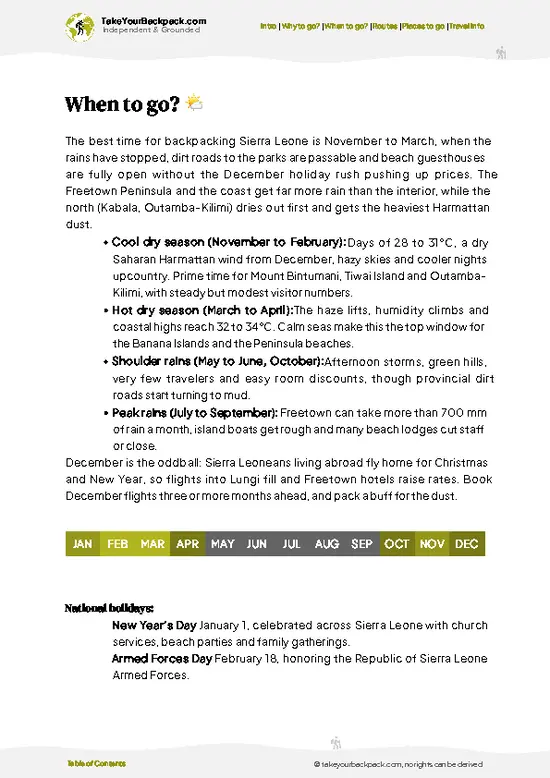
  • Topic: Weather – Kabala’s climate swings between a wet season from May to October and a dry season from November to April. The wet months bring heavy, humid rains that can turn trails into mudslides, making trekking a slog rather than a joy. Dry season offers clearer skies and firmer paths, ideal for exploring without the constant dampness weighing you down.

  • Topic: Temperature – Expect daytime highs around 28-32°C (82-90°F) during the dry season, with cooler nights dropping to 18-22°C (64-72°F). The wet season feels hotter and stickier, often pushing 30-34°C (86-93°F) with humidity that clings like a second skin. Timing your visit for the dry months means more comfortable hiking and sleeping conditions.

  • Topic: Daylight Hours – Near the equator, Kabala enjoys roughly 12 hours of daylight
read more 👉

  • Topic: Weather – Kabala’s climate swings between a wet season from May to October and a dry season from November to April. The wet months bring heavy, humid rains that can turn trails into mudslides, making trekking a slog rather than a joy. Dry season offers clearer skies and firmer paths, ideal for exploring without the constant dampness weighing you down.

  • Topic: Temperature – Expect daytime highs around 28-32°C (82-90°F) during the dry season, with cooler nights dropping to 18-22°C (64-72°F). The wet season feels hotter and stickier, often pushing 30-34°C (86-93°F) with humidity that clings like a second skin. Timing your visit for the dry months means more comfortable hiking and sleeping conditions.

  • Topic: Daylight Hours – Near the equator, Kabala enjoys roughly 12 hours of daylight year-round, but the dry season’s clearer skies make those hours feel brighter and more expansive. Early mornings and late afternoons during dry months offer golden light perfect for photography and less oppressive heat.

  • Topic: Crowds – Kabala is off the beaten path, so crowds are minimal year-round. However, local festivals and market days peak during the dry season, adding vibrant cultural energy without overwhelming the town’s laid-back vibe.

  • Topic: Seasonal Activities – Dry season unlocks trekking routes, village visits, and river crossings that become treacherous or inaccessible in the rains. It’s also when local agriculture is in full swing, offering a chance to witness traditional farming and fresh markets bursting with produce.

  • Topic: Price Fluctuations – Accommodation and transport costs dip slightly during the wet season due to fewer tourists, but the trade-off is dealing with unreliable roads and limited activities. Dry season prices rise modestly but reflect the smoother logistics and richer experiences.


Pro-tip: Aim for the shoulder months of November or April—when the rains ease or just begin—to catch fewer tourists, manageable weather, and a town transitioning between seasons, giving you a more intimate, authentic experience.


source: climatestotravel.comJANJanuary: excellent for travelingFEBFebruary: excellent for travelingMARMarch: excellent for travelingAPRApril: highly recommended for travelingMAYMay: fair for travelingJUNJune: fair for travelingJULJuly: fair for travelingAUGAugust: fair for travelingSEPSeptember: fair for travelingOCTOctober: fair for travelingNOVNovember: highly recommended for travelingDECDecember: excellent for traveling
when-to-go

✈️ The backpacker research shortcutSierra Leone Travel Guide

An offline-friendly backpacking guide with optimized travel routes, ranked highlights, transport advice, and the best areas to stay.
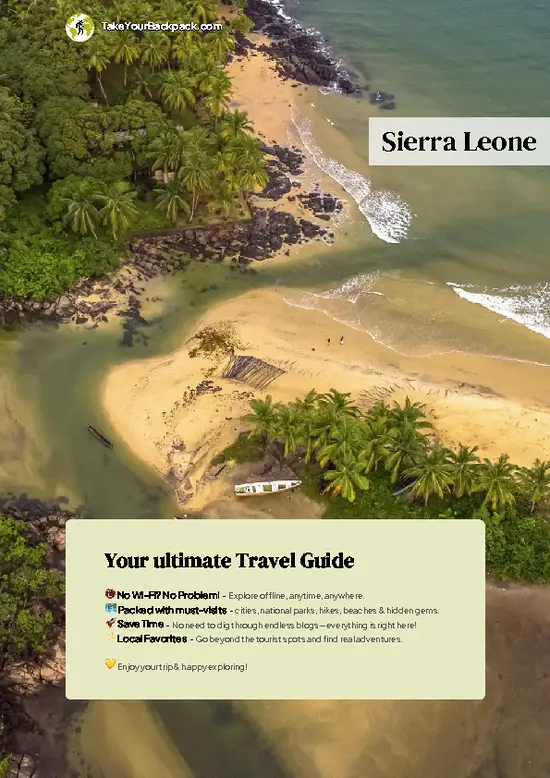
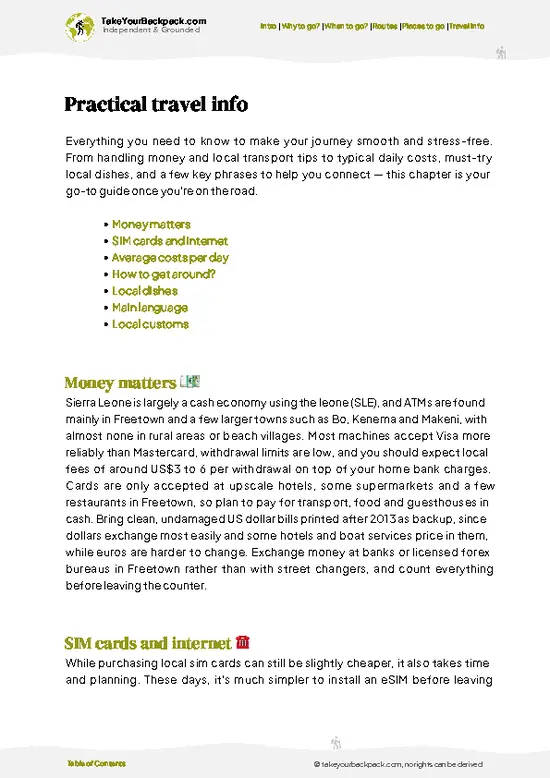
example page 0 from our offline Travel Guide for Sierra Leone
example page 1 from our offline Travel Guide for Sierra Leone
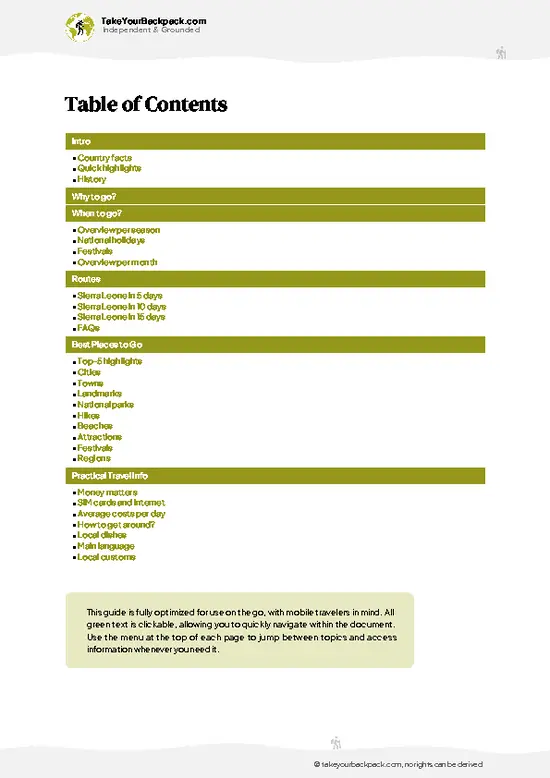
example page 2 from our offline Travel Guide for Sierra Leone
example page 3 from our offline Travel Guide for Sierra Leone
example page 4 from our offline Travel Guide for Sierra Leone
example page 5 from our offline Travel Guide for Sierra Leone
example page 6 from our offline Travel Guide for Sierra Leone
example page 7 from our offline Travel Guide for Sierra Leone
The digital guide (275 pages) contains:
63 highlights, ranked by travel appeal
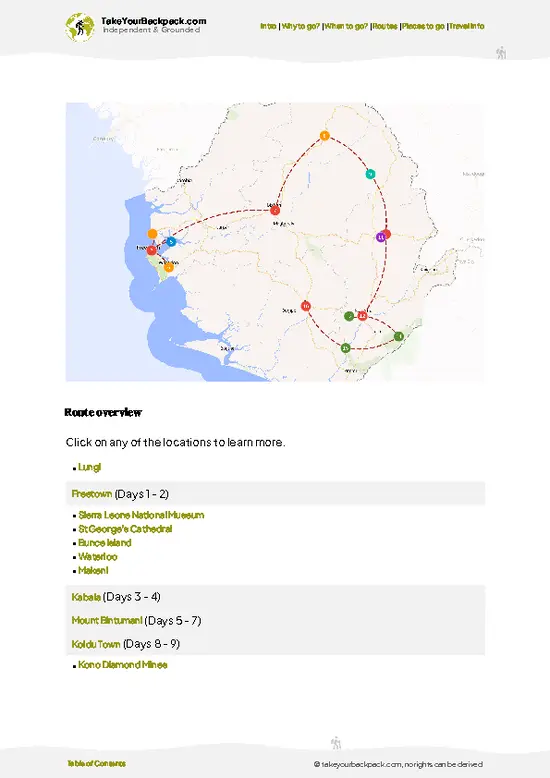
Optimized 5, 10 & 15-day travel routes
Cities, national parks, landmarks, beaches
How to get around
Offline-friendly for travel without Wi-Fi
👉 Click to see all 30+ guide features

📅 Plan smarter in minutes, not weeks
Month by month travel advice
Festivals & national holidays
Budget expectations

🗺️ Go to the right places, skip the overrated ones
Honest pros & cons of destinations
Top hikes, parks & viewpoints
Lesser-known places most travelers miss
Clear “worth it vs skip it” guidance

🛏️ Travel smoothly without rookie mistakes
Best areas to stay
Transport systems explained simply
Common scams & safety advice
SIM cards, money & practical tips

🌍 Understand the country, not just visit it
Culture & traditions
52 Essential phrases & customs
Festivals worth planning around
Traveler-friendly historical context
Insights that make places more meaningful

📱 Built for real travel conditions
Fully downloadable PDF
Works completely offline
Optimized for phone use
Useful in remote areas & buses
Everything in one place
Save weeks of stressful planning
Get instant access to your full guide. 30‑day money-back guarantee.
+ Add another guide for just US$7.80

By proceeding you agree to our terms.
Sent to your inbox immediately after payment • 100% Secure Checkout
Best Backpacking Travel Advisor 2025 tourism awardBest Backpacking
Travel Advisor
2025
What others say about Take Your Backpack Guides:
⭐⭐⭐⭐⭐
Fantastic, amazing amount of information!
⭐⭐⭐⭐⭐
My goodness this is amazing, it's what I've been looking for hats off too you!
⭐⭐⭐⭐⭐
I think this is absolutely BRILLIANT
⭐⭐⭐⭐
Very complete and informative. It's still missing places, but I gotta to commend you
⭐⭐⭐⭐⭐
This is truly amazing, thank you, can't wait to explore it with my kids!
⭐⭐⭐⭐⭐
Awesome resource, thank you!
⭐⭐⭐⭐⭐
This is amazing! Can't wait to explore the ones I haven't seen
⭐⭐⭐⭐
I love this! Well done, great idea.
⭐⭐⭐⭐⭐
Thanks for taking the time to make this gem!
⭐⭐⭐⭐⭐
This might be the best website I've ever seen.
⭐⭐⭐⭐⭐
Congratulations, and thank you so much for your work; it's incredibly valuable.
⭐⭐⭐⭐
In all seriousness I think you did a great job pointing out the important spots
⭐⭐⭐⭐⭐
10/10 very good
⭐⭐⭐⭐⭐
As someone who's only just starting to visit regularly this is awesome, thank you.
⭐⭐⭐⭐
Thank you very much! I'm going to visit my dad, it's going to be very useful!
⭐⭐⭐⭐⭐
This is really cool! We'll be travelling for the first time and this definitely come in handy.
⭐⭐⭐⭐⭐
You are now our minister of culture, congratulations 👨‍💼
⭐⭐⭐⭐⭐
Just wanted to tell you that this is a pearl! Going to follow your recommendations.
⭐⭐⭐⭐⭐
This is so cool. I'll definitely be using the resource for my travels soon.
⭐⭐⭐⭐⭐
This is very impressive! Good work.
⭐⭐⭐⭐⭐
This is an amazing and informative site. Very well done!

🛏️ Where to stay?Best areas to stay in Sierra Leone

Kabala’s heart for backpackers pulses strongest around the central market area and the nearby neighborhoods stretching toward the town’s main road arteries. This zone is where you’ll find the best mix of safety, social buzz, and budget-friendly options. The market’s energy spills into the streets with vendors calling out, the scent of fresh produce mingling with the earthy smell of rain-soaked dirt roads. It’s a place where locals and travelers cross paths naturally, making it easier to strike up conversations or find a guide for the hills beyond.

Compared to the quieter, more residential outskirts, … read more 👉
Kabala’s heart for backpackers pulses strongest around the central market area and the nearby neighborhoods stretching toward the town’s main road arteries. This zone is where you’ll find the best mix of safety, social buzz, and budget-friendly options. The market’s energy spills into the streets with vendors calling out, the scent of fresh produce mingling with the earthy smell of rain-soaked dirt roads. It’s a place where locals and travelers cross paths naturally, making it easier to strike up conversations or find a guide for the hills beyond.

Compared to the quieter, more residential outskirts, this central cluster keeps you plugged into Kabala’s rhythm without feeling overwhelmed. Hostels here tend to be modest but welcoming, often run by locals who know the town’s pulse and can steer you toward authentic experiences. The vibe is relaxed but alive—think open-air courtyards where you can swap stories with fellow travelers under the fading light.

Venturing too far from this hub means losing the social safety net and easy access to essentials. The streets get less traveled, and the sense of community thins out. Staying near the market and main roads isn’t just about convenience; it’s about embedding yourself in the town’s daily life, where every sound and scent tells a story worth waking up for.

🚌 Getting aroundHow to get around Kabala

Kabala moves at its own rhythm — not the sharp tick of a clock, but the slow, steady pulse of a town where the sun’s angle shifts the day’s tempo. Streets hum with a mix of purposeful strides and spontaneous pauses, where vendors call out in bursts, and the scent of roasting peanuts drifts through the air, mingling with the earthiness of the nearby hills. Here, schedules are more like suggestions, and the real flow comes from reading the crowd, catching the right moment to hop on a ride or strike a deal. It’s a place where patience isn’t just a virtue; it’s your ticket to unlocking the town’s genuine character.


  • Walking: The heart of Kabala is compact enough to explore on foot. Walking lets you soak in the texture of the town—the cracked sidewalks, the chatter spilling from open doorways,
read more 👉
Kabala moves at its own rhythm — not the sharp tick of a clock, but the slow, steady pulse of a town where the sun’s angle shifts the day’s tempo. Streets hum with a mix of purposeful strides and spontaneous pauses, where vendors call out in bursts, and the scent of roasting peanuts drifts through the air, mingling with the earthiness of the nearby hills. Here, schedules are more like suggestions, and the real flow comes from reading the crowd, catching the right moment to hop on a ride or strike a deal. It’s a place where patience isn’t just a virtue; it’s your ticket to unlocking the town’s genuine character.


  • Walking: The heart of Kabala is compact enough to explore on foot. Walking lets you soak in the texture of the town—the cracked sidewalks, the chatter spilling from open doorways, and the way sunlight filters through mango trees lining the streets. It’s free, flexible, and the best way to catch the small details that motorized transport misses.


  • Motorbike Taxis (Okadas): These are the lifeblood of quick, affordable transit. Expect to pay around 2,000 to 3,000 Leones for short hops. They dart through narrow lanes and traffic snarls with a reckless grace, but hold on tight—the ride is bumpy and the helmet optional. They run from dawn until dusk, but don’t count on a strict timetable; flag one down when you see it.


  • Shared Minibuses: If you’re heading to nearby villages or the outskirts, shared minibuses are your go-to. They leave when full, so timing is unpredictable, but fares are dirt cheap—usually under 5,000 Leones. The interior is basic, often packed shoulder-to-shoulder, but the windows open wide to catch the warm breeze and the scent of dry grasslands outside. It’s a slow, communal ride that doubles as a social experience.


  • Bicycle Rentals: For a bit more freedom and speed than walking, renting a bicycle is a smart move. Rentals cost about 10,000 Leones per day. The terrain around Kabala is a mix of flat stretches and gentle hills, so be ready to pedal with purpose. Early mornings and late afternoons offer the best light and cooler air, making the ride more pleasant and the views sharper.


  • Private Taxis: More comfortable and faster, private taxis come at a premium—expect to pay 30,000 Leones or more for intra-town trips. They’re best if you’re carrying heavy gear or traveling in a group. Unlike motorbike taxis, these run on a looser schedule but can be arranged in advance through local contacts or your guesthouse.

👛 Costs (as of 3 September 2026)Travel costs and budget guide for Kabala

Backpacking in Kabala, Sierra Leone, means navigating a place where simplicity meets raw, authentic life—expect modest costs but also a few quirks that shape your daily budget.
  • Dorm Accommodation: Basic guesthouses or small hostels offer dorm beds typically between $5 and $10 per night. These places are no-frills, often with shared bathrooms and intermittent electricity, so bring a headlamp and patience for the power cuts.
  • Meals: Local eateries serve hearty meals for $2 to $5. Think rice, stews, and fresh vegetables cooked over charcoal fires. Western-style or imported food is rare and pricier, so sticking to local fare is both economical and a way to soak in the local flavors.
  • Local Transport: Transport options are limited. Motorbike taxis (okadas) are the main way to get around town,
read more 👉
Backpacking in Kabala, Sierra Leone, means navigating a place where simplicity meets raw, authentic life—expect modest costs but also a few quirks that shape your daily budget.
  • Dorm Accommodation: Basic guesthouses or small hostels offer dorm beds typically between $5 and $10 per night. These places are no-frills, often with shared bathrooms and intermittent electricity, so bring a headlamp and patience for the power cuts.
  • Meals: Local eateries serve hearty meals for $2 to $5. Think rice, stews, and fresh vegetables cooked over charcoal fires. Western-style or imported food is rare and pricier, so sticking to local fare is both economical and a way to soak in the local flavors.
  • Local Transport: Transport options are limited. Motorbike taxis (okadas) are the main way to get around town, costing around $0.50 to $1 per short ride. For longer trips or shared taxis, budget $2 to $5 depending on distance. Walking is often the best way to absorb the town’s atmosphere.
  • Basic Activities/Entry Fees: Kabala’s attractions are mostly natural and community-based, with minimal or no entry fees. Visiting local markets or nearby hills is free, but guided hikes or cultural tours might cost $5 to $10 if arranged locally.
  • Miscellaneous Expenses: Budget $1 to $3 for essentials like bottled water, snacks, or phone credit. Internet access can be patchy and expensive, so plan accordingly if you need connectivity.

All told, you’re looking at roughly $10 to $25 per day to cover the essentials in Kabala. This range reflects the town’s straightforward lifestyle—spend a little more for comfort or local guides, but know that the real richness here comes from the unvarnished experience, not luxury.
⚠️ Prices can change and everyone travels differently, so take this as a rough guide. Hope it helps you plan your adventure!

🚌 Day tripsShort trips worth adding

Kabala, Sierra Leone, is a vibrant hub for backpackers eager to explore the surrounding natural beauty and cultural richness. With its friendly locals and stunning landscapes, it’s the perfect base for day trips that offer both adventure and insight into the heart of Sierra Leone.

Waterfall Wonders
A trek to the nearby Wara Wara Mountains leads you to the breathtaking Tiwai Island. The journey takes about an hour by shared taxi, costing around $5. The trail is a mix of dirt paths and rocky inclines, but the reward is worth every step. You’ll be greeted by the sound of cascading water and the scent of lush greenery. Bring a packed lunch to enjoy by the falls, and don’t forget your camera; the light filtering through the trees creates a magical atmosphere. Many first-timers underestimate … read more 👉
Kabala, Sierra Leone, is a vibrant hub for backpackers eager to explore the surrounding natural beauty and cultural richness. With its friendly locals and stunning landscapes, it’s the perfect base for day trips that offer both adventure and insight into the heart of Sierra Leone.

Waterfall Wonders
A trek to the nearby Wara Wara Mountains leads you to the breathtaking Tiwai Island. The journey takes about an hour by shared taxi, costing around $5. The trail is a mix of dirt paths and rocky inclines, but the reward is worth every step. You’ll be greeted by the sound of cascading water and the scent of lush greenery. Bring a packed lunch to enjoy by the falls, and don’t forget your camera; the light filtering through the trees creates a magical atmosphere. Many first-timers underestimate the hike’s intensity, so wear sturdy shoes and stay hydrated.


Market Day Magic
Experience the pulse of Kabala by visiting the local market, which comes alive every Saturday. It’s a short walk from the town center, and you can easily spend a few hours wandering through stalls filled with vibrant fabrics, fresh produce, and handmade crafts. The cost? Just a few dollars for snacks and souvenirs. The best time to go is early morning when the air is cool and the market buzzes with energy. A common mistake is to rush through; take your time to chat with vendors and soak in the atmosphere.


Cultural Connection
A visit to the nearby village of Koinadugu offers a glimpse into traditional life. It’s about a 30-minute drive, costing around $3. Here, you can engage with locals, learn about their customs, and even participate in a traditional dance. The experience is enriching, especially if you’re keen on understanding the local culture. Aim for a weekday visit to avoid the weekend crowds. Many backpackers overlook the importance of cultural sensitivity; approach with respect and an open mind.


Nature’s Playground
For those craving a bit of adventure, head to the Loma Mountains National Park. It’s a two-hour trip by taxi, costing around $10. The park is a biodiversity hotspot, with trails that lead you through dense forests and past stunning viewpoints. The best time to visit is during the dry season, from November to April, when trails are more accessible. A common pitfall is underestimating the park’s size; plan your route ahead of time to avoid getting lost.
👉 Explore Loma Mountains National Park

Each of these trips offers a unique slice of Sierra Leonean life, making your stay in Kabala not just a stopover, but a meaningful adventure.
Want to know what more Sierra Leone offers?
The Sierra Leone Travel Guide describes 63 highlights, from cities to national parks, from beaches to hikes

Get the Travel Guide -

🛡️ SafetyTraveler Safety Guide

Kabala, Sierra Leone, is generally safe, but a few practical tips can enhance your experience. The bustling market area is vibrant, filled with the scent of spices and the sound of lively bargaining. Stay aware of your surroundings here; pickpocketing can happen in crowded spots.

Traveling solo? Stick to well-lit areas after dark. The streets can feel quiet, and while locals are friendly, it’s wise to avoid wandering too far from the main paths.

Scams are rare, but be cautious with unofficial taxi drivers. Always negotiate fares upfront and opt for registered taxis when possible.

Annoyances can crop up, like persistent vendors or locals wanting to chat for a fee. A polite but firm “no, thank you” usually does the trick. Carry yourself confidently, smile, and engage with locals; they … read more 👉
Kabala, Sierra Leone, is generally safe, but a few practical tips can enhance your experience. The bustling market area is vibrant, filled with the scent of spices and the sound of lively bargaining. Stay aware of your surroundings here; pickpocketing can happen in crowded spots.

Traveling solo? Stick to well-lit areas after dark. The streets can feel quiet, and while locals are friendly, it’s wise to avoid wandering too far from the main paths.

Scams are rare, but be cautious with unofficial taxi drivers. Always negotiate fares upfront and opt for registered taxis when possible.

Annoyances can crop up, like persistent vendors or locals wanting to chat for a fee. A polite but firm “no, thank you” usually does the trick. Carry yourself confidently, smile, and engage with locals; they appreciate genuine interest. This approach not only keeps you safe but also enriches your journey through Kabala.

FAQTraveler FAQ

Kabala is worth visiting for its authentic rural Sierra Leonean experience and scenic surroundings, not just a stopover. It offers a glimpse into local culture and markets, with nearby natural attractions like the Loma Mountains. Many travelers find it a refreshing break from busier cities.
Two to three days are sufficient to explore Kabala and its surroundings comfortably. This allows time to visit local markets, interact with residents, and take day hikes in the nearby hills. Staying longer is optional unless you want to explore more remote villages.
Kabala cannot realistically be visited as a day trip from nearby cities due to poor road conditions and long travel times. For example, the journey from Makeni, the closest major town, takes around 4 to 5 hours one way. Overnight stays in Kabala are recommended to make the trip worthwhile.
⚠️ Things can change over time, so always validate details locally before you go.

Other Sierra Leonean towns near Kabala

Explore more nearby:

  • Bumbuna—hydroelectric dam, Sula Mountains, reservoir lake| 63 km away
  • Kamakwie—river crossing, weekly cattle market, northern savanna| 75 km away
  • Binkolo—small villages, farming landscape, Temne heritage| 84 km away

💡 Not sure where to go next?
Create a personalized itinerary for Sierra Leone including Kabala and the places that fit your trip.

Generate my itinerary

👉 Discover all towns

Or checkout all Sierra Leone has to offer (think cities, towns, villages, national parks, hikes, beaches, festivals)
Country photo of Sierra Leone

We 💚 feedbackWhat to keep in mind

Kabala has a pulse that’s hard to ignore. The air is thick with the scent of earth after rain, and the laughter of locals fills the streets. Expect a warm welcome, but don’t be surprised by the occasional power outage—it’s part of the charm. The best surprise? Stumbling upon a local festival where the music and dance pull you in like a magnet. Embrace the unpredictability; it’s where the real magic lies. Just keep your sense of adventure close, and you’ll leave with stories that linger long after you’re gone.

✍️ Help improve this page!
The information on this page is based on in-depth research, insights shared by experienced travelers, and feedback from the local travel community in Sierra Leone. While every effort is made to keep the information accurate and current, conditions can change — so if you spot anything incorrect or outdated, please get in touch.


🙋‍♂️ Give feedback

👋 Meet the founderWho’s Behind Take Your Backpack?

Johan, backpacker and founder of TakeYourBackpackHi, I’m Johan (Netherlands 🇳🇱), the creator of TakeYourBackpack. Over the past decade, I’ve backpacked through 80+ countries across six continents, gaining extensive experience with independent travel, long-term trips, and overland routes.

This site is built on a combination of firsthand travel experience and carefully curated insights from other backpackers. Many guides are based on places I’ve personally visited, while others bring together tips, observations, and practical advice shared by trusted travelers I’ve met along the way.

The goal is to provide realistic, experience-driven guidance — not generic itineraries — so you can explore destinations with better context, clearer expectations, and more confidence.

Get full country guide •
Instant download • 63 highlights • Full Offline guide