×

Sierra Leone🇸🇱 | attractionsSierra Leone National Museumethnographic displays, cultural artifacts, curated collections | things to do and best time to go

Explore National Railway MuseumExplore Old Fourah Bay College

Backpacking in Sierra Leone National Museum
👍 Recommendedattraction ranked #5
By Johan Kruseman 🇳🇱 | Updated September 3, 2026

Here’s what nobody tells you: the Sierra Leone National Museum is one of the only places in Freetown where you can actually escape the midday chaos and heat without paying resort prices or hiding in your hostel. It’s right in the city center, tucked behind the cotton tree—easy to find, impossible to miss if you know what you’re looking for. Now, let’s be honest. This isn’t the Louvre, and it’s not trying to be. The museum is small, sometimes a little dusty, and the lighting can be hit-or-miss. But if you want to understand Sierra Leone beyond the headlines, this is where you start. The exhibits—masks, colonial relics, Krio culture—are raw, sometimes haunting, and refreshingly free of the usual tourist gloss. You’ll rarely fight crowds, and the entry fee is pocket change compared to the country’s big-ticket wildlife parks. It’s not adrenaline, but it’s real: a crash course in Sierra Leone’s soul, delivered without pretense or filter.

Discover everything you want to know in the 📖 Sierra Leone Travel Guide.
Loading the map 🌍
CLICK TO FILTER
cities
towns
landmarks
national parks
hikes
beaches
attractions
festivals
regions
SHOW COUNTRY’S BESTSHOW ALL

✨ Why go?
Ranked #5 attraction in Sierra Leone
What makes this attraction worth visiting

The Sierra Leone National Museum isn’t some glossy, Instagram-ready spot where you snap a quick selfie and move on. It’s gritty, real, and packed with layers of history that hit harder than you expect. Backpackers who carve out time here aren’t just ticking off a checklist—they’re diving into the raw soul of Sierra Leone. This museum is a rare window into the country’s complex past, from its role in the transatlantic slave trade to its rich indigenous cultures and the scars left by civil conflict. It’s not about polished displays but about feeling the weight of history in artifacts, photographs, and stories that don’t sugarcoat the truth.

Yes, it’s modest and can get crowded, but that’s part of the deal. The effort to navigate Freetown’s chaotic streets and the modest entrance fee are small … read more 👉
The Sierra Leone National Museum isn’t some glossy, Instagram-ready spot where you snap a quick selfie and move on. It’s gritty, real, and packed with layers of history that hit harder than you expect. Backpackers who carve out time here aren’t just ticking off a checklist—they’re diving into the raw soul of Sierra Leone. This museum is a rare window into the country’s complex past, from its role in the transatlantic slave trade to its rich indigenous cultures and the scars left by civil conflict. It’s not about polished displays but about feeling the weight of history in artifacts, photographs, and stories that don’t sugarcoat the truth.

Yes, it’s modest and can get crowded, but that’s part of the deal. The effort to navigate Freetown’s chaotic streets and the modest entrance fee are small prices for a dose of perspective that no guidebook can replicate. For backpackers on a route through West Africa, this museum is a milestone—an anchor point that deepens your understanding of the country beyond beaches and markets. It’s where history stops being abstract and starts to feel urgent, personal, and, ultimately, transformative. Skip it, and you miss the backbone of Sierra Leone’s identity.
Want to include Sierra Leone National Museum in your Sierra Leone route?
Create a personalized Sierra Leone itinerary that includes Sierra Leone National Museum and the places that fit your trip — based on your travel style, budget, and available time. Get your route in seconds.

Generate my trip

💡 HighlightsThe experiences that define the visit

The Original Cotton Tree Relics
Forget the Instagrammed shots of the Cotton Tree itself—inside the museum, you’ll find artifacts that actually tell the story. The Cotton Tree is Sierra Leone’s symbol of freedom, but the museum holds the battered chains, colonial-era documents, and faded photographs that show what that freedom cost. It’s not sanitized. You’ll see the real scars of the slave trade and the resilience that followed. This is where the country’s mythic origin story gets its teeth.


Traditional Masks and Secret Society Regalia
If you want to understand Sierra Leone, skip the touristy dance shows and look at the masks. The museum’s collection of Mende and Temne masks isn’t just for show—they’re the real deal, used in secret society rituals that still shape local politics and identity. … read more 👉
The Original Cotton Tree Relics
Forget the Instagrammed shots of the Cotton Tree itself—inside the museum, you’ll find artifacts that actually tell the story. The Cotton Tree is Sierra Leone’s symbol of freedom, but the museum holds the battered chains, colonial-era documents, and faded photographs that show what that freedom cost. It’s not sanitized. You’ll see the real scars of the slave trade and the resilience that followed. This is where the country’s mythic origin story gets its teeth.


Traditional Masks and Secret Society Regalia
If you want to understand Sierra Leone, skip the touristy dance shows and look at the masks. The museum’s collection of Mende and Temne masks isn’t just for show—they’re the real deal, used in secret society rituals that still shape local politics and identity. Some are beautiful, some are downright intimidating, and all of them are loaded with meaning. You won’t get this kind of access anywhere else unless you’re invited into a Poro or Sande ceremony (spoiler: you won’t be).


Krio Heritage and the Story of Freetown
The museum doesn’t sugarcoat the Krio story. You’ll see artifacts from the freed slaves who founded Freetown—everything from battered Bibles to Victorian tea sets. It’s a crash course in how cultures collide and blend, and it’s a lot messier (and more interesting) than the sanitized version you’ll hear on city tours. The Krio identity is complicated, and the museum leans into that complexity.


Presidential and Colonial-Era Memorabilia
You’ll find a jumble of oddities here: the first Sierra Leonean president’s desk, British colonial uniforms, and even some surprisingly well-preserved 19th-century furniture. It’s not curated for Instagram—it’s curated for people who want to see the weird, human side of history. This is where you realize how recent and raw the country’s independence really is.


Local Art and Everyday Objects
This isn’t the Louvre, and that’s the point. The museum’s collection of local crafts—carved stools, woven baskets, battered musical instruments—shows you what daily life actually looked like for Sierra Leoneans, not just the elite. There’s a tactile, lived-in quality to these objects. You can almost hear the drumming and feel the dust. It’s a reminder that history isn’t just about big events; it’s about ordinary people making do and making art.


The Unpolished, Human Scale
Here’s the real magic: the Sierra Leone National Museum isn’t slick or over-produced. The lighting is harsh, the labels are sometimes handwritten, and the staff might just give you a personal tour if you ask. It’s refreshingly unpretentious. You’re not just a spectator—you’re a participant in a living, breathing story. If you want a museum that feels like a theme park, look elsewhere. If you want one that feels like a conversation, you’ve found it.
Spotted a mistake or missing something? Contact us.

🌤️ When to go?Seasonal considerations and timing


  • Topic: Weather – Sierra Leone’s climate is tropical, so expect heavy rains from May through October. The museum visit during these months means dodging downpours and muddy streets. Dry season, November to April, offers clearer skies and less humidity, making it easier to explore without sweating buckets.

  • Topic: Temperature – Temperatures hover around 24-31°C (75-88°F) year-round. The dry season tends to be a bit cooler and more comfortable, especially December to February, when the Harmattan wind brings a dry, dusty breeze that cuts the heat slightly.

  • Topic: Daylight Hours – Daylight is pretty consistent, roughly 11-12 hours daily throughout the year. No drastic shifts, so you won’t lose precious museum time to early sunsets.

  • Topic: Crowds – The museum isn’t exactly a tourist magnet,
read more 👉

  • Topic: Weather – Sierra Leone’s climate is tropical, so expect heavy rains from May through October. The museum visit during these months means dodging downpours and muddy streets. Dry season, November to April, offers clearer skies and less humidity, making it easier to explore without sweating buckets.

  • Topic: Temperature – Temperatures hover around 24-31°C (75-88°F) year-round. The dry season tends to be a bit cooler and more comfortable, especially December to February, when the Harmattan wind brings a dry, dusty breeze that cuts the heat slightly.

  • Topic: Daylight Hours – Daylight is pretty consistent, roughly 11-12 hours daily throughout the year. No drastic shifts, so you won’t lose precious museum time to early sunsets.

  • Topic: Crowds – The museum isn’t exactly a tourist magnet, but local school groups swell the visitor count during term times (January to March and September to November). Visiting mid-week or early morning helps avoid these bursts of noise and chaos.

  • Topic: Seasonal Activities – Cultural events and exhibitions sometimes align with national holidays like Independence Day in April, offering a richer context but also more crowds. If you want the quiet, skip these peak cultural moments.

  • Topic: Price Fluctuations – Entry fees are modest and stable year-round, but travel costs to Freetown spike during the dry season when more tourists arrive. Budget accordingly if you’re booking flights or accommodation.


Pro-tip: Aim for the dry season’s shoulder months—November or April—to dodge rain, crowds, and inflated prices while catching the museum in its most accessible form.


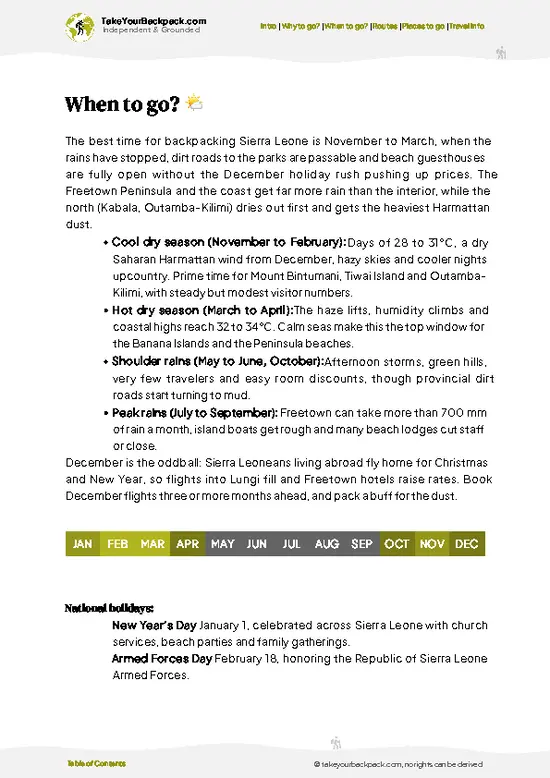
source: climatestotravel.comJANJanuary: highly recommended for travelingFEBFebruary: highly recommended for travelingMARMarch: good for travelingAPRApril: highly recommended for travelingMAYMay: fair for travelingJUNJune: fair for travelingJULJuly: fair for travelingAUGAugust: fair for travelingSEPSeptember: good for travelingOCTOctober: good for travelingNOVNovember: highly recommended for travelingDECDecember: excellent for traveling
when-to-go

✈️ The backpacker research shortcutSierra Leone Travel Guide

An offline-friendly backpacking guide with optimized travel routes, ranked highlights, transport advice, and the best areas to stay.
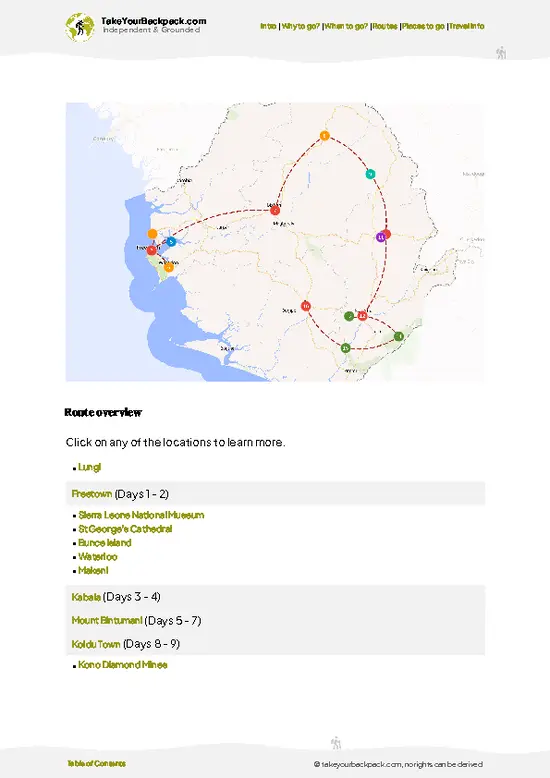
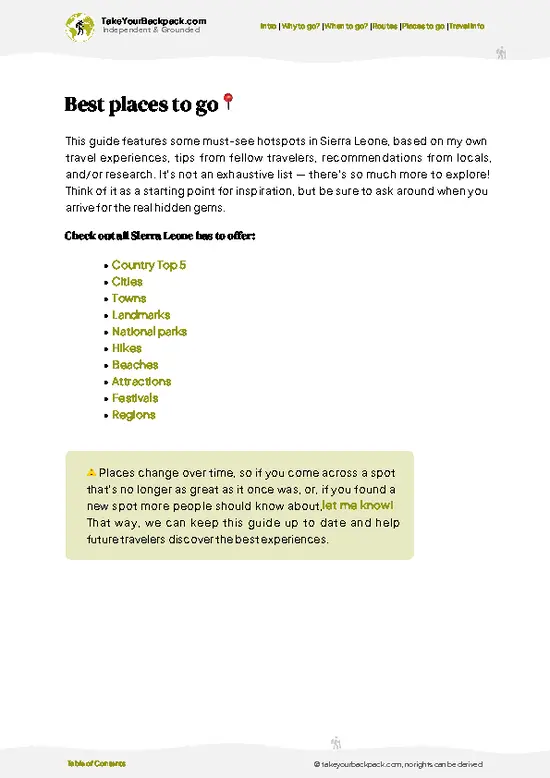
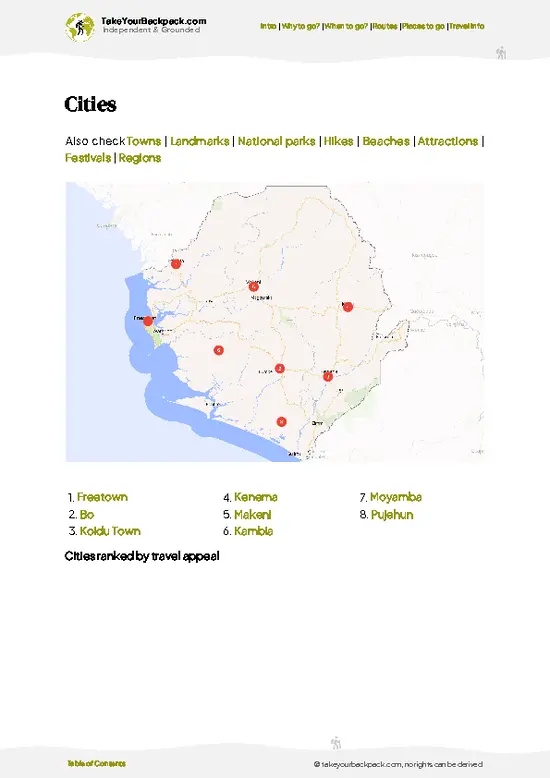
example page 0 from our offline Travel Guide for Sierra Leone
example page 1 from our offline Travel Guide for Sierra Leone
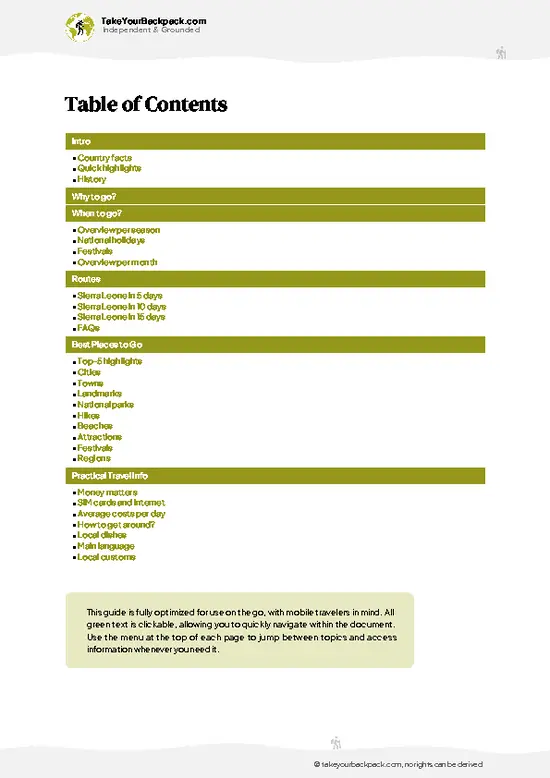
example page 2 from our offline Travel Guide for Sierra Leone
example page 3 from our offline Travel Guide for Sierra Leone
example page 4 from our offline Travel Guide for Sierra Leone
example page 5 from our offline Travel Guide for Sierra Leone
example page 6 from our offline Travel Guide for Sierra Leone
example page 7 from our offline Travel Guide for Sierra Leone
The digital guide (275 pages) contains:
63 highlights, ranked by travel appeal
Optimized 5, 10 & 15-day travel routes
Cities, national parks, landmarks, beaches
How to get around
Offline-friendly for travel without Wi-Fi
👉 Click to see all 30+ guide features

📅 Plan smarter in minutes, not weeks
Month by month travel advice
Festivals & national holidays
Budget expectations

🗺️ Go to the right places, skip the overrated ones
Honest pros & cons of destinations
Top hikes, parks & viewpoints
Lesser-known places most travelers miss
Clear “worth it vs skip it” guidance

🛏️ Travel smoothly without rookie mistakes
Best areas to stay
Transport systems explained simply
Common scams & safety advice
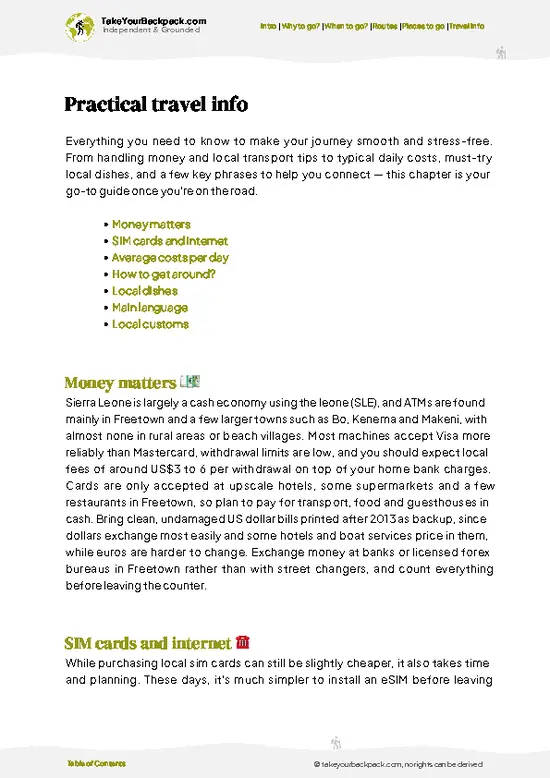
SIM cards, money & practical tips

🌍 Understand the country, not just visit it
Culture & traditions
52 Essential phrases & customs
Festivals worth planning around
Traveler-friendly historical context
Insights that make places more meaningful

📱 Built for real travel conditions
Fully downloadable PDF
Works completely offline
Optimized for phone use
Useful in remote areas & buses
Everything in one place
Save weeks of stressful planning
Get instant access to your full guide. 30‑day money-back guarantee.
+ Add another guide for just US$7.80

By proceeding you agree to our terms.
Sent to your inbox immediately after payment • 100% Secure Checkout
Best Backpacking Travel Advisor 2025 tourism awardBest Backpacking
Travel Advisor
2025
What others say about Take Your Backpack Guides:
⭐⭐⭐⭐⭐
Fantastic, amazing amount of information!
⭐⭐⭐⭐⭐
My goodness this is amazing, it's what I've been looking for hats off too you!
⭐⭐⭐⭐⭐
I think this is absolutely BRILLIANT
⭐⭐⭐⭐
Very complete and informative. It's still missing places, but I gotta to commend you
⭐⭐⭐⭐⭐
This is truly amazing, thank you, can't wait to explore it with my kids!
⭐⭐⭐⭐⭐
Awesome resource, thank you!
⭐⭐⭐⭐⭐
This is amazing! Can't wait to explore the ones I haven't seen
⭐⭐⭐⭐
I love this! Well done, great idea.
⭐⭐⭐⭐⭐
Thanks for taking the time to make this gem!
⭐⭐⭐⭐⭐
This might be the best website I've ever seen.
⭐⭐⭐⭐⭐
Congratulations, and thank you so much for your work; it's incredibly valuable.
⭐⭐⭐⭐
In all seriousness I think you did a great job pointing out the important spots
⭐⭐⭐⭐⭐
10/10 very good
⭐⭐⭐⭐⭐
As someone who's only just starting to visit regularly this is awesome, thank you.
⭐⭐⭐⭐
Thank you very much! I'm going to visit my dad, it's going to be very useful!
⭐⭐⭐⭐⭐
This is really cool! We'll be travelling for the first time and this definitely come in handy.
⭐⭐⭐⭐⭐
You are now our minister of culture, congratulations 👨‍💼
⭐⭐⭐⭐⭐
Just wanted to tell you that this is a pearl! Going to follow your recommendations.
⭐⭐⭐⭐⭐
This is so cool. I'll definitely be using the resource for my travels soon.
⭐⭐⭐⭐⭐
This is very impressive! Good work.
⭐⭐⭐⭐⭐
This is an amazing and informative site. Very well done!

🛏️ Where to stay?Best areas and accommodation options

Forget the glossy travel brochures that paint Freetown as a seamless paradise around the Sierra Leone National Museum. The reality is a bit rougher—crowds can be unpredictable, and the infrastructure around the museum isn’t exactly polished for tourists. But here’s the kicker: that’s where the real experience lives.

If you want to be close to the museum and dive into the pulse of the city, aim for the neighborhoods of Central Freetown and Wilkinson Road. These areas are the beating heart of local life, where backpackers and solo travelers mingle with street vendors, students, and artists. It’s … read more 👉
Forget the glossy travel brochures that paint Freetown as a seamless paradise around the Sierra Leone National Museum. The reality is a bit rougher—crowds can be unpredictable, and the infrastructure around the museum isn’t exactly polished for tourists. But here’s the kicker: that’s where the real experience lives.

If you want to be close to the museum and dive into the pulse of the city, aim for the neighborhoods of Central Freetown and Wilkinson Road. These areas are the beating heart of local life, where backpackers and solo travelers mingle with street vendors, students, and artists. It’s not about luxury; it’s about connection. You’ll find safe pockets where the community looks out for each other, and the vibe is social without the touristy gloss.

Central Freetown offers a gritty, authentic urban experience. It’s noisy, alive, and full of character. You can walk to the museum easily, and after hours, the streets buzz with informal gatherings and local eateries serving up real Sierra Leonean flavors. Wilkinson Road, just a bit further out, is quieter but still social, with a mix of guesthouses and small cafés where you can swap stories with fellow travelers.

Yes, the streets can feel chaotic, and the budget options won’t pamper you. But if you’re after a genuine slice of Sierra Leone’s culture, these neighborhoods put you right in the middle of it. The museum is just the start—the real treasure is the city’s raw, unfiltered energy around it.

👛 Costs (as of 3 September 2026)Travel costs and budget guide for Sierra Leone National Museum

As of the most recent estimates, the Sierra Leone National Museum charges an entrance fee of $5 for international visitors and 5,000 SLL (approximately $5) for national visitors. Additional costs may include guided tours or donations. ([tourism.gov.sl](https://tourism.gov.sl/national-museum/?utm_source=openai))
⚠️ Prices can change and everyone travels differently, so take this as a rough guide. Hope it helps you plan your adventure!

FAQTraveler FAQ

Plan to spend about 1 to 2 hours visiting the Sierra Leone National Museum to see its key exhibits. This allows enough time to explore the cultural artifacts and historical displays without rushing.
Yes, the Sierra Leone National Museum is worth the entrance fee, which is typically around 5,000 Leones (about 0.50 USD). It offers valuable insights into Sierra Leone's history and culture, making it a good value for travelers interested in local heritage.
To get to the Sierra Leone National Museum, head to Freetown city center. It is located near the Fourah Bay College area and can be reached by taxi or local transport from most parts of the city within 10 to 20 minutes depending on traffic.
⚠️ Things can change over time, so always validate details locally before you go.

Other Sierra Leonean attractions near Sierra Leone National Museum

Explore more nearby:


💡 Not sure where to go next?
Create a personalized itinerary for Sierra Leone including Sierra Leone National Museum and the places that fit your trip.

Generate my itinerary

👉 Discover all attractions

Or checkout all Sierra Leone has to offer (think cities, towns, villages, national parks, hikes, beaches, festivals)
Country photo of Sierra Leone

We 💚 feedbackKey takeaways before you go

The Sierra Leone National Museum isn’t going to wow you with flashy displays or crowds of tourists snapping selfies. It’s quiet, a bit rough around the edges, but that’s exactly where its charm lies. The real magic is in the stories—the artifacts that speak to a history you won’t find in glossy guidebooks. Don’t expect polished exhibits; expect authenticity. If you’re patient and curious, you’ll leave with a deeper respect for Sierra Leone’s resilience and culture. It’s a low-key stop that rewards those who slow down and listen.

✍️ Help improve this page!
The information on this page is based on in-depth research, insights shared by experienced travelers, and feedback from the local travel community in Sierra Leone. While every effort is made to keep the information accurate and current, conditions can change — so if you spot anything incorrect or outdated, please get in touch.


🙋‍♂️ Give feedback

👋 Meet the founderWho’s Behind Take Your Backpack?

Johan, backpacker and founder of TakeYourBackpackHi, I’m Johan (Netherlands 🇳🇱), the creator of TakeYourBackpack. Over the past decade, I’ve backpacked through 80+ countries across six continents, gaining extensive experience with independent travel, long-term trips, and overland routes.

This site is built on a combination of firsthand travel experience and carefully curated insights from other backpackers. Many guides are based on places I’ve personally visited, while others bring together tips, observations, and practical advice shared by trusted travelers I’ve met along the way.

The goal is to provide realistic, experience-driven guidance — not generic itineraries — so you can explore destinations with better context, clearer expectations, and more confidence.

Get full country guide •
Instant download • 63 highlights • Full Offline guide