

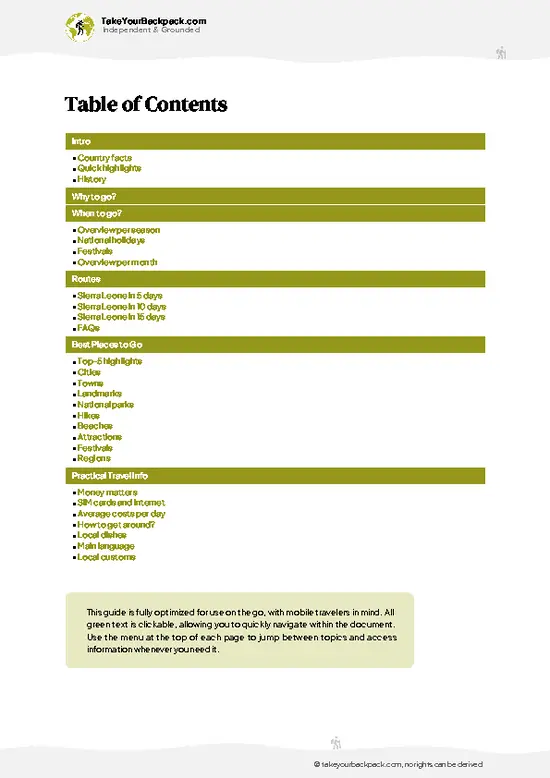


The Locomotive Graveyard: Sierra Leone’s Iron Giants
Forget the polished, glass-cased nostalgia of European train museums. Here, you’re face-to-face with the real, rusted beasts that once hauled diamonds, cocoa, and people across the country. These aren’t replicas or sanitized relics—they’re battered, bullet-scarred survivors of war and weather. Climb up, touch the metal, smell the oil and dust. This is history you can feel in your bones, not just read on a plaque.
The Colonial-Era Carriages: Echoes of Empire
Step inside the original passenger cars from the British colonial days. The woodwork is battered, the seats are threadbare, and the stories are thick in the air. You’ll see the class divide in the upholstery, the faded signage, and the layout itself. It’s not romanticized—this is the … read more 👉
Forget the polished, glass-cased nostalgia of European train museums. Here, you’re face-to-face with the real, rusted beasts that once hauled diamonds, cocoa, and people across the country. These aren’t replicas or sanitized relics—they’re battered, bullet-scarred survivors of war and weather. Climb up, touch the metal, smell the oil and dust. This is history you can feel in your bones, not just read on a plaque.
The Colonial-Era Carriages: Echoes of Empire
Step inside the original passenger cars from the British colonial days. The woodwork is battered, the seats are threadbare, and the stories are thick in the air. You’ll see the class divide in the upholstery, the faded signage, and the layout itself. It’s not romanticized—this is the … read more 👉
The Locomotive Graveyard: Sierra Leone’s Iron Giants
Forget the polished, glass-cased nostalgia of European train museums. Here, you’re face-to-face with the real, rusted beasts that once hauled diamonds, cocoa, and people across the country. These aren’t replicas or sanitized relics—they’re battered, bullet-scarred survivors of war and weather. Climb up, touch the metal, smell the oil and dust. This is history you can feel in your bones, not just read on a plaque.
The Colonial-Era Carriages: Echoes of Empire
Step inside the original passenger cars from the British colonial days. The woodwork is battered, the seats are threadbare, and the stories are thick in the air. You’ll see the class divide in the upholstery, the faded signage, and the layout itself. It’s not romanticized—this is the raw, unvarnished reality of travel in a country shaped by outsiders. If you want to understand Sierra Leone’s past, start here, where the ghosts of colonial ambition still linger in the grain of the wood.
The Workshop: Mechanics in Motion
This isn’t a sterile exhibit behind velvet ropes. If you’re lucky, you’ll catch the museum’s small team coaxing a century-old engine back to life with nothing but hand tools and stubbornness. The workshop is a living display of Sierra Leonean ingenuity—resourceful, improvisational, and proud. Watch as they weld, hammer, and tinker, keeping history running on a shoestring. It’s gritty, noisy, and absolutely captivating.
The War-Damaged Engines: Scars of Conflict
Some locomotives wear their history openly—shrapnel holes, twisted metal, and scorch marks from the civil war. These aren’t just artifacts; they’re witnesses. You’ll get a visceral sense of how conflict tore through every layer of life here, even the railways. It’s sobering, but it’s also a testament to survival. No Instagram filter can capture the gravity of standing beside a train that’s literally been through hell and back.
The Station Platform: Time Travel Without the Gimmicks
Stand on the original platform, weeds poking through the cracks, and imagine the chaos of market days, the anticipation of departures, the reunions and farewells. There’s no piped-in soundtrack, no costumed actors—just the echo of real lives lived. The platform is a stage for your imagination, and it’s all the more powerful for its authenticity.
The Volunteer Guides: Storytelling With Teeth
Skip the laminated scripts. The guides here are passionate, opinionated, and sometimes blunt. They’ll tell you about the glory days, the collapse, and the slow, stubborn resurrection of the railway. Expect candor, humor, and the occasional hard truth about Sierra Leone’s struggles and resilience. This is oral history at its best—messy, human, and unforgettable for all the right reasons.
Forget the polished, glass-cased nostalgia of European train museums. Here, you’re face-to-face with the real, rusted beasts that once hauled diamonds, cocoa, and people across the country. These aren’t replicas or sanitized relics—they’re battered, bullet-scarred survivors of war and weather. Climb up, touch the metal, smell the oil and dust. This is history you can feel in your bones, not just read on a plaque.
The Colonial-Era Carriages: Echoes of Empire
Step inside the original passenger cars from the British colonial days. The woodwork is battered, the seats are threadbare, and the stories are thick in the air. You’ll see the class divide in the upholstery, the faded signage, and the layout itself. It’s not romanticized—this is the raw, unvarnished reality of travel in a country shaped by outsiders. If you want to understand Sierra Leone’s past, start here, where the ghosts of colonial ambition still linger in the grain of the wood.
The Workshop: Mechanics in Motion
This isn’t a sterile exhibit behind velvet ropes. If you’re lucky, you’ll catch the museum’s small team coaxing a century-old engine back to life with nothing but hand tools and stubbornness. The workshop is a living display of Sierra Leonean ingenuity—resourceful, improvisational, and proud. Watch as they weld, hammer, and tinker, keeping history running on a shoestring. It’s gritty, noisy, and absolutely captivating.
The War-Damaged Engines: Scars of Conflict
Some locomotives wear their history openly—shrapnel holes, twisted metal, and scorch marks from the civil war. These aren’t just artifacts; they’re witnesses. You’ll get a visceral sense of how conflict tore through every layer of life here, even the railways. It’s sobering, but it’s also a testament to survival. No Instagram filter can capture the gravity of standing beside a train that’s literally been through hell and back.
The Station Platform: Time Travel Without the Gimmicks
Stand on the original platform, weeds poking through the cracks, and imagine the chaos of market days, the anticipation of departures, the reunions and farewells. There’s no piped-in soundtrack, no costumed actors—just the echo of real lives lived. The platform is a stage for your imagination, and it’s all the more powerful for its authenticity.
The Volunteer Guides: Storytelling With Teeth
Skip the laminated scripts. The guides here are passionate, opinionated, and sometimes blunt. They’ll tell you about the glory days, the collapse, and the slow, stubborn resurrection of the railway. Expect candor, humor, and the occasional hard truth about Sierra Leone’s struggles and resilience. This is oral history at its best—messy, human, and unforgettable for all the right reasons.
Spotted a mistake or missing something? Contact us.
v2.webp)

Best Backpacking
Hi, I’m Johan (Netherlands 🇳🇱), the creator of TakeYourBackpack. Over the past decade, I’ve backpacked through 80+ countries across six continents, gaining extensive experience with independent travel, long-term trips, and overland routes.