×

Sierra Leone🇸🇱 | attractionsSt George’s CathedralAnglican cathedral, Gloucester Street, memorial tablets, Sunday choirs | things to do and best time to go

Explore Old Fourah Bay CollegeExplore Cotton Tree Monument Area

Backpacking in St George’s Cathedral
👌 Worth visitingattraction ranked #8
By Johan Kruseman 🇳🇱 | Updated October 22, 2026

Entry costs nothing and the doors usually stand open in daylight, so you can drop in between errands without planning a thing. St George’s Cathedral sits in Freetown, Sierra Leone’s capital, on Gloucester Street in the old downtown near Cotton Tree. Inside, the air is cool and smells of old timber and floor polish, and the stone walls hold the hum of traffic outside to a murmur. It is small, quiet and rarely crowded, which is why a short visit works better than a long one. Services fill the pews and the singing is the reason to time a Sunday visit, though you should dress modestly and sit near the back. Hours are irregular, so ask the caretaker rather than trusting a sign. Unlike the larger, newer Roman Catholic cathedral nearby, this one is a colonial-era Anglican building with a quieter, almost village-church feel.

Discover everything you want to know in the 📖 Sierra Leone Travel Guide.


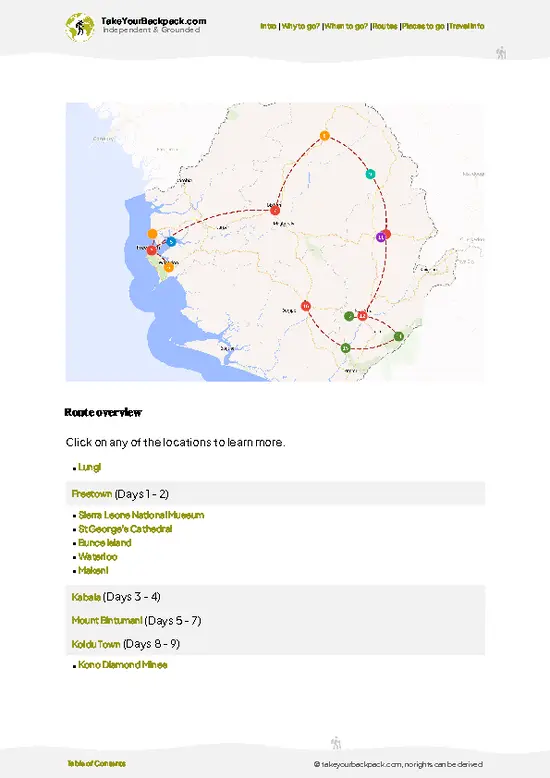
example page 0 from our offline Travel Guide for Sierra Leone
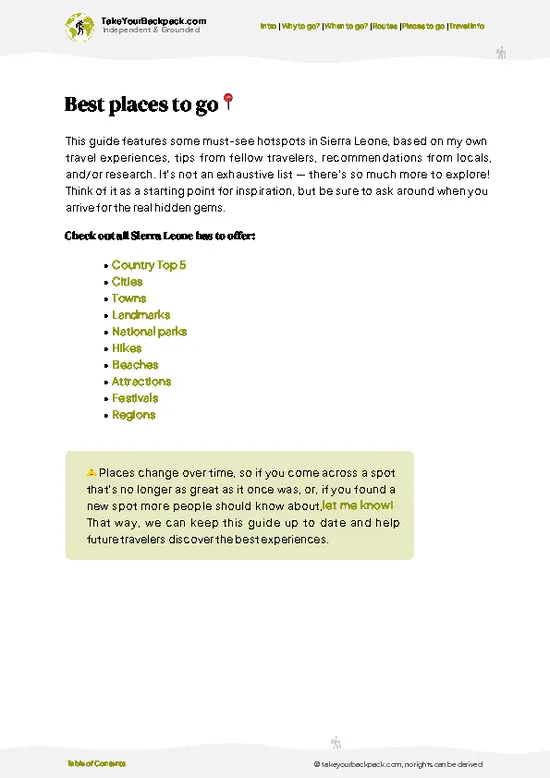
example page 1 from our offline Travel Guide for Sierra Leone
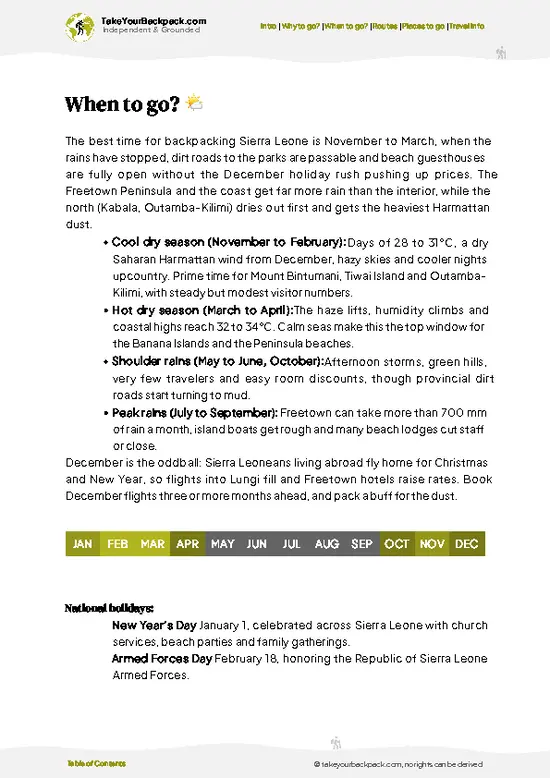
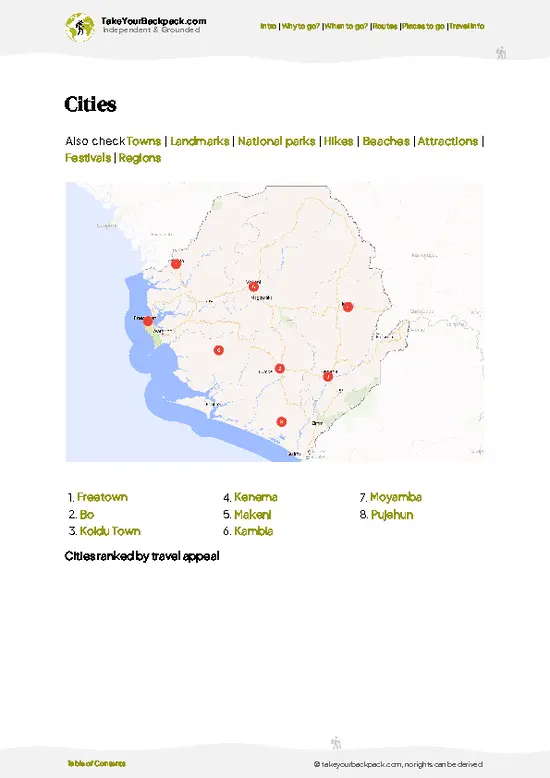
example page 2 from our offline Travel Guide for Sierra Leone
example page 3 from our offline Travel Guide for Sierra Leone
example page 4 from our offline Travel Guide for Sierra Leone
example page 5 from our offline Travel Guide for Sierra Leone
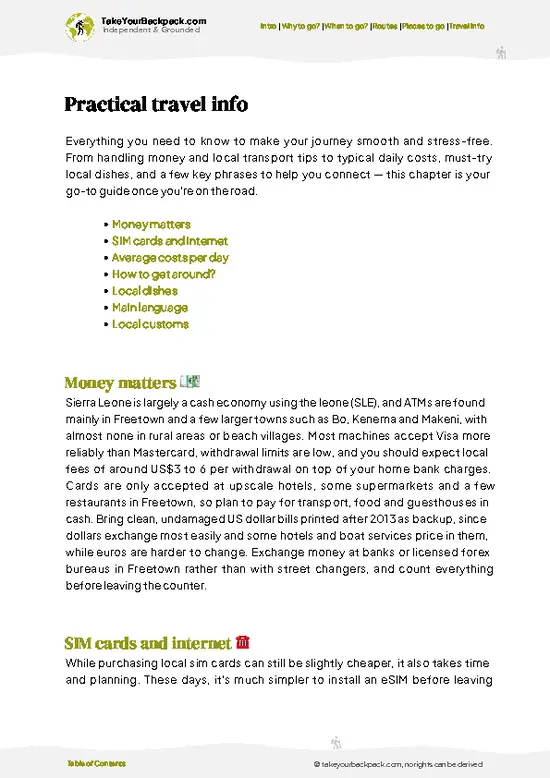
example page 6 from our offline Travel Guide for Sierra Leone
example page 7 from our offline Travel Guide for Sierra Leone
Loading the map 🌍
CLICK TO FILTER
cities
towns
landmarks
national parks
hikes
beaches
attractions
festivals
regions
SHOW COUNTRY’S BESTSHOW ALL

✨ Why go?
Ranked #8 attraction in Sierra Leone
What sets this place apart

St George’s Cathedral is the clearest surviving piece of Freetown’s founding story, a church tied to the settlers who built the city as a home for freed people. If you care about how Sierra Leone took shape, this is where the Krio identity feels most physical: Victorian stonework, brass plaques and hymns sung with full-throated conviction.

The second reason is placement. The Gloucester Street location puts you within a short walk of Cotton Tree and the old downtown, so the cathedral anchors an easy half-day of historic Freetown on foot. Few capital-city sights ask so little of your time or money.

The third is Sunday worship. Hearing a Freetown congregation sing in this room is warmer and more moving than any exhibit, and you are welcome to listen quietly from the back.

💡 HighlightsEssential experiences to have while visiting St George’s Cathedral

  1. The Cathedral Nave and Its Stone Façade: The building most people come to photograph is the Anglican cathedral on Gloucester Street in central Freetown, with a squat, solid tower and pale walls streaked by tropical rain. Inside, the nave stays noticeably cooler than the street, and the pews, hymn boards and ceiling fans give it a working-church feel.
  2. The Foundation Stone and Early Colonial Story: The cornerstone was laid in the 1850s, and the cathedral grew out of Freetown’s settler community of liberated Africans and Nova Scotian and Jamaican arrivals. Reading the plaques inside, you start to see how this church anchored the Krio identity.
  3. Sunday Morning Service: This is the best entertainment on the grounds. Choirs sing in harmony, women arrive in matching head wraps and bright cloth, and
… read more 👉
  1. The Cathedral Nave and Its Stone Façade: The building most people come to photograph is the Anglican cathedral on Gloucester Street in central Freetown, with a squat, solid tower and pale walls streaked by tropical rain. Inside, the nave stays noticeably cooler than the street, and the pews, hymn boards and ceiling fans give it a working-church feel.
  2. The Foundation Stone and Early Colonial Story: The cornerstone was laid in the 1850s, and the cathedral grew out of Freetown’s settler community of liberated Africans and Nova Scotian and Jamaican arrivals. Reading the plaques inside, you start to see how this church anchored the Krio identity.
  3. Sunday Morning Service: This is the best entertainment on the grounds. Choirs sing in harmony, women arrive in matching head wraps and bright cloth, and the hymns spill out through open doors into the street. Dress modestly, sit near the back and stay respectful.
  4. Memorial Plaques and Tablets: The walls carry brass and stone tablets for bishops, colonial officials and old Freetown families. They are small, easy to skim, and give you names that turn up again on street signs and school gates around the city.
  5. The Stained Glass and Interior Woodwork: Colored glass throws patches of red and blue onto the floor on bright mornings. The dark wooden pulpit and pews have the worn polish of more than a century of hands.
  6. The Surrounding Churchyard and Gloucester Street: Outside, vendors, minibuses and motorbike taxis keep up a steady noise. Standing under the tower with the traffic horns around you tells you more about downtown Freetown than any plaque.
  7. The Neighboring Historic Core: A short walk takes you toward the Cotton Tree area and Freetown’s other old colonial buildings. Seeing the cathedral as part of this cluster makes its place in the city’s history clearer.
St George’s Cathedral does not need a ticket or advance booking, though a small donation at the door is customary and Sunday services are best attended by simply arriving early.
Spotted a mistake or missing something? Contact us.

🌤️ When to go?When to go for the best experience

Late November through February gives you the easiest days for walking around Freetown’s city center, with dry weather and highs of 29 to 32°C (84 to 90°F).
  • Harmattan Months (December to February): Dusty haze from the Sahara softens the sky, nights dip to about 23°C (73°F), and the walk between the cathedral, Cotton Tree and the National Museum is comfortable. Daylight lasts roughly 12 hours.
  • Hot Build-Up (March to May): Humidity climbs, highs reach 32 to 34°C (90 to 93°F), and midday sightseeing is sweaty. Crowds stay thin.
  • Rains (June to October): August is the wettest month, with downpours that flood streets and make hillside lanes slippery. Guesthouse rates often soften.
  • Christmas and Easter: Services fill the pews and Freetown gets busier, with higher prices for beds and flights.
Visit on a … read more 👉
Late November through February gives you the easiest days for walking around Freetown’s city center, with dry weather and highs of 29 to 32°C (84 to 90°F).
  • Harmattan Months (December to February): Dusty haze from the Sahara softens the sky, nights dip to about 23°C (73°F), and the walk between the cathedral, Cotton Tree and the National Museum is comfortable. Daylight lasts roughly 12 hours.
  • Hot Build-Up (March to May): Humidity climbs, highs reach 32 to 34°C (90 to 93°F), and midday sightseeing is sweaty. Crowds stay thin.
  • Rains (June to October): August is the wettest month, with downpours that flood streets and make hillside lanes slippery. Guesthouse rates often soften.
  • Christmas and Easter: Services fill the pews and Freetown gets busier, with higher prices for beds and flights.
Visit on a weekday morning, before the heat builds and before Sunday services take over the building.


source: climatestotravel.comJANJanuary: excellent for travelingFEBFebruary: excellent for travelingMARMarch: excellent for travelingAPRApril: highly recommended for travelingMAYMay: fair for travelingJUNJune: fair for travelingJULJuly: fair for travelingAUGAugust: fair for travelingSEPSeptember: fair for travelingOCTOctober: fair for travelingNOVNovember: highly recommended for travelingDECDecember: excellent for traveling
when-to-go

✈️ The backpacker research shortcutSierra Leone Travel Guide

An offline-friendly backpacking guide with optimized travel routes, ranked highlights, transport advice, and the best areas to stay.
example page 0 from our offline Travel Guide for Sierra Leone
example page 1 from our offline Travel Guide for Sierra Leone
example page 2 from our offline Travel Guide for Sierra Leone
example page 3 from our offline Travel Guide for Sierra Leone
example page 4 from our offline Travel Guide for Sierra Leone
example page 5 from our offline Travel Guide for Sierra Leone
example page 6 from our offline Travel Guide for Sierra Leone
example page 7 from our offline Travel Guide for Sierra Leone
The digital guide (242 pages) contains:
✅ 50 highlights, ranked by travel appeal
✅ Optimized 5, 10 & 15-day travel routes
✅ Cities, national parks, landmarks, beaches
✅ How to get around
✅ Offline-friendly for travel without Wi-Fi
👉 Click to see all 30+ guide features

📅 Plan smarter in minutes, not weeks
✅ Month by month travel advice
✅ Festivals & national holidays
✅ Budget expectations

🗺️ Go to the right places, skip the overrated ones
✅ Honest pros & cons of destinations
✅ Top hikes, parks & viewpoints
✅ Lesser-known places most travelers miss
✅ Clear “worth it vs skip it” guidance

🛏️ Travel smoothly without rookie mistakes
✅ Best areas to stay
✅ Transport systems explained simply
✅ Common scams & safety advice
✅ SIM cards, money & practical tips

🌍 Understand the country, not just visit it
✅ Culture & traditions
✅ 52 Essential phrases & customs
✅ Festivals worth planning around
✅ Traveler-friendly historical context
✅ Insights that make places more meaningful

📱 Built for real travel conditions
✅ Fully downloadable PDF
✅ Works completely offline
✅ Optimized for phone use
✅ Useful in remote areas & buses
✅ Everything in one place
Stop searching, start planning
Get instant access to your full guide. 30‑day money-back guarantee.
+ Add another guide for just

By proceeding you agree to our terms.
Sent to your inbox immediately after payment • 100% Secure Checkout
Best Backpacking Travel Advisor 2025 tourism awardBest Backpacking
Travel Advisor
2025
What others say about Take Your Backpack Guides:
⭐⭐⭐⭐⭐
Fantastic, amazing amount of information!
⭐⭐⭐⭐⭐
My goodness this is amazing, it's what I've been looking for hats off too you!
⭐⭐⭐⭐⭐
I think this is absolutely BRILLIANT
⭐⭐⭐⭐
Very complete and informative. It's still missing places, but I gotta to commend you
⭐⭐⭐⭐⭐
This is truly amazing, thank you, can't wait to explore it with my kids!
⭐⭐⭐⭐⭐
Awesome resource, thank you!
⭐⭐⭐⭐⭐
This is amazing! Can't wait to explore the ones I haven't seen
⭐⭐⭐⭐
I love this! Well done, great idea.
⭐⭐⭐⭐⭐
Thanks for taking the time to make this gem!
⭐⭐⭐⭐⭐
This might be the best website I've ever seen.
⭐⭐⭐⭐⭐
Congratulations, and thank you so much for your work; it's incredibly valuable.
⭐⭐⭐⭐
In all seriousness I think you did a great job pointing out the important spots
⭐⭐⭐⭐⭐
10/10 very good
⭐⭐⭐⭐⭐
As someone who's only just starting to visit regularly this is awesome, thank you.
⭐⭐⭐⭐
Thank you very much! I'm going to visit my dad, it's going to be very useful!
⭐⭐⭐⭐⭐
This is really cool! We'll be travelling for the first time and this definitely come in handy.
⭐⭐⭐⭐⭐
You are now our minister of culture, congratulations 👨‍💼
⭐⭐⭐⭐⭐
Just wanted to tell you that this is a pearl! Going to follow your recommendations.
⭐⭐⭐⭐⭐
This is so cool. I'll definitely be using the resource for my travels soon.
⭐⭐⭐⭐⭐
This is very impressive! Good work.
⭐⭐⭐⭐⭐
This is an amazing and informative site. Very well done!

🛏️ Where to stay?How to pick the right area

Stay in central Freetown or on the Aberdeen and Lumley side, since the cathedral sits at the heart of the old downtown on Pademba Road and Wallace Johnson Street.
The Central Business District puts you within walking distance of the cathedral, Cotton Tree, Victoria Park and the National Museum. It is loud and traffic-choked by day, and I would use taxis after dark. Guesthouses here are the cheapest and let you start early before the heat.
Aberdeen and Lumley, about 15 to 30 minutes by taxi depending on traffic, are where most backpackers end up. Beachfront guesthouses, bars and restaurants make … read more 👉
Stay in central Freetown or on the Aberdeen and Lumley side, since the cathedral sits at the heart of the old downtown on Pademba Road and Wallace Johnson Street.
The Central Business District puts you within walking distance of the cathedral, Cotton Tree, Victoria Park and the National Museum. It is loud and traffic-choked by day, and I would use taxis after dark. Guesthouses here are the cheapest and let you start early before the heat.
Aberdeen and Lumley, about 15 to 30 minutes by taxi depending on traffic, are where most backpackers end up. Beachfront guesthouses, bars and restaurants make it easy to meet other travelers, and the area feels more relaxed in the evenings. Tokeh and River Number Two beaches are further out and suit the end of a trip rather than a base for city sights.
I would choose Aberdeen or Lumley for the social scene and short taxi rides into the center, and downtown only if an early start matters most.

👛 Costs (as of 22 October 2026)Typical daily expenses

St George’s Cathedral costs very little to visit, and a backpacker’s day in Freetown comes to about US$48 including a bed, meals and local transport.
CategoryBudget RangeLocal Reality
Entry to St George’s CathedralFreeWorshippers and visitors walk in; a small donation of US$1 to 3 is appreciated.
Guide or caretakerUS$0 to 5A caretaker may show you the interior and history for a tip.
Dorm or basic room (low season)US$15 to 30Guesthouses in Aberdeen and downtown.
Dorm or basic room (high season)US$20 to 35Prices rise from December to February. Paid in cash or at times by card.
Local mealsUS$6 to 12Rice with cassava leaf or groundnut stew at local eateries.
TransportUS$3 to 8Shared taxis cost less than a private drop, and okadas are limited in the center.
Nearby sightsUS$2 to 5National Museum and Cotton
… read more 👉
St George’s Cathedral costs very little to visit, and a backpacker’s day in Freetown comes to about US$48 including a bed, meals and local transport.
CategoryBudget RangeLocal Reality
Entry to St George’s CathedralFreeWorshippers and visitors walk in; a small donation of US$1 to 3 is appreciated.
Guide or caretakerUS$0 to 5A caretaker may show you the interior and history for a tip.
Dorm or basic room (low season)US$15 to 30Guesthouses in Aberdeen and downtown.
Dorm or basic room (high season)US$20 to 35Prices rise from December to February. Paid in cash or at times by card.
Local mealsUS$6 to 12Rice with cassava leaf or groundnut stew at local eateries.
TransportUS$3 to 8Shared taxis cost less than a private drop, and okadas are limited in the center.
Nearby sightsUS$2 to 5National Museum and Cotton Tree, small fees or donations.
Total Daily BudgetUS$48Using a high-season bed and typical meals.
⚠️ Prices can change and everyone travels differently, so take this as a rough guide. Hope it helps you plan your adventure!

FAQFrequently asked questions about St George’s Cathedral

Allow 30 to 60 minutes for St George’s Cathedral itself. Add another 2 to 3 hours if you combine it with the nearby Cotton Tree, the National Museum and Victoria Park, all within a 10 to 15 minute walk. Services on Sunday mornings last a couple of hours.
Yes, because St George’s Cathedral has no fixed entrance fee, only an optional donation of around US$1 to 3. You get one of West Africa’s oldest cathedral buildings, dating from the early 19th century, and a calm break from downtown traffic. A caretaker may show you around for a small tip.
St George’s Cathedral sits in central Freetown on Pademba Road, a 10 to 15 minute walk from Cotton Tree. From Lungi International Airport, take the ferry or water taxi across the estuary, then a taxi, for a total of about 1.5 to 3 hours and roughly US$40 to 60. From Aberdeen or Lumley, a taxi takes 15 to 30 minutes and costs about US$3 to 8.
⚠️ Things can change over time, so always validate details locally before you go.

Other Sierra Leonean attractions near St George’s Cathedral

Explore more nearby:


💡 Not sure where to go next?
Create a personalized itinerary for Sierra Leone including St George’s Cathedral and the places that fit your trip.

Generate my itinerary

👉 Discover all attractions

Or checkout all Sierra Leone has to offer (think cities, towns, villages, national parks, hikes, beaches, festivals)
Country photo of Sierra Leone

We 💚 feedbackWhat to keep in mind

St George’s Cathedral suits history lovers, quiet-minded travelers and anyone curious about Krio culture most. If a hymn-filled morning appeals, go on a Sunday and bring a modest layer for your shoulders. Skip it if you want spectacle, but pair it with Cotton Tree for a slow, rewarding hour.

✍️ Help improve this page!
The information on this page is based on in-depth research, insights shared by experienced travelers, and feedback from the local travel community in Sierra Leone. While every effort is made to keep the information accurate and current, conditions can change — so if you spot anything incorrect or outdated, please get in touch.


🙋‍♂️ Give feedback

👋 Meet the founderWho’s Behind Take Your Backpack?

Johan, backpacker and founder of TakeYourBackpackHi, I’m Johan (Netherlands 🇳🇱), the creator of TakeYourBackpack. Over the past 3 decades, I’ve backpacked through 90+ countries across six continents, gaining extensive experience with independent travel, long-term trips, and overland routes.

This site is built on a combination of firsthand travel experience and carefully curated insights from other backpackers. Many guides are based on places I’ve personally visited, while others bring together tips, observations, and practical advice shared by trusted travelers I’ve met along the way.

The goal is to provide realistic, experience-driven guidance — not generic itineraries — so you can explore destinations with better context, clearer expectations, and more confidence.