×

Singapore🇸🇬 | townsChinatownTemple street, market alleys, clan houses | things to do and best time to go

Explore Pulau UbinExplore Little India

Backpacking in Chinatown
🏆 Top picktown ranked #2
By Johan Kruseman 🇳🇱 | Updated September 23, 2026

Chinatown isn’t for anyone chasing wilderness, silence, or “authenticity” untouched by tourism. The streets are busy, the souvenir shops are loud, and you’re never more than a few steps from someone’s selfie. But for backpackers, that chaos is exactly why it works: it’s one of the easiest places in Singapore to land, get your bearings, and plug straight into the city’s food and culture without spending half your budget in a mall.

Wedged between the CBD and Outram Park, Chinatown is central, compact, and walkable, with MRT lines that shoot you to Little India, Marina Bay, or even nature escapes like MacRitchie and the Southern Ridges. It’s more atmospheric than Bugis, less intense than Little India at night, and cheaper to sleep in than the riverfront. Hostels cluster in old shophouses, so it’s social without being a party zoo. Hawker centers keep food costs sane; streets feel safe even late, just busy. As a base, it’s ideal for 2-3 nights: you day-trip out for greenery, then come back to lantern-lit streets, incense from the temples, and the clatter of woks as your nightly soundtrack.

Discover everything you want to know in the 📖 Singapore Travel Guide.


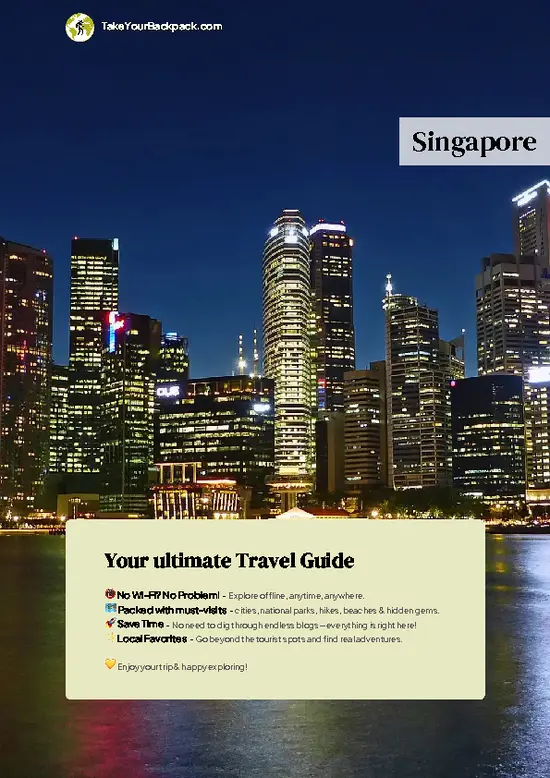
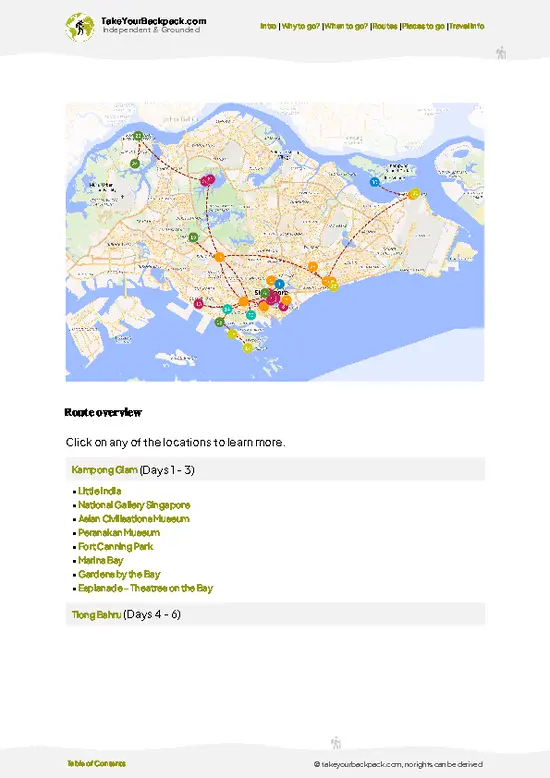
example page 0 from our offline Travel Guide for Singapore
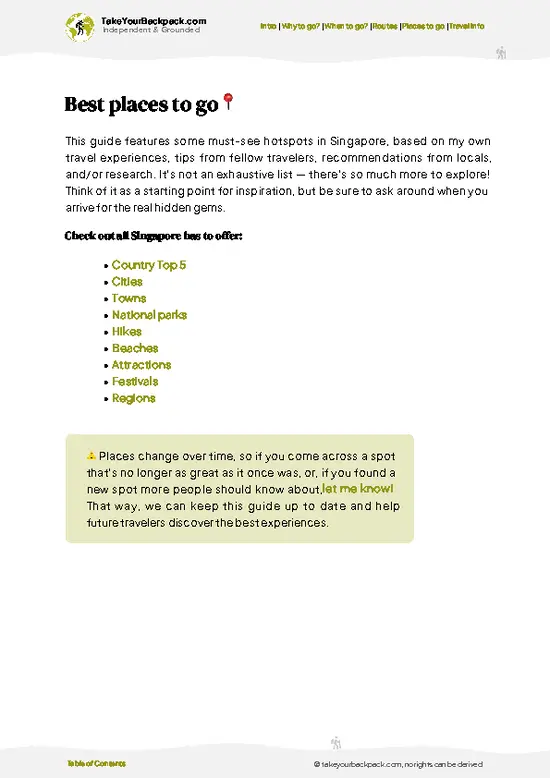
example page 1 from our offline Travel Guide for Singapore
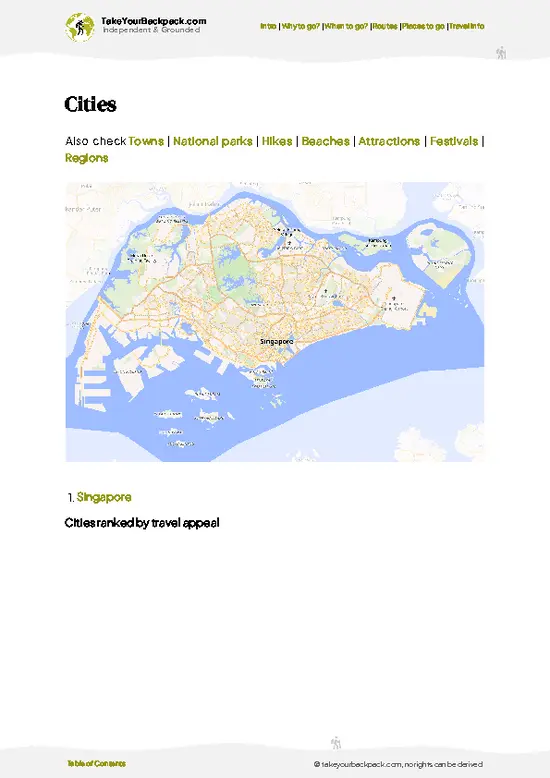
example page 2 from our offline Travel Guide for Singapore
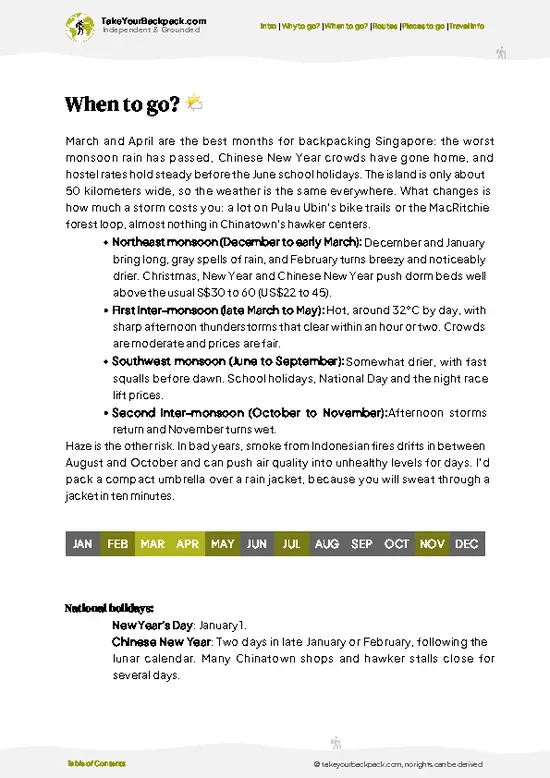
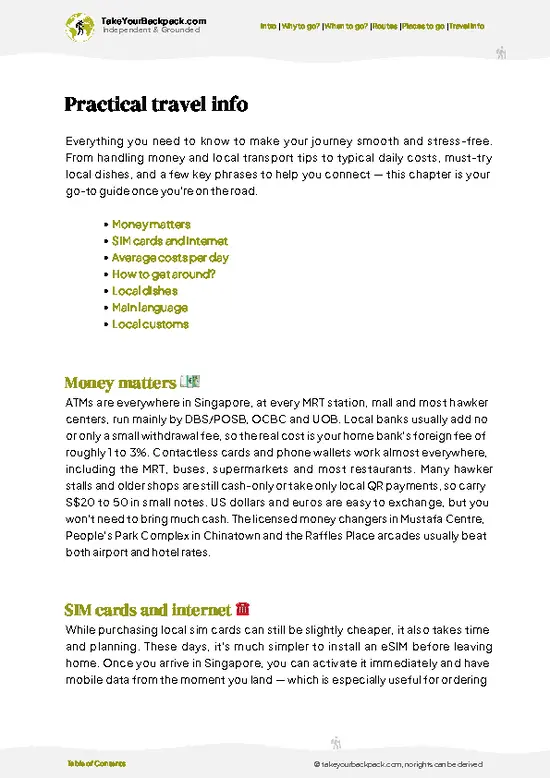
example page 3 from our offline Travel Guide for Singapore
example page 4 from our offline Travel Guide for Singapore
example page 5 from our offline Travel Guide for Singapore
example page 6 from our offline Travel Guide for Singapore
example page 7 from our offline Travel Guide for Singapore
Loading the map 🌍
CLICK TO FILTER
cities
towns
national parks
hikes
beaches
attractions
festivals
regions
SHOW COUNTRY’S BESTSHOW ALL

✨ Why go?
Ranked #2 town in Singapore
What sets this place apart

Chinatown in Singapore is a backpacker’s hub that strikes a balance between convenience and culture. It’s a launchpad for nearby hikes in the lush trails of Bukit Timah Nature Reserve or a quick trip to the sandy shores of Sentosa Island. The streets are walkable, lined with small-scale hostels and guesthouses that offer a cozy, communal vibe. You’ll find affordable local food stalls serving up steaming bowls of laksa and fragrant satay, perfect for fueling your adventures.

Travelers often stay here for a few days, soaking in the friendly atmosphere that encourages mingling. It’s a great spot for solo travelers or small groups looking to connect over shared meals or explore together. The energy is vibrant but not overwhelming, making it easy to find your rhythm.

While some backpackers … read more 👉
Chinatown in Singapore is a backpacker’s hub that strikes a balance between convenience and culture. It’s a launchpad for nearby hikes in the lush trails of Bukit Timah Nature Reserve or a quick trip to the sandy shores of Sentosa Island. The streets are walkable, lined with small-scale hostels and guesthouses that offer a cozy, communal vibe. You’ll find affordable local food stalls serving up steaming bowls of laksa and fragrant satay, perfect for fueling your adventures.

Travelers often stay here for a few days, soaking in the friendly atmosphere that encourages mingling. It’s a great spot for solo travelers or small groups looking to connect over shared meals or explore together. The energy is vibrant but not overwhelming, making it easy to find your rhythm.

While some backpackers might just pass through, those who linger will appreciate the cultural richness and the chance to unwind after a day of exploration. If you’re seeking a blend of authentic experiences and practical access to Singapore’s highlights, Chinatown is a smart choice for your journey.

💡 HighlightsDon't-miss highlights and experiences

  1. Buddha Tooth Relic Temple & Museum — Ostentatious, recently rebuilt Buddhist temple with dramatic red-and-gold interiors, a museum of Chinese Buddhist art and daily rituals you can watch; great for photos and a quiet roof-level view over the old quarter.
  2. Sri Mariamman Temple — Singapore’s oldest Hindu temple, right in the heart of Chinatown; the Dravidian tower, vibrant shrine rooms and regular ceremonies give a direct glimpse into the area’s multicultural history.
  3. Thian Hock Keng Temple — One of the island’s oldest Hokkien temples, beautifully restored with carved beams, ceramic roof tiles and a link to early Chinese sea-arrival rituals — visit for architecture and the riverside backstory.
  4. Chinatown Heritage Centre (Pagoda Street) — Small but immersive museum inside conserved shophouses
… read more 👉
  1. Buddha Tooth Relic Temple & Museum — Ostentatious, recently rebuilt Buddhist temple with dramatic red-and-gold interiors, a museum of Chinese Buddhist art and daily rituals you can watch; great for photos and a quiet roof-level view over the old quarter.
  2. Sri Mariamman Temple — Singapore’s oldest Hindu temple, right in the heart of Chinatown; the Dravidian tower, vibrant shrine rooms and regular ceremonies give a direct glimpse into the area’s multicultural history.
  3. Thian Hock Keng Temple — One of the island’s oldest Hokkien temples, beautifully restored with carved beams, ceramic roof tiles and a link to early Chinese sea-arrival rituals — visit for architecture and the riverside backstory.
  4. Chinatown Heritage Centre (Pagoda Street) — Small but immersive museum inside conserved shophouses that recreates early 19th-20th century household rooms; you actually get the cramped, noisy-feel of old Chinatown life — invaluable context before you stroll the streets.
  5. Chinatown Complex Market & Hawker Centre — The biggest wet market and hawker cluster in Chinatown: row after row of food stalls, cheap eats, herbal shops and the famous soya-sauce chicken stall that drew international attention — perfect for a cheap, authentic meal and people-watching.
  6. Pagoda Street & the Street Market — The classic open-air market strip where haggling, lacquered souvenirs, tea shops and old shophouse facades mix; it’s touristy but still the pulse of daytime Chinatown and good for scouting trinkets and snacks.
  7. Smith Street / Chinatown Food Street — Pedestrianised in the evenings, this tight row of hawker kiosks under conserved shophouses makes for a lively, atmospheric dinner spot; come hungry, but be ready for crowds and the full-on tourist vibe — worth it for the atmosphere.
  8. Ann Siang Hill & Club Street — A compact cluster of beautifully restored shophouses, hidden lanes, clan-association plaques and a surprisingly good selection of simple bars and eateries; great for architecture, a quieter wander, and discovering tucked-away cafés.
  9. Jamae (Chulia) Mosque — A 19th-century Tamil Muslim mosque tucked into the Chinatown conservation area; the small prayer hall and its history show the religious diversity that existed (and still exists) in the neighbourhood.
  10. People’s Park Complex — A time-capsule 1970s mall that still houses shops selling herbal medicine, jade, cheap electronics and old-school kopitiams upstairs; chaotic, authentic and useful if you want the local, non-glossy side of Chinatown shopping.
Nearby day-trip highlights you can reach easily from Chinatown include Pulau Ubin (rustic kampong island), Sentosa (beaches and attractions) and Johor Bahru across the causeway; Pulau Ubin is my personal favourite for a quick escape from the city.
Spotted a mistake or missing something? Contact us.

Things to do around Chinatown

Ratings based on Tripadvisor reviews. When you book through this link, you support our work at no extra cost to you.

🏘️ NeighborhoodsUnderstanding the local layout

Chinatown in Singapore is a vibrant blend of history, culture, and modernity, making it a must-visit for backpackers seeking authentic experiences. Here’s how to navigate its distinct neighborhoods:

Chinatown Heritage Centre: This area is steeped in history. The Heritage Centre offers a glimpse into the lives of early Chinese immigrants. The vibe is educational yet lively, with street vendors selling local snacks. It’s walkable, and you can easily spend a few hours here. Perfect for short stays, as it’s close to public transport.

Pagoda Street: A bustling thoroughfare lined with shops and eateries, Pagoda Street is where you can soak in the local atmosphere. The scent of incense mingles with the aroma of street food. It’s a great spot for budget-friendly dining and shopping. The nightlife … read more 👉
Chinatown in Singapore is a vibrant blend of history, culture, and modernity, making it a must-visit for backpackers seeking authentic experiences. Here’s how to navigate its distinct neighborhoods:

Chinatown Heritage Centre: This area is steeped in history. The Heritage Centre offers a glimpse into the lives of early Chinese immigrants. The vibe is educational yet lively, with street vendors selling local snacks. It’s walkable, and you can easily spend a few hours here. Perfect for short stays, as it’s close to public transport.

Pagoda Street: A bustling thoroughfare lined with shops and eateries, Pagoda Street is where you can soak in the local atmosphere. The scent of incense mingles with the aroma of street food. It’s a great spot for budget-friendly dining and shopping. The nightlife here is vibrant but not overwhelming, making it suitable for both short and longer stays.

Smith Street: Known as the food street, this area is a paradise for food lovers. The energy is palpable, especially in the evenings when hawker stalls come alive. It’s a bit more crowded, but the variety of affordable eats makes it worth it. Ideal for longer stays if you want to explore the culinary scene.

Ann Siang Hill: For a quieter vibe, head to Ann Siang Hill. This area features charming shophouses and cozy cafes. It’s perfect for those looking to unwind after a day of exploration. The walkability is excellent, and it’s a great base for longer stays, especially if you enjoy a more relaxed atmosphere.

Each area in Chinatown offers a unique flavor, ensuring that your backpacking adventure is rich with experiences.

⌛️ 1 daySeeing the highlights in 24 hours

Chinatown in Singapore is a vibrant blend of history, culture, and culinary delights. The air is thick with the aroma of street food, and the colorful shophouses tell stories of a rich heritage. It’s a place where the past meets the present, making it a must-visit for anyone wanting to experience the soul of the city.

Start your morning at the bustling Maxwell Food Centre. Grab a bowl of the famous Hainanese chicken rice. The tender chicken, paired with fragrant rice, sets the tone for the day. As you savor your meal, soak in the lively chatter around you. After breakfast, take a stroll to the Buddha Tooth Relic Temple. The golden stupa gleams in the sunlight, and the intricate carvings invite you to explore. Don’t rush; the tranquility inside is a refreshing contrast to the bustling streets … read more 👉
Chinatown in Singapore is a vibrant blend of history, culture, and culinary delights. The air is thick with the aroma of street food, and the colorful shophouses tell stories of a rich heritage. It’s a place where the past meets the present, making it a must-visit for anyone wanting to experience the soul of the city.

Start your morning at the bustling Maxwell Food Centre. Grab a bowl of the famous Hainanese chicken rice. The tender chicken, paired with fragrant rice, sets the tone for the day. As you savor your meal, soak in the lively chatter around you. After breakfast, take a stroll to the Buddha Tooth Relic Temple. The golden stupa gleams in the sunlight, and the intricate carvings invite you to explore. Don’t rush; the tranquility inside is a refreshing contrast to the bustling streets outside.

In the afternoon, wander through the narrow lanes of Ann Siang Hill. This area is often overlooked by tourists, but it’s a treasure trove of boutique shops and cozy cafes. Stop by a hidden gem, the Naiise store, where you can find unique local crafts. The scent of freshly brewed coffee wafts from nearby cafes, tempting you to take a break. Grab a cup and enjoy the laid-back atmosphere.

As evening approaches, head to Chinatown’s vibrant street markets. The stalls come alive with colorful goods and the sizzling sounds of food being prepared. Try some satay skewers or a bowl of laksa. The flavors are bold and unforgettable.

Finish your day at the rooftop bar of the Chinatown Point mall. The view of the city skyline at sunset is breathtaking. It’s the perfect way to reflect on your day, surrounded by the energy of Singapore. Each moment in Chinatown is a reminder that the journey is as rewarding as the destination.

🌤️ When to go?Choosing the right time of year

  • Topic: Weather - Singapore’s equatorial climate means it’s hot and humid year-round, hovering around 26-32°C (79-90°F). Expect frequent, short bursts of rain, especially from November to January during the Northeast Monsoon. These showers cool things down but can soak you fast, so pack a light rain jacket and quick-dry gear.
  • Topic: Temperature - Temperatures rarely dip below 25°C (77°F) at night, so you’re always in tropical territory. This consistency means you can plan your days without worrying about cold snaps but prepare for sweat-soaked clothes and the need for hydration.
  • Topic: Daylight Hours - Daylight is steady, about 12 hours year-round, with sunrise around 7 AM and sunset near 7 PM. This reliable rhythm lets you maximize daylight for exploring without the frustration of early
… read more 👉
  • Topic: Weather - Singapore’s equatorial climate means it’s hot and humid year-round, hovering around 26-32°C (79-90°F). Expect frequent, short bursts of rain, especially from November to January during the Northeast Monsoon. These showers cool things down but can soak you fast, so pack a light rain jacket and quick-dry gear.
  • Topic: Temperature - Temperatures rarely dip below 25°C (77°F) at night, so you’re always in tropical territory. This consistency means you can plan your days without worrying about cold snaps but prepare for sweat-soaked clothes and the need for hydration.
  • Topic: Daylight Hours - Daylight is steady, about 12 hours year-round, with sunrise around 7 AM and sunset near 7 PM. This reliable rhythm lets you maximize daylight for exploring without the frustration of early darkness or late dawn.
  • Topic: Crowds - Peak tourist seasons align with major holidays like Chinese New Year (January/February) and the Great Singapore Sale (mid-year). Chinatown swells with visitors, making narrow streets feel packed. For a more relaxed vibe, visit outside these spikes, especially in the shoulder months of March to May or September to October.
  • Topic: Seasonal Activities - Chinese New Year lights up Chinatown with lanterns, lion dances, and street markets, a sensory overload worth timing your trip for if you want cultural immersion. The Mid-Autumn Festival also brings mooncakes and lantern displays but fewer crowds than New Year.
  • Topic: Price Fluctuations - Accommodation and flights spike during festive seasons and school holidays. Booking in shoulder seasons can save you a chunk, letting you splurge on street food or souvenirs instead.
Pro-tip: Aim for late February to April—humidity is manageable, crowds thin, and the streets still hum with local life, giving you Chinatown’s pulse without the crush.


source: climatestotravel.comJANJanuary: good for travelingFEBFebruary: good for travelingMARMarch: highly recommended for travelingAPRApril: highly recommended for travelingMAYMay: highly recommended for travelingJUNJune: good for travelingJULJuly: good for travelingAUGAugust: good for travelingSEPSeptember: highly recommended for travelingOCTOctober: highly recommended for travelingNOVNovember: fair for travelingDECDecember: fair for traveling
singapore-city-chinatown
© Google |

✈️ The backpacker research shortcutSingapore Travel Guide

An offline-friendly backpacking guide with optimized travel routes, ranked highlights, transport advice, and the best areas to stay.
example page 0 from our offline Travel Guide for Singapore
example page 1 from our offline Travel Guide for Singapore
example page 2 from our offline Travel Guide for Singapore
example page 3 from our offline Travel Guide for Singapore
example page 4 from our offline Travel Guide for Singapore
example page 5 from our offline Travel Guide for Singapore
example page 6 from our offline Travel Guide for Singapore
example page 7 from our offline Travel Guide for Singapore
The digital guide (246 pages) contains:
✅ 63 highlights, ranked by travel appeal
✅ Optimized 5, 10 & 15-day travel routes
✅ Cities, national parks, landmarks, beaches
✅ How to get around
✅ Offline-friendly for travel without Wi-Fi
👉 Click to see all 30+ guide features

📅 Plan smarter in minutes, not weeks
✅ Month by month travel advice
✅ Festivals & national holidays
✅ Budget expectations

🗺️ Go to the right places, skip the overrated ones
✅ Honest pros & cons of destinations
✅ Top hikes, parks & viewpoints
✅ Lesser-known places most travelers miss
✅ Clear “worth it vs skip it” guidance

🛏️ Travel smoothly without rookie mistakes
✅ Best areas to stay
✅ Transport systems explained simply
✅ Common scams & safety advice
✅ SIM cards, money & practical tips

🌍 Understand the country, not just visit it
✅ Culture & traditions
✅ Local customs
✅ Festivals worth planning around
✅ Traveler-friendly historical context
✅ Insights that make places more meaningful

📱 Built for real travel conditions
✅ Fully downloadable PDF
✅ Works completely offline
✅ Optimized for phone use
✅ Useful in remote areas & buses
✅ Everything in one place
Stop searching, start planning
Get instant access to your full guide. 30‑day money-back guarantee.
+ Add another guide for just

By proceeding you agree to our terms.
Sent to your inbox immediately after payment • 100% Secure Checkout
Best Backpacking Travel Advisor 2025 tourism awardBest Backpacking
Travel Advisor
2025
What others say about Take Your Backpack Guides:
⭐⭐⭐⭐⭐
Fantastic, amazing amount of information!
⭐⭐⭐⭐⭐
My goodness this is amazing, it's what I've been looking for hats off too you!
⭐⭐⭐⭐⭐
I think this is absolutely BRILLIANT
⭐⭐⭐⭐
Very complete and informative. It's still missing places, but I gotta to commend you
⭐⭐⭐⭐⭐
This is truly amazing, thank you, can't wait to explore it with my kids!
⭐⭐⭐⭐⭐
Awesome resource, thank you!
⭐⭐⭐⭐⭐
This is amazing! Can't wait to explore the ones I haven't seen
⭐⭐⭐⭐
I love this! Well done, great idea.
⭐⭐⭐⭐⭐
Thanks for taking the time to make this gem!
⭐⭐⭐⭐⭐
This might be the best website I've ever seen.
⭐⭐⭐⭐⭐
Congratulations, and thank you so much for your work; it's incredibly valuable.
⭐⭐⭐⭐
In all seriousness I think you did a great job pointing out the important spots
⭐⭐⭐⭐⭐
10/10 very good
⭐⭐⭐⭐⭐
As someone who's only just starting to visit regularly this is awesome, thank you.
⭐⭐⭐⭐
Thank you very much! I'm going to visit my dad, it's going to be very useful!
⭐⭐⭐⭐⭐
This is really cool! We'll be travelling for the first time and this definitely come in handy.
⭐⭐⭐⭐⭐
You are now our minister of culture, congratulations 👨‍💼
⭐⭐⭐⭐⭐
Just wanted to tell you that this is a pearl! Going to follow your recommendations.
⭐⭐⭐⭐⭐
This is so cool. I'll definitely be using the resource for my travels soon.
⭐⭐⭐⭐⭐
This is very impressive! Good work.
⭐⭐⭐⭐⭐
This is an amazing and informative site. Very well done!

🛏️ Where to stay?Choosing the right base

Chinatown in Singapore is a no-brainer for backpackers who want to dive into the city’s pulse without draining their wallets. The heart of Chinatown itself—around Pagoda Street and Smith Street—is where you’ll find the best mix of budget hostels and a buzzing social scene. It’s a compact area, so you’re never far from hawker stalls that fill the air with the scent of char kway teow and satay, perfect for late-night fuel after a day of exploring. The streets hum with a mix of locals and travelers, making it easy to strike up conversations or join group outings.

Compared to other parts of Singapore, … read more 👉
Chinatown in Singapore is a no-brainer for backpackers who want to dive into the city’s pulse without draining their wallets. The heart of Chinatown itself—around Pagoda Street and Smith Street—is where you’ll find the best mix of budget hostels and a buzzing social scene. It’s a compact area, so you’re never far from hawker stalls that fill the air with the scent of char kway teow and satay, perfect for late-night fuel after a day of exploring. The streets hum with a mix of locals and travelers, making it easy to strike up conversations or join group outings.

Compared to other parts of Singapore, Chinatown offers a rare blend of old-world charm and modern convenience. The narrow shophouses, colorful lanterns, and temple bells create an atmosphere that feels alive and authentic, not sanitized for tourists. It’s also incredibly safe, with well-lit streets and a steady police presence, so solo travelers can roam freely even after dark.

If you wander just a bit beyond the core, areas like Tanjong Pagar and Ann Siang Hill offer a quieter vibe but still keep you close to Chinatown’s energy. These neighborhoods have fewer hostels but more boutique guesthouses and cozy bars, ideal if you want to wind down without losing the social buzz. Staying here means you get the best of both worlds: easy access to the backpacker hub and a slightly more laid-back retreat when you need it.

🚌 Getting aroundHow to get around Chinatown

Chinatown pulses with a rhythm that’s part old-world hustle, part modern scramble. The streets don’t wait for you—they demand you keep up. It’s a place where the scent of sizzling dumplings mingles with the sharp tang of street vendors’ spices, and the chatter is a constant undercurrent. Time here isn’t measured by clocks but by the flow of people and the opening and closing of shop shutters. You’ll find that rigid schedules give way to a more fluid, instinct-driven pace. To navigate Chinatown like a local, you need to sync with this pulse—move fast, expect the unexpected, and lean into the sensory overload. The payoff is a neighborhood that rewards your attention with layers of culture, flavor, and history that unfold in real-time.

Walking: The ultimate way to soak in Chinatown’s texture. … read more 👉
Chinatown pulses with a rhythm that’s part old-world hustle, part modern scramble. The streets don’t wait for you—they demand you keep up. It’s a place where the scent of sizzling dumplings mingles with the sharp tang of street vendors’ spices, and the chatter is a constant undercurrent. Time here isn’t measured by clocks but by the flow of people and the opening and closing of shop shutters. You’ll find that rigid schedules give way to a more fluid, instinct-driven pace. To navigate Chinatown like a local, you need to sync with this pulse—move fast, expect the unexpected, and lean into the sensory overload. The payoff is a neighborhood that rewards your attention with layers of culture, flavor, and history that unfold in real-time.

Walking: The ultimate way to soak in Chinatown’s texture. Streets are narrow and packed, so walking lets you catch the details—the faded signs, the steam rising from street carts, the quick exchanges in Cantonese or Mandarin. It’s free, obviously, and often faster than any vehicle during peak hours. Just watch your step; the sidewalks can be uneven and crowded.

Bus (Routes 1, 2, 6): Buses thread through Chinatown’s main arteries, running roughly every 10-15 minutes from early morning (around 6 AM) until late evening (about 11 PM). A single ride costs under $3, making it a budget staple. It’s slower than walking during rush hour but perfect for longer hauls or when your legs need a break. Expect a mix of locals and tourists, and keep your belongings close—rush hour can get packed.

Subway (Line A, Station: Chinatown): The subway is the fastest way to punch through the city’s chaos. Trains run every 5 minutes during peak times and every 10-15 minutes late at night (service typically ends around midnight). A single fare is about $2.75. The station is underground, so you’ll escape the street noise and smells for a bit, but be ready for stairs and occasional crowd crushes during rush hour.

Shared Bike Rentals: For the nimble traveler, bike rentals offer a sweet middle ground between walking and public transit. Bikes can be rented via app for around $1 per 30 minutes. Chinatown’s streets are tight and often congested, so this option suits those comfortable weaving through traffic and pedestrians. It’s a great way to cover ground quickly while still feeling the city’s pulse.

Taxi/Rideshare: Taxis and rideshares are the most flexible but also the priciest option. Expect to pay $10-$20 for short trips within Chinatown or to nearby neighborhoods. They’re handy late at night when public transit winds down or if you’re hauling gear. Traffic jams can turn a quick ride into a slow crawl, so factor that into your plans.

Mastering Chinatown’s transit is about reading the room—knowing when to walk, when to hop on a bus, and when to dive underground. Each mode offers a different slice of the neighborhood’s character, and mixing them up keeps your experience fresh and efficient. The streets may feel chaotic, but with these tools, you’ll move through Chinatown like you belong.

👛 Costs (as of 23 September 2026)Typical daily expenses

Backpacking in Chinatown, Singapore, means navigating a vibrant urban maze where every dollar counts but the experience is rich. Here’s what you’re realistically looking at for daily expenses, laid out so you can plan with confidence.
  • Dorm Accommodation: Expect to pay around $15 to $30 USD per night for a bed in a shared dorm. Hostels here are clean and efficient, often with air conditioning—a must in Singapore’s humid heat. The price varies by location and amenities, but Chinatown offers some of the best value for proximity to the city’s pulse.
  • Meals: Food is where Chinatown shines without breaking the bank. Hawker centers serve up meals for $3 to $6 USD. You can eat well on local dishes like chicken rice or laksa, which are flavorful and filling. If you opt for a casual sit-down restaurant,
… read more 👉
Backpacking in Chinatown, Singapore, means navigating a vibrant urban maze where every dollar counts but the experience is rich. Here’s what you’re realistically looking at for daily expenses, laid out so you can plan with confidence.
  • Dorm Accommodation: Expect to pay around $15 to $30 USD per night for a bed in a shared dorm. Hostels here are clean and efficient, often with air conditioning—a must in Singapore’s humid heat. The price varies by location and amenities, but Chinatown offers some of the best value for proximity to the city’s pulse.
  • Meals: Food is where Chinatown shines without breaking the bank. Hawker centers serve up meals for $3 to $6 USD. You can eat well on local dishes like chicken rice or laksa, which are flavorful and filling. If you opt for a casual sit-down restaurant, expect to pay closer to $8 to $15 USD per meal.
  • Local Transport: The MRT (Mass Rapid Transit) system is the backbone here. A typical daily spend on transport is about $4 to $6 USD, covering multiple rides. Buses are similarly priced but slower. Grab rides or taxis start around $5 USD for short trips but add up fast, so stick to public transit for budget control.
  • Basic Activities/Entry Fees: Chinatown itself is mostly free to explore, but if you want to visit museums or temples, budget $5 to $10 USD per day. For example, the Chinatown Heritage Centre charges around $6 USD. Walking tours or cultural workshops might push this higher but are worth it for the depth they add.
  • Miscellaneous Expenses: This covers water, snacks, SIM cards, or small souvenirs. Plan for about $3 to $7 USD daily. Bottled water is essential in the tropical heat, and a local SIM card with data can cost around $10 USD for a few days, so spread that cost over your stay.

All told, you’re looking at roughly $30 to $60 USD per day to backpack comfortably in Chinatown, Singapore. This range gives you room to enjoy the essentials without skimping on the experience. Keep your water bottle handy and your feet ready to wander—this neighborhood rewards those who explore on foot and savor every bite.


source: visitsingapore.com
⚠️ Prices can change and everyone travels differently, so take this as a rough guide. Hope it helps you plan your adventure!

🚌 Day tripsBest day trips from Chinatown

Chinatown, Singapore, is not just a vibrant neighborhood; it’s the perfect launchpad for unforgettable day trips. With its rich culture, mouthwatering food, and easy access to public transport, you can dive into the heart of Southeast Asia without breaking a sweat.

Sentosa Island
Just a short ride on the MRT, Sentosa Island is a playground for thrill-seekers and beach lovers alike. You can soak up the sun on its sandy shores or explore the Universal Studios theme park if you’re feeling adventurous. The island is packed with attractions, but don’t miss the free beaches and the stunning views from the Skywalk. Aim for a weekday visit to avoid the weekend crowds. Expect to spend around SGD 20-30 for transport and snacks. The common mistake? Overlooking the quieter spots; skip the tourist traps … read more 👉
Chinatown, Singapore, is not just a vibrant neighborhood; it’s the perfect launchpad for unforgettable day trips. With its rich culture, mouthwatering food, and easy access to public transport, you can dive into the heart of Southeast Asia without breaking a sweat.

Sentosa Island
Just a short ride on the MRT, Sentosa Island is a playground for thrill-seekers and beach lovers alike. You can soak up the sun on its sandy shores or explore the Universal Studios theme park if you’re feeling adventurous. The island is packed with attractions, but don’t miss the free beaches and the stunning views from the Skywalk. Aim for a weekday visit to avoid the weekend crowds. Expect to spend around SGD 20-30 for transport and snacks. The common mistake? Overlooking the quieter spots; skip the tourist traps and find your own slice of paradise.


Pulau Ubin
For a taste of rustic Singapore, hop on a bumboat from Changi Point to Pulau Ubin. This island feels like a time capsule, with its old-school kampongs and lush trails. Rent a bike for about SGD 10 and explore the island’s natural beauty, including the mangroves and wildlife. The trip takes about 30 minutes, and you can easily spend a full day here. Bring your own snacks to keep costs low—around SGD 15-20 total. A rookie mistake? Not checking the boat schedule; they run less frequently in the late afternoon.
👉 Explore Pulau Ubin

Little India
Just a quick MRT ride away, Little India is a sensory overload in the best way. The vibrant colors, the scent of spices wafting from the markets, and the lively atmosphere make it a must-visit. Spend your day exploring the temples, sampling street food, and shopping for unique souvenirs. You can easily do this trip for under SGD 20, including food and transport. The best time to visit is during the morning when the markets are buzzing. Don’t miss the chance to try a thali meal; a common mistake is sticking to familiar dishes.
👉 Explore Little India

MacRitchie Reservoir
For those craving a bit of nature, MacRitchie Reservoir is a quick MRT ride followed by a short bus trip. The treetop walk offers breathtaking views and a chance to spot monkeys and other wildlife. The hike can take 2-4 hours, depending on your pace, and costs nothing but your time. Bring water and snacks, and aim for early morning to beat the heat. A common oversight is underestimating the trail’s difficulty; wear good shoes and be prepared for some elevation.

🛡️ SafetySafety Tips and Common Scams in Chinatown

Chinatown in Singapore is generally safe, but a few practical tips can enhance your experience. The bustling streets are alive with the scent of street food and the chatter of locals, but keep your wits about you in crowded areas, especially near the hawker centers. Pickpockets are rare, but it’s wise to secure your belongings, especially when navigating through throngs of tourists.

If you’re wandering solo at night, stick to well-lit areas. The vibrant night market is a treat, but avoid dimly lit side streets. Trust your instincts; if something feels off, it probably is.

Scams are minimal, but be cautious of overly friendly strangers offering unsolicited help or deals that seem too good to be true. A common annoyance is the aggressive sales tactics in some shops. Politely decline and keep … read more 👉
Chinatown in Singapore is generally safe, but a few practical tips can enhance your experience. The bustling streets are alive with the scent of street food and the chatter of locals, but keep your wits about you in crowded areas, especially near the hawker centers. Pickpockets are rare, but it’s wise to secure your belongings, especially when navigating through throngs of tourists.

If you’re wandering solo at night, stick to well-lit areas. The vibrant night market is a treat, but avoid dimly lit side streets. Trust your instincts; if something feels off, it probably is.

Scams are minimal, but be cautious of overly friendly strangers offering unsolicited help or deals that seem too good to be true. A common annoyance is the aggressive sales tactics in some shops. Politely decline and keep moving; it’s part of the local hustle. Carry yourself confidently, and you’ll blend right in, soaking up the rich culture without unnecessary stress.

FAQFrequently asked questions about Chinatown

Yes, Chinatown in Singapore is worth visiting for its rich cultural heritage, vibrant street markets, and historic temples like the Buddha Tooth Relic Temple. It offers a unique blend of traditional and modern experiences within a compact area.
One full day is sufficient to explore Chinatown thoroughly, including visiting key sites, sampling local food, and shopping. If you want to explore museums or attend cultural events, consider extending to two days.
Yes, Chinatown can be visited as a day trip from nearby cities like Johor Bahru, Malaysia, which is about 30 kilometers away. The trip involves a border crossing and roughly 1 to 2 hours of travel each way, making it feasible for a day visit.
⚠️ Things can change over time, so always validate details locally before you go.

Other Singaporean towns near Chinatown

Explore more nearby:

  • Clarke Quay—Riverside bars, restored warehouses, nightlife hub| 1 km away
  • Tiong Bahru—Art Deco blocks, indie bakeries, morning markets| 2 km away
  • Marina Bay—Skyline views, waterfront promenades, iconic landmarks| 3 km away

💡 Not sure where to go next?
Create a personalized itinerary for Singapore including Chinatown and the places that fit your trip.

Generate my itinerary

👉 Discover all towns

Or checkout all Singapore has to offer (think cities, towns, villages, national parks, hikes, beaches, festivals)
Country photo of Singapore

We 💚 feedbackParting advice and final tips

Chinatown in Singapore is a sensory feast. The air is thick with the scent of sizzling satay and sweet, sticky dumplings. You’ll find vibrant markets and temples that pulse with life. But be ready for crowds; it can feel overwhelming during peak hours. Embrace the chaos, though—it’s part of the experience. The energy here is electric, and every corner reveals a story waiting to be uncovered. Just breathe and let it unfold.

✈️ When did I visit Singapore?
During a short stop-over, I was able to celebrate Chinese New Year in 2016.

✍️ Help improve this page!
The information on this page is based on my own backpacking experience in Singapore, supplemented with up-to-date research and feedback from other travelers. Travel details can change, so if you notice anything outdated or incomplete, feel free to let me know.


🙋‍♂️ Give feedback

👋 Meet the founderWho’s Behind Take Your Backpack?

Johan, backpacker and founder of TakeYourBackpackHi, I’m Johan (Netherlands 🇳🇱), the creator of TakeYourBackpack. Over the past 3 decades, I’ve backpacked through 90+ countries across six continents, gaining extensive experience with independent travel, long-term trips, and overland routes.

This site is built on a combination of firsthand travel experience and carefully curated insights from other backpackers. Many guides are based on places I’ve personally visited, while others bring together tips, observations, and practical advice shared by trusted travelers I’ve met along the way.

The goal is to provide realistic, experience-driven guidance — not generic itineraries — so you can explore destinations with better context, clearer expectations, and more confidence.