×
Singapore

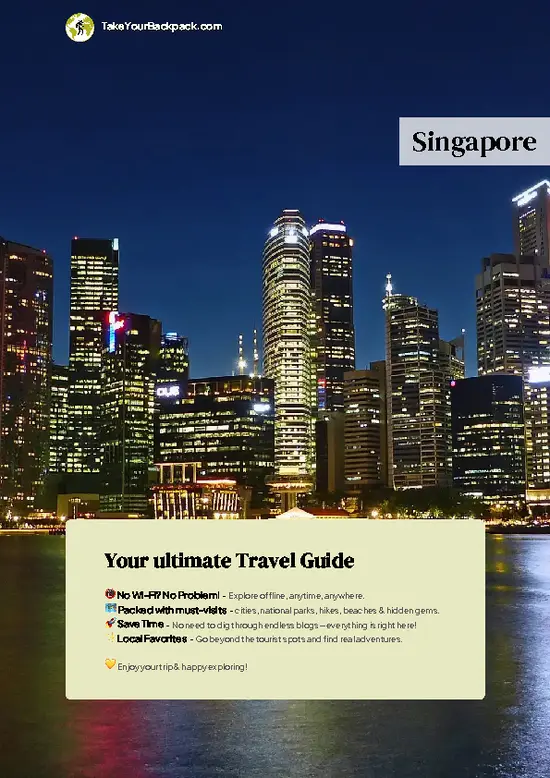
Singapore🇸🇬 | citiesSingaporehawker centers, Marina Bay skyline, multicultural quarters, urban gardens | things to do and best time to go

Explore Tanjong BeachExplore Chingay Parade

Backpacking in Singapore
🏆 Top pickcity ranked #1
By Johan Kruseman 🇳🇱 | Updated September 4, 2026

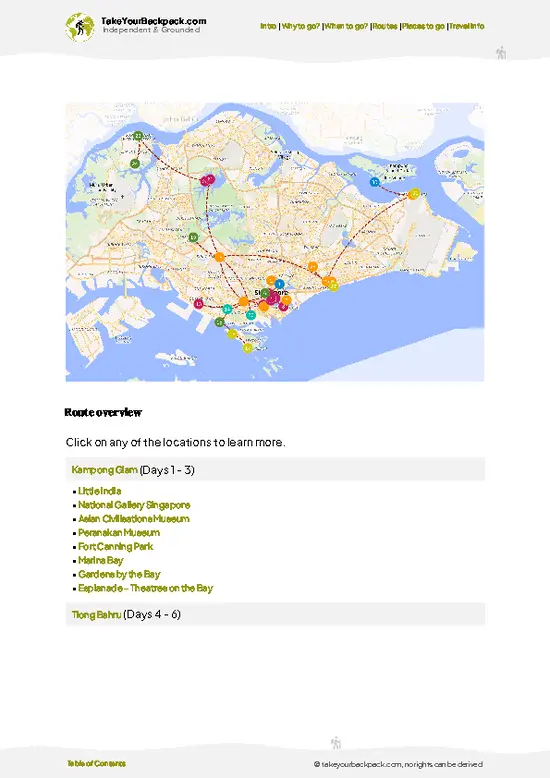
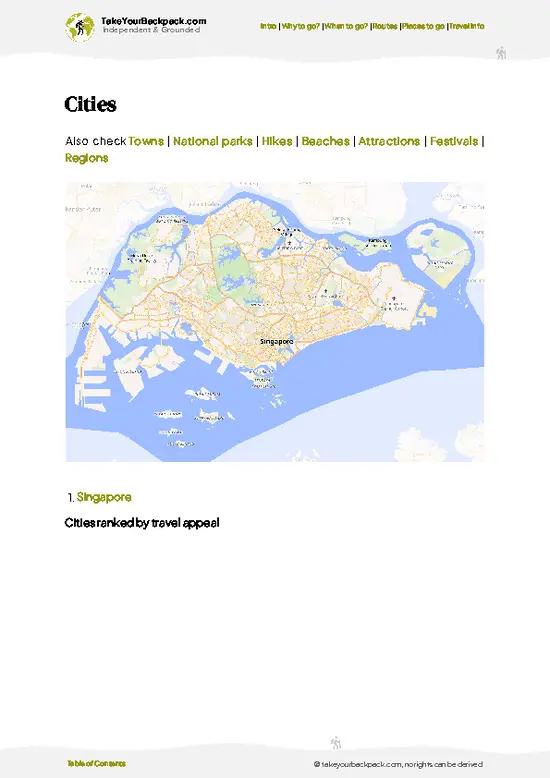
Most people think Singapore is either a sterile layover mall or too expensive to bother with; it’s neither if you play it right. Singapore sits at the southern tip of the Malay Peninsula, a compact island-city-state where you can cross whole neighborhoods in a single MRT ride. As a backpacker destination, it’s a paradox: food is cheap if you live at hawker centers, but beds and beers punch above Southeast Asia prices, and nightlife in Clarke Quay or Club Street can vaporize your budget in a night. The payoff is huge: Chinatown shophouses, Little India’s chaos, Kampong Glam’s street art, the riverfront, plus parks like MacRitchie and the Southern Ridges that feel wildly green for such a dense city. It’s clean, extremely safe, and logistically effortless, but less social than hostelly Kuala Lumpur or Penang; you work a bit harder to meet people, yet you move through the city like a pro.

Discover everything you want to know in the 📖 Singapore Travel Guide.
Loading the map 🌍
CLICK TO FILTER
cities
towns
national parks
hikes
beaches
attractions
festivals
regions
SHOW COUNTRY’S BESTSHOW ALL

✨ Why go?
Ranked #1 city in Singapore
What makes this city worth visiting

Singapore is a backpacker’s hub that offers a unique blend of highlights and practical advantages. First off, the amount of activities is staggering. You can dive into a mix of cultures, from hawker centers to art districts, all within a compact area. This walkability means you can explore without burning a hole in your pocket on transport.

When it comes to accommodation, the city is packed with hostels that cater to budget travelers, often featuring vibrant communal spaces that make meeting fellow adventurers easy. Plus, the food scene is a culinary playground—affordable and diverse, it’s a feast for your taste buds without breaking the bank.

Singapore also serves as an excellent basecamp for day trips to nearby destinations, making it a strategic stop on your journey. The nightlife is … read more 👉
Singapore is a backpacker’s hub that offers a unique blend of highlights and practical advantages. First off, the amount of activities is staggering. You can dive into a mix of cultures, from hawker centers to art districts, all within a compact area. This walkability means you can explore without burning a hole in your pocket on transport.

When it comes to accommodation, the city is packed with hostels that cater to budget travelers, often featuring vibrant communal spaces that make meeting fellow adventurers easy. Plus, the food scene is a culinary playground—affordable and diverse, it’s a feast for your taste buds without breaking the bank.

Singapore also serves as an excellent basecamp for day trips to nearby destinations, making it a strategic stop on your journey. The nightlife is lively, offering everything from chill bars to bustling clubs, ensuring your evenings are just as exciting as your days.

Lastly, onward travel is a breeze, with efficient connections to other Southeast Asian hotspots. If you’re after a city that balances comfort and value, Singapore is a smart choice, whether for a short stop or a longer stay.
Want to include Singapore in your Singapore route?
Create a personalized Singapore itinerary that includes Singapore and the places that fit your trip — based on your travel style, budget, and available time. Get your route in seconds.

Generate my trip

💡 HighlightsEssential experiences to have while visiting Singapore

  1. Marina Bay Sands SkyPark — That rooftop observation deck gives you the classic Singapore skyline: Gardens by the Bay, the ArtScience Museum, and the light shows all lined up. It’s touristy, yes, but worth it for sunset photos and for the odd feeling of standing on a ship on top of a city.
  2. Gardens by the Bay (Supertree Grove & Cloud Forest) — Futuristic gardens with towering Supertrees and the misty Cloud Forest dome; great for both the plant nerds and anyone who wants a striking evening light show. Buy a dome ticket or at least wander the outdoor Supertree area at dusk.
  3. Singapore Botanic Gardens — A UNESCO-listed green lung with the National Orchid Garden, colonial-era lawns, and a surprisingly peaceful rainforest patch. Perfect for a picnic, a morning jog, or some botanical history away
read more 👉
  1. Marina Bay Sands SkyPark — That rooftop observation deck gives you the classic Singapore skyline: Gardens by the Bay, the ArtScience Museum, and the light shows all lined up. It’s touristy, yes, but worth it for sunset photos and for the odd feeling of standing on a ship on top of a city.
  2. Gardens by the Bay (Supertree Grove & Cloud Forest) — Futuristic gardens with towering Supertrees and the misty Cloud Forest dome; great for both the plant nerds and anyone who wants a striking evening light show. Buy a dome ticket or at least wander the outdoor Supertree area at dusk.
  3. Singapore Botanic Gardens — A UNESCO-listed green lung with the National Orchid Garden, colonial-era lawns, and a surprisingly peaceful rainforest patch. Perfect for a picnic, a morning jog, or some botanical history away from the high-rise glare.
  4. Chinatown (Buddha Tooth Relic Temple & Chinatown Heritage Centre) — A compact neighborhood where heritage streets, temples, and hawker stalls meet. The Heritage Centre and Buddha Tooth Relic Temple give context to the area’s migrant history; snag food at Maxwell Food Centre while you’re there.
  5. Little India (Tekka Centre & Sri Veeramakaliamman Temple) — Bright temples, fragrant spice shops, and the hectic, wonderful Tekka Centre for cheap, hearty meals. It’s sensory and real: cultural rituals, sari shops, and Tamil cinema posters — all walkable in an afternoon.
  6. Kampong Glam / Haji Lane and Sultan Mosque — The Malay-Muslim quarter with the impressive Sultan Mosque, boutique stores on Haji Lane, and a lively café scene. It’s small but layered: history, street art, and food that tells Singapore’s multicultural story.
  7. National Gallery Singapore — Housed in the old City Hall and Supreme Court, the gallery showcases Southeast Asian art and is itself an architectural mash-up of colonial and modern Singapore. Good for rainy days and for understanding the region’s visual history.
  8. Maxwell Food Centre — One of the best hawker hubs to sample Hainanese chicken rice, laksa, and local desserts without breaking the bank. Food is central to Singapore’s culture; come hungry and expect queues at the famous stalls.
  9. Fort Canning Park & The Battlebox — A leafy historic hill with colonial relics, spice gardens, and the Battlebox — a WWII underground command centre you can tour. It’s where greenspace meets real, tangible history of the island.
  10. Haw Par Villa — A quirky open-air park full of vivid statues and dioramas illustrating Chinese myths and moral tales; weird, educational, and very different from Singapore’s polished attractions. It’s genuinely one of the most singular cultural sites you’ll find here.


For nearby day trips, try Pulau Ubin (rustic island biking and mangroves — my personal favorite), the Southern Islands like St. John’s and Lazarus for snorkeling, or hop across to Johor Bahru in Malaysia for cheap eats and markets.
Spotted a mistake or missing something? Contact us.

🏘️ NeighborhoodsKey areas and districts to know

Singapore is a compact powerhouse of culture, food, and experiences. Each neighborhood offers unique flavors and vibes, making it crucial to choose wisely based on your priorities. Here’s a breakdown of key areas for backpackers.

Little India: Bursting with color and life, this area is a sensory overload. Street food is cheap and delicious, perfect for budget travelers. The walkability is high, with vibrant markets and temples around every corner. Nightlife is lively but not overwhelming, making it suitable for both short and longer stays.

Chinatown: A blend of history and modernity, Chinatown offers affordable accommodation and a rich cultural experience. The hawker centers serve up some of the best local dishes at low prices. It’s walkable, with easy access to public transport. The nightlife … read more 👉
Singapore is a compact powerhouse of culture, food, and experiences. Each neighborhood offers unique flavors and vibes, making it crucial to choose wisely based on your priorities. Here’s a breakdown of key areas for backpackers.

Little India: Bursting with color and life, this area is a sensory overload. Street food is cheap and delicious, perfect for budget travelers. The walkability is high, with vibrant markets and temples around every corner. Nightlife is lively but not overwhelming, making it suitable for both short and longer stays.

Chinatown: A blend of history and modernity, Chinatown offers affordable accommodation and a rich cultural experience. The hawker centers serve up some of the best local dishes at low prices. It’s walkable, with easy access to public transport. The nightlife is more laid-back, ideal for those who want to unwind after a day of exploration.

Bugis: Known for its shopping and street food, Bugis is a hotspot for young backpackers. It’s bustling and energetic, with a mix of modern malls and traditional markets. Transport links are excellent, making it easy to explore the rest of the city. The area is lively at night, but you can find quieter spots if you seek them out.

Orchard Road: If shopping is your game, this is the place. It’s pricier, but you can still find budget-friendly eateries. The area is highly walkable, with a plethora of transport options. While it’s not the best for nightlife, it’s perfect for a short stay focused on retail therapy.

Marina Bay: Iconic views and upscale vibes define this area. It’s more expensive, but the sights are worth it. Walkability is excellent, with attractions like Gardens by the Bay and the Marina Bay Sands within reach. Nightlife is upscale and vibrant, making it a great spot for a splurge. Perfect for a short visit to soak in the skyline.

⌛️ 1 day1-day itinerary for Singapore

Singapore is a city that thrives on contrasts, where futuristic skyscrapers coexist with lush greenery and rich cultural heritage. It’s a place where you can savor street food one moment and sip cocktails in a rooftop bar the next. With just one day to explore, you can dive into its vibrant neighborhoods and iconic sights without feeling rushed.

Start your morning in the historic district of Chinatown. Grab a traditional breakfast of kaya toast and kopi at a local hawker center. The sweet, coconut jam paired with buttery toast is a must-try. After fueling up, wander through the bustling streets, stopping by the Buddha Tooth Relic Temple. Its intricate architecture and serene atmosphere provide a peaceful contrast to the lively market outside.

As the sun climbs higher, head over to the Marina … read more 👉
Singapore is a city that thrives on contrasts, where futuristic skyscrapers coexist with lush greenery and rich cultural heritage. It’s a place where you can savor street food one moment and sip cocktails in a rooftop bar the next. With just one day to explore, you can dive into its vibrant neighborhoods and iconic sights without feeling rushed.

Start your morning in the historic district of Chinatown. Grab a traditional breakfast of kaya toast and kopi at a local hawker center. The sweet, coconut jam paired with buttery toast is a must-try. After fueling up, wander through the bustling streets, stopping by the Buddha Tooth Relic Temple. Its intricate architecture and serene atmosphere provide a peaceful contrast to the lively market outside.

As the sun climbs higher, head over to the Marina Bay area. Here, you can marvel at the stunning Marina Bay Sands and take a stroll through the Gardens by the Bay. The Supertree Grove is a sight to behold, especially when you catch the midday light filtering through the towering structures. If you’re feeling adventurous, consider visiting the lesser-known Tiong Bahru neighborhood. This charming area is filled with art deco buildings, quirky cafes, and independent bookstores. Grab a refreshing drink at Tiong Bahru Bakery and soak in the local vibe.

In the evening, return to Marina Bay for the spectacular light and sound show at the waterfront. It’s a perfect way to unwind after a day of exploration. For dinner, indulge in a meal at Lau Pa Sat, a hawker center known for its satay stalls. The smoky aroma and lively atmosphere will make you feel like you’re part of the city’s pulse.

With this itinerary, you’ll experience the essence of Singapore, balancing time, comfort, and a touch of adventure. Each choice you make enhances your day, turning logistics into a rewarding journey.
Turn your Singapore visit into an Singapore adventure
Build a complete Singapore route with Singapore, hidden gems, must-see destinations, and realistic travel times included.

Generate my trip

🌤️ When to go?Choosing the right time of year


  • Topic: Weather – Singapore’s equatorial climate means it’s hot and humid year-round, with temperatures hovering between 26°C and 32°C (79°F to 90°F). Rain is frequent but usually in short, intense bursts, especially from November to January during the monsoon season.

  • Topic: Temperature – Expect consistent warmth; there’s no real “cold” season. Nights rarely dip below 24°C (75°F), so pack light, breathable clothing. The heat can be relentless, so timing your outdoor activities for early morning or late afternoon is smart.

  • Topic: Daylight Hours – Daylight stays steady at about 12 hours year-round, roughly from 7 AM to 7 PM. This consistency means you don’t have to juggle short days or long nights when planning your hikes or city explorations.

  • Topic: Crowds – Peak tourist influx aligns
read more 👉

  • Topic: Weather – Singapore’s equatorial climate means it’s hot and humid year-round, with temperatures hovering between 26°C and 32°C (79°F to 90°F). Rain is frequent but usually in short, intense bursts, especially from November to January during the monsoon season.

  • Topic: Temperature – Expect consistent warmth; there’s no real “cold” season. Nights rarely dip below 24°C (75°F), so pack light, breathable clothing. The heat can be relentless, so timing your outdoor activities for early morning or late afternoon is smart.

  • Topic: Daylight Hours – Daylight stays steady at about 12 hours year-round, roughly from 7 AM to 7 PM. This consistency means you don’t have to juggle short days or long nights when planning your hikes or city explorations.

  • Topic: Crowds – Peak tourist influx aligns with the dry season (February to April) and major holidays like Chinese New Year (January/February). Expect higher prices and busier attractions during these times. Off-peak months offer more breathing room but come with heavier rains.

  • Topic: Seasonal Activities – The Great Singapore Sale (June-July) and the Formula 1 Grand Prix (September) are major draws. These events spike prices and crowds but deliver unique cultural and entertainment value.

  • Topic: Price Fluctuations – Accommodation and flights tend to be pricier during dry months and event seasons. Budget travelers can save by visiting during the wetter months (November to January), accepting occasional downpours for better deals.


Pro-tip: Aim for February to April if you want a balance of manageable crowds, drier weather, and steady daylight—perfect for squeezing the most out of your Singapore backpacking adventure without sweating the small stuff.


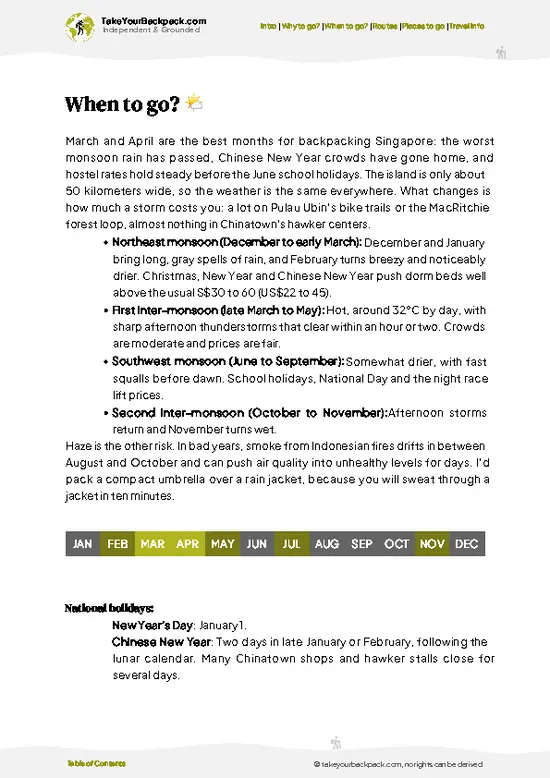
source: climatestotravel.comJANJanuary: fair for travelingFEBFebruary: highly recommended for travelingMARMarch: highly recommended for travelingAPRApril: highly recommended for travelingMAYMay: good for travelingJUNJune: highly recommended for travelingJULJuly: highly recommended for travelingAUGAugust: good for travelingSEPSeptember: highly recommended for travelingOCTOctober: good for travelingNOVNovember: fair for travelingDECDecember: fair for traveling
Singapore - Singapore

✈️ The backpacker research shortcutSingapore Travel Guide

An offline-friendly backpacking guide with optimized travel routes, ranked highlights, transport advice, and the best areas to stay.
example page 0 from our offline Travel Guide for Singapore
example page 1 from our offline Travel Guide for Singapore
example page 2 from our offline Travel Guide for Singapore
example page 3 from our offline Travel Guide for Singapore
example page 4 from our offline Travel Guide for Singapore
example page 5 from our offline Travel Guide for Singapore
example page 6 from our offline Travel Guide for Singapore
example page 7 from our offline Travel Guide for Singapore
The digital guide (256 pages) contains:
66 highlights, ranked by travel appeal
Optimized 5, 10 & 15-day travel routes
Cities, national parks, landmarks, beaches
How to get around
Offline-friendly for travel without Wi-Fi
👉 Click to see all 30+ guide features

📅 Plan smarter in minutes, not weeks
Month by month travel advice
Festivals & national holidays
Budget expectations

🗺️ Go to the right places, skip the overrated ones
Honest pros & cons of destinations
Top hikes, parks & viewpoints
Lesser-known places most travelers miss
Clear “worth it vs skip it” guidance

🛏️ Travel smoothly without rookie mistakes
Best areas to stay
Transport systems explained simply
Common scams & safety advice
SIM cards, money & practical tips

🌍 Understand the country, not just visit it
Culture & traditions
Local customs
Festivals worth planning around
Traveler-friendly historical context
Insights that make places more meaningful

📱 Built for real travel conditions
Fully downloadable PDF
Works completely offline
Optimized for phone use
Useful in remote areas & buses
Everything in one place
Save weeks of stressful planning
Get instant access to your full guide. 30‑day money-back guarantee.
+ Add another guide for just R$44.25

By proceeding you agree to our terms.
Sent to your inbox immediately after payment • 100% Secure Checkout
Best Backpacking Travel Advisor 2025 tourism awardBest Backpacking
Travel Advisor
2025
What others say about Take Your Backpack Guides:
⭐⭐⭐⭐⭐
Fantastic, amazing amount of information!
⭐⭐⭐⭐⭐
My goodness this is amazing, it's what I've been looking for hats off too you!
⭐⭐⭐⭐⭐
I think this is absolutely BRILLIANT
⭐⭐⭐⭐
Very complete and informative. It's still missing places, but I gotta to commend you
⭐⭐⭐⭐⭐
This is truly amazing, thank you, can't wait to explore it with my kids!
⭐⭐⭐⭐⭐
Awesome resource, thank you!
⭐⭐⭐⭐⭐
This is amazing! Can't wait to explore the ones I haven't seen
⭐⭐⭐⭐
I love this! Well done, great idea.
⭐⭐⭐⭐⭐
Thanks for taking the time to make this gem!
⭐⭐⭐⭐⭐
This might be the best website I've ever seen.
⭐⭐⭐⭐⭐
Congratulations, and thank you so much for your work; it's incredibly valuable.
⭐⭐⭐⭐
In all seriousness I think you did a great job pointing out the important spots
⭐⭐⭐⭐⭐
10/10 very good
⭐⭐⭐⭐⭐
As someone who's only just starting to visit regularly this is awesome, thank you.
⭐⭐⭐⭐
Thank you very much! I'm going to visit my dad, it's going to be very useful!
⭐⭐⭐⭐⭐
This is really cool! We'll be travelling for the first time and this definitely come in handy.
⭐⭐⭐⭐⭐
You are now our minister of culture, congratulations 👨‍💼
⭐⭐⭐⭐⭐
Just wanted to tell you that this is a pearl! Going to follow your recommendations.
⭐⭐⭐⭐⭐
This is so cool. I'll definitely be using the resource for my travels soon.
⭐⭐⭐⭐⭐
This is very impressive! Good work.
⭐⭐⭐⭐⭐
This is an amazing and informative site. Very well done!

🛏️ Where to stay?Best areas and accommodation options

Little India is the go-to for backpackers who want to dive into Singapore’s cultural pulse without blowing the budget. It’s a lively neighborhood where you can find plenty of hostels packed with solo travelers and small groups. The vibe here is energetic but approachable, with street markets, affordable eats, and easy access to public transit. Staying here means sacrificing a bit of the sleek, polished image Singapore is known for, but you gain authentic street-level experiences and a social atmosphere that’s hard to beat.

Bugis offers a smart balance between comfort and cost. It’s a bit more … read more 👉
Little India is the go-to for backpackers who want to dive into Singapore’s cultural pulse without blowing the budget. It’s a lively neighborhood where you can find plenty of hostels packed with solo travelers and small groups. The vibe here is energetic but approachable, with street markets, affordable eats, and easy access to public transit. Staying here means sacrificing a bit of the sleek, polished image Singapore is known for, but you gain authentic street-level experiences and a social atmosphere that’s hard to beat.

Bugis offers a smart balance between comfort and cost. It’s a bit more polished than Little India but still friendly to budget travelers. Hostels here tend to be modern and clean, attracting a mix of solo backpackers and young travelers who want to be close to shopping, nightlife, and transit hubs. The trade-off is paying a little more for convenience and a safer, quieter environment compared to the hustle of Little India.

Chinatown is another solid choice, especially if you want a neighborhood that’s both historic and social. It’s packed with budget accommodations and has a strong backpacker presence. The area is safe, walkable, and full of street food stalls and bars where you can meet fellow travelers. The trade-off here is that it’s more touristy, so prices for food and drinks can be slightly higher than in Little India.

Compared to the Central Business District or Marina Bay, these neighborhoods offer a clear advantage for backpackers: they prioritize social connection and affordability over luxury, making them the smartest bets for those who want to stretch their dollars without sacrificing the city’s character.

🚌 Getting aroundHow to get around Singapore

Singapore moves with a precision that feels almost mechanical, yet beneath that surface hums a pulse of spontaneous energy. The city’s flow is a dance between strict timetables and the occasional burst of improvisation—like a well-oiled machine that lets you slip in just the right moment. Here, time is money, but comfort is negotiable, and every choice you make in transit reveals what you value most: speed, cost, or ease. Mastering this balance is your key to unlocking Singapore’s layers without getting trapped in tourist traps or overpriced taxis.


  • MRT (Mass Rapid Transit): The backbone of Singapore’s transit, the MRT runs from about 5:30 AM to midnight. It’s fast, reliable, and dirt cheap—fares start at around SGD 0.92 for short trips. Expect clean, air-conditioned cars and minimal wait
read more 👉
Singapore moves with a precision that feels almost mechanical, yet beneath that surface hums a pulse of spontaneous energy. The city’s flow is a dance between strict timetables and the occasional burst of improvisation—like a well-oiled machine that lets you slip in just the right moment. Here, time is money, but comfort is negotiable, and every choice you make in transit reveals what you value most: speed, cost, or ease. Mastering this balance is your key to unlocking Singapore’s layers without getting trapped in tourist traps or overpriced taxis.


  • MRT (Mass Rapid Transit): The backbone of Singapore’s transit, the MRT runs from about 5:30 AM to midnight. It’s fast, reliable, and dirt cheap—fares start at around SGD 0.92 for short trips. Expect clean, air-conditioned cars and minimal wait times during off-peak hours. The trade-off? You’re tied to fixed routes and stations, so some destinations require transfers or a bit of walking.


  • Public Buses: Covering areas the MRT can’t reach, buses run roughly from 5:30 AM to midnight as well. Fares are similar to the MRT, often cheaper for short distances. Buses are slower due to traffic but offer a window into local life, with stops every few blocks. Comfort varies—peak hours mean crowded, standing-room-only rides, but off-peak can be surprisingly pleasant.


  • Walking: Singapore’s compact size and pedestrian-friendly infrastructure make walking a surprisingly efficient option, especially in the downtown core and neighborhoods like Chinatown or Little India. It costs nothing but time and energy. The payoff is immersion—you catch the city’s textures, smells, and sounds in a way no vehicle can deliver. The trade-off is obvious: it’s slower and can be hot and humid, so plan accordingly.


  • Ride-Hailing (Grab, Gojek): When time is tight and comfort non-negotiable, ride-hailing apps offer door-to-door service 24/7. Prices vary widely depending on demand and distance, often starting around SGD 5 for short trips. It’s the most comfortable and flexible option but also the most expensive, especially during peak hours or bad weather. Use it strategically to save time or when hauling heavy gear.


  • Rental Bikes and E-Scooters: For short hops and last-mile connections, dockless bikes and e-scooters are scattered across the city. They’re cheap, fast, and give you freedom to explore at your own pace. The catch: you need to be comfortable navigating traffic and obeying local rules, or risk fines. Also, they’re weather-dependent—rain or extreme heat can kill this option instantly.

👛 Costs (as of 4 September 2026)How expensive it really is

Backpacking in Singapore means balancing a high-cost urban environment with smart choices that stretch your dollar without sacrificing the essentials.
  • Dorm Accommodation (High Season): Expect to pay around $20-$35 USD per night in popular hostels. High season pushes prices up due to demand, especially around major holidays and events.
  • Dorm Accommodation (Off-Season): Prices drop to about $15-$25 USD per night. Booking in advance can snag you better deals, especially in less tourist-heavy neighborhoods.
  • Meals: Street food and hawker centers are your best friends here, with meals typically costing $3-$6 USD. Mid-range casual dining bumps that up to $10-$15 USD per meal, but you can eat well on a budget if you stick to local fare.
  • Local Transport: Single MRT or bus rides cost between $0.80
read more 👉
Backpacking in Singapore means balancing a high-cost urban environment with smart choices that stretch your dollar without sacrificing the essentials.
  • Dorm Accommodation (High Season): Expect to pay around $20-$35 USD per night in popular hostels. High season pushes prices up due to demand, especially around major holidays and events.
  • Dorm Accommodation (Off-Season): Prices drop to about $15-$25 USD per night. Booking in advance can snag you better deals, especially in less tourist-heavy neighborhoods.
  • Meals: Street food and hawker centers are your best friends here, with meals typically costing $3-$6 USD. Mid-range casual dining bumps that up to $10-$15 USD per meal, but you can eat well on a budget if you stick to local fare.
  • Local Transport: Single MRT or bus rides cost between $0.80 and $1.50 USD depending on distance. It’s efficient and covers the city comprehensively.
  • City Transport Pass: A Singapore Tourist Pass offers unlimited rides for $10-$20 USD per day, which pays off if you plan to move around a lot.
  • Basic Activities/Entry Fees: Many cultural sites and museums charge $5-$15 USD. Botanical gardens and some parks are free, but attractions like the Marina Bay Sands SkyPark or Gardens by the Bay can push $20-$30 USD.
  • Miscellaneous Expenses: Budget $5-$10 USD for essentials like bottled water, snacks, or occasional coffee. Wi-Fi is widely available, but a local SIM card for data runs about $10-$15 USD for a few days.

Singapore’s daily backpacking budget typically ranges from $40 to $70 USD, depending on how much you lean into comfort or bargain hunting. The city’s efficiency means you don’t waste time or money on transport, but the cost of living keeps your wallet on alert. Knowing where to save and where to splurge turns this into a strategic game rather than a budget battle.


source: visitsingapore.com
⚠️ Prices can change and everyone travels differently, so take this as a rough guide. Hope it helps you plan your adventure!

🚌 Day tripsWhere to go beyond the main area

Singapore is a fantastic launchpad for day trips that offer a taste of Southeast Asia’s diverse cultures and landscapes. Here’s how to maximize your time, money, and comfort while exploring beyond the city-state.

**Pulau Ubin**
Just a 30-minute bumboat ride from Changi Point, Pulau Ubin feels like a step back in time. This rustic island is a haven for nature lovers and cyclists. Rent a bike for around SGD 10 and pedal through lush trails, spotting wildlife and traditional kampong houses. The island’s laid-back vibe is a refreshing contrast to Singapore’s urban hustle. Aim for a weekday visit to avoid crowds and enjoy the tranquility. A common mistake is underestimating the heat; pack plenty of water and sunscreen.
👉 Explore Pulau Ubin

**Kuala Lumpur**
Hop on a bus for a 5-hour journey … read more 👉
Singapore is a fantastic launchpad for day trips that offer a taste of Southeast Asia’s diverse cultures and landscapes. Here’s how to maximize your time, money, and comfort while exploring beyond the city-state.

**Pulau Ubin**
Just a 30-minute bumboat ride from Changi Point, Pulau Ubin feels like a step back in time. This rustic island is a haven for nature lovers and cyclists. Rent a bike for around SGD 10 and pedal through lush trails, spotting wildlife and traditional kampong houses. The island’s laid-back vibe is a refreshing contrast to Singapore’s urban hustle. Aim for a weekday visit to avoid crowds and enjoy the tranquility. A common mistake is underestimating the heat; pack plenty of water and sunscreen.
👉 Explore Pulau Ubin

**Kuala Lumpur**
Hop on a bus for a 5-hour journey to Malaysia’s capital, Kuala Lumpur. The bus fare is around SGD 20, and you’ll be rewarded with a mix of modern skyscrapers and rich history. Don’t miss the iconic Petronas Towers and the vibrant street food scene in Jalan Alor. The best time to visit is early morning or late afternoon to avoid the midday heat. First-timers often overlook the importance of local transport; grab a Grab app for easy navigation.


**Batam**
A quick 45-minute ferry ride from Singapore, Batam offers a different pace and a taste of Indonesia. For about SGD 25 round trip, you can indulge in affordable spa treatments, fresh seafood, and local markets. The island is perfect for a day of relaxation and exploration. Best visited during the dry season from April to October, Batam can get crowded on weekends, so aim for a weekday trip. Many travelers forget to check their visa requirements, so do a quick review before you go.


**Johor Bahru**
Just across the causeway, Johor Bahru is a 1-hour bus ride away and offers a mix of shopping and local cuisine. A round trip will set you back about SGD 10. Explore the bustling markets and try local dishes like laksa and nasi lemak. Weekdays are ideal to dodge the weekend crowds. A common pitfall is not checking the bus schedules; they can be less frequent later in the day.


**Sentosa Island**
While technically part of Singapore, Sentosa Island feels like a mini-getaway. Just a short MRT ride and a cable car ride away, you can spend a day lounging on the beach or exploring attractions like Universal Studios. Entry to the island is free, but attractions can add up. Visit during the week for fewer crowds and better deals on tickets. Many first-timers miss the free beaches; don’t just stick to the paid attractions.
Want to know what more Singapore offers?
The Singapore Travel Guide describes 66 highlights, from cities to national parks, from beaches to hikes

Get the Travel Guide -

🍲 FoodLocal Cuisine & Drinks

In Singapore, **food** is a vibrant tapestry of flavors, and every bite tells a story. Start with **Hainanese Chicken Rice**—tender chicken served with fragrant rice and a side of chili sauce. It’s simple yet packed with flavor, a must-try for any backpacker. Then there’s **Chili Crab**, a messy but delightful experience; the sweet and spicy sauce begs for a side of fried mantou to soak it all up.

For a true local experience, head to the **hawker centers**. These bustling food courts are the heart of Singapore’s culinary scene. You’ll find everything from **Laksa**, a spicy noodle soup, to **Char Kway Teow**, stir-fried flat noodles that are smoky and savory. The atmosphere is electric, filled with the sounds of sizzling woks and the chatter of locals.

When it comes to **drinks**, don’t … read more 👉
In Singapore, **food** is a vibrant tapestry of flavors, and every bite tells a story. Start with **Hainanese Chicken Rice**—tender chicken served with fragrant rice and a side of chili sauce. It’s simple yet packed with flavor, a must-try for any backpacker. Then there’s **Chili Crab**, a messy but delightful experience; the sweet and spicy sauce begs for a side of fried mantou to soak it all up.

For a true local experience, head to the **hawker centers**. These bustling food courts are the heart of Singapore’s culinary scene. You’ll find everything from **Laksa**, a spicy noodle soup, to **Char Kway Teow**, stir-fried flat noodles that are smoky and savory. The atmosphere is electric, filled with the sounds of sizzling woks and the chatter of locals.

When it comes to **drinks**, don’t miss out on **Kaya Toast** paired with a cup of strong kopi (coffee). This breakfast staple is sweet, buttery, and perfect for fueling your day of exploration.

Etiquette is casual; just grab a seat and dig in. Sharing tables is common, so don’t hesitate to sit next to someone. Embrace the communal vibe—food here is about connection, not just sustenance. Enjoy the flavors, the hustle, and the warmth of Singapore’s culinary culture.

🛡️ SafetySafety Tips and Common Scams in Singapore

Singapore is one of the safest cities in the world, but a little awareness goes a long way. While you can stroll through most neighborhoods without a hitch, keep an eye on your belongings in crowded areas like Orchard Road or Little India. These spots are bustling, and a moment of distraction can lead to a pickpocket.

If you’re traveling solo, especially at night, stick to well-lit areas and main streets. The public transport system is reliable and safe, so use it to your advantage. Taxis are also a good option; just ensure you use reputable services like Grab instead of hailing random cabs.

Scams are rare, but a few exist. Be cautious of overly friendly strangers offering unsolicited help or trying to sell you something on the street. Everyday annoyances might include the occasional long … read more 👉
Singapore is one of the safest cities in the world, but a little awareness goes a long way. While you can stroll through most neighborhoods without a hitch, keep an eye on your belongings in crowded areas like Orchard Road or Little India. These spots are bustling, and a moment of distraction can lead to a pickpocket.

If you’re traveling solo, especially at night, stick to well-lit areas and main streets. The public transport system is reliable and safe, so use it to your advantage. Taxis are also a good option; just ensure you use reputable services like Grab instead of hailing random cabs.

Scams are rare, but a few exist. Be cautious of overly friendly strangers offering unsolicited help or trying to sell you something on the street. Everyday annoyances might include the occasional long wait for food at popular hawker centers, but that’s part of the experience. Embrace it; the wait often leads to some of the best meals you’ll have. Stay aware, keep your wits about you, and enjoy the vibrant pulse of the city.

FAQTraveler FAQ

3 to 4 days are sufficient to explore Singapore's main attractions, including Marina Bay Sands, Gardens by the Bay, and Sentosa Island. This allows time for cultural neighborhoods like Chinatown and Little India as well. Public transport is efficient, making it easy to cover key sites within this timeframe.
Yes, Singapore is very safe for solo backpackers. The city has low crime rates, strict laws, and excellent public transportation, which makes solo travel convenient and secure. Basic precautions like avoiding isolated areas at night are still advisable.
Singapore is known for its cleanliness, modern architecture, and multicultural diversity. Key highlights include the futuristic Gardens by the Bay, the iconic Marina Bay Sands hotel, and its vibrant food scene with hawker centers offering affordable local dishes. It is also a major financial hub in Southeast Asia.
⚠️ Things can change over time, so always validate details locally before you go.

Where to go next

Singapore isn’t the only highlight in Singapore. Explore all what Singapore has to offer.
Country photo of Singapore

We 💚 feedbackSumming up the experience

Singapore is a playground of cultures, where every corner offers a new taste or experience. The hawker centers? A must-visit for authentic local flavors at unbeatable prices. But here’s the catch: it can feel a bit sterile and overly polished. You might miss the raw edges that give cities their character. Still, the blend of tradition and modernity makes it a fascinating stop. Just be ready for that shiny veneer.

✈️ When did I visit Singapore?
During a short stop-over, I was able to celebrate Chinese New Year in 2016.

✍️ Help improve this page!
The information on this page is based on my own backpacking experience in Singapore, supplemented with up-to-date research and feedback from other travelers. Travel details can change, so if you notice anything outdated or incomplete, feel free to let me know.


🙋‍♂️ Give feedback

👋 Meet the founderWho’s Behind Take Your Backpack?

Johan, backpacker and founder of TakeYourBackpackHi, I’m Johan (Netherlands 🇳🇱), the creator of TakeYourBackpack. Over the past decade, I’ve backpacked through 80+ countries across six continents, gaining extensive experience with independent travel, long-term trips, and overland routes.

This site is built on a combination of firsthand travel experience and carefully curated insights from other backpackers. Many guides are based on places I’ve personally visited, while others bring together tips, observations, and practical advice shared by trusted travelers I’ve met along the way.

The goal is to provide realistic, experience-driven guidance — not generic itineraries — so you can explore destinations with better context, clearer expectations, and more confidence.

Get full Singapore guide •
Instant download • 66 highlights • Full Offline guide