×

Solomon Islands🇸🇧 | national parksArnavon Islandssea turtle nesting beaches, coral reefs, community conservation | things to do and best time to go

Explore Tenaru FallsExplore Kolombangara Island

Backpacking in Arnavon Islands
👍 Recommendednational park ranked #3
By Johan Kruseman 🇳🇱 | Updated September 23, 2026

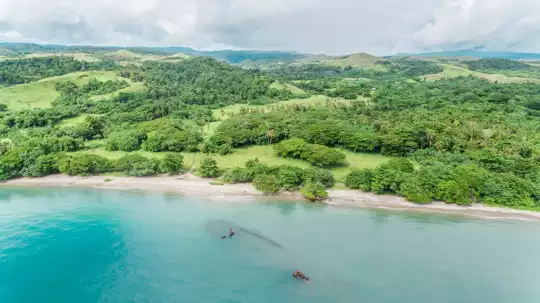
Most online blurbs sell the Arnavon Islands as a generic “turtle sanctuary,” but what they skip is that it’s more like a working conservation outpost than a beach-holiday park, and that matters a lot for backpackers. The Arnavons sit between Isabel and Choiseul Provinces in the central-north Solomon Islands, a small marine national park scattered across low coral islands and reefs. You come here for hawksbill turtles, seabirds, and big-sea horizons, not for long hikes; walking is limited to short sand and scrub wanders, with the real action in the water or at the ranger station. Access is expensive, boat-dependent, and usually arranged through Honiara or provincial hubs, with fees and community levies that add up but directly support local management. Compared with easier parks like Marovo Lagoon or East Rennell, Arnavon feels wilder, quieter, pricier per day, and more purpose-driven than relaxing. Camping or basic huts may be possible via prior arrangement, but you should not expect casual, turn-up-and-crash budget options or crowds—this is a low-volume, conservation-first destination, not a classic backpacker circuit.

Discover everything you want to know in the 📖 Solomon Islands Travel Guide.
Loading the map 🌍
CLICK TO FILTER
towns
villages
landmarks
national parks
hikes
beaches
attractions
festivals
regions
SHOW COUNTRY’S BESTSHOW ALL

✨ Why go?
Ranked #3 national park in Solomon Islands
Why Arnavon Islands should be on your travel list

The Arnavon Islands in the Solomon Islands attract backpackers for several compelling reasons. First, the opportunity for independent exploration is a major draw. You can wander through lush forests, snorkel vibrant reefs, and discover secluded beaches at your own pace. This freedom is a refreshing change from rigid tour schedules.

Budget-conscious travelers will appreciate the camping options available. There are basic facilities that allow you to pitch a tent or find affordable hostels nearby. This keeps costs low, letting you allocate funds for experiences that truly matter, like diving with sea turtles or hiking to stunning viewpoints.

The trail variety is another highlight. Whether you’re looking for a leisurely stroll or a challenging trek, the islands offer paths that cater to different … read more 👉
The Arnavon Islands in the Solomon Islands attract backpackers for several compelling reasons. First, the opportunity for independent exploration is a major draw. You can wander through lush forests, snorkel vibrant reefs, and discover secluded beaches at your own pace. This freedom is a refreshing change from rigid tour schedules.

Budget-conscious travelers will appreciate the camping options available. There are basic facilities that allow you to pitch a tent or find affordable hostels nearby. This keeps costs low, letting you allocate funds for experiences that truly matter, like diving with sea turtles or hiking to stunning viewpoints.

The trail variety is another highlight. Whether you’re looking for a leisurely stroll or a challenging trek, the islands offer paths that cater to different skill levels. This diversity makes it easy to tailor your adventure to your energy levels and interests.

Lastly, the park is well-suited for self-guided travelers. While guided tours are available, many find that navigating the trails independently enhances the experience. You can set your own pace and truly immerse yourself in the natural beauty without the constraints of a group.
Want to include Arnavon Islands in your Solomon Islands route?
Create a personalized Solomon Islands itinerary that includes Arnavon Islands and the places that fit your trip — based on your travel style, budget, and available time. Get your route in seconds.

Generate my trip

💡 HighlightsWhat this place is best known for

  • Hawksbill turtle nesting beaches — one of the Arnavons’ biggest claims to fame: a rare, still-active hawksbill rookery where you can (quietly and with a guide) witness nesting or hatchlings. It’s a powerful wildlife moment and a reminder that these islands matter for global conservation.
  • Coral gardens and snorkeling reefs — shallow, healthy reef patches right off the beaches with colorful hard and soft corals, schools of reef fish and easy snorkel access. No need for fancy gear to see a lot—just a mask, fins and calm water.
  • Seabird rookeries — offshore rocks and small islets host terns, noddies and other breeding seabirds. Good binoculars and quiet footsteps reward you with close views and loud, chaotic nesting colonies.
  • Short island hikes and coastal viewpoints — there aren’t long backcountry
… read more 👉
  • Hawksbill turtle nesting beaches — one of the Arnavons’ biggest claims to fame: a rare, still-active hawksbill rookery where you can (quietly and with a guide) witness nesting or hatchlings. It’s a powerful wildlife moment and a reminder that these islands matter for global conservation.
  • Coral gardens and snorkeling reefs — shallow, healthy reef patches right off the beaches with colorful hard and soft corals, schools of reef fish and easy snorkel access. No need for fancy gear to see a lot—just a mask, fins and calm water.
  • Seabird rookeries — offshore rocks and small islets host terns, noddies and other breeding seabirds. Good binoculars and quiet footsteps reward you with close views and loud, chaotic nesting colonies.
  • Short island hikes and coastal viewpoints — there aren’t long backcountry trails, but the short walks across the islands deliver panoramic ocean views, lowland scrub and perfect photo spots. Great for stretching legs between snorkel sessions.
  • Marine megafauna sightings — aside from turtles, you’ll often see rays, reef sharks and larger reef fish cruising the drop-offs. Encounters are more likely with a local skipper who knows the best spots.
  • Mangrove edges and nursery habitats — the mangrove fringes are quiet, wildlife-rich zones where juvenile fish, crabs and birds congregate. They’re worth a slow paddle or shoreline walk for a different ecosystem feel.
  • Community conservation and ranger stations — what makes the Arnavons special is the local guardianship. Meeting rangers and learning about community-driven protection gives the place context — and your visit directly supports those efforts.
Spotted a mistake or missing something? Contact us.
🌤️ When to go?Seasonal considerations and timing


  • Topic: Weather – The Arnavon Islands experience a tropical climate with a wet season from November to April. Expect heavy rains and high humidity during these months, which can make trekking and camping uncomfortable and increase the risk of leeches and mosquitoes.

  • Topic: Temperature – Temperatures hover between 24°C to 31°C (75°F to 88°F) year-round. The dry season, May to October, offers slightly cooler and more stable conditions, ideal for outdoor activities without the oppressive heat.

  • Topic: Daylight Hours – Near the equator, daylight remains consistent throughout the year, roughly 11 to 12 hours daily. This means you won’t have to adjust your plans drastically based on daylight changes.

  • Topic: Crowds – The Arnavon Islands are remote and rarely crowded. However, the dry season
… read more 👉

  • Topic: Weather – The Arnavon Islands experience a tropical climate with a wet season from November to April. Expect heavy rains and high humidity during these months, which can make trekking and camping uncomfortable and increase the risk of leeches and mosquitoes.

  • Topic: Temperature – Temperatures hover between 24°C to 31°C (75°F to 88°F) year-round. The dry season, May to October, offers slightly cooler and more stable conditions, ideal for outdoor activities without the oppressive heat.

  • Topic: Daylight Hours – Near the equator, daylight remains consistent throughout the year, roughly 11 to 12 hours daily. This means you won’t have to adjust your plans drastically based on daylight changes.

  • Topic: Crowds – The Arnavon Islands are remote and rarely crowded. However, the dry season sees a modest uptick in eco-tourists and researchers, so expect more activity but never overwhelming numbers.

  • Topic: Seasonal Activities – Dry months are best for snorkeling, birdwatching, and hiking. Wet season limits access to trails and waters, and some conservation activities pause due to weather constraints.

  • Topic: Price Fluctuations – Prices for local guides and transport tend to rise slightly during the dry season when demand peaks. Booking ahead can lock in better rates and avoid last-minute premiums.


Pro-tip: Aim for May to October to dodge rain, enjoy manageable temperatures, and keep your budget steady—this window maximizes your chances for smooth, rewarding exploration without surprises.


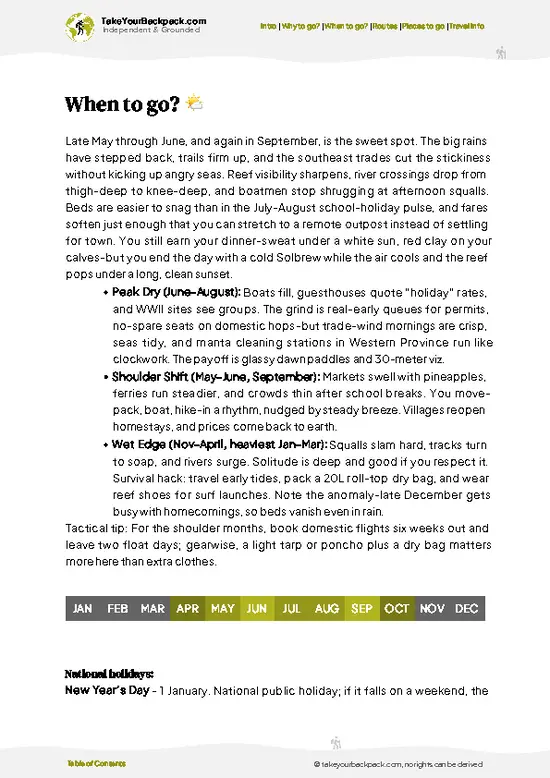
source: climatestotravel.comJANJanuary: fair for travelingFEBFebruary: fair for travelingMARMarch: fair for travelingAPRApril: fair for travelingMAYMay: excellent for travelingJUNJune: excellent for travelingJULJuly: excellent for travelingAUGAugust: excellent for travelingSEPSeptember: excellent for travelingOCTOctober: excellent for travelingNOVNovember: fair for travelingDECDecember: fair for traveling
solomon-islands-national-park-arnavon-islands
© Google | Deni Mcc

✈️ The backpacker research shortcutSolomon Islands Travel Guide

An offline-friendly backpacking guide with optimized travel routes, ranked highlights, transport advice, and the best areas to stay.
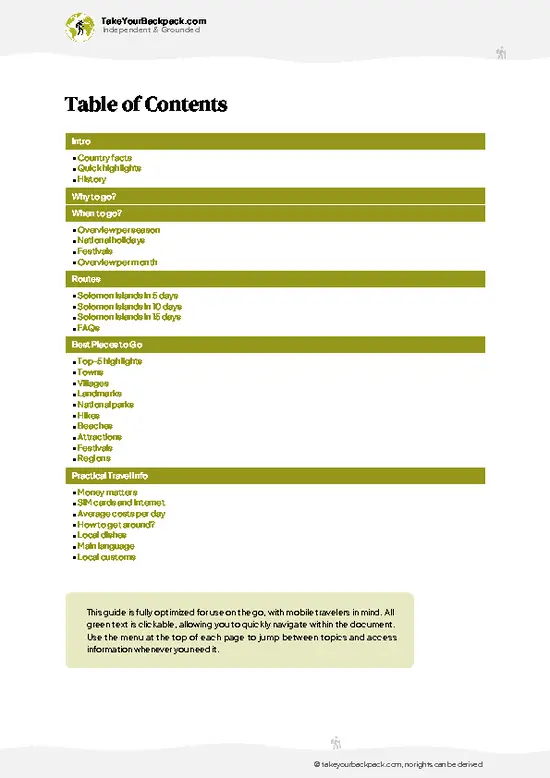
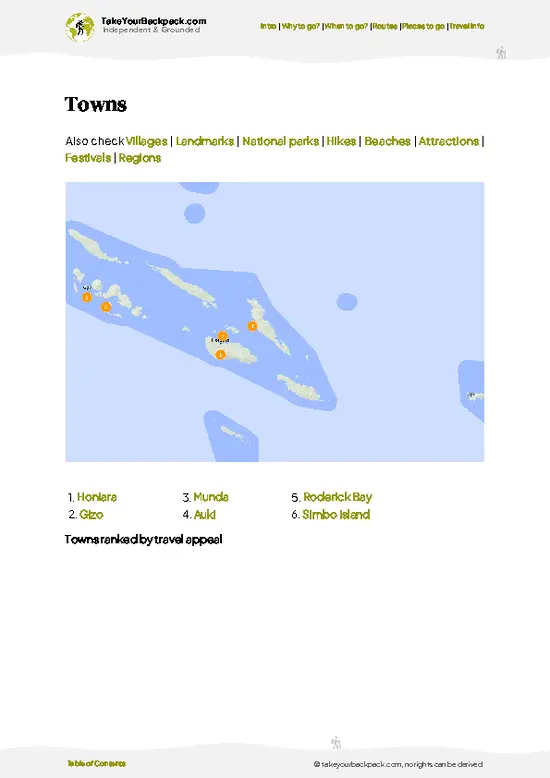
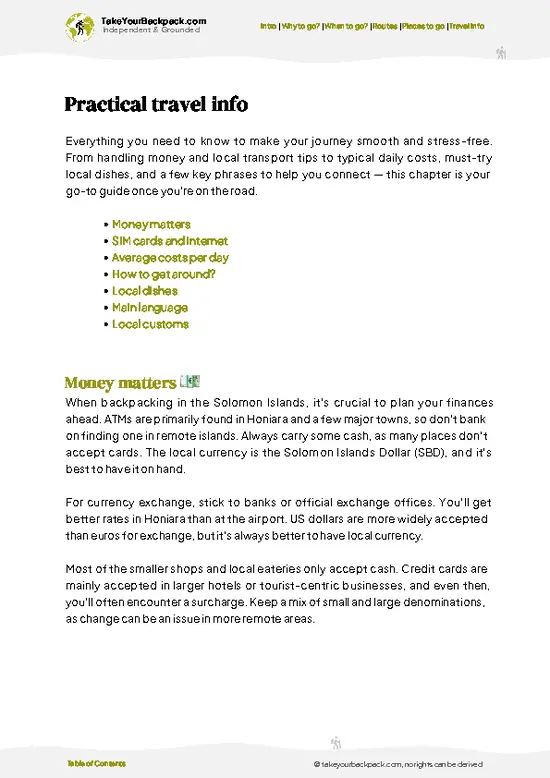
example page 0 from our offline Travel Guide for Solomon Islands
example page 1 from our offline Travel Guide for Solomon Islands
example page 2 from our offline Travel Guide for Solomon Islands
example page 3 from our offline Travel Guide for Solomon Islands
example page 4 from our offline Travel Guide for Solomon Islands
example page 5 from our offline Travel Guide for Solomon Islands
example page 6 from our offline Travel Guide for Solomon Islands
example page 7 from our offline Travel Guide for Solomon Islands
The digital guide (173 pages) contains:
✅ 39 highlights, ranked by travel appeal
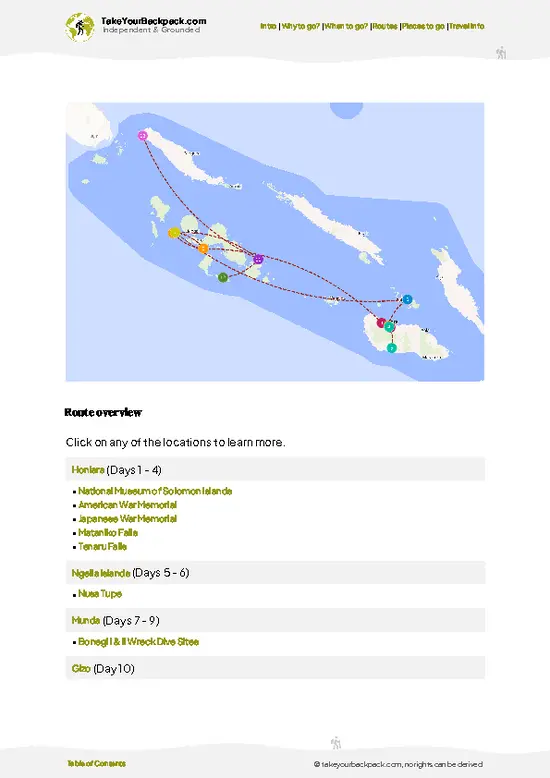
✅ Optimized 5, 10 & 15-day travel routes
✅ Cities, national parks, landmarks, beaches
✅ How to get around
✅ Offline-friendly for travel without Wi-Fi
👉 Click to see all 30+ guide features

📅 Plan smarter in minutes, not weeks
✅ Month by month travel advice
✅ Festivals & national holidays
✅ Budget expectations

🗺️ Go to the right places, skip the overrated ones
✅ Honest pros & cons of destinations
✅ Top hikes, parks & viewpoints
✅ Lesser-known places most travelers miss
✅ Clear “worth it vs skip it” guidance

🛏️ Travel smoothly without rookie mistakes
✅ Best areas to stay
✅ Transport systems explained simply
✅ Common scams & safety advice
✅ SIM cards, money & practical tips

🌍 Understand the country, not just visit it
✅ Culture & traditions
✅ 52 Essential phrases & customs
✅ Festivals worth planning around
✅ Traveler-friendly historical context
✅ Insights that make places more meaningful

📱 Built for real travel conditions
✅ Fully downloadable PDF
✅ Works completely offline
✅ Optimized for phone use
✅ Useful in remote areas & buses
✅ Everything in one place
Save weeks of stressful planning
Get instant access to your full guide. 30‑day money-back guarantee.
+ Add another guide for just

By proceeding you agree to our terms.
Sent to your inbox immediately after payment • 100% Secure Checkout
Best Backpacking Travel Advisor 2025 tourism awardBest Backpacking
Travel Advisor
2025
What others say about Take Your Backpack Guides:
⭐⭐⭐⭐⭐
Fantastic, amazing amount of information!
⭐⭐⭐⭐⭐
My goodness this is amazing, it's what I've been looking for hats off too you!
⭐⭐⭐⭐⭐
I think this is absolutely BRILLIANT
⭐⭐⭐⭐
Very complete and informative. It's still missing places, but I gotta to commend you
⭐⭐⭐⭐⭐
This is truly amazing, thank you, can't wait to explore it with my kids!
⭐⭐⭐⭐⭐
Awesome resource, thank you!
⭐⭐⭐⭐⭐
This is amazing! Can't wait to explore the ones I haven't seen
⭐⭐⭐⭐
I love this! Well done, great idea.
⭐⭐⭐⭐⭐
Thanks for taking the time to make this gem!
⭐⭐⭐⭐⭐
This might be the best website I've ever seen.
⭐⭐⭐⭐⭐
Congratulations, and thank you so much for your work; it's incredibly valuable.
⭐⭐⭐⭐
In all seriousness I think you did a great job pointing out the important spots
⭐⭐⭐⭐⭐
10/10 very good
⭐⭐⭐⭐⭐
As someone who's only just starting to visit regularly this is awesome, thank you.
⭐⭐⭐⭐
Thank you very much! I'm going to visit my dad, it's going to be very useful!
⭐⭐⭐⭐⭐
This is really cool! We'll be travelling for the first time and this definitely come in handy.
⭐⭐⭐⭐⭐
You are now our minister of culture, congratulations 👨‍💼
⭐⭐⭐⭐⭐
Just wanted to tell you that this is a pearl! Going to follow your recommendations.
⭐⭐⭐⭐⭐
This is so cool. I'll definitely be using the resource for my travels soon.
⭐⭐⭐⭐⭐
This is very impressive! Good work.
⭐⭐⭐⭐⭐
This is an amazing and informative site. Very well done!

🛏️ Where to stay?Choosing the right base

When it comes to staying near the Arnavon Islands National Park, options are limited but solid. There are no accommodations directly within the park itself, which means you’ll need to plan ahead.

The closest town is Kira Kira, about a 30-minute boat ride away. Here, you’ll find a few guesthouses that cater to backpackers. The Kira Kira Guesthouse is a reliable choice, offering basic amenities and a chance to connect with locals. Expect a no-frills experience, but the hospitality is genuine.

If you’re looking for something a bit more rustic, consider the nearby village of Taro. It’s a bit off … read more 👉
When it comes to staying near the Arnavon Islands National Park, options are limited but solid. There are no accommodations directly within the park itself, which means you’ll need to plan ahead.

The closest town is Kira Kira, about a 30-minute boat ride away. Here, you’ll find a few guesthouses that cater to backpackers. The Kira Kira Guesthouse is a reliable choice, offering basic amenities and a chance to connect with locals. Expect a no-frills experience, but the hospitality is genuine.

If you’re looking for something a bit more rustic, consider the nearby village of Taro. It’s a bit off the beaten path, but you can find homestays that provide an authentic glimpse into local life. Just be prepared for limited facilities and a more immersive experience.

Budget for boat transfers to the islands, as they can add up. Always confirm schedules in advance; they can be unpredictable. Bring cash, as ATMs are scarce.

Ultimately, the key is to embrace the simplicity. The real reward lies in the natural beauty and the unique wildlife of the Arnavon Islands. Prioritize your energy and budget for the experiences that matter most—like snorkeling with turtles or exploring untouched beaches.

👛 Costs (as of 23 September 2026)How expensive it really is

Visiting Arnavon Islands National Park in the Solomon Islands can be a rewarding experience, but it’s essential to be aware of the costs involved to avoid any surprises.

Entry fees for the park are typically around $10 to $20 USD per person. This fee helps maintain the park and its facilities. If you’re planning to camp, expect to pay an additional $5 to $10 USD per night for a designated camping area.

Transportation can be a significant part of your budget. Boat transfers from nearby islands or the mainland can range from $50 to $150 USD, depending on the distance and the type of boat. Always confirm the price beforehand to avoid last-minute hikes.

If you’re considering guided tours, prices can vary widely. A half-day tour might cost around $50 to $100 USD, while full-day excursions can … read more 👉
Visiting Arnavon Islands National Park in the Solomon Islands can be a rewarding experience, but it’s essential to be aware of the costs involved to avoid any surprises.

Entry fees for the park are typically around $10 to $20 USD per person. This fee helps maintain the park and its facilities. If you’re planning to camp, expect to pay an additional $5 to $10 USD per night for a designated camping area.

Transportation can be a significant part of your budget. Boat transfers from nearby islands or the mainland can range from $50 to $150 USD, depending on the distance and the type of boat. Always confirm the price beforehand to avoid last-minute hikes.

If you’re considering guided tours, prices can vary widely. A half-day tour might cost around $50 to $100 USD, while full-day excursions can go up to $200 USD or more, depending on the inclusions like meals or equipment rental.

Food options are limited, so budgeting for meals is crucial. Expect to spend around $10 to $30 USD per day, depending on whether you’re cooking for yourself or eating at local establishments.

Lastly, always factor in additional costs for gear rental, snorkeling equipment, or any other activities you might want to try. Being prepared for these expenses will help you focus on enjoying the natural beauty and unique experiences the Arnavon Islands have to offer.


source: solomonislands.com
⚠️ Prices can change and everyone travels differently, so take this as a rough guide. Hope it helps you plan your adventure!

🥾 TrailsExploring Arnavon Islands: trails, terrain, and views

The hiking opportunities in the Arnavon Islands National Park are a hidden gem for those looking to explore a mix of stunning landscapes and rich wildlife. The terrain is a blend of coastal trails and lush forest paths, with breathtaking views of the turquoise waters and coral reefs. Wildlife enthusiasts will be thrilled to spot nesting sea turtles and various bird species, making it a nature lover’s paradise. The trails can be a bit rugged, so be prepared for some uneven ground, but nothing too extreme.

There’s a designated trail called Arnavon Coastal Trail that’s worth checking out:
  • Length:
… read more 👉
The hiking opportunities in the Arnavon Islands National Park are a hidden gem for those looking to explore a mix of stunning landscapes and rich wildlife. The terrain is a blend of coastal trails and lush forest paths, with breathtaking views of the turquoise waters and coral reefs. Wildlife enthusiasts will be thrilled to spot nesting sea turtles and various bird species, making it a nature lover’s paradise. The trails can be a bit rugged, so be prepared for some uneven ground, but nothing too extreme.

There’s a designated trail called Arnavon Coastal Trail that’s worth checking out:
  • Length: 3 km
  • Estimated Duration: 1-2 hours
  • Difficulty Level: Moderate
  • Key Features: Scenic coastal views, nesting sites for turtles, diverse flora
  • Terrain: Mix of sandy paths and rocky sections

Getting to the park can be a bit of an adventure. Public transport options are limited, but you can usually catch a boat from nearby islands, which adds to the experience. Just be aware that it can get crowded during peak seasons, especially if you’re visiting for turtle nesting. As for entrance fees, there’s typically a small charge that goes towards conservation efforts, so it’s a win-win. Just remember to pack your essentials and enjoy the untouched beauty!
⚠️ Hiking info can sometimes be outdated or inaccurate. Before you hit the trail, check the latest conditions with locals. If you do spot anything that's off, I'd love to hear from you, so I can update it for fellow travelers.

🛡️ SafetySafety Tips and Common Scams in Arnavon Islands

The Arnavon Islands offer a relatively straightforward hiking experience, but a few practical considerations can enhance your adventure. Weather can shift quickly, so pack for both sun and rain. Lightweight, waterproof gear is essential.

The terrain varies, with some steep sections and uneven footing. Good hiking shoes with solid grip will keep you stable. Navigation is generally clear, but a map or GPS can help if you stray from the marked paths.

Wildlife encounters are part of the charm here. You might spot sea turtles or various bird species. Keep a respectful distance; don’t feed or approach them. This preserves their natural behavior and keeps you safe.

First-timers often underestimate the importance of hydration. Bring enough water or a reliable filtration system, especially on … read more 👉
The Arnavon Islands offer a relatively straightforward hiking experience, but a few practical considerations can enhance your adventure. Weather can shift quickly, so pack for both sun and rain. Lightweight, waterproof gear is essential.

The terrain varies, with some steep sections and uneven footing. Good hiking shoes with solid grip will keep you stable. Navigation is generally clear, but a map or GPS can help if you stray from the marked paths.

Wildlife encounters are part of the charm here. You might spot sea turtles or various bird species. Keep a respectful distance; don’t feed or approach them. This preserves their natural behavior and keeps you safe.

First-timers often underestimate the importance of hydration. Bring enough water or a reliable filtration system, especially on warmer days. Timing your hikes for early morning or late afternoon can help you avoid the heat and enjoy the trails with fewer people. Stay aware, respect the environment, and you’ll have a rewarding experience.

FAQCommon questions from travelers

2 to 3 days is sufficient to explore the Arnavon Islands, allowing time for wildlife observation and snorkeling. The islands are small, so a couple of days covers the main points of interest. Longer stays are possible but not necessary for a thorough visit.
Yes, you can visit the Arnavon Islands without a car. Access is typically by boat from nearby locations like Santa Isabel Island, as there are no roads or vehicles on the islands themselves. Travel arrangements usually involve local boat operators.
Yes, a permit is required to visit the Arnavon Islands as it is a protected conservation area. The permit fee is generally modest, around 10 to 20 Solomon Islands dollars, and must be obtained through local authorities or tour operators before arrival. This helps fund conservation efforts and regulate visitor impact.
⚠️ Things can change over time, so always validate details locally before you go.

Other Solomon Islander national parks near Arnavon Islands

Explore more nearby:

  • Kolombangara Island—volcanic slopes, cloud forest, endemic birdlife| 121 km away
  • Vonavona Lagoon—mangrove labyrinth, WWII relics, traditional fishing grounds| 133 km away
  • Tetepare Island—uninhabited wilderness, dugong habitat, rainforest trails| 151 km away

💡 Not sure where to go next?
Create a personalized itinerary for Solomon Islands including Arnavon Islands and the places that fit your trip.

Generate my itinerary

👉 Discover all national parks

Or checkout all Solomon Islands has to offer (think cities, towns, villages, national parks, hikes, beaches, festivals)
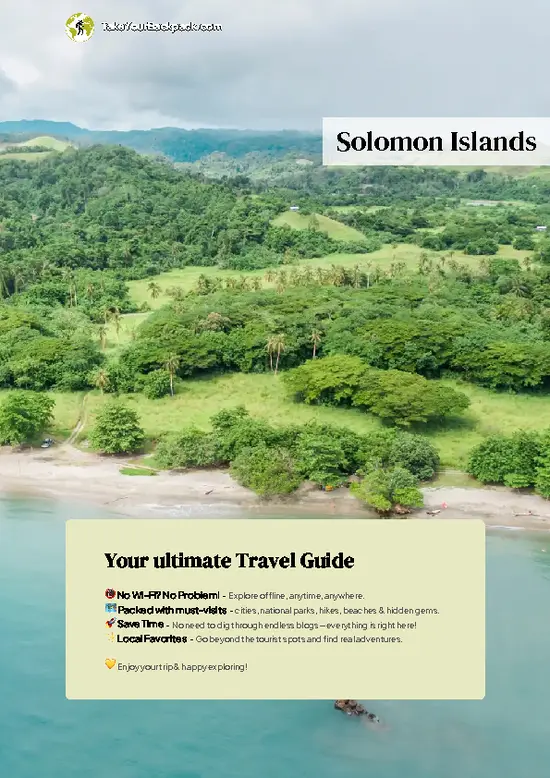
Country photo of Solomon Islands

We 💚 feedbackFinal thoughts on exploring Arnavon Islands

The Arnavon Islands are a slice of paradise, but don’t let the beauty fool you. The vibe is laid-back, perfect for those who want to disconnect. A pleasant surprise? The vibrant marine life—snorkeling here feels like swimming in an aquarium. Just a heads-up: the logistics can be tricky. Limited transport options mean planning is key. Bring enough supplies, especially water, to avoid unnecessary stress. Embrace the simplicity, and you’ll find the real treasure lies in the moments of peace and connection with nature.

✍️ Help improve this page!
The information on this page is based on in-depth research, insights shared by experienced travelers, and feedback from the local travel community in Solomon Islands. While every effort is made to keep the information accurate and current, conditions can change — so if you spot anything incorrect or outdated, please get in touch.


🙋‍♂️ Give feedback

👋 Meet the founderWho’s Behind Take Your Backpack?

Johan, backpacker and founder of TakeYourBackpackHi, I’m Johan (Netherlands 🇳🇱), the creator of TakeYourBackpack. Over the past decade, I’ve backpacked through 80+ countries across six continents, gaining extensive experience with independent travel, long-term trips, and overland routes.

This site is built on a combination of firsthand travel experience and carefully curated insights from other backpackers. Many guides are based on places I’ve personally visited, while others bring together tips, observations, and practical advice shared by trusted travelers I’ve met along the way.

The goal is to provide realistic, experience-driven guidance — not generic itineraries — so you can explore destinations with better context, clearer expectations, and more confidence.

Get full country guide •
Instant download • 39 highlights • Full Offline guide