×

Somalia🇸🇴 | citiesBeledweyneShabelle bridge, flood-prone river, livestock market, Hiraan tea sessions | things to do and best time to go

Explore BaidoaExplore Burao

Backpacking in Beledweyne
👍 Recommendedcity ranked #9
By Johan Kruseman 🇳🇱 | Updated November 2, 2026

The real decision in Beledweyne is whether to come at all, and security conditions tip it either way. The town sits in the Hiraan region of central Somalia, straddling the Shabelle River near the Ethiopian border. Skip any plan built around ticking off sights, because there are few formal ones. The river, the markets and the Hiraan clan elders’ tea sessions are what deserve your time. Heavy flooding in rainy seasons can cut roads and wreck plans, and the town has seen conflict, so independent wandering is not worth the risk. Beledweyne suits experienced, well-connected travelers with local contacts, aid and journalism backgrounds, or diaspora visitors. It won’t suit first-timers, hostel-hoppers or anyone who wants a loose, spontaneous trip.

Part of Backpacking in Somalia: all 68 places on one map, with routes and the best time to go.
Discover everything you want to know in the 📖 Somalia Travel Guide.
Safety warning

The current risk level for Somalia is high. Check the advice before going.


example page 0 from our offline Travel Guide for Somalia
example page 1 from our offline Travel Guide for Somalia
example page 2 from our offline Travel Guide for Somalia
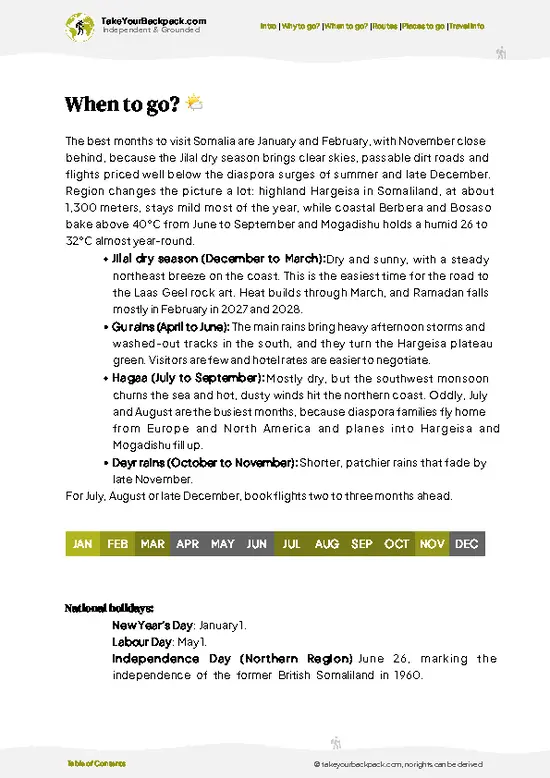
example page 3 from our offline Travel Guide for Somalia
example page 4 from our offline Travel Guide for Somalia
example page 5 from our offline Travel Guide for Somalia
example page 6 from our offline Travel Guide for Somalia
example page 7 from our offline Travel Guide for Somalia
Loading the map 🌍
CLICK TO FILTER
cities
towns
landmarks
national parks
hikes
beaches
attractions
festivals
regions
SHOW COUNTRY’S BESTSHOW ALL

✨ Why go?
Ranked #9 city in Somalia
Why Beledweyne should be on your travel list

Beledweyne draws the rare traveler who wants to see everyday Somalia away from the coast. The Shabelle River splits the town in two, and its bridge and banks give you a setting no other inland Somali town has. Hospitality is the main reason to come: a local host, a pot of spiced tea and hours of conversation tell you more than a checklist could. It also works as a link on a route toward the Ethiopian frontier, with a lively cross-border trade in livestock, fruit and goods. Hostels in the backpacker sense do not exist, so you arrange stays through contacts. The town is small enough to cover on foot or by short rides, and a day or two is plenty. Come for the people and the river, not for a long list of attractions.

💡 HighlightsTop highlights of Beledweyne

  1. Shabelle River Bridge: The town’s defining landmark links the two halves of Beledweyne, and the banks fill with washing, fishing and chatter. Go in the morning when it is cooler. Free, 30 to 60 minutes.
  2. Main Livestock Market: Goats, camels and cattle change hands in noisy, haggling crowds, and it shows why the town matters to trade. Early morning is liveliest. Entry is free, allow 1 to 2 hours.
  3. Central Bakaaraha-style Souk Area: The central market streets sell fruit, fabric, tea and household goods, with banana and mango stalls from the river farms. Visit before midday. Free, 1 hour, with a few dollars for snacks.
  4. Riverside Farms: Irrigated plots along the Shabelle grow maize, sesame and fruit, and walking the edges shows how the valley feeds the town. Go in the cooler morning with a local guide.
… read more 👉
  1. Shabelle River Bridge: The town’s defining landmark links the two halves of Beledweyne, and the banks fill with washing, fishing and chatter. Go in the morning when it is cooler. Free, 30 to 60 minutes.
  2. Main Livestock Market: Goats, camels and cattle change hands in noisy, haggling crowds, and it shows why the town matters to trade. Early morning is liveliest. Entry is free, allow 1 to 2 hours.
  3. Central Bakaaraha-style Souk Area: The central market streets sell fruit, fabric, tea and household goods, with banana and mango stalls from the river farms. Visit before midday. Free, 1 hour, with a few dollars for snacks.
  4. Riverside Farms: Irrigated plots along the Shabelle grow maize, sesame and fruit, and walking the edges shows how the valley feeds the town. Go in the cooler morning with a local guide. Free to US$5 for a guide, 1 to 2 hours.
  5. Local Tea House: A sit-down over sweet spiced tea is the best way to meet townspeople and hear about the region. Late afternoon is relaxed. About US$1 to 2, 1 hour.
From Beledweyne, the only realistic outings are to nearby riverside villages in Hiraan, and travel beyond town needs local arrangements and current security advice. The riverbank walk is free, and the tea house costs least among the paid options.
Spotted a mistake or missing something? Contact us.

🏘️ NeighborhoodsKey areas and districts to know

Beledweyne is split by the Shabelle River, and where you spend your time depends on which bank you are on. Stick to the areas below.
  • Old Town: This is the main commercial core and the part worth your time. Narrow streets hold the central market, tea stalls, money-transfer offices and small restaurants serving grilled meat and fresh camel milk. It is flat and walkable in the morning, and it gets loud and dusty by midday.
  • Koshin: A residential district with wider streets, shops and a few cafés. Come for an evening walk and a plate of fish or rice, not for sights. There is little here you can't find in the old town.
  • Riverfront: The Shabelle is the reason the town exists, and watching farmers, goats and washing along the banks gives the best sense of local life. Skip it in the rainy season when floods
… read more 👉
Beledweyne is split by the Shabelle River, and where you spend your time depends on which bank you are on. Stick to the areas below.
  • Old Town: This is the main commercial core and the part worth your time. Narrow streets hold the central market, tea stalls, money-transfer offices and small restaurants serving grilled meat and fresh camel milk. It is flat and walkable in the morning, and it gets loud and dusty by midday.
  • Koshin: A residential district with wider streets, shops and a few cafés. Come for an evening walk and a plate of fish or rice, not for sights. There is little here you can't find in the old town.
  • Riverfront: The Shabelle is the reason the town exists, and watching farmers, goats and washing along the banks gives the best sense of local life. Skip it in the rainy season when floods can close paths and make footing slick.
  • Outskirts and farmland: Irrigated plots of maize, sesame and fruit lie beyond the edge of town. Interesting, but go only with a local contact, since distances are long for walking and you need guidance.

⌛️ 1 dayA smart one-day plan

Plan the day on foot for the center and short taxi or motorbike rides for anything farther, and stop for a long break indoors when the midday heat peaks. 7:30 AM: Shabelle River Bridge Start on the bridge while the air is cool and watch washing, fishing and early traffic. Walk the bank for a feel of the town’s geography.
9:00 AM: Central market streets Cross to the main souk, buy fruit and try fresh tea. Ask before photographing anyone, and keep a local contact beside you.
11:00 AM: Livestock market Ride a short way to see animals trading, which is busiest earlier but still active. It shows the economy better than any museum.
12:30 PM: Lunch and rest Eat goat or rice at a local restaurant and rest out of the sun until the heat eases.
3:30 PM: Riverside farms Away from the standard route, walk … read more 👉
Plan the day on foot for the center and short taxi or motorbike rides for anything farther, and stop for a long break indoors when the midday heat peaks. 7:30 AM: Shabelle River Bridge Start on the bridge while the air is cool and watch washing, fishing and early traffic. Walk the bank for a feel of the town’s geography.
9:00 AM: Central market streets Cross to the main souk, buy fruit and try fresh tea. Ask before photographing anyone, and keep a local contact beside you.
11:00 AM: Livestock market Ride a short way to see animals trading, which is busiest earlier but still active. It shows the economy better than any museum.
12:30 PM: Lunch and rest Eat goat or rice at a local restaurant and rest out of the sun until the heat eases.
3:30 PM: Riverside farms Away from the standard route, walk the edges of the irrigated plots with a guide. Farmers grow maize, sesame and fruit, and they are usually happy to talk.
5:30 PM: Tea house End with spiced tea and conversation before heading in well before dark.

🌤️ When to go?Weather, crowds, and seasonal trade-offs

Beledweyne is hot all year, and the Shabelle flooding decides when the town is easiest to visit.
  • Jilaal (Dec to Mar): The driest and sunniest stretch, with days around 32 to 36°C (90 to 97°F) and cooler nights near 21°C (70°F). Roads are firm and travel is simplest.
  • Gu rains (Apr to Jun): Heavy downpours raise the river, and floods can cut roads and flood low neighborhoods. Expect 30 to 34°C (86 to 93°F) and mud.
  • Hagaa (Jul to Sep): Dry and breezy, with highs around 32 to 35°C (90 to 95°F). A good second window for travel.
  • Deyr rains (Oct to Nov): Shorter showers and another flood risk.
Daylight stays close to 12 hours all year, and prices for transport tend to climb when roads flood, so aim for Jilaal.

source: climatestotravel.comJANJanuary: excellent for travelingFEBFebruary: excellent for travelingMARMarch: fair for travelingAPRApril: fair for travelingMAYMay: fair for travelingJUNJune: good for travelingJULJuly: good for travelingAUGAugust: good for travelingSEPSeptember: good for travelingOCTOctober: good for travelingNOVNovember: highly recommended for travelingDECDecember: excellent for traveling
when-to-go

✈️ The backpacker research shortcutSomalia Travel Guide

What the free pages can't give you: ready-made routes, every place ranked, and it works offline. All in 1 guide.
example page 0 from our offline Travel Guide for Somalia
example page 1 from our offline Travel Guide for Somalia
example page 2 from our offline Travel Guide for Somalia
example page 3 from our offline Travel Guide for Somalia
example page 4 from our offline Travel Guide for Somalia
example page 5 from our offline Travel Guide for Somalia
example page 6 from our offline Travel Guide for Somalia
example page 7 from our offline Travel Guide for Somalia
The digital guide (237 pages) contains:-page digital guide:
✅ Ready-made 5, 10 & 15-day routes
✅ All 68 places ranked, so you skip the overrated ones
✅ Works offline, all in 1 guide
✅ Cities, national parks, landmarks, beaches
✅ How to get around
👉 Click to see all 30+ guide features

📅 Plan smarter in minutes, not weeks
✅ Month by month travel advice
✅ Festivals & national holidays
✅ Budget expectations

🗺️ Go to the right places, skip the overrated ones
✅ Honest pros & cons of destinations
✅ Top hikes, parks & viewpoints
✅ Lesser-known places most travelers miss
✅ Clear “worth it vs skip it” guidance

🛏️ Travel smoothly without rookie mistakes
✅ Best areas to stay
✅ Transport systems explained simply
✅ Common scams & safety advice
✅ SIM cards, money & practical tips

🌍 Understand the country, not just visit it
✅ Culture & traditions
✅ 52 Essential phrases & customs
✅ Festivals worth planning around
✅ Traveler-friendly historical context
✅ Insights that make places more meaningful

📱 Built for real travel conditions
✅ Fully downloadable PDF
✅ Works completely offline
✅ Optimized for phone use
✅ Useful in remote areas & buses
✅ All in 1 guide
Stop searching, start planning
Get instant access to your full guide. 30‑day money-back guarantee.


By proceeding you agree to our terms.
Sent to your inbox immediately after payment • 100% Secure Checkout
Best Backpacking Travel Advisor 2025 tourism awardBest Backpacking
Travel Advisor
2025
What others say about Take Your Backpack Guides:
⭐⭐⭐⭐⭐
Fantastic, amazing amount of information!
⭐⭐⭐⭐⭐
My goodness this is amazing, it's what I've been looking for hats off too you!
⭐⭐⭐⭐⭐
I think this is absolutely BRILLIANT
⭐⭐⭐⭐
Very complete and informative. It's still missing places, but I gotta to commend you
⭐⭐⭐⭐⭐
This is truly amazing, thank you, can't wait to explore it with my kids!
⭐⭐⭐⭐⭐
Awesome resource, thank you!
⭐⭐⭐⭐⭐
This is amazing! Can't wait to explore the ones I haven't seen
⭐⭐⭐⭐
I love this! Well done, great idea.
⭐⭐⭐⭐⭐
Thanks for taking the time to make this gem!
⭐⭐⭐⭐⭐
This might be the best website I've ever seen.
⭐⭐⭐⭐⭐
Congratulations, and thank you so much for your work; it's incredibly valuable.
⭐⭐⭐⭐
In all seriousness I think you did a great job pointing out the important spots
⭐⭐⭐⭐⭐
10/10 very good
⭐⭐⭐⭐⭐
As someone who's only just starting to visit regularly this is awesome, thank you.
⭐⭐⭐⭐
Thank you very much! I'm going to visit my dad, it's going to be very useful!
⭐⭐⭐⭐⭐
This is really cool! We'll be travelling for the first time and this definitely come in handy.
⭐⭐⭐⭐⭐
You are now our minister of culture, congratulations 👨‍💼
⭐⭐⭐⭐⭐
Just wanted to tell you that this is a pearl! Going to follow your recommendations.
⭐⭐⭐⭐⭐
This is so cool. I'll definitely be using the resource for my travels soon.
⭐⭐⭐⭐⭐
This is very impressive! Good work.
⭐⭐⭐⭐⭐
This is an amazing and informative site. Very well done!

🛏️ Where to stay?Where staying makes the most sense

The old town, near the central market, is the best place to sleep in Beledweyne. Budget guesthouses and simple rooms cluster here at roughly US$10 to 25 a night, and you are within walking distance of food, money-transfer offices and where shared cars gather. It is noisy from dawn with market traffic and the call to prayer, so bring earplugs.

Koshin is the quieter alternative. Streets are calmer at night, though rooms are fewer and you will need a bajaj for the trip to the market, usually US$1 to 2. Dormitory hostels in the backpacker sense do not exist here, so expect private rooms, often with … read more 👉
The old town, near the central market, is the best place to sleep in Beledweyne. Budget guesthouses and simple rooms cluster here at roughly US$10 to 25 a night, and you are within walking distance of food, money-transfer offices and where shared cars gather. It is noisy from dawn with market traffic and the call to prayer, so bring earplugs.

Koshin is the quieter alternative. Streets are calmer at night, though rooms are fewer and you will need a bajaj for the trip to the market, usually US$1 to 2. Dormitory hostels in the backpacker sense do not exist here, so expect private rooms, often with shared bathrooms and fan cooling. Book through a local contact or arrange a guesthouse before arrival, and choose compounds with a gate and a night guard. Avoid the riverbank edges, which can flood and have poor lighting after dark.

🚌 Getting aroundGetting around like a local

Beledweyne has no formal bus station, so minibuses and shared cars from other towns drop you at the central market area, and from there the old town is a 5 to 10 minute walk or a short bajaj ride. Walking is the best choice for the compact center, since the main streets, market and tea stalls sit within about 1 km of each other. Traffic is light apart from midday around the market, and there is no public transit system at all.
  • Walking: Free and the most sensible option for the center. Do it in the morning, because midday heat above 33°C (91°F) makes it tiring.
  • Bajaj (three-wheeler): The everyday taxi, usually US$1 to 2 for a short city ride. Agree the price before getting in, and use them to cross the river or reach the edges of town.
  • Motorbike taxi: Quicker and cheaper at around US$0.50 to 1.
… read more 👉
Beledweyne has no formal bus station, so minibuses and shared cars from other towns drop you at the central market area, and from there the old town is a 5 to 10 minute walk or a short bajaj ride. Walking is the best choice for the compact center, since the main streets, market and tea stalls sit within about 1 km of each other. Traffic is light apart from midday around the market, and there is no public transit system at all.
  • Walking: Free and the most sensible option for the center. Do it in the morning, because midday heat above 33°C (91°F) makes it tiring.
  • Bajaj (three-wheeler): The everyday taxi, usually US$1 to 2 for a short city ride. Agree the price before getting in, and use them to cross the river or reach the edges of town.
  • Motorbike taxi: Quicker and cheaper at around US$0.50 to 1.50, but not comfortable with a big pack. Skip it if you carry luggage.
  • Shared cars and minibuses: The way to reach other towns such as Mogadishu direction or Hiiraan villages, with fares roughly US$10 to 30 depending on distance. They leave when full, usually in the morning, so arrive early.
  • Domestic flights: Not worth planning around. Road routes are the realistic option, and security conditions should be checked locally before any long trip.
Bridges over the Shabelle are the only crossings, so allow extra time when water is high.

👛 Costs (as of 2 November 2026)Typical daily expenses

Beledweyne costs about US$37 to 74 a day for a backpacker on a basic budget, mostly driven by lodging and local transport.
CategoryBudget RangeLocal Reality
Dorm accommodation (high season)US$10 to 20No dorms exist, so this is a basic private room in a guesthouse.
Dorm accommodation (off-season)US$8 to 15Rooms are a little cheaper in the wet months.
MealsUS$6 to 12Rice and meat plates, tea and fruit at local eateries.
Local transportUS$3 to 6A few bajaj rides within town.
City transport passNot availableNo pass exists; pay per ride.
Basic activities/entry feesUS$5 to 10Guide for farm or river visits, as there are no ticketed sights.
MiscellaneousUS$3 to 6Water, SIM data and tips.
Total Daily BudgetUS$37 to 74Based on high-season lodging.
Eat where locals eat and share bajaj rides to cut costs.

source: numbeo.com
⚠️ Prices can change and everyone travels differently, so take this as a rough guide. Hope it helps you plan your adventure!

🚌 Day tripsExploring the surroundings

Beledweyne works as a base for only a few short outings, and nearly all of them run along the Shabelle River, so you need a local contact to confirm road conditions before you leave.
Shabelle River Farms:
The riverbanks just outside town are lined with irrigated plots of maize, sesame, onions and watermelon, and the flat green is a sharp contrast to the dry bush beyond. Shared minibuses and motorbike taxis cover the 5 to 15 km out and back for US$2 to 6 in total. Come in the Gu rains or just after the Deyr rains, when the fields are at their greenest. First-timers often wander off the track with a camera, so stay with your host and ask the farmer before photographing.

Buulo Barde:
This farming town sits about 30 to 40 km south of Beledweyne, a ride of roughly 1 to 1.5 hours by shared car, … read more 👉
Beledweyne works as a base for only a few short outings, and nearly all of them run along the Shabelle River, so you need a local contact to confirm road conditions before you leave.
Shabelle River Farms:
The riverbanks just outside town are lined with irrigated plots of maize, sesame, onions and watermelon, and the flat green is a sharp contrast to the dry bush beyond. Shared minibuses and motorbike taxis cover the 5 to 15 km out and back for US$2 to 6 in total. Come in the Gu rains or just after the Deyr rains, when the fields are at their greenest. First-timers often wander off the track with a camera, so stay with your host and ask the farmer before photographing.

Buulo Barde:
This farming town sits about 30 to 40 km south of Beledweyne, a ride of roughly 1 to 1.5 hours by shared car, with return fares around US$6 to 10. It is worth the trip for its busy produce market, where river-grown vegetables and fruit change hands in the early hours, and for the sweet fresh mango and papaya in season. Go in the dry months from December to March, since the road softens badly when the rains come. A common mistake is leaving for the return after midday, when cars thin out and fares climb.

Jalalaqsi:
South of Beledweyne along the river, Jalalaqsi is a small trading town with a quiet riverside and a market that sells goat, camel milk and bundles of qat from the road. Allow about 1.5 to 2 hours each way by shared vehicle and US$8 to 14 for the round trip, plus a few dollars for tea and a meal. The cooler months from December to February make the open road far easier to bear. Many visitors try to fit in too many stops, so settle on this one place and be back in Beledweyne before dark.
👉 Explore Jalalaqsi

🍲 FoodLocal Flavors for Backpackers

Food here follows the Shabelle valley, so fresh river-farm produce sets it apart: sweet watermelon, papaya, bananas and mangoes sold from carts in the morning. Look for camel milk (caano geel), served cold or warm and tangy, plus goat and camel meat grilled over charcoal. Maize and sorghum dishes are more common than in coastal areas, often as a thick porridge or flatbread with stew.

Most backpackers eat at small local restaurants near the central market, where a plate of rice with meat runs around US$2 to 4. Tea stalls pour sweet spiced shaah with milk all day and are the best place to meet locals. Fruit juice stands are worth a stop in the afternoon heat, usually US$0.50 to 1. Eat with your right hand when sharing a platter, and drink bottled water only.

🛡️ SafetyTraveler Safety Guide

Beledweyne needs real preparation, as security conditions in central Somalia can change quickly. Check current advice before arrival and ask your guesthouse host or local contact about which areas are calm that week. Move around in daylight and be back inside by dusk, since street lighting is poor. Solo travelers should arrange a trusted local guide or host, and women should dress modestly and cover hair. Carry small cash, as there are no card machines for visitors, and keep your phone out of sight in crowds. Petty haggling over bajaj fares is the usual annoyance, so fix the price first. During the rainy seasons, flooding is the more common hazard, so avoid low riverbank areas.

FAQFrequently asked questions about Beledweyne

Two days is enough for Beledweyne, since the old town, river and nearby farms fit into that time. Spend one day around the central market and Shabelle riverbank, and a second on a guided farm visit about 15 to 30 minutes out. Add a day of buffer if floods or road conditions delay your onward travel.
Beledweyne is not an easy place for solo backpackers, and security in central Somalia can change quickly. Arrange a local host or guide before arrival, stay in a gated guesthouse in the old town, and be inside by dusk. Bajaj rides cost about US$1 to 2, and checking current advice before each trip is wise.
Beledweyne is known for the Shabelle River, which runs through the middle of town and feeds the farms of the Hiiraan region. It is a trading hub for maize, sesame, fruit and livestock, and the river also brings seasonal floods in the Gu and Deyr rains. Camel milk and fresh watermelon are among the local favorites, with a meal costing around US$2 to 4.
⚠️ Things can change over time, so always validate details locally before you go.

Other Somali cities near Beledweyne

Explore more nearby:

  • Baidoa—Sorghum market, Isha water source, former parliament, red-soil farm belt| 249 km away
  • Afgooye—Shabelle farmland, banana plantations, roadside fruit stands, day outing from Mogadishu| 289 km away
  • Mogadishu—Hamar Weyne, 13th-century mosques, Shangani arcades, Lido Beach| 300 km away

💡 Not sure where to go next?
Create a personalized itinerary for Somalia including Beledweyne and the places that fit your trip.

Generate my itinerary

👉 Discover all cities

Or checkout all Somalia has to offer (think cities, towns, villages, national parks, hikes, beaches, festivals)
Country photo of Somalia

We 💚 feedbackFinal thoughts on visiting Beledweyne

Beledweyne deserves a day or two, no more, and only with a trusted local host arranging everything. I would spend the second morning just sitting by the river with tea, because conversation is the best thing here. Bring cash in small US dollar bills and keep your plans flexible.

✍️ Help improve this page!
The information on this page is based on in-depth research, insights shared by experienced travelers, and feedback from the local travel community in Somalia. While every effort is made to keep the information accurate and current, conditions can change — so if you spot anything incorrect or outdated, please get in touch.


🙋‍♂️ Give feedback

👋 Meet the founderWho’s Behind Take Your Backpack?

Johan, backpacker and founder of TakeYourBackpackHi, I’m Johan (Netherlands 🇳🇱), the creator of TakeYourBackpack. Over the past 30 years, I’ve backpacked through 88 countries across six continents, gaining extensive experience with independent travel, long-term trips, and overland routes.

This site is built on a combination of firsthand travel experience and carefully curated insights from other backpackers. Many guides are based on places I’ve personally visited, while others bring together tips, observations, and practical advice shared by trusted travelers I’ve met along the way.

The goal is to provide realistic, experience-driven guidance — not generic itineraries — so you can explore destinations with better context, clearer expectations, and more confidence.