×

Somalia🇸🇴 | citiesMogadishuIndian Ocean coastline, government district, urban sprawl | things to do and best time to go

Explore KismayoExplore Qardho

Backpacking in Mogadishu
🏆 Top pickcity ranked #1
By Johan Kruseman 🇳🇱 | Updated June 11, 2026

Here’s what nobody tells you until you’re already in Mogadishu: if you’re willing to plan ahead, you can have entire stretches of the city’s Indian Ocean beaches almost to yourself—no crowds, no touts, just the sound of the surf and the call to prayer drifting over the sand. Mogadishu sits on Somalia’s southeastern coast, right where the continent leans into the sea. For backpackers, this is a city that’s both magnetic and merciless. The old Italian colonial architecture—crumbling but defiant—gives you a sense of faded grandeur, especially around the old port and the Arba’a Rukun mosque. The fish market is chaotic, raw, and fascinating if you’re up for it. But let’s be blunt: travel here is not easy. Security is a constant negotiation, and you’ll need a fixer or guide for almost everything. Meeting other travelers is rare; this isn’t a hostel-hopping scene. Costs are surprisingly high for what you get, and comfort is always second to safety. Compared to Hargeisa or Berbera in Somaliland, Mogadishu is more intense, less predictable, and far less relaxed. The vibe? Adrenaline-laced, gritty, and—if you’re prepared—deeply memorable.

Discover everything you want to know in the 📖 Somalia Travel Guide.
Safety warning

The current risk level for Somalia is high. Check the advice before going.


Get your Somalia guide
83 ranked highlights, routes & tips, works offline (354 pages)
Loading the map 🌍
CLICK TO FILTER
cities
towns
landmarks
national parks
hikes
beaches
attractions
festivals
regions
SHOW COUNTRY’S BESTSHOW ALL

✨ Why go?
Ranked #1 city in Somalia
What makes it a must-see city

Mogadishu is emerging as a backpacker’s base for those seeking a unique experience in Somalia. The city offers a blend of highlights and activities that cater to various interests, making it more than just a stopover. The basecamp value here is significant; you can easily launch day trips to explore the surrounding areas without the hassle of long travel times.

Accommodations range from budget-friendly hostels to more comfortable options, ensuring you can find a place that fits your style. The food scene is vibrant, with local dishes that are both affordable and delicious, giving you a taste of Somali culture without breaking the bank.

Mogadishu is surprisingly walkable, allowing you to soak in the atmosphere as you navigate the streets. When the sun sets, the nightlife offers a glimpse … read more 👉
Mogadishu is emerging as a backpacker’s base for those seeking a unique experience in Somalia. The city offers a blend of highlights and activities that cater to various interests, making it more than just a stopover. The basecamp value here is significant; you can easily launch day trips to explore the surrounding areas without the hassle of long travel times.

Accommodations range from budget-friendly hostels to more comfortable options, ensuring you can find a place that fits your style. The food scene is vibrant, with local dishes that are both affordable and delicious, giving you a taste of Somali culture without breaking the bank.

Mogadishu is surprisingly walkable, allowing you to soak in the atmosphere as you navigate the streets. When the sun sets, the nightlife offers a glimpse into the local scene, with spots that buzz with energy and camaraderie.

For those on a broader journey, Mogadishu serves as a strategic point for easy onward travel to other parts of Somalia or neighboring countries. If you’re after authentic experiences and a chance to engage with a city in transition, this could be the perfect fit for your travel style.
Want to include Mogadishu in your Somalia route?
Create a personalized Somalia itinerary that includes Mogadishu and the places that fit your trip — based on your travel style, budget, and available time. Get your route in seconds.

Generate my trip

💡 HighlightsKey sights and experiences for travelers

  • Liido Beach (Lido) — The city’s best seaside hangout: sandy shore, simple seafood shacks, late-afternoon crowds, and proper Indian Ocean sunsets. Great for a relaxed stroll, swimming when conditions are calm, and people-watching with locals.
  • Lido fish market & seafront stalls — Early-morning mayhem where fishermen land their catch and vendors fillet and grill on the spot. Raw, sensory, and a genuine way to taste Mogadishu’s coastal food culture (go with a local and your nerve for fish-scented chaos).
  • Shingani / Hamar Weyne Old Town — Narrow alleys, coral-stone houses, and courtyard mosques — the historical core of Mogadishu. Walking this quarter feels like stepping back centuries; bring a guide who can point out family compounds, old carved doors, and living crafts.
  • Arba’a Rukun Mosque
read more 👉
  • Liido Beach (Lido) — The city’s best seaside hangout: sandy shore, simple seafood shacks, late-afternoon crowds, and proper Indian Ocean sunsets. Great for a relaxed stroll, swimming when conditions are calm, and people-watching with locals.
  • Lido fish market & seafront stalls — Early-morning mayhem where fishermen land their catch and vendors fillet and grill on the spot. Raw, sensory, and a genuine way to taste Mogadishu’s coastal food culture (go with a local and your nerve for fish-scented chaos).
  • Shingani / Hamar Weyne Old Town — Narrow alleys, coral-stone houses, and courtyard mosques — the historical core of Mogadishu. Walking this quarter feels like stepping back centuries; bring a guide who can point out family compounds, old carved doors, and living crafts.
  • Arba’a Rukun Mosque — One of Mogadishu’s oldest and most venerated mosques, notable for its age, local religious life, and traditional architecture. Even if you’re not Muslim, the quiet courtyards and call-to-prayer rhythms are culturally revealing.
  • Bakaara Market — The city’s sprawling central market and a real commerce hub: spices, textiles, electronics, and everyday Somali life. It’s chaotic in the best way — ideal for budget shopping and watching traders barter — but best experienced with a local fix-up on routes and safety.
  • Banadir Stadium — Where Mogadishu’s football obsession comes alive. Catch a match or just visit on game day for raw, noisy local atmosphere and a window into contemporary civic life that’s hard to fake.
  • Mogadishu Cathedral (ruins of Our Lady of Mount Carmel) — The striking shell of the Italian-era cathedral stands as a photo- and history-heavy landmark. It’s evocative rather than polished; good for those interested in colonial-era layers of the city.
  • Villa Somalia (presidential palace) — exterior & surroundings — You can’t wander inside, but viewing the palace and the guard-lined frontage tells you a lot about modern Somali politics and power. The nearby promenades and streets are lively and worth a cautious look.
  • Mogadishu Port (Dekedda Muqdisho) & dhow harbor — Active docks, loading dhows, and a working waterfront where you can observe trade, fishing fleets, and maritime life. It’s gritty and authentic — best seen in daylight and with a local contact.
  • Italian-era buildings & the old National Theatre area — Pockets of colonial architecture and the shell of the old theatre cluster together to show Mogadishu’s 20th-century urban story. Walkable, photographic, and full of small, reclaimed spaces where locals meet.
Nearby day-trip options worth considering: the riverine groves and markets of Afgooye, the historic coastal town of Merca (Marka), and the older port town of Barawa (Baraawe).
Spotted a mistake or missing something? Contact us.
🏘️ NeighborhoodsHow different areas shape the experience

Mogadishu is a city of contrasts, where history meets resilience. Understanding its neighborhoods can help you maximize your experience.

Hodan: This area is a vibrant hub for backpackers. It’s bustling with local markets and street food stalls, offering an authentic taste of Somali culture. Prices are reasonable, making it a budget-friendly choice. Walkability is decent, but be mindful of your surroundings. Nightlife is low-key, with a few cafes and restaurants. Ideal for short stays, Hodan gives you a taste of local life without overwhelming you.

Maka Al-Mukarama: Known for its main thoroughfare, this area is more commercial. It’s a bit pricier, but you’ll find a range of accommodations. The vibe is energetic, with shops and eateries lining the streets. Transport access is excellent, making … read more 👉
Mogadishu is a city of contrasts, where history meets resilience. Understanding its neighborhoods can help you maximize your experience.

Hodan: This area is a vibrant hub for backpackers. It’s bustling with local markets and street food stalls, offering an authentic taste of Somali culture. Prices are reasonable, making it a budget-friendly choice. Walkability is decent, but be mindful of your surroundings. Nightlife is low-key, with a few cafes and restaurants. Ideal for short stays, Hodan gives you a taste of local life without overwhelming you.

Maka Al-Mukarama: Known for its main thoroughfare, this area is more commercial. It’s a bit pricier, but you’ll find a range of accommodations. The vibe is energetic, with shops and eateries lining the streets. Transport access is excellent, making it easy to explore the city. While nightlife is limited, the daytime buzz makes it suitable for longer stays if you want to be in the heart of the action.

Liido Beach: If you’re craving some sun and sand, this is the spot. It’s a bit of a splurge, but the beach atmosphere is worth it. Walkability is great along the shore, and you can find beachside cafes. The nightlife here is more relaxed, perfect for unwinding after a day of exploration. Best for short stays, especially if you want to recharge.

K4: This area is a blend of residential and commercial spaces. It’s quieter than Hodan and Maka Al-Mukarama, making it a good choice for those seeking peace. Prices are moderate, and it’s walkable, though public transport is limited. Ideal for longer stays, K4 allows you to settle in and soak up the local vibe.

⌛️ 1 dayWhat you can realistically do in a day

Mogadishu is a city where history and resilience collide. Once a bustling trade hub, it’s now a vibrant tapestry of culture, marked by its stunning coastline and the echoes of its storied past. Spending a day here is about immersing yourself in the local rhythm, tasting the flavors, and connecting with the people.

Start your morning at the lively Bakara Market. It’s a sensory overload—vendors shouting, spices wafting through the air, and the vibrant colors of textiles everywhere. Grab a cup of Somali chai from a local stall; it’s sweet and spiced, the perfect fuel for your adventure. As you wander through the market, take in the energy and perhaps pick up a handmade souvenir.

Afterward, head towards the shoreline. The Lido Beach area is a fantastic spot to soak up the sun and watch the … read more 👉
Mogadishu is a city where history and resilience collide. Once a bustling trade hub, it’s now a vibrant tapestry of culture, marked by its stunning coastline and the echoes of its storied past. Spending a day here is about immersing yourself in the local rhythm, tasting the flavors, and connecting with the people.

Start your morning at the lively Bakara Market. It’s a sensory overload—vendors shouting, spices wafting through the air, and the vibrant colors of textiles everywhere. Grab a cup of Somali chai from a local stall; it’s sweet and spiced, the perfect fuel for your adventure. As you wander through the market, take in the energy and perhaps pick up a handmade souvenir.

Afterward, head towards the shoreline. The Lido Beach area is a fantastic spot to soak up the sun and watch the waves crash against the shore. Here, you can enjoy fresh seafood from one of the local beachside restaurants. Try the grilled fish; it’s a local favorite and incredibly fresh. This is a great moment to relax and chat with locals, who are often eager to share stories about their city.

In the afternoon, make your way to the historic district of Hamar Weyne. Explore the remnants of old colonial architecture and visit the iconic Arba’a Rukun Mosque, a beautiful example of Islamic architecture. This area often flies under the radar for tourists, but it’s rich in character and history.

As evening approaches, return to the coast for a sunset view at the beach. The sky transforms into a canvas of oranges and purples, a perfect backdrop for reflection. For dinner, seek out a local eatery in the nearby neighborhood of Waberi. The traditional Somali dishes here are hearty and flavorful, a fitting end to your day.

Mogadishu is a city that invites you to engage with its spirit. Each moment spent here is a chance to connect, learn, and appreciate the resilience of its people.
Turn your Mogadishu visit into an Somalia adventure
Build a complete Somalia route with Mogadishu, hidden gems, must-see destinations, and realistic travel times included.

Generate my trip

🌤️ When to go?Weather, crowds, and seasonal trade-offs


  • Weather: Mogadishu’s climate is hot and arid year-round, but the coolest months are January to March, with temperatures averaging 25-30°C (77-86°F). Avoid April to June when the intense heat spikes above 35°C (95°F), making daytime trekking exhausting.

  • Temperature: Nighttime lows rarely dip below 20°C (68°F), so pack light layers but expect warmth even after sunset. The hottest months, May and June, push highs to 38°C (100°F), which can drain your energy fast.

  • Daylight Hours: Near the equator, daylight is steady—about 12 hours year-round. This consistency means you can plan hikes or city explorations without worrying about early sunsets cutting your day short.

  • Crowds: Tourist traffic is minimal year-round, but local holidays like Eid can swell crowds and prices briefly. Visiting outside
read more 👉

  • Weather: Mogadishu’s climate is hot and arid year-round, but the coolest months are January to March, with temperatures averaging 25-30°C (77-86°F). Avoid April to June when the intense heat spikes above 35°C (95°F), making daytime trekking exhausting.

  • Temperature: Nighttime lows rarely dip below 20°C (68°F), so pack light layers but expect warmth even after sunset. The hottest months, May and June, push highs to 38°C (100°F), which can drain your energy fast.

  • Daylight Hours: Near the equator, daylight is steady—about 12 hours year-round. This consistency means you can plan hikes or city explorations without worrying about early sunsets cutting your day short.

  • Crowds: Tourist traffic is minimal year-round, but local holidays like Eid can swell crowds and prices briefly. Visiting outside these times means more space to explore and better deals.

  • Seasonal Activities: The dry season (December to March) is ideal for beach visits and cultural festivals. The rainy season (April to June) brings sporadic showers that can disrupt plans and muddy roads.

  • Price Fluctuations: Accommodation and transport costs dip during the hotter months and rainy season due to lower demand. If you can handle the heat, this is when your money stretches furthest.


Pro-tip: Target the shoulder months of January to March for a smart balance of cooler weather, manageable crowds, and fair prices—turning Mogadishu’s challenges into your advantage.


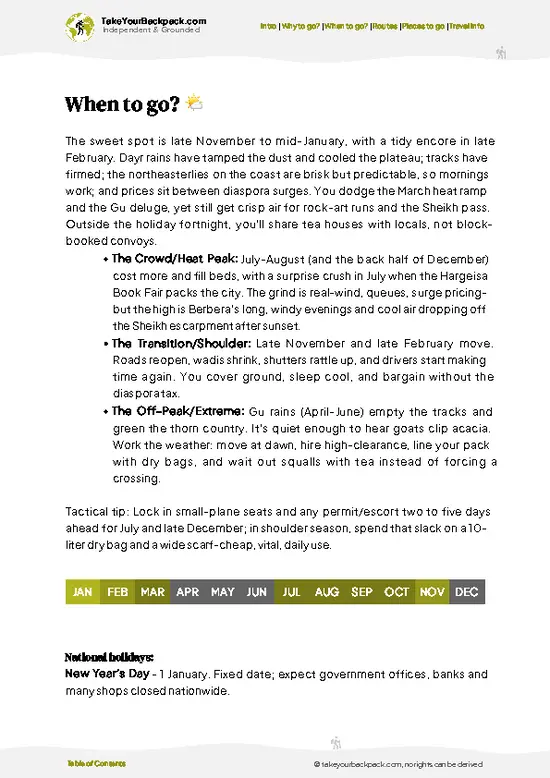
source: climatestotravel.comJANJanuary: excellent for travelingFEBFebruary: excellent for travelingMARMarch: excellent for travelingAPRApril: fair for travelingMAYMay: below average for travelingJUNJune: below average for travelingJULJuly: good for travelingAUGAugust: good for travelingSEPSeptember: good for travelingOCTOctober: good for travelingNOVNovember: highly recommended for travelingDECDecember: highly recommended for traveling
when-to-go

✈️ The backpacker research shortcutSomalia Travel Guide

An offline-friendly backpacking guide with optimized travel routes, ranked highlights, transport advice, and the best areas to stay.
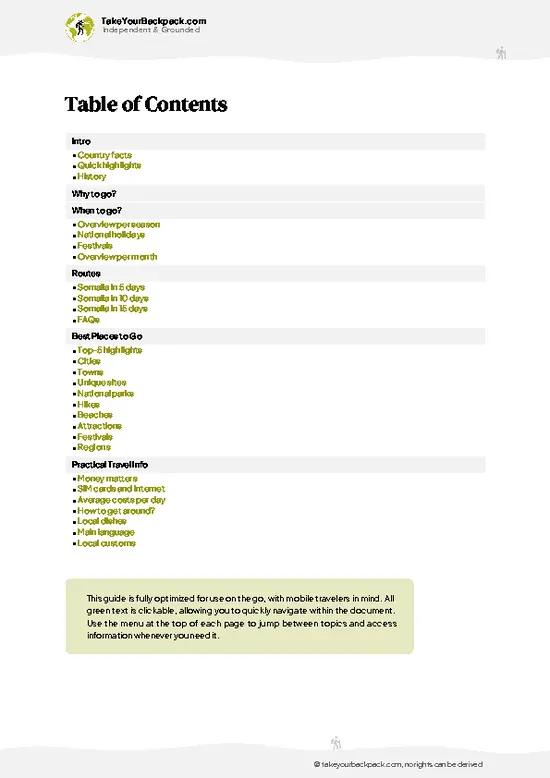
example page 0 from our offline Travel Guide for Somalia
example page 1 from our offline Travel Guide for Somalia
example page 2 from our offline Travel Guide for Somalia
example page 3 from our offline Travel Guide for Somalia
example page 4 from our offline Travel Guide for Somalia
example page 5 from our offline Travel Guide for Somalia
example page 6 from our offline Travel Guide for Somalia
example page 7 from our offline Travel Guide for Somalia
The digital guide (354 pages) contains:
83 highlights, ranked by travel appeal
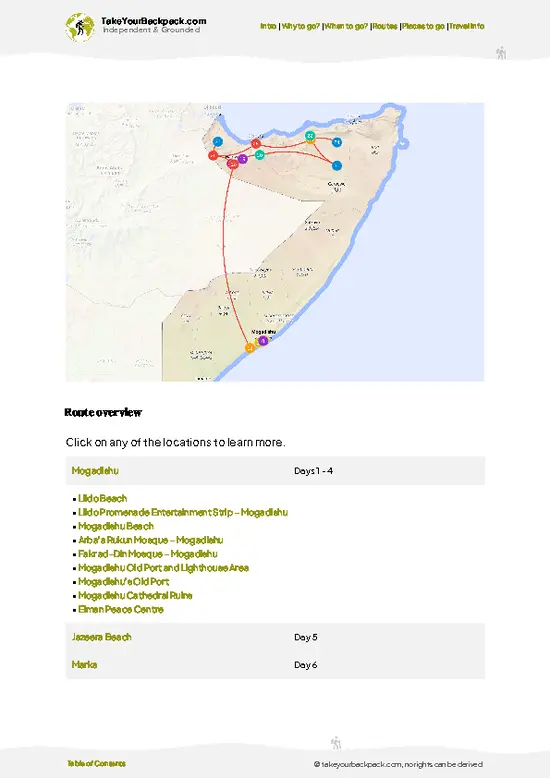
Optimized 5, 10 & 15-day travel routes
Cities, national parks, landmarks, beaches
How to get around
Offline-friendly for travel without Wi-Fi
👉 Click to see all 30+ guide features

📅 Plan smarter in minutes, not weeks
Month by month travel advice
Festivals & national holidays
Budget expectations

🗺️ Go to the right places, skip the overrated ones
Honest pros & cons of destinations
Top hikes, parks & viewpoints
Lesser-known places most travelers miss
Clear “worth it vs skip it” guidance

🛏️ Travel smoothly without rookie mistakes
Best areas to stay
Transport systems explained simply
Common scams & safety advice
SIM cards, money & practical tips

🌍 Understand the country, not just visit it
Culture & traditions
52 Essential phrases & customs
Festivals worth planning around
Traveler-friendly historical context
Insights that make places more meaningful

📱 Built for real travel conditions
Fully downloadable PDF
Works completely offline
Optimized for phone use
Useful in remote areas & buses
Everything in one place
Save weeks of stressful planning
Get instant access to your full guide. 30‑day money-back guarantee.


By proceeding you agree to our terms.
Sent to your inbox immediately after payment • 100% Secure Checkout
Best Backpacking Travel Advisor 2025 tourism awardBest Backpacking
Travel Advisor
2025
What others say about Take Your Backpack Guides:
⭐⭐⭐⭐⭐
Fantastic, amazing amount of information!
⭐⭐⭐⭐⭐
My goodness this is amazing, it's what I've been looking for hats off too you!
⭐⭐⭐⭐⭐
I think this is absolutely BRILLIANT
⭐⭐⭐⭐
Very complete and informative. It's still missing places, but I gotta to commend you
⭐⭐⭐⭐⭐
This is truly amazing, thank you, can't wait to explore it with my kids!
⭐⭐⭐⭐⭐
Awesome resource, thank you!
⭐⭐⭐⭐⭐
This is amazing! Can't wait to explore the ones I haven't seen
⭐⭐⭐⭐
I love this! Well done, great idea.
⭐⭐⭐⭐⭐
Thanks for taking the time to make this gem!
⭐⭐⭐⭐⭐
This might be the best website I've ever seen.
⭐⭐⭐⭐⭐
Congratulations, and thank you so much for your work; it's incredibly valuable.
⭐⭐⭐⭐
In all seriousness I think you did a great job pointing out the important spots
⭐⭐⭐⭐⭐
10/10 very good
⭐⭐⭐⭐⭐
As someone who's only just starting to visit regularly this is awesome, thank you.
⭐⭐⭐⭐
Thank you very much! I'm going to visit my dad, it's going to be very useful!
⭐⭐⭐⭐⭐
This is really cool! We'll be travelling for the first time and this definitely come in handy.
⭐⭐⭐⭐⭐
You are now our minister of culture, congratulations 👨‍💼
⭐⭐⭐⭐⭐
Just wanted to tell you that this is a pearl! Going to follow your recommendations.
⭐⭐⭐⭐⭐
This is so cool. I'll definitely be using the resource for my travels soon.
⭐⭐⭐⭐⭐
This is very impressive! Good work.
⭐⭐⭐⭐⭐
This is an amazing and informative site. Very well done!

🛏️ Where to stay?How to pick the right area

Mogadishu’s reputation precedes it, but for the savvy backpacker, the city offers pockets where safety, social life, and budget converge—if you know where to look. The best area to base yourself is the Hamar Weyne district. It’s the historic heart of the city, where the streets hum with daily commerce and local life. Here, you’ll find a handful of guesthouses and budget accommodations that cater to solo travelers and those who want to immerse themselves without breaking the bank. The vibe is gritty but genuine—expect lively street markets, the scent of freshly brewed Somali coffee, and locals … read more 👉
Mogadishu’s reputation precedes it, but for the savvy backpacker, the city offers pockets where safety, social life, and budget converge—if you know where to look. The best area to base yourself is the Hamar Weyne district. It’s the historic heart of the city, where the streets hum with daily commerce and local life. Here, you’ll find a handful of guesthouses and budget accommodations that cater to solo travelers and those who want to immerse themselves without breaking the bank. The vibe is gritty but genuine—expect lively street markets, the scent of freshly brewed Somali coffee, and locals who are curious but welcoming.

Compared to other parts of Mogadishu, Hamar Weyne strikes a balance between accessibility and relative safety. It’s not a luxury zone, so comfort is basic, but that’s part of the trade-off for authentic engagement and lower costs. Other neighborhoods like Hodan or Waberi might offer more modern infrastructure but come with higher prices and less of that social buzz backpackers crave. Plus, they can feel more isolated, which isn’t ideal if you’re traveling solo and want to connect.

Hostel-style options are limited citywide, so expect guesthouses with shared facilities rather than dorm-style hostels. This means you sacrifice some social ease but gain a more intimate, local experience. In Mogadishu, your best bet is to lean into the city’s rhythm in Hamar Weyne—where every street corner is a lesson in resilience and culture, and your choice to stay there is a strategic win in the game of time, money, and comfort.

🚌 Getting aroundHow to get from A to B

Mogadishu moves to a rhythm all its own—less a clockwork precision and more a pulse you feel in the streets. Time here isn’t a strict appointment; it’s a negotiation between urgency and patience, where schedules bend to the flow of people and circumstance. The city’s transit system reflects this blend of chaos and order. You won’t find neat timetables or predictable intervals, but you will find options that reward your savvy with speed, savings, or a bit of comfort. Understanding the trade-offs between time, money, and comfort here is your key to mastering the city’s pulse without getting lost in it.


  • Walking: The most reliable and cost-free way to navigate Mogadishu’s compact neighborhoods. Walking lets you control your pace and soak in the city’s textures, but expect uneven sidewalks
read more 👉
Mogadishu moves to a rhythm all its own—less a clockwork precision and more a pulse you feel in the streets. Time here isn’t a strict appointment; it’s a negotiation between urgency and patience, where schedules bend to the flow of people and circumstance. The city’s transit system reflects this blend of chaos and order. You won’t find neat timetables or predictable intervals, but you will find options that reward your savvy with speed, savings, or a bit of comfort. Understanding the trade-offs between time, money, and comfort here is your key to mastering the city’s pulse without getting lost in it.


  • Walking: The most reliable and cost-free way to navigate Mogadishu’s compact neighborhoods. Walking lets you control your pace and soak in the city’s textures, but expect uneven sidewalks and the occasional need to dodge street vendors or traffic. It’s slow compared to motorized options but unbeatable for budget and immersion.


  • Shared Minibuses: These are the workhorses of Mogadishu’s transit. They run from early morning until dusk, roughly 6 AM to 7 PM, with fares around 100-200 Somali Shillings (a few cents). They’re cheap and relatively fast on main roads but can get cramped and unpredictable in schedule. Comfort is minimal, but if you’re after speed and savings, these are your go-to.


  • Motorcycle Taxis (Bajaj): When time is tight and you want to skip traffic snarls, bajajs are your best bet. They operate 24/7, fares vary but expect to pay about 500-1000 Shillings for short hops. They’re nimble and fast but sacrifice comfort and safety—helmet use is rare, and the ride can be bumpy. Ideal for solo travelers who prioritize speed over ease.


  • Private Car Hire: For those who want comfort and control, private cars are available but pricey—expect to pay 10-20 USD per hour. They offer air conditioning and a smoother ride, plus flexibility on timing and routes. This option saves time and adds comfort but at a steep cost, making it a splurge choice for budget travelers.


  • Informal Carpooling: A middle ground between minibuses and private cars. Locals often share rides in private vehicles, splitting costs. It’s faster and more comfortable than minibuses but less predictable than private hire. Prices vary widely, so negotiating upfront is key. This option balances time, money, and comfort if you’re willing to engage with the local scene.

👛 Costs (as of 6 April 2026)Typical daily expenses

Backpacking in Mogadishu, Somalia, demands a sharp eye on your budget because the city’s costs reflect a mix of scarcity, security considerations, and limited tourist infrastructure. Here’s how the daily expenses typically break down for an independent traveler navigating this complex environment:
  • Dorm Accommodation (High Season): Expect to pay around $40 to $60 per night. High season sees a slight bump due to demand from aid workers and business travelers, with limited guesthouses offering basic but secure rooms rather than traditional dorms.
  • Dorm Accommodation (Off-Season): Prices can drop to $25 to $40 per night. Availability is tighter, and quality varies, so lower prices often mean compromises on comfort and security measures.
  • Meals: Street food and local eateries offer meals for $3
read more 👉
Backpacking in Mogadishu, Somalia, demands a sharp eye on your budget because the city’s costs reflect a mix of scarcity, security considerations, and limited tourist infrastructure. Here’s how the daily expenses typically break down for an independent traveler navigating this complex environment:
  • Dorm Accommodation (High Season): Expect to pay around $40 to $60 per night. High season sees a slight bump due to demand from aid workers and business travelers, with limited guesthouses offering basic but secure rooms rather than traditional dorms.
  • Dorm Accommodation (Off-Season): Prices can drop to $25 to $40 per night. Availability is tighter, and quality varies, so lower prices often mean compromises on comfort and security measures.
  • Meals: Street food and local eateries offer meals for $3 to $7. Western-style or hotel dining pushes costs higher, around $10 to $20 per meal. Fresh seafood and Somali staples like rice and camel meat dominate menus, but expect limited variety.
  • Local Transport: Informal minibuses and shared taxis run about $0.50 to $1 per trip within the city. Negotiation is common, and routes can be unpredictable, so flexibility is key.
  • City Transport Pass: There is no formal city transport pass system. Travelers rely on cash payments for each ride, which adds a layer of logistical complexity and small cost increments throughout the day.
  • Basic Activities/Entry Fees: Tourist activities are minimal and often informal. Entry fees to any cultural or historical sites, if accessible, range from $5 to $15. Guided tours are rare and usually arranged privately at higher rates.
  • Miscellaneous Expenses: Budget $5 to $10 for essentials like bottled water, SIM cards, and occasional security-related costs such as private transport or escorts, which are often necessary for safety.

Summing it up, a realistic daily budget for backpacking in Mogadishu hovers between $60 and $110. The trade-off here is clear: you’re paying a premium for security and limited infrastructure, so every dollar spent is a conscious choice balancing comfort and safety against the raw, challenging experience of this city.
⚠️ Prices can change and everyone travels differently, so take this as a rough guide. Hope it helps you plan your adventure!

🚌 Day tripsExploring the surroundings

Mogadishu serves as a unique launchpad for day trips that blend adventure with cultural immersion. Here are some standout options that make the most of your time, money, and comfort.

Kismayo
A trip to Kismayo, about a 6-hour drive from Mogadishu, offers a taste of coastal life. The vibrant markets and stunning beaches are a refreshing contrast to the city. You can indulge in fresh seafood while soaking in the local atmosphere. Budget travelers can expect to spend around $30 on transport and meals. The best time to visit is during the dry season, from December to February. A common mistake is underestimating the travel time; plan for a full day to truly enjoy the experience.
👉 Explore Kismayo

Laas Geel
Just a few hours north of Mogadishu, Laas Geel is home to ancient rock art that dates … read more 👉
Mogadishu serves as a unique launchpad for day trips that blend adventure with cultural immersion. Here are some standout options that make the most of your time, money, and comfort.

Kismayo
A trip to Kismayo, about a 6-hour drive from Mogadishu, offers a taste of coastal life. The vibrant markets and stunning beaches are a refreshing contrast to the city. You can indulge in fresh seafood while soaking in the local atmosphere. Budget travelers can expect to spend around $30 on transport and meals. The best time to visit is during the dry season, from December to February. A common mistake is underestimating the travel time; plan for a full day to truly enjoy the experience.
👉 Explore Kismayo

Laas Geel
Just a few hours north of Mogadishu, Laas Geel is home to ancient rock art that dates back thousands of years. The journey takes about 4 hours by car, and the entrance fee is minimal, making it a budget-friendly option. The art is not only visually striking but also rich in history, offering a glimpse into the region’s past. Aim to visit in the cooler months, from October to March, to avoid the heat. First-timers often overlook the need for a local guide to enhance the experience and provide context.
👉 Explore Laas Geel

Afgooye
Only about an hour from Mogadishu, Afgooye is known for its lush green landscapes and the Shabelle River. This day trip is perfect for those looking to escape the urban hustle. You can rent a bike for around $5 and explore the countryside, stopping at local farms and markets. The best time to go is during the rainy season, when the scenery is at its most vibrant. A common pitfall is not bringing enough water; the heat can be deceptive, even in the cooler months.
👉 Explore Afgooye

Merca
Merca, a coastal town just 2 hours away, is a hidden treasure. The beaches are pristine, and the local seafood is a must-try. You can easily spend the day lounging by the water or exploring the town’s rich history. Expect to spend around $25 for transport and food. The ideal time to visit is during the dry season, when the weather is perfect for beach activities. Many first-timers forget to check local transport schedules, which can be erratic; plan ahead to avoid delays.


Each of these trips offers a unique slice of Somali culture and landscape, making them well worth the effort from your base in Mogadishu.
Want to know what more Somalia offers?
The Somalia Travel Guide describes 83 highlights, from cities to national parks, from beaches to hikes

Get the Travel Guide -

🍲 FoodEating & Drinking in Mogadishu

In Mogadishu, the culinary scene is a vibrant tapestry of flavors that tells the story of its people. You can’t visit without trying bariis iskukaris, a fragrant rice dish often cooked with spices and served alongside tender meat or fish. The sambusa, a crispy pastry filled with spiced meat or lentils, is a must-have street snack that pairs perfectly with a cup of shaah, Somali tea infused with cardamom and cloves.

Backpackers will find the heart of local dining in bustling markets and lively street stalls. The air is thick with the aroma of grilled meats and spices, inviting you to dive into the chaos. Casual eateries serve up hearty portions at prices that won’t break the bank. Eating here is not just about the food; it’s a communal experience. Expect to share dishes and engage in lively … read more 👉
In Mogadishu, the culinary scene is a vibrant tapestry of flavors that tells the story of its people. You can’t visit without trying bariis iskukaris, a fragrant rice dish often cooked with spices and served alongside tender meat or fish. The sambusa, a crispy pastry filled with spiced meat or lentils, is a must-have street snack that pairs perfectly with a cup of shaah, Somali tea infused with cardamom and cloves.

Backpackers will find the heart of local dining in bustling markets and lively street stalls. The air is thick with the aroma of grilled meats and spices, inviting you to dive into the chaos. Casual eateries serve up hearty portions at prices that won’t break the bank. Eating here is not just about the food; it’s a communal experience. Expect to share dishes and engage in lively conversations with locals, who are often eager to share their stories.

Etiquette is straightforward: eat with your right hand, and don’t be surprised if you’re offered food multiple times. It’s a sign of hospitality. Embrace the quirks—like the way meals can stretch into long, leisurely affairs, filled with laughter and camaraderie. In Mogadishu, every bite is a connection to the culture, making your culinary journey as rich as the flavors themselves.

🛡️ SafetyStaying Safe: What Travelers Should Know

Mogadishu is a city on the rise, but it requires a savvy approach. While many areas are safe, exercise caution in crowded markets like Bakara, where pickpockets may lurk. Keep your belongings close and be aware of your surroundings.

Solo travelers should think twice about venturing out after dark. The streets can be quiet, and it’s easy to lose your bearings. If you must go out, stick to well-lit areas and consider traveling with a local guide who knows the lay of the land.

Scams are not rampant, but be wary of overly friendly strangers offering unsolicited help. Politely decline and keep moving. Everyday annoyances include traffic jams and the occasional street vendor who might be a bit too persistent. A calm demeanor and a friendly smile can go a long way in navigating these situations. … read more 👉
Mogadishu is a city on the rise, but it requires a savvy approach. While many areas are safe, exercise caution in crowded markets like Bakara, where pickpockets may lurk. Keep your belongings close and be aware of your surroundings.

Solo travelers should think twice about venturing out after dark. The streets can be quiet, and it’s easy to lose your bearings. If you must go out, stick to well-lit areas and consider traveling with a local guide who knows the lay of the land.

Scams are not rampant, but be wary of overly friendly strangers offering unsolicited help. Politely decline and keep moving. Everyday annoyances include traffic jams and the occasional street vendor who might be a bit too persistent. A calm demeanor and a friendly smile can go a long way in navigating these situations.

Ultimately, staying alert and confident will help you enjoy the vibrant pulse of Mogadishu while minimizing any bumps along the way.

Other Somali cities near Mogadishu

Explore more nearby:

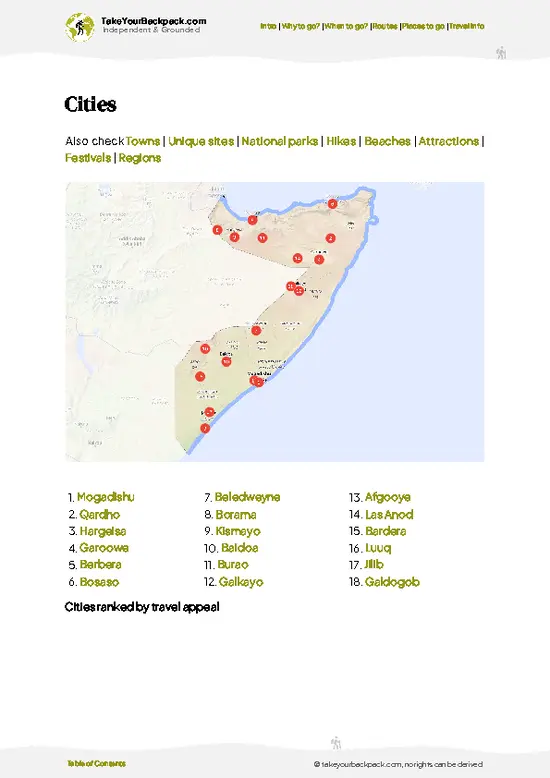
  • Afgooye—Shabelle River, fertile farmland, weekly market| 27 km away
  • Baidoa—Baidoa plateau, regional crossroads, livestock trading| 222 km away
  • Beledweyne—floodplain setting, trade crossroads, river islands| 300 km away

💡 Not sure where to go next?
Create a personalized itinerary for Somalia including Mogadishu and the places that fit your trip.

Generate my itinerary

👉 Discover all cities

Or checkout all Somalia has to offer (think cities, towns, villages, national parks, hikes, beaches, festivals)
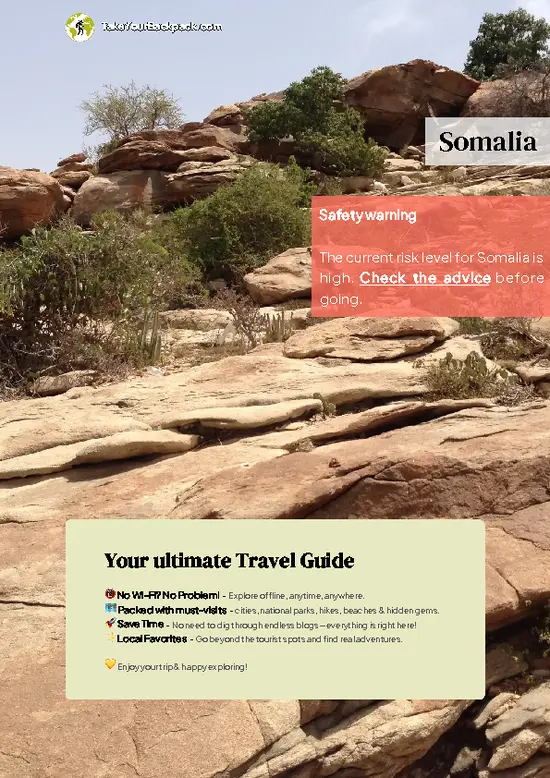
Country photo of Somalia

We 💚 feedbackFinal thoughts on visiting Mogadishu

Mogadishu is raw and real, a place where the past and present collide in the most unexpected ways. The best surprise? The vibrant street life—locals selling everything from fresh mangoes to handmade crafts. You’ll feel the energy pulse through the city. But a heads-up: stay aware of your surroundings. It’s not just about the sights; it’s about the stories woven into every corner. Embrace the chaos, and you’ll find a warmth that’s hard to shake off. This city is a lesson in resilience.

✍️ Help improve this page!
The information on this page is based on in-depth research, insights shared by experienced travelers, and feedback from the local travel community in Somalia. While every effort is made to keep the information accurate and current, conditions can change — so if you spot anything incorrect or outdated, please get in touch.


🙋‍♂️ Give feedback

👋 Meet the founderWho’s Behind Take Your Backpack?

Johan, backpacker and founder of TakeYourBackpackHi, I’m Johan (Netherlands 🇳🇱), the creator of TakeYourBackpack. Over the past decade, I’ve backpacked through 80+ countries across six continents, gaining extensive experience with independent travel, long-term trips, and overland routes.

This site is built on a combination of firsthand travel experience and carefully curated insights from other backpackers. Many guides are based on places I’ve personally visited, while others bring together tips, observations, and practical advice shared by trusted travelers I’ve met along the way.

The goal is to provide realistic, experience-driven guidance — not generic itineraries — so you can explore destinations with better context, clearer expectations, and more confidence.

Get full Somalia guide •
Instant download • 83 highlights • Full Offline guide