×

Somalia🇸🇴 | townsBuurhakabarocky hills, roadside town, regional bus stop | things to do and best time to go

Explore AfmadowExplore El Wak

Backpacking in Buurhakaba
👍 Recommendedtown ranked #22
By Johan Kruseman 🇳🇱 | Updated June 9, 2026

If you crave nightlife, polished hostels, or a menu of Western comforts, Buurhakaba will frustrate you. But if you’re the kind who finds meaning in raw, unfiltered places, this town in southern Somalia rewards patience. Set west of Mogadishu, Buurhakaba is a crossroads: dusty, practical, and honest. It’s not a destination for sights, but for the rhythm of daily life—market chatter, the scent of spiced tea, the slow pulse of rural Somalia. You’ll need local transport, and the pace is slow, but that’s the point. Costs are low, safety is variable, and you’ll likely be the only foreigner in town. Compared to busier Baidoa, Buurhakaba feels more grounded—less scenic, more real, and best used as a stopover or a base for exploring the countryside, not for urban thrills.

Discover everything you want to know in the 📖 Somalia Travel Guide.
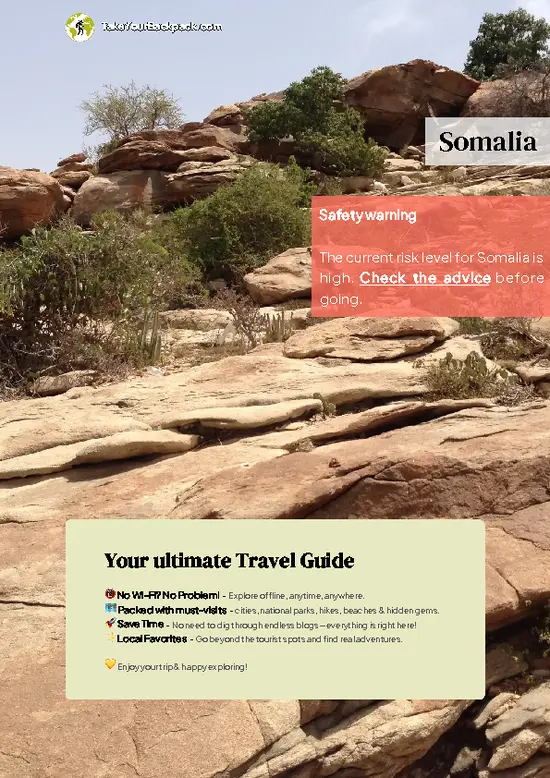
Safety warning

The current risk level for Somalia is high. Check the advice before going.


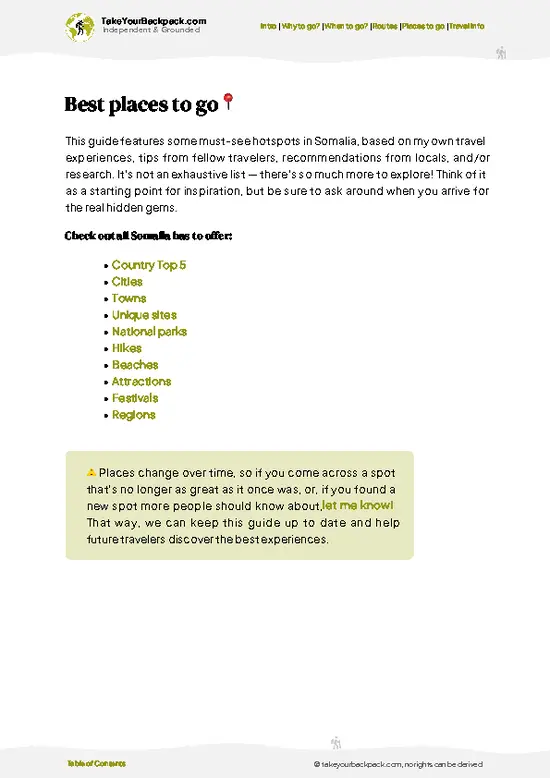
Get your Somalia guide
83 ranked highlights, routes & tips, works offline (354 pages)
Loading the map 🌍
CLICK TO FILTER
cities
towns
landmarks
national parks
hikes
beaches
attractions
festivals
regions
SHOW COUNTRY’S BESTSHOW ALL

✨ Why go?
Ranked #22 town in Somalia
What sets this place apart

Buurhakaba draws backpackers for its convenient access to stunning hikes and cultural sites nearby. The walkable streets invite exploration, where you can savor local food from small eateries that serve up hearty dishes. Accommodations range from small-scale hostels to cozy guesthouses, fostering a friendly social atmosphere perfect for solo travelers or small groups. Most visitors linger a few days, soaking in the laid-back vibe and connecting with locals. It’s not a party town; instead, it offers a chance to recharge and immerse yourself in the rhythm of everyday life, making it a worthwhile stop on your journey.
Want to include Buurhakaba in your Somalia route?
Create a personalized Somalia itinerary that includes Buurhakaba and the places that fit your trip — based on your travel style, budget, and available time. Get your route in seconds.

Generate my trip

💡 HighlightsTop highlights of Buurhakaba

  1. Suuqa Dhexe (Central Market) — The energetic heart of town where farmers and traders sell sorghum, sesame, fresh produce, textiles and everyday gear; great for people-watching and seeing how the town’s economy actually works.
  2. Buurhakaba Main Mosque (Masjidka Buurhakaba) — The town’s principal mosque and social hub; visiting at prayer times (with respect for local customs) gives a real feel for daily life and communal rhythms.
  3. The Buur (Town Hill) — The small hill that gives Buurhakaba its name; an easy climb for views over the town and surrounding fields and a good spot to hear local stories about the place’s history.
  4. Livestock Market (Suuqa Xoolaha) — Where herders trade goats, sheep and camels; noisy, chaotic and endlessly informative about regional livelihoods, animal husbandry and
read more 👉
  1. Suuqa Dhexe (Central Market) — The energetic heart of town where farmers and traders sell sorghum, sesame, fresh produce, textiles and everyday gear; great for people-watching and seeing how the town’s economy actually works.
  2. Buurhakaba Main Mosque (Masjidka Buurhakaba) — The town’s principal mosque and social hub; visiting at prayer times (with respect for local customs) gives a real feel for daily life and communal rhythms.
  3. The Buur (Town Hill) — The small hill that gives Buurhakaba its name; an easy climb for views over the town and surrounding fields and a good spot to hear local stories about the place’s history.
  4. Livestock Market (Suuqa Xoolaha) — Where herders trade goats, sheep and camels; noisy, chaotic and endlessly informative about regional livelihoods, animal husbandry and negotiation styles.
  5. District Administration Compound — The municipal cluster where local governance and community meetings happen; useful for understanding contemporary local politics and meeting civic figures (with permission).
  6. Community Elders’ House (Guriga Odayaasha) — The traditional meeting space for elders and dispute resolution; visiting (and listening) offers insight into oral history, customary law and social ties that knit the town together.
  7. Local School (Buurhakaba Secondary / Primary) — Schools are community anchors here; drop by to see classroom life, meet teachers, and learn about local education initiatives and youth culture.
  8. Traditional Crafts Workshops — Small-scale weavers, leatherworkers and woodworkers practicing age-old techniques; great for picking up locally made goods and seeing hands-on craftsmanship you won’t find in a mall.
  9. Water Wells and Borehole Sites — Essential communal infrastructure that reveals how people manage scarce water resources; often run by community committees and worth visiting to understand everyday survival strategies.
  10. Old Cemeteries and Memorial Sites — Quiet, respectful places that tell local genealogies and honor past leaders; visiting with a local guide provides context and a window into clan memory and reverence practices.
A few real, visitable highlights close enough for day trips from Buurhakaba include the regional hub Baidoa with its larger markets and services, nearby farming villages across the Bay plains, and other market towns in the Bay region that show wider regional trade routes.
Spotted a mistake or missing something? Contact us.
🏘️ NeighborhoodsUnderstanding the local layout

Buurhakaba offers a unique blend of culture and community, perfect for backpackers seeking authenticity.

Central Market Area: This is the heartbeat of Buurhakaba. The vibrant market buzzes with vendors selling spices and textiles. It’s walkable and lively, ideal for short stays. Expect low costs, but nightlife is minimal—focus on daytime exploration.

Old Town: Rich in history, this area features traditional architecture and local cafes. It’s quieter, perfect for those wanting to soak in the atmosphere. Transport options are limited, but it’s a short stroll from the market. Great for longer stays if you enjoy a slower pace.

New District: A bit more modern, this area has a few restaurants and shops. It’s less walkable but offers better transport links. Nightlife is sparse, making it suitable … read more 👉
Buurhakaba offers a unique blend of culture and community, perfect for backpackers seeking authenticity.

Central Market Area: This is the heartbeat of Buurhakaba. The vibrant market buzzes with vendors selling spices and textiles. It’s walkable and lively, ideal for short stays. Expect low costs, but nightlife is minimal—focus on daytime exploration.

Old Town: Rich in history, this area features traditional architecture and local cafes. It’s quieter, perfect for those wanting to soak in the atmosphere. Transport options are limited, but it’s a short stroll from the market. Great for longer stays if you enjoy a slower pace.

New District: A bit more modern, this area has a few restaurants and shops. It’s less walkable but offers better transport links. Nightlife is sparse, making it suitable for those who prefer a peaceful retreat after a day of adventure.

⌛️ 1 dayHow to make the most of one day

Buurhakaba, a town steeped in history and culture, offers a glimpse into the heart of Somalia. The air is rich with the scent of spices and the sounds of daily life, making it a vibrant place to explore.

Start your morning at the bustling local market, where vendors display colorful fruits and vegetables. Engage with the friendly locals; their warmth is infectious. Afterward, stroll through the narrow streets of the Old Town, where crumbling stone buildings whisper stories of the past.

In the afternoon, head to the outskirts to visit the ancient ruins of the old mosque. It’s often overlooked by tourists, but the tranquility and historical significance are palpable. The light filtering through the trees creates a serene atmosphere, perfect for reflection.

As evening approaches, return to … read more 👉
Buurhakaba, a town steeped in history and culture, offers a glimpse into the heart of Somalia. The air is rich with the scent of spices and the sounds of daily life, making it a vibrant place to explore.

Start your morning at the bustling local market, where vendors display colorful fruits and vegetables. Engage with the friendly locals; their warmth is infectious. Afterward, stroll through the narrow streets of the Old Town, where crumbling stone buildings whisper stories of the past.

In the afternoon, head to the outskirts to visit the ancient ruins of the old mosque. It’s often overlooked by tourists, but the tranquility and historical significance are palpable. The light filtering through the trees creates a serene atmosphere, perfect for reflection.

As evening approaches, return to the town center. Grab a seat at a local café and savor a plate of camel meat served with fragrant rice. The sunset casts a golden hue over the town, wrapping up your day with a sense of connection to this unique place.
Turn your Buurhakaba visit into an Somalia adventure
Build a complete Somalia route with Buurhakaba, hidden gems, must-see destinations, and realistic travel times included.

Generate my trip

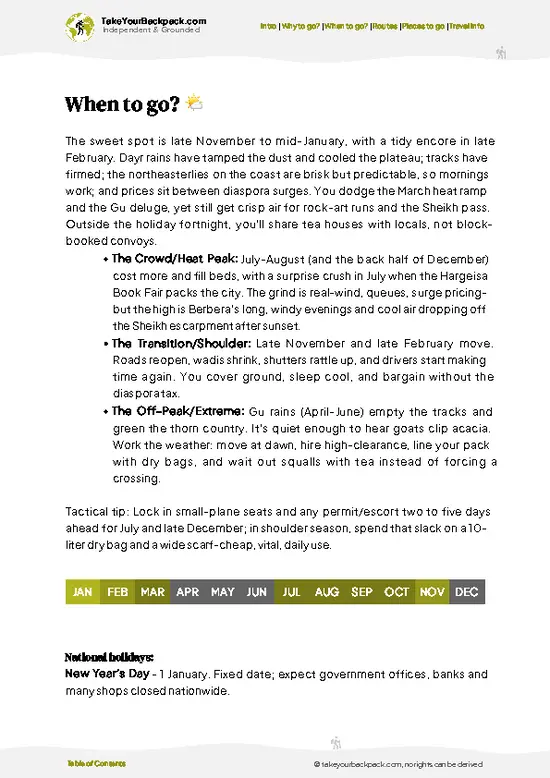
🌤️ When to go?Weather, crowds, and seasonal trade-offs


  • Topic: Weather – Buurhakaba’s climate swings between hot, dry seasons and brief rains. The cooler months from November to February hover around 22-28°C (72-82°F), making trekking and exploring less exhausting.

  • Topic: Temperature – Daytime highs can spike to 35°C (95°F) in summer, which drains energy fast. Early dry season offers a gentler sun, perfect for long walks without overheating.

  • Topic: Daylight Hours – Near the equator, daylight stays steady year-round, roughly 12 hours. This consistency means you can plan hikes and market visits without worrying about sudden dark.

  • Topic: Crowds – Buurhakaba isn’t a tourist hotspot, so crowds are minimal year-round. However, local market activity peaks post-harvest, around March and April, offering a livelier cultural pulse.

  • Topic: Seasonal
read more 👉

  • Topic: Weather – Buurhakaba’s climate swings between hot, dry seasons and brief rains. The cooler months from November to February hover around 22-28°C (72-82°F), making trekking and exploring less exhausting.

  • Topic: Temperature – Daytime highs can spike to 35°C (95°F) in summer, which drains energy fast. Early dry season offers a gentler sun, perfect for long walks without overheating.

  • Topic: Daylight Hours – Near the equator, daylight stays steady year-round, roughly 12 hours. This consistency means you can plan hikes and market visits without worrying about sudden dark.

  • Topic: Crowds – Buurhakaba isn’t a tourist hotspot, so crowds are minimal year-round. However, local market activity peaks post-harvest, around March and April, offering a livelier cultural pulse.

  • Topic: Seasonal Activities – The post-rain months bring fresh greenery and active markets, ideal for immersive cultural experiences. Dry months favor trekking and easier travel on dusty roads.

  • Topic: Price Fluctuations – Prices stay relatively stable, but transport costs can rise during rainy seasons due to road conditions, so budget extra if visiting then.


Pro-tip: Aim for the cooler dry season to balance comfort, vibrant local life, and smoother travel logistics—this is when Buurhakaba’s real character shines through without the heat haze.


source: climatestotravel.comJANJanuary: excellent for travelingFEBFebruary: excellent for travelingMARMarch: highly recommended for travelingAPRApril: highly recommended for travelingMAYMay: good for travelingJUNJune: fair for travelingJULJuly: fair for travelingAUGAugust: fair for travelingSEPSeptember: good for travelingOCTOctober: good for travelingNOVNovember: excellent for travelingDECDecember: excellent for traveling
when-to-go

✈️ The backpacker research shortcutSomalia Travel Guide

An offline-friendly backpacking guide with optimized travel routes, ranked highlights, transport advice, and the best areas to stay.
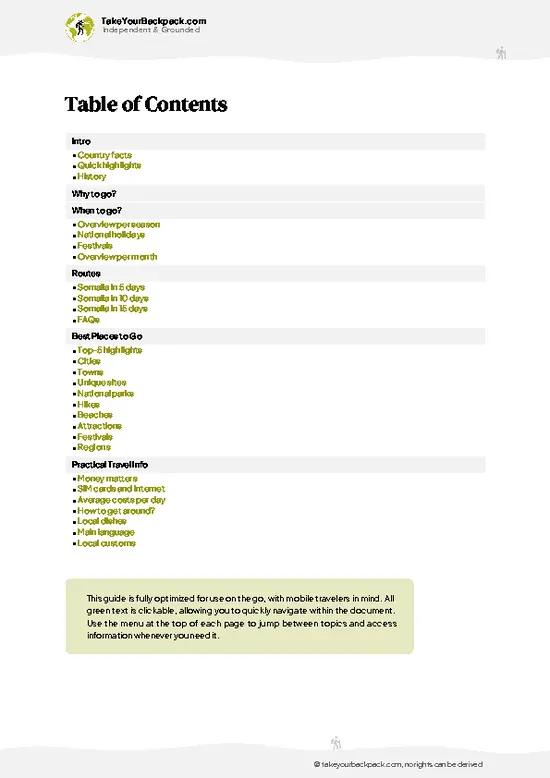
example page 0 from our offline Travel Guide for Somalia
example page 1 from our offline Travel Guide for Somalia
example page 2 from our offline Travel Guide for Somalia
example page 3 from our offline Travel Guide for Somalia
example page 4 from our offline Travel Guide for Somalia
example page 5 from our offline Travel Guide for Somalia
example page 6 from our offline Travel Guide for Somalia
example page 7 from our offline Travel Guide for Somalia
The digital guide (354 pages) contains:
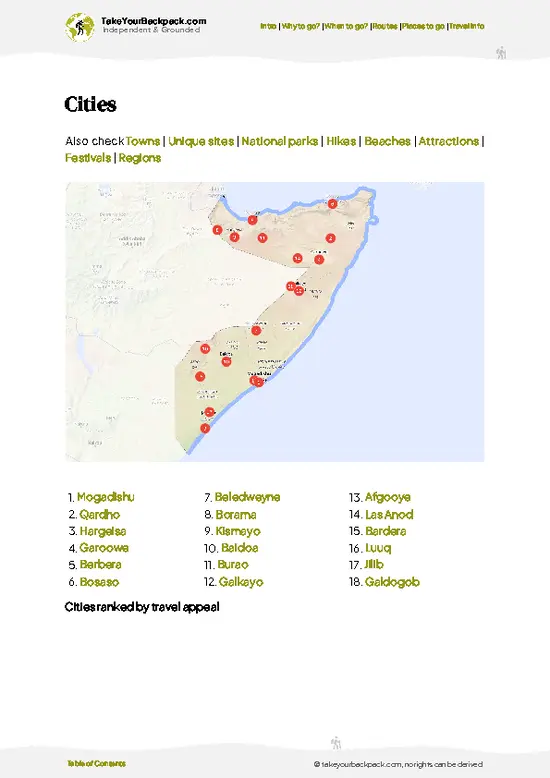
83 highlights, ranked by travel appeal
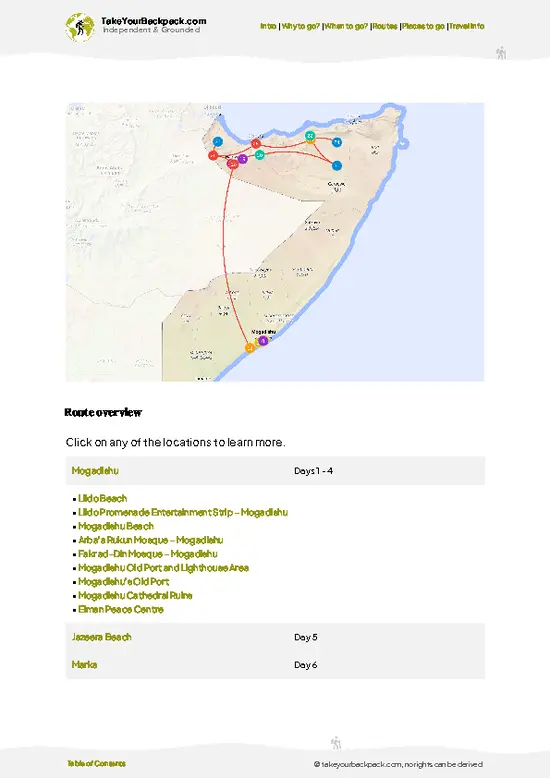
Optimized 5, 10 & 15-day travel routes
Cities, national parks, landmarks, beaches
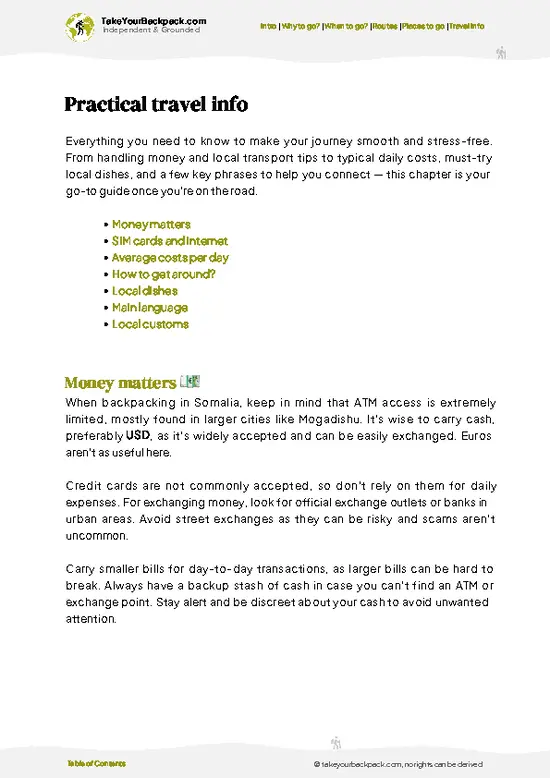
How to get around
Offline-friendly for travel without Wi-Fi
👉 Click to see all 30+ guide features

📅 Plan smarter in minutes, not weeks
Month by month travel advice
Festivals & national holidays
Budget expectations

🗺️ Go to the right places, skip the overrated ones
Honest pros & cons of destinations
Top hikes, parks & viewpoints
Lesser-known places most travelers miss
Clear “worth it vs skip it” guidance

🛏️ Travel smoothly without rookie mistakes
Best areas to stay
Transport systems explained simply
Common scams & safety advice
SIM cards, money & practical tips

🌍 Understand the country, not just visit it
Culture & traditions
52 Essential phrases & customs
Festivals worth planning around
Traveler-friendly historical context
Insights that make places more meaningful

📱 Built for real travel conditions
Fully downloadable PDF
Works completely offline
Optimized for phone use
Useful in remote areas & buses
Everything in one place
Save weeks of stressful planning
Get instant access to your full guide. 30‑day money-back guarantee.


By proceeding you agree to our terms.
Sent to your inbox immediately after payment • 100% Secure Checkout
Best Backpacking Travel Advisor 2025 tourism awardBest Backpacking
Travel Advisor
2025
What others say about Take Your Backpack Guides:
⭐⭐⭐⭐⭐
Fantastic, amazing amount of information!
⭐⭐⭐⭐⭐
My goodness this is amazing, it's what I've been looking for hats off too you!
⭐⭐⭐⭐⭐
I think this is absolutely BRILLIANT
⭐⭐⭐⭐
Very complete and informative. It's still missing places, but I gotta to commend you
⭐⭐⭐⭐⭐
This is truly amazing, thank you, can't wait to explore it with my kids!
⭐⭐⭐⭐⭐
Awesome resource, thank you!
⭐⭐⭐⭐⭐
This is amazing! Can't wait to explore the ones I haven't seen
⭐⭐⭐⭐
I love this! Well done, great idea.
⭐⭐⭐⭐⭐
Thanks for taking the time to make this gem!
⭐⭐⭐⭐⭐
This might be the best website I've ever seen.
⭐⭐⭐⭐⭐
Congratulations, and thank you so much for your work; it's incredibly valuable.
⭐⭐⭐⭐
In all seriousness I think you did a great job pointing out the important spots
⭐⭐⭐⭐⭐
10/10 very good
⭐⭐⭐⭐⭐
As someone who's only just starting to visit regularly this is awesome, thank you.
⭐⭐⭐⭐
Thank you very much! I'm going to visit my dad, it's going to be very useful!
⭐⭐⭐⭐⭐
This is really cool! We'll be travelling for the first time and this definitely come in handy.
⭐⭐⭐⭐⭐
You are now our minister of culture, congratulations 👨‍💼
⭐⭐⭐⭐⭐
Just wanted to tell you that this is a pearl! Going to follow your recommendations.
⭐⭐⭐⭐⭐
This is so cool. I'll definitely be using the resource for my travels soon.
⭐⭐⭐⭐⭐
This is very impressive! Good work.
⭐⭐⭐⭐⭐
This is an amazing and informative site. Very well done!

🛏️ Where to stay?How to pick the right area

In Buurhakaba, the best spot for backpackers is the central district near the main market. This area hums with local life—vendors shouting, spices scenting the air, and the warm light of late afternoon casting long shadows on dusty streets. It’s where you’ll find a handful of budget guesthouses and informal hostels, perfect for solo travelers looking to connect without the fuss of luxury. Compared to the quieter, more residential outskirts, this neighborhood offers safety through numbers and a social vibe that makes navigating the city less daunting. Staying here means you’re plugged into the … read more 👉
In Buurhakaba, the best spot for backpackers is the central district near the main market. This area hums with local life—vendors shouting, spices scenting the air, and the warm light of late afternoon casting long shadows on dusty streets. It’s where you’ll find a handful of budget guesthouses and informal hostels, perfect for solo travelers looking to connect without the fuss of luxury. Compared to the quieter, more residential outskirts, this neighborhood offers safety through numbers and a social vibe that makes navigating the city less daunting. Staying here means you’re plugged into the pulse of Buurhakaba, with easy access to food stalls and local transport, making your stay both practical and immersive.

🚌 Getting aroundGetting around like a local

Buurhakaba moves at its own rhythm—less a clockwork town and more a pulse you feel underfoot. The sun hits the dusty streets with a fierce clarity by mid-morning, and the air carries the scent of earth and spices from nearby markets. Here, schedules are loose suggestions, not ironclad rules. You’ll find that patience and a keen eye for local cues unlock the best rides and routes. The town’s flow is a blend of spontaneous haggling and steady foot traffic, where the quickest way isn’t always the straightest line but the one that reads the mood of the moment.


  • Walking: The most reliable way to navigate Buurhakaba’s compact center, especially early morning or late afternoon when the light softens and the heat eases. No cost, full sensory immersion, and you’ll catch the town’s subtle shifts
read more 👉
Buurhakaba moves at its own rhythm—less a clockwork town and more a pulse you feel underfoot. The sun hits the dusty streets with a fierce clarity by mid-morning, and the air carries the scent of earth and spices from nearby markets. Here, schedules are loose suggestions, not ironclad rules. You’ll find that patience and a keen eye for local cues unlock the best rides and routes. The town’s flow is a blend of spontaneous haggling and steady foot traffic, where the quickest way isn’t always the straightest line but the one that reads the mood of the moment.


  • Walking: The most reliable way to navigate Buurhakaba’s compact center, especially early morning or late afternoon when the light softens and the heat eases. No cost, full sensory immersion, and you’ll catch the town’s subtle shifts in rhythm.

  • Shared Minibuses (Matatus): Run frequently from dawn until dusk, costing just a few hundred Somali shillings. They’re cramped but fast, weaving through the main roads with a chaotic energy that’s part of the local charm. Flag one down anywhere along the route.

  • Motorcycle Taxis (Bajaj): Available all day, these three-wheelers offer a quick, nimble option for short hops. Expect to negotiate fares upfront—usually affordable but variable depending on time and distance.

  • Local Buses: Less frequent and slower than minibuses, these follow set routes and schedules but can be unpredictable. Best for longer trips outside town if you’re not in a rush and want to blend in with daily commuters.

👛 Costs (as of 5 April 2026)How expensive it really is

Backpacking in Buurhakaba, Somalia, is a raw, off-the-beaten-path experience where costs remain modest but the infrastructure is basic, demanding a bit of grit and flexibility.
  • Dorm accommodation: Options are extremely limited, often informal guesthouses or local homestays rather than established hostels. Expect to pay around $5 to $10 per night. These places are simple, with basic bedding and no frills, but they offer a chance to connect with locals and experience the town’s atmosphere up close.
  • Meals: Food costs are low, with street food and small eateries serving traditional Somali dishes like rice, goat meat, and flatbread. A typical meal runs between $1 and $3. Freshly brewed tea or coffee is cheap and widely available, adding to the local flavor without breaking the bank.
  • Local transport:
read more 👉
Backpacking in Buurhakaba, Somalia, is a raw, off-the-beaten-path experience where costs remain modest but the infrastructure is basic, demanding a bit of grit and flexibility.
  • Dorm accommodation: Options are extremely limited, often informal guesthouses or local homestays rather than established hostels. Expect to pay around $5 to $10 per night. These places are simple, with basic bedding and no frills, but they offer a chance to connect with locals and experience the town’s atmosphere up close.
  • Meals: Food costs are low, with street food and small eateries serving traditional Somali dishes like rice, goat meat, and flatbread. A typical meal runs between $1 and $3. Freshly brewed tea or coffee is cheap and widely available, adding to the local flavor without breaking the bank.
  • Local transport: Public transport is sparse and informal. Most travelers rely on shared taxis or minibuses, which cost around $0.50 to $1 for short trips within town. Walking is often the best way to soak in the environment, but for longer distances, be prepared to negotiate fares directly with drivers.
  • Basic activities/entry fees: Buurhakaba doesn’t have formal tourist sites with entry fees. Instead, the value lies in wandering markets, visiting local mosques, or exploring nearby rural areas. Any small fees for guides or local experiences typically range from $2 to $5, depending on the arrangement.
  • Miscellaneous expenses: This includes bottled water, snacks, phone credit, and occasional tips. Budget around $1 to $3 daily. Water quality can be an issue, so buying bottled water is a must, and phone credit is cheap but essential for navigation and communication.

All told, a daily budget in Buurhakaba hovers between $10 and $22. This keeps you lean but comfortable enough to engage with the town’s pulse without unnecessary splurges. The modest costs reflect the town’s developing infrastructure, but the payoff is a genuine, unvarnished Somali experience that’s rare to find elsewhere.
⚠️ Prices can change and everyone travels differently, so take this as a rough guide. Hope it helps you plan your adventure!

🚌 Day tripsExploring the surroundings

Buurhakaba is a fantastic base for exploring the rich landscapes and cultures of Somalia. Here are some day trips that truly capture the essence of the region.

Boorama Adventure
Just a couple of hours from Buurhakaba, Boorama offers a vibrant market scene and stunning views of the surrounding mountains. The scent of spices fills the air as you wander through stalls, and the locals are eager to share their stories. Aim for a morning departure to soak in the lively atmosphere before the heat sets in. Expect to spend around $10 on transport and snacks. A common mistake? Not bargaining at the market; it’s part of the experience!


The Coastal Charm of Berbera
A longer trek, about four hours, leads you to Berbera, where the turquoise waters of the Gulf of Aden await. The salty breeze and … read more 👉
Buurhakaba is a fantastic base for exploring the rich landscapes and cultures of Somalia. Here are some day trips that truly capture the essence of the region.

Boorama Adventure
Just a couple of hours from Buurhakaba, Boorama offers a vibrant market scene and stunning views of the surrounding mountains. The scent of spices fills the air as you wander through stalls, and the locals are eager to share their stories. Aim for a morning departure to soak in the lively atmosphere before the heat sets in. Expect to spend around $10 on transport and snacks. A common mistake? Not bargaining at the market; it’s part of the experience!


The Coastal Charm of Berbera
A longer trek, about four hours, leads you to Berbera, where the turquoise waters of the Gulf of Aden await. The salty breeze and soft sand make for a perfect beach day. Pack a picnic to enjoy while watching fishermen haul in their catch. Costs can run about $15 for transport, but the memories are priceless. Best visited in the cooler months, as summer can be sweltering. Don’t forget sunscreen; the sun is relentless!
👉 Explore Berbera

Historical Insights at Laas Geel
Just under two hours away, Laas Geel is home to ancient rock art that dates back thousands of years. The colors of the paintings pop against the rugged stone, and the site feels like a time capsule. A guided tour typically costs around $20, which is well worth it for the context. Early mornings are best to avoid the heat and crowds. Many first-timers overlook the importance of hiring a local guide, which enriches the experience.
👉 Explore Laas Geel
Want to know what more Somalia offers?
The Somalia Travel Guide describes 83 highlights, from cities to national parks, from beaches to hikes

Get the Travel Guide -

🛡️ SafetyStaying Safe: What Travelers Should Know

Buurhakaba is generally safe, but staying aware is key. Stick to well-lit areas at night; the streets can feel empty after dark. When solo, blend in—avoid flashy clothing or gear that screams “tourist.”

Common scams are rare, but be cautious of overly friendly locals who might ask for money or favors. Keep your belongings close, especially in crowded spots. A confident demeanor goes a long way; walk with purpose and engage with locals respectfully. This approach not only keeps you safe but enriches your experience.

Other Somali towns near Buurhakaba

Explore more nearby:

  • Wanlaweyn—sorghum fields, rural market, small river| 93 km away
  • Qoryoley—canal network, rice paddies, village clusters| 123 km away
  • Marka—Indian Ocean port, coral stone buildings, fishing boats| 143 km away

💡 Not sure where to go next?
Create a personalized itinerary for Somalia including Buurhakaba and the places that fit your trip.

Generate my itinerary

👉 Discover all towns

Or checkout all Somalia has to offer (think cities, towns, villages, national parks, hikes, beaches, festivals)
Country photo of Somalia

We 💚 feedbackWhat to keep in mind

Buurhakaba pulses with a raw energy. The scent of spices wafts through bustling markets, and the laughter of locals fills the air. Just be ready for the heat—carry water and take breaks. The warmth of the people makes every effort worthwhile.

✍️ Help improve this page!
The information on this page is based on in-depth research, insights shared by experienced travelers, and feedback from the local travel community in Somalia. While every effort is made to keep the information accurate and current, conditions can change — so if you spot anything incorrect or outdated, please get in touch.


🙋‍♂️ Give feedback

👋 Meet the founderWho’s Behind Take Your Backpack?

Johan, backpacker and founder of TakeYourBackpackHi, I’m Johan (Netherlands 🇳🇱), the creator of TakeYourBackpack. Over the past decade, I’ve backpacked through 80+ countries across six continents, gaining extensive experience with independent travel, long-term trips, and overland routes.

This site is built on a combination of firsthand travel experience and carefully curated insights from other backpackers. Many guides are based on places I’ve personally visited, while others bring together tips, observations, and practical advice shared by trusted travelers I’ve met along the way.

The goal is to provide realistic, experience-driven guidance — not generic itineraries — so you can explore destinations with better context, clearer expectations, and more confidence.

Get full Somalia guide •
Instant download • 83 highlights • Full Offline guide