×

Somalia🇸🇴 | townsAfmadowCamel and goat trade, inland Lower Juba, invitation-only access | things to do and best time to go

Explore BuurhakabaExplore Qoryoley

Backpacking in Afmadow
👍 Recommendedtown ranked #10
By Johan Kruseman 🇳🇱 | Updated November 1, 2026

Afmadow is known for its livestock trade, with camels, goats and cattle moving through town from the surrounding bush. Just as important and often overlooked, it is a place where you arrive on someone’s invitation, not on a whim. It sits in Somalia’s Lower Juba region, northwest of Kismayo, and the roads are rough and security shifts, so experienced travelers go with a local host or contact and move by daylight. There is no hostel scene and no backpacker circuit, so skip any plan built around nightlife or sightseeing lists. The market, the tea stalls and the talk are worth your time. Unlike Kismayo, a port city with a coast and more services, Afmadow is a small inland trading town.

Part of Backpacking in Somalia: all 68 places on one map, with routes and the best time to go.
Discover everything you want to know in the 📖 Somalia Travel Guide.
Safety warning

The current risk level for Somalia is high. Check the advice before going.


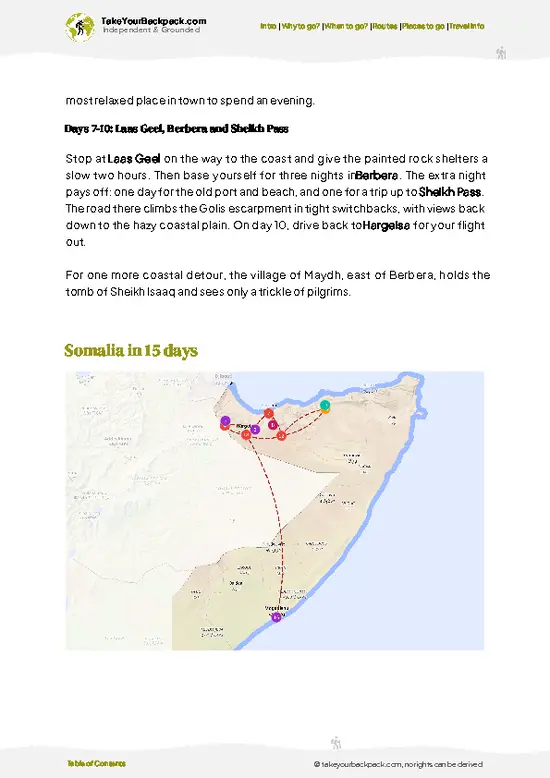
example page 0 from our offline Travel Guide for Somalia
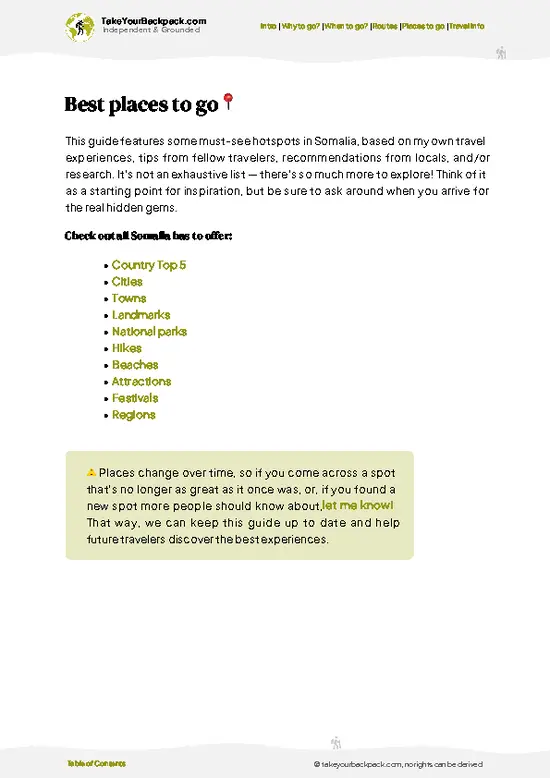
example page 1 from our offline Travel Guide for Somalia
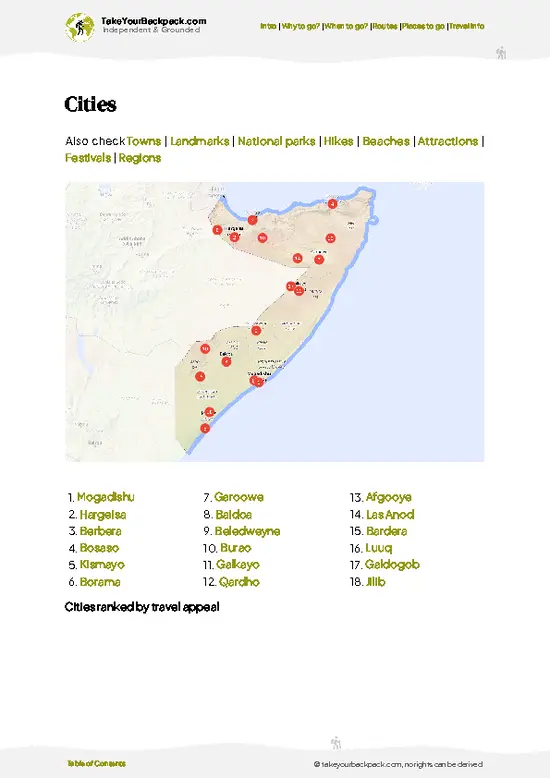
example page 2 from our offline Travel Guide for Somalia
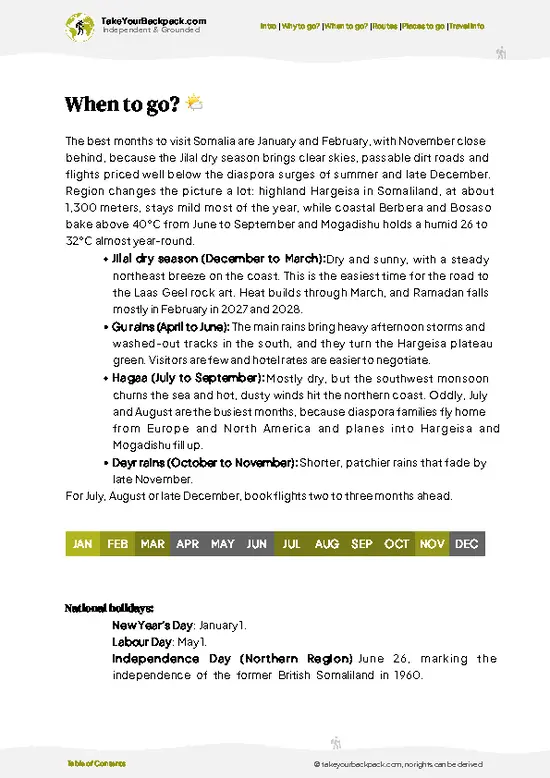
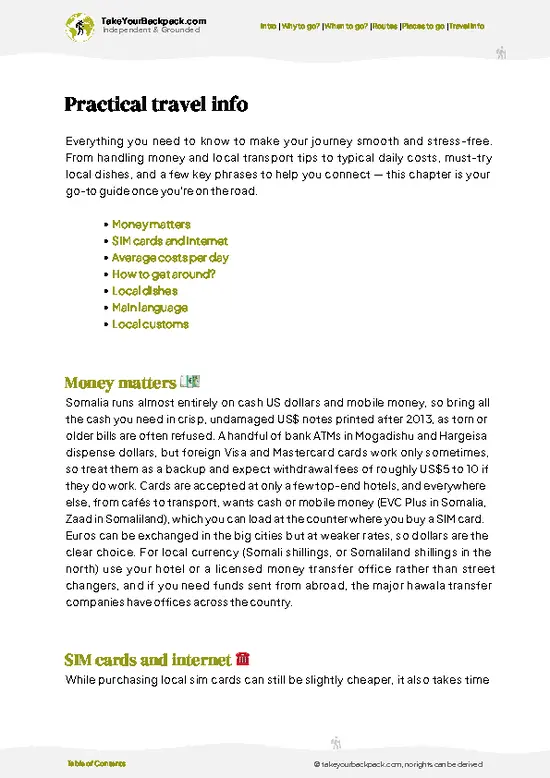
example page 3 from our offline Travel Guide for Somalia
example page 4 from our offline Travel Guide for Somalia
example page 5 from our offline Travel Guide for Somalia
example page 6 from our offline Travel Guide for Somalia
example page 7 from our offline Travel Guide for Somalia
Loading the map 🌍
CLICK TO FILTER
cities
towns
landmarks
national parks
hikes
beaches
attractions
festivals
regions
SHOW COUNTRY’S BESTSHOW ALL

✨ Why go?
Ranked #10 town in Somalia
What sets this place apart

Afmadow gives you a look at inland Jubaland that coastal Somalia never shows. The draw is the working life around the livestock market, where herders, traders and brokers settle deals over sweet tea. Stays are short, usually a night or two, because there is little formal lodging and a local host shapes your whole visit. It suits seasoned, self-sufficient travelers with regional experience and good contacts, and it is a poor fit for first-timers or anyone who wants an easy, independent trip. Come to listen and watch, not to tick off sights.

💡 HighlightsKey sights and experiences for travelers

  1. Afmadow Main Market: The town’s commercial heart and the sight most visitors register first, where livestock traders, produce sellers and shopkeepers keep the main street busy. Come in the morning when stalls are freshest. Walking it is free, and an hour is enough to see it all.
  2. Afmadow Livestock Market: Afmadow sits in cattle and camel country, and herders bring animals here to sell. Watching a deal get negotiated explains the local economy better than any museum. Arrive early, before the heat builds. Entry is free, and 45 minutes to an hour is plenty.
Afmadow has few formal sights, so a short list is the honest one. Beyond town, the Lag Badana (Bush Bush) National Park area to the south and the Jubba River valley to the east can be explored as day trips, but only with local guidance on current … read more 👉
  1. Afmadow Main Market: The town’s commercial heart and the sight most visitors register first, where livestock traders, produce sellers and shopkeepers keep the main street busy. Come in the morning when stalls are freshest. Walking it is free, and an hour is enough to see it all.
  2. Afmadow Livestock Market: Afmadow sits in cattle and camel country, and herders bring animals here to sell. Watching a deal get negotiated explains the local economy better than any museum. Arrive early, before the heat builds. Entry is free, and 45 minutes to an hour is plenty.
Afmadow has few formal sights, so a short list is the honest one. Beyond town, the Lag Badana (Bush Bush) National Park area to the south and the Jubba River valley to the east can be explored as day trips, but only with local guidance on current conditions. Pair the main market with the livestock market in one morning, then rest through the midday heat.
Spotted a mistake or missing something? Contact us.

🏘️ NeighborhoodsKey areas and districts to know

Afmadow is a small district town in Lower Juba, and you can cover all of it on foot in an afternoon. Areas are informal, so here is how they work and how to handle them.
  • Central market and main road: This is where trucks, minibuses and traders meet, so it is the only place worth your time for food, SIM cards and information. Tea houses serve camel meat, rice and sweet spiced tea. Go in the morning, when stalls are full and the heat is bearable.
  • Residential quarters around the mosques: Low clan-based neighborhoods of walled compounds and sandy lanes. There is nothing to tick off here, and wandering uninvited draws attention. Walk through with a local host, who can explain who lives where.
  • Outskirts and camps for displaced families: Settlements on the edges exist because drought and conflict pushed
… read more 👉
Afmadow is a small district town in Lower Juba, and you can cover all of it on foot in an afternoon. Areas are informal, so here is how they work and how to handle them.
  • Central market and main road: This is where trucks, minibuses and traders meet, so it is the only place worth your time for food, SIM cards and information. Tea houses serve camel meat, rice and sweet spiced tea. Go in the morning, when stalls are full and the heat is bearable.
  • Residential quarters around the mosques: Low clan-based neighborhoods of walled compounds and sandy lanes. There is nothing to tick off here, and wandering uninvited draws attention. Walk through with a local host, who can explain who lives where.
  • Outskirts and camps for displaced families: Settlements on the edges exist because drought and conflict pushed people in. Do not treat them as sights. Visit only with an aid or local contact.
  • Bush roads toward the Kenya border: Nothing to see, and movement beyond town needs local clearance and advice. Skip it unless you have an arranged, vetted trip.

⌛️ 1 dayWhat you can realistically do in a day

8:00 AM, Tea stall on the main street: Start with spiced tea and a flatbread breakfast among traders and drivers. Listen to the morning’s news, then walk toward the market.
9:30 AM, Livestock market: Watch herders present camels and goats while brokers negotiate. Stand back from the pens, ask before taking photos, and let your host introduce you.
12:00 PM, Central market: Walk the stalls for fabric, tea and dry goods while the livestock trade winds down. Buy a small item to support a vendor.
1:00 PM, Lunch with your host: Rice or pasta with goat meat is typical. Rest through the hottest hours indoors.
4:00 PM, Edge of town, where the bush begins: Away from the standard stops, a short walk toward the outskirts shows grazing land, wells and herds heading home. Go only with a local companion and … read more 👉
8:00 AM, Tea stall on the main street: Start with spiced tea and a flatbread breakfast among traders and drivers. Listen to the morning’s news, then walk toward the market.
9:30 AM, Livestock market: Watch herders present camels and goats while brokers negotiate. Stand back from the pens, ask before taking photos, and let your host introduce you.
12:00 PM, Central market: Walk the stalls for fabric, tea and dry goods while the livestock trade winds down. Buy a small item to support a vendor.
1:00 PM, Lunch with your host: Rice or pasta with goat meat is typical. Rest through the hottest hours indoors.
4:00 PM, Edge of town, where the bush begins: Away from the standard stops, a short walk toward the outskirts shows grazing land, wells and herds heading home. Go only with a local companion and stay on known paths.
6:00 PM, Back at the tea stalls: Finish with tea and conversation as the streets quiet. Return to your lodging before dark.

🌤️ When to go?Weather, crowds, and seasonal trade-offs

  • Jilaal (Dec to Mar): Hot and dry, 32 to 38°C (90 to 100°F), with dust and little water. Roads are fastest now, but wells run low and food prices rise.
  • Gu rains (Apr to Jun): Heavy downpours turn dirt tracks to mud and can cut the road for days. Highs of 30 to 34°C (86 to 93°F). Transport costs jump.
  • Xagaa (Jul to Sep): Cooler, breezy and mostly dry, 27 to 32°C (81 to 90°F). The most comfortable stretch for traveling.
  • Deyr rains (Oct to Nov): Shorter showers, some muddy sections, 29 to 33°C (84 to 91°F).
Daylight stays near 12 hours all year. Plan arrival for Xagaa and allow a spare day for delays.

source: climatestotravel.comJANJanuary: excellent for travelingFEBFebruary: excellent for travelingMARMarch: fair for travelingAPRApril: below average for travelingMAYMay: fair for travelingJUNJune: good for travelingJULJuly: good for travelingAUGAugust: good for travelingSEPSeptember: good for travelingOCTOctober: good for travelingNOVNovember: highly recommended for travelingDECDecember: excellent for traveling
when-to-go

✈️ The backpacker research shortcutSomalia Travel Guide

What the free pages can't give you: ready-made routes, every place ranked, and it works offline. All in 1 guide.
example page 0 from our offline Travel Guide for Somalia
example page 1 from our offline Travel Guide for Somalia
example page 2 from our offline Travel Guide for Somalia
example page 3 from our offline Travel Guide for Somalia
example page 4 from our offline Travel Guide for Somalia
example page 5 from our offline Travel Guide for Somalia
example page 6 from our offline Travel Guide for Somalia
example page 7 from our offline Travel Guide for Somalia
The digital guide (237 pages) contains:-page digital guide:
✅ Ready-made 5, 10 & 15-day routes
✅ All 68 places ranked, so you skip the overrated ones
✅ Works offline, all in 1 guide
✅ Cities, national parks, landmarks, beaches
✅ How to get around
👉 Click to see all 30+ guide features

📅 Plan smarter in minutes, not weeks
✅ Month by month travel advice
✅ Festivals & national holidays
✅ Budget expectations

🗺️ Go to the right places, skip the overrated ones
✅ Honest pros & cons of destinations
✅ Top hikes, parks & viewpoints
✅ Lesser-known places most travelers miss
✅ Clear “worth it vs skip it” guidance

🛏️ Travel smoothly without rookie mistakes
✅ Best areas to stay
✅ Transport systems explained simply
✅ Common scams & safety advice
✅ SIM cards, money & practical tips

🌍 Understand the country, not just visit it
✅ Culture & traditions
✅ 52 Essential phrases & customs
✅ Festivals worth planning around
✅ Traveler-friendly historical context
✅ Insights that make places more meaningful

📱 Built for real travel conditions
✅ Fully downloadable PDF
✅ Works completely offline
✅ Optimized for phone use
✅ Useful in remote areas & buses
✅ All in 1 guide
Stop searching, start planning
Get instant access to your full guide. 30‑day money-back guarantee.


By proceeding you agree to our terms.
Sent to your inbox immediately after payment • 100% Secure Checkout
Best Backpacking Travel Advisor 2025 tourism awardBest Backpacking
Travel Advisor
2025
What others say about Take Your Backpack Guides:
⭐⭐⭐⭐⭐
Fantastic, amazing amount of information!
⭐⭐⭐⭐⭐
My goodness this is amazing, it's what I've been looking for hats off too you!
⭐⭐⭐⭐⭐
I think this is absolutely BRILLIANT
⭐⭐⭐⭐
Very complete and informative. It's still missing places, but I gotta to commend you
⭐⭐⭐⭐⭐
This is truly amazing, thank you, can't wait to explore it with my kids!
⭐⭐⭐⭐⭐
Awesome resource, thank you!
⭐⭐⭐⭐⭐
This is amazing! Can't wait to explore the ones I haven't seen
⭐⭐⭐⭐
I love this! Well done, great idea.
⭐⭐⭐⭐⭐
Thanks for taking the time to make this gem!
⭐⭐⭐⭐⭐
This might be the best website I've ever seen.
⭐⭐⭐⭐⭐
Congratulations, and thank you so much for your work; it's incredibly valuable.
⭐⭐⭐⭐
In all seriousness I think you did a great job pointing out the important spots
⭐⭐⭐⭐⭐
10/10 very good
⭐⭐⭐⭐⭐
As someone who's only just starting to visit regularly this is awesome, thank you.
⭐⭐⭐⭐
Thank you very much! I'm going to visit my dad, it's going to be very useful!
⭐⭐⭐⭐⭐
This is really cool! We'll be travelling for the first time and this definitely come in handy.
⭐⭐⭐⭐⭐
You are now our minister of culture, congratulations 👨‍💼
⭐⭐⭐⭐⭐
Just wanted to tell you that this is a pearl! Going to follow your recommendations.
⭐⭐⭐⭐⭐
This is so cool. I'll definitely be using the resource for my travels soon.
⭐⭐⭐⭐⭐
This is very impressive! Good work.
⭐⭐⭐⭐⭐
This is an amazing and informative site. Very well done!

🛏️ Where to stay?Best areas to stay in Somalia

Stay near the central market and main road, because that is where the few guesthouses and basic rooms cluster, and it has the most people around. Beds are limited. Expect simple rooms or shared lodging at roughly US$8 to 20 a night, with no true hostel scene, so arrange your bed before you arrive through a local contact or host.
The center is safer at night than the edges, since there is foot traffic and neighbors who notice newcomers. Mosque calls start before dawn and generators can hum into the evening, so earplugs help. Water and power can be unreliable, so bring a power bank and purification … read more 👉
Stay near the central market and main road, because that is where the few guesthouses and basic rooms cluster, and it has the most people around. Beds are limited. Expect simple rooms or shared lodging at roughly US$8 to 20 a night, with no true hostel scene, so arrange your bed before you arrive through a local contact or host.
The center is safer at night than the edges, since there is foot traffic and neighbors who notice newcomers. Mosque calls start before dawn and generators can hum into the evening, so earplugs help. Water and power can be unreliable, so bring a power bank and purification tablets.
The outskirts have fewer options, poor lighting and slower access to help. Pick a place within walking distance of the main road so your vehicle out is easy to reach in the morning.

🚌 Getting aroundMoving around without the hassle

Afmadow’s center is small enough to cross on foot in 15 to 20 minutes, and walking is the best way to see the market, the main road and the district offices. Walking stops making sense once you head out to the outskirts, the surrounding farmland or any neighboring village, where distances stretch, shade disappears and the heat near the equator wears you down by midday. There is no formal public transport system, so everything beyond the center runs on informal vehicles that leave when full, not on a timetable. Afmadow sits in Lower Juba, a region where security conditions change, so travelers check current conditions locally before any movement outside town.
  • Walking is free and covers nearly everything in town. Go in the morning, carry water, and wear a hat, because the sun is strong and there
… read more 👉
Afmadow’s center is small enough to cross on foot in 15 to 20 minutes, and walking is the best way to see the market, the main road and the district offices. Walking stops making sense once you head out to the outskirts, the surrounding farmland or any neighboring village, where distances stretch, shade disappears and the heat near the equator wears you down by midday. There is no formal public transport system, so everything beyond the center runs on informal vehicles that leave when full, not on a timetable. Afmadow sits in Lower Juba, a region where security conditions change, so travelers check current conditions locally before any movement outside town.
  • Walking is free and covers nearly everything in town. Go in the morning, carry water, and wear a hat, because the sun is strong and there are few shaded benches.
  • Bajaj (three-wheeled auto rickshaws) are the standard way to cover a few kilometers. Short rides usually cost US$0.50 to 2, and you agree on the price before you climb in because there are no meters. Pay in small bills, since drivers rarely have change for large notes.
  • Motorbike taxis are faster on rutted tracks and cost about US$1 to 3 for short trips. They are not worth it with a big pack or in rain, when dirt roads turn slick, and a bajaj is the safer choice then.
  • Shared minibuses and pickup trucks link Afmadow with larger towns in the region, such as Kismayo. Expect roughly US$10 to 25 depending on the vehicle and the road, and a journey of several hours on rough surfaces. They leave when full, usually early morning, so arrive by 6 am and ask drivers and market traders the day before about the next departure. Skip any afternoon departure, since delays are common and arriving after dark is a poor idea.

👛 Costs (as of 1 November 2026)How expensive it really is

Afmadow costs about US$20 to 55 a day for a basic trip, mostly because lodging and transport are informal and priced for outsiders. US dollars are widely accepted, though local shillings are used for small purchases.
CategoryBudget RangeLocal Reality
Dorm accommodationUS$8 to 20No dorms exist. A simple private room or shared lodging is the norm.
MealsUS$5 to 10Rice, pasta, goat or camel meat and tea at local eateries.
Local transportUS$2 to 10Short bajaj or motorbike rides, with pricier shared cars for longer hops.
Basic activities/entry feesUS$0 to 5No ticketed sights. A local guide or escort may cost extra.
Miscellaneous expensesUS$5 to 10Mobile data, water, phone credit and small tips.
Total Daily BudgetUS$20 to 55About US$50 in high season.
Buy water and food in the morning at the market, when prices are lowest and stock is freshest.

source: worldbank.org
⚠️ Prices can change and everyone travels differently, so take this as a rough guide. Hope it helps you plan your adventure!

🚌 Day tripsExploring the surroundings

Afmadow works as a base only with careful local advice, because security and road conditions limit what is realistic. Treat these as options to check on the ground, not guarantees.
Kismayo: Reaching the coastal city takes about 3 to 5 hours each way by shared car, so leave at dawn. Budget US$20 to 40 return. You get beaches, a port and fish markets, and better lodging. Dry months from Jul to Sep are easiest. First-timers often leave too late and get stuck overnight.
👉 Explore Kismayo
Jubba River villages: Farming settlements along the river lie a few hours away by 4x4, with banana and mango plots and a very different green landscape. Expect US$30 to 60 for a shared or hired vehicle. Go only with a local guide who knows current access.

Badhaadhe area: Coastal and bush terrain toward the Indian … read more 👉
Afmadow works as a base only with careful local advice, because security and road conditions limit what is realistic. Treat these as options to check on the ground, not guarantees.
Kismayo: Reaching the coastal city takes about 3 to 5 hours each way by shared car, so leave at dawn. Budget US$20 to 40 return. You get beaches, a port and fish markets, and better lodging. Dry months from Jul to Sep are easiest. First-timers often leave too late and get stuck overnight.
👉 Explore Kismayo
Jubba River villages: Farming settlements along the river lie a few hours away by 4x4, with banana and mango plots and a very different green landscape. Expect US$30 to 60 for a shared or hired vehicle. Go only with a local guide who knows current access.

Badhaadhe area: Coastal and bush terrain toward the Indian Ocean, reached by long road journeys that rarely suit one day. Check with locals before even considering it, since conditions change quickly.

🛡️ SafetyTraveler Safety Guide

Afmadow lies in a region where security is unstable, and travel advisories warn against travel to much of Lower Juba. Armed groups operate in the surrounding countryside, and roads outside town carry the main risk. Do not move between towns without current local advice, and avoid travel after dark. Stay in the center, keep a low profile and dress modestly. Women traveling alone should arrange a local host. Photography of officials, checkpoints and compounds can cause trouble, so ask first. Everyday annoyances are small: inflated prices for outsiders and requests for informal fees at checkpoints. Carry small US dollar notes, keep copies of your documents and register your plans with a trusted local contact.

FAQCommon questions from travelers

Afmadow suits travelers with a specific reason, such as aid work, research or local connections, more than casual sightseeing. It has no major sights, and security in Lower Juba limits what you can do. Expect a market town with tea houses and sandy streets, and plan for about US$20 to 55 a day.
Afmadow needs one to two days at most. A day covers the market and main road, and a second allows for delayed transport. The 3 to 5 hour road from Kismayo means you should add buffer time, especially in the rainy months of April to June.
Afmadow is not a practical day trip from Kismayo. The road is roughly 100 to 130 km and takes 3 to 5 hours each way in good conditions, so a round trip uses most of the day. Security also makes late returns unwise, so plan to stay overnight with arranged lodging.
⚠️ Things can change over time, so always validate details locally before you go.

Other Somali towns near Afmadow

Explore more nearby:

  • Jamaame—Juba River bananas, papaya plots, riverside tea| 90 km away
  • Buur Gaabo—Warm-water beach, tuna and lobster landings, Kenyan border coast| 195 km away
  • El Wak—Divided border town, deep wells, pastoral trade| 279 km away

💡 Not sure where to go next?
Create a personalized itinerary for Somalia including Afmadow and the places that fit your trip.

Generate my itinerary

👉 Discover all towns

Or checkout all Somalia has to offer (think cities, towns, villages, national parks, hikes, beaches, festivals)
Country photo of Somalia

We 💚 feedbackIs it worth it?

Afmadow’s overlooked detail is its tea stalls, where deals, news and introductions happen long before anything is written down. I would arrive with a host, spend more time there than at any landmark, and bring small cash for tea and a gift for the person who vouches for you.

✍️ Help improve this page!
The information on this page is based on in-depth research, insights shared by experienced travelers, and feedback from the local travel community in Somalia. While every effort is made to keep the information accurate and current, conditions can change — so if you spot anything incorrect or outdated, please get in touch.


🙋‍♂️ Give feedback

👋 Meet the founderWho’s Behind Take Your Backpack?

Johan, backpacker and founder of TakeYourBackpackHi, I’m Johan (Netherlands 🇳🇱), the creator of TakeYourBackpack. Over the past 30 years, I’ve backpacked through 88 countries across six continents, gaining extensive experience with independent travel, long-term trips, and overland routes.

This site is built on a combination of firsthand travel experience and carefully curated insights from other backpackers. Many guides are based on places I’ve personally visited, while others bring together tips, observations, and practical advice shared by trusted travelers I’ve met along the way.

The goal is to provide realistic, experience-driven guidance — not generic itineraries — so you can explore destinations with better context, clearer expectations, and more confidence.