×

Somalia🇸🇴 | festivalsDervish Dayanti-colonial commemoration, Sufi heritage, Dhulbahante traditions | things to do and best time to go

Explore Somali Week FestivalExplore Eid al-Fitr

Backpacking in Dervish Day
👍 Recommendedfestival ranked #6
By Johan Kruseman 🇳🇱 | Updated June 5, 2026

Here’s what most travelers miss: Dervish Day isn’t just a festival—it’s a rare window when Mogadishu’s streets pulse with a cautious optimism, and you can move through the city with a little less friction than usual. Dervish Day unfolds in Somalia’s capital, Mogadishu, right in the heart of the city’s old colonial core. This isn’t a tourist spectacle; it’s a fiercely local celebration of Somali resistance and pride, anchored by thunderous drumming, martial poetry, and the kind of ululating chants that rattle your bones. The crowd is mostly Somali families, elders, and a handful of diaspora returning home—outsiders stand out, but if you’re respectful, you’ll be welcomed with wary curiosity. The energy is electric but never frivolous; it’s a day-long event, heavy on history, light on creature comforts. If you crave authenticity over comfort, Dervish Day delivers—just don’t expect a festival in the Western sense.

Discover everything you want to know in the 📖 Somalia Travel Guide.
Safety warning

The current risk level for Somalia is high. Check the advice before going.


Get your Somalia guide
83 ranked highlights, routes & tips, works offline (354 pages)
Loading the map 🌍
CLICK TO FILTER
cities
towns
landmarks
national parks
hikes
beaches
attractions
festivals
regions
SHOW COUNTRY’S BESTSHOW ALL

✨ Why go?
Ranked #6 festival in Somalia
What makes it a must-see festival

Backpackers flock to Dervish Day in Somalia for a reason. This festival isn’t just a date on the calendar; it’s a social energy explosion. Picture this: vibrant gatherings where locals and travelers unite, creating a temporary community that pulses with life. You dive into the heart of Somali culture, experiencing traditions that stretch back generations.

The affordability of Dervish Day compared to similar global events makes it a no-brainer. You get rich experiences without breaking the bank. Plus, it seamlessly fits into longer travel plans. Imagine starting your journey in bustling Mogadishu, then heading to the festival, and finally exploring the stunning landscapes of Somaliland.

Planning your route around Dervish Day isn’t just smart; it’s a way to preserve your energy and budgetread more 👉
Backpackers flock to Dervish Day in Somalia for a reason. This festival isn’t just a date on the calendar; it’s a social energy explosion. Picture this: vibrant gatherings where locals and travelers unite, creating a temporary community that pulses with life. You dive into the heart of Somali culture, experiencing traditions that stretch back generations.

The affordability of Dervish Day compared to similar global events makes it a no-brainer. You get rich experiences without breaking the bank. Plus, it seamlessly fits into longer travel plans. Imagine starting your journey in bustling Mogadishu, then heading to the festival, and finally exploring the stunning landscapes of Somaliland.

Planning your route around Dervish Day isn’t just smart; it’s a way to preserve your energy and budget for the moments that truly matter. Embrace the challenge, and let the festival guide your adventure!
Want to include Dervish Day in your Somalia route?
Create a personalized Somalia itinerary that includes Dervish Day and the places that fit your trip — based on your travel style, budget, and available time. Get your route in seconds.

Generate my trip

💡 HighlightsDon't-miss highlights and experiences

  1. Gabay and oral poetry recitals: The heart of Dervish Day is spoken word — long, rhythmic Somali poems that can be biting, celebratory, mournful or political. Listening to a gabay is like getting the history and gossip of a clan in one sitting; the performers command the crowd and the words often spark spontaneous applause or debate.
  2. Traditional music and dance (dhaanto and more): Expect call-and-response singing, hand clapping, and energetic dances like the dhaanto. Musicians use local instruments and the whole crowd often joins in, so it’s less “stage show” and more full-on communal party with a strong, local beat.
  3. Historical exhibits and reenactments: Dervish Day centers on the memory of the Dervish resistance, so you’ll find displays, talks, and sometimes reenactments that bring that
read more 👉
  1. Gabay and oral poetry recitals: The heart of Dervish Day is spoken word — long, rhythmic Somali poems that can be biting, celebratory, mournful or political. Listening to a gabay is like getting the history and gossip of a clan in one sitting; the performers command the crowd and the words often spark spontaneous applause or debate.
  2. Traditional music and dance (dhaanto and more): Expect call-and-response singing, hand clapping, and energetic dances like the dhaanto. Musicians use local instruments and the whole crowd often joins in, so it’s less “stage show” and more full-on communal party with a strong, local beat.
  3. Historical exhibits and reenactments: Dervish Day centers on the memory of the Dervish resistance, so you’ll find displays, talks, and sometimes reenactments that bring that era to life — photographs, oral histories, and artifacts. It’s a sober, proud side of the festival that gives context to the songs and speeches you hear elsewhere.
  4. Camel and horse parades and horsemanship: Livestock displays are a big deal: decorated camels, mounted riders showing off traditional tack and riding skills, and sometimes races or demonstrations. It’s flashy, practical and a reminder of how central camels and horses remain to Somali identity.
  5. Food stalls, crafts and communal gatherings: Markets pop up with local food (think savory stews, flatbreads and sambusas), handmade textiles, jewelry and carved items. Eating together, bargaining at a stall, or swapping stories over coffee — that social bustle is the festival’s warm, human core.
Spotted a mistake or missing something? Contact us.
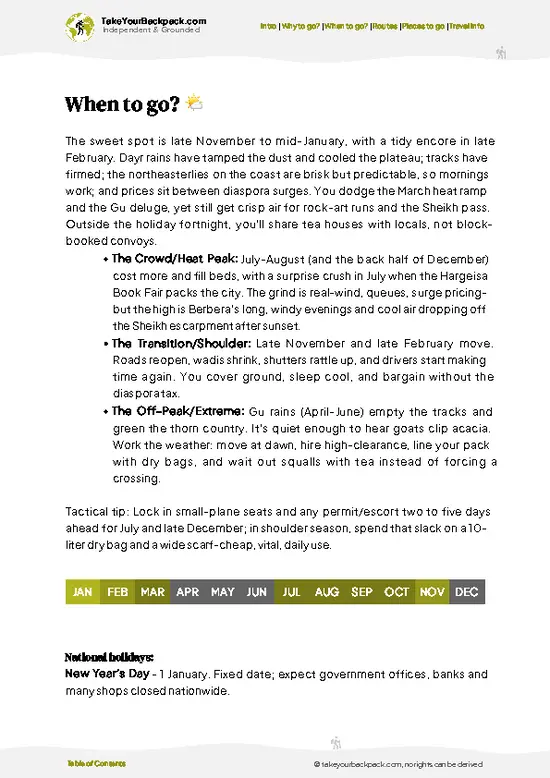
🌤️ When to go?When is the celebration of Dervish Day?


  • Topic: Weather – Somalia’s climate is hot and arid. The best window is during the cooler months from November to February when temperatures hover between 24-30°C (75-86°F). Avoid the scorching heat of April to June, which can drain your energy fast.

  • Topic: Temperature – Daytime highs can spike above 35°C (95°F) outside the cooler season, making trekking and festival crowds exhausting. Nighttime temps drop to a comfortable 20°C (68°F) in the ideal months, perfect for camping or late-night festivities.

  • Topic: Daylight Hours – Expect roughly 11 to 12 hours of daylight year-round, but the cooler months offer a more forgiving sun angle. This means you can explore longer without frying under relentless sun.

  • Topic: Crowds – Dervish Day draws local and regional visitors mainly during the
read more 👉

  • Topic: Weather – Somalia’s climate is hot and arid. The best window is during the cooler months from November to February when temperatures hover between 24-30°C (75-86°F). Avoid the scorching heat of April to June, which can drain your energy fast.

  • Topic: Temperature – Daytime highs can spike above 35°C (95°F) outside the cooler season, making trekking and festival crowds exhausting. Nighttime temps drop to a comfortable 20°C (68°F) in the ideal months, perfect for camping or late-night festivities.

  • Topic: Daylight Hours – Expect roughly 11 to 12 hours of daylight year-round, but the cooler months offer a more forgiving sun angle. This means you can explore longer without frying under relentless sun.

  • Topic: Crowds – Dervish Day draws local and regional visitors mainly during the dry season. Arriving early in the festival period helps you avoid the peak crush and secure better lodging and transport options.

  • Topic: Seasonal Activities – The dry season aligns with traditional ceremonies and outdoor performances, maximizing your cultural immersion. Rainy months (April to June) can disrupt these events and muddy trails.

  • Topic: Price Fluctuations – Prices for accommodation and transport spike during the festival’s peak and dry season. Booking ahead during November to February locks in better rates and availability.


Pro-tip: Time your visit for late November or early December to catch cooler weather, manageable crowds, and the full cultural pulse without burning out or breaking the bank.


source: climatestotravel.comJANJanuary: not recommended for travelingFEBFebruary: not recommended for travelingMARMarch: not recommended for travelingAPRApril: not recommended for travelingMAYMay: not recommended for travelingJUNJune: not recommended for travelingJULJuly: not recommended for travelingAUGAugust: not recommended for travelingSEPSeptember: not recommended for travelingOCTOctober: not recommended for travelingNOVNovember: excellent for travelingDECDecember: not recommended for traveling

✈️ The backpacker research shortcutSomalia Travel Guide

An offline-friendly backpacking guide with optimized travel routes, ranked highlights, transport advice, and the best areas to stay.
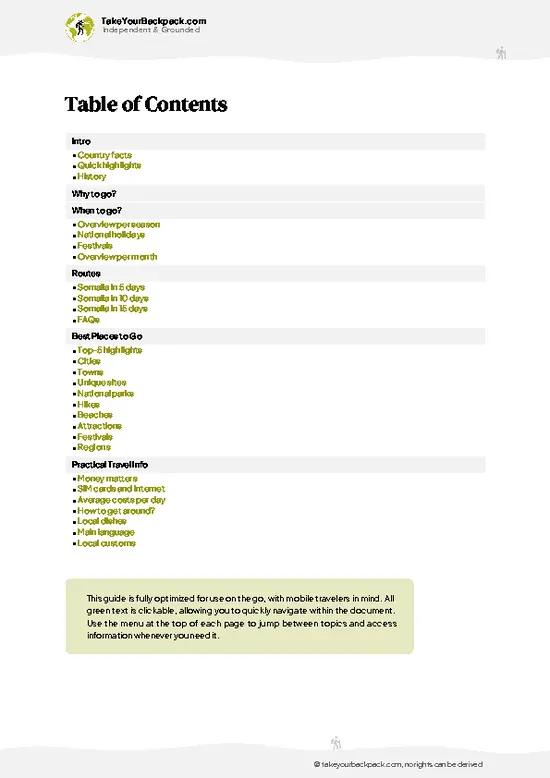
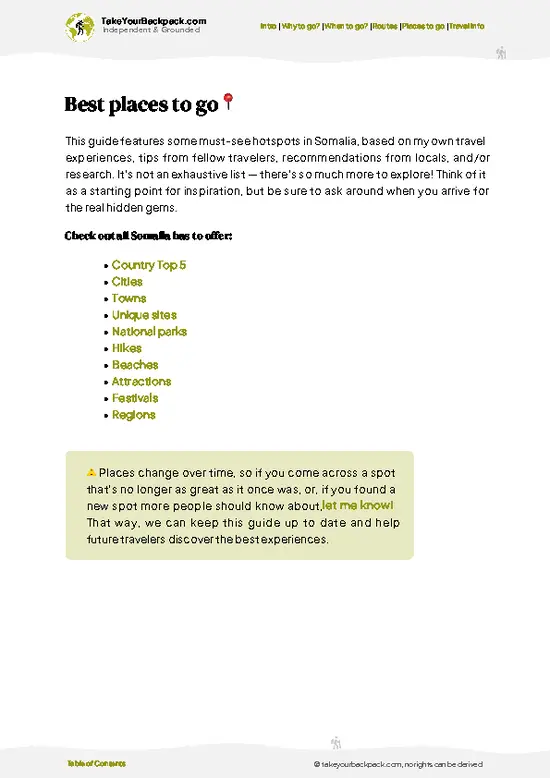
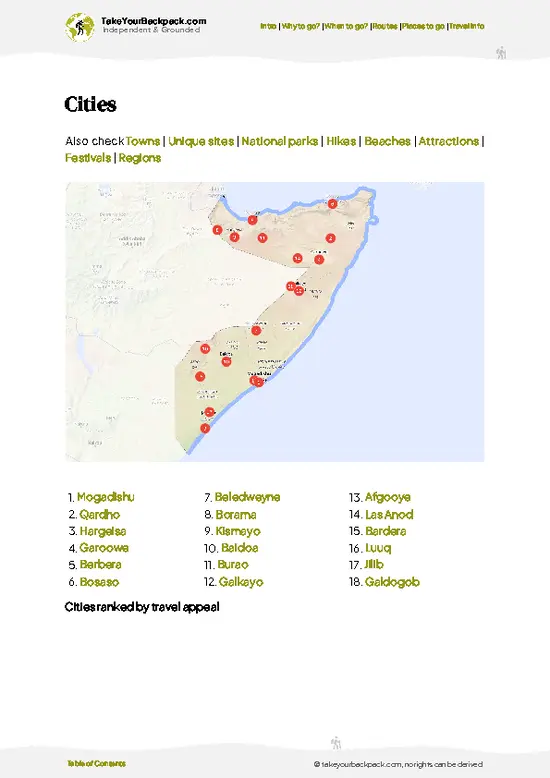
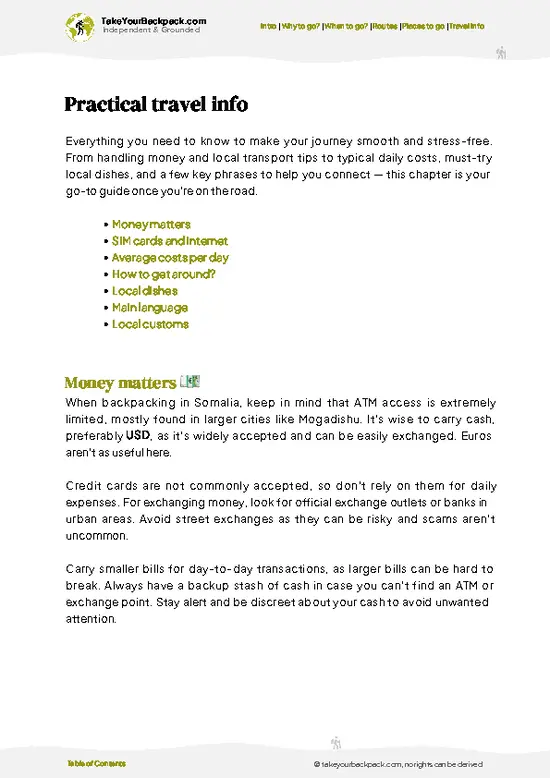
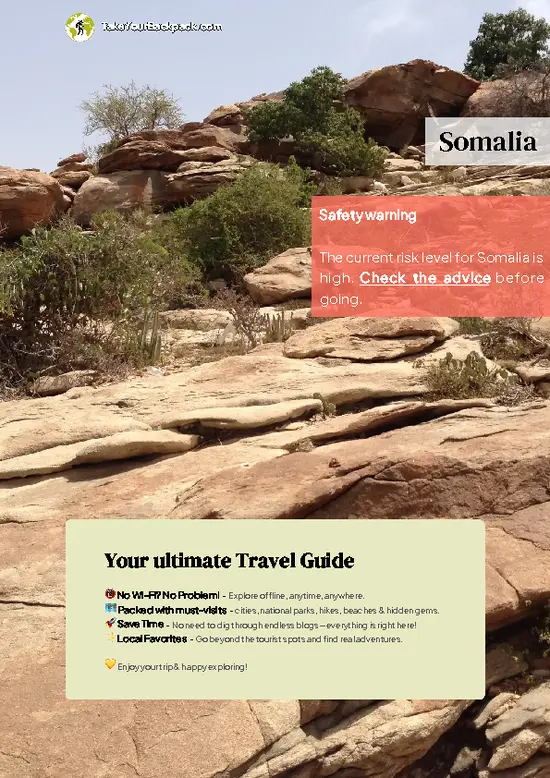
example page 0 from our offline Travel Guide for Somalia
example page 1 from our offline Travel Guide for Somalia
example page 2 from our offline Travel Guide for Somalia
example page 3 from our offline Travel Guide for Somalia
example page 4 from our offline Travel Guide for Somalia
example page 5 from our offline Travel Guide for Somalia
example page 6 from our offline Travel Guide for Somalia
example page 7 from our offline Travel Guide for Somalia
The digital guide (354 pages) contains:
83 highlights, ranked by travel appeal
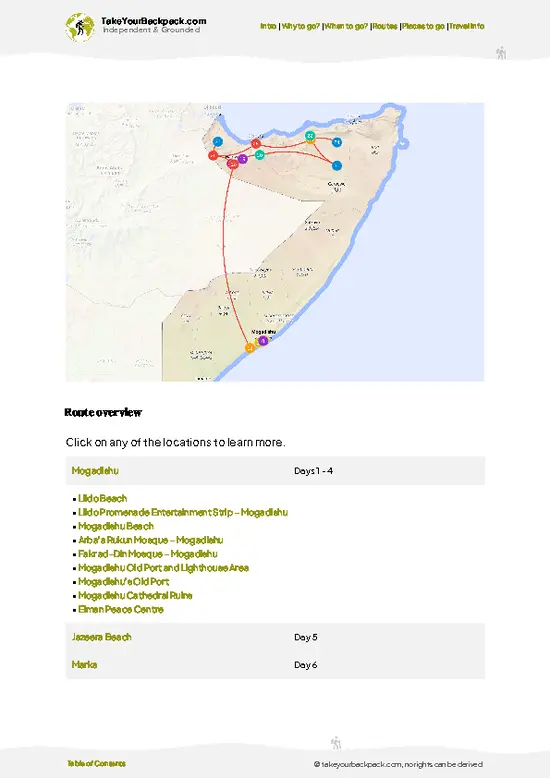
Optimized 5, 10 & 15-day travel routes
Cities, national parks, landmarks, beaches
How to get around
Offline-friendly for travel without Wi-Fi
👉 Click to see all 30+ guide features

📅 Plan smarter in minutes, not weeks
Month by month travel advice
Festivals & national holidays
Budget expectations

🗺️ Go to the right places, skip the overrated ones
Honest pros & cons of destinations
Top hikes, parks & viewpoints
Lesser-known places most travelers miss
Clear “worth it vs skip it” guidance

🛏️ Travel smoothly without rookie mistakes
Best areas to stay
Transport systems explained simply
Common scams & safety advice
SIM cards, money & practical tips

🌍 Understand the country, not just visit it
Culture & traditions
52 Essential phrases & customs
Festivals worth planning around
Traveler-friendly historical context
Insights that make places more meaningful

📱 Built for real travel conditions
Fully downloadable PDF
Works completely offline
Optimized for phone use
Useful in remote areas & buses
Everything in one place
Save weeks of stressful planning
Get instant access to your full guide. 30‑day money-back guarantee.


By proceeding you agree to our terms.
Sent to your inbox immediately after payment • 100% Secure Checkout
Best Backpacking Travel Advisor 2025 tourism awardBest Backpacking
Travel Advisor
2025
What others say about Take Your Backpack Guides:
⭐⭐⭐⭐⭐
Fantastic, amazing amount of information!
⭐⭐⭐⭐⭐
My goodness this is amazing, it's what I've been looking for hats off too you!
⭐⭐⭐⭐⭐
I think this is absolutely BRILLIANT
⭐⭐⭐⭐
Very complete and informative. It's still missing places, but I gotta to commend you
⭐⭐⭐⭐⭐
This is truly amazing, thank you, can't wait to explore it with my kids!
⭐⭐⭐⭐⭐
Awesome resource, thank you!
⭐⭐⭐⭐⭐
This is amazing! Can't wait to explore the ones I haven't seen
⭐⭐⭐⭐
I love this! Well done, great idea.
⭐⭐⭐⭐⭐
Thanks for taking the time to make this gem!
⭐⭐⭐⭐⭐
This might be the best website I've ever seen.
⭐⭐⭐⭐⭐
Congratulations, and thank you so much for your work; it's incredibly valuable.
⭐⭐⭐⭐
In all seriousness I think you did a great job pointing out the important spots
⭐⭐⭐⭐⭐
10/10 very good
⭐⭐⭐⭐⭐
As someone who's only just starting to visit regularly this is awesome, thank you.
⭐⭐⭐⭐
Thank you very much! I'm going to visit my dad, it's going to be very useful!
⭐⭐⭐⭐⭐
This is really cool! We'll be travelling for the first time and this definitely come in handy.
⭐⭐⭐⭐⭐
You are now our minister of culture, congratulations 👨‍💼
⭐⭐⭐⭐⭐
Just wanted to tell you that this is a pearl! Going to follow your recommendations.
⭐⭐⭐⭐⭐
This is so cool. I'll definitely be using the resource for my travels soon.
⭐⭐⭐⭐⭐
This is very impressive! Good work.
⭐⭐⭐⭐⭐
This is an amazing and informative site. Very well done!

🛏️ Where to stay?How to pick the right area

When you’re gearing up for Dervish Day in Somalia, the right area can make all the difference. Head to Hargeisa, the capital, where the vibe is electric. This city buzzes with energy, and you’ll find a mix of locals and travelers. The streets are alive with chatter, and the markets are a feast for the senses.

Look for spots near the main square; it’s a hub for festivities and a great place to meet fellow backpackers. Safety is a priority here, so stick to well-trodden paths and stay in areas where the community thrives.

Another option is Berbera, a coastal town that offers a laid-back atmosphere. … read more 👉
When you’re gearing up for Dervish Day in Somalia, the right area can make all the difference. Head to Hargeisa, the capital, where the vibe is electric. This city buzzes with energy, and you’ll find a mix of locals and travelers. The streets are alive with chatter, and the markets are a feast for the senses.

Look for spots near the main square; it’s a hub for festivities and a great place to meet fellow backpackers. Safety is a priority here, so stick to well-trodden paths and stay in areas where the community thrives.

Another option is Berbera, a coastal town that offers a laid-back atmosphere. It’s a bit quieter but perfect for those who want to recharge after the festival’s excitement. The beach scene is inviting, and you’ll find plenty of budget-friendly accommodations.

Both locations provide a blend of culture and camaraderie, ensuring your experience is rich without draining your wallet.

👛 Costs (as of 4 April 2026)Typical daily expenses

The Dervish Day festival in Somalia is a vibrant celebration, but navigating the costs can be tricky. Here’s a breakdown to keep your budget in check while you soak in the experience.
  • Festival Tickets: Entry to Dervish Day typically ranges from €5 to €15 ($5 to $15). Prices can vary based on the specific events you want to attend. Some activities may be free, while others might require a ticket. Always check in advance to avoid surprises.
  • Accommodation: Expect to pay between €20 and €50 ($20 to $50) per night for budget-friendly options. Guesthouses and basic hotels are your best bet. Prices can spike during the festival, so booking ahead is crucial to secure a spot without breaking the bank.
  • Local Transport: Getting around can cost you about €2 to €10 ($2 to $10) per day. Public transport is
read more 👉
The Dervish Day festival in Somalia is a vibrant celebration, but navigating the costs can be tricky. Here’s a breakdown to keep your budget in check while you soak in the experience.
  • Festival Tickets: Entry to Dervish Day typically ranges from €5 to €15 ($5 to $15). Prices can vary based on the specific events you want to attend. Some activities may be free, while others might require a ticket. Always check in advance to avoid surprises.
  • Accommodation: Expect to pay between €20 and €50 ($20 to $50) per night for budget-friendly options. Guesthouses and basic hotels are your best bet. Prices can spike during the festival, so booking ahead is crucial to secure a spot without breaking the bank.
  • Local Transport: Getting around can cost you about €2 to €10 ($2 to $10) per day. Public transport is limited, so consider hiring a local guide or using taxis. Negotiate fares upfront to avoid getting caught off guard.
  • Food & Drinks: Budget around €10 to €25 ($10 to $25) daily for meals. Street food is a tasty and economical choice, while restaurants may charge more. Always check the menu before sitting down to avoid unexpected bills.
  • Miscellaneous Expenses: Set aside €5 to €15 ($5 to $15) for souvenirs, tips, or unexpected costs. It’s wise to have a little extra for anything that might pop up, like a spontaneous local tour or a unique craft you can’t resist.

Keep these figures in mind to ensure your adventure is both thrilling and financially sound.
⚠️ Prices can change and everyone travels differently, so take this as a rough guide. Hope it helps you plan your adventure!

🍲 FoodWhat to Eat & Drink

At the Dervish Day festival in Somalia, food and drink pulse with local flavor. You’ll find stalls brimming with canjeero, a spongy flatbread perfect for scooping up spicy stews. Don’t miss bariis iskukaris, a fragrant rice dish infused with spices that dances on your palate.

For drinks, shaah (tea) is a must. It’s sweet, spiced, and served hot, providing a warm embrace amidst the festival buzz. If you’re feeling adventurous, try biyo macaan, a sweet, refreshing drink made from fresh fruit.

Embrace the festival vibe by sharing your food. It’s customary to pass dishes around, creating a sense of community. Lines can get long, so be patient; it’s part of the experience. Cash is king here, so stash some Somali shillings for those spontaneous bites. Serving sizes are generous, so don’t over-order—leave … read more 👉
At the Dervish Day festival in Somalia, food and drink pulse with local flavor. You’ll find stalls brimming with canjeero, a spongy flatbread perfect for scooping up spicy stews. Don’t miss bariis iskukaris, a fragrant rice dish infused with spices that dances on your palate.

For drinks, shaah (tea) is a must. It’s sweet, spiced, and served hot, providing a warm embrace amidst the festival buzz. If you’re feeling adventurous, try biyo macaan, a sweet, refreshing drink made from fresh fruit.

Embrace the festival vibe by sharing your food. It’s customary to pass dishes around, creating a sense of community. Lines can get long, so be patient; it’s part of the experience. Cash is king here, so stash some Somali shillings for those spontaneous bites. Serving sizes are generous, so don’t over-order—leave room for that second helping of canjeero!

Other Somali festivals near Dervish Day

Explore more nearby:


💡 Not sure where to go next?
Create a personalized itinerary for Somalia including Dervish Day and the places that fit your trip.

Generate my itinerary

👉 Discover all festivals

Or checkout all Somalia has to offer (think cities, towns, villages, national parks, hikes, beaches, festivals)
Country photo of Somalia

We 💚 feedbackSumming up the experience

Dervish Day in Somalia is electric. The energy of the crowd, the rhythmic chanting, and the vibrant colors pulse with life. Expect the unexpected—like the spontaneous dance-offs that break out. But here’s the kicker: stay hydrated and keep your valuables close. The excitement can sweep you away, but you want to savor every moment, not stress over lost gear. Embrace the chaos; it’s part of the magic.

✍️ Help improve this page!
The information on this page is based on in-depth research, insights shared by experienced travelers, and feedback from the local travel community in Somalia. While every effort is made to keep the information accurate and current, conditions can change — so if you spot anything incorrect or outdated, please get in touch.


🙋‍♂️ Give feedback

👋 Meet the founderWho’s Behind Take Your Backpack?

Johan, backpacker and founder of TakeYourBackpackHi, I’m Johan (Netherlands 🇳🇱), the creator of TakeYourBackpack. Over the past decade, I’ve backpacked through 80+ countries across six continents, gaining extensive experience with independent travel, long-term trips, and overland routes.

This site is built on a combination of firsthand travel experience and carefully curated insights from other backpackers. Many guides are based on places I’ve personally visited, while others bring together tips, observations, and practical advice shared by trusted travelers I’ve met along the way.

The goal is to provide realistic, experience-driven guidance — not generic itineraries — so you can explore destinations with better context, clearer expectations, and more confidence.

Get full Somalia guide •
Instant download • 83 highlights • Full Offline guide