×

Somalia🇸🇴 | best festivalsYour Guide to the 9 Best festivals in Somalia

In Somalia, festivals are vibrant expressions of culture, deeply rooted in tradition and community. They vary significantly across regions, with each festival reflecting local customs, seasonal changes, and the unique energy of its people. For backpackers and independent travelers, choosing the right festival can dramatically alter your experience.

Some festivals draw massive crowds, creating a lively atmosphere but also requiring careful navigation of logistics and safety. Others offer intimate settings, perfect for genuine cultural immersion. Timing is crucial; certain festivals align with harvest seasons or religious observances, impacting both budget and travel ease. Understanding these nuances ensures you engage authentically while preserving your energy and resources for the moments that truly matter.

By Johan Kruseman 🇳🇱 | Updated June 8, 2026
Explore the best regions in Somalia

Why go?What Makes Them Special

Festivals in Somalia are a vibrant expression of the country’s rich cultural tapestry, deeply rooted in its historical and social fabric. Unlike many other nations, Somalia’s festivals are not just celebrations; they are communal gatherings that reinforce identity and heritage. The timing of these events often aligns with the agricultural calendar, making them a crucial part of the community’s rhythm.

However, the logistical landscape can be challenging. Infrastructure is still developing, and accessibility varies widely. Travelers may face long travel times to reach festival sites, which can detract from the overall experience. Yet, this trade-off often leads to deeper immersion in local culture, as the journey itself becomes part of the adventure.

Crowd sizes can fluctuate significantly. … read more 👉
Festivals in Somalia are a vibrant expression of the country’s rich cultural tapestry, deeply rooted in its historical and social fabric. Unlike many other nations, Somalia’s festivals are not just celebrations; they are communal gatherings that reinforce identity and heritage. The timing of these events often aligns with the agricultural calendar, making them a crucial part of the community’s rhythm.

However, the logistical landscape can be challenging. Infrastructure is still developing, and accessibility varies widely. Travelers may face long travel times to reach festival sites, which can detract from the overall experience. Yet, this trade-off often leads to deeper immersion in local culture, as the journey itself becomes part of the adventure.

Crowd sizes can fluctuate significantly. Some festivals attract large numbers, which can dilute the intimate experience many seek. Conversely, smaller gatherings offer a chance for genuine interaction but may lack the spectacle of larger events.

The climatic conditions also play a role. Somalia’s dry seasons can create a harsh environment, impacting attendance and overall comfort. Understanding these factors is essential for anyone looking to engage meaningfully with Somali festivals. The rewards are immense, but preparation and awareness of these constraints will ensure a more enriching experience.
How the List Was Created
The list of best festivals in Somalia is created based on energy, traditions, crowd experience, activities, and overall excitement. If you feel a festival is missing in this list, please let us know.

When to go?When to Plan Your Trip

Seasonality plays a crucial role in the festival landscape of Somalia. The dry season, typically from November to March, is when the majority of cultural celebrations occur. This period offers pleasant weather, making it ideal for outdoor festivities. Expect vibrant gatherings, lively music, and traditional dances. However, this is also when crowds peak. Prices for accommodations and services can spike, and navigating through busy areas may require patience.

Shoulder seasons—April to June and September to October—present a different experience. While the weather can be hotter and less predictable, these months often see fewer tourists. This means lower costs and a more intimate atmosphere at festivals. The trade-off is that some events may be less frequent or smaller in scale. Authenticity … read more 👉
Seasonality plays a crucial role in the festival landscape of Somalia. The dry season, typically from November to March, is when the majority of cultural celebrations occur. This period offers pleasant weather, making it ideal for outdoor festivities. Expect vibrant gatherings, lively music, and traditional dances. However, this is also when crowds peak. Prices for accommodations and services can spike, and navigating through busy areas may require patience.

Shoulder seasons—April to June and September to October—present a different experience. While the weather can be hotter and less predictable, these months often see fewer tourists. This means lower costs and a more intimate atmosphere at festivals. The trade-off is that some events may be less frequent or smaller in scale. Authenticity can shine through in these quieter moments, allowing for deeper connections with local culture.

Peak periods can be exhilarating but come with their own challenges. High energy is palpable, yet the hustle can overshadow the essence of the celebrations. For those seeking a balance, consider timing visits during the shoulder seasons. This approach allows for a richer experience without the overwhelming crowds, ensuring that the focus remains on the cultural significance of the festivals.

festival hoppingSuggested Travel Strategies

General Routing Logic

Traveling through Somalia for festivals requires a smart approach. Start in the north, where the vibrant cultural scene in Hargeisa hosts events like the Somaliland Independence Day. From there, head south to Mogadishu, where the International Somali Festival brings together music and art. This route allows for a natural flow, minimizing backtracking and maximizing exposure to diverse experiences.

Typical Time Needed

Plan for at least two to three days at each major festival. This pacing allows for immersion without exhaustion. Festivals can be intense, so factor in downtime to recharge. Skipping this can lead to burnout, especially when navigating crowds.

Common Planning Mistakes

One common pitfall is trying to cram too many events into a short timeframe. This often … read more 👉

General Routing Logic

Traveling through Somalia for festivals requires a smart approach. Start in the north, where the vibrant cultural scene in Hargeisa hosts events like the Somaliland Independence Day. From there, head south to Mogadishu, where the International Somali Festival brings together music and art. This route allows for a natural flow, minimizing backtracking and maximizing exposure to diverse experiences.

Typical Time Needed

Plan for at least two to three days at each major festival. This pacing allows for immersion without exhaustion. Festivals can be intense, so factor in downtime to recharge. Skipping this can lead to burnout, especially when navigating crowds.

Common Planning Mistakes

One common pitfall is trying to cram too many events into a short timeframe. This often results in missed experiences and a rushed feel. Prioritize quality over quantity. Also, neglecting local transport options can lead to unexpected delays. Researching reliable transport methods in advance is crucial.

Trade-offs and Constraints

Balancing speed with depth is essential. Quick travel might save time but can rob the experience of its richness. Budget constraints can also impact comfort; consider investing in local guides for deeper insights. Flexibility is key; be prepared to adapt plans based on local conditions or festival schedules.

The ListThe Best festivals of Somalia

1 Hargeysa International Book Fair

diaspora writers, poetry readings, Somaliland arts

Immerse yourself in a week of readings, workshops, and cross-cultural exchange that draws writers and artists from across the Horn of Africa.

2 Mogadishu Film Festival

Somali cinema, film screenings, director Q&As

Watch contemporary Somali films, meet filmmakers, and engage with stories that reflect the country’s evolving creative landscape.

3 Mogadishu International Book Fair

urban literary scene, book launches, author meetups

Join readers and writers in Mogadishu for book signings, panel talks, and a celebration of Somali storytelling in the capital.

4 Garowe Book Fair

regional authors, literary panels, Puntland culture

Browse new Somali literature, attend discussions with writers, and discover the literary pulse of Puntland at this annual gathering.

5 Somali Independence Day

flag-raising ceremonies, national parades, unity celebrations

Celebrate Somalia’s independence with public festivities, patriotic songs, and gatherings that highlight the country’s journey toward self-determination.

6 Dervish Day

anti-colonial commemoration, Sufi heritage, Dhulbahante traditions

Join locals as they honor the Dervish movement’s legacy with poetry, music, and rituals that reflect deep-rooted resistance and spiritual pride.

7 Somali Youth Day

youth activism, educational events, sports competitions

Mark the achievements of Somali youth through debates, athletic contests, and cultural showcases that spotlight the next generation’s aspirations.

8 Eid al-Fitr

end of Ramadan, communal feasts, mosque gatherings

Experience the close of Ramadan with shared meals, new clothes, and joyful reunions that bring Somali families and neighborhoods together.

9 Eid al-Adha

animal sacrifice, family visits, charitable giving

Witness the spirit of generosity as families gather, share meat with neighbors, and mark the festival with prayers and acts of kindness.

Loading the map 🌍

Expert viewExpert Commentary on festivals

Festival Timing
Somalia’s festival scene is vibrant, but timing is everything. Most major festivals occur during the dry season, roughly from October to April. This is when the weather is more manageable, and the cultural energy is at its peak. You’ll want to plan for at least two to three festivals during this window to truly soak in the atmosphere. However, be prepared for the heat; it can be relentless. Hydration and sun protection are non-negotiable.

Cultural Context
Understanding the cultural backdrop is crucial. Festivals often celebrate Islamic traditions, agricultural cycles, or historical events. Each festival has its own flavor, reflecting the rich tapestry of Somali culture. For instance, the Eid celebrations are marked by communal prayers, feasting, and family gatherings, while … read more 👉
Festival Timing
Somalia’s festival scene is vibrant, but timing is everything. Most major festivals occur during the dry season, roughly from October to April. This is when the weather is more manageable, and the cultural energy is at its peak. You’ll want to plan for at least two to three festivals during this window to truly soak in the atmosphere. However, be prepared for the heat; it can be relentless. Hydration and sun protection are non-negotiable.

Cultural Context
Understanding the cultural backdrop is crucial. Festivals often celebrate Islamic traditions, agricultural cycles, or historical events. Each festival has its own flavor, reflecting the rich tapestry of Somali culture. For instance, the Eid celebrations are marked by communal prayers, feasting, and family gatherings, while the Maalinta Qaran (Somalia’s Independence Day) is a raucous display of national pride. Embrace the local customs, but tread lightly; some areas may have stricter cultural norms. Dress modestly and be respectful of local practices to avoid drawing unwanted attention.

Crowd Management
Expect crowds. Festivals can draw large numbers, especially in urban areas. This can be exhilarating but also overwhelming. Arrive early to secure a good spot, and consider your exit strategy. If you’re not comfortable in tightly packed spaces, choose smaller, local festivals instead of the larger national ones. This way, you can engage more authentically with the community.

Budget and Comfort
Festivals can range from low-cost to more expensive, depending on how you choose to engage. Street food is often delicious and affordable, but if you opt for sit-down meals at restaurants, your budget will take a hit. Factor in transportation costs, as getting to and from festival sites can add up, especially if you’re traveling from remote areas. Accommodations can vary widely; while some may offer basic comfort, others can be pricier and less reliable. Always read reviews and check for recent traveler experiences.

Safety Considerations
Safety is paramount. While many areas are welcoming, some regions may have security concerns. Stay updated on local conditions and heed travel advisories. It’s wise to travel in groups, especially at night. Keep your belongings secure and be cautious about sharing personal information with strangers. Engaging with locals can enrich your experience, but trust your instincts. If something feels off, it probably is.

Planning and Prioritizing
When planning your festival itinerary, prioritize based on your interests. If you’re drawn to music, seek out festivals that feature traditional Somali music and dance. For food lovers, look for events that highlight local cuisine. Research ahead of time to understand the festival schedule and any associated events. Don’t try to cram too much into your trip; allow for downtime to recharge.

Trade-offs
One key trade-off to consider is the balance between experiencing the festival atmosphere and maintaining your comfort. Larger festivals can be thrilling but may come with logistical headaches, while smaller, local events can offer a more intimate experience but might lack the spectacle. Choose wisely based on what you value most in your travel experience.

By keeping these factors in mind, you can navigate Somalia’s festival landscape with confidence, ensuring that your journey is both enriching and enjoyable.

✈️ The backpacker research shortcutSomalia Travel Guide

An offline-friendly backpacking guide with optimized travel routes, ranked highlights, transport advice, and the best areas to stay.
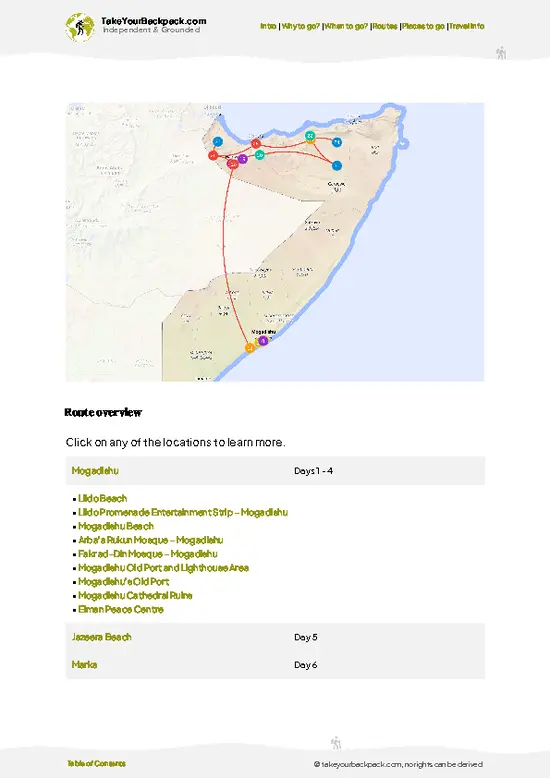
example page 0 from our offline Travel Guide for Somalia
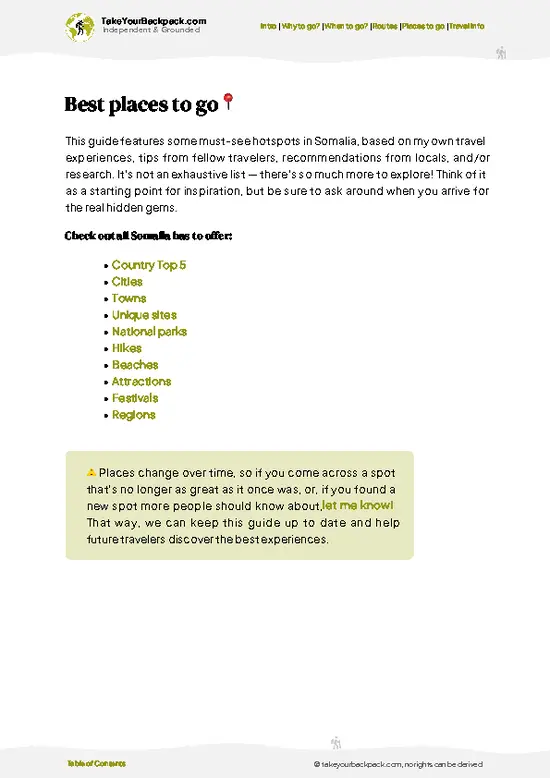
example page 1 from our offline Travel Guide for Somalia
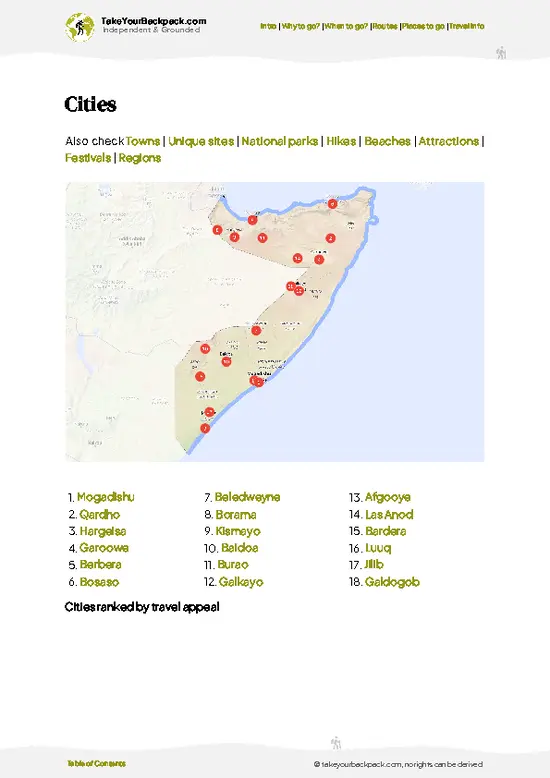
example page 2 from our offline Travel Guide for Somalia
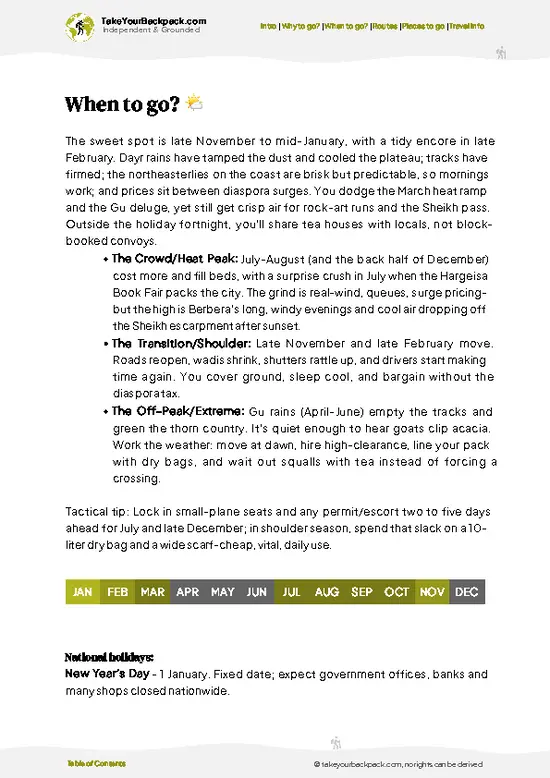
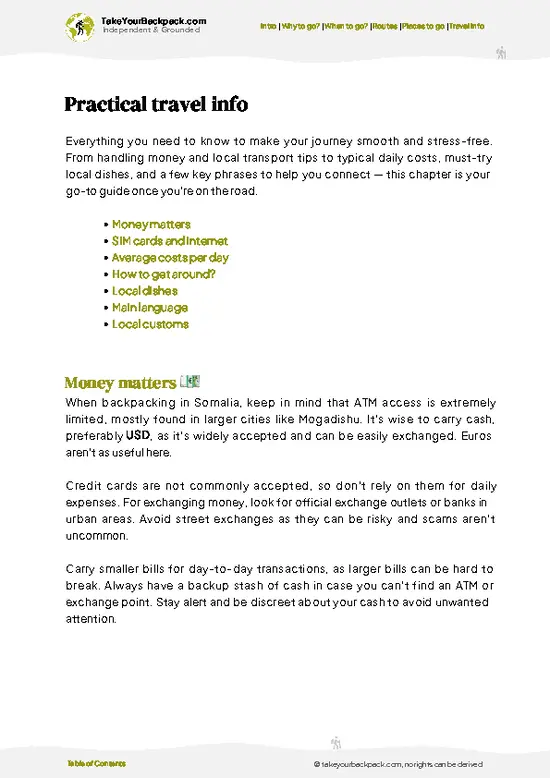
example page 3 from our offline Travel Guide for Somalia
example page 4 from our offline Travel Guide for Somalia
example page 5 from our offline Travel Guide for Somalia
example page 6 from our offline Travel Guide for Somalia
example page 7 from our offline Travel Guide for Somalia
The digital guide (354 pages) contains:
83 highlights, ranked by travel appeal
Optimized 5, 10 & 15-day travel routes
Cities, national parks, landmarks, beaches
How to get around
Offline-friendly for travel without Wi-Fi
👉 Click to see all 30+ guide features

📅 Plan smarter in minutes, not weeks
Month by month travel advice
Festivals & national holidays
Budget expectations

🗺️ Go to the right places, skip the overrated ones
Honest pros & cons of destinations
Top hikes, parks & viewpoints
Lesser-known places most travelers miss
Clear “worth it vs skip it” guidance

🛏️ Travel smoothly without rookie mistakes
Best areas to stay
Transport systems explained simply
Common scams & safety advice
SIM cards, money & practical tips

🌍 Understand the country, not just visit it
Culture & traditions
52 Essential phrases & customs
Festivals worth planning around
Traveler-friendly historical context
Insights that make places more meaningful

📱 Built for real travel conditions
Fully downloadable PDF
Works completely offline
Optimized for phone use
Useful in remote areas & buses
Everything in one place
Save weeks of stressful planning
Get instant access to your full guide. 30‑day money-back guarantee.


By proceeding you agree to our terms.
Sent to your inbox immediately after payment • 100% Secure Checkout
Best Backpacking Travel Advisor 2025 tourism awardBest Backpacking
Travel Advisor
2025
What others say about Take Your Backpack Guides:
⭐⭐⭐⭐⭐
Fantastic, amazing amount of information!
⭐⭐⭐⭐⭐
My goodness this is amazing, it's what I've been looking for hats off too you!
⭐⭐⭐⭐⭐
I think this is absolutely BRILLIANT
⭐⭐⭐⭐
Very complete and informative. It's still missing places, but I gotta to commend you
⭐⭐⭐⭐⭐
This is truly amazing, thank you, can't wait to explore it with my kids!
⭐⭐⭐⭐⭐
Awesome resource, thank you!
⭐⭐⭐⭐⭐
This is amazing! Can't wait to explore the ones I haven't seen
⭐⭐⭐⭐
I love this! Well done, great idea.
⭐⭐⭐⭐⭐
Thanks for taking the time to make this gem!
⭐⭐⭐⭐⭐
This might be the best website I've ever seen.
⭐⭐⭐⭐⭐
Congratulations, and thank you so much for your work; it's incredibly valuable.
⭐⭐⭐⭐
In all seriousness I think you did a great job pointing out the important spots
⭐⭐⭐⭐⭐
10/10 very good
⭐⭐⭐⭐⭐
As someone who's only just starting to visit regularly this is awesome, thank you.
⭐⭐⭐⭐
Thank you very much! I'm going to visit my dad, it's going to be very useful!
⭐⭐⭐⭐⭐
This is really cool! We'll be travelling for the first time and this definitely come in handy.
⭐⭐⭐⭐⭐
You are now our minister of culture, congratulations 👨‍💼
⭐⭐⭐⭐⭐
Just wanted to tell you that this is a pearl! Going to follow your recommendations.
⭐⭐⭐⭐⭐
This is so cool. I'll definitely be using the resource for my travels soon.
⭐⭐⭐⭐⭐
This is very impressive! Good work.
⭐⭐⭐⭐⭐
This is an amazing and informative site. Very well done!

🛏️ Where to stay?Top Places to Consider Staying

Short answer: Formal hostels are rare in Somalia; budget options exist mainly as guesthouses and low‑cost hotels in major cities rather than backpacker dorms.
In Mogadishu the densest options cluster around Lido (beachside restaurants and nightlife but busy and with fluctuating security) and the Hamarweyne/Hamar Jajab districts (central for markets and transport but narrow streets and variable safety), while Waberi and Hodan are quieter, more residential and often have more controlled access but fewer amenities.
Outside Mogadishu, central/downtown areas of Hargeisa, Bosaso and Kismayo offer the best budget choices; those neighborhoods are generally more walkable and stable by day but have … read more 👉
Short answer: Formal hostels are rare in Somalia; budget options exist mainly as guesthouses and low‑cost hotels in major cities rather than backpacker dorms.
In Mogadishu the densest options cluster around Lido (beachside restaurants and nightlife but busy and with fluctuating security) and the Hamarweyne/Hamar Jajab districts (central for markets and transport but narrow streets and variable safety), while Waberi and Hodan are quieter, more residential and often have more controlled access but fewer amenities.
Outside Mogadishu, central/downtown areas of Hargeisa, Bosaso and Kismayo offer the best budget choices; those neighborhoods are generally more walkable and stable by day but have limited nightlife and require vetted transport and local security awareness.

If you enjoy meeting fellow travelers, consider choosing hostels with high ratings for atmosphere. On the other hand, if you prefer having your own space, a hotel might be a better option.

SomaliaMore Places Across Somalia

👋 Meet the founderWho’s Behind Take Your Backpack?

Johan, backpacker and founder of TakeYourBackpackHi, I’m Johan (Netherlands 🇳🇱), the creator of TakeYourBackpack. Over the past decade, I’ve backpacked through 80+ countries across six continents, gaining extensive experience with independent travel, long-term trips, and overland routes.

This site is built on a combination of firsthand travel experience and carefully curated insights from other backpackers. Many guides are based on places I’ve personally visited, while others bring together tips, observations, and practical advice shared by trusted travelers I’ve met along the way.

The goal is to provide realistic, experience-driven guidance — not generic itineraries — so you can explore destinations with better context, clearer expectations, and more confidence.

Get full Somalia guide •
Instant download • 83 highlights • Full Offline guide