×

Somalia🇸🇴 | citiesLuuqriver bend, ancient settlement, stone bridges | things to do and best time to go

Explore JilibExplore Garoowe

Backpacking in Luuq
👀 For curious travelerscity ranked #13
By Johan Kruseman 🇳🇱 | Updated June 16, 2026

If you crave nightlife, polished hostels, or a menu of Western comforts, Luuq will test your patience. But for backpackers who want to feel the pulse of the Jubba River at sunrise and taste the grit of real Somali travel, Luuq rewards curiosity. Tucked in southwestern Somalia, near the Ethiopian border, the town is more crossroads than destination—dusty, sunbaked, and honest. The old town’s mud-brick alleys and riverside markets are best explored on foot, though don’t expect tourist infrastructure or easy English. Luuq is quieter and less frenetic than Beledweyne or Baidoa, but also less social—travelers are rare, and evenings are slow. Costs are low, but safety and logistics require vigilance and local contacts. For the right traveler, Luuq is a raw, real base for river walks and a window into Somali daily life, not a checklist of attractions.

Discover everything you want to know in the 📖 Somalia Travel Guide.
Safety warning

The current risk level for Somalia is high. Check the advice before going.


Get your Somalia guide
83 ranked highlights, routes & tips, works offline (354 pages)
Loading the map 🌍
CLICK TO FILTER
cities
towns
landmarks
national parks
hikes
beaches
attractions
festivals
regions
SHOW COUNTRY’S BESTSHOW ALL

✨ Why go?
Ranked #13 city in Somalia
What makes it a must-see city

Backpackers flock to Luuq for its strategic location along the route to stunning hikes and cultural sites. The walkable streets invite exploration, while small-scale hostels and guesthouses offer a cozy, communal vibe. Here, you can savor local food experiences that burst with flavor, making every meal a celebration. Travelers often linger a few days, soaking in the friendly atmosphere and connecting with fellow adventurers. This town suits slow travelers and solo explorers seeking a blend of authenticity and convenience. It’s not about nightlife; it’s about the journey and the stories you gather along the way.
Want to include Luuq in your Somalia route?
Create a personalized Somalia itinerary that includes Luuq and the places that fit your trip — based on your travel style, budget, and available time. Get your route in seconds.

Generate my trip

💡 HighlightsEssential experiences to have while visiting Luuq

  • Jubba Riverfront (riverside landings and promenades) — The river is Luuq’s heartbeat. Walk the banks to watch fishermen, small dhows, and the loading/unloading of goods; river life and views of the changing water levels tell more about local life than any plaque.
  • Central Market (Suuqa Dhexe) — A compact, noisy market where everyday Somali commerce happens: spices, tea, cloth, phone credit and the odd second-hand item. Great for people-watching and picking up cheap snacks or bargaining practice.
  • Main Friday Mosque (Masjidka Juma’a) — The town’s principal mosque is the social and spiritual anchor. Visiting (outside prayer times unless you’re attending) gives a sense of community rhythms and local religious architecture.
  • Livestock Market (Suuqa Xoolaha) — Luuq’s animal market is where pastoral
read more 👉
  • Jubba Riverfront (riverside landings and promenades) — The river is Luuq’s heartbeat. Walk the banks to watch fishermen, small dhows, and the loading/unloading of goods; river life and views of the changing water levels tell more about local life than any plaque.
  • Central Market (Suuqa Dhexe) — A compact, noisy market where everyday Somali commerce happens: spices, tea, cloth, phone credit and the odd second-hand item. Great for people-watching and picking up cheap snacks or bargaining practice.
  • Main Friday Mosque (Masjidka Juma’a) — The town’s principal mosque is the social and spiritual anchor. Visiting (outside prayer times unless you’re attending) gives a sense of community rhythms and local religious architecture.
  • Livestock Market (Suuqa Xoolaha) — Luuq’s animal market is where pastoral and town life meet: goats, sheep and camels traded, health checked and readied for transport. It’s noisy, earthy and an excellent way to see regional economies in action.
  • Riverside Banana and Mango Gardens — Small plots lining the Jubba produce the fruit that feeds the town. Stroll through the shaded gardens to see traditional irrigation, meet growers, and taste ridiculously fresh fruit you rarely get elsewhere.
  • Traditional Boat Crossings and Small Dhow Landings — Short boat trips or simple ferries across the Jubba are practical and atmospheric. They’re low-cost, human-scale ways to experience the river and talk to the boatmen about routes and seasons.
  • Old Town Lanes and River Houses — The narrow alleys and simple riverfront houses show how people live in the heat: shade, airflow and communal courtyards. No guided tour necessary—just walk slowly and be polite when peeking at daily life.
  • Community Meeting Grounds and Xeer Courts — The public spaces where elders meet and customary law (xeer) is discussed are central to local governance. Observing (with permission) offers real insight into Somali social order and dispute resolution.
  • Town Cemetery and Ancestral Tombs — Local burial sites and the graves of respected elders are treated with care and can be visited respectfully to understand lineage, clan ties and local histories that don’t appear in books.
  • Municipal Square and Administrative Compound — The hub where government, NGOs and local leaders converge. It’s where announcements are posted, meetings happen, and you can catch the pulse of civic life and any local events or markets.
A few real, visitable highlights just outside Luuq worth day-tripping to are the nearby riverine countryside and banana plantations along the Jubba, the border town of Doolow (Dolow) to the north, and the Gedo towns such as Beledhawo (Belet Hawo), all of which give broader context to Luuq’s river-based economy and regional networks.
Spotted a mistake or missing something? Contact us.
🏘️ NeighborhoodsNeighborhood guide to Luuq

Luuq is a vibrant town that offers a unique blend of culture and adventure, perfect for backpackers seeking authenticity.

Central Luuq: This area pulses with local life. Markets brim with spices and textiles, and the streets are alive with chatter. It’s walkable and budget-friendly, making it ideal for short stays. You’ll find basic accommodations and local eateries that won’t break the bank.

Shabelle District: Quieter and more residential, this neighborhood offers a glimpse into daily life. It’s less touristy, providing a peaceful atmosphere. Transport options are limited, but it’s a great spot for longer stays if you want to immerse yourself in the local culture.

Riverfront Area: This is where the action is at night. Enjoy local music and dance, but be mindful of safety. It’s lively, … read more 👉
Luuq is a vibrant town that offers a unique blend of culture and adventure, perfect for backpackers seeking authenticity.

Central Luuq: This area pulses with local life. Markets brim with spices and textiles, and the streets are alive with chatter. It’s walkable and budget-friendly, making it ideal for short stays. You’ll find basic accommodations and local eateries that won’t break the bank.

Shabelle District: Quieter and more residential, this neighborhood offers a glimpse into daily life. It’s less touristy, providing a peaceful atmosphere. Transport options are limited, but it’s a great spot for longer stays if you want to immerse yourself in the local culture.

Riverfront Area: This is where the action is at night. Enjoy local music and dance, but be mindful of safety. It’s lively, making it perfect for those looking to socialize. Accommodations here can be pricier, but the experience is worth it.

⌛️ 1 daySeeing the highlights in 24 hours

Luuq, Somalia, is a vibrant tapestry of culture and history, where the scent of spices mingles with the warm desert air. Start your day early at the bustling local market, where vendors sell everything from fresh produce to handmade crafts. The energy is palpable, and the colors are a feast for the eyes. Grab a breakfast of warm, flaky sambusas filled with spiced meat or vegetables, and sip on sweet Somali tea.

In the afternoon, head to the historic Luuq Mosque, a stunning example of traditional architecture. The intricate carvings and the cool shade provide a perfect backdrop for reflection. Afterward, wander through the nearby neighborhoods, where you can engage with locals and perhaps even join a game of street football.

As the sun sets, make your way to the banks of the Juba River. … read more 👉
Luuq, Somalia, is a vibrant tapestry of culture and history, where the scent of spices mingles with the warm desert air. Start your day early at the bustling local market, where vendors sell everything from fresh produce to handmade crafts. The energy is palpable, and the colors are a feast for the eyes. Grab a breakfast of warm, flaky sambusas filled with spiced meat or vegetables, and sip on sweet Somali tea.

In the afternoon, head to the historic Luuq Mosque, a stunning example of traditional architecture. The intricate carvings and the cool shade provide a perfect backdrop for reflection. Afterward, wander through the nearby neighborhoods, where you can engage with locals and perhaps even join a game of street football.

As the sun sets, make your way to the banks of the Juba River. The golden light reflecting off the water creates a serene atmosphere. Enjoy a simple dinner at a local eatery, savoring grilled fish seasoned with local spices. This day in Luuq isn’t just about sights; it’s about connecting with the heart of Somalia.
Turn your Luuq visit into an Somalia adventure
Build a complete Somalia route with Luuq, hidden gems, must-see destinations, and realistic travel times included.

Generate my trip

🌤️ When to go?Weather, crowds, and seasonal trade-offs


  • Topic: Weather — Luuq bakes under a harsh desert sun most of the year. The best window is during the cooler months from November to February when temperatures drop to a more bearable 25-30°C (77-86°F). Outside this, expect relentless heat that can sap your energy fast.

  • Topic: Temperature — Daytime highs can soar above 40°C (104°F) in summer, making midday trekking brutal. Nights cool off but remain warm, rarely dipping below 20°C (68°F), so pack light layers for early mornings and evenings.

  • Topic: Daylight Hours — Near the equator, daylight stays steady around 12 hours year-round. This means you can plan hikes and explorations without worrying about shifting daylight, but start early to avoid the peak sun.

  • Topic: Crowds — Luuq is off the beaten path, so crowds are minimal year-round.
read more 👉

  • Topic: Weather — Luuq bakes under a harsh desert sun most of the year. The best window is during the cooler months from November to February when temperatures drop to a more bearable 25-30°C (77-86°F). Outside this, expect relentless heat that can sap your energy fast.

  • Topic: Temperature — Daytime highs can soar above 40°C (104°F) in summer, making midday trekking brutal. Nights cool off but remain warm, rarely dipping below 20°C (68°F), so pack light layers for early mornings and evenings.

  • Topic: Daylight Hours — Near the equator, daylight stays steady around 12 hours year-round. This means you can plan hikes and explorations without worrying about shifting daylight, but start early to avoid the peak sun.

  • Topic: Crowds — Luuq is off the beaten path, so crowds are minimal year-round. Visiting during the cooler season means you’ll find a few more local traders and seasonal activity, adding life without overwhelming solitude.

  • Topic: Seasonal Activities — The cooler months coincide with local markets and cultural events tied to harvest cycles. This timing lets you experience authentic community rhythms rather than just passing through.

  • Topic: Price Fluctuations — Prices for lodging and guides tend to dip during the hotter months when fewer travelers arrive. However, the discomfort of extreme heat often outweighs the savings.


Pro-tip: Aim for early mornings and late afternoons to soak in Luuq’s raw landscape when the light softens and the heat eases—this is when the desert reveals its true character.


source: climatestotravel.comJANJanuary: excellent for travelingFEBFebruary: excellent for travelingMARMarch: fair for travelingAPRApril: fair for travelingMAYMay: fair for travelingJUNJune: below average for travelingJULJuly: below average for travelingAUGAugust: below average for travelingSEPSeptember: fair for travelingOCTOctober: good for travelingNOVNovember: excellent for travelingDECDecember: excellent for traveling
when-to-go

✈️ The backpacker research shortcutSomalia Travel Guide

An offline-friendly backpacking guide with optimized travel routes, ranked highlights, transport advice, and the best areas to stay.
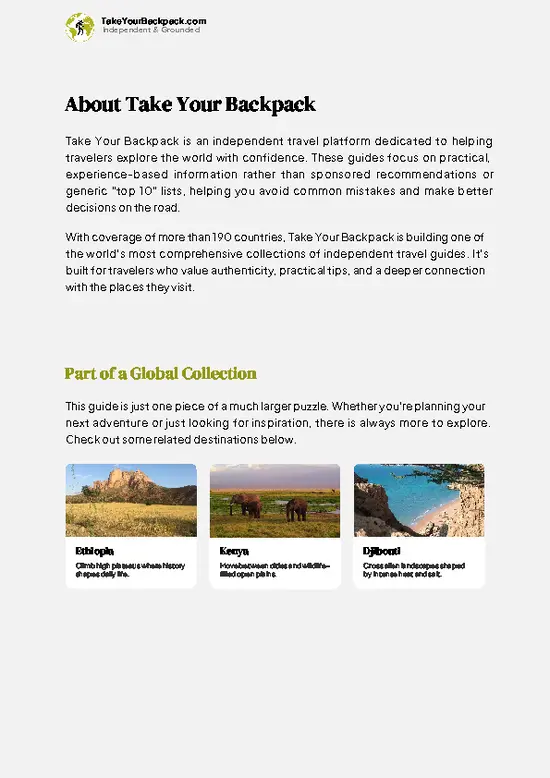
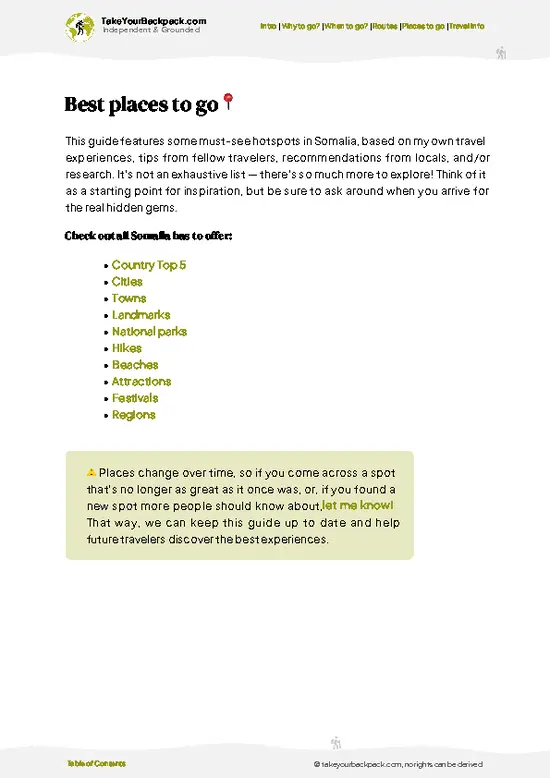
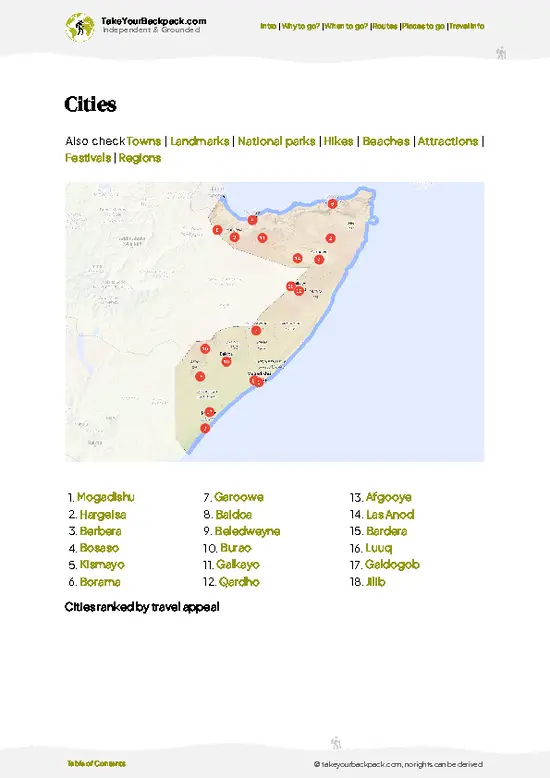
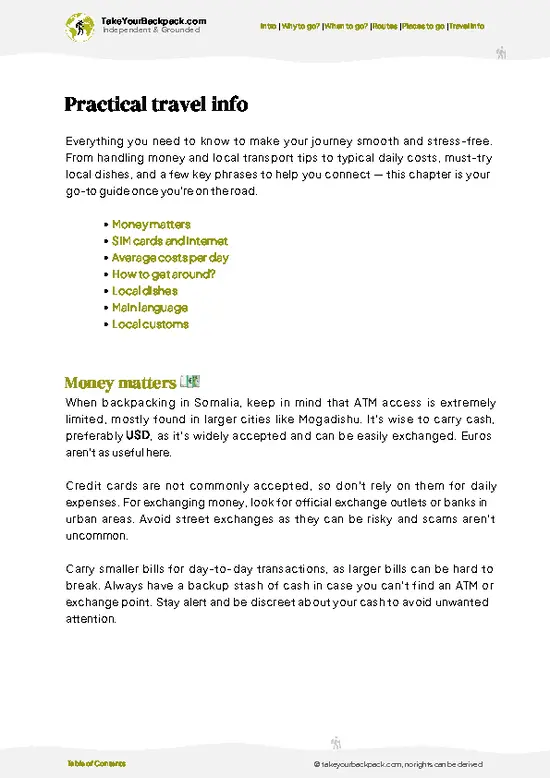
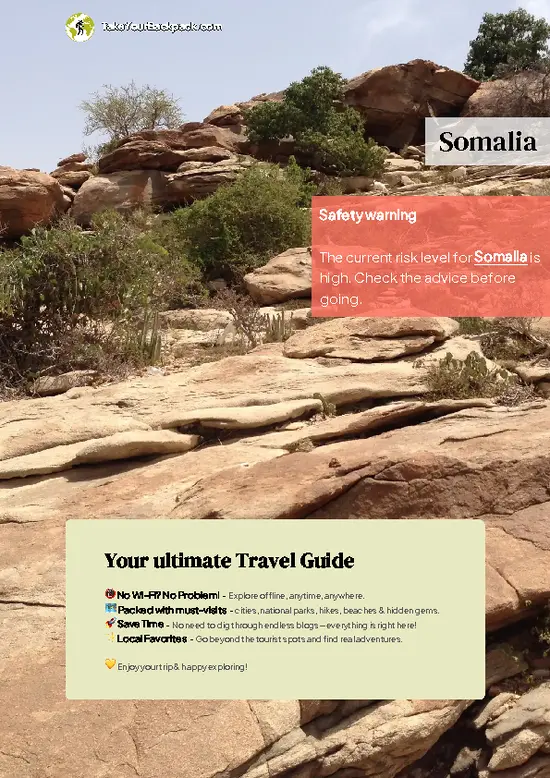
example page 0 from our offline Travel Guide for Somalia
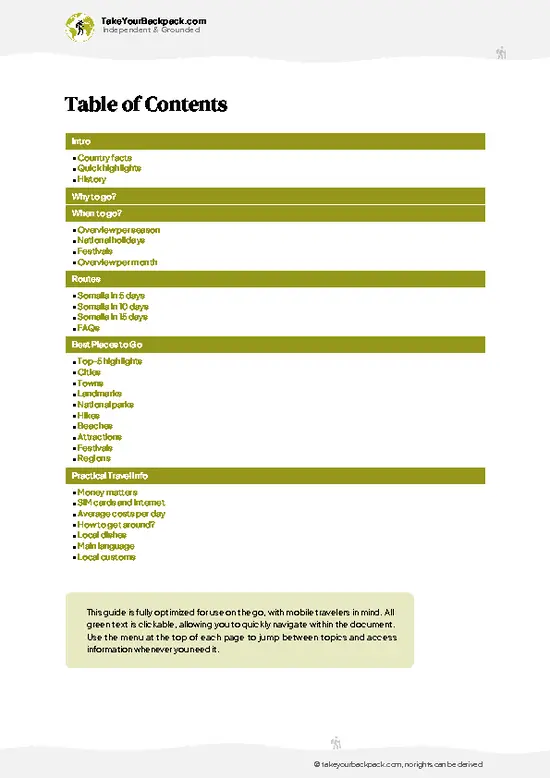
example page 1 from our offline Travel Guide for Somalia
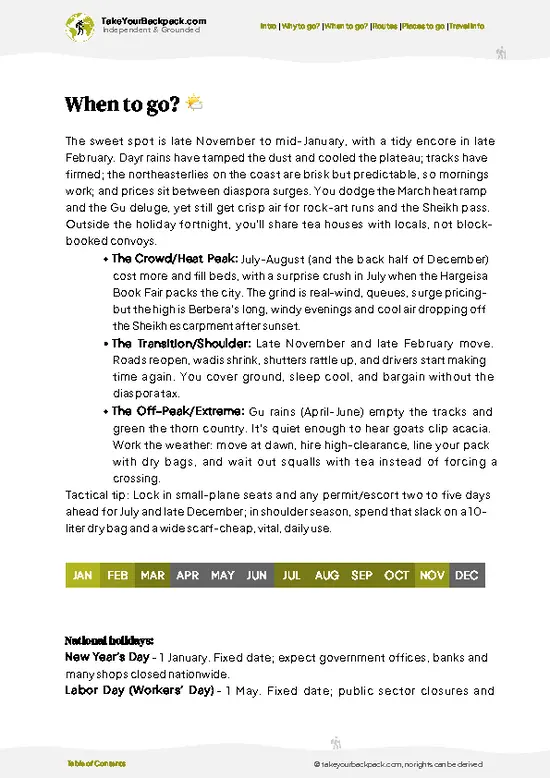
example page 2 from our offline Travel Guide for Somalia
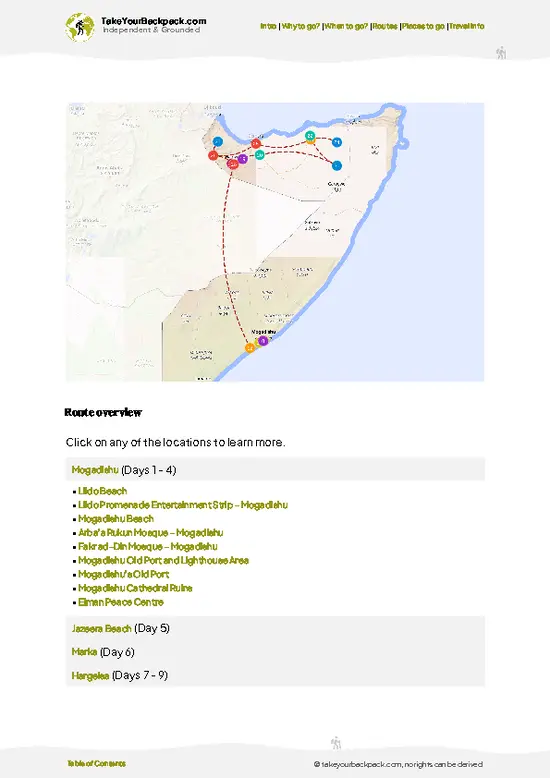
example page 3 from our offline Travel Guide for Somalia
example page 4 from our offline Travel Guide for Somalia
example page 5 from our offline Travel Guide for Somalia
example page 6 from our offline Travel Guide for Somalia
example page 7 from our offline Travel Guide for Somalia
The digital guide (354 pages) contains:
83 highlights, ranked by travel appeal
Optimized 5, 10 & 15-day travel routes
Cities, national parks, landmarks, beaches
How to get around
Offline-friendly for travel without Wi-Fi
👉 Click to see all 30+ guide features

📅 Plan smarter in minutes, not weeks
Month by month travel advice
Festivals & national holidays
Budget expectations

🗺️ Go to the right places, skip the overrated ones
Honest pros & cons of destinations
Top hikes, parks & viewpoints
Lesser-known places most travelers miss
Clear “worth it vs skip it” guidance

🛏️ Travel smoothly without rookie mistakes
Best areas to stay
Transport systems explained simply
Common scams & safety advice
SIM cards, money & practical tips

🌍 Understand the country, not just visit it
Culture & traditions
52 Essential phrases & customs
Festivals worth planning around
Traveler-friendly historical context
Insights that make places more meaningful

📱 Built for real travel conditions
Fully downloadable PDF
Works completely offline
Optimized for phone use
Useful in remote areas & buses
Everything in one place
Save weeks of stressful planning
Get instant access to your full guide. 30‑day money-back guarantee.


By proceeding you agree to our terms.
Sent to your inbox immediately after payment • 100% Secure Checkout
Best Backpacking Travel Advisor 2025 tourism awardBest Backpacking
Travel Advisor
2025
What others say about Take Your Backpack Guides:
⭐⭐⭐⭐⭐
Fantastic, amazing amount of information!
⭐⭐⭐⭐⭐
My goodness this is amazing, it's what I've been looking for hats off too you!
⭐⭐⭐⭐⭐
I think this is absolutely BRILLIANT
⭐⭐⭐⭐
Very complete and informative. It's still missing places, but I gotta to commend you
⭐⭐⭐⭐⭐
This is truly amazing, thank you, can't wait to explore it with my kids!
⭐⭐⭐⭐⭐
Awesome resource, thank you!
⭐⭐⭐⭐⭐
This is amazing! Can't wait to explore the ones I haven't seen
⭐⭐⭐⭐
I love this! Well done, great idea.
⭐⭐⭐⭐⭐
Thanks for taking the time to make this gem!
⭐⭐⭐⭐⭐
This might be the best website I've ever seen.
⭐⭐⭐⭐⭐
Congratulations, and thank you so much for your work; it's incredibly valuable.
⭐⭐⭐⭐
In all seriousness I think you did a great job pointing out the important spots
⭐⭐⭐⭐⭐
10/10 very good
⭐⭐⭐⭐⭐
As someone who's only just starting to visit regularly this is awesome, thank you.
⭐⭐⭐⭐
Thank you very much! I'm going to visit my dad, it's going to be very useful!
⭐⭐⭐⭐⭐
This is really cool! We'll be travelling for the first time and this definitely come in handy.
⭐⭐⭐⭐⭐
You are now our minister of culture, congratulations 👨‍💼
⭐⭐⭐⭐⭐
Just wanted to tell you that this is a pearl! Going to follow your recommendations.
⭐⭐⭐⭐⭐
This is so cool. I'll definitely be using the resource for my travels soon.
⭐⭐⭐⭐⭐
This is very impressive! Good work.
⭐⭐⭐⭐⭐
This is an amazing and informative site. Very well done!

🛏️ Where to stay?Choosing the right base

In Luuq, the heart of the town where the river’s dry dust meets the sunbaked streets is your best bet. This central area hums with life—local markets spill spices and fresh bread scents into the air, and the chatter of vendors creates a rhythm that’s easy to sync with. It’s where you’ll find the few budget guesthouses and informal hostels that cater to travelers who want to connect without the fuss of luxury. Safety here isn’t guaranteed by walls but by the steady presence of locals and the natural watchfulness of a tight-knit community.

Venture too far into the outskirts, and you lose that … read more 👉
In Luuq, the heart of the town where the river’s dry dust meets the sunbaked streets is your best bet. This central area hums with life—local markets spill spices and fresh bread scents into the air, and the chatter of vendors creates a rhythm that’s easy to sync with. It’s where you’ll find the few budget guesthouses and informal hostels that cater to travelers who want to connect without the fuss of luxury. Safety here isn’t guaranteed by walls but by the steady presence of locals and the natural watchfulness of a tight-knit community.

Venture too far into the outskirts, and you lose that pulse; the streets thin out, and the atmosphere shifts to something quieter, less welcoming for solo backpackers. Staying central means you’re steps from the social hubs—tea stalls, small eateries, and the occasional gathering spot where stories flow as freely as the sweet Somali chai. It’s rough around the edges, but that’s the point: you’re not just passing through, you’re stepping into the town’s daily rhythm.

🚌 Getting aroundHow to get from A to B

Luuq moves at its own rhythm—less a clockwork town and more a pulse you feel in the dust and chatter. The sun beats down hard, and the air carries the scent of dry earth and distant fires. Here, schedules are suggestions, not laws. You’ll find that patience is your best companion, and a flexible mindset turns waiting into a chance to soak in the local vibe. The streets hum with the shuffle of feet, the occasional honk of a shared taxi, and the calls of vendors selling everything from fresh bread to bundles of firewood. This isn’t a place where transit runs like clockwork; it’s a place where you learn to read the flow, catch rides when they come, and walk when they don’t.


  • Walking: The most reliable way to get around Luuq’s compact center. Streets are dusty but navigable, and walking lets
read more 👉
Luuq moves at its own rhythm—less a clockwork town and more a pulse you feel in the dust and chatter. The sun beats down hard, and the air carries the scent of dry earth and distant fires. Here, schedules are suggestions, not laws. You’ll find that patience is your best companion, and a flexible mindset turns waiting into a chance to soak in the local vibe. The streets hum with the shuffle of feet, the occasional honk of a shared taxi, and the calls of vendors selling everything from fresh bread to bundles of firewood. This isn’t a place where transit runs like clockwork; it’s a place where you learn to read the flow, catch rides when they come, and walk when they don’t.


  • Walking: The most reliable way to get around Luuq’s compact center. Streets are dusty but navigable, and walking lets you catch the scents and sounds that motorized transport misses. Expect to cover most key spots within 30 minutes on foot.

  • Shared Minibuses (Matatus): These are the backbone of local transit, leaving when full rather than on a strict timetable. Fares are low, usually under 100 Somali shillings, but expect cramped conditions and frequent stops. They run from early morning until dusk.

  • Motorcycle Taxis (Bajajs): Faster than walking and more flexible than minibuses, bajajs dart through traffic and narrow alleys. Negotiate fares upfront—typically 200-300 shillings for short trips. They operate from dawn to late evening but can be scarce after dark.

  • Private Taxis: Less common and pricier, private taxis offer comfort and speed, especially for longer distances outside town. Expect to pay several times the minibus fare. Best for when you need to beat the heat or carry heavy gear.

👛 Costs (as of 11 April 2026)Typical daily expenses

Backpacking in Luuq, Somalia, means embracing a raw, off-the-grid experience where every dollar counts and the local rhythm sets the pace.
  • Dorm Accommodation: Options here are extremely limited and basic, often guesthouses rather than formal hostels. Expect to pay around $5 to $10 per night for a simple, shared room. The facilities are minimal, so bring your own sleeping gear and be ready for rustic conditions.
  • Meals: Food is straightforward and filling, mostly local staples like rice, beans, and grilled meat. Street food and small eateries will cost about $2 to $5 per meal. Fresh fruit and water are affordable but always check for cleanliness to avoid health issues.
  • Local Transport: Transport options are scarce and informal. Motorbike taxis or shared pickups are the norm, costing roughly
read more 👉
Backpacking in Luuq, Somalia, means embracing a raw, off-the-grid experience where every dollar counts and the local rhythm sets the pace.
  • Dorm Accommodation: Options here are extremely limited and basic, often guesthouses rather than formal hostels. Expect to pay around $5 to $10 per night for a simple, shared room. The facilities are minimal, so bring your own sleeping gear and be ready for rustic conditions.
  • Meals: Food is straightforward and filling, mostly local staples like rice, beans, and grilled meat. Street food and small eateries will cost about $2 to $5 per meal. Fresh fruit and water are affordable but always check for cleanliness to avoid health issues.
  • Local Transport: Transport options are scarce and informal. Motorbike taxis or shared pickups are the norm, costing roughly $1 to $3 for short trips within town. Walking is often the best way to soak in the atmosphere and avoid unnecessary expenses.
  • Basic Activities/Entry Fees: Luuq is not a tourist hotspot, so there are no formal entry fees or organized activities. Any cultural or natural exploration will be self-guided and free, though hiring a local guide for about $10 to $15 can enrich your experience and ensure safety.
  • Miscellaneous Expenses: Budget around $2 to $5 for essentials like bottled water, phone credit, or small tips. Internet access is limited and expensive, so plan accordingly.

The daily cost for backpacking in Luuq typically falls between $10 and $25. This lean budget reflects the town’s basic infrastructure and the need for self-sufficiency, but it also opens the door to an authentic, unfiltered encounter with a rarely visited corner of Somalia.
⚠️ Prices can change and everyone travels differently, so take this as a rough guide. Hope it helps you plan your adventure!

🚌 Day tripsBest day trips from Luuq

Luuq, Somalia, is a fantastic base for day trips that reveal the region’s rich culture and stunning landscapes. Here are some worthwhile excursions that will elevate your experience.

The Shabelle River Adventure
Just a short ride from Luuq, the Shabelle River offers a refreshing escape. Picture yourself drifting along the water, surrounded by lush greenery and the sounds of birds. Bring a packed lunch and enjoy a picnic on the banks. The trip takes about an hour, costing around $5 for transport. Early mornings are best to catch the sunrise and avoid the heat. Many first-timers overlook the importance of bringing water shoes; the riverbed can be rocky.


Exploring the Ruins of Luuq
Stay local and dive into the history of Luuq itself. The ancient ruins scattered around the town tell stories … read more 👉
Luuq, Somalia, is a fantastic base for day trips that reveal the region’s rich culture and stunning landscapes. Here are some worthwhile excursions that will elevate your experience.

The Shabelle River Adventure
Just a short ride from Luuq, the Shabelle River offers a refreshing escape. Picture yourself drifting along the water, surrounded by lush greenery and the sounds of birds. Bring a packed lunch and enjoy a picnic on the banks. The trip takes about an hour, costing around $5 for transport. Early mornings are best to catch the sunrise and avoid the heat. Many first-timers overlook the importance of bringing water shoes; the riverbed can be rocky.


Exploring the Ruins of Luuq
Stay local and dive into the history of Luuq itself. The ancient ruins scattered around the town tell stories of past civilizations. Spend a few hours wandering through these remnants, absorbing the atmosphere. It’s a free activity, but hiring a local guide for about $10 can enhance your understanding. Late afternoons are ideal, as the golden light casts a warm glow over the stones. A common mistake is rushing through without taking the time to appreciate the details.


The Markets of Luuq
Immerse yourself in the vibrant local culture by visiting the bustling markets. The sights, sounds, and scents of spices and textiles create an unforgettable experience. You can easily spend a couple of hours here, and it won’t cost you more than a few dollars for snacks. Mornings are lively, with vendors setting up and locals gathering. First-timers often miss out on bargaining; don’t be shy—haggling is part of the fun!
Want to know what more Somalia offers?
The Somalia Travel Guide describes 83 highlights, from cities to national parks, from beaches to hikes

Get the Travel Guide -

🍲 FoodLocal Cuisine & Drinks

In Luuq, food is a gateway to the soul of the city. The air often carries the smoky aroma of suqaar, a spiced beef or goat stew that simmers with garlic and cardamom, served alongside fluffy canjeero—a sour, crepe-like bread that soaks up every drop. For a quick bite, street vendors dish out muufo, a dense, cornbread-like staple that pairs perfectly with honey or ghee.

Backpackers find themselves drawn to the bustling markets, where the rhythm of haggling blends with the sizzle of grills and the chatter of locals. Casual eateries here don’t fuss with menus; you point, you taste, you dive in. Drinking culture is simple but social—expect to share shaah (spiced tea) poured from a height to cool it, a ritual that invites conversation and connection.

Etiquette leans on respect: accept food with … read more 👉
In Luuq, food is a gateway to the soul of the city. The air often carries the smoky aroma of suqaar, a spiced beef or goat stew that simmers with garlic and cardamom, served alongside fluffy canjeero—a sour, crepe-like bread that soaks up every drop. For a quick bite, street vendors dish out muufo, a dense, cornbread-like staple that pairs perfectly with honey or ghee.

Backpackers find themselves drawn to the bustling markets, where the rhythm of haggling blends with the sizzle of grills and the chatter of locals. Casual eateries here don’t fuss with menus; you point, you taste, you dive in. Drinking culture is simple but social—expect to share shaah (spiced tea) poured from a height to cool it, a ritual that invites conversation and connection.

Etiquette leans on respect: accept food with your right hand, and don’t rush meals. Eating here is less about speed and more about savoring the moment, the flavors, and the company.

🛡️ SafetySafety Tips and Common Scams in Luuq

Luuq, Somalia, is generally safe, but staying aware enhances your experience. Stick to well-trodden paths, especially around the market during busy hours; the vibrant atmosphere can distract you from your belongings. Solo travelers should avoid wandering alone after dark; the streets can feel different when the sun sets.

Watch for common scams, like overly friendly locals offering unsolicited help that leads to a price tag. Carry yourself confidently, engage with locals respectfully, and trust your instincts. This approach not only keeps you safe but also opens doors to genuine connections.

Other Somali cities near Luuq

Explore more nearby:

  • Baidoa—Baidoa plateau, regional crossroads, livestock trading| 144 km away
  • Bardera—Juba River, fertile floodplains, agricultural hub| 164 km away
  • Beledweyne—floodplain setting, trade crossroads, river islands| 313 km away

💡 Not sure where to go next?
Create a personalized itinerary for Somalia including Luuq and the places that fit your trip.

Generate my itinerary

👉 Discover all cities

Or checkout all Somalia has to offer (think cities, towns, villages, national parks, hikes, beaches, festivals)
Country photo of Somalia

We 💚 feedbackKey takeaways before you go

Luuq pulses with a raw energy that’s hard to shake off. The best surprise? The warmth of the locals; their laughter fills the air like spices in a market. Just be mindful of the heat—stay hydrated and pace yourself. It’s all part of the adventure.

✍️ Help improve this page!
The information on this page is based on in-depth research, insights shared by experienced travelers, and feedback from the local travel community in Somalia. While every effort is made to keep the information accurate and current, conditions can change — so if you spot anything incorrect or outdated, please get in touch.


🙋‍♂️ Give feedback

👋 Meet the founderWho’s Behind Take Your Backpack?

Johan, backpacker and founder of TakeYourBackpackHi, I’m Johan (Netherlands 🇳🇱), the creator of TakeYourBackpack. Over the past decade, I’ve backpacked through 80+ countries across six continents, gaining extensive experience with independent travel, long-term trips, and overland routes.

This site is built on a combination of firsthand travel experience and carefully curated insights from other backpackers. Many guides are based on places I’ve personally visited, while others bring together tips, observations, and practical advice shared by trusted travelers I’ve met along the way.

The goal is to provide realistic, experience-driven guidance — not generic itineraries — so you can explore destinations with better context, clearer expectations, and more confidence.

Get full Somalia guide •
Instant download • 83 highlights • Full Offline guide