×

Somalia🇸🇴 | regionsSool Plateausemi-arid grasslands, seasonal wadis, scattered wells, camel herds | things to do and best time to go

Explore Shimbiris MountainExplore Sool Valley

Backpacking in Sool Plateau
👌 Worth visitingregion ranked #5
By Johan Kruseman 🇳🇱 | Updated June 2, 2026

You land in Somalia, eyes on the Sool Plateau, and here’s the first real fork in the road: do you burn precious hours bouncing between dusty minibuses for the sake of your wallet, or do you pay up for a private 4x4 and see twice as much—at the cost of your daily budget? This is the kind of trade-off that defines travel here. Sool Plateau sits in northern Somalia, wedged between the more famous Somaliland and Puntland regions, and it’s the sort of place that rewards the curious. The landscape is wild—think endless grasslands, rocky outcrops, and the kind of silence that makes you realize how loud your life usually is. There’s no tourist circus here; you’ll find raw, unfiltered hospitality, but also long, slow journeys between towns like Las Anod. Costs are low, but so is comfort—expect basic guesthouses, not boutique anything. Compared to the busier, slightly more polished Somaliland, Sool is the deep end: more authentic, less convenient, and all the more memorable for it.

Discover everything you want to know in the 📖 Somalia Travel Guide.
Safety warning

The current risk level for Somalia is high. Check the advice before going.


Get your Somalia guide
83 ranked highlights, routes & tips, works offline (354 pages)
Loading the map 🌍
CLICK TO FILTER
cities
towns
landmarks
national parks
hikes
beaches
attractions
festivals
regions
SHOW COUNTRY’S BESTSHOW ALL

✨ Why go?
Ranked #5 region in Somalia
What sets this place apart

The Sool Plateau in Somalia is a backpacker’s playground, and here’s why savvy travelers are drawn to it. First off, the variety of landscapes is mind-blowing. You’ve got rolling hills, rugged mountains, and vast plateaus, all within a stone’s throw. This means you can soak in diverse scenery without the hassle of constant relocation.

Transport flexibility is another gem here. You can hop on a local bus or even hitch a ride with friendly locals. This makes it easy to explore at your own pace, giving you the freedom to linger in places that catch your eye.

What really sets the Sool Plateau apart is the chance to blend nature and culture seamlessly. You can hike through stunning vistas by day and then dive into local traditions by night. This slow travel approach allows you to connect deeply … read more 👉
The Sool Plateau in Somalia is a backpacker’s playground, and here’s why savvy travelers are drawn to it. First off, the variety of landscapes is mind-blowing. You’ve got rolling hills, rugged mountains, and vast plateaus, all within a stone’s throw. This means you can soak in diverse scenery without the hassle of constant relocation.

Transport flexibility is another gem here. You can hop on a local bus or even hitch a ride with friendly locals. This makes it easy to explore at your own pace, giving you the freedom to linger in places that catch your eye.

What really sets the Sool Plateau apart is the chance to blend nature and culture seamlessly. You can hike through stunning vistas by day and then dive into local traditions by night. This slow travel approach allows you to connect deeply with the land and its people, making every moment feel rich and rewarding.

So, if you’re looking for a place where you can stretch your time and money while soaking in unforgettable experiences, the Sool Plateau is calling your name.
Want to include Sool Plateau in your Somalia route?
Create a personalized Somalia itinerary that includes Sool Plateau and the places that fit your trip — based on your travel style, budget, and available time. Get your route in seconds.

Generate my trip

💡 HighlightsEssential experiences to have while visiting Sool Plateau

  1. Taleh (Taleex) Darawiish Fort Complex — The best-known historical site in the plateau: early-20th-century Dervish-era forts and ruined strongholds tied to Mohammed Abdullah Hassan’s resistance. Walkable earthworks and stone remains give a real sense of regional history you won’t get elsewhere; local guides (when available) can point out lesser-seen bastions and the layout of the garrison towns.
  2. Las Anod old town & central livestock market — The regional hub where pastoral life meets trade: a lively, colorful market (best in the mornings) full of camels, goats and bargaining, plus small teashops where elders recite poetry and discuss clan history. It’s the most immediate way to see contemporary Sool society in motion.
  3. Las Anod escarpments & plateau viewpoints — Low cliffs and open plateaus
read more 👉
  1. Taleh (Taleex) Darawiish Fort Complex — The best-known historical site in the plateau: early-20th-century Dervish-era forts and ruined strongholds tied to Mohammed Abdullah Hassan’s resistance. Walkable earthworks and stone remains give a real sense of regional history you won’t get elsewhere; local guides (when available) can point out lesser-seen bastions and the layout of the garrison towns.
  2. Las Anod old town & central livestock market — The regional hub where pastoral life meets trade: a lively, colorful market (best in the mornings) full of camels, goats and bargaining, plus small teashops where elders recite poetry and discuss clan history. It’s the most immediate way to see contemporary Sool society in motion.
  3. Las Anod escarpments & plateau viewpoints — Low cliffs and open plateaus just outside the town give wide, empty panoramas at sunrise/sunset. Good for short hikes, photography, and to watch nomadic herds move across the landscape; the plateau light is distinct from coastal or highland Somalia.
  4. Hudun (Xudun) wadis and acacia groves — Seasonal riverbeds and scattered acacia pockets around Hudun are quiet, green after the rains, and used heavily by local herders. They’re great for short walks, birdwatching, and witnessing seasonal pastoral patterns most visitors miss.
  5. Nomadic camp stay with a pastoral family — Unique to the plateau: book a homestay with a camel- or goat-herding family to learn milking routines, campfire tea rituals, and how pasture decisions are made. This is cultural immersion more than a “safari” and reveals daily rhythms that don’t exist in towns.
  6. Taleh’s minor forts and outlying earthworks (hidden gem) — Away from the main ruin complex are smaller, rarely visited outworks and defensive ditches that locals know well. They’re atmospheric, quiet, and give a different perspective on the Dervish state—bring a local to find them and explain the micro-history.
  7. Small roadside livestock markets between Las Anod and Hudun (hidden gem) — Not the large city market but the mid-route auctions where local herders meet once or twice a week. Fewer tourists, raw trading energy, quick deals, and a genuine snapshot of how animals change hands in the plateau economy.
  8. Ephemeral salt flats and dry lake beds — Scattered shallow pans that flood briefly after heavy rains and then dry into glittering flats. These landscapes are short-lived, locally significant for seasonal grazing and salt collection, and offer unusual photo opportunities and geology contrasts unique to the plateau.
  9. Plateau night sky & star camps — The Sool Plateau has very dark skies outside the towns; spending a night at a simple camp gives outstanding stargazing (Milky Way visibility, shooting stars) and a real sense of remoteness. Combine with a campfire, local stories, and tea for a memorable low-cost evening.
  10. Clan teahouses and poetry gatherings (hidden gem) — Informal, evening gatherings in Las Anod and smaller settlements where elders and poets recite gabay and debate local news. Not a packaged show—this is where oral history, dispute resolution and humor happen. Respectful attendance (and an introduction from a local) opens a rare window into Somalia’s living oral traditions.
Spotted a mistake or missing something? Contact us.
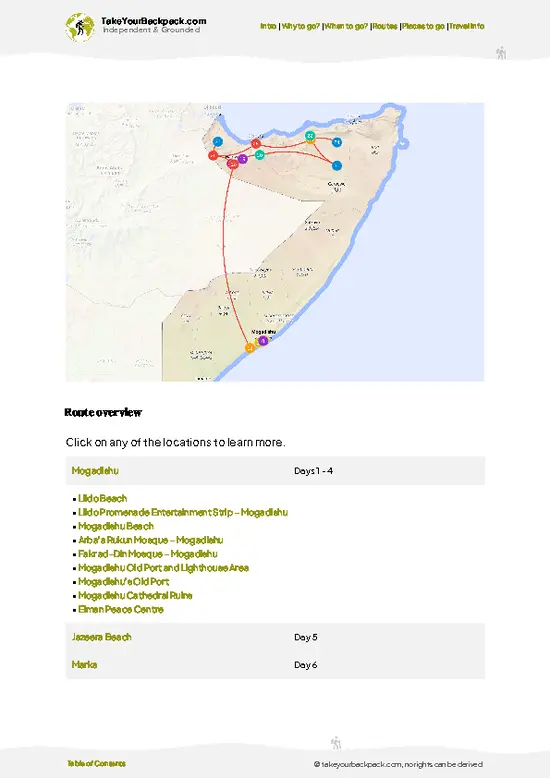
⌛️ 5 daysSeeing the highlights in 5 days

Day 1: Hargeisa
Start your journey in Hargeisa, the capital of Somaliland. This bustling city is your gateway to the Sool Plateau. Spend the day acclimating and exploring local markets. The transport system here is a mix of shared taxis and buses, which can be a bit chaotic but are your best bet for budget travel. Get familiar with the rhythm of the city; it sets the tone for your adventure.

Day 2: Hargeisa to Las Anod
Early morning, hop on a shared taxi to Las Anod. This ride is about 4-5 hours, so pack snacks and water. The road is bumpy, but the scenery is captivating. Las Anod is the heart of the Sool Plateau, and you’ll want to soak in the local culture. Spend the afternoon visiting the local museum and chatting with residents. Their stories will enrich your experience.

Day 3: … read more 👉
Day 1: Hargeisa
Start your journey in Hargeisa, the capital of Somaliland. This bustling city is your gateway to the Sool Plateau. Spend the day acclimating and exploring local markets. The transport system here is a mix of shared taxis and buses, which can be a bit chaotic but are your best bet for budget travel. Get familiar with the rhythm of the city; it sets the tone for your adventure.

Day 2: Hargeisa to Las Anod
Early morning, hop on a shared taxi to Las Anod. This ride is about 4-5 hours, so pack snacks and water. The road is bumpy, but the scenery is captivating. Las Anod is the heart of the Sool Plateau, and you’ll want to soak in the local culture. Spend the afternoon visiting the local museum and chatting with residents. Their stories will enrich your experience.

Day 3: Las Anod to Taleh
Take a local bus to Taleh, a journey of around 2-3 hours. This is where the real adventure begins. The landscape shifts dramatically, and you’ll feel the isolation of the plateau. Explore the ancient ruins nearby; they’re often overlooked but offer a glimpse into the region’s history.

Day 4: Off-Path Reward: Gumburo
Instead of heading straight to your next destination, take a detour to Gumburo. This hidden village is a treasure trove of traditional Somali life. Spend the day interacting with locals and enjoying home-cooked meals. It’s a chance to step off the tourist path and truly connect with the culture.

Day 5: Taleh to Hargeisa
Return to Hargeisa for your final day. This is your chance to revisit favorite spots or discover new ones. The transport back is straightforward, but plan your departure time wisely to avoid the evening rush.

The must-do day? Day 4 in Gumburo. It’s the kind of experience that transforms your trip from ordinary to extraordinary, giving you stories to tell long after you’ve left.
Turn your Sool Plateau visit into an Somalia adventure
Build a complete Somalia route with Sool Plateau, hidden gems, must-see destinations, and realistic travel times included.

Generate my trip

🌤️ When to go?Choosing the right time of year


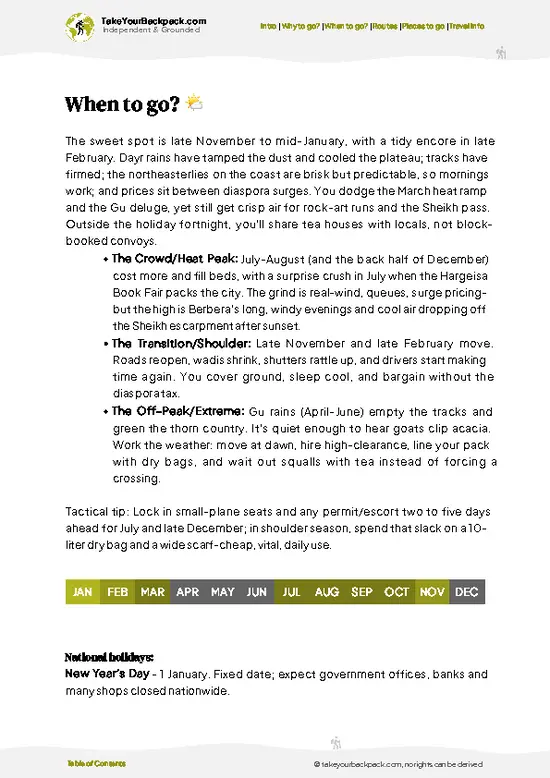
  • Weather: The Sool Plateau bakes under a harsh sun most of the year, but the sweet spot is between November and February. Expect dry, cool days perfect for trekking, avoiding the scorching 35°C+ (95°F+) highs of summer.

  • Temperature: Daytime temps hover around 20-25°C (68-77°F) in the best months, dropping sharply at night. Pack layers—nights can dip below 10°C (50°F), a shock if you’re used to Somalia’s coastal heat.

  • Daylight Hours: Daylight is steady year-round, roughly 11 to 12 hours. Early mornings and late afternoons are your golden hours for hiking—beat the midday blaze and catch the plateau’s raw colors.

  • Crowds: The plateau is off most travelers’ radar, but local nomads move seasonally. Visit in the dry season to avoid any unexpected gatherings and enjoy solitude with just the
read more 👉

  • Weather: The Sool Plateau bakes under a harsh sun most of the year, but the sweet spot is between November and February. Expect dry, cool days perfect for trekking, avoiding the scorching 35°C+ (95°F+) highs of summer.

  • Temperature: Daytime temps hover around 20-25°C (68-77°F) in the best months, dropping sharply at night. Pack layers—nights can dip below 10°C (50°F), a shock if you’re used to Somalia’s coastal heat.

  • Daylight Hours: Daylight is steady year-round, roughly 11 to 12 hours. Early mornings and late afternoons are your golden hours for hiking—beat the midday blaze and catch the plateau’s raw colors.

  • Crowds: The plateau is off most travelers’ radar, but local nomads move seasonally. Visit in the dry season to avoid any unexpected gatherings and enjoy solitude with just the wind and your thoughts.

  • Seasonal Activities: November to February aligns with local pastoral cycles—watch herders move livestock across the plateau, a rare cultural window that adds depth to your trek.

  • Price Fluctuations: Prices for guides and local services dip in the hotter months when fewer travelers brave the heat. If you want the plateau to yourself and a bargain, late spring is your gamble—but prepare for discomfort.


Pro-tip: Arrive just before the dry season peaks—November mornings are cool, the plateau is quiet, and you’ll snag the best local insights before the few other travelers roll in.


source: climatestotravel.comJANJanuary: excellent for travelingFEBFebruary: excellent for travelingMARMarch: good for travelingAPRApril: fair for travelingMAYMay: fair for travelingJUNJune: below average for travelingJULJuly: below average for travelingAUGAugust: below average for travelingSEPSeptember: fair for travelingOCTOctober: good for travelingNOVNovember: excellent for travelingDECDecember: excellent for traveling
when-to-go

✈️ The backpacker research shortcutSomalia Travel Guide

An offline-friendly backpacking guide with optimized travel routes, ranked highlights, transport advice, and the best areas to stay.
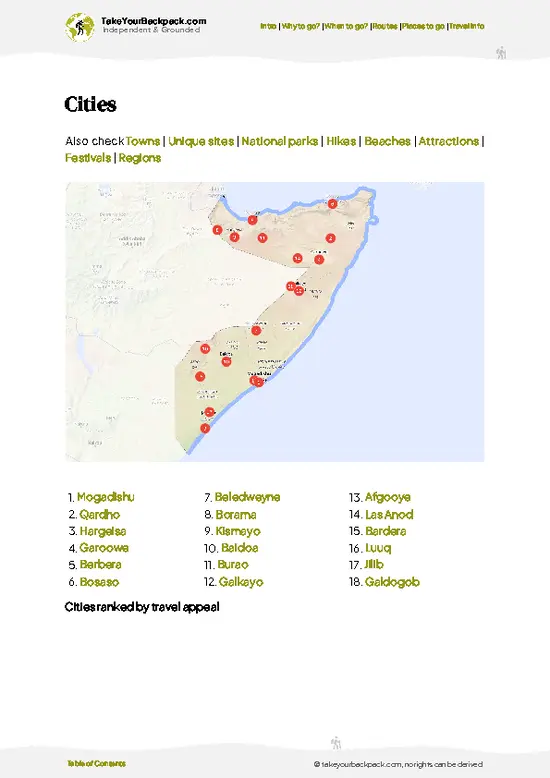
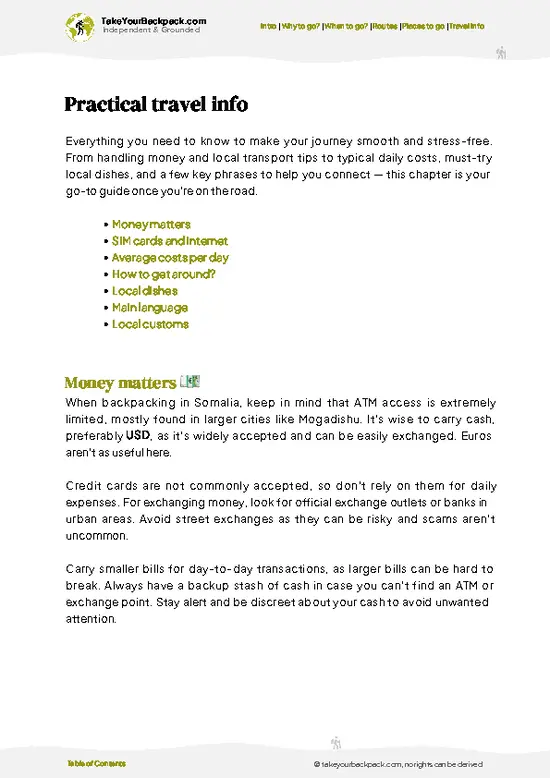
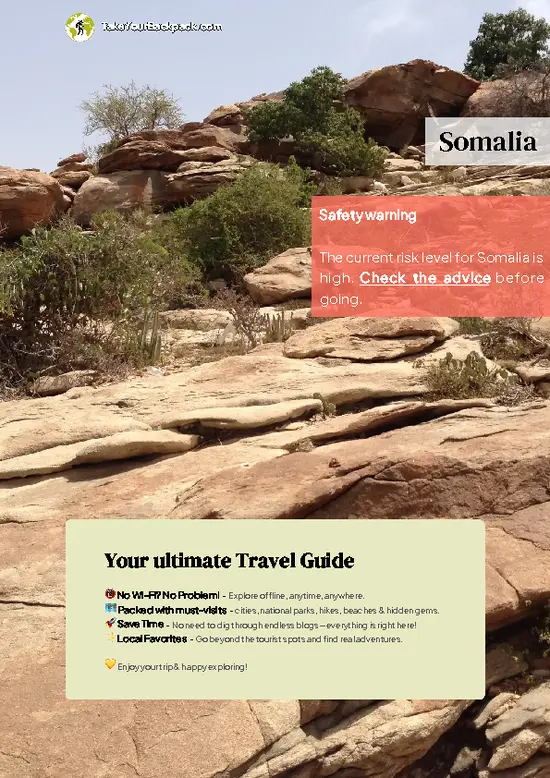
example page 0 from our offline Travel Guide for Somalia
example page 1 from our offline Travel Guide for Somalia
example page 2 from our offline Travel Guide for Somalia
example page 3 from our offline Travel Guide for Somalia
example page 4 from our offline Travel Guide for Somalia
example page 5 from our offline Travel Guide for Somalia
example page 6 from our offline Travel Guide for Somalia
example page 7 from our offline Travel Guide for Somalia
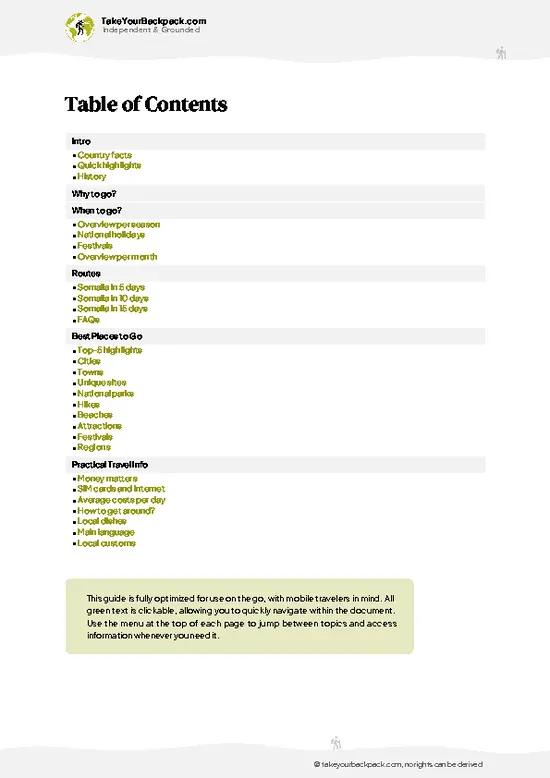
The digital guide (354 pages) contains:
83 highlights, ranked by travel appeal
Optimized 5, 10 & 15-day travel routes
Cities, national parks, landmarks, beaches
How to get around
Offline-friendly for travel without Wi-Fi
👉 Click to see all 30+ guide features

📅 Plan smarter in minutes, not weeks
Month by month travel advice
Festivals & national holidays
Budget expectations

🗺️ Go to the right places, skip the overrated ones
Honest pros & cons of destinations
Top hikes, parks & viewpoints
Lesser-known places most travelers miss
Clear “worth it vs skip it” guidance

🛏️ Travel smoothly without rookie mistakes
Best areas to stay
Transport systems explained simply
Common scams & safety advice
SIM cards, money & practical tips

🌍 Understand the country, not just visit it
Culture & traditions
52 Essential phrases & customs
Festivals worth planning around
Traveler-friendly historical context
Insights that make places more meaningful

📱 Built for real travel conditions
Fully downloadable PDF
Works completely offline
Optimized for phone use
Useful in remote areas & buses
Everything in one place
Save weeks of stressful planning
Get instant access to your full guide. 30‑day money-back guarantee.


By proceeding you agree to our terms.
Sent to your inbox immediately after payment • 100% Secure Checkout
Best Backpacking Travel Advisor 2025 tourism awardBest Backpacking
Travel Advisor
2025
What others say about Take Your Backpack Guides:
⭐⭐⭐⭐⭐
Fantastic, amazing amount of information!
⭐⭐⭐⭐⭐
My goodness this is amazing, it's what I've been looking for hats off too you!
⭐⭐⭐⭐⭐
I think this is absolutely BRILLIANT
⭐⭐⭐⭐
Very complete and informative. It's still missing places, but I gotta to commend you
⭐⭐⭐⭐⭐
This is truly amazing, thank you, can't wait to explore it with my kids!
⭐⭐⭐⭐⭐
Awesome resource, thank you!
⭐⭐⭐⭐⭐
This is amazing! Can't wait to explore the ones I haven't seen
⭐⭐⭐⭐
I love this! Well done, great idea.
⭐⭐⭐⭐⭐
Thanks for taking the time to make this gem!
⭐⭐⭐⭐⭐
This might be the best website I've ever seen.
⭐⭐⭐⭐⭐
Congratulations, and thank you so much for your work; it's incredibly valuable.
⭐⭐⭐⭐
In all seriousness I think you did a great job pointing out the important spots
⭐⭐⭐⭐⭐
10/10 very good
⭐⭐⭐⭐⭐
As someone who's only just starting to visit regularly this is awesome, thank you.
⭐⭐⭐⭐
Thank you very much! I'm going to visit my dad, it's going to be very useful!
⭐⭐⭐⭐⭐
This is really cool! We'll be travelling for the first time and this definitely come in handy.
⭐⭐⭐⭐⭐
You are now our minister of culture, congratulations 👨‍💼
⭐⭐⭐⭐⭐
Just wanted to tell you that this is a pearl! Going to follow your recommendations.
⭐⭐⭐⭐⭐
This is so cool. I'll definitely be using the resource for my travels soon.
⭐⭐⭐⭐⭐
This is very impressive! Good work.
⭐⭐⭐⭐⭐
This is an amazing and informative site. Very well done!

🛏️ Where to stay?Choosing the right base

The Sool Plateau is a backpacker’s dream, but you’ve got to know where to land. Start with Las Anod. This town is the heart of the plateau, buzzing with local life. You’ll find friendly faces and a vibrant market scene. It’s a great base for exploring the surrounding hills and valleys. Plus, the social vibe here makes it easy to connect with fellow travelers.

Next up, consider Taleh. It’s a bit off the beaten path, but that’s the charm. The landscape is stunning, and you’ll feel like you’ve stepped into a different world. The locals are welcoming, and you can often join in on community events. … read more 👉
The Sool Plateau is a backpacker’s dream, but you’ve got to know where to land. Start with Las Anod. This town is the heart of the plateau, buzzing with local life. You’ll find friendly faces and a vibrant market scene. It’s a great base for exploring the surrounding hills and valleys. Plus, the social vibe here makes it easy to connect with fellow travelers.

Next up, consider Taleh. It’s a bit off the beaten path, but that’s the charm. The landscape is stunning, and you’ll feel like you’ve stepped into a different world. The locals are welcoming, and you can often join in on community events. It’s a fantastic spot for those who want to dive deeper into the culture.

Lastly, check out Buuhoodle. This town is known for its rich history and is a hub for nomadic culture. You’ll find plenty of opportunities to engage with locals and learn about their way of life. The atmosphere is laid-back, perfect for solo travelers looking to soak in the experience without the touristy hustle.

Each of these spots offers a unique slice of life on the plateau, balancing safety, social interaction, and budget-friendly options. Choose wisely, and you’ll create memories that stick.

🚌 Getting aroundTransportation options and practical tips

The Sool Plateau is a wild dance of movement, where schedules are more like suggestions than rules. Picture this: a landscape that shifts from rugged mountains to sprawling plains, where the rhythm of life is dictated by the sun and the whims of the locals. You won’t find the sterile precision of a metro system here; instead, it’s a place where intuition reigns. The transport options are a mix of organized chaos and spontaneous adventure, making every journey feel like a mini-quest. You’ll need to embrace the unpredictability, but that’s where the magic lies.


  • Shared Taxis - These are the lifeblood of local transport. They usually run from early morning until sunset, with prices around $5 to $10 depending on the distance. Expect a bumpy ride, but you’ll be crammed in with locals, sharing
read more 👉
The Sool Plateau is a wild dance of movement, where schedules are more like suggestions than rules. Picture this: a landscape that shifts from rugged mountains to sprawling plains, where the rhythm of life is dictated by the sun and the whims of the locals. You won’t find the sterile precision of a metro system here; instead, it’s a place where intuition reigns. The transport options are a mix of organized chaos and spontaneous adventure, making every journey feel like a mini-quest. You’ll need to embrace the unpredictability, but that’s where the magic lies.


  • Shared Taxis - These are the lifeblood of local transport. They usually run from early morning until sunset, with prices around $5 to $10 depending on the distance. Expect a bumpy ride, but you’ll be crammed in with locals, sharing stories and laughter. Speed varies, but you’ll get where you need to go—eventually.


  • Minibuses - A step up in comfort, these can be found in major towns like Las Anod. They typically leave when full, which can mean a wait, but the fare is about $3 to $7. They’re faster than shared taxis and offer a bit more legroom, making them a solid choice for budget travelers.


  • Motorcycle Taxis (Boda Boda) - For those short hops or when you’re feeling adventurous, these are your go-to. Prices are negotiable, usually around $1 to $3. They zip through traffic like a breeze, but hold on tight; it’s a thrilling ride. Just be sure to agree on the fare before you hop on.


  • Walking - Don’t underestimate the power of your own two feet. Many towns are small enough to explore on foot, allowing you to soak in the local culture and scenery. It’s free, and you’ll discover hidden spots that no taxi can reach.


  • Private Car Rentals - If you’re feeling flush, renting a car can give you the freedom to explore at your own pace. Prices start around $50 a day, but factor in fuel and insurance. This option is best for those who want to venture off the beaten path without the hassle of public transport.


For a smooth journey across the Sool Plateau, always negotiate your fare upfront, especially with shared taxis and motorcycle taxis. This little hack saves you from any surprises and keeps your travel budget intact. Embrace the flow, and let the adventure unfold!

🍲 FoodWhat to Eat & Drink

In the Sool Plateau, food is a celebration of local flavors and communal spirit. You can’t miss the canjeero, a spongy flatbread that’s a staple here. Pair it with suqaar, a savory meat stew, and you’ll feel the warmth of Somali hospitality. The spices are bold, with hints of cumin and coriander that dance on your palate.

For a true local experience, hit up the markets. The bustling stalls are filled with vibrant produce and the aroma of grilled meats wafting through the air. Street vendors serve up sambusa, crispy pastries stuffed with spiced meat or lentils, perfect for a quick bite. Don’t shy away from trying shaah, a sweet Somali tea infused with cardamom; it’s a social ritual, often shared among friends.

Dining here is relaxed. Expect to eat with your hands, a sign of respect and connection. … read more 👉
In the Sool Plateau, food is a celebration of local flavors and communal spirit. You can’t miss the canjeero, a spongy flatbread that’s a staple here. Pair it with suqaar, a savory meat stew, and you’ll feel the warmth of Somali hospitality. The spices are bold, with hints of cumin and coriander that dance on your palate.

For a true local experience, hit up the markets. The bustling stalls are filled with vibrant produce and the aroma of grilled meats wafting through the air. Street vendors serve up sambusa, crispy pastries stuffed with spiced meat or lentils, perfect for a quick bite. Don’t shy away from trying shaah, a sweet Somali tea infused with cardamom; it’s a social ritual, often shared among friends.

Dining here is relaxed. Expect to eat with your hands, a sign of respect and connection. When you’re invited to share a meal, it’s customary to accept; it’s a way to bond. Just remember, the first bite is always reserved for the host.

So, dive into the local scene, savor the flavors, and embrace the warmth of the Sool Plateau. You’ll leave with a full belly and a heart full of stories.

Other Somali regions near Sool Plateau

Explore more nearby:

  • Shimbiris Mountain—Somalia’s highest point, cloud forest, alpine meadows, panoramic vistas| 78 km away
  • Karkaar Mountains—limestone ridges, juniper forests, remote villages, highland passes| 111 km away
  • Sanaag Mountains—granite peaks, frankincense groves, misty valleys, endemic wildlife| 222 km away

💡 Not sure where to go next?
Create a personalized itinerary for Somalia including Sool Plateau and the places that fit your trip.

Generate my itinerary

👉 Discover all regions

Or checkout all Somalia has to offer (think cities, towns, villages, national parks, hikes, beaches, festivals)
Country photo of Somalia

We 💚 feedbackParting advice and final tips

The Sool Plateau is a wild card. You’ll find a raw beauty that feels untouched, like stepping into a living postcard. The best surprise? The locals. Their warmth and hospitality will make you feel like family. But here’s the kicker: don’t underestimate the weather. It can shift faster than a conversation at a bar. Pack layers and be ready for anything. Embrace the unpredictability; it’s part of the charm. Trust me, you’ll leave with stories that’ll make your friends jealous.

✍️ Help improve this page!
The information on this page is based on in-depth research, insights shared by experienced travelers, and feedback from the local travel community in Somalia. While every effort is made to keep the information accurate and current, conditions can change — so if you spot anything incorrect or outdated, please get in touch.


🙋‍♂️ Give feedback

👋 Meet the founderWho’s Behind Take Your Backpack?

Johan, backpacker and founder of TakeYourBackpackHi, I’m Johan (Netherlands 🇳🇱), the creator of TakeYourBackpack. Over the past decade, I’ve backpacked through 80+ countries across six continents, gaining extensive experience with independent travel, long-term trips, and overland routes.

This site is built on a combination of firsthand travel experience and carefully curated insights from other backpackers. Many guides are based on places I’ve personally visited, while others bring together tips, observations, and practical advice shared by trusted travelers I’ve met along the way.

The goal is to provide realistic, experience-driven guidance — not generic itineraries — so you can explore destinations with better context, clearer expectations, and more confidence.

Get full Somalia guide •
Instant download • 83 highlights • Full Offline guide