×

South Africa🇿🇦 | attractionsDistrict Six MuseumPainted floor map, salvaged street signs, ex-resident guides, converted church | things to do and best time to go

Explore Robben Island MuseumExplore Constitution Hill

Backpacking in District Six Museum
🌟 Highlightattraction ranked #6
By Johan Kruseman 🇳🇱 | Updated October 22, 2026

The tea at the museum’s small café comes in a mismatched cup, and I paid about US$2 for it while reading street names stitched onto a huge floor map, where former residents have written where their homes stood. District Six Museum sits on the eastern edge of central Cape Town, South Africa, in a converted Methodist church on Buitenkant Street. Be plain about the downsides: it is small, there is no spectacle, and anyone wanting views or adrenaline should skip it. Crowds stay thin, apart from tour groups on weekday mornings, and the entry fee of roughly US$4 to 5 is fair for what you get. What earns the visit is the testimony. Handwritten signs, salvaged street signs and ex-residents who sometimes guide the rooms turn forced removals into something personal. Anyone curious about apartheid’s human cost will love it. Travelers wanting quick photo stops will not.

Discover everything you want to know in the 📖 South Africa Travel Guide.


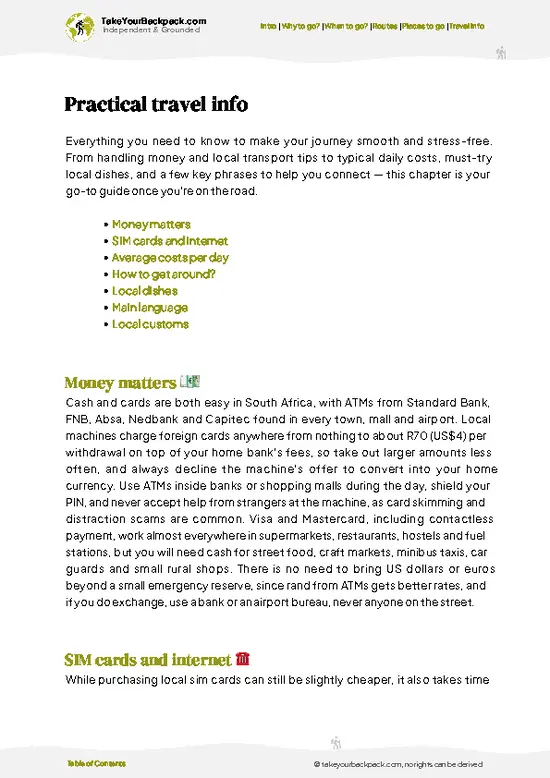
example page 0 from our offline Travel Guide for South Africa
example page 1 from our offline Travel Guide for South Africa
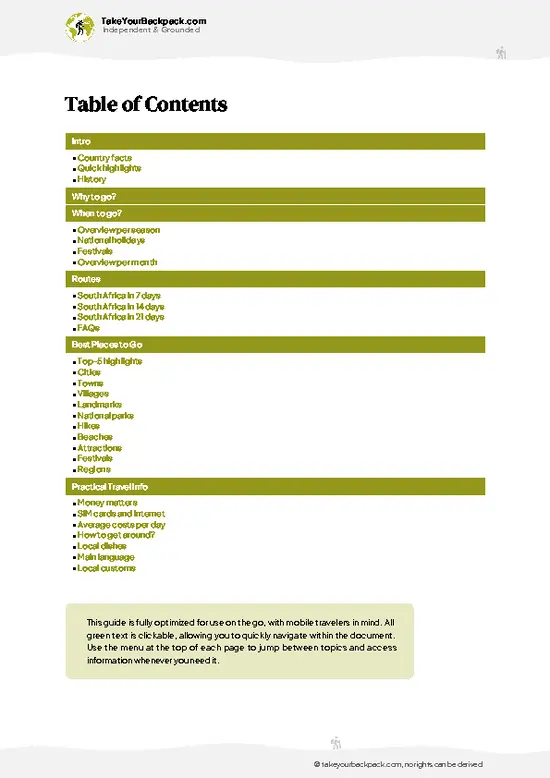
example page 2 from our offline Travel Guide for South Africa
example page 3 from our offline Travel Guide for South Africa
example page 4 from our offline Travel Guide for South Africa
example page 5 from our offline Travel Guide for South Africa
example page 6 from our offline Travel Guide for South Africa
example page 7 from our offline Travel Guide for South Africa
Loading the map 🌍
CLICK TO FILTER
cities
towns
villages
landmarks
national parks
hikes
beaches
attractions
festivals
regions
SHOW COUNTRY’S BESTSHOW ALL

✨ Why go?
Ranked #6 attraction in South Africa
The unique appeal for travelers

District Six Museum is where Cape Town’s apartheid history stops being abstract. In 1966 the government declared the mixed neighborhood white-only, and around 60,000 residents were forcibly moved to the Cape Flats over the following years. The museum, opened in 1994, was built by the people who lost their homes, and it still feels like theirs. You can see it in the floor map of the old streets where returning residents have scrawled names and memories, and in the rescued street signs hanging from the ceiling that used to mark Hanover Street and its neighbors.

For a backpacker, this is the best single hour for context before you visit Robben Island or walk through the Bo-Kaap. Many tours there are led by former District Six residents, so you hear first-person stories rather than a script. … read more 👉
District Six Museum is where Cape Town’s apartheid history stops being abstract. In 1966 the government declared the mixed neighborhood white-only, and around 60,000 residents were forcibly moved to the Cape Flats over the following years. The museum, opened in 1994, was built by the people who lost their homes, and it still feels like theirs. You can see it in the floor map of the old streets where returning residents have scrawled names and memories, and in the rescued street signs hanging from the ceiling that used to mark Hanover Street and its neighbors.

For a backpacker, this is the best single hour for context before you visit Robben Island or walk through the Bo-Kaap. Many tours there are led by former District Six residents, so you hear first-person stories rather than a script. It costs little, sits within walking distance of the city center, and changes how you read the rest of Cape Town.

💡 HighlightsDon't-miss highlights and experiences

  1. The Floor Map of District Six: a large painted map of the old street grid covers the main hall floor. Former residents have written the spots where their houses, shops and mosques stood, and it is the museum’s emotional center.
  2. Street Signs Collection: original signs, rescued as bulldozers worked, hang above you. They are simple objects, yet they give the lost streets a physical presence.
  3. Guided Tours by Former Residents: some guides lived in District Six before the removals. Their stories of neighbors, music and eviction day add detail no label can match.
  4. Memory Cloth and Writing Walls: visitors and returning families leave messages on cloth and walls. Reading them takes time and rewards it.
  5. Photographs and Household Objects: family portraits, tools and everyday items show the neighborhood’s
… read more 👉
  1. The Floor Map of District Six: a large painted map of the old street grid covers the main hall floor. Former residents have written the spots where their houses, shops and mosques stood, and it is the museum’s emotional center.
  2. Street Signs Collection: original signs, rescued as bulldozers worked, hang above you. They are simple objects, yet they give the lost streets a physical presence.
  3. Guided Tours by Former Residents: some guides lived in District Six before the removals. Their stories of neighbors, music and eviction day add detail no label can match.
  4. Memory Cloth and Writing Walls: visitors and returning families leave messages on cloth and walls. Reading them takes time and rewards it.
  5. Photographs and Household Objects: family portraits, tools and everyday items show the neighborhood’s mixed Muslim, Christian and other communities. The ordinariness is what makes it hit hard.
  6. The Church Building: the former Methodist Mission Church, built in the 1800s, was a gathering point for people opposed to the removals. Its pews and wooden floors keep the old atmosphere.
  7. The Museum Café and Shop: cheap tea, snacks and books by local authors. Buy something here, since sales support the museum’s work with its community.
District Six Museum charges a modest entry fee at the door, and guided tours by ex-residents are best arranged ahead, particularly for groups.
Spotted a mistake or missing something? Contact us.

Things to do around District Six Museum

Ratings based on Tripadvisor reviews. When you book through this link, you support our work at no extra cost to you.

🌤️ When to go?Choosing the right time of year

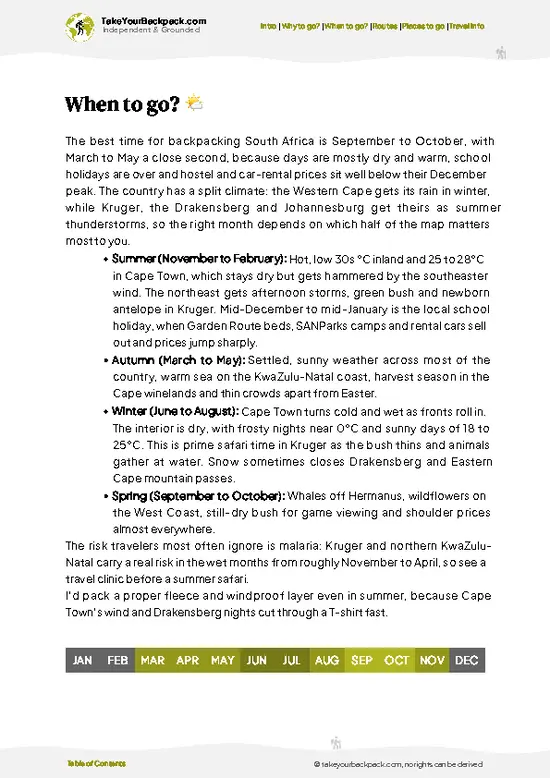
  • Summer (November to March): Cape Town runs warm and dry, typically 18 to 27°C (64 to 81°F), with long evenings and strong southeast wind. The museum is indoors, so the heat matters little, but December and January bring the most visitors and the highest bed prices.
  • Autumn (April to May): Days of 15 to 23°C (59 to 73°F), calmer wind and thinner crowds make this a comfortable period for walking the surrounding streets.
  • Winter (June to August): Cold fronts bring rain, with temperatures around 8 to 18°C (46 to 64°F). A museum visit fits a wet day well, and rooms are at their cheapest.
  • Spring (September to October): Mild weather of 11 to 22°C (52 to 72°F) and rising daylight. Prices stay moderate until the summer rush.
Weekday mornings are the quietest, because tour groups tend to arrive around midday.

source: climatestotravel.comJANJanuary: good for travelingFEBFebruary: good for travelingMARMarch: highly recommended for travelingAPRApril: highly recommended for travelingMAYMay: fair for travelingJUNJune: below average for travelingJULJuly: below average for travelingAUGAugust: fair for travelingSEPSeptember: good for travelingOCTOctober: highly recommended for travelingNOVNovember: highly recommended for travelingDECDecember: good for traveling
south-africa-attraction-district-six-museum
© Google |

✈️ The backpacker research shortcutSouth Africa Travel Guide

An offline-friendly backpacking guide with optimized travel routes, ranked highlights, transport advice, and the best areas to stay.
example page 0 from our offline Travel Guide for South Africa
example page 1 from our offline Travel Guide for South Africa
example page 2 from our offline Travel Guide for South Africa
example page 3 from our offline Travel Guide for South Africa
example page 4 from our offline Travel Guide for South Africa
example page 5 from our offline Travel Guide for South Africa
example page 6 from our offline Travel Guide for South Africa
example page 7 from our offline Travel Guide for South Africa
The digital guide (457 pages) contains:
✅ 125 highlights, ranked by travel appeal
✅ Optimized 7, 14 & 21-day travel routes
✅ Cities, national parks, landmarks, beaches
✅ How to get around
✅ Offline-friendly for travel without Wi-Fi
👉 Click to see all 30+ guide features

📅 Plan smarter in minutes, not weeks
✅ Month by month travel advice
✅ Festivals & national holidays
✅ Budget expectations

🗺️ Go to the right places, skip the overrated ones
✅ Honest pros & cons of destinations
✅ Top hikes, parks & viewpoints
✅ Lesser-known places most travelers miss
✅ Clear “worth it vs skip it” guidance

🛏️ Travel smoothly without rookie mistakes
✅ Best areas to stay
✅ Transport systems explained simply
✅ Common scams & safety advice
✅ SIM cards, money & practical tips

🌍 Understand the country, not just visit it
✅ Culture & traditions
✅ 52 Essential phrases & customs
✅ Festivals worth planning around
✅ Traveler-friendly historical context
✅ Insights that make places more meaningful

📱 Built for real travel conditions
✅ Fully downloadable PDF
✅ Works completely offline
✅ Optimized for phone use
✅ Useful in remote areas & buses
✅ Everything in one place
Stop searching, start planning
Get instant access to your full guide. 30‑day money-back guarantee.
+ Add another guide for just

By proceeding you agree to our terms.
Sent to your inbox immediately after payment • 100% Secure Checkout
Best Backpacking Travel Advisor 2025 tourism awardBest Backpacking
Travel Advisor
2025
What others say about Take Your Backpack Guides:
⭐⭐⭐⭐⭐
Fantastic, amazing amount of information!
⭐⭐⭐⭐⭐
My goodness this is amazing, it's what I've been looking for hats off too you!
⭐⭐⭐⭐⭐
I think this is absolutely BRILLIANT
⭐⭐⭐⭐
Very complete and informative. It's still missing places, but I gotta to commend you
⭐⭐⭐⭐⭐
This is truly amazing, thank you, can't wait to explore it with my kids!
⭐⭐⭐⭐⭐
Awesome resource, thank you!
⭐⭐⭐⭐⭐
This is amazing! Can't wait to explore the ones I haven't seen
⭐⭐⭐⭐
I love this! Well done, great idea.
⭐⭐⭐⭐⭐
Thanks for taking the time to make this gem!
⭐⭐⭐⭐⭐
This might be the best website I've ever seen.
⭐⭐⭐⭐⭐
Congratulations, and thank you so much for your work; it's incredibly valuable.
⭐⭐⭐⭐
In all seriousness I think you did a great job pointing out the important spots
⭐⭐⭐⭐⭐
10/10 very good
⭐⭐⭐⭐⭐
As someone who's only just starting to visit regularly this is awesome, thank you.
⭐⭐⭐⭐
Thank you very much! I'm going to visit my dad, it's going to be very useful!
⭐⭐⭐⭐⭐
This is really cool! We'll be travelling for the first time and this definitely come in handy.
⭐⭐⭐⭐⭐
You are now our minister of culture, congratulations 👨‍💼
⭐⭐⭐⭐⭐
Just wanted to tell you that this is a pearl! Going to follow your recommendations.
⭐⭐⭐⭐⭐
This is so cool. I'll definitely be using the resource for my travels soon.
⭐⭐⭐⭐⭐
This is very impressive! Good work.
⭐⭐⭐⭐⭐
This is an amazing and informative site. Very well done!

🛏️ Where to stay?How to pick the right area

The City Bowl, especially the central business district and the East City area, puts you within a 5 to 15 minute walk of the District Six Museum on Buitenkant Street. Dorm beds here run roughly US$12 to 22 a night, and the streets between Long Street and the Company’s Garden are the most sociable. Long Street itself has the densest cluster of hostels, bars and cafes, so it suits solo travelers who want company, though weekend nights are loud. Stick to the main lit streets after dark and use a rideshare for late returns.

Gardens and Tamboerskloof sit on the slopes toward Table Mountain. They are … read more 👉
The City Bowl, especially the central business district and the East City area, puts you within a 5 to 15 minute walk of the District Six Museum on Buitenkant Street. Dorm beds here run roughly US$12 to 22 a night, and the streets between Long Street and the Company’s Garden are the most sociable. Long Street itself has the densest cluster of hostels, bars and cafes, so it suits solo travelers who want company, though weekend nights are loud. Stick to the main lit streets after dark and use a rideshare for late returns.

Gardens and Tamboerskloof sit on the slopes toward Table Mountain. They are quieter, greener and a short ride or 20 minute walk away, with a mellower crowd of longer-stay travelers and a few small guesthouses. Woodstock, east of the center, has street art, markets and a creative scene, and it is cheaper, but it is less consistent after dark, so choose a spot close to Lower Main Road. The V&A Waterfront is safe but pricey and has little backpacker atmosphere.

👛 Costs (as of 22 October 2026)Money, prices, and spending tips

A day around District Six Museum costs about US$50 to 75 for a backpacker, including a bed, food, transport and the museum entry.
CategoryBudget RangeLocal Reality
Museum entryUS$4 to 6Paid in rand at the desk. Entry is modest and supports the museum’s community work. Card is usually accepted.
Guided tour or former residents’ talkUS$0 to 6Staff and former residents often tell the stories on the floor, and a tip is appreciated.
Accommodation (high season)US$14 to 25Dorm bed in the City Bowl. Winter prices fall to around US$10 to 18.
FoodUS$10 to 20Cafes near Buitenkant Street and Long Street, plus market lunches in Woodstock.
Local transportUS$3 to 12The MyCiTi bus covers the center, and rideshares cost about US$3 to 6 for short trips.
ExtrasUS$3 to 8Coffee, souvenirs from the museum shop and the
… read more 👉
A day around District Six Museum costs about US$50 to 75 for a backpacker, including a bed, food, transport and the museum entry.
CategoryBudget RangeLocal Reality
Museum entryUS$4 to 6Paid in rand at the desk. Entry is modest and supports the museum’s community work. Card is usually accepted.
Guided tour or former residents’ talkUS$0 to 6Staff and former residents often tell the stories on the floor, and a tip is appreciated.
Accommodation (high season)US$14 to 25Dorm bed in the City Bowl. Winter prices fall to around US$10 to 18.
FoodUS$10 to 20Cafes near Buitenkant Street and Long Street, plus market lunches in Woodstock.
Local transportUS$3 to 12The MyCiTi bus covers the center, and rideshares cost about US$3 to 6 for short trips.
ExtrasUS$3 to 8Coffee, souvenirs from the museum shop and the nearby Company’s Garden are all low cost.
Total Daily BudgetUS$50 to 75Lower if you walk everywhere and self-cater.
⚠️ Prices can change and everyone travels differently, so take this as a rough guide. Hope it helps you plan your adventure!

FAQTraveler FAQ

Plan on 1.5 to 2 hours at District Six Museum, which is enough to read the displays and listen to a guide or former resident. Add another hour if you want to walk the former district toward Zonnebloem and the Company’s Garden. Mornings on weekdays are calmest.
Yes, District Six Museum is worth the entrance fee of roughly US$4 to 6, because the exhibits are built from real street signs, memories and the floor map signed by former residents. Guides who lived through the forced removals add detail no sign can give. Few Cape Town sights this affordable explain apartheid so personally.
From the center of Cape Town, District Six Museum on Buitenkant Street is a 10 to 15 minute walk from Greenmarket Square or the Castle of Good Hope. A rideshare from the Waterfront or Long Street costs about US$3 to 6 and takes 10 to 20 minutes. MyCiTi buses and minibus taxis also stop near the Grand Parade, a short walk away.
⚠️ Things can change over time, so always validate details locally before you go.

Other South African attractions near District Six Museum

Explore more nearby:


💡 Not sure where to go next?
Create a personalized itinerary for South Africa including District Six Museum and the places that fit your trip.

Generate my itinerary

👉 Discover all attractions

Or checkout all South Africa has to offer (think cities, towns, villages, national parks, hikes, beaches, festivals)
Country photo of South Africa

We 💚 feedbackSumming up the experience

District Six Museum deserves about ninety minutes, two hours if you join a guided tour and linger over the floor map. I would go early in your Cape Town stay, before Table Mountain and the beaches, so the rest of the city reads differently. Skip it only if you want entertainment.

✈️ When did I visit South Africa?
I have visited South Africa, before and after my Zimbabwe trip in 2001.

✍️ Help improve this page!
The information on this page is based on my own backpacking experience in South Africa, supplemented with up-to-date research and feedback from other travelers. Travel details can change, so if you notice anything outdated or incomplete, feel free to let me know.


🙋‍♂️ Give feedback

👋 Meet the founderWho’s Behind Take Your Backpack?

Johan, backpacker and founder of TakeYourBackpackHi, I’m Johan (Netherlands 🇳🇱), the creator of TakeYourBackpack. Over the past 3 decades, I’ve backpacked through 90+ countries across six continents, gaining extensive experience with independent travel, long-term trips, and overland routes.

This site is built on a combination of firsthand travel experience and carefully curated insights from other backpackers. Many guides are based on places I’ve personally visited, while others bring together tips, observations, and practical advice shared by trusted travelers I’ve met along the way.

The goal is to provide realistic, experience-driven guidance — not generic itineraries — so you can explore destinations with better context, clearer expectations, and more confidence.