×

South Africa🇿🇦 | villagesMatjiesfonteinVictorian hotel, railway platform, double-decker tour, Karoo flats | things to do and best time to go

Explore DullstroomExplore Greyton

Backpacking in Matjiesfontein
👍 Recommendedvillage ranked #5
By Johan Kruseman 🇳🇱 | Updated October 22, 2026

Matjiesfontein is a working Victorian railway village with a hotel, a museum and a handful of houses, and it does not have the shops, ATMs or restaurant choice a stop on the main road might suggest. It sits in the Central Karoo of South Africa, off the N1, roughly midway between Cape Town and Johannesburg. I drove in from the N1, and a flock of Karoo sheep blocked the turnoff while a farmer waved me through with his hat. Skip an overnight stay unless you want the Lord Milner Hotel, because the village takes an hour or two to see and the Transport Museum and the old London double-decker bus tour cover everything. Fill your tank and carry cash and food beforehand, since services are minimal. Evenings are silent, with a few hotel guests and starry skies. Unlike Laingsburg, a farm town with supermarkets and fuel, Matjiesfontein is preserved as a museum piece.

Discover everything you want to know in the 📖 South Africa Travel Guide.


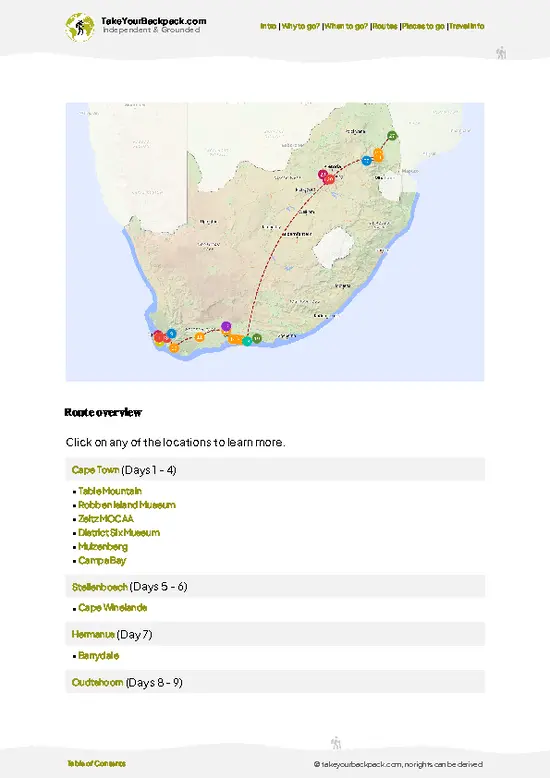
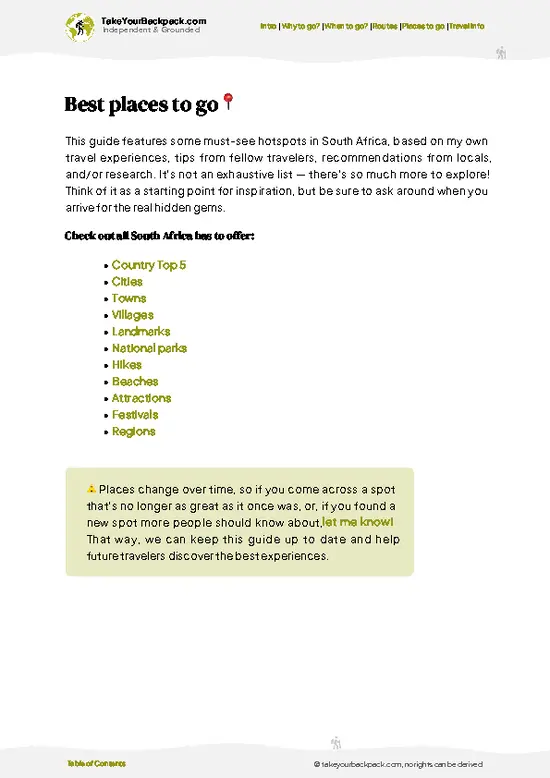
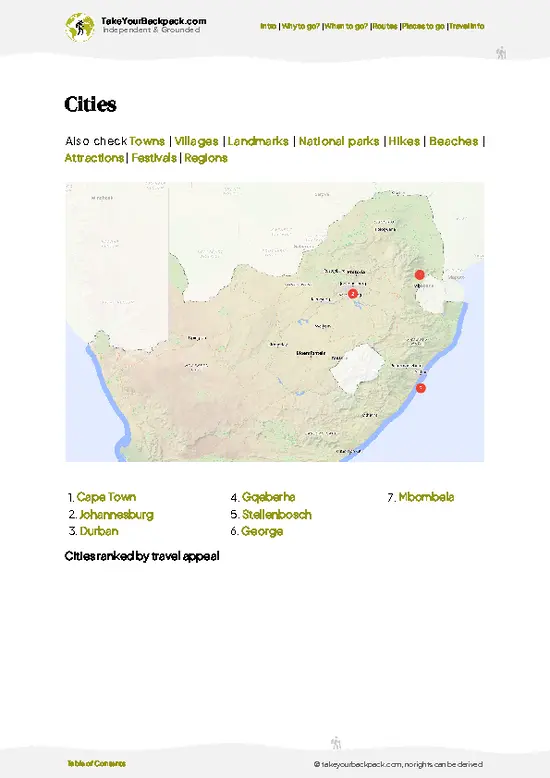
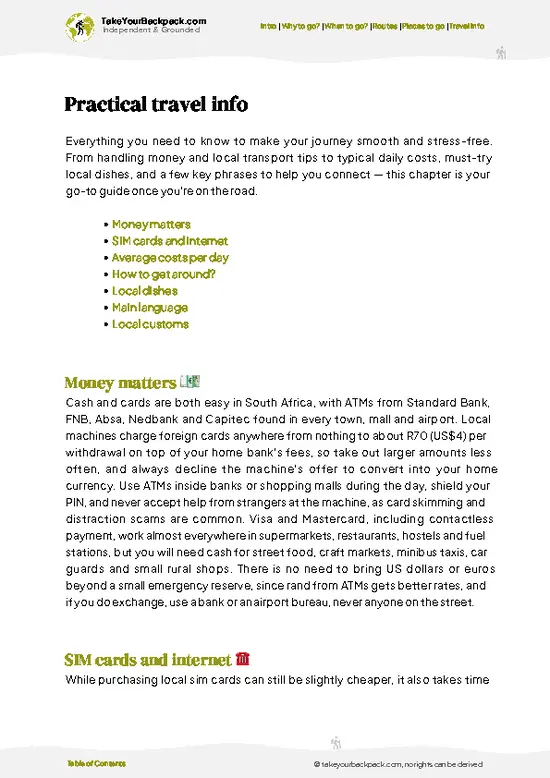
example page 0 from our offline Travel Guide for South Africa
example page 1 from our offline Travel Guide for South Africa
example page 2 from our offline Travel Guide for South Africa
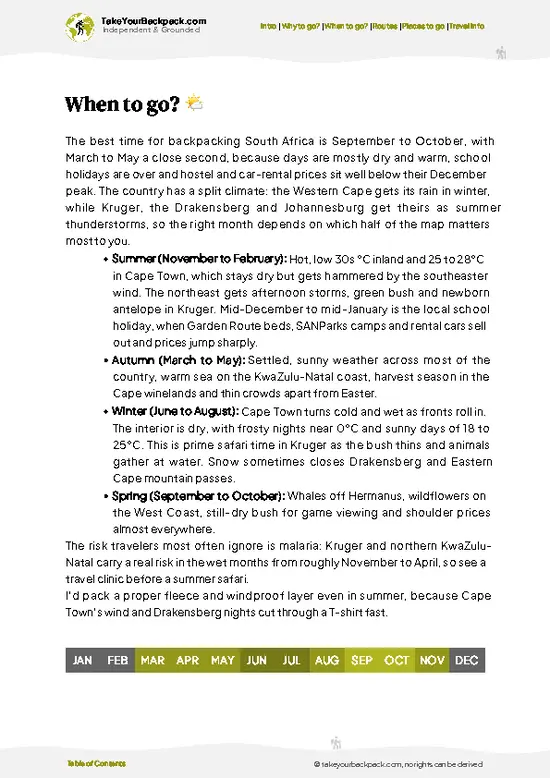
example page 3 from our offline Travel Guide for South Africa
example page 4 from our offline Travel Guide for South Africa
example page 5 from our offline Travel Guide for South Africa
example page 6 from our offline Travel Guide for South Africa
example page 7 from our offline Travel Guide for South Africa
Loading the map 🌍
CLICK TO FILTER
cities
towns
villages
landmarks
national parks
hikes
beaches
attractions
festivals
regions
SHOW COUNTRY’S BESTSHOW ALL

✨ Why go?
Ranked #5 village in South Africa
The unique appeal for travelers

Matjiesfontein works as a pause on the long Cape Town to Johannesburg corridor, where the Karoo stretches empty for hours and a Victorian street appears out of nowhere. Backpackers stop for one night, rarely two. The appeal is the Lord Milner Hotel and the preserved street around it, with old lamp posts, a red London bus and a sense that nothing has been rushed since the railway arrived. Add the Karoo night sky, which is dark enough to show the Milky Way without any effort, and you have a reason to break a drive or train ride. It suits slow travelers, couples, road-trippers and rail fans, and solo travelers who want calm rather than company. Do not expect hostel banter or hikes. Anyone who wants activity should keep moving toward the Cape winelands or the Garden Route. Anyone happy with an … read more 👉
Matjiesfontein works as a pause on the long Cape Town to Johannesburg corridor, where the Karoo stretches empty for hours and a Victorian street appears out of nowhere. Backpackers stop for one night, rarely two. The appeal is the Lord Milner Hotel and the preserved street around it, with old lamp posts, a red London bus and a sense that nothing has been rushed since the railway arrived. Add the Karoo night sky, which is dark enough to show the Milky Way without any effort, and you have a reason to break a drive or train ride. It suits slow travelers, couples, road-trippers and rail fans, and solo travelers who want calm rather than company. Do not expect hostel banter or hikes. Anyone who wants activity should keep moving toward the Cape winelands or the Garden Route. Anyone happy with an early dinner and a porch will find one night is just right.

💡 HighlightsEssential experiences to have while visiting Matjiesfontein

  1. Lord Milner Hotel: The village’s signature building, a Victorian hotel with a long veranda, period furniture and old photographs in the corridors. Walk in for a look at the lobby and the bar, or stay a night if you can afford the splurge. Late afternoon is pleasant for tea on the veranda. Entering the public areas is usually free, and a pot of tea or a drink costs about US$3 to 6. Allow 30 to 60 minutes.
  2. Marie Rawdon Museum: A small, crowded museum of Victorian and Edwardian curiosities, railway memorabilia, old clothing, household objects and items from the Anglo-Boer War era. It is the best place to understand how this one-street village grew around its founder and the railway. Entry is roughly US$3 to 5, and an hour is plenty. Visit mid-morning, when the street is calm.
  3. Historic Street and
… read more 👉
  1. Lord Milner Hotel: The village’s signature building, a Victorian hotel with a long veranda, period furniture and old photographs in the corridors. Walk in for a look at the lobby and the bar, or stay a night if you can afford the splurge. Late afternoon is pleasant for tea on the veranda. Entering the public areas is usually free, and a pot of tea or a drink costs about US$3 to 6. Allow 30 to 60 minutes.
  2. Marie Rawdon Museum: A small, crowded museum of Victorian and Edwardian curiosities, railway memorabilia, old clothing, household objects and items from the Anglo-Boer War era. It is the best place to understand how this one-street village grew around its founder and the railway. Entry is roughly US$3 to 5, and an hour is plenty. Visit mid-morning, when the street is calm.
  3. Historic Street and Railway Station: The main street is lined with restored cottages, a post office, a tearoom and a vintage London double-decker bus that runs short village tours for a few dollars. The station platform is where the Blue Train and long-distance passenger trains pass through, and watching one roll in across the flat Karoo is a fine way to spend a quiet half hour. Walking is free, the bus costs around US$3 to 5, and you should allow one to two hours. Evening is best, when the light is soft and the street empties.
For day trips, the Cape winelands near Worcester, the Karoo National Park at Beaufort West and the arty village of Prince Albert are the closest worthwhile outings by road. Walking the street and the station platform costs nothing, which makes it the cheapest item here.
Spotted a mistake or missing something? Contact us.

Things to do near Matjiesfontein

Ratings based on Tripadvisor reviews. When you book through this link, you support our work at no extra cost to you.

🌤️ When to go?When to go for the best experience

Matjiesfontein works best from March to May and September to November, when Karoo days run 20 to 27°C (68 to 81°F) and nights cool off nicely.
  • Summer (December to February): Days hit 32 to 38°C (90 to 100°F) and the sun is harsh, with long evenings. Thunderstorms are rare but possible. South African school holidays fill the Lord Milner Hotel, so prices climb.
  • Autumn (March to May): Clear, calm and mild at 18 to 27°C (64 to 81°F). Crowds thin and rooms loosen up.
  • Winter (June to August): Days are crisp at 12 to 18°C (54 to 64°F), but nights often drop to 0°C (32°F) or below, with frost and occasional snow on the Swartberg and Witteberg peaks. Daylight is shorter, and the star show is superb.
  • Spring (September to November): Warming 17 to 28°C (63 to 82°F), with Karoo shrubs flowering after rain.
… read more 👉
Matjiesfontein works best from March to May and September to November, when Karoo days run 20 to 27°C (68 to 81°F) and nights cool off nicely.
  • Summer (December to February): Days hit 32 to 38°C (90 to 100°F) and the sun is harsh, with long evenings. Thunderstorms are rare but possible. South African school holidays fill the Lord Milner Hotel, so prices climb.
  • Autumn (March to May): Clear, calm and mild at 18 to 27°C (64 to 81°F). Crowds thin and rooms loosen up.
  • Winter (June to August): Days are crisp at 12 to 18°C (54 to 64°F), but nights often drop to 0°C (32°F) or below, with frost and occasional snow on the Swartberg and Witteberg peaks. Daylight is shorter, and the star show is superb.
  • Spring (September to November): Warming 17 to 28°C (63 to 82°F), with Karoo shrubs flowering after rain.
Book ahead for long weekends and December, and pack a warm layer in every season.


source: climatestotravel.comJANJanuary: good for travelingFEBFebruary: good for travelingMARMarch: highly recommended for travelingAPRApril: highly recommended for travelingMAYMay: excellent for travelingJUNJune: highly recommended for travelingJULJuly: highly recommended for travelingAUGAugust: highly recommended for travelingSEPSeptember: excellent for travelingOCTOctober: highly recommended for travelingNOVNovember: highly recommended for travelingDECDecember: good for traveling
when-to-go

✈️ The backpacker research shortcutSouth Africa Travel Guide

An offline-friendly backpacking guide with optimized travel routes, ranked highlights, transport advice, and the best areas to stay.
example page 0 from our offline Travel Guide for South Africa
example page 1 from our offline Travel Guide for South Africa
example page 2 from our offline Travel Guide for South Africa
example page 3 from our offline Travel Guide for South Africa
example page 4 from our offline Travel Guide for South Africa
example page 5 from our offline Travel Guide for South Africa
example page 6 from our offline Travel Guide for South Africa
example page 7 from our offline Travel Guide for South Africa
The digital guide (457 pages) contains:
✅ 125 highlights, ranked by travel appeal
✅ Optimized 7, 14 & 21-day travel routes
✅ Cities, national parks, landmarks, beaches
✅ How to get around
✅ Offline-friendly for travel without Wi-Fi
👉 Click to see all 30+ guide features

📅 Plan smarter in minutes, not weeks
✅ Month by month travel advice
✅ Festivals & national holidays
✅ Budget expectations

🗺️ Go to the right places, skip the overrated ones
✅ Honest pros & cons of destinations
✅ Top hikes, parks & viewpoints
✅ Lesser-known places most travelers miss
✅ Clear “worth it vs skip it” guidance

🛏️ Travel smoothly without rookie mistakes
✅ Best areas to stay
✅ Transport systems explained simply
✅ Common scams & safety advice
✅ SIM cards, money & practical tips

🌍 Understand the country, not just visit it
✅ Culture & traditions
✅ 52 Essential phrases & customs
✅ Festivals worth planning around
✅ Traveler-friendly historical context
✅ Insights that make places more meaningful

📱 Built for real travel conditions
✅ Fully downloadable PDF
✅ Works completely offline
✅ Optimized for phone use
✅ Useful in remote areas & buses
✅ Everything in one place
Stop searching, start planning
Get instant access to your full guide. 30‑day money-back guarantee.
+ Add another guide for just

By proceeding you agree to our terms.
Sent to your inbox immediately after payment • 100% Secure Checkout
Best Backpacking Travel Advisor 2025 tourism awardBest Backpacking
Travel Advisor
2025
What others say about Take Your Backpack Guides:
⭐⭐⭐⭐⭐
Fantastic, amazing amount of information!
⭐⭐⭐⭐⭐
My goodness this is amazing, it's what I've been looking for hats off too you!
⭐⭐⭐⭐⭐
I think this is absolutely BRILLIANT
⭐⭐⭐⭐
Very complete and informative. It's still missing places, but I gotta to commend you
⭐⭐⭐⭐⭐
This is truly amazing, thank you, can't wait to explore it with my kids!
⭐⭐⭐⭐⭐
Awesome resource, thank you!
⭐⭐⭐⭐⭐
This is amazing! Can't wait to explore the ones I haven't seen
⭐⭐⭐⭐
I love this! Well done, great idea.
⭐⭐⭐⭐⭐
Thanks for taking the time to make this gem!
⭐⭐⭐⭐⭐
This might be the best website I've ever seen.
⭐⭐⭐⭐⭐
Congratulations, and thank you so much for your work; it's incredibly valuable.
⭐⭐⭐⭐
In all seriousness I think you did a great job pointing out the important spots
⭐⭐⭐⭐⭐
10/10 very good
⭐⭐⭐⭐⭐
As someone who's only just starting to visit regularly this is awesome, thank you.
⭐⭐⭐⭐
Thank you very much! I'm going to visit my dad, it's going to be very useful!
⭐⭐⭐⭐⭐
This is really cool! We'll be travelling for the first time and this definitely come in handy.
⭐⭐⭐⭐⭐
You are now our minister of culture, congratulations 👨‍💼
⭐⭐⭐⭐⭐
Just wanted to tell you that this is a pearl! Going to follow your recommendations.
⭐⭐⭐⭐⭐
This is so cool. I'll definitely be using the resource for my travels soon.
⭐⭐⭐⭐⭐
This is very impressive! Good work.
⭐⭐⭐⭐⭐
This is an amazing and informative site. Very well done!

🛏️ Where to stay?Best areas and accommodation options

Matjiesfontein has only a handful of beds, all within a few minutes’ walk of the railway station, so the choice is quick and booking ahead matters.
The Lord Milner Hotel is the landmark, a Victorian pile with creaking corridors, a wide veranda and a dining room. Rooms run roughly US$90 to 170 a night, which is high for a backpacker, though a splurge here buys real atmosphere. Breakfast is usually extra or bundled depending on the room.
Cheaper options are the Milner’s annex rooms and a few self-catering cottages and guesthouses along the main street, typically US$45 to 90 a night for a double. Ask … read more 👉
Matjiesfontein has only a handful of beds, all within a few minutes’ walk of the railway station, so the choice is quick and booking ahead matters.
The Lord Milner Hotel is the landmark, a Victorian pile with creaking corridors, a wide veranda and a dining room. Rooms run roughly US$90 to 170 a night, which is high for a backpacker, though a splurge here buys real atmosphere. Breakfast is usually extra or bundled depending on the room.
Cheaper options are the Milner’s annex rooms and a few self-catering cottages and guesthouses along the main street, typically US$45 to 90 a night for a double. Ask about cottages if you travel in a group, since splitting a four-bed unit brings the cost per person down sharply.
There is no hostel and no real camping scene in the village itself. Budget travelers often stay in Laingsburg, about 35 minutes by road, where guesthouses start closer to US$30 to 50 per person.
Bring cash for small purchases and food, as the village has just a couple of places to eat and no supermarket. Winter nights are freezing, so check that your room has a heater or electric blanket.

🚌 Day tripsEasy escapes and nearby places

Matjiesfontein itself is small enough to see in two hours, so day trips depend on having a car, since no regular public transport runs from the village.
Laingsburg and the Flood Museum:
About 35 minutes west by road, Laingsburg tells the story of the 1981 flood that destroyed most of the town. The museum is compact and moving, and entry is only a few dollars. Allow two hours, plus fuel of around US$10 to 15 round trip. Go in the cooler months, and check opening hours first, since first-timers often arrive on a Sunday.

Karoo National Park:
Roughly an hour and a half by road toward Beaufort West, this park shows off Karoo plains, dolerite ridges and mountain zebra. Day entry is around US$10 to 15, and fuel adds about US$30 to 40. Drive the loop slowly at dawn, and bring your own water and lunch. … read more 👉
Matjiesfontein itself is small enough to see in two hours, so day trips depend on having a car, since no regular public transport runs from the village.
Laingsburg and the Flood Museum:
About 35 minutes west by road, Laingsburg tells the story of the 1981 flood that destroyed most of the town. The museum is compact and moving, and entry is only a few dollars. Allow two hours, plus fuel of around US$10 to 15 round trip. Go in the cooler months, and check opening hours first, since first-timers often arrive on a Sunday.

Karoo National Park:
Roughly an hour and a half by road toward Beaufort West, this park shows off Karoo plains, dolerite ridges and mountain zebra. Day entry is around US$10 to 15, and fuel adds about US$30 to 40. Drive the loop slowly at dawn, and bring your own water and lunch. Spring offers the best light and flowers.

Sutherland Observatory:
About two hours north on a mostly paved road, Sutherland is famed for dark skies and the SALT telescope complex. Daytime tours exist, and evening stargazing is excellent in winter. Expect to spend around US$40 to 60 including fuel and a tour. Many visitors forget that evening tours must be booked well ahead, and that the drive back is in the dark with livestock near the road.
👉 Explore Sutherland

FAQTraveler FAQ

Matjiesfontein sits on the N1 about 2.5 to 3 hours northeast of Cape Town, roughly 240 km, so a rental car is the simplest way in. The Shosholoza Meyl and Blue Train routes stop at the station, but schedules are limited, so check them in advance. Intercity buses along the N1, such as Intercape, pass nearby, and fares from Cape Town start around US$20 to 30, though they may not stop in the village itself.
Matjiesfontein is worth it if you like railway history, Victorian architecture and open Karoo quiet, and less so if you need nightlife or hiking. The Lord Milner Hotel, the small museums and the old station can fill two to three hours. It also breaks the long drive between Cape Town and the Garden Route or Karoo towns, with entry to the museums costing just a few dollars.
Matjiesfontein suits a stop of two to four hours, and many people visit on a break during the N1 drive between Cape Town and Beaufort West or beyond. From Cape Town it is a long return day of about 5 to 6 hours of driving, so overnighting at the Lord Milner Hotel (about US$90 to 170) is more relaxed. Public transport for a same-day return is unreliable, so a car is far easier.
⚠️ Things can change over time, so always validate details locally before you go.

Other South African villages near Matjiesfontein

Explore more nearby:

  • Greyton—Mountain trails, Saturday market, thatched cottages| 128 km away
  • Riebeek-Kasteel—olive groves, boutique wineries, village square| 158 km away
  • Nieu-Bethesda—Owl House art, Karoo landscape, unpaved streets| 402 km away

💡 Not sure where to go next?
Create a personalized itinerary for South Africa including Matjiesfontein and the places that fit your trip.

Generate my itinerary

👉 Discover all villages

Or checkout all South Africa has to offer (think cities, towns, villages, national parks, hikes, beaches, festivals)
Country photo of South Africa

We 💚 feedbackWhat to keep in mind

Matjiesfontein rewards anyone who stays past the museum closing time, because the quiet street and the freight trains rolling through in the dark are the real show. I would book a night at the hotel, eat dinner there, and step outside afterward to look up. Skip it if you need nightlife.

✈️ When did I visit South Africa?
I have visited South Africa, before and after my Zimbabwe trip in 2001.

✍️ Help improve this page!
The information on this page is based on my own backpacking experience in South Africa, supplemented with up-to-date research and feedback from other travelers. Travel details can change, so if you notice anything outdated or incomplete, feel free to let me know.


🙋‍♂️ Give feedback

👋 Meet the founderWho’s Behind Take Your Backpack?

Johan, backpacker and founder of TakeYourBackpackHi, I’m Johan (Netherlands 🇳🇱), the creator of TakeYourBackpack. Over the past 3 decades, I’ve backpacked through 90+ countries across six continents, gaining extensive experience with independent travel, long-term trips, and overland routes.

This site is built on a combination of firsthand travel experience and carefully curated insights from other backpackers. Many guides are based on places I’ve personally visited, while others bring together tips, observations, and practical advice shared by trusted travelers I’ve met along the way.

The goal is to provide realistic, experience-driven guidance — not generic itineraries — so you can explore destinations with better context, clearer expectations, and more confidence.