v2.webp)
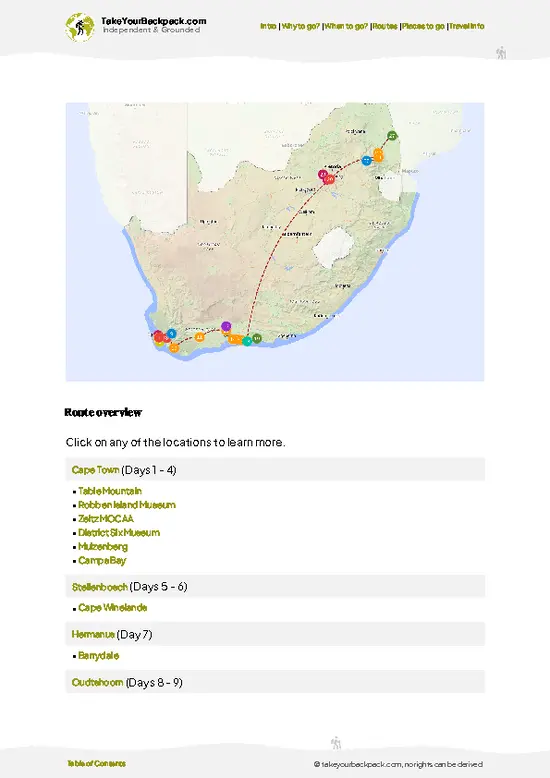
- Kasteelberg walk: The mountain behind the village is its signature landmark, with trails and farm tracks that give wide views over the Swartland’s wheat and vineyards. Access depends on the route and landowner, so check locally first. It costs little to nothing, takes 2 to 3 hours, and is best on a cool, clear morning.
- Main Road and the old village center: A stroll past restored Cape Dutch and Victorian buildings, small galleries and cafes, ending at the village square. It is free, takes 1 to 2 hours, and is liveliest on weekend mornings when shops are open.
- Village wine and olive tasting rooms: Tasting rooms in and around the village pour local Swartland reds and whites, and olive producers offer oil tastings. Expect roughly US$3 to 8 per tasting, 1 to 2 hours each, best in the late morning
- Kasteelberg walk: The mountain behind the village is its signature landmark, with trails and farm tracks that give wide views over the Swartland’s wheat and vineyards. Access depends on the route and landowner, so check locally first. It costs little to nothing, takes 2 to 3 hours, and is best on a cool, clear morning.
- Main Road and the old village center: A stroll past restored Cape Dutch and Victorian buildings, small galleries and cafes, ending at the village square. It is free, takes 1 to 2 hours, and is liveliest on weekend mornings when shops are open.
- Village wine and olive tasting rooms: Tasting rooms in and around the village pour local Swartland reds and whites, and olive producers offer oil tastings. Expect roughly US$3 to 8 per tasting, 1 to 2 hours each, best in the late morning before lunch and with booking on weekends.
Spotted a mistake or missing something? Contact us.


 Best Backpacking
.jpg) Hi, I’m Johan (Netherlands 🇳🇱), the creator of TakeYourBackpack. Over the past 3 decades, I’ve backpacked through 90+ countries across six continents, gaining extensive experience with independent travel, long-term trips, and overland routes.
Hi, I’m Johan (Netherlands 🇳🇱), the creator of TakeYourBackpack. Over the past 3 decades, I’ve backpacked through 90+ countries across six continents, gaining extensive experience with independent travel, long-term trips, and overland routes.