×

South Africa🇿🇦 | regionsNamaqualandDaisy carpets, quiver trees, granite koppies, diamond coast | things to do and best time to go

Explore Midlands MeanderExplore Overberg

Backpacking in Namaqualand
👌 Worth visitingregion ranked #7
By Johan Kruseman 🇳🇱 | Updated October 22, 2026

Namaqualand’s famous flower carpet lasts only about six weeks, and the blooms stay closed on cloudy days and open late in the morning, so timing your drive matters more than the date. The region sits in the north-west of South Africa, running up the Atlantic side toward the Namibian border. Between flowers it is a thin, dry, empty landscape, and the long gravel stretches are not worth your time without a car. Springbok, Kamieskroon and Nieuwoudtville repay the detour with rock domes, quiver trees and cheap, friendly guesthouses. I expected a flat desert and found a hillside near Skilpad so densely orange that I stopped the car and walked in silence. Bring a rental car and fill the tank in every town.

Discover everything you want to know in the 📖 South Africa Travel Guide.


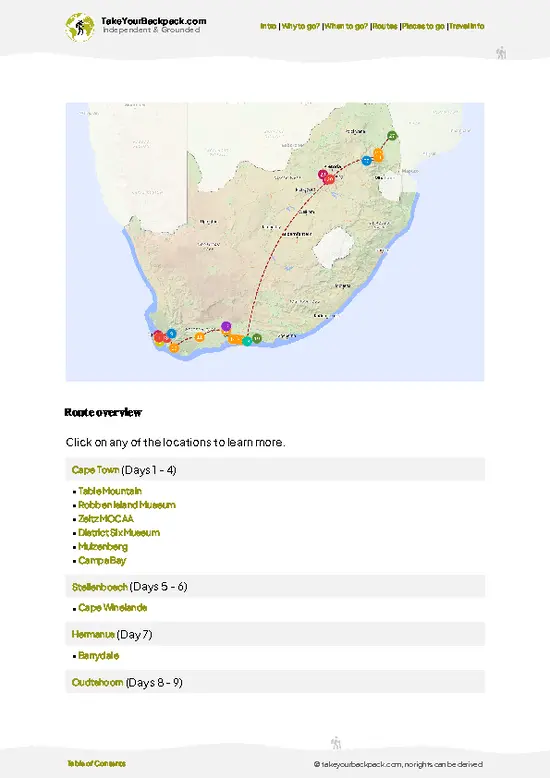
example page 0 from our offline Travel Guide for South Africa
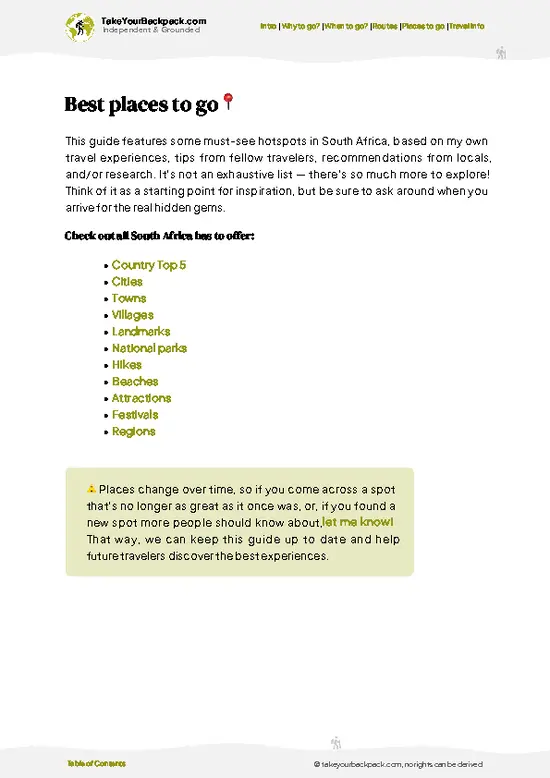
example page 1 from our offline Travel Guide for South Africa
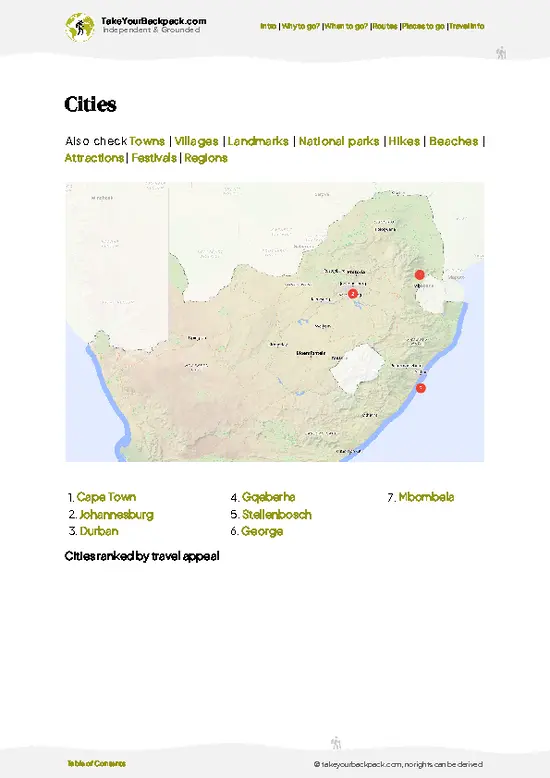
example page 2 from our offline Travel Guide for South Africa
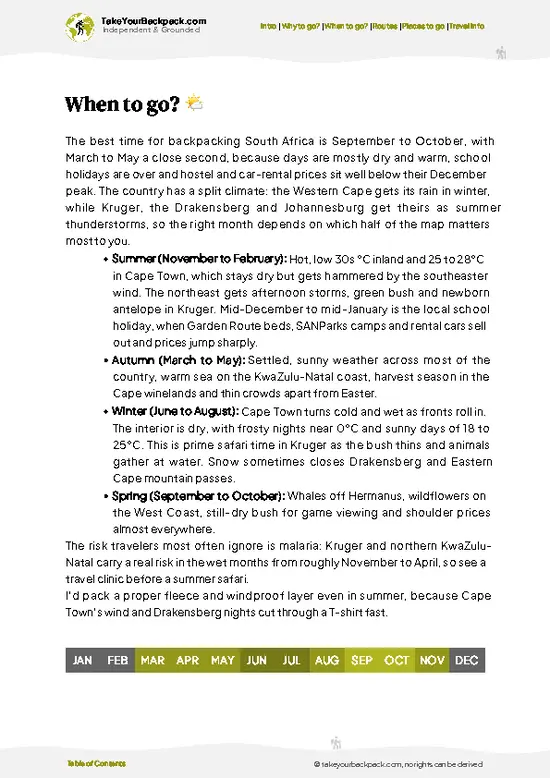
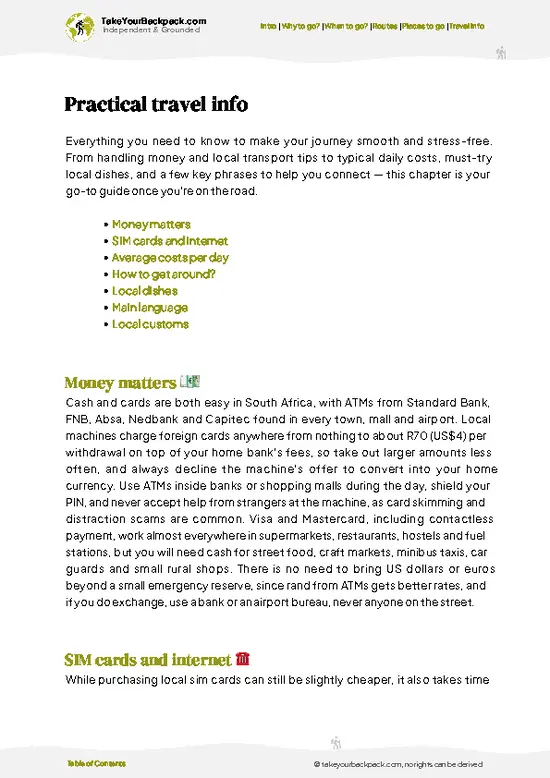
example page 3 from our offline Travel Guide for South Africa
example page 4 from our offline Travel Guide for South Africa
example page 5 from our offline Travel Guide for South Africa
example page 6 from our offline Travel Guide for South Africa
example page 7 from our offline Travel Guide for South Africa
Loading the map 🌍
CLICK TO FILTER
cities
towns
villages
landmarks
national parks
hikes
beaches
attractions
festivals
regions
SHOW COUNTRY’S BESTSHOW ALL

✨ Why go?
Ranked #7 region in South Africa
What makes it a must-see region

Namaqualand rewards backpackers who like big contrasts without constant packing. Within a few hours of driving you move from the Namaqua National Park flower fields to the granite domes around Kamieskroon, then onto the Atlantic coast at Port Nolloth. Distances are huge, so a car or a shared ride is what makes it work, and it gives you the freedom to stop wherever a hillside turns color. The second reason is variety of landscape for little effort. The Richtersveld adds raw mountain desert and the Orange River canyons, where you can paddle or camp. Add the small-town stops and you get slow travel at its best: farm stalls, copper-mining history in Springbok and Afrikaans hospitality at the guesthouse table. Few places in South Africa feel this open, quiet and unhurried, and prices stay modest outside flower season.

💡 HighlightsPlaces and moments you shouldn't skip

  1. Namaqua National Park: The wildflower showpiece near Kamieskroon, where August and September carpets of orange daisies spread across red sand. Outside bloom season it is quiet, with a rugged coastal section and a gravel loop you can drive in an ordinary car.
  2. Skilpad Wildflower Reserve: The old sheep-farm section of the park, famous for dense daisy fields that turn their faces toward the sun. Entry is roughly US$5 to 8, and flowers close up on cloudy days, so go midday.
  3. Goegap Nature Reserve: Outside Springbok, with granite hills, quiver trees, and oryx and Hartmann’s mountain zebra. Its gravel roads and short hiking trails suit a slow morning.
  4. Springbok Koppie and Main Street: A compact town with a dolomite hill, a former synagogue turned museum, and the region’s best supply of groceries, fuel
… read more 👉
  1. Namaqua National Park: The wildflower showpiece near Kamieskroon, where August and September carpets of orange daisies spread across red sand. Outside bloom season it is quiet, with a rugged coastal section and a gravel loop you can drive in an ordinary car.
  2. Skilpad Wildflower Reserve: The old sheep-farm section of the park, famous for dense daisy fields that turn their faces toward the sun. Entry is roughly US$5 to 8, and flowers close up on cloudy days, so go midday.
  3. Goegap Nature Reserve: Outside Springbok, with granite hills, quiver trees, and oryx and Hartmann’s mountain zebra. Its gravel roads and short hiking trails suit a slow morning.
  4. Springbok Koppie and Main Street: A compact town with a dolomite hill, a former synagogue turned museum, and the region’s best supply of groceries, fuel and hot meals before the long empty stretches.
  5. Hantam-style Kamieskroon Hills Walks: Short walks around Kamieskroon’s granite outcrops give you rock gardens, succulents and quiet away from the flower convoys.
  6. Hondeklip Bay: A tiny, windblown fishing village on the Atlantic coast, with a wrecked trawler on the shore and crayfish sold off boats in season. Few outsiders make the long gravel drive.
  7. Richtersveld Transfrontier Park edge at Alexander Bay: Where the Orange River meets the sea, with flamingos on the mouth wetlands and diamond-mining country on every side. It feels like the end of the map.
  8. Orange River at Vioolsdrif: Canoe trips drift past desert cliffs on calm water, with sandbank camps and fish eagles overhead. Multi-day paddles run well beyond a simple afternoon.
  9. Okiep Copper Mine Ruins: Cornish-built engine house and chimneys from South Africa’s first big mining boom stand near Okiep. It is free to look at and rarely has anyone else there.
  10. Port Nolloth Harbor: A cold-coast working harbor with diamond-diving boats, a little jetty cafe and fresh fish. The sea fog and the empty beaches are the draw.
Namaqualand rewards pairing Skilpad Wildflower Reserve with Namaqua National Park’s coastal loop, since both sit on the same gravel network and make one full flower day.
Spotted a mistake or missing something? Contact us.

⌛️ 5 days5-day itinerary for Namaqualand

Day 1: Springbok: Start in Springbok, because it is the only place with a proper supermarket, fuel and ATMs, and the rest of the region runs on long empty roads. A rental car dictates the pace here, as buses are rare and the distances are large. Spend the afternoon at Goegap Nature Reserve for succulents and quiver trees.
Day 2: Namaqua National Park: Drive south to Skilpad and time your arrival for late morning, when the flowers open fully. Stay slowly on the loop, then end the day in Kamieskroon with an easy granite walk.
Day 3 and 4: Port Nolloth: Head west to the coast for cold-water seafood and a change of scenery. Detour to Alexander Bay and the Orange River mouth for a remote border landscape that adds a lot for a modest extra drive. Use the second day to wander the harbor and the empty … read more 👉
Day 1: Springbok: Start in Springbok, because it is the only place with a proper supermarket, fuel and ATMs, and the rest of the region runs on long empty roads. A rental car dictates the pace here, as buses are rare and the distances are large. Spend the afternoon at Goegap Nature Reserve for succulents and quiver trees.
Day 2: Namaqua National Park: Drive south to Skilpad and time your arrival for late morning, when the flowers open fully. Stay slowly on the loop, then end the day in Kamieskroon with an easy granite walk.
Day 3 and 4: Port Nolloth: Head west to the coast for cold-water seafood and a change of scenery. Detour to Alexander Bay and the Orange River mouth for a remote border landscape that adds a lot for a modest extra drive. Use the second day to wander the harbor and the empty beaches.
Day 5: Nieuwoudtville: Finish inland among bulbs and waterfalls, where the pace drops and the roads are quiet.
If you can do only one day, I would choose Day 2 at Namaqua National Park, because that is the picture that brings people here.

🌤️ When to go?Choosing the right time of year

Wildflower season, August to September, is when Namaqualand earns its reputation, and everything else is a quieter, harsher version of the place. Plan around that window.
  • Flower Season (Aug to Sep): Daisies and mesembs open only in direct sun, roughly 10 am to 4 pm, and close on cloudy days. Days run 20 to 26°C (68 to 79°F), nights 6 to 10°C (43 to 50°F). Crowds and lodging prices peak, and rooms book out months ahead.
  • Summer (Dec to Feb): Dry and fierce, 30 to 40°C (86 to 104°F) inland, with long light for hiking Richtersveld-side routes but little shade. Prices drop and the roads empty.
  • Autumn (Mar to May): Settled and warm, 22 to 30°C (72 to 86°F), with cheap beds and quiet campsites.
  • Winter (Jun to Jul): Cool, 15 to 20°C (59 to 68°F), with occasional rain that triggers the bloom. Quiet, and
… read more 👉
Wildflower season, August to September, is when Namaqualand earns its reputation, and everything else is a quieter, harsher version of the place. Plan around that window.
  • Flower Season (Aug to Sep): Daisies and mesembs open only in direct sun, roughly 10 am to 4 pm, and close on cloudy days. Days run 20 to 26°C (68 to 79°F), nights 6 to 10°C (43 to 50°F). Crowds and lodging prices peak, and rooms book out months ahead.
  • Summer (Dec to Feb): Dry and fierce, 30 to 40°C (86 to 104°F) inland, with long light for hiking Richtersveld-side routes but little shade. Prices drop and the roads empty.
  • Autumn (Mar to May): Settled and warm, 22 to 30°C (72 to 86°F), with cheap beds and quiet campsites.
  • Winter (Jun to Jul): Cool, 15 to 20°C (59 to 68°F), with occasional rain that triggers the bloom. Quiet, and the flowers have not yet opened.
Check recent rainfall reports before booking, since a dry winter means a thin bloom.


source: climatestotravel.comJANJanuary: fair for travelingFEBFebruary: fair for travelingMARMarch: fair for travelingAPRApril: good for travelingMAYMay: good for travelingJUNJune: good for travelingJULJuly: good for travelingAUGAugust: excellent for travelingSEPSeptember: excellent for travelingOCTOctober: good for travelingNOVNovember: good for travelingDECDecember: fair for traveling
when-to-go

✈️ The backpacker research shortcutSouth Africa Travel Guide

An offline-friendly backpacking guide with optimized travel routes, ranked highlights, transport advice, and the best areas to stay.
example page 0 from our offline Travel Guide for South Africa
example page 1 from our offline Travel Guide for South Africa
example page 2 from our offline Travel Guide for South Africa
example page 3 from our offline Travel Guide for South Africa
example page 4 from our offline Travel Guide for South Africa
example page 5 from our offline Travel Guide for South Africa
example page 6 from our offline Travel Guide for South Africa
example page 7 from our offline Travel Guide for South Africa
The digital guide (457 pages) contains:
✅ 125 highlights, ranked by travel appeal
✅ Optimized 7, 14 & 21-day travel routes
✅ Cities, national parks, landmarks, beaches
✅ How to get around
✅ Offline-friendly for travel without Wi-Fi
👉 Click to see all 30+ guide features

📅 Plan smarter in minutes, not weeks
✅ Month by month travel advice
✅ Festivals & national holidays
✅ Budget expectations

🗺️ Go to the right places, skip the overrated ones
✅ Honest pros & cons of destinations
✅ Top hikes, parks & viewpoints
✅ Lesser-known places most travelers miss
✅ Clear “worth it vs skip it” guidance

🛏️ Travel smoothly without rookie mistakes
✅ Best areas to stay
✅ Transport systems explained simply
✅ Common scams & safety advice
✅ SIM cards, money & practical tips

🌍 Understand the country, not just visit it
✅ Culture & traditions
✅ 52 Essential phrases & customs
✅ Festivals worth planning around
✅ Traveler-friendly historical context
✅ Insights that make places more meaningful

📱 Built for real travel conditions
✅ Fully downloadable PDF
✅ Works completely offline
✅ Optimized for phone use
✅ Useful in remote areas & buses
✅ Everything in one place
Stop searching, start planning
Get instant access to your full guide. 30‑day money-back guarantee.
+ Add another guide for just

By proceeding you agree to our terms.
Sent to your inbox immediately after payment • 100% Secure Checkout
Best Backpacking Travel Advisor 2025 tourism awardBest Backpacking
Travel Advisor
2025
What others say about Take Your Backpack Guides:
⭐⭐⭐⭐⭐
Fantastic, amazing amount of information!
⭐⭐⭐⭐⭐
My goodness this is amazing, it's what I've been looking for hats off too you!
⭐⭐⭐⭐⭐
I think this is absolutely BRILLIANT
⭐⭐⭐⭐
Very complete and informative. It's still missing places, but I gotta to commend you
⭐⭐⭐⭐⭐
This is truly amazing, thank you, can't wait to explore it with my kids!
⭐⭐⭐⭐⭐
Awesome resource, thank you!
⭐⭐⭐⭐⭐
This is amazing! Can't wait to explore the ones I haven't seen
⭐⭐⭐⭐
I love this! Well done, great idea.
⭐⭐⭐⭐⭐
Thanks for taking the time to make this gem!
⭐⭐⭐⭐⭐
This might be the best website I've ever seen.
⭐⭐⭐⭐⭐
Congratulations, and thank you so much for your work; it's incredibly valuable.
⭐⭐⭐⭐
In all seriousness I think you did a great job pointing out the important spots
⭐⭐⭐⭐⭐
10/10 very good
⭐⭐⭐⭐⭐
As someone who's only just starting to visit regularly this is awesome, thank you.
⭐⭐⭐⭐
Thank you very much! I'm going to visit my dad, it's going to be very useful!
⭐⭐⭐⭐⭐
This is really cool! We'll be travelling for the first time and this definitely come in handy.
⭐⭐⭐⭐⭐
You are now our minister of culture, congratulations 👨‍💼
⭐⭐⭐⭐⭐
Just wanted to tell you that this is a pearl! Going to follow your recommendations.
⭐⭐⭐⭐⭐
This is so cool. I'll definitely be using the resource for my travels soon.
⭐⭐⭐⭐⭐
This is very impressive! Good work.
⭐⭐⭐⭐⭐
This is an amazing and informative site. Very well done!

🛏️ Where to stay?Best areas and accommodation options

Springbok is the best base in Namaqualand, with the widest range of budget beds, supermarkets, a fuel station, and the Goegap Nature Reserve a short drive away. Dorms and guesthouse rooms run roughly US$15 to 40 a night, and you will meet other travelers over braai fires and breakfast tables. It is also the safest and easiest place to find a lift or share a rental car.
Kamieskroon suits you if flowers are the goal. The village sits beside Namaqua National Park, and its small guesthouses and campsites put you at the gate for early starts. Camping costs about US$10 to 20 a person. It is quiet in … read more 👉
Springbok is the best base in Namaqualand, with the widest range of budget beds, supermarkets, a fuel station, and the Goegap Nature Reserve a short drive away. Dorms and guesthouse rooms run roughly US$15 to 40 a night, and you will meet other travelers over braai fires and breakfast tables. It is also the safest and easiest place to find a lift or share a rental car.
Kamieskroon suits you if flowers are the goal. The village sits beside Namaqua National Park, and its small guesthouses and campsites put you at the gate for early starts. Camping costs about US$10 to 20 a person. It is quiet in the evenings, so bring groceries.
Port Nolloth gives you a coastal option with cold Atlantic air, fresh seafood, and a relaxed fishing-town feel. Guesthouses and basic rooms cost roughly US$30 to 60. Nearby Alexander Bay and the Richtersveld are easy to reach from here.
Book all three well ahead in August and September, when beds across the region fill up.

🚌 Getting aroundMoving around without the hassle

Namaqualand is not walkable as a region, and even in towns like Springbok the center is a compact few blocks of shops you can cross on foot in ten minutes. Past that, distances are huge and walking stops making sense. Minibus taxis and a few long-distance coaches run along the N7, but reaching the flower reserves and the coast realistically means wheels of your own or a shared hire.
  • Intercity coach: Buses on the N7 link Cape Town with Springbok in about 8 to 9 hours for US$30 to 50. Seats are comfortable and the desert unrolls outside the window, but the buses skip every reserve and village off the highway.
  • Minibus taxi: Cheapest for short hops between towns such as Springbok and Okiep, around US$2 to 8. They are crammed and leave only when full, but you get local conversation and a seat at
… read more 👉
Namaqualand is not walkable as a region, and even in towns like Springbok the center is a compact few blocks of shops you can cross on foot in ten minutes. Past that, distances are huge and walking stops making sense. Minibus taxis and a few long-distance coaches run along the N7, but reaching the flower reserves and the coast realistically means wheels of your own or a shared hire.
  • Intercity coach: Buses on the N7 link Cape Town with Springbok in about 8 to 9 hours for US$30 to 50. Seats are comfortable and the desert unrolls outside the window, but the buses skip every reserve and village off the highway.
  • Minibus taxi: Cheapest for short hops between towns such as Springbok and Okiep, around US$2 to 8. They are crammed and leave only when full, but you get local conversation and a seat at the pace of daily life.
  • Rental car: Roughly US$25 to 45 a day for a small car, and the only sensible way to chase blooms at Goegap or along the coast to Hondeklip Bay. Gravel roads are mostly fine in a normal car, and you can stop whenever a field turns orange.
  • Hitchhiking and shared lifts: Slow and unreliable on quiet roads, and not worth the wait outside flower season. Hostel noticeboards sometimes turn up car-share seats for US$10 to 20 toward the reserves.
Fill the tank in Springbok or Vredendal whenever you pass, since stations thin out quickly and the next one can be 100 km away.

🍲 FoodLocal Cuisine & Drinks

Lamb is the soul of Namaqualand cooking, and a braai of lamb chops and boerewors over camelthorn coals is the meal you should plan around. Smoke hangs over every campsite at dusk, and strangers swap tongs and stories. Try potbrood baked in cast iron, and roosterkoek split and spread with apricot jam.
On the coast, crayfish (West Coast rock lobster) and fried snoek arrive fresh at Port Nolloth, usually at simple harbor-side spots for US$8 to 20 a plate. Inland, farm stalls and roadside padstals sell dried fruit, biltong, rusks and strong filter coffee, perfect for a long drive. Springbok has a handful of cafés and takeaway counters serving breakfast fry-ups and toasted sandwiches for US$4 to 8.
Local drinks include rooibos tea, which you will see everywhere, and sweet witblits or Cape wines from … read more 👉
Lamb is the soul of Namaqualand cooking, and a braai of lamb chops and boerewors over camelthorn coals is the meal you should plan around. Smoke hangs over every campsite at dusk, and strangers swap tongs and stories. Try potbrood baked in cast iron, and roosterkoek split and spread with apricot jam.
On the coast, crayfish (West Coast rock lobster) and fried snoek arrive fresh at Port Nolloth, usually at simple harbor-side spots for US$8 to 20 a plate. Inland, farm stalls and roadside padstals sell dried fruit, biltong, rusks and strong filter coffee, perfect for a long drive. Springbok has a handful of cafés and takeaway counters serving breakfast fry-ups and toasted sandwiches for US$4 to 8.
Local drinks include rooibos tea, which you will see everywhere, and sweet witblits or Cape wines from the Olifants River side. Meals are leisurely, tipping around 10 percent is customary, and many small towns shut kitchens early, so eat by 8 pm. Cash is handy at rural stalls.

FAQCommon questions from travelers

Three to five days covers Namaqualand if you drive. Springbok and Goegap Nature Reserve take a day, Namaqua National Park near Kamieskroon another, and the coast at Port Nolloth or Hondeklip Bay a third. Add two days if you plan to reach the Richtersveld, and allow a full day just for the roughly 8-hour road trip from Cape Town.
A coach on the N7 from Cape Town reaches Springbok in about 8 to 9 hours for US$30 to 50, but covering Namaqualand without a car is difficult after that. Minibus taxis link nearby towns for roughly US$2 to 8, and some guesthouses arrange tours or lifts to the reserves. Splitting a rental car at US$25 to 45 a day with other travelers is usually the most practical option.
Namaqualand is known for its spring wildflower bloom, when daisies, mesembs and other flowers blanket the dry landscape in orange, white and purple, mainly in August and September. Goegap Nature Reserve and Namaqua National Park are the top viewing areas. It is also known for copper-mining history around Springbok and Okiep, the rugged Atlantic coast near Port Nolloth, and wide empty roads running toward the Richtersveld.
⚠️ Things can change over time, so always validate details locally before you go.

Other South African regions near Namaqualand

Explore more nearby:

  • West Coast—fishing villages, Atlantic beaches, seafood shacks, salt pans| 419 km away
  • Cape Winelands—vineyard landscapes, Cape Dutch estates, mountain backdrops, cellar tastings| 443 km away
  • Overberg—wheat fields, whale coast, fynbos reserves, mountain passes| 520 km away

💡 Not sure where to go next?
Create a personalized itinerary for South Africa including Namaqualand and the places that fit your trip.

Generate my itinerary

👉 Discover all regions

Or checkout all South Africa has to offer (think cities, towns, villages, national parks, hikes, beaches, festivals)
Country photo of South Africa

We 💚 feedbackIs it worth it?

Namaqualand suits self-sufficient travelers who enjoy empty roads, flowers and small towns more than nightlife. If that is you, go in flower season with a car and flexible dates. I would skip long detours on cloudy days and carry extra water and snacks.

✈️ When did I visit South Africa?
I have visited South Africa, before and after my Zimbabwe trip in 2001.

✍️ Help improve this page!
The information on this page is based on my own backpacking experience in South Africa, supplemented with up-to-date research and feedback from other travelers. Travel details can change, so if you notice anything outdated or incomplete, feel free to let me know.


🙋‍♂️ Give feedback

👋 Meet the founderWho’s Behind Take Your Backpack?

Johan, backpacker and founder of TakeYourBackpackHi, I’m Johan (Netherlands 🇳🇱), the creator of TakeYourBackpack. Over the past 3 decades, I’ve backpacked through 90+ countries across six continents, gaining extensive experience with independent travel, long-term trips, and overland routes.

This site is built on a combination of firsthand travel experience and carefully curated insights from other backpackers. Many guides are based on places I’ve personally visited, while others bring together tips, observations, and practical advice shared by trusted travelers I’ve met along the way.

The goal is to provide realistic, experience-driven guidance — not generic itineraries — so you can explore destinations with better context, clearer expectations, and more confidence.