v2.webp)
The Sculpture: 50 Steel Columns
Forget the Instagram-perfect angle for a second—this is public art with teeth. From the wrong spot, it’s just a forest of metal poles. But walk the marked path, and suddenly, Nelson Mandela’s face snaps into focus, 9 meters tall, staring back at you with a gravity that’s impossible to fake. This isn’t just a photo op; it’s a gut-punch reminder of how perspective changes everything. The design is clever, but the emotional payoff is what sticks. You’ll see people go quiet here, and for good reason. This is my personal favorite—no contest.
The Long Walk to Freedom Pathway
You don’t just stroll up to the monument. The approach is a deliberate, winding path, lined with timeline markers that chart Mandela’s journey and South Africa’s struggle. It’s not subtle, and … read more 👉
Forget the Instagram-perfect angle for a second—this is public art with teeth. From the wrong spot, it’s just a forest of metal poles. But walk the marked path, and suddenly, Nelson Mandela’s face snaps into focus, 9 meters tall, staring back at you with a gravity that’s impossible to fake. This isn’t just a photo op; it’s a gut-punch reminder of how perspective changes everything. The design is clever, but the emotional payoff is what sticks. You’ll see people go quiet here, and for good reason. This is my personal favorite—no contest.
The Long Walk to Freedom Pathway
You don’t just stroll up to the monument. The approach is a deliberate, winding path, lined with timeline markers that chart Mandela’s journey and South Africa’s struggle. It’s not subtle, and … read more 👉
The Sculpture: 50 Steel Columns
Forget the Instagram-perfect angle for a second—this is public art with teeth. From the wrong spot, it’s just a forest of metal poles. But walk the marked path, and suddenly, Nelson Mandela’s face snaps into focus, 9 meters tall, staring back at you with a gravity that’s impossible to fake. This isn’t just a photo op; it’s a gut-punch reminder of how perspective changes everything. The design is clever, but the emotional payoff is what sticks. You’ll see people go quiet here, and for good reason. This is my personal favorite—no contest.
The Long Walk to Freedom Pathway
You don’t just stroll up to the monument. The approach is a deliberate, winding path, lined with timeline markers that chart Mandela’s journey and South Africa’s struggle. It’s not subtle, and it’s not meant to be. Every step is a history lesson, and by the time you reach the sculpture, you’ve walked through decades of pain, hope, and resistance. It’s immersive, and it works—especially if you let yourself slow down and read the details.
The Museum Exhibition Hall
Inside, you get the meat and potatoes: artifacts, multimedia displays, and raw, unvarnished stories. This isn’t a sanitized, hero-worshipping museum. You’ll see the ugly realities of apartheid, the complexity of the anti-apartheid movement, and the personal cost to Mandela and his family. The curation is sharp, and the audio-visual elements are more than just background noise—they pull you in. If you want to understand why this spot matters, don’t skip the indoor exhibits.
The Site of the Actual Capture
There’s no velvet rope or dramatic plaque. Just a patch of rural road where Mandela’s freedom ended for 27 years. It’s understated, but that’s the point. You stand there and realize history isn’t always grand; sometimes it’s just a dusty roadside in KwaZulu-Natal. The ordinariness is what makes it hit home.
The Rural KwaZulu-Natal Setting
You’re not in Cape Town or Johannesburg. You’re out in the rolling hills, surrounded by sugarcane fields and big skies. The landscape is part of the experience—quiet, a little wild, and totally at odds with the global significance of what happened here. It’s a reminder that world-changing moments often happen far from the spotlight. If you want a place that feels real, this is it.
The Mandela-Inspired Art Installations
Beyond the main sculpture, the site often features rotating art pieces and installations inspired by Mandela’s legacy. Some are subtle, some are bold, but all are designed to provoke thought rather than just decorate the grounds. If you catch a temporary exhibit, it’s usually worth your time—these aren’t tourist-trap souvenirs, but genuine attempts to keep the conversation alive.
Forget the Instagram-perfect angle for a second—this is public art with teeth. From the wrong spot, it’s just a forest of metal poles. But walk the marked path, and suddenly, Nelson Mandela’s face snaps into focus, 9 meters tall, staring back at you with a gravity that’s impossible to fake. This isn’t just a photo op; it’s a gut-punch reminder of how perspective changes everything. The design is clever, but the emotional payoff is what sticks. You’ll see people go quiet here, and for good reason. This is my personal favorite—no contest.
The Long Walk to Freedom Pathway
You don’t just stroll up to the monument. The approach is a deliberate, winding path, lined with timeline markers that chart Mandela’s journey and South Africa’s struggle. It’s not subtle, and it’s not meant to be. Every step is a history lesson, and by the time you reach the sculpture, you’ve walked through decades of pain, hope, and resistance. It’s immersive, and it works—especially if you let yourself slow down and read the details.
The Museum Exhibition Hall
Inside, you get the meat and potatoes: artifacts, multimedia displays, and raw, unvarnished stories. This isn’t a sanitized, hero-worshipping museum. You’ll see the ugly realities of apartheid, the complexity of the anti-apartheid movement, and the personal cost to Mandela and his family. The curation is sharp, and the audio-visual elements are more than just background noise—they pull you in. If you want to understand why this spot matters, don’t skip the indoor exhibits.
The Site of the Actual Capture
There’s no velvet rope or dramatic plaque. Just a patch of rural road where Mandela’s freedom ended for 27 years. It’s understated, but that’s the point. You stand there and realize history isn’t always grand; sometimes it’s just a dusty roadside in KwaZulu-Natal. The ordinariness is what makes it hit home.
The Rural KwaZulu-Natal Setting
You’re not in Cape Town or Johannesburg. You’re out in the rolling hills, surrounded by sugarcane fields and big skies. The landscape is part of the experience—quiet, a little wild, and totally at odds with the global significance of what happened here. It’s a reminder that world-changing moments often happen far from the spotlight. If you want a place that feels real, this is it.
The Mandela-Inspired Art Installations
Beyond the main sculpture, the site often features rotating art pieces and installations inspired by Mandela’s legacy. Some are subtle, some are bold, but all are designed to provoke thought rather than just decorate the grounds. If you catch a temporary exhibit, it’s usually worth your time—these aren’t tourist-trap souvenirs, but genuine attempts to keep the conversation alive.
Spotted a mistake or missing something? Contact us.

Garden Route Durban to Cape Town via Addo National Park - 7 Days

Drakensberg Kamberg Rock Art & Mandela Capture Site Day Tour from Durban

Drakensberg Mountains & Nelson Mandela Capture Site Full Day Safari

Drakensberg Giant's Castle Cave Art & Mandela Capture Site Tour from Durban

Drakensberg and Nelson Mandela Capture Site Full-Day.

Full Day-Drakensberg-MandelaCaptureSite-HowickFalls-MidlandsMeander from Durban

Hluhluwe, Isimangaliso & Drakensberg 5 Day Pvt Safari from Durban

Personalised Battlefield and Historical tours of KZ Natal.

7 Days Garden Route Private Tour - Durban To Cape Town

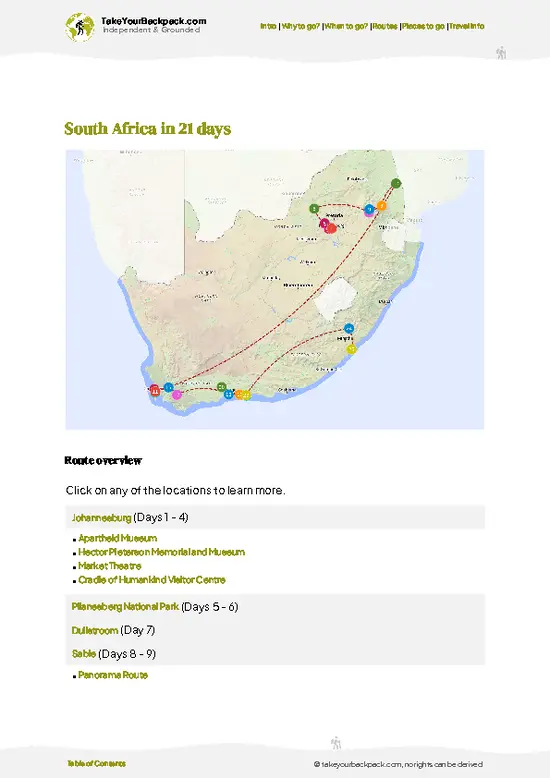

 Best Backpacking
.jpg) Hi, I’m Johan (Netherlands 🇳🇱), the creator of TakeYourBackpack. Over the past decade, I’ve backpacked through 80+ countries across six continents, gaining extensive experience with independent travel, long-term trips, and overland routes.
Hi, I’m Johan (Netherlands 🇳🇱), the creator of TakeYourBackpack. Over the past decade, I’ve backpacked through 80+ countries across six continents, gaining extensive experience with independent travel, long-term trips, and overland routes.