×

South Korea🇰🇷 | citiesCheongju
Early printing museum, university campus, tobacco history | things to do and best time to go

Explore ChuncheonExplore Pohang

Backpacking in Cheongju
By Johan Kruseman 🇳🇱 | Updated May 17, 2026

Cheongju is not for checklist travelers chasing Korea’s biggest skylines or party districts. It rewards backpackers who like decoding “normal” Korean life: mid-sized city, low foreigner count, high authenticity. Sitting inland in North Chungcheong, a few hours from Seoul and Daejeon, it’s cheaper and calmer than both, with solid safety, easy buses, and walkable core areas. You get Heungdeoksa printing museum history, a compact downtown bar zone, leafy parks, and a mellow, lived‑in vibe—but limited hostel culture and fewer instant travel buddies.

Discover everything you want to know in the 📖 South Korea Travel Guide.
Loading the map 🌍
CLICK TO FILTER
city
town
village
unique site
national park
hike
beach
attraction
festival
region
SHOW COUNTRY’S BESTSHOW ALL

✨ Why go?
Ranked #99 city in South Korea
What makes this city worth visiting

Cheongju is a strategic basecamp for backpackers, balancing affordability with a surprising array of experiences. The hostels here are budget-friendly and often social, making it easy to connect with fellow travelers. The city’s walkability allows you to explore local food stalls and cafes without breaking a sweat. While it may not be a nightlife hotspot, the laid-back bars offer a cozy vibe for unwinding after a day of adventure. Plus, its location makes for easy onward travel to nearby attractions, ensuring you maximize your time without sacrificing comfort. Cheongju is perfect for those seeking a low-key stop that still packs a punch.
Get the complete Travel Guide for South Korea
Everything organized for offline planning — routes, highlights, costs & tips

See what’s inside 👉

Get the Travel Guide -

💡 HighlightsEssential experiences to have while visiting Cheongju

  • Heungdeoksa Temple site & Early Printing Museum (Jikji) — The place tied to Jikji, the world’s oldest extant book printed with movable metal type; the site and museum explain early Korean printing technology and have hands-on displays and replicas worth seeing in person.
  • Sangdangsanseong Fortress — A restored mountain fortress with walking walls, small museums, and great city views; a perfect mix of light hiking, history, and village life tucked into the ramparts.
  • Bomunsan Mountain Park — The city’s green lung: trails, pagodas, rocky viewpoints and seasonal flowers. Easy to get to from downtown and ideal for a short hike with skyline panoramas.
  • Uirimji Reservoir (Uirimji Pond) — One of Korea’s historic reservoirs with pretty walking paths and reflective water—peaceful, photogenic, and
read more 👉
  • Heungdeoksa Temple site & Early Printing Museum (Jikji) — The place tied to Jikji, the world’s oldest extant book printed with movable metal type; the site and museum explain early Korean printing technology and have hands-on displays and replicas worth seeing in person.
  • Sangdangsanseong Fortress — A restored mountain fortress with walking walls, small museums, and great city views; a perfect mix of light hiking, history, and village life tucked into the ramparts.
  • Bomunsan Mountain Park — The city’s green lung: trails, pagodas, rocky viewpoints and seasonal flowers. Easy to get to from downtown and ideal for a short hike with skyline panoramas.
  • Uirimji Reservoir (Uirimji Pond) — One of Korea’s historic reservoirs with pretty walking paths and reflective water—peaceful, photogenic, and a reminder of old irrigation engineering still serving the region.
  • Cheongju Central (Jungang) Market — A lively traditional market where you can eat cheap, authentic street food, shop local produce and watch everyday Cheongju life unfold—best for taste-testing regional snacks.
  • Cheongnamdae Presidential Villa — The former presidential retreat turned public site: landscaped grounds, period interiors and a glimpse into modern political history set against a quiet hillside.
  • Cheongju Museum of Art / Arts Center — Rotating contemporary and traditional exhibitions, occasional performances and community workshops make this a good stop to feel the city’s cultural pulse.
  • Cheongju Museum (regional history & archaeology) — Regional artifacts from prehistoric to Joseon times; handy for context on the area’s archaeology and historical development if you want more than scenic stops.
  • Uam (Song Si-yeol) Memorial & Historic Area — A small but atmospheric Confucian scholar memorial site and associated buildings that give a genuine sense of local intellectual history and traditional architecture.
  • Hanji (Korean paper) experience spots — Cheongju is a national center for hanji: several workshops and small museums let you watch paper-making and try simple crafts—great for a tactile, local cultural souvenir.
A few great day-trip picks just outside Cheongju: historic Gongju (Gongsanseong fortress and other Baekje sites), nearby Daejeon for the National Science Museum and hot springs, and Mount Songnisan with Beopjusa Temple if you want a longer nature-and-temple outing.
Spotted a mistake or missing something? Contact us.

Things to do near Cheongju

Ratings based on Tripadvisor reviews. When you book through this link, you support our work at no extra cost to you.

🏘️ NeighborhoodsUnderstanding the local layout

Cheongju offers a blend of history and modernity, making it a fascinating stop for backpackers.

Downtown Cheongju: This area buzzes with energy. It’s packed with cafes, shops, and street food stalls. Affordable accommodation is plentiful, and everything is walkable. Nightlife thrives here, with bars and live music venues. Perfect for short stays.

Heungdeok-gu: A quieter neighborhood, ideal for those seeking a more relaxed vibe. It’s less touristy, with local eateries and parks. Transport links are solid, making it easy to explore. Great for longer stays if you want a homey feel.

Cheongju University Area: A youthful atmosphere reigns here, thanks to the student population. Expect budget-friendly options and a lively social scene. Walkability is high, and it’s a good base for both short and extended visits.

⌛️ 1 dayHow to make the most of one day

Cheongju, South Korea, is a city where history and modernity intertwine seamlessly. It’s known for its rich cultural heritage, particularly the Cheongju Early Printing Museum, which showcases the city’s role in Korea’s printing history.

Start your morning at the bustling Cheongju Market. Grab a warm, savory kimbap from a local vendor and soak in the vibrant atmosphere. Afterward, head to the serene Sangdangsanseong Fortress. The hike up offers stunning views and a glimpse into the city’s past.

In the afternoon, explore the charming neighborhood of Uam-dong. Visit the Cheongju National Museum to dive deeper into the region’s history. Don’t miss the nearby Seongyojang House, a traditional Korean home that’s often overlooked by tourists.

As evening falls, stroll along the peaceful Cheongju … read more 👉
Cheongju, South Korea, is a city where history and modernity intertwine seamlessly. It’s known for its rich cultural heritage, particularly the Cheongju Early Printing Museum, which showcases the city’s role in Korea’s printing history.

Start your morning at the bustling Cheongju Market. Grab a warm, savory kimbap from a local vendor and soak in the vibrant atmosphere. Afterward, head to the serene Sangdangsanseong Fortress. The hike up offers stunning views and a glimpse into the city’s past.

In the afternoon, explore the charming neighborhood of Uam-dong. Visit the Cheongju National Museum to dive deeper into the region’s history. Don’t miss the nearby Seongyojang House, a traditional Korean home that’s often overlooked by tourists.

As evening falls, stroll along the peaceful Cheongju Stream. Find a cozy café to unwind and enjoy a cup of traditional tea. This blend of experiences—local flavors, historical insights, and tranquil moments—will make your day in Cheongju truly rewarding.
Build the Right Itinerary
Use the South Korea Travel Guide’s 7, 14 & 21-day routes as a starting point to plan a trip that actually works on the ground.

Get the Travel Guide -

🌤️ When to go?Choosing the right time of year


  • Weather: Spring (April to June) and autumn (September to November) offer mild, dry conditions perfect for hiking and city strolls. Summers are hot and humid, often hitting 30°C (86°F) or more, while winters plunge below freezing, making outdoor activities less pleasant.

  • Temperature: Spring and autumn average 15-22°C (59-72°F), ideal for layering. Winter temperatures can dip to -5°C (23°F), demanding heavy gear, while summer highs can feel sticky and oppressive.

  • Daylight Hours: Longer days in late spring and early autumn provide 12-14 hours of light, maximizing your exploration window without rushing.

  • Crowds: Tourist flow peaks during cherry blossom season in April and autumn foliage in October, which means more people but also vibrant local festivals and events.

  • Seasonal Activities:
read more 👉

  • Weather: Spring (April to June) and autumn (September to November) offer mild, dry conditions perfect for hiking and city strolls. Summers are hot and humid, often hitting 30°C (86°F) or more, while winters plunge below freezing, making outdoor activities less pleasant.

  • Temperature: Spring and autumn average 15-22°C (59-72°F), ideal for layering. Winter temperatures can dip to -5°C (23°F), demanding heavy gear, while summer highs can feel sticky and oppressive.

  • Daylight Hours: Longer days in late spring and early autumn provide 12-14 hours of light, maximizing your exploration window without rushing.

  • Crowds: Tourist flow peaks during cherry blossom season in April and autumn foliage in October, which means more people but also vibrant local festivals and events.

  • Seasonal Activities: Spring brings flower festivals; autumn showcases harvest celebrations. Winter offers fewer events, while summer’s heat limits outdoor options.

  • Price Fluctuations: Accommodation and transport costs spike during peak seasons (spring and autumn). Off-peak winter months see lower prices but at the expense of comfort and daylight.


Pro-tip: Aim for late April or early October to balance weather, daylight, and crowd size—your sweet spot for comfort and value.


source: climatestotravel.comJANJanuary: fair for travelingFEBFebruary: fair for travelingMARMarch: good for travelingAPRApril: excellent for travelingMAYMay: excellent for travelingJUNJune: highly recommended for travelingJULJuly: fair for travelingAUGAugust: fair for travelingSEPSeptember: highly recommended for travelingOCTOctober: excellent for travelingNOVNovember: highly recommended for travelingDECDecember: fair for traveling
when-to-go

✈️ The backpacker research shortcutSouth Korea Travel Guide

An offline-friendly backpacking guide with optimized travel routes, ranked highlights, transport advice, and the best areas to stay.
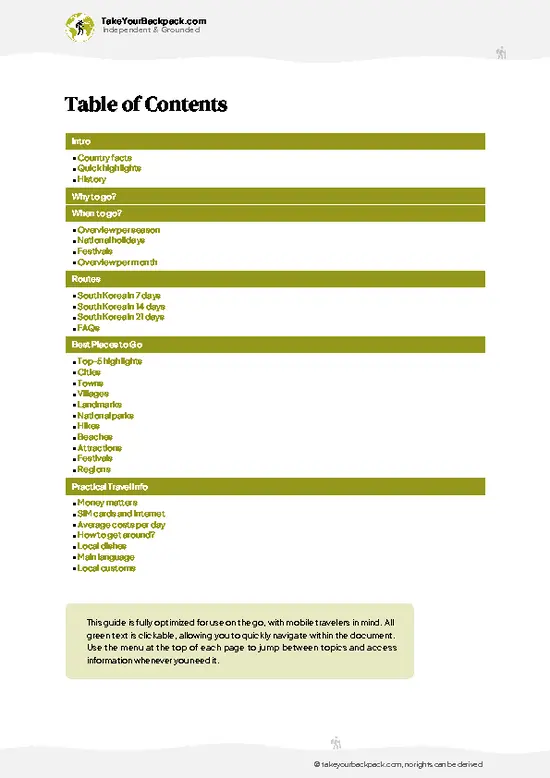
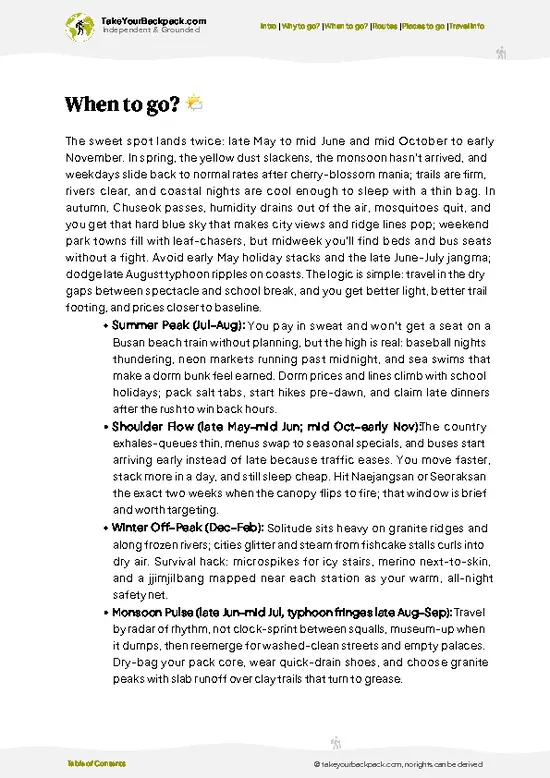
example page 0 from our offline Travel Guide for South Koreaexample page 1 from our offline Travel Guide for South Koreaexample page 2 from our offline Travel Guide for South Koreaexample page 3 from our offline Travel Guide for South Koreaexample page 4 from our offline Travel Guide for South Koreaexample page 5 from our offline Travel Guide for South Koreaexample page 6 from our offline Travel Guide for South Koreaexample page 7 from our offline Travel Guide for South Korea
The digital guide (408 pages) contains:
115 highlights, ranked by travel appeal
Optimized 7, 14 & 21-day travel routes
Cities, national parks, beaches, historical sites, ...
How to get around
Offline-friendly for travel without Wi-Fi
👉 Click to see all 30+ guide features

📅 Plan smarter in minutes, not weeks
Month by month travel advice
Festivals & national holidays
Budget expectations

🗺️ Go to the right places, skip the overrated ones
Honest pros & cons of destinations
Top hikes, parks & viewpoints
Lesser-known places most travelers miss
Clear “worth it vs skip it” guidance

🛏️ Travel smoothly without rookie mistakes
Best areas to stay
Transport systems explained simply
Common scams & safety advice
SIM cards, money & practical tips

🌍 Understand the country, not just visit it
Culture & traditions
52 Essential phrases & customs
Festivals worth planning around
Traveler-friendly historical context
Insights that make places more meaningful

📱 Built for real travel conditions
Fully downloadable PDF
Works completely offline
Optimized for phone use
Useful in remote areas & buses
Everything in one place
Save weeks of stressful planning
Get instant access to the full guide directly. 30-day money-back guarantee.


Sent to your inbox immediately after payment • 100% Secure Checkout
Best Backpacking Travel Advisor 2025 tourism awardBest Backpacking
Travel Advisor
2025
What others say about Take Your Backpack Guides:
⭐⭐⭐⭐⭐
Fantastic, amazing amount of information!
⭐⭐⭐⭐⭐
My goodness this is amazing, it's what I've been looking for hats off too you!
⭐⭐⭐⭐⭐
I think this is absolutely BRILLIANT
⭐⭐⭐⭐
Very complete and informative. It's still missing places, but I gotta to commend you
⭐⭐⭐⭐⭐
This is truly amazing, thank you, can't wait to explore it with my kids!
⭐⭐⭐⭐⭐
Awesome resource, thank you!
⭐⭐⭐⭐⭐
This is amazing! Can't wait to explore the ones I haven't seen
⭐⭐⭐⭐
I love this! Well done, great idea.
⭐⭐⭐⭐⭐
Thanks for taking the time to make this gem!
⭐⭐⭐⭐⭐
This might be the best website I've ever seen.
⭐⭐⭐⭐⭐
Congratulations, and thank you so much for your work; it's incredibly valuable.
⭐⭐⭐⭐
In all seriousness I think you did a great job pointing out the important spots
⭐⭐⭐⭐⭐
10/10 very good
⭐⭐⭐⭐⭐
As someone who's only just starting to visit regularly this is awesome, thank you.
⭐⭐⭐⭐
Thank you very much! I'm going to visit my dad, it's going to be very useful!
⭐⭐⭐⭐⭐
This is really cool! We'll be travelling for the first time and this definitely come in handy.
⭐⭐⭐⭐⭐
You are now our minister of culture, congratulations 👨‍💼
⭐⭐⭐⭐⭐
Just wanted to tell you that this is a pearl! Going to follow your recommendations.
⭐⭐⭐⭐⭐
This is so cool. I'll definitely be using the resource for my travels soon.
⭐⭐⭐⭐⭐
This is very impressive! Good work.
⭐⭐⭐⭐⭐
This is an amazing and informative site. Very well done!

🛏️ Where to stay?Choosing the right base

Cheongju’s best backpacker base is the Heungdeok-gu district, especially near the city center. It’s where budget travelers find a sweet spot: safe streets, plenty of affordable guesthouses, and a vibe that’s low-key but social enough to meet fellow wanderers. This area balances convenience and comfort without the touristy price hike you’d face closer to major transit hubs. Compared to quieter residential zones, Heungdeok-gu offers more nightlife options and street food stalls, making it easier to stretch your budget while soaking in local rhythms. If you want to avoid the sterile feel of business … read more 👉
Cheongju’s best backpacker base is the Heungdeok-gu district, especially near the city center. It’s where budget travelers find a sweet spot: safe streets, plenty of affordable guesthouses, and a vibe that’s low-key but social enough to meet fellow wanderers. This area balances convenience and comfort without the touristy price hike you’d face closer to major transit hubs. Compared to quieter residential zones, Heungdeok-gu offers more nightlife options and street food stalls, making it easier to stretch your budget while soaking in local rhythms. If you want to avoid the sterile feel of business districts, this neighborhood keeps things real and accessible.

🚌 Getting aroundHow to get around Cheongju

Cheongju moves with a quiet rhythm, not the frantic pulse of Seoul but not a sleepy backwater either. It’s a city where schedules matter, but there’s room for a little wiggle—public transit runs on a reliable clock, yet locals know when to bend the rules. Your challenge here is balancing efficiency with the occasional detour, because sometimes the best discoveries happen when you step off the beaten path. Understanding how time, money, and comfort interplay in Cheongju’s transit scene lets you hack your way through the city like a pro, squeezing value out of every won and every minute.


  • Walking: The most cost-effective and flexible option. Cheongju’s downtown is compact enough to cover on foot, letting you soak in street-level details at zero cost. Expect to spend 10-20 minutes between
read more 👉
Cheongju moves with a quiet rhythm, not the frantic pulse of Seoul but not a sleepy backwater either. It’s a city where schedules matter, but there’s room for a little wiggle—public transit runs on a reliable clock, yet locals know when to bend the rules. Your challenge here is balancing efficiency with the occasional detour, because sometimes the best discoveries happen when you step off the beaten path. Understanding how time, money, and comfort interplay in Cheongju’s transit scene lets you hack your way through the city like a pro, squeezing value out of every won and every minute.


  • Walking: The most cost-effective and flexible option. Cheongju’s downtown is compact enough to cover on foot, letting you soak in street-level details at zero cost. Expect to spend 10-20 minutes between major spots, depending on your pace.

  • City Buses: Runs roughly from 5:30 AM to 11 PM, fares hover around 1,250 KRW. Buses are frequent and cover most neighborhoods, but expect some crowding during rush hours. A solid balance of cost and coverage if you don’t mind standing room.

  • Taxi: Starting fare about 3,800 KRW, with a moderate surge in late hours. Faster and more comfortable than buses, but costs add up quickly. Best for short hops when time is tight or you’re hauling gear.

  • Bike Rentals: Available in select areas, usually under 2,000 KRW per hour. Offers a sweet spot between speed and cost, plus the freedom to explore beyond bus routes. Requires some stamina and comfort with city traffic.

👛 Costs (as of 2 April 2026)What things cost and how to budget

Backpacking in Cheongju, South Korea, offers a clear trade-off between cost and comfort, with prices that reflect its status as a mid-sized city balancing local charm and modern convenience.
  • Dorm Accommodation (High Season): Expect to pay around $15 to $25 per night. High season, typically spring and autumn, pushes prices up due to increased demand from domestic and regional travelers.
  • Dorm Accommodation (Off-Season): Prices drop to about $10 to $18 per night. Winter months and summer heat see fewer visitors, so hostels lower rates to fill beds.
  • Meals: Street food and local eateries offer meals for $3 to $7. A typical Korean meal like bibimbap or a bowl of noodles is affordable and filling. Western-style cafes or restaurants will push your meal cost closer to $10 to $15.
  • Local Transport:
read more 👉
Backpacking in Cheongju, South Korea, offers a clear trade-off between cost and comfort, with prices that reflect its status as a mid-sized city balancing local charm and modern convenience.
  • Dorm Accommodation (High Season): Expect to pay around $15 to $25 per night. High season, typically spring and autumn, pushes prices up due to increased demand from domestic and regional travelers.
  • Dorm Accommodation (Off-Season): Prices drop to about $10 to $18 per night. Winter months and summer heat see fewer visitors, so hostels lower rates to fill beds.
  • Meals: Street food and local eateries offer meals for $3 to $7. A typical Korean meal like bibimbap or a bowl of noodles is affordable and filling. Western-style cafes or restaurants will push your meal cost closer to $10 to $15.
  • Local Transport: Single bus or subway rides cost around $1 to $1.50. Cheongju’s public transport is efficient and cheap, making it easy to get around without a car.
  • City Transport Pass: A daily transport pass, if available, runs about $3 to $5, which is worthwhile if you plan multiple trips in a day.
  • Basic Activities/Entry Fees: Museums, parks, and cultural sites typically charge between $2 and $7. Some local attractions may be free or have nominal fees, but budget for a few paid entries.
  • Miscellaneous Expenses: This covers bottled water, snacks, occasional coffee, or small souvenirs, usually around $3 to $7 daily.

In total, a backpacker in Cheongju can expect to spend roughly $25 to $50 per day, depending on season and lifestyle choices. This range balances basic comfort with the freedom to explore, making it a manageable and rewarding destination for independent travelers.


source: english.visitkorea.or.kr
⚠️ Prices can change and everyone travels differently, so take this as a rough guide. Hope it helps you plan your adventure!

🚌 Day tripsEasy escapes and nearby places

Cheongju is a fantastic launchpad for day trips that blend culture, nature, and a taste of local life. Here are some top picks that make the most of your time and money.

**Bonghwangsan Mountain**
Just a 30-minute bus ride from Cheongju, Bonghwangsan offers stunning views and a chance to stretch your legs. The trails are well-marked, and you’ll encounter locals enjoying the outdoors. Pack a lunch and savor it at the summit. The best time to hike is in spring or fall when the weather is mild and the scenery is vibrant. A round trip will cost you around $3. First-timers often underestimate the trail’s difficulty, so wear proper shoes.


**Daejeon O-World**
About an hour away, this amusement park combines a zoo, botanical garden, and rides. It’s a fun escape, especially if you’re traveling … read more 👉
Cheongju is a fantastic launchpad for day trips that blend culture, nature, and a taste of local life. Here are some top picks that make the most of your time and money.

**Bonghwangsan Mountain**
Just a 30-minute bus ride from Cheongju, Bonghwangsan offers stunning views and a chance to stretch your legs. The trails are well-marked, and you’ll encounter locals enjoying the outdoors. Pack a lunch and savor it at the summit. The best time to hike is in spring or fall when the weather is mild and the scenery is vibrant. A round trip will cost you around $3. First-timers often underestimate the trail’s difficulty, so wear proper shoes.


**Daejeon O-World**
About an hour away, this amusement park combines a zoo, botanical garden, and rides. It’s a fun escape, especially if you’re traveling with friends. Expect to spend around $20 for entry and food. Spring is ideal for the blooming flowers, making the gardens a highlight. A common mistake is to rush through; take your time to enjoy the various sections.


**Sangdangsanseong Fortress**
Just 20 minutes from Cheongju, this historical site offers a glimpse into Korea’s past. The fortress walls are well-preserved, and the hike to the top is rewarding. Entry is free, and you can easily spend a few hours exploring. Fall is particularly beautiful here, with colorful foliage. Many visitors overlook the small museum at the entrance, which adds context to your visit.
Want to know what more South Korea offers?
The South Korea Travel Guide describes 115 highlights, from cities to national parks, from beaches to hikes

Get the Travel Guide -

🍲 FoodLocal Cuisine & Drinks

Cheongju’s **culinary scene** is a playground for the senses. Dive into **sundubu jjigae**, a spicy soft tofu stew that warms you from the inside out, or savor **cheongju bibimbap**, a colorful mix of rice and fresh veggies topped with a fried egg. Street food stalls are everywhere, serving up crispy **tteokbokki** (spicy rice cakes) and **hotteok** (sweet pancakes) that fill the air with irresistible aromas.

When it comes to drinks, don’t miss **makgeolli**, a traditional rice wine, often enjoyed in casual settings. Sharing a bottle with locals is a rite of passage, so embrace the **custom** of pouring for each other. This communal spirit makes every meal a celebration.

🛡️ SafetyStaying Safe: What Travelers Should Know

Cheongju is generally safe, but like any city, it has its quirks. Stay alert in crowded areas like the bus terminal or markets; pickpockets can be opportunistic. If you’re solo and out at night, stick to well-lit streets and avoid quiet alleys. Most locals are friendly, but be cautious of overly eager vendors who might push for a sale. Carry your belongings close and maintain a confident posture. This awareness transforms potential annoyances into manageable experiences, letting you enjoy the city’s charm without worry.

Other South Korean cities near Cheongju

Explore more nearby:

  • Nonsan—Strawberry farms, Baekje fortress, rural plains| 60 km away
  • Gimcheon—Ginkgo avenue, Buddhist temples, agricultural markets| 78 km away
  • Suwon—Fortress walls, chicken street, traditional markets| 83 km away

👉 Discover all cities

Or checkout all South Korea has to offer (think cities, towns, villages, national parks, hikes, beaches, festivals)
Country photo of South Korea

We 💚 feedbackParting advice and final tips

Cheongju has a laid-back vibe that feels refreshingly authentic. Don’t miss the Cheongju Early Printing Museum; it’s a delightful surprise that reveals the city’s rich history. Just be ready for the occasional language barrier—it adds to the adventure!

✍️ Help improve this page!
The information on this page is based on in-depth research, insights shared by experienced travelers, and feedback from the local travel community in South Korea. While every effort is made to keep the information accurate and current, conditions can change — so if you spot anything incorrect or outdated, please get in touch.


🙋‍♂️ Give feedback

👋 Meet the founderWho’s Behind Take Your Backpack?

Johan, backpacker and founder of TakeYourBackpackHi, I’m Johan (Netherlands 🇳🇱), the creator of TakeYourBackpack. Over the past decade, I’ve backpacked through 80+ countries across six continents, gaining extensive experience with independent travel, long-term trips, and overland routes.

This site is built on a combination of firsthand travel experience and carefully curated insights from other backpackers. Many guides are based on places I’ve personally visited, while others bring together tips, observations, and practical advice shared by trusted travelers I’ve met along the way.

The goal is to provide realistic, experience-driven guidance — not generic itineraries — so you can explore destinations with better context, clearer expectations, and more confidence.

Get full country guide •
Instant download • 115 highlights • Full Offline guide