×

South Korea🇰🇷 | citiesGimcheonGinkgo avenue, Buddhist temples, agricultural markets | things to do and best time to go

Explore GimhaeExplore Gyeongsan

Backpacking in Gimcheon
👀 For curious travelerscity ranked #38
By Johan Kruseman 🇳🇱 | Updated July 30, 2026

Steam from your jjigae fogs the restaurant window while an old man in hiking gear clinks soju glasses with his friends, and the TV in the corner hums with a baseball game no one’s really watching. Gimcheon, tucked between Daegu and Daejeon in central South Korea, is a workaday city with a calm, slightly conservative feel. It’s cheap, safe, and easy to navigate, with Jikjisa Temple and nearby hiking giving it real pull, but nightlife is tame and foreign backpackers are rare, so you trade social buzz for a more local, slow-burn experience.

Discover everything you want to know in the 📖 South Korea Travel Guide.
Loading the map 🌍
CLICK TO FILTER
cities
towns
villages
landmarks
national parks
hikes
beaches
attractions
festivals
regions
SHOW COUNTRY’S BESTSHOW ALL

✨ Why go?
Ranked #38 city in South Korea
What makes it a must-see city

Gimcheon is a strategic stop for backpackers navigating South Korea. It offers a solid mix of affordable hostels and delicious local food, making it easy on the wallet. The city is walkable, so you can explore without the hassle of transport. Plus, it’s a great basecamp for day trips to nearby attractions, allowing you to maximize your time. The nightlife is low-key but fun, perfect for unwinding after a day of exploration. If you’re looking for a place that balances comfort and value, Gimcheon is worth considering, especially for a short stay.
Want to include Gimcheon in your South Korea route?
Create a personalized South Korea itinerary that includes Gimcheon and the places that fit your trip — based on your travel style, budget, and available time. Get your route in seconds.

Generate my trip

💡 HighlightsMust-see experiences and standout moments

  • Gimcheon Sangmu Stadium (Gimcheon Sports Complex) — Home of Gimcheon Sangmu FC, the city’s K-League football team; attending a match gives a real local vibe, easy transport, and a chance to see a lively crowd without Daegu-level crowds.
  • Gimcheon Station (Gyeongbu Line) — The city’s main rail hub on Korea’s busiest Seoul-Busan corridor; it’s a practical starting point for exploring the city and watching daily Korean rail life, plus nearby shops and eateries that cater to travelers.
  • Gimcheon Jungang (Central) Market — A traditional market where you can eat cheap, authentic street food, buy local produce, and watch everyday commerce; markets like this are the best place to taste regional snacks and meet locals.
Nearby day-trip highlights outside the city include Haeinsa Temple (part of Gayasan … read more 👉
  • Gimcheon Sangmu Stadium (Gimcheon Sports Complex) — Home of Gimcheon Sangmu FC, the city’s K-League football team; attending a match gives a real local vibe, easy transport, and a chance to see a lively crowd without Daegu-level crowds.
  • Gimcheon Station (Gyeongbu Line) — The city’s main rail hub on Korea’s busiest Seoul-Busan corridor; it’s a practical starting point for exploring the city and watching daily Korean rail life, plus nearby shops and eateries that cater to travelers.
  • Gimcheon Jungang (Central) Market — A traditional market where you can eat cheap, authentic street food, buy local produce, and watch everyday commerce; markets like this are the best place to taste regional snacks and meet locals.
Nearby day-trip highlights outside the city include Haeinsa Temple (part of Gayasan National Park), the hiking routes and temples of Gayasan, and the regional hub of Daegu — all easily reachable from Gimcheon.
Spotted a mistake or missing something? Contact us.

Things to do near Gimcheon

Ratings based on Tripadvisor reviews. When you book through this link, you support our work at no extra cost to you.

🏘️ NeighborhoodsUnderstanding the local layout

Gimcheon offers a unique blend of urban charm and cultural depth, perfect for backpackers seeking authentic experiences.

**Downtown Gimcheon**: This is the heart of the city. Vibrant markets and local eateries abound. It’s walkable, with easy access to public transport. Ideal for short stays, you’ll find a mix of nightlife and quiet spots to recharge.

**Gimcheon Station Area**: A transit hub that connects you to other cities. It’s bustling and convenient, but not the most picturesque. Great for longer stays if you plan to explore beyond the city. Affordable accommodations are plentiful.

**Gimcheon’s Cultural District**: A quieter vibe with museums and parks. Perfect for those who appreciate art and history. It’s less lively at night, making it suitable for relaxation. Walkable, but public transport is handy for longer distances.

⌛️ 1 dayA smart one-day plan

Gimcheon, a city rich in history and culture, offers a unique blend of traditional Korean life and modern vibrancy. Start your day in the bustling district of Sangdong, where you can grab a hearty breakfast at a local café. Try some hotteok, a sweet Korean pancake, to fuel your adventures.

After breakfast, head to the Gimcheon National Museum. It’s not just about artifacts; the museum’s architecture is a sight in itself. Spend a couple of hours exploring the exhibits that showcase the region’s history.

In the afternoon, stroll through the serene Gimcheon Lake Park. The peaceful surroundings are perfect for a leisurely walk or a quick picnic. If you’re feeling adventurous, rent a bike to explore the area more thoroughly.

As evening approaches, make your way to the vibrant Gyeongbuk-dong … read more 👉
Gimcheon, a city rich in history and culture, offers a unique blend of traditional Korean life and modern vibrancy. Start your day in the bustling district of Sangdong, where you can grab a hearty breakfast at a local café. Try some hotteok, a sweet Korean pancake, to fuel your adventures.

After breakfast, head to the Gimcheon National Museum. It’s not just about artifacts; the museum’s architecture is a sight in itself. Spend a couple of hours exploring the exhibits that showcase the region’s history.

In the afternoon, stroll through the serene Gimcheon Lake Park. The peaceful surroundings are perfect for a leisurely walk or a quick picnic. If you’re feeling adventurous, rent a bike to explore the area more thoroughly.

As evening approaches, make your way to the vibrant Gyeongbuk-dong neighborhood. Here, you’ll find a local eatery serving up bibimbap that’s bursting with flavor. For a unique twist, visit the nearby traditional market, where you can mingle with locals and sample street food that’s often overlooked by tourists.

This day in Gimcheon balances comfort and exploration, allowing you to savor authentic experiences without feeling rushed.
Turn your Gimcheon visit into an South Korea adventure
Build a complete South Korea route with Gimcheon, hidden gems, must-see destinations, and realistic travel times included.

Generate my trip

🌤️ When to go?Seasonal considerations and timing


  • Weather: Spring (April-May) and autumn (September-October) offer mild, dry conditions perfect for hiking and exploring. Summers are hot and humid, often above 30°C (86°F), while winters can dip below freezing, making outdoor activities less pleasant.

  • Temperature: Spring and autumn average 15-22°C (59-72°F), ideal for comfort without overheating or freezing. Winter chills hover around -5°C (23°F), and summer highs can reach 33°C (91°F), pushing comfort limits.

  • Daylight Hours: Longer days in late spring and early autumn provide 12-14 hours of light, maximizing your trekking and sightseeing time without rushing.

  • Crowds: Peak tourist season aligns with cherry blossom season in spring and foliage in autumn, so expect more visitors but also vibrant local festivals. Off-peak winter and summer
read more 👉

  • Weather: Spring (April-May) and autumn (September-October) offer mild, dry conditions perfect for hiking and exploring. Summers are hot and humid, often above 30°C (86°F), while winters can dip below freezing, making outdoor activities less pleasant.

  • Temperature: Spring and autumn average 15-22°C (59-72°F), ideal for comfort without overheating or freezing. Winter chills hover around -5°C (23°F), and summer highs can reach 33°C (91°F), pushing comfort limits.

  • Daylight Hours: Longer days in late spring and early autumn provide 12-14 hours of light, maximizing your trekking and sightseeing time without rushing.

  • Crowds: Peak tourist season aligns with cherry blossom season in spring and foliage in autumn, so expect more visitors but also vibrant local festivals. Off-peak winter and summer see fewer tourists but less favorable weather.

  • Seasonal Activities: Spring brings cherry blossoms and outdoor markets; autumn showcases colorful foliage and harvest festivals. Winter offers traditional cultural events but limited outdoor options.

  • Price Fluctuations: Accommodation and transport costs spike during spring and autumn festivals. Winter and summer months tend to be cheaper but come with weather trade-offs.


Pro-tip: Aim for late April or early October to balance pleasant weather, manageable crowds, and reasonable prices—your sweet spot for a high-value Gimcheon trip.


source: climatestotravel.comJANJanuary: fair for travelingFEBFebruary: fair for travelingMARMarch: good for travelingAPRApril: excellent for travelingMAYMay: excellent for travelingJUNJune: good for travelingJULJuly: fair for travelingAUGAugust: fair for travelingSEPSeptember: excellent for travelingOCTOctober: excellent for travelingNOVNovember: good for travelingDECDecember: fair for traveling
when-to-go

✈️ The backpacker research shortcutSouth Korea Travel Guide

An offline-friendly backpacking guide with optimized travel routes, ranked highlights, transport advice, and the best areas to stay.
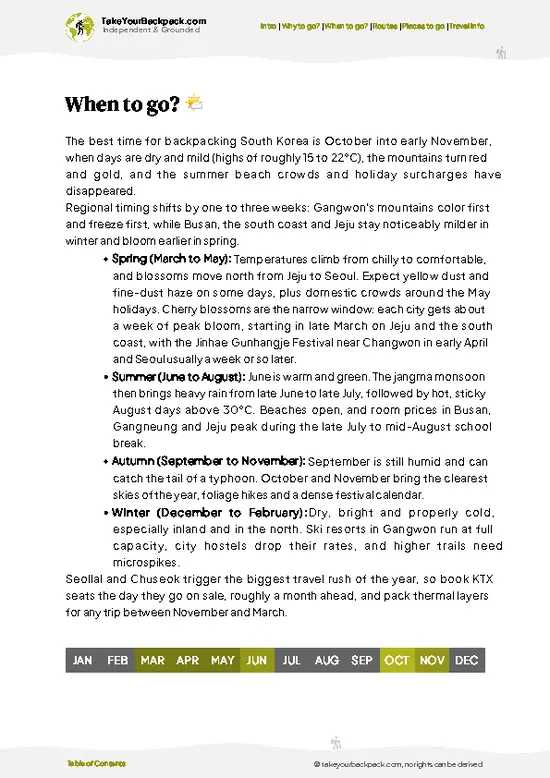
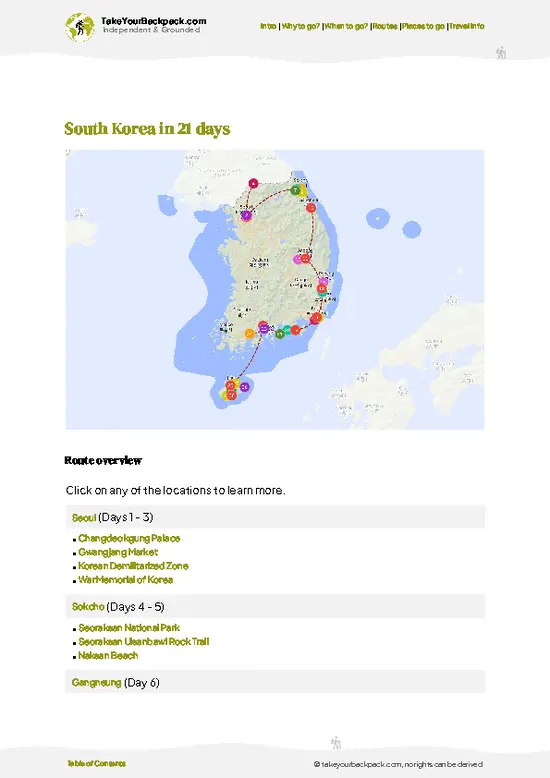
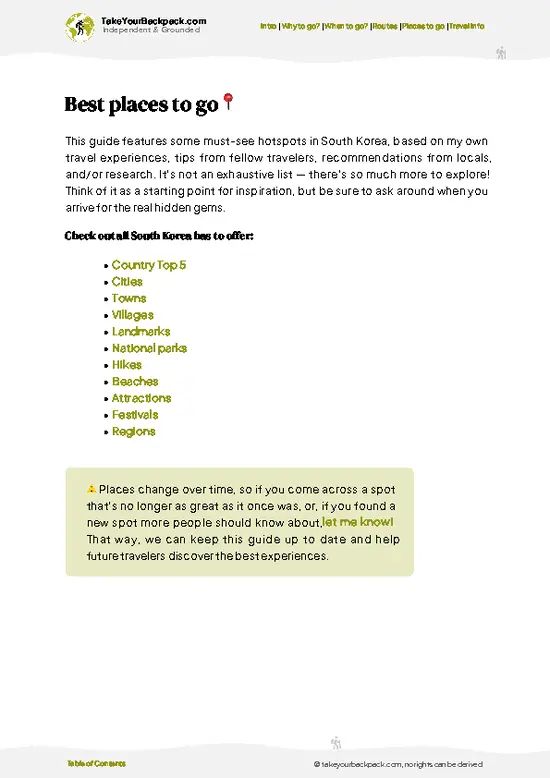
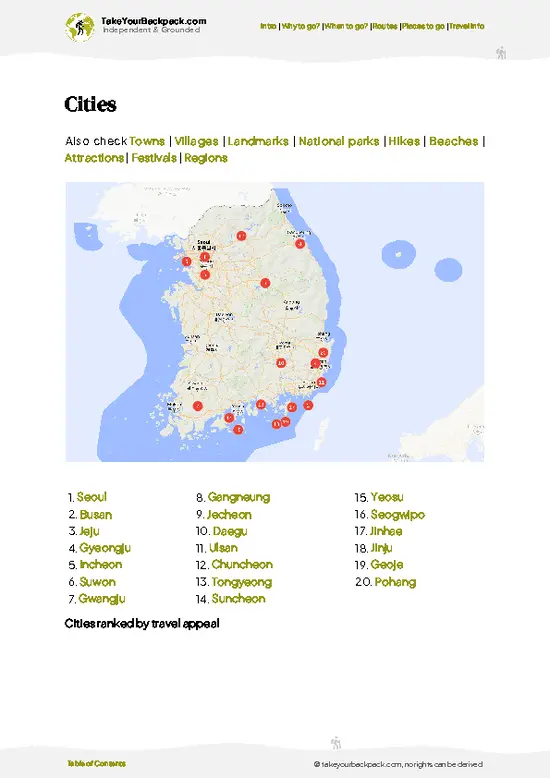
example page 0 from our offline Travel Guide for South Korea
example page 1 from our offline Travel Guide for South Korea
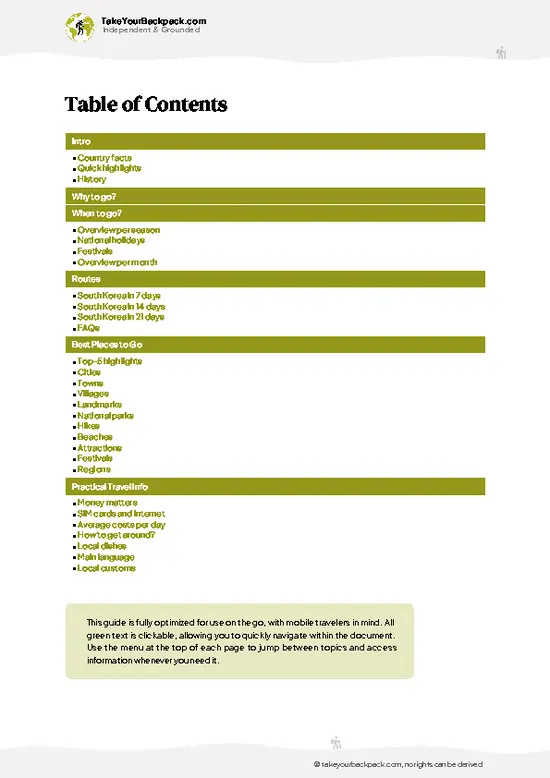
example page 2 from our offline Travel Guide for South Korea
example page 3 from our offline Travel Guide for South Korea
example page 4 from our offline Travel Guide for South Korea
example page 5 from our offline Travel Guide for South Korea
example page 6 from our offline Travel Guide for South Korea
example page 7 from our offline Travel Guide for South Korea
The digital guide (439 pages) contains:
124 highlights, ranked by travel appeal
Optimized 7, 14 & 21-day travel routes
Cities, national parks, landmarks, beaches
How to get around
Offline-friendly for travel without Wi-Fi
👉 Click to see all 30+ guide features

📅 Plan smarter in minutes, not weeks
Month by month travel advice
Festivals & national holidays
Budget expectations

🗺️ Go to the right places, skip the overrated ones
Honest pros & cons of destinations
Top hikes, parks & viewpoints
Lesser-known places most travelers miss
Clear “worth it vs skip it” guidance

🛏️ Travel smoothly without rookie mistakes
Best areas to stay
Transport systems explained simply
Common scams & safety advice
SIM cards, money & practical tips

🌍 Understand the country, not just visit it
Culture & traditions
52 Essential phrases & customs
Festivals worth planning around
Traveler-friendly historical context
Insights that make places more meaningful

📱 Built for real travel conditions
Fully downloadable PDF
Works completely offline
Optimized for phone use
Useful in remote areas & buses
Everything in one place
Save weeks of stressful planning
Get instant access to your full guide. 30‑day money-back guarantee.


By proceeding you agree to our terms.
Sent to your inbox immediately after payment • 100% Secure Checkout
Best Backpacking Travel Advisor 2025 tourism awardBest Backpacking
Travel Advisor
2025
What others say about Take Your Backpack Guides:
⭐⭐⭐⭐⭐
Fantastic, amazing amount of information!
⭐⭐⭐⭐⭐
My goodness this is amazing, it's what I've been looking for hats off too you!
⭐⭐⭐⭐⭐
I think this is absolutely BRILLIANT
⭐⭐⭐⭐
Very complete and informative. It's still missing places, but I gotta to commend you
⭐⭐⭐⭐⭐
This is truly amazing, thank you, can't wait to explore it with my kids!
⭐⭐⭐⭐⭐
Awesome resource, thank you!
⭐⭐⭐⭐⭐
This is amazing! Can't wait to explore the ones I haven't seen
⭐⭐⭐⭐
I love this! Well done, great idea.
⭐⭐⭐⭐⭐
Thanks for taking the time to make this gem!
⭐⭐⭐⭐⭐
This might be the best website I've ever seen.
⭐⭐⭐⭐⭐
Congratulations, and thank you so much for your work; it's incredibly valuable.
⭐⭐⭐⭐
In all seriousness I think you did a great job pointing out the important spots
⭐⭐⭐⭐⭐
10/10 very good
⭐⭐⭐⭐⭐
As someone who's only just starting to visit regularly this is awesome, thank you.
⭐⭐⭐⭐
Thank you very much! I'm going to visit my dad, it's going to be very useful!
⭐⭐⭐⭐⭐
This is really cool! We'll be travelling for the first time and this definitely come in handy.
⭐⭐⭐⭐⭐
You are now our minister of culture, congratulations 👨‍💼
⭐⭐⭐⭐⭐
Just wanted to tell you that this is a pearl! Going to follow your recommendations.
⭐⭐⭐⭐⭐
This is so cool. I'll definitely be using the resource for my travels soon.
⭐⭐⭐⭐⭐
This is very impressive! Good work.
⭐⭐⭐⭐⭐
This is an amazing and informative site. Very well done!

🛏️ Where to stay?Best areas and accommodation options

In Gimcheon, the best spot for backpackers is the area around Gimcheon Station. It’s the city’s pulse—safe, easy to navigate, and loaded with budget-friendly hostels that cater to solo travelers and small groups. This neighborhood strikes a solid balance between comfort and cost, with enough local eateries and convenience stores to keep you fueled without breaking the bank. Compared to the quieter, more residential zones, staying near the station means you’re plugged into the social scene and public transport, saving time and hassle. It’s not flashy, but it’s efficient, practical, and perfect … read more 👉
In Gimcheon, the best spot for backpackers is the area around Gimcheon Station. It’s the city’s pulse—safe, easy to navigate, and loaded with budget-friendly hostels that cater to solo travelers and small groups. This neighborhood strikes a solid balance between comfort and cost, with enough local eateries and convenience stores to keep you fueled without breaking the bank. Compared to the quieter, more residential zones, staying near the station means you’re plugged into the social scene and public transport, saving time and hassle. It’s not flashy, but it’s efficient, practical, and perfect for those who want to maximize experience without unnecessary splurges.

🚌 Getting aroundTransportation options and practical tips

Gimcheon moves at a pace that’s neither frantic nor sluggish—it’s a city where schedules matter, but local intuition fills the gaps. You’ll find a rhythm that balances punctual buses with the occasional wait, and a walk that’s as much about soaking in the streets as it is about getting somewhere. Here, time, money, and comfort play a strategic game, and knowing the trade-offs lets you win every move.


  • City Bus: Runs roughly from 5:30 AM to 11 PM, fares hover around 1,200 KRW. It’s cheap and covers most neighborhoods, but expect crowding during rush hours and a stop-every-block pace.

  • Intercity Bus Terminal: For trips beyond Gimcheon, buses depart frequently from early morning until late evening. Tickets cost between 5,000 to 15,000 KRW depending on distance. It’s a solid balance of speed
read more 👉
Gimcheon moves at a pace that’s neither frantic nor sluggish—it’s a city where schedules matter, but local intuition fills the gaps. You’ll find a rhythm that balances punctual buses with the occasional wait, and a walk that’s as much about soaking in the streets as it is about getting somewhere. Here, time, money, and comfort play a strategic game, and knowing the trade-offs lets you win every move.


  • City Bus: Runs roughly from 5:30 AM to 11 PM, fares hover around 1,200 KRW. It’s cheap and covers most neighborhoods, but expect crowding during rush hours and a stop-every-block pace.

  • Intercity Bus Terminal: For trips beyond Gimcheon, buses depart frequently from early morning until late evening. Tickets cost between 5,000 to 15,000 KRW depending on distance. It’s a solid balance of speed and cost if you’re heading out of town.

  • Taxi: Starting fare is about 3,800 KRW, with additional charges per kilometer. Faster and more comfortable than buses, but costs add up quickly—best for short hops or when you’re pressed for time.

  • Walking: Gimcheon’s compact downtown makes walking a top choice. It costs nothing, gives you full control over your pace, and lets you absorb the city’s character. Just factor in weather and your energy.

👛 Costs (as of 30 July 2026)What things cost and how to budget

Backpacking in Gimcheon, South Korea, offers a clear trade-off between cost and comfort, with prices that reflect its status as a smaller, less tourist-heavy city.
  • Dorm Accommodation (High Season): Expect to pay around $15 to $20 per night. High season sees a slight bump due to local festivals or holidays, but options remain limited compared to bigger cities.
  • Dorm Accommodation (Off-Season): Prices drop to about $10 to $15 per night. Fewer travelers mean better deals, and you can often negotiate directly with hostels for a discount.
  • Meals: Street food and local eateries dominate here. Budget about $5 to $8 per day if you stick to simple meals like kimbap, tteokbokki, or a bowl of bibimbap. Splurging on a sit-down restaurant meal will push this higher.
  • Local Transport: Single bus or taxi
read more 👉
Backpacking in Gimcheon, South Korea, offers a clear trade-off between cost and comfort, with prices that reflect its status as a smaller, less tourist-heavy city.
  • Dorm Accommodation (High Season): Expect to pay around $15 to $20 per night. High season sees a slight bump due to local festivals or holidays, but options remain limited compared to bigger cities.
  • Dorm Accommodation (Off-Season): Prices drop to about $10 to $15 per night. Fewer travelers mean better deals, and you can often negotiate directly with hostels for a discount.
  • Meals: Street food and local eateries dominate here. Budget about $5 to $8 per day if you stick to simple meals like kimbap, tteokbokki, or a bowl of bibimbap. Splurging on a sit-down restaurant meal will push this higher.
  • Local Transport: Single bus or taxi rides within Gimcheon typically cost between $0.80 and $1.50. Walking is also a solid option given the city’s manageable size.
  • City Transport Pass: A daily transport pass, if available, can cost around $3 to $5, offering unlimited bus rides and occasional discounts on local transit.
  • Basic Activities/Entry Fees: Most cultural sites and museums charge modest fees, usually between $2 and $5. Outdoor activities like hiking are free but factor in transport costs to trailheads.
  • Miscellaneous Expenses: Budget $2 to $5 for essentials like bottled water, snacks, or small souvenirs. Internet cafes and laundry services are affordable, usually under $5 per use.

In total, a daily budget for backpacking in Gimcheon ranges from about $25 on a tight budget during the off-season to $40 or more if you lean towards comfort and convenience in high season. This balance lets you decide how much you want to invest in comfort versus stretching your dollar further.
⚠️ Prices can change and everyone travels differently, so take this as a rough guide. Hope it helps you plan your adventure!

🚌 Day tripsExploring the surroundings

Gimcheon is a strategic launchpad for day trips that blend culture, nature, and adventure. Here are some top picks to maximize your experience.

**Hiking at Gayasan National Park**
Just an hour from Gimcheon, Gayasan offers stunning trails and the chance to see the historic Haeinsa Temple, home to the Tripitaka Koreana. The hike is invigorating, with panoramic views that make the effort worthwhile. Expect to spend around $5 for transportation and snacks. Spring and autumn are ideal for mild weather and vibrant foliage. A common mistake? Underestimating the trail difficulty; wear proper shoes.


**Exploring Gyeongju**
About 90 minutes away, Gyeongju is a treasure trove of ancient sites, including Bulguksa Temple and Seokguram Grotto. The city’s rich history makes it a must-see, and you … read more 👉
Gimcheon is a strategic launchpad for day trips that blend culture, nature, and adventure. Here are some top picks to maximize your experience.

**Hiking at Gayasan National Park**
Just an hour from Gimcheon, Gayasan offers stunning trails and the chance to see the historic Haeinsa Temple, home to the Tripitaka Koreana. The hike is invigorating, with panoramic views that make the effort worthwhile. Expect to spend around $5 for transportation and snacks. Spring and autumn are ideal for mild weather and vibrant foliage. A common mistake? Underestimating the trail difficulty; wear proper shoes.


**Exploring Gyeongju**
About 90 minutes away, Gyeongju is a treasure trove of ancient sites, including Bulguksa Temple and Seokguram Grotto. The city’s rich history makes it a must-see, and you can easily spend a full day wandering through its parks and museums. Budget around $10 for transport and entry fees. Late spring or early fall is perfect for comfortable exploration. Many first-timers rush through; take your time to soak it all in.
👉 Explore Gyeongju

**Visiting Andong**
In just over an hour, you can reach Andong, famous for its traditional culture and the Hahoe Folk Village. This UNESCO site showcases traditional Korean architecture and performances. Expect to spend about $15 for transport and meals. Autumn is particularly beautiful here, with colorful leaves enhancing the scenery. A common pitfall is skipping the village tour; it’s worth it for the insights.
👉 Explore Andong
Want to know what more South Korea offers?
The South Korea Travel Guide describes 124 highlights, from cities to national parks, from beaches to hikes

Get the Travel Guide -

🍲 FoodWhat to Eat & Drink

In **Gimcheon**, dive into the local **cuisine** that bursts with flavor. Don’t miss out on **tteokbokki**, those chewy rice cakes drenched in a spicy-sweet sauce, or **sundubu jjigae**, a comforting soft tofu stew that warms you from the inside out.

Street food stalls are your best bet for authentic bites, where the air is thick with the scent of grilling meats and sizzling pancakes.

When it comes to drinks, try **makgeolli**, a milky rice wine that pairs perfectly with savory pancakes.

Remember, sharing is key here; locals often order a variety of dishes to enjoy together, creating a communal vibe that makes every meal feel like a celebration.

🛡️ SafetyTraveler Safety Guide

Gimcheon is generally safe, but like any city, it has its quirks. Stay alert in crowded areas, especially near markets or public transport. Solo travelers should feel comfortable, but avoid dimly lit streets at night.

While scams are rare, be cautious of overly friendly locals offering unsolicited help; they might expect something in return. Everyday annoyances include occasional language barriers, so a translation app can be handy. Carry yourself confidently, and you’ll navigate the city smoothly.

Other South Korean cities near Gimcheon

Explore more nearby:

  • Daegu—Textile district, herbal medicine alley, city festivals| 48 km away
  • Gyeongsan—University district, commuter city, suburban parks| 66 km away
  • Andong—Folk village, mask dance, wooden bridges| 74 km away

💡 Not sure where to go next?
Create a personalized itinerary for South Korea including Gimcheon and the places that fit your trip.

Generate my itinerary

👉 Discover all cities

Or checkout all South Korea has to offer (think cities, towns, villages, national parks, hikes, beaches, festivals)
Country photo of South Korea

We 💚 feedbackKey takeaways before you go

Gimcheon has a laid-back charm that sneaks up on you. Don’t miss the local markets; they’re a sensory delight. Just be ready for the occasional language barrier—it adds to the adventure. Embrace it, and you’ll discover the city’s true heart.

✍️ Help improve this page!
The information on this page is based on in-depth research, insights shared by experienced travelers, and feedback from the local travel community in South Korea. While every effort is made to keep the information accurate and current, conditions can change — so if you spot anything incorrect or outdated, please get in touch.


🙋‍♂️ Give feedback

👋 Meet the founderWho’s Behind Take Your Backpack?

Johan, backpacker and founder of TakeYourBackpackHi, I’m Johan (Netherlands 🇳🇱), the creator of TakeYourBackpack. Over the past decade, I’ve backpacked through 80+ countries across six continents, gaining extensive experience with independent travel, long-term trips, and overland routes.

This site is built on a combination of firsthand travel experience and carefully curated insights from other backpackers. Many guides are based on places I’ve personally visited, while others bring together tips, observations, and practical advice shared by trusted travelers I’ve met along the way.

The goal is to provide realistic, experience-driven guidance — not generic itineraries — so you can explore destinations with better context, clearer expectations, and more confidence.

Get full country guide •
Instant download • 124 highlights • Full Offline guide