×

South Korea🇰🇷 | citiesPohangSteel mills, sunrise point, seafood markets | things to do and best time to go

Explore CheongjuExplore Ulsan

Backpacking in Pohang
👍 Recommendedcity ranked #21
By Johan Kruseman 🇳🇱 | Updated September 4, 2026

Most people write Pohang off as “just a steel town,” but for backpackers it’s one of the easiest places in Korea to mash sunrise temples, raw industrial coastline, and cheap seafood into a single day. Sitting on the east coast of South Korea, north of Gyeongju, it’s safe, walkable in pockets, and very local-feeling. You trade big-city buzz and hostel scenes for homestay warmth, beach camping near Yeongildae, night views from POSCO’s glow, and quick, cheap hops to prettier but pricier Gyeongju and Busan.

Discover everything you want to know in the 📖 South Korea Travel Guide.
Loading the map 🌍
CLICK TO FILTER
cities
towns
villages
landmarks
national parks
hikes
beaches
attractions
festivals
regions
SHOW COUNTRY’S BESTSHOW ALL

✨ Why go?
Ranked #21 city in South Korea
What makes this city worth visiting

Pohang is a strategic stop for backpackers weaving through South Korea. It offers a unique blend of affordability and accessibility. The hostels here are not just budget-friendly; they foster a sense of community, perfect for meeting fellow travelers. The walkability of the city makes it easy to explore local markets and street food stalls, where you can indulge in fresh seafood without breaking the bank.

Pohang serves as a basecamp for day trips to nearby attractions, allowing you to maximize your time without the hassle of constant relocation. The nightlife is lively yet laid-back, providing a great atmosphere to unwind after a day of exploration. Plus, with easy onward travel options, you can seamlessly continue your journey. If you’re after a city that balances high-value experiencesread more 👉
Pohang is a strategic stop for backpackers weaving through South Korea. It offers a unique blend of affordability and accessibility. The hostels here are not just budget-friendly; they foster a sense of community, perfect for meeting fellow travelers. The walkability of the city makes it easy to explore local markets and street food stalls, where you can indulge in fresh seafood without breaking the bank.

Pohang serves as a basecamp for day trips to nearby attractions, allowing you to maximize your time without the hassle of constant relocation. The nightlife is lively yet laid-back, providing a great atmosphere to unwind after a day of exploration. Plus, with easy onward travel options, you can seamlessly continue your journey. If you’re after a city that balances high-value experiences with a relaxed vibe, Pohang is worth more than just a fleeting visit.
Want to include Pohang in your South Korea route?
Create a personalized South Korea itinerary that includes Pohang and the places that fit your trip — based on your travel style, budget, and available time. Get your route in seconds.

Generate my trip

💡 HighlightsKey sights and experiences for travelers

  • Homigot Sunrise Plaza (Hands of Harmony) — The iconic pair of giant hands reaching out of the sea is a must-see at sunrise; the plaza, lighthouse and coastal walks capture Pohang’s maritime spirit and the annual sunrise festival draws locals and visitors alike.
  • Jukdo Market — One of Korea’s liveliest traditional markets, great for fresh seafood, cheap banchan, and people-watching; wander the narrow alleys, sample grilled fish or raw hoe, and soak up authentic local trading culture.
  • POSCO Museum & Steelworks viewing — Pohang’s identity is inseparable from POSCO. The museum explains modern steelmaking and the company’s local impact, and organized tours/observation points (book ahead) let you appreciate the scale and history of the city’s industry.
  • Guryongpo Modern Cultural & History Street
read more 👉
  • Homigot Sunrise Plaza (Hands of Harmony) — The iconic pair of giant hands reaching out of the sea is a must-see at sunrise; the plaza, lighthouse and coastal walks capture Pohang’s maritime spirit and the annual sunrise festival draws locals and visitors alike.
  • Jukdo Market — One of Korea’s liveliest traditional markets, great for fresh seafood, cheap banchan, and people-watching; wander the narrow alleys, sample grilled fish or raw hoe, and soak up authentic local trading culture.
  • POSCO Museum & Steelworks viewing — Pohang’s identity is inseparable from POSCO. The museum explains modern steelmaking and the company’s local impact, and organized tours/observation points (book ahead) let you appreciate the scale and history of the city’s industry.
  • Guryongpo Modern Cultural & History Street — A charming fishing-port neighborhood of preserved Japanese-era buildings, small museums and cafes; the nearby Guryongpo Lighthouse and harbor front are perfect for a slow stroll and seafood dinners.
  • Yeongildae Beach & Pavilion — A beloved urban beach with a tree-lined promenade, scenic pavilion and lively evening scene; it’s where locals picnic, watch sunsets, and catch festivals in summer.
  • Pohang Steelyard (Pohang Stadium) — Home of the Pohang Steelers; even if you don’t catch a match, the stadium pulse on game day and the surrounding neighborhood give a real sense of local pride and modern city life.
  • Jukdo Island / Jukdo Park — Small island/park near the river mouth (and the market that carries its name) offering coastal walks, a lighthouse feel and views over the estuary—an easy, peaceful escape inside the city.
  • Pohang City Museum — A good place to ground your visit: local archaeology, folk artifacts and exhibits explain the region’s past (from fishing villages to industrial growth) in compact, visitable displays.
  • Pohang Cultural & Arts Center / Local galleries — The city’s arts venues (rotating shows, small galleries, occasional performances) showcase contemporary regional artists and make for a pleasant cultural stop when you want indoor, low-cost things to do.
  • Hyeongsan River cycling path & riverside parks — Rent a bike and follow the Hyeongsan River; the riverside greenways, bridges and neighborhood markets reveal everyday Pohang life and are perfect for slow exploration away from tourist spots.
A few excellent day trips from Pohang: historic Gyeongju (Bulguksa, Seokguram, Tumuli), nearby Ulsan (Jangsaengpo Whale Museum, Taehwa River) and the traditional Hahoe Village in Andong are all easily visitable in a day.
Spotted a mistake or missing something? Contact us.

Things to do near Pohang

Ratings based on Tripadvisor reviews. When you book through this link, you support our work at no extra cost to you.

🏘️ NeighborhoodsUnderstanding the local layout

Pohang is a coastal city that blends urban life with natural beauty, making it a unique stop for backpackers. Here’s how the neighborhoods stack up:

Yeongil Bay: This area is a backpacker’s dream. With stunning ocean views and a laid-back vibe, it’s perfect for those who want to relax. Affordable guesthouses line the waterfront, and the beach is just a stroll away. Nightlife is low-key, with a few bars and cafes. Great for both short and longer stays, especially if you love the sound of waves.

Downtown Pohang: The bustling heart of the city, this neighborhood offers a mix of street food, shopping, and cultural experiences. It’s walkable, with plenty of transport options, making it easy to explore. Prices here can vary, but you’ll find budget-friendly hostels. The nightlife is vibrant, with … read more 👉
Pohang is a coastal city that blends urban life with natural beauty, making it a unique stop for backpackers. Here’s how the neighborhoods stack up:

Yeongil Bay: This area is a backpacker’s dream. With stunning ocean views and a laid-back vibe, it’s perfect for those who want to relax. Affordable guesthouses line the waterfront, and the beach is just a stroll away. Nightlife is low-key, with a few bars and cafes. Great for both short and longer stays, especially if you love the sound of waves.

Downtown Pohang: The bustling heart of the city, this neighborhood offers a mix of street food, shopping, and cultural experiences. It’s walkable, with plenty of transport options, making it easy to explore. Prices here can vary, but you’ll find budget-friendly hostels. The nightlife is vibrant, with many bars and clubs, ideal for social backpackers looking to meet others.

Nam-gu: A quieter residential area, Nam-gu is perfect for those seeking a more local experience. It’s less touristy, with cozy cafes and parks. While transport is accessible, it’s a bit further from the main attractions. This area suits longer stays, especially if you want to immerse yourself in everyday life.

⌛️ 1 dayHow to make the most of one day

Pohang, a coastal city in South Korea, is a delightful blend of industrial grit and natural beauty. Known for its vibrant fishing culture and the stunning Homigot Sunrise Square, it offers a unique glimpse into both traditional and modern Korean life.

Start your day at the bustling Jukdo Market. Here, the aroma of fresh seafood fills the air, and you can grab a hearty breakfast of grilled fish or spicy tteokbokki from local vendors. The market is a sensory overload, but it’s a fantastic way to dive into the local culture. After fueling up, take a leisurely stroll along the coast to Homigot, where the iconic hand sculptures rise from the sea, symbolizing hope and new beginnings. The morning light casts a magical glow, perfect for photos.

In the afternoon, head to the nearby Yeongildae Beach. … read more 👉
Pohang, a coastal city in South Korea, is a delightful blend of industrial grit and natural beauty. Known for its vibrant fishing culture and the stunning Homigot Sunrise Square, it offers a unique glimpse into both traditional and modern Korean life.

Start your day at the bustling Jukdo Market. Here, the aroma of fresh seafood fills the air, and you can grab a hearty breakfast of grilled fish or spicy tteokbokki from local vendors. The market is a sensory overload, but it’s a fantastic way to dive into the local culture. After fueling up, take a leisurely stroll along the coast to Homigot, where the iconic hand sculptures rise from the sea, symbolizing hope and new beginnings. The morning light casts a magical glow, perfect for photos.

In the afternoon, head to the nearby Yeongildae Beach. It’s a popular spot for locals, so you’ll get a taste of everyday life. Relax on the sandy shore or rent a bike to explore the scenic coastal paths. If you’re feeling adventurous, try your hand at windsurfing or paddleboarding.

As evening approaches, make your way to the historic village of Guryongpo. This area is often overlooked by tourists, but its charming streets and traditional houses are worth the visit. Enjoy dinner at a local seafood restaurant, where you can savor dishes like sashimi or grilled mackerel.

End your day at the Pohang Steel Company’s light show, a dazzling display that highlights the city’s industrial heritage against the backdrop of the night sky. This blend of culture, food, and stunning sights makes for a day in Pohang that’s both enriching and memorable.
Turn your Pohang visit into an South Korea adventure
Build a complete South Korea route with Pohang, hidden gems, must-see destinations, and realistic travel times included.

Generate my trip

🌤️ When to go?When to go for the best experience


  • Weather: Pohang’s best window is late spring to early autumn. May to September offers warm, dry days perfect for coastal hikes and beach time, with temps ranging 18-28°C (64-82°F).

  • Temperature: Winters dip below freezing, often hovering around -2°C (28°F), which can make outdoor exploration less inviting unless you’re into brisk, quiet streets.

  • Daylight Hours: Summer days stretch long, up to 14-15 hours, maximizing your adventure time. Winter cuts that down to about 9-10 hours, limiting daylight for activities.

  • Crowds: Summer sees a spike in domestic tourists, especially around beaches and festivals. Spring and autumn offer a quieter vibe without sacrificing pleasant weather.

  • Seasonal Activities: Summer hosts the Pohang International Fireworks Festival, a spectacle worth timing
read more 👉

  • Weather: Pohang’s best window is late spring to early autumn. May to September offers warm, dry days perfect for coastal hikes and beach time, with temps ranging 18-28°C (64-82°F).

  • Temperature: Winters dip below freezing, often hovering around -2°C (28°F), which can make outdoor exploration less inviting unless you’re into brisk, quiet streets.

  • Daylight Hours: Summer days stretch long, up to 14-15 hours, maximizing your adventure time. Winter cuts that down to about 9-10 hours, limiting daylight for activities.

  • Crowds: Summer sees a spike in domestic tourists, especially around beaches and festivals. Spring and autumn offer a quieter vibe without sacrificing pleasant weather.

  • Seasonal Activities: Summer hosts the Pohang International Fireworks Festival, a spectacle worth timing your visit for. Autumn brings vibrant foliage and seafood festivals, adding cultural flavor.

  • Price Fluctuations: Peak summer months push accommodation and transport prices up. Shoulder seasons (spring and autumn) balance cost and comfort, giving you more bang for your buck.


Pro-tip: Aim for late April to early June or September to October to dodge crowds, enjoy mild weather, and keep your wallet happy—smart timing turns a good trip into a great one.


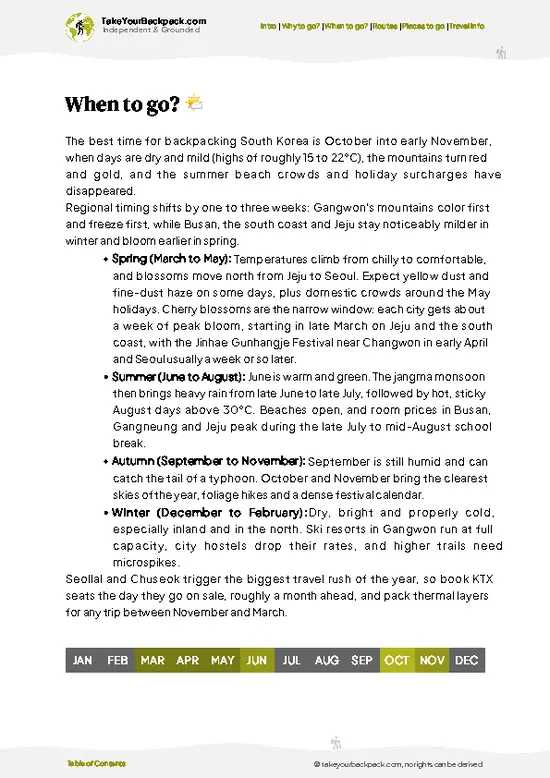
source: climatestotravel.comJANJanuary: fair for travelingFEBFebruary: fair for travelingMARMarch: good for travelingAPRApril: highly recommended for travelingMAYMay: excellent for travelingJUNJune: excellent for travelingJULJuly: highly recommended for travelingAUGAugust: highly recommended for travelingSEPSeptember: excellent for travelingOCTOctober: excellent for travelingNOVNovember: good for travelingDECDecember: fair for traveling
when-to-go

✈️ The backpacker research shortcutSouth Korea Travel Guide

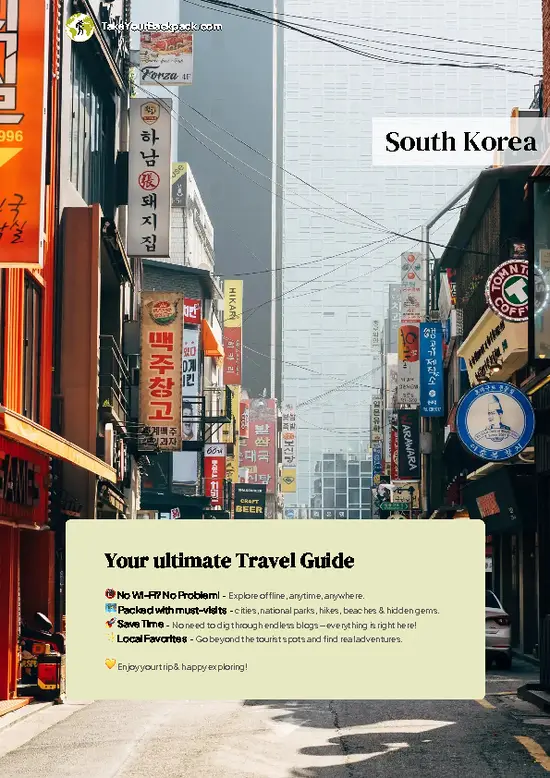
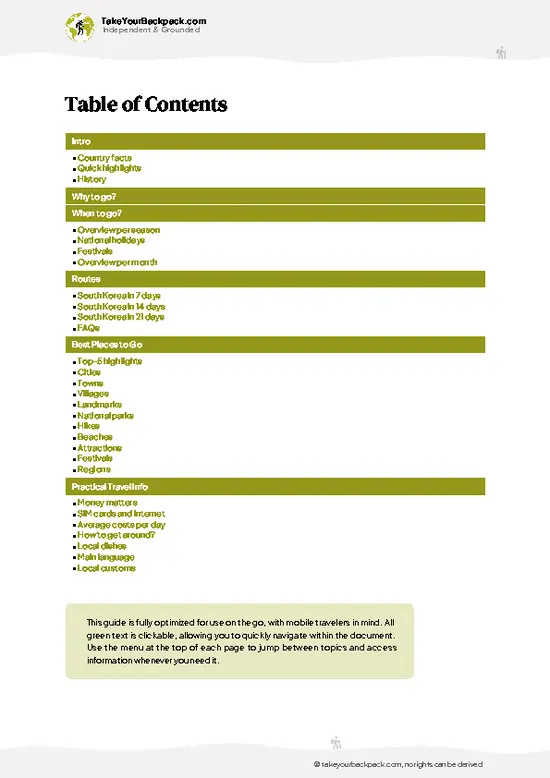
An offline-friendly backpacking guide with optimized travel routes, ranked highlights, transport advice, and the best areas to stay.
example page 0 from our offline Travel Guide for South Korea
example page 1 from our offline Travel Guide for South Korea
example page 2 from our offline Travel Guide for South Korea
example page 3 from our offline Travel Guide for South Korea
example page 4 from our offline Travel Guide for South Korea
example page 5 from our offline Travel Guide for South Korea
example page 6 from our offline Travel Guide for South Korea
example page 7 from our offline Travel Guide for South Korea
The digital guide (439 pages) contains:
124 highlights, ranked by travel appeal
Optimized 7, 14 & 21-day travel routes
Cities, national parks, landmarks, beaches
How to get around
Offline-friendly for travel without Wi-Fi
👉 Click to see all 30+ guide features

📅 Plan smarter in minutes, not weeks
Month by month travel advice
Festivals & national holidays
Budget expectations

🗺️ Go to the right places, skip the overrated ones
Honest pros & cons of destinations
Top hikes, parks & viewpoints
Lesser-known places most travelers miss
Clear “worth it vs skip it” guidance

🛏️ Travel smoothly without rookie mistakes
Best areas to stay
Transport systems explained simply
Common scams & safety advice
SIM cards, money & practical tips

🌍 Understand the country, not just visit it
Culture & traditions
52 Essential phrases & customs
Festivals worth planning around
Traveler-friendly historical context
Insights that make places more meaningful

📱 Built for real travel conditions
Fully downloadable PDF
Works completely offline
Optimized for phone use
Useful in remote areas & buses
Everything in one place
Save weeks of stressful planning
Get instant access to your full guide. 30‑day money-back guarantee.
+ Add another guide for just US$7.80

By proceeding you agree to our terms.
Sent to your inbox immediately after payment • 100% Secure Checkout
Best Backpacking Travel Advisor 2025 tourism awardBest Backpacking
Travel Advisor
2025
What others say about Take Your Backpack Guides:
⭐⭐⭐⭐⭐
Fantastic, amazing amount of information!
⭐⭐⭐⭐⭐
My goodness this is amazing, it's what I've been looking for hats off too you!
⭐⭐⭐⭐⭐
I think this is absolutely BRILLIANT
⭐⭐⭐⭐
Very complete and informative. It's still missing places, but I gotta to commend you
⭐⭐⭐⭐⭐
This is truly amazing, thank you, can't wait to explore it with my kids!
⭐⭐⭐⭐⭐
Awesome resource, thank you!
⭐⭐⭐⭐⭐
This is amazing! Can't wait to explore the ones I haven't seen
⭐⭐⭐⭐
I love this! Well done, great idea.
⭐⭐⭐⭐⭐
Thanks for taking the time to make this gem!
⭐⭐⭐⭐⭐
This might be the best website I've ever seen.
⭐⭐⭐⭐⭐
Congratulations, and thank you so much for your work; it's incredibly valuable.
⭐⭐⭐⭐
In all seriousness I think you did a great job pointing out the important spots
⭐⭐⭐⭐⭐
10/10 very good
⭐⭐⭐⭐⭐
As someone who's only just starting to visit regularly this is awesome, thank you.
⭐⭐⭐⭐
Thank you very much! I'm going to visit my dad, it's going to be very useful!
⭐⭐⭐⭐⭐
This is really cool! We'll be travelling for the first time and this definitely come in handy.
⭐⭐⭐⭐⭐
You are now our minister of culture, congratulations 👨‍💼
⭐⭐⭐⭐⭐
Just wanted to tell you that this is a pearl! Going to follow your recommendations.
⭐⭐⭐⭐⭐
This is so cool. I'll definitely be using the resource for my travels soon.
⭐⭐⭐⭐⭐
This is very impressive! Good work.
⭐⭐⭐⭐⭐
This is an amazing and informative site. Very well done!

🛏️ Where to stay?Best areas to stay in South Korea

Downtown Pohang is the backpacker sweet spot—safe, lively, and wallet-friendly. This area balances convenience with a social vibe, packed with hostels that cater to solo travelers and budget adventurers. You’re close to street food stalls, local markets, and nightlife without the tourist overload. It’s where you’ll find a mix of locals and fellow backpackers, making it easy to connect and swap stories.

Compared to the quieter, more residential neighborhoods or the industrial zones near the port, downtown offers a better blend of comfort and accessibility. You sacrifice a bit of tranquility for … read more 👉
Downtown Pohang is the backpacker sweet spot—safe, lively, and wallet-friendly. This area balances convenience with a social vibe, packed with hostels that cater to solo travelers and budget adventurers. You’re close to street food stalls, local markets, and nightlife without the tourist overload. It’s where you’ll find a mix of locals and fellow backpackers, making it easy to connect and swap stories.

Compared to the quieter, more residential neighborhoods or the industrial zones near the port, downtown offers a better blend of comfort and accessibility. You sacrifice a bit of tranquility for the buzz, but that trade-off pays off in authentic experiences and easy logistics.

🚌 Getting aroundGetting around like a local

Pohang moves at its own rhythm—a blend of industrial precision and coastal spontaneity. The city’s pulse is set by the steel mills and fishing docks, where schedules matter but the sea breeze invites a slower pace. You’ll find that timing here is a flexible game: buses and trains run on a timetable, but local intuition often fills the gaps. Mastering Pohang’s flow means balancing the clock with a willingness to adapt, turning transit into a strategic play rather than a chore.


  • City Buses: Operating roughly from 5:30 AM to 11 PM, fares hover around 1,250 KRW. They’re slow but reliable, threading through neighborhoods and industrial zones—perfect if you want to stretch your legs and soak in local life without breaking the bank.

  • Intercity Buses: Departing from Pohang Bus Terminal, these
read more 👉
Pohang moves at its own rhythm—a blend of industrial precision and coastal spontaneity. The city’s pulse is set by the steel mills and fishing docks, where schedules matter but the sea breeze invites a slower pace. You’ll find that timing here is a flexible game: buses and trains run on a timetable, but local intuition often fills the gaps. Mastering Pohang’s flow means balancing the clock with a willingness to adapt, turning transit into a strategic play rather than a chore.


  • City Buses: Operating roughly from 5:30 AM to 11 PM, fares hover around 1,250 KRW. They’re slow but reliable, threading through neighborhoods and industrial zones—perfect if you want to stretch your legs and soak in local life without breaking the bank.

  • Intercity Buses: Departing from Pohang Bus Terminal, these connect you to nearby cities like Daegu and Ulsan. Tickets cost about 7,000 to 10,000 KRW. They’re faster than city buses but less frequent, so timing is key if you want to avoid long waits.

  • Taxi: Readily available but pricier, expect a base fare around 3,800 KRW plus distance charges. Ideal for short hops when time is tight or when you’re hauling gear. Comfort and door-to-door service come at a premium.

  • Walking: Pohang’s compact downtown and coastal areas reward those who choose their own pace. No cost, full control, and a chance to discover the city’s character beyond transit routes. Just watch for industrial traffic near the port.

👛 Costs (as of 4 September 2026)Money, prices, and spending tips

Backpacking in Pohang, South Korea, offers a clear trade-off between cost and comfort, with prices that reflect its status as a mid-sized coastal city rather than a major tourist hub. Here’s how your daily budget breaks down:
  • Dorm Accommodation (High Season): Expect to pay around $15 to $25 per night. High season, typically summer months, pushes prices up due to beach tourism and local festivals.
  • Dorm Accommodation (Off-Season): Prices drop to about $10 to $18 per night when the crowds thin out, especially in winter and early spring.
  • Meals: Street food and casual eateries will cost you roughly $5 to $10 per meal. A full day of eating on a budget can be managed for $15 to $25 if you stick to local favorites like kimbap, tteokbokki, and seafood pancakes.
  • Local Transport: Bus fares within
read more 👉
Backpacking in Pohang, South Korea, offers a clear trade-off between cost and comfort, with prices that reflect its status as a mid-sized coastal city rather than a major tourist hub. Here’s how your daily budget breaks down:
  • Dorm Accommodation (High Season): Expect to pay around $15 to $25 per night. High season, typically summer months, pushes prices up due to beach tourism and local festivals.
  • Dorm Accommodation (Off-Season): Prices drop to about $10 to $18 per night when the crowds thin out, especially in winter and early spring.
  • Meals: Street food and casual eateries will cost you roughly $5 to $10 per meal. A full day of eating on a budget can be managed for $15 to $25 if you stick to local favorites like kimbap, tteokbokki, and seafood pancakes.
  • Local Transport: Bus fares within Pohang are generally $1 to $1.50 per ride. Taxis start at about $3, but are rarely necessary for budget travelers.
  • City Transport Pass: A daily transport pass, if available, can cost around $3 to $5, offering unlimited bus rides and making it easier to explore without worrying about individual fares.
  • Basic Activities/Entry Fees: Most local attractions, such as museums or parks, charge between $2 and $7. Beach access is free, but special exhibitions or cultural performances might add a few dollars.
  • Miscellaneous Expenses: This includes bottled water, snacks, or small souvenirs, typically around $3 to $7 per day depending on your habits.

In total, a backpacker in Pohang can expect to spend between $40 and $70 per day. This range balances modest comfort with the essentials, giving you enough flexibility to enjoy local flavors and sights without overspending. The key trade-off here is between paying a bit more for convenience and comfort during high season or tightening the belt in quieter months to stretch your budget further.


source: english.visitkorea.or.kr
⚠️ Prices can change and everyone travels differently, so take this as a rough guide. Hope it helps you plan your adventure!

🚌 Day tripsShort trips worth adding

Pohang is a fantastic launchpad for day trips that blend culture, nature, and adventure. Here’s how to make the most of your time without breaking the bank.

**Gyeongju**
Just a 30-minute bus ride from Pohang, Gyeongju is a treasure trove of ancient history. You can explore the UNESCO World Heritage sites like Bulguksa Temple and Seokguram Grotto, which are both jaw-dropping and educational. Expect to spend around 15,000 KRW on transport and entry fees. Spring and fall are ideal for pleasant weather and fewer crowds. A common mistake? Skipping the local street food—don’t miss out on the savory Gyeongju bread!
👉 Explore Gyeongju

**Oeosa Temple**
A mere 20-minute bus ride will take you to Oeosa Temple, a serene spot nestled in the mountains. The temple is less touristy, allowing for a … read more 👉
Pohang is a fantastic launchpad for day trips that blend culture, nature, and adventure. Here’s how to make the most of your time without breaking the bank.

**Gyeongju**
Just a 30-minute bus ride from Pohang, Gyeongju is a treasure trove of ancient history. You can explore the UNESCO World Heritage sites like Bulguksa Temple and Seokguram Grotto, which are both jaw-dropping and educational. Expect to spend around 15,000 KRW on transport and entry fees. Spring and fall are ideal for pleasant weather and fewer crowds. A common mistake? Skipping the local street food—don’t miss out on the savory Gyeongju bread!
👉 Explore Gyeongju

**Oeosa Temple**
A mere 20-minute bus ride will take you to Oeosa Temple, a serene spot nestled in the mountains. The temple is less touristy, allowing for a peaceful experience. The hike up to the temple offers stunning views, and you can do it all for about 10,000 KRW. Late spring is particularly beautiful when the cherry blossoms are in full bloom. First-timers often underestimate the hike; wear good shoes and take your time!


**Homigot Sunrise Square**
For a breathtaking start to your day, head to Homigot Sunrise Square, just 30 minutes away. The giant hand sculpture reaching out of the sea is iconic, and the sunrise views are worth the early wake-up call. You can enjoy this trip for around 5,000 KRW, including transport. Visit in the summer for the best sunrises, but be prepared for crowds. Many miss the nearby fishing market—grab some fresh seafood for breakfast!


**Bonghwangdae**
About 40 minutes from Pohang, Bonghwangdae offers a unique blend of history and nature. This ancient burial mound provides panoramic views of the surrounding area. The trip costs around 8,000 KRW, making it a budget-friendly option. Fall is the best time to visit, with vibrant foliage. A common oversight is not bringing water; the hike can be more strenuous than it appears!
Want to know what more South Korea offers?
The South Korea Travel Guide describes 124 highlights, from cities to national parks, from beaches to hikes

Get the Travel Guide -

🍲 FoodWhat to Eat & Drink

In **Pohang**, the culinary scene is a delightful playground for backpackers. Dive into **hoe**, a fresh raw fish dish that’s a local staple. The ocean’s bounty is at your fingertips, and the taste of the sea is vibrant and clean. Pair it with a bowl of **sundubu jjigae**, a spicy tofu stew that warms you from the inside out.

Street food is where the magic happens. Stroll through bustling markets and savor **tteokbokki**, spicy rice cakes that are chewy and addictive. The aroma of **hotteok**, sweet pancakes filled with syrupy goodness, wafts through the air, tempting you to indulge.

When it comes to drinks, don’t miss out on **makgeolli**, a traditional rice wine that’s slightly sweet and effervescent. It’s often enjoyed in casual settings, where sharing is the norm. Remember, pouring … read more 👉
In **Pohang**, the culinary scene is a delightful playground for backpackers. Dive into **hoe**, a fresh raw fish dish that’s a local staple. The ocean’s bounty is at your fingertips, and the taste of the sea is vibrant and clean. Pair it with a bowl of **sundubu jjigae**, a spicy tofu stew that warms you from the inside out.

Street food is where the magic happens. Stroll through bustling markets and savor **tteokbokki**, spicy rice cakes that are chewy and addictive. The aroma of **hotteok**, sweet pancakes filled with syrupy goodness, wafts through the air, tempting you to indulge.

When it comes to drinks, don’t miss out on **makgeolli**, a traditional rice wine that’s slightly sweet and effervescent. It’s often enjoyed in casual settings, where sharing is the norm. Remember, pouring drinks for others is a sign of respect, so keep that in mind as you mingle with locals.

In Pohang, every bite and sip is a chance to connect with the culture. Enjoy the flavors, and let the city’s spirit fill your senses.

🛡️ SafetyStaying Safe: What Travelers Should Know

Pohang is generally safe for backpackers, but a few situational awareness tips can enhance your experience. Stick to well-lit areas at night, especially if you’re solo. The waterfront can be quiet after dark, so consider heading back to your accommodation before the sun sets.

While scams are rare, be cautious around busy markets. Vendors may try to upsell or mislead about prices. Always ask for clarification if something feels off.

Annoyances can include language barriers, so a translation app can be your best friend. Locals are friendly and often willing to help, but knowing a few basic phrases can ease interactions. Carry yourself confidently, and you’ll navigate Pohang like a pro.

FAQFrequently asked questions about Pohang

2 to 3 days are sufficient to explore Pohang. Key attractions include Homigot Sunrise Square and Jukdo Market, with time to enjoy local seafood and beaches. This duration allows for a relaxed pace without rushing.
Yes, Pohang is safe for solo backpackers. The city has low crime rates and a friendly local population, making it comfortable for independent travelers. Basic precautions like avoiding poorly lit areas at night are advised.
Pohang is known for its steel industry, particularly POSCO, one of the world's largest steel producers. It is also famous for its coastal scenery, including Homigot and Bukbu Beach, and fresh seafood markets.
⚠️ Things can change over time, so always validate details locally before you go.

Other South Korean cities near Pohang

Explore more nearby:

  • Gyeongju—Royal tombs, ancient observatory, Buddhist relics| 24 km away
  • Ulsan—Whale museum, shipbuilding docks, bamboo groves| 53 km away
  • Gyeongsan—University district, commuter city, suburban parks| 60 km away

💡 Not sure where to go next?
Create a personalized itinerary for South Korea including Pohang and the places that fit your trip.

Generate my itinerary

👉 Discover all cities

Or checkout all South Korea has to offer (think cities, towns, villages, national parks, hikes, beaches, festivals)
Country photo of South Korea

We 💚 feedbackKey takeaways before you go

Pohang has a laid-back vibe that feels like a well-kept secret. The best surprise? The raw beauty of Homigot Sunrise Square at dawn—watching the sun rise over the ocean is pure magic. Just a heads-up: the public transport can be a bit tricky, so plan your routes ahead. Embrace the local seafood; it’s fresh and delicious. You’ll leave with a taste of the coast and a heart full of memories.

✍️ Help improve this page!
The information on this page is based on in-depth research, insights shared by experienced travelers, and feedback from the local travel community in South Korea. While every effort is made to keep the information accurate and current, conditions can change — so if you spot anything incorrect or outdated, please get in touch.


🙋‍♂️ Give feedback

👋 Meet the founderWho’s Behind Take Your Backpack?

Johan, backpacker and founder of TakeYourBackpackHi, I’m Johan (Netherlands 🇳🇱), the creator of TakeYourBackpack. Over the past decade, I’ve backpacked through 80+ countries across six continents, gaining extensive experience with independent travel, long-term trips, and overland routes.

This site is built on a combination of firsthand travel experience and carefully curated insights from other backpackers. Many guides are based on places I’ve personally visited, while others bring together tips, observations, and practical advice shared by trusted travelers I’ve met along the way.

The goal is to provide realistic, experience-driven guidance — not generic itineraries — so you can explore destinations with better context, clearer expectations, and more confidence.

Get full country guide •
Instant download • 124 highlights • Full Offline guide