×

South Korea🇰🇷 | regionsJeju IslandLava tubes, oreum cones, tangerine orchards | things to do and best time to go

Explore Ulleungdo IslandExplore Bukchon Hanok Village

Backpacking in Jeju Island
🏆 Top pickregion ranked #1
By Johan Kruseman 🇳🇱 | Updated September 4, 2026

Ten years ago Jeju felt like a slightly scruffy island outpost where you hitchhiked between tangerine farms and maybe saw one tour bus a day; now it’s South Korea’s playground, with rental cars everywhere and cafés designed for Instagram as much as caffeine. It sits off the country’s south coast, a short flight from Seoul or Busan, and for backpackers it’s this weird mix of wild lava cliffs, polished resorts, and very normal small-town Korea in between. You get serious coastal trails, Hallasan National Park right in the middle, waterfalls, black-sand beaches, and enough quirky museums to fill a rainy week, but you’ll pay more for beds and food than on the mainland and buses between towns can be slow and indirect. Compared with Busan or the southern mainland coast, Jeju is more nature-heavy, more curated, and less “everyday Korea,” but if you chase dawn hikes and quiet fishing villages instead of peak-season hotspots, it still feels real.

Discover everything you want to know in the 📖 South Korea Travel Guide.
Loading the map 🌍
CLICK TO FILTER
cities
towns
villages
landmarks
national parks
hikes
beaches
attractions
festivals
regions
SHOW COUNTRY’S BESTSHOW ALL

✨ Why go?
Ranked #1 region in South Korea
Reasons people choose to visit here

Jeju Island is a backpacker’s paradise for a reason. First off, the variety of landscapes is mind-blowing. You’ve got volcanic craters, lush forests, and stunning coastlines all within a short drive. This means you can dive into nature without the hassle of constant relocation.

Transport here is a breeze. Rent a scooter or hop on a bus, and you’re free to explore at your own pace. This flexibility lets you hit the famous Hallasan Mountain for a sunrise hike, then chill at a beachside café in the afternoon.

But it’s not just about nature. Jeju’s rich culture is woven into every corner. Visit local markets, sample black pork, and chat with friendly locals who are eager to share their stories. This blend of nature and culture makes slow travel here incredibly rewarding.

You can spend a … read more 👉
Jeju Island is a backpacker’s paradise for a reason. First off, the variety of landscapes is mind-blowing. You’ve got volcanic craters, lush forests, and stunning coastlines all within a short drive. This means you can dive into nature without the hassle of constant relocation.

Transport here is a breeze. Rent a scooter or hop on a bus, and you’re free to explore at your own pace. This flexibility lets you hit the famous Hallasan Mountain for a sunrise hike, then chill at a beachside café in the afternoon.

But it’s not just about nature. Jeju’s rich culture is woven into every corner. Visit local markets, sample black pork, and chat with friendly locals who are eager to share their stories. This blend of nature and culture makes slow travel here incredibly rewarding.

You can spend a week or more without feeling like you’ve exhausted the island. Each day offers a new adventure, whether it’s hiking, eating, or just soaking in the views. Jeju Island isn’t just a stop; it’s a full experience waiting to be savored.
Want to include Jeju Island in your South Korea route?
Create a personalized South Korea itinerary that includes Jeju Island and the places that fit your trip — based on your travel style, budget, and available time. Get your route in seconds.

Generate my trip

💡 HighlightsEssential experiences to have while visiting Jeju Island

  1. Seongsan Ilchulbong (Sunrise Peak) — A dramatic tuff cone that literally looks like it popped out of the sea. The rim hike is short but steep and the sunrise panorama over Jeju’s east coast and crater bowl is a one-of-a-kind volcanic moment you can’t replicate on the mainland.
  2. Hallasan (Baengnokdam crater) — South Korea’s highest peak sits in the island’s center. Hikes through unique sub-alpine plants, lava fields and the misty crater lake (Baengnokdam) feel like walking on another planet — especially in spring when alpine flowers bloom.
  3. Manjanggul Lava Tube — One of the longest lava tubes in the world, with massive lava stalactites and a cool, eerie tunnel you can walk into. It’s geology on show: you’re literally inside a frozen river of lava.
  4. Seongeup Folk Village — A living village
read more 👉
  1. Seongsan Ilchulbong (Sunrise Peak) — A dramatic tuff cone that literally looks like it popped out of the sea. The rim hike is short but steep and the sunrise panorama over Jeju’s east coast and crater bowl is a one-of-a-kind volcanic moment you can’t replicate on the mainland.
  2. Hallasan (Baengnokdam crater) — South Korea’s highest peak sits in the island’s center. Hikes through unique sub-alpine plants, lava fields and the misty crater lake (Baengnokdam) feel like walking on another planet — especially in spring when alpine flowers bloom.
  3. Manjanggul Lava Tube — One of the longest lava tubes in the world, with massive lava stalactites and a cool, eerie tunnel you can walk into. It’s geology on show: you’re literally inside a frozen river of lava.
  4. Seongeup Folk Village — A living village where low, thatched Jeju houses, stone walls and ancestral rites still happen. It’s the clearest peek into old island life — expect horses, traditional gates, and local stories you won’t get at a polished museum.
  5. Udo Island (Udo-bong & Seobin Baeksa) — A short ferry hop from Jeju; Udo’s black lava coast, coral-feeling white sand (Seobin Baeksa), and peanut-ice-cream stalls make it a tiny island loop that feels like a cheerful local escape rather than a staged sight.
  6. Jusangjeolli Cliffs — Hexagonal basalt pillars carved by fierce waves along the southern coast. The geometry against the ocean is dramatic and very Jeju — volcanic rock arranged like someone stacked giant columns.
  7. Haenyeo diving villages (see the women divers) — The island’s female free-diver culture is living, not a show: watch haenyeo surface with baskets of shellfish at small harbors (good spots include Seongsan, parts of Seogwipo and Moseulpo). If you time mornings right you’ll see skill and stamina that can’t be copied anywhere else.
  8. Bijarim Forest (hidden gem) — A peaceful, ancient stand of nutmeg yew trees (some over 500 years old). The mossy path through towering trunks feels intimate and timeless — fewer tourists, big atmosphere.
  9. Saryeoni Forest Trail (hidden gem) — A soft, volcanic-soil forest walk inland that’s quieter than the main national-park trails. Locals picnic and jog here; it’s great for a relaxed half-day hike where the air actually smells different (in a good way).
  10. Biyangdo Island (hidden gem) — A tiny, sleepy islet off Jeju’s west coast — short ferry, easy loop walk, dramatic cliffs and local fishing villages. Far fewer visitors than Udo, so it feels like discovering real island life: quiet coves, simple seafood stands, good views.
Spotted a mistake or missing something? Contact us.

Things to do around Jeju Island

Ratings based on Tripadvisor reviews. When you book through this link, you support our work at no extra cost to you.

⌛️ 5 daysWhat you can realistically do in a week

Day 1: Jeju City
Jeju City is your launchpad. Arrive, get your bearings, and soak in the local vibe. The bus system here is efficient, connecting you to major sights without breaking the bank. Spend the day exploring the bustling markets and sampling street food. Trust me, the tteokbokki (spicy rice cakes) from a local vendor is a game-changer. This initial immersion sets the tone for your trip, allowing you to adjust to the island’s rhythm.

Day 2: Hallasan National Park
Rise early and head to Hallasan National Park. The bus ride is straightforward, taking about an hour. This is where you’ll feel the island’s heart. The hike up Hallasan is challenging but worth every step. The panoramic views from the summit are breathtaking. Plus, the trail is well-marked, making it accessible for most. … read more 👉
Day 1: Jeju City
Jeju City is your launchpad. Arrive, get your bearings, and soak in the local vibe. The bus system here is efficient, connecting you to major sights without breaking the bank. Spend the day exploring the bustling markets and sampling street food. Trust me, the tteokbokki (spicy rice cakes) from a local vendor is a game-changer. This initial immersion sets the tone for your trip, allowing you to adjust to the island’s rhythm.

Day 2: Hallasan National Park
Rise early and head to Hallasan National Park. The bus ride is straightforward, taking about an hour. This is where you’ll feel the island’s heart. The hike up Hallasan is challenging but worth every step. The panoramic views from the summit are breathtaking. Plus, the trail is well-marked, making it accessible for most. Bring snacks; you’ll want to linger at the top. This day is all about embracing nature and pushing your limits.

Day 3: Seogwipo
Transition to Seogwipo, about an hour south by bus. This coastal town offers a different flavor of Jeju. Spend the day at Jeongbang Waterfall, where the water crashes directly into the sea. It’s a stunning sight. Afterward, explore the local markets for fresh seafood. The vibe here is laid-back, perfect for unwinding after your hike.

Day 4: Off-Path Reward - Udo Island
Take a short ferry ride to Udo Island. This detour is a hidden treasure. Rent a bike and explore the island’s stunning coastline and unique landscapes. The peanut ice cream is a must-try. This day is about slowing down and enjoying the little things, away from the crowds.

Day 5: Manjanggul Cave & Departure
On your final day, visit Manjanggul Cave, one of the longest lava tubes in the world. The bus ride is about 30 minutes from Jeju City. The cave’s cool, dark interior offers a fascinating contrast to the island’s sunny exterior. Wrap up your trip with a leisurely stroll along the coast before heading back to the city for your departure.

The must-do day? Day 2 at Hallasan. It’s the essence of Jeju, combining challenge and beauty, and it’ll leave you with stories to tell long after you leave.
Turn your Jeju Island visit into an South Korea adventure
Build a complete South Korea route with Jeju Island, hidden gems, must-see destinations, and realistic travel times included.

Generate my trip

🌤️ When to go?Weather, crowds, and seasonal trade-offs


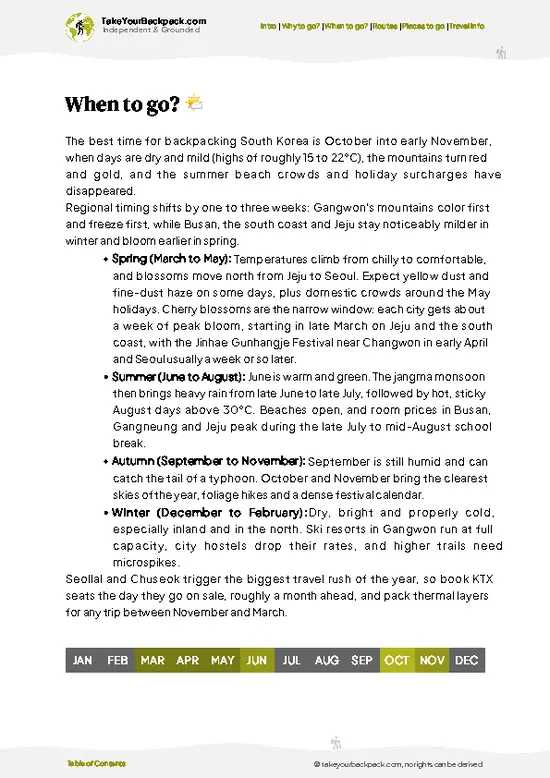
  • Weather: Spring (April to June) and autumn (September to November) bring the best weather—mild, dry, and breezy. Expect highs around 18-24°C (64-75°F). Avoid the summer monsoon (July-August) when humidity spikes and rain can drown your plans.

  • Temperature: Winter (December to February) is crisp and cool, hovering around 5-10°C (41-50°F). Not freezing, but chilly enough to limit outdoor adventures unless you’re packing layers.

  • Daylight Hours: Longer days in late spring and early autumn mean more daylight for hikes and beach time—up to 13-14 hours. Winter days shrink to about 9-10 hours, squeezing your outdoor window.

  • Crowds: Peak tourist season hits in summer and during Korean holidays. Spring and autumn see fewer tourists, giving you that insider vibe and easier access to popular spots.
read more 👉

  • Weather: Spring (April to June) and autumn (September to November) bring the best weather—mild, dry, and breezy. Expect highs around 18-24°C (64-75°F). Avoid the summer monsoon (July-August) when humidity spikes and rain can drown your plans.

  • Temperature: Winter (December to February) is crisp and cool, hovering around 5-10°C (41-50°F). Not freezing, but chilly enough to limit outdoor adventures unless you’re packing layers.

  • Daylight Hours: Longer days in late spring and early autumn mean more daylight for hikes and beach time—up to 13-14 hours. Winter days shrink to about 9-10 hours, squeezing your outdoor window.

  • Crowds: Peak tourist season hits in summer and during Korean holidays. Spring and autumn see fewer tourists, giving you that insider vibe and easier access to popular spots.

  • Seasonal Activities: Cherry blossoms bloom in April, while autumn paints the island in fiery reds and oranges—both perfect for photography and local festivals. Summer offers water sports but also swarms of visitors.

  • Price Fluctuations: Accommodation and flights spike in summer and around major holidays. Booking in shoulder seasons (spring and autumn) nets better deals and more flexible options.


Pro-tip: Aim for late April or mid-October—weather’s sweet, crowds thin, and prices dip. You’ll feel like you’ve got Jeju all to yourself.


source: climatestotravel.comJANJanuary: fair for travelingFEBFebruary: fair for travelingMARMarch: good for travelingAPRApril: excellent for travelingMAYMay: excellent for travelingJUNJune: highly recommended for travelingJULJuly: below average for travelingAUGAugust: below average for travelingSEPSeptember: excellent for travelingOCTOctober: excellent for travelingNOVNovember: highly recommended for travelingDECDecember: fair for traveling
when-to-go

✈️ The backpacker research shortcutSouth Korea Travel Guide

An offline-friendly backpacking guide with optimized travel routes, ranked highlights, transport advice, and the best areas to stay.
example page 0 from our offline Travel Guide for South Korea
example page 1 from our offline Travel Guide for South Korea
example page 2 from our offline Travel Guide for South Korea
example page 3 from our offline Travel Guide for South Korea
example page 4 from our offline Travel Guide for South Korea
example page 5 from our offline Travel Guide for South Korea
example page 6 from our offline Travel Guide for South Korea
example page 7 from our offline Travel Guide for South Korea
The digital guide (439 pages) contains:
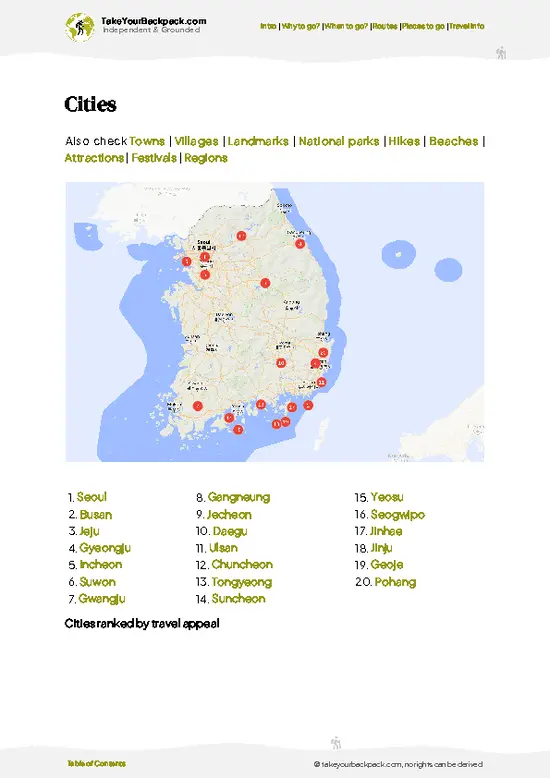
124 highlights, ranked by travel appeal
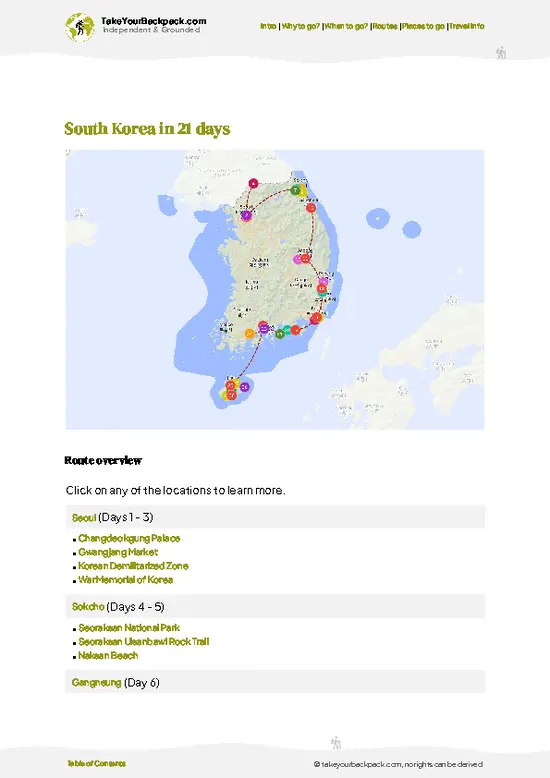
Optimized 7, 14 & 21-day travel routes
Cities, national parks, landmarks, beaches
How to get around
Offline-friendly for travel without Wi-Fi
👉 Click to see all 30+ guide features

📅 Plan smarter in minutes, not weeks
Month by month travel advice
Festivals & national holidays
Budget expectations

🗺️ Go to the right places, skip the overrated ones
Honest pros & cons of destinations
Top hikes, parks & viewpoints
Lesser-known places most travelers miss
Clear “worth it vs skip it” guidance

🛏️ Travel smoothly without rookie mistakes
Best areas to stay
Transport systems explained simply
Common scams & safety advice
SIM cards, money & practical tips

🌍 Understand the country, not just visit it
Culture & traditions
52 Essential phrases & customs
Festivals worth planning around
Traveler-friendly historical context
Insights that make places more meaningful

📱 Built for real travel conditions
Fully downloadable PDF
Works completely offline
Optimized for phone use
Useful in remote areas & buses
Everything in one place
Save weeks of stressful planning
Get instant access to your full guide. 30‑day money-back guarantee.
+ Add another guide for just US$7.80

By proceeding you agree to our terms.
Sent to your inbox immediately after payment • 100% Secure Checkout
Best Backpacking Travel Advisor 2025 tourism awardBest Backpacking
Travel Advisor
2025
What others say about Take Your Backpack Guides:
⭐⭐⭐⭐⭐
Fantastic, amazing amount of information!
⭐⭐⭐⭐⭐
My goodness this is amazing, it's what I've been looking for hats off too you!
⭐⭐⭐⭐⭐
I think this is absolutely BRILLIANT
⭐⭐⭐⭐
Very complete and informative. It's still missing places, but I gotta to commend you
⭐⭐⭐⭐⭐
This is truly amazing, thank you, can't wait to explore it with my kids!
⭐⭐⭐⭐⭐
Awesome resource, thank you!
⭐⭐⭐⭐⭐
This is amazing! Can't wait to explore the ones I haven't seen
⭐⭐⭐⭐
I love this! Well done, great idea.
⭐⭐⭐⭐⭐
Thanks for taking the time to make this gem!
⭐⭐⭐⭐⭐
This might be the best website I've ever seen.
⭐⭐⭐⭐⭐
Congratulations, and thank you so much for your work; it's incredibly valuable.
⭐⭐⭐⭐
In all seriousness I think you did a great job pointing out the important spots
⭐⭐⭐⭐⭐
10/10 very good
⭐⭐⭐⭐⭐
As someone who's only just starting to visit regularly this is awesome, thank you.
⭐⭐⭐⭐
Thank you very much! I'm going to visit my dad, it's going to be very useful!
⭐⭐⭐⭐⭐
This is really cool! We'll be travelling for the first time and this definitely come in handy.
⭐⭐⭐⭐⭐
You are now our minister of culture, congratulations 👨‍💼
⭐⭐⭐⭐⭐
Just wanted to tell you that this is a pearl! Going to follow your recommendations.
⭐⭐⭐⭐⭐
This is so cool. I'll definitely be using the resource for my travels soon.
⭐⭐⭐⭐⭐
This is very impressive! Good work.
⭐⭐⭐⭐⭐
This is an amazing and informative site. Very well done!

🛏️ Where to stay?Best areas to stay in South Korea

Jeju Island is a treasure trove for backpackers, and knowing where to stay can elevate your experience from good to legendary.

Start with Jeju City. It’s the island’s bustling hub, perfect for those who crave social interaction. The local markets are alive with energy, and you can snag some delicious street food while mingling with fellow travelers. Plus, it’s a great launchpad for day trips to iconic spots like Hallasan National Park.

Next up, Seogwipo. This town has a laid-back vibe that’s hard to resist. The coastal views are stunning, and the waterfalls nearby are a must-see. It’s a bit … read more 👉
Jeju Island is a treasure trove for backpackers, and knowing where to stay can elevate your experience from good to legendary.

Start with Jeju City. It’s the island’s bustling hub, perfect for those who crave social interaction. The local markets are alive with energy, and you can snag some delicious street food while mingling with fellow travelers. Plus, it’s a great launchpad for day trips to iconic spots like Hallasan National Park.

Next up, Seogwipo. This town has a laid-back vibe that’s hard to resist. The coastal views are stunning, and the waterfalls nearby are a must-see. It’s a bit quieter than Jeju City, making it ideal for solo backpackers looking to recharge. You’ll find plenty of cafes where you can sip coffee and swap stories with other adventurers.

Don’t overlook Udo Island, a short ferry ride away. This small island is perfect for those who want to escape the crowds. Rent a bike and explore the scenic coastline. It’s safe, social, and offers a unique perspective on Jeju’s beauty.

Each of these spots has its own charm, so choose based on your vibe. Time, money, and comfort are all in play, but you’ll find that the right area can make all the difference in your journey.

🚌 Getting aroundMoving around without the hassle

Jeju Island is a wild dance of nature and culture, where the rhythm of life flows like the waves crashing against its volcanic shores. Forget rigid schedules; here, spontaneity reigns. You might find yourself chasing sunsets on a whim or stumbling upon a local market bursting with flavors. The island’s transport options reflect this vibe—flexible yet reliable, allowing you to explore at your own pace while still keeping you connected to the must-see spots.


  • Public Buses: The backbone of Jeju’s transport system. Buses run frequently, especially on main routes, with fares around 1,200 KRW ($1 USD). They’re a budget-friendly way to hop between attractions, but be prepared for a bit of a wait during off-peak hours. First bus usually starts around 6 AM, with the last one rolling out around 10
read more 👉
Jeju Island is a wild dance of nature and culture, where the rhythm of life flows like the waves crashing against its volcanic shores. Forget rigid schedules; here, spontaneity reigns. You might find yourself chasing sunsets on a whim or stumbling upon a local market bursting with flavors. The island’s transport options reflect this vibe—flexible yet reliable, allowing you to explore at your own pace while still keeping you connected to the must-see spots.


  • Public Buses: The backbone of Jeju’s transport system. Buses run frequently, especially on main routes, with fares around 1,200 KRW ($1 USD). They’re a budget-friendly way to hop between attractions, but be prepared for a bit of a wait during off-peak hours. First bus usually starts around 6 AM, with the last one rolling out around 10 PM.


  • Taxi Services: Taxis are plentiful and relatively affordable, with base fares starting at about 3,300 KRW ($2.50 USD). They’re a great option if you’re in a hurry or traveling in a group. Just be aware that late-night rides can get pricey. Most drivers understand basic English, but having your destination written in Korean can save you some confusion.


  • Rental Cars: If you want to explore the island’s hidden corners, renting a car is the way to go. Prices start around 50,000 KRW ($40 USD) per day. Just remember, Jeju’s roads can be winding, and parking can be tricky in popular areas. This option gives you the freedom to chase those spontaneous adventures without worrying about bus schedules.


  • Bicycle Rentals: For the eco-conscious traveler, renting a bike is a fantastic way to soak in the scenery. Daily rentals typically cost around 10,000 KRW ($8 USD). You’ll find bike paths along the coast and through scenic spots, but be ready for some uphill battles if you venture inland.


  • Airport Limousine Buses: These are a comfortable option for getting from Jeju International Airport to major hotels and tourist areas. Fares are about 6,000 KRW ($5 USD), and they run every 30 minutes from 6 AM to 10 PM. It’s a smooth ride that lets you kick back and enjoy the views as you transition into vacation mode.


Here’s the insider tip: download a local transport app like KakaoMap or Naver Map. They’ll help you navigate bus schedules and routes like a local, making your travels seamless and stress-free. Embrace the flow of Jeju, and let the island guide you to its treasures.

🍲 FoodLocal Cuisine & Drinks

Jeju Island is a **culinary playground** that beckons with its unique flavors. Dive into **black pork**, a local specialty that’s grilled to perfection, offering a smoky, tender bite that’s hard to resist. Pair it with **haemul pajeon**, a savory seafood pancake that’s crispy on the outside and soft within, bursting with fresh ingredients. Don’t miss out on **jeonbokjuk**, a comforting abalone porridge that warms you from the inside out.

For a true local experience, hit up the **traditional markets**. The **Dongmun Market** is a sensory overload, with stalls overflowing with fresh produce and street food. Grab a **hotteok**, a sweet pancake filled with brown sugar and nuts, or sample **tangerine juice**—Jeju’s pride. The island’s **café culture** is also thriving; cozy spots serve up aromatic … read more 👉
Jeju Island is a **culinary playground** that beckons with its unique flavors. Dive into **black pork**, a local specialty that’s grilled to perfection, offering a smoky, tender bite that’s hard to resist. Pair it with **haemul pajeon**, a savory seafood pancake that’s crispy on the outside and soft within, bursting with fresh ingredients. Don’t miss out on **jeonbokjuk**, a comforting abalone porridge that warms you from the inside out.

For a true local experience, hit up the **traditional markets**. The **Dongmun Market** is a sensory overload, with stalls overflowing with fresh produce and street food. Grab a **hotteok**, a sweet pancake filled with brown sugar and nuts, or sample **tangerine juice**—Jeju’s pride. The island’s **café culture** is also thriving; cozy spots serve up aromatic **coffee** and **green tea**, often accompanied by a slice of **tangerine cake**.

Dining here is relaxed. You’ll often find locals sharing dishes, so don’t hesitate to order a few and dig in. Remember, it’s polite to say “**jal meogeosseumnida**” (I will eat well) before you start. Embrace the communal vibe, and let the flavors of Jeju linger long after your trip.

FAQFrequently asked questions about Jeju Island

4 to 5 days are ideal to explore Jeju Island thoroughly. This allows time to visit major sites like Hallasan National Park, Seongsan Ilchulbong, and the Manjanggul Lava Tube. Shorter trips may miss key attractions or require rushed travel.
You can get around Jeju Island using the extensive public bus system, which covers most tourist spots. Buses run frequently, with fares typically around 1,200 to 2,000 KRW per ride. Taxis are also available but more expensive, so plan routes and schedules carefully.
Jeju Island is known for its volcanic landscapes, including Hallasan, South Korea's highest mountain. It is also famous for its unique lava tubes, beautiful beaches, and traditional stone statues called Dol Hareubang. The island is a popular destination for hiking, seafood, and scenic coastal views.
⚠️ Things can change over time, so always validate details locally before you go.

Other South Korean regions near Jeju Island

Explore more nearby:

  • Cheongsando Island—Stone-walled fields, terraced hills, slow city designation| 169 km away
  • Namhae Island—Rice paddies, German village, coastal ridges| 198 km away
  • Ulleungdo Island—Volcanic cliffs, sea caves, wind-bent forests| 602 km away

💡 Not sure where to go next?
Create a personalized itinerary for South Korea including Jeju Island and the places that fit your trip.

Generate my itinerary

👉 Discover all regions

Or checkout all South Korea has to offer (think cities, towns, villages, national parks, hikes, beaches, festivals)
Country photo of South Korea

We 💚 feedbackWhat to keep in mind

Jeju Island is a breath of fresh air, but don’t get too comfy in the tourist traps. The real magic happens when you wander off the beaten path. Hit up the local markets for fresh seafood and grab a bowl of black pork barbecue—trust me, it’s a game changer. Just be ready for the weather; it can flip on you. Pack layers and don’t shy away from a little rain. Embrace it. You’ll find the island’s charm shines brightest when you’re a bit soaked and laughing.

✍️ Help improve this page!
The information on this page is based on in-depth research, insights shared by experienced travelers, and feedback from the local travel community in South Korea. While every effort is made to keep the information accurate and current, conditions can change — so if you spot anything incorrect or outdated, please get in touch.


🙋‍♂️ Give feedback

👋 Meet the founderWho’s Behind Take Your Backpack?

Johan, backpacker and founder of TakeYourBackpackHi, I’m Johan (Netherlands 🇳🇱), the creator of TakeYourBackpack. Over the past decade, I’ve backpacked through 80+ countries across six continents, gaining extensive experience with independent travel, long-term trips, and overland routes.

This site is built on a combination of firsthand travel experience and carefully curated insights from other backpackers. Many guides are based on places I’ve personally visited, while others bring together tips, observations, and practical advice shared by trusted travelers I’ve met along the way.

The goal is to provide realistic, experience-driven guidance — not generic itineraries — so you can explore destinations with better context, clearer expectations, and more confidence.

Get full country guide •
Instant download • 124 highlights • Full Offline guide