×

South Korea🇰🇷 | landmarksNamhansanseongMountain fortress, emergency palace, forested trails | things to do and best time to go

Explore Jeju’s Seongsan IlchulbongExplore Oedo Botania

Backpacking in Namhansanseong
UNESCO World Heritage site
👌 Worth visitingunique site ranked #7
By Johan Kruseman 🇳🇱 | Updated September 4, 2026

Most people online sell Namhansanseong as a quiet “hidden” fortress hike; in reality, on weekends it’s where half of greater Seoul comes to walk, snack, and pose in hanbok. Namhansanseong sits in the hills southeast of Seoul, in Gyeonggi-do, close enough that it feels like an extension of the city’s metro sprawl. For backpackers, it’s a weirdly perfect combo: cheap to reach, no entrance fee for the walls themselves, and loaded with Joseon-era history and war stories, but also lined with restaurants and cafés that kill any illusion of wilderness. The views over Seoul and the ridgeline walls have serious wow-factor and photo power, especially in autumn, yet the crowds, traffic, and occasional overbuilt kitsch can break the mood. Go for the fortress and ridge walks, not for solitude.

Discover everything you want to know in the 📖 South Korea Travel Guide.
Loading the map 🌍
CLICK TO FILTER
cities
towns
villages
landmarks
national parks
hikes
beaches
attractions
festivals
regions
SHOW COUNTRY’S BESTSHOW ALL

✨ Why go?
Ranked #7 unique site in South Korea
What makes it a must-see unique site

Namhansanseong isn’t just another historical site; it’s a strategic fortress that tells the story of Korea’s resilience. Sure, it’s popular, but don’t let the crowds deter you. The hiking trails around the fortress offer breathtaking views without the Instagram hype. You’ll find yourself surrounded by nature, where the only noise is the rustle of leaves and the occasional call of a bird.

The entry fee is a mere pittance, making it a budget-friendly stop that packs a punch. You can easily fit it into a broader route, especially if you’re exploring Seoul or nearby Suwon. It’s a perfect day trip that adds depth to your travel narrative.

What sets Namhansanseong apart is its authenticity. You’re not just ticking off a box; you’re walking through history, feeling the weight of the stones and … read more 👉
Namhansanseong isn’t just another historical site; it’s a strategic fortress that tells the story of Korea’s resilience. Sure, it’s popular, but don’t let the crowds deter you. The hiking trails around the fortress offer breathtaking views without the Instagram hype. You’ll find yourself surrounded by nature, where the only noise is the rustle of leaves and the occasional call of a bird.

The entry fee is a mere pittance, making it a budget-friendly stop that packs a punch. You can easily fit it into a broader route, especially if you’re exploring Seoul or nearby Suwon. It’s a perfect day trip that adds depth to your travel narrative.

What sets Namhansanseong apart is its authenticity. You’re not just ticking off a box; you’re walking through history, feeling the weight of the stones and the stories they hold. This isn’t just a site; it’s a living testament to a culture that values endurance and beauty.
Want to include Namhansanseong in your South Korea route?
Create a personalized South Korea itinerary that includes Namhansanseong and the places that fit your trip — based on your travel style, budget, and available time. Get your route in seconds.

Generate my trip

💡 HighlightsEssential experiences to have while visiting Namhansanseong

  • UNESCO fortress walls and gates — A roughly 12 km ring of stone walls snaking along ridges: you can actually walk long stretches of the original defensive line and feel how the builders used the terrain. It’s a rare, well-preserved example of a full mountain fortress rather than just a single castle tower.
  • Haenggung (the temporary royal palace) — This is where the Joseon court sheltered during crises (notably King Injo during the 1636 Manchu invasion). The restored courtyards and rooms give a real sense of how this place functioned as an “emergency capital.”
  • Gunpowder-era military installations — Look for artillery platforms, bastions, command posts and powder magazines carved into the slopes. They show the 17th-century shift in military thinking and how Korean fortress design adapted
read more 👉
  • UNESCO fortress walls and gates — A roughly 12 km ring of stone walls snaking along ridges: you can actually walk long stretches of the original defensive line and feel how the builders used the terrain. It’s a rare, well-preserved example of a full mountain fortress rather than just a single castle tower.
  • Haenggung (the temporary royal palace) — This is where the Joseon court sheltered during crises (notably King Injo during the 1636 Manchu invasion). The restored courtyards and rooms give a real sense of how this place functioned as an “emergency capital.”
  • Gunpowder-era military installations — Look for artillery platforms, bastions, command posts and powder magazines carved into the slopes. They show the 17th-century shift in military thinking and how Korean fortress design adapted to firearms and cannons.
  • Hiking trails and sweeping viewpoints — Short to moderate trails connect gates and lookouts with panoramic views over Seoul and the Han River; great for sunrise or late-afternoon light. The mix of granite outcrops and forest feels rugged but accessible.
  • Fortress village and living cultural landscape — Small hamlets, terraced fields and traditional houses sit inside the walls — it’s not just ruins but a lived-in historic landscape showing daily life integrated with defense.
  • Temples and sacred spots tucked into the mountain — Modest temples and shrines inside the fortress add spiritual layers to the site and offer quiet, reflective pockets amid the military architecture.
  • Namhansanseong Museum and seasonal reenactments — The onsite museum gives useful context (maps, artifacts, the UNESCO story) and you’ll often find guided programs or historical performances that bring the 17th-century drama to life.
Spotted a mistake or missing something? Contact us.

Things to do near Namhansanseong

Ratings based on Tripadvisor reviews. When you book through this link, you support our work at no extra cost to you.

🌤️ When to go?Best time to visit Namhansanseong


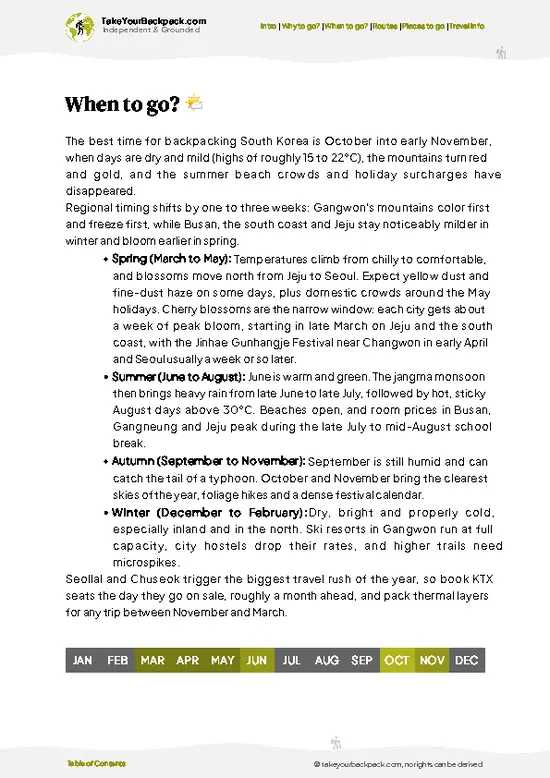
  • Weather: Spring (April-May) and autumn (September-October) offer the best weather—mild and dry. Summers can scorch you with 25-30°C (77-86°F) heat and sticky humidity, while winters plunge below freezing, often under 0°C (32°F), making the hike slippery and less enjoyable.

  • Temperature: Expect comfortable hiking temps around 15-22°C (59-72°F) in spring and fall. Avoid the extremes: summer’s heat and winter’s chill can sap your energy fast.

  • Daylight Hours: Spring and autumn provide roughly 12-13 hours of daylight, enough to explore without rushing. Winter days shrink to about 9 hours, limiting your window.

  • Crowds: Peak season is spring cherry blossom time and autumn foliage—expect a swarm of locals and tourists. If you want solitude, hit early spring or late autumn weekdays.

  • Seasonal Activities:
read more 👉

  • Weather: Spring (April-May) and autumn (September-October) offer the best weather—mild and dry. Summers can scorch you with 25-30°C (77-86°F) heat and sticky humidity, while winters plunge below freezing, often under 0°C (32°F), making the hike slippery and less enjoyable.

  • Temperature: Expect comfortable hiking temps around 15-22°C (59-72°F) in spring and fall. Avoid the extremes: summer’s heat and winter’s chill can sap your energy fast.

  • Daylight Hours: Spring and autumn provide roughly 12-13 hours of daylight, enough to explore without rushing. Winter days shrink to about 9 hours, limiting your window.

  • Crowds: Peak season is spring cherry blossom time and autumn foliage—expect a swarm of locals and tourists. If you want solitude, hit early spring or late autumn weekdays.

  • Seasonal Activities: Spring bursts with cherry blossoms; autumn dazzles with fiery leaves. Winter offers a stark, quiet beauty but no special events. Summer is mostly just hot hiking.

  • Price Fluctuations: Entry to Namhansanseong is generally low-cost year-round, but nearby accommodations and transport spike during peak seasons, especially cherry blossom time.


Pro-tip: Visit just before or after peak bloom or fall color weeks—weather’s still great, crowds thin, and prices ease. You’ll get the magic without the madness.


source: climatestotravel.comJANJanuary: fair for travelingFEBFebruary: fair for travelingMARMarch: good for travelingAPRApril: excellent for travelingMAYMay: excellent for travelingJUNJune: good for travelingJULJuly: fair for travelingAUGAugust: fair for travelingSEPSeptember: excellent for travelingOCTOctober: excellent for travelingNOVNovember: highly recommended for travelingDECDecember: fair for traveling
when-to-go

✈️ The backpacker research shortcutSouth Korea Travel Guide

An offline-friendly backpacking guide with optimized travel routes, ranked highlights, transport advice, and the best areas to stay.
example page 0 from our offline Travel Guide for South Korea
example page 1 from our offline Travel Guide for South Korea
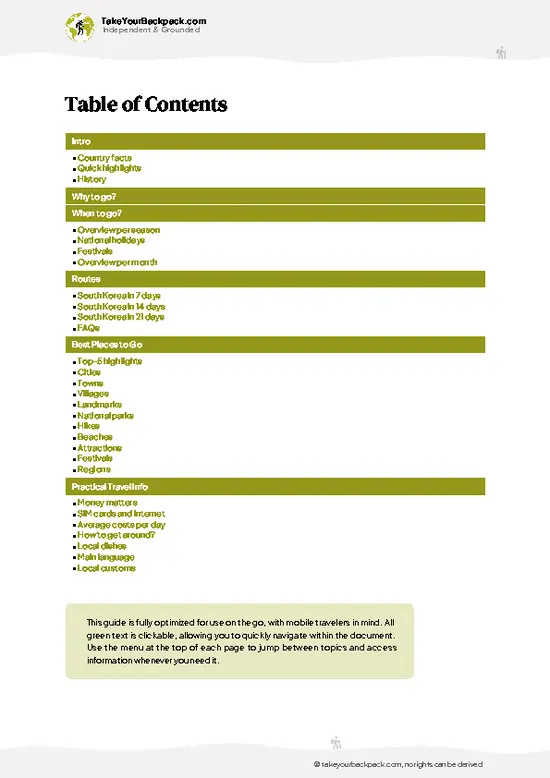
example page 2 from our offline Travel Guide for South Korea
example page 3 from our offline Travel Guide for South Korea
example page 4 from our offline Travel Guide for South Korea
example page 5 from our offline Travel Guide for South Korea
example page 6 from our offline Travel Guide for South Korea
example page 7 from our offline Travel Guide for South Korea
The digital guide (439 pages) contains:
124 highlights, ranked by travel appeal
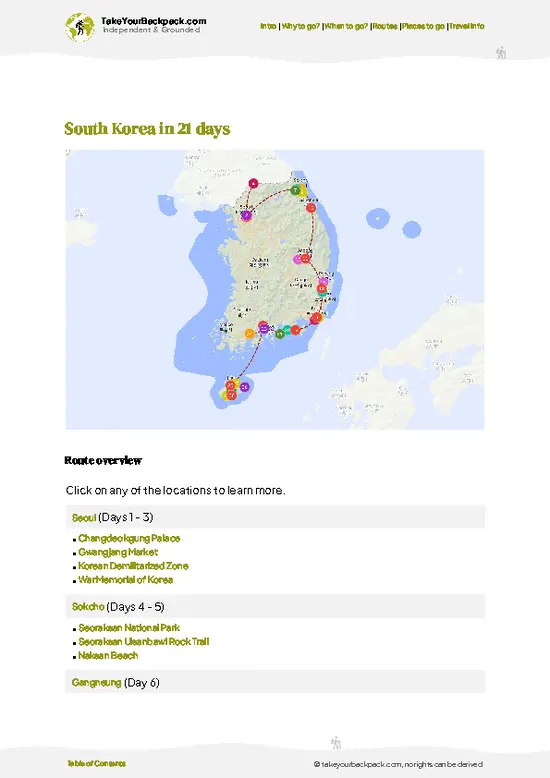
Optimized 7, 14 & 21-day travel routes
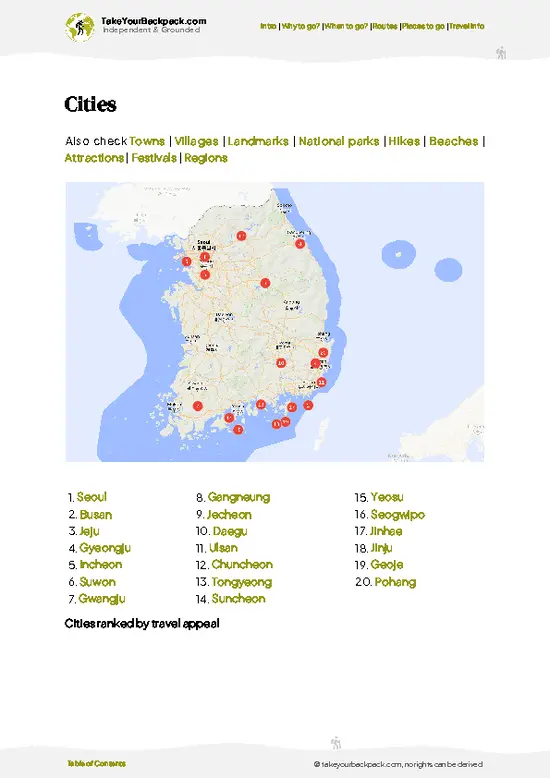
Cities, national parks, landmarks, beaches
How to get around
Offline-friendly for travel without Wi-Fi
👉 Click to see all 30+ guide features

📅 Plan smarter in minutes, not weeks
Month by month travel advice
Festivals & national holidays
Budget expectations

🗺️ Go to the right places, skip the overrated ones
Honest pros & cons of destinations
Top hikes, parks & viewpoints
Lesser-known places most travelers miss
Clear “worth it vs skip it” guidance

🛏️ Travel smoothly without rookie mistakes
Best areas to stay
Transport systems explained simply
Common scams & safety advice
SIM cards, money & practical tips

🌍 Understand the country, not just visit it
Culture & traditions
52 Essential phrases & customs
Festivals worth planning around
Traveler-friendly historical context
Insights that make places more meaningful

📱 Built for real travel conditions
Fully downloadable PDF
Works completely offline
Optimized for phone use
Useful in remote areas & buses
Everything in one place
Save weeks of stressful planning
Get instant access to your full guide. 30‑day money-back guarantee.
+ Add another guide for just US$7.80

By proceeding you agree to our terms.
Sent to your inbox immediately after payment • 100% Secure Checkout
Best Backpacking Travel Advisor 2025 tourism awardBest Backpacking
Travel Advisor
2025
What others say about Take Your Backpack Guides:
⭐⭐⭐⭐⭐
Fantastic, amazing amount of information!
⭐⭐⭐⭐⭐
My goodness this is amazing, it's what I've been looking for hats off too you!
⭐⭐⭐⭐⭐
I think this is absolutely BRILLIANT
⭐⭐⭐⭐
Very complete and informative. It's still missing places, but I gotta to commend you
⭐⭐⭐⭐⭐
This is truly amazing, thank you, can't wait to explore it with my kids!
⭐⭐⭐⭐⭐
Awesome resource, thank you!
⭐⭐⭐⭐⭐
This is amazing! Can't wait to explore the ones I haven't seen
⭐⭐⭐⭐
I love this! Well done, great idea.
⭐⭐⭐⭐⭐
Thanks for taking the time to make this gem!
⭐⭐⭐⭐⭐
This might be the best website I've ever seen.
⭐⭐⭐⭐⭐
Congratulations, and thank you so much for your work; it's incredibly valuable.
⭐⭐⭐⭐
In all seriousness I think you did a great job pointing out the important spots
⭐⭐⭐⭐⭐
10/10 very good
⭐⭐⭐⭐⭐
As someone who's only just starting to visit regularly this is awesome, thank you.
⭐⭐⭐⭐
Thank you very much! I'm going to visit my dad, it's going to be very useful!
⭐⭐⭐⭐⭐
This is really cool! We'll be travelling for the first time and this definitely come in handy.
⭐⭐⭐⭐⭐
You are now our minister of culture, congratulations 👨‍💼
⭐⭐⭐⭐⭐
Just wanted to tell you that this is a pearl! Going to follow your recommendations.
⭐⭐⭐⭐⭐
This is so cool. I'll definitely be using the resource for my travels soon.
⭐⭐⭐⭐⭐
This is very impressive! Good work.
⭐⭐⭐⭐⭐
This is an amazing and informative site. Very well done!

🛏️ Where to stay?Where staying makes the most sense

Namhansanseong is a treasure, but let’s cut through the Instagram haze. Crowds can be overwhelming, especially on weekends. If you want to experience the real magic, consider staying in the nearby areas of Seongnam or Bundang.

Seongnam offers a mix of urban life and easy access to the fortress. You’ll find cozy guesthouses and budget-friendly accommodations that cater to backpackers. The vibe is friendly, and you can easily meet fellow travelers over a shared meal or a local café.

Bundang, on the other hand, is a bit more upscale but still has affordable options. The parks and trails here are … read more 👉
Namhansanseong is a treasure, but let’s cut through the Instagram haze. Crowds can be overwhelming, especially on weekends. If you want to experience the real magic, consider staying in the nearby areas of Seongnam or Bundang.

Seongnam offers a mix of urban life and easy access to the fortress. You’ll find cozy guesthouses and budget-friendly accommodations that cater to backpackers. The vibe is friendly, and you can easily meet fellow travelers over a shared meal or a local café.

Bundang, on the other hand, is a bit more upscale but still has affordable options. The parks and trails here are perfect for unwinding after a day of exploring Namhansanseong. Plus, the public transport is solid, making it easy to hop back and forth.

Both areas are safe and have a local feel, which is crucial for solo backpackers. You’ll get a taste of everyday life in South Korea while being close enough to the fortress to soak in its history without the tourist trap atmosphere. Embrace the journey, and you’ll find the real stories waiting for you.

👛 Costs (as of 4 September 2026)What things cost and how to budget

Visiting Namhansanseong is a blend of history, nature, and a bit of a reality check on costs. Here’s what you can expect:
  • Entrance Fee: The entrance fee is around 3,000 to 5,000 KRW (approximately $2.50 to $4.20 USD). This small fee grants you access to the fortress and its trails, making it a budget-friendly option for a day of exploration.
  • Transportation: Getting there can vary. If you’re taking public transport, expect to spend about 1,500 to 3,000 KRW ($1.25 to $2.50 USD) for a bus or subway ride from Seoul. A taxi will set you back around 30,000 to 50,000 KRW ($25 to $42 USD) depending on your starting point.
  • Food: Dining options near Namhansanseong are modest. A meal at a local restaurant will cost you about 8,000 to 15,000 KRW ($6.70 to $12.50 USD). If you pack your own lunch, you can
read more 👉
Visiting Namhansanseong is a blend of history, nature, and a bit of a reality check on costs. Here’s what you can expect:
  • Entrance Fee: The entrance fee is around 3,000 to 5,000 KRW (approximately $2.50 to $4.20 USD). This small fee grants you access to the fortress and its trails, making it a budget-friendly option for a day of exploration.
  • Transportation: Getting there can vary. If you’re taking public transport, expect to spend about 1,500 to 3,000 KRW ($1.25 to $2.50 USD) for a bus or subway ride from Seoul. A taxi will set you back around 30,000 to 50,000 KRW ($25 to $42 USD) depending on your starting point.
  • Food: Dining options near Namhansanseong are modest. A meal at a local restaurant will cost you about 8,000 to 15,000 KRW ($6.70 to $12.50 USD). If you pack your own lunch, you can save even more and enjoy a picnic with a view.
  • Souvenirs: If you’re looking to take home a piece of the experience, budget around 5,000 to 20,000 KRW ($4.20 to $17 USD) for local crafts or snacks. It’s a nice way to support local artisans without breaking the bank.
  • Guided Tours: If you prefer a guided experience, tours can range from 30,000 to 100,000 KRW ($25 to $85 USD) depending on the length and inclusions. This can be a worthwhile investment for deeper insights into the history and culture.

Namhansanseong offers a rich experience without demanding a fortune. Just be prepared for the crowds, especially on weekends. The real magic lies in the trails, the views, and the stories waiting to be uncovered.


source: english.visitkorea.or.kr
⚠️ Prices can change and everyone travels differently, so take this as a rough guide. Hope it helps you plan your adventure!

FAQTraveler FAQ

Namhansanseong is a historic mountain fortress located southeast of Seoul, South Korea, built in the 17th century as a defensive stronghold during invasions. It covers an area of about 12 square kilometers and includes walls, gates, temples, and military facilities.
Visiting Namhansanseong typically requires 3 to 4 hours to explore the main fortress walls, gates, and hiking trails thoroughly. If you plan to hike multiple trails or visit museums within the site, allocate half a day.
To get to Namhansanseong, take Seoul Subway Line 8 to Sanseong Station, then transfer to a local bus or taxi for the 5-kilometer ride to the fortress entrance. Alternatively, buses from Seoul's Dongseoul Bus Terminal also serve the area.
⚠️ Things can change over time, so always validate details locally before you go.

Other South Korean landmarks near Namhansanseong

Explore more nearby:


💡 Not sure where to go next?
Create a personalized itinerary for South Korea including Namhansanseong and the places that fit your trip.

Generate my itinerary

👉 Discover all landmarks

Or checkout all South Korea has to offer (think cities, towns, villages, national parks, hikes, beaches, festivals)
Country photo of South Korea

We 💚 feedbackSumming up the experience

Namhansanseong isn’t just another historical site; it’s a breath of fresh air away from the Seoul chaos. Expect crowds, especially on weekends, but don’t let that deter you. The real magic lies in the quiet trails and the unexpected views that unfold as you wander. Grab a local snack from a vendor—trust me, the sweet rice cakes are a game changer. Just be ready for some steep climbs; they’re worth every step for that panoramic sunset.

✍️ Help improve this page!
The information on this page is based on in-depth research, insights shared by experienced travelers, and feedback from the local travel community in South Korea. While every effort is made to keep the information accurate and current, conditions can change — so if you spot anything incorrect or outdated, please get in touch.


🙋‍♂️ Give feedback

👋 Meet the founderWho’s Behind Take Your Backpack?

Johan, backpacker and founder of TakeYourBackpackHi, I’m Johan (Netherlands 🇳🇱), the creator of TakeYourBackpack. Over the past decade, I’ve backpacked through 80+ countries across six continents, gaining extensive experience with independent travel, long-term trips, and overland routes.

This site is built on a combination of firsthand travel experience and carefully curated insights from other backpackers. Many guides are based on places I’ve personally visited, while others bring together tips, observations, and practical advice shared by trusted travelers I’ve met along the way.

The goal is to provide realistic, experience-driven guidance — not generic itineraries — so you can explore destinations with better context, clearer expectations, and more confidence.

Get full country guide •
Instant download • 124 highlights • Full Offline guide