×
National Theatre of Korea

South Korea🇰🇷 | attractionsNational Theatre of Koreamain stage productions, Korean opera, contemporary dance | things to do and best time to go

Explore Lotte WorldExplore Gyeongbokgung Palace

Backpacking in National Theatre of Korea
👀 For curious travelersattraction ranked #19
By Johan Kruseman 🇳🇱 | Updated May 24, 2026

Everyone’s heard the pitch: you go to the National Theatre of Korea for the grand, glossy performances—K-pop musicals, epic operas, the kind of stuff that fills your feed with velvet seats and dramatic spotlights. But here’s the truth: the real magic isn’t in the spectacle, it’s in the pulse of Korean creativity you feel just walking the grounds. Perched on the slopes of Namsan in central Seoul, the theatre is less about red carpets and more about the electric mix of tradition and experimentation. Backpackers, don’t expect bargain tickets or a crowd-free zone—this is a national stage, and it draws everyone from local families to international tour groups. The wow-factor? It’s not the building, but the raw, live-wire energy of Korean performing arts, from pansori to avant-garde dance. Compared to the palaces or the DMZ, it’s pricier and less photogenic, but if you want to feel the heartbeat of modern Korea, this is where it thunders.

Discover everything you want to know in the 📖 South Korea Travel Guide.
Loading the map 🌍
CLICK TO FILTER
cities
towns
villages
landmarks
national parks
hikes
beaches
attractions
festivals
regions
SHOW COUNTRY’S BESTSHOW ALL

✨ Why go?
Ranked #19 attraction in South Korea
Why visitors keep coming back

The National Theatre of Korea isn’t just another stop on your Seoul itinerary—it’s a cultural heavyweight that demands your attention. Sure, it doesn’t have the flashy Instagram appeal of palaces or neon-lit streets, but that’s exactly why it’s worth your time. This place is where Korean performing arts come alive in their purest form, showcasing everything from traditional pansori singing to cutting-edge contemporary plays. It’s a living archive of the country’s artistic evolution, packed with performances that hit you right in the gut with their emotional depth and raw energy.

Crowds? Yes, they gather here, especially during festivals or major shows, but it’s never the chaotic crush you find at tourist traps. The ticket prices are reasonable, especially compared to Western theaters, making … read more 👉
The National Theatre of Korea isn’t just another stop on your Seoul itinerary—it’s a cultural heavyweight that demands your attention. Sure, it doesn’t have the flashy Instagram appeal of palaces or neon-lit streets, but that’s exactly why it’s worth your time. This place is where Korean performing arts come alive in their purest form, showcasing everything from traditional pansori singing to cutting-edge contemporary plays. It’s a living archive of the country’s artistic evolution, packed with performances that hit you right in the gut with their emotional depth and raw energy.

Crowds? Yes, they gather here, especially during festivals or major shows, but it’s never the chaotic crush you find at tourist traps. The ticket prices are reasonable, especially compared to Western theaters, making it a high-value cultural experience that won’t drain your wallet. For backpackers, it’s a milestone—a moment to pause and absorb the historical layers of Korea’s identity beyond the surface. If you want to understand Korea’s soul, this is where you feel it pulse strongest. It’s not just a show; it’s a rite of passage that transforms your journey from sightseeing to truly knowing the place.
Want to include National Theatre of Korea in your South Korea route?
Create a personalized South Korea itinerary that includes National Theatre of Korea and the places that fit your trip — based on your travel style, budget, and available time. Get your route in seconds.

Generate my trip

💡 HighlightsThe experiences that define the visit

1. Main Hall Hae: The Powerhouse Stage
Forget the Instagram shots of the building’s exterior—this is where the real drama happens. Main Hall Hae is the National Theatre’s flagship stage, and it’s engineered for spectacle. The acoustics are sharp enough to catch a whisper, and the sightlines are so good you’ll forget you’re in a 1,500-seat venue. This is where you’ll see Korea’s top-tier productions—think grand operas, full-scale ballets, and the kind of orchestral performances that make your chest vibrate. The energy is electric, especially when the house is packed with locals who know every beat of the story. If you want to feel the pulse of Korean performing arts, this is the seat of power.


2. National Changgeuk Company: Korean Opera, Unfiltered
Changgeuk is Korean opera, but not the powdered-wig … read more 👉
1. Main Hall Hae: The Powerhouse Stage
Forget the Instagram shots of the building’s exterior—this is where the real drama happens. Main Hall Hae is the National Theatre’s flagship stage, and it’s engineered for spectacle. The acoustics are sharp enough to catch a whisper, and the sightlines are so good you’ll forget you’re in a 1,500-seat venue. This is where you’ll see Korea’s top-tier productions—think grand operas, full-scale ballets, and the kind of orchestral performances that make your chest vibrate. The energy is electric, especially when the house is packed with locals who know every beat of the story. If you want to feel the pulse of Korean performing arts, this is the seat of power.


2. National Changgeuk Company: Korean Opera, Unfiltered
Changgeuk is Korean opera, but not the powdered-wig kind. It’s raw, emotional, and sung in Korean, with stories that cut closer to the bone than any Western import. The National Changgeuk Company is the best in the country, and their performances are a crash course in Korean storytelling—think betrayal, ghosts, and family curses, all delivered with a vocal style that’s halfway between singing and soul-baring. You don’t need to understand every word; the emotion is universal, and the staging is often minimalist, putting the focus on the performers’ intensity. This isn’t tourist-bait; it’s the real deal.


3. National Dance Company: Tradition Meets Edge
If you think traditional Korean dance is all slow-motion fans and hanbok, the National Dance Company will set you straight. Yes, they honor the classics, but they also push boundaries with contemporary choreography that’s athletic, experimental, and sometimes downright wild. The company’s signature is its ability to blend old and new—one minute you’re watching a centuries-old court dance, the next you’re hit with a modern piece that feels like a fever dream. The physicality is jaw-dropping, and the costumes are a visual feast. It’s a masterclass in how tradition can evolve without losing its soul.


4. Outdoor Plaza Performances: Culture Without the Velvet Rope
Here’s a secret: some of the most memorable moments at the National Theatre happen outside, in the open-air plaza. These aren’t afterthoughts—they’re curated pop-up performances, often free, that range from drumming ensembles to street theatre. Locals show up with picnic mats, kids run wild, and the city skyline glows in the background. It’s the antidote to stuffy, ticketed culture. If you want to see how performance art lives and breathes in Seoul, skip the lobby and head straight for the plaza when something’s on.


5. National Orchestra of Korea: East Meets West, Live
The National Orchestra isn’t your standard symphony. They play traditional Korean instruments—gayageum, haegeum, janggu—but they’re not afraid to throw in a Western violin or two. The result is a sound you won’t hear anywhere else: haunting, percussive, and sometimes thunderous. Their concerts are a crash course in Korean musical heritage, but with enough innovation to keep even the most jaded concertgoer on their toes. If you’re chasing a musical experience that’s both ancient and alive, this is your ticket.
Spotted a mistake or missing something? Contact us.

Things to do around National Theatre of Korea

Ratings based on Tripadvisor reviews. When you book through this link, you support our work at no extra cost to you.

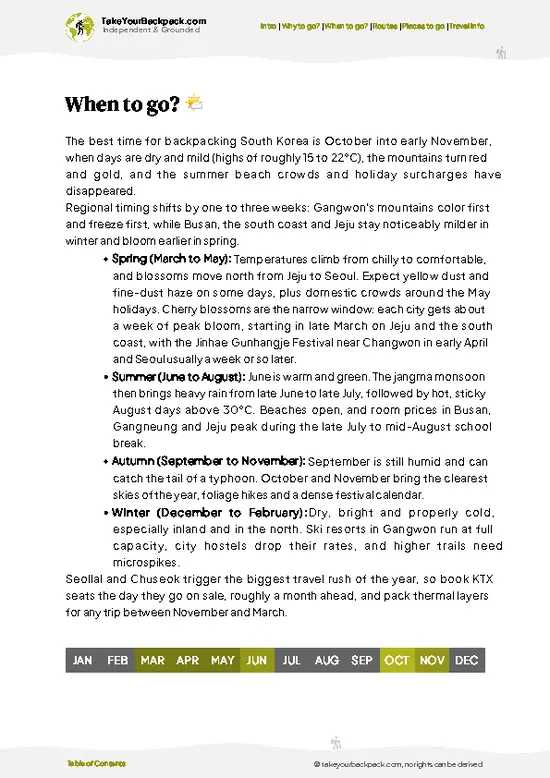
🌤️ When to go?When to go for the best experience


  • Topic: Weather and Temperature – The National Theatre of Korea is best visited in spring (April to June) or autumn (September to November). Spring temperatures hover around 10-20°C (50-68°F), while autumn cools down to 12-22°C (54-72°F). These months avoid the harsh summer heat and the biting winter cold, making outdoor exploration and walking between venues comfortable.

  • Topic: Daylight Hours – Longer daylight in late spring and early autumn means you get more time to soak in the theatre’s surroundings and nearby cultural spots. In May and October, expect about 12-13 hours of daylight, perfect for a full day of sightseeing without rushing.

  • Topic: Crowds – Peak tourist season in summer (July and August) brings heavy crowds and inflated prices, especially on weekends. Winter months see fewer
read more 👉

  • Topic: Weather and Temperature – The National Theatre of Korea is best visited in spring (April to June) or autumn (September to November). Spring temperatures hover around 10-20°C (50-68°F), while autumn cools down to 12-22°C (54-72°F). These months avoid the harsh summer heat and the biting winter cold, making outdoor exploration and walking between venues comfortable.

  • Topic: Daylight Hours – Longer daylight in late spring and early autumn means you get more time to soak in the theatre’s surroundings and nearby cultural spots. In May and October, expect about 12-13 hours of daylight, perfect for a full day of sightseeing without rushing.

  • Topic: Crowds – Peak tourist season in summer (July and August) brings heavy crowds and inflated prices, especially on weekends. Winter months see fewer visitors but can be chilly and less lively. Spring and autumn strike the right balance with manageable crowds and a more authentic vibe.

  • Topic: Seasonal Activities – The theatre hosts special performances and festivals mainly in spring and autumn, aligning with cultural celebrations. These events offer a richer experience but book tickets early to avoid disappointment.

  • Topic: Price Fluctuations – Ticket prices and accommodation nearby tend to spike during summer festivals and holidays like Chuseok (September/October). Visiting in shoulder seasons means better deals and less competition for seats.


Pro-tip: Aim for midweek visits in April, May, September, or October to dodge crowds and catch the theatre’s best seasonal performances without breaking the bank.


source: climatestotravel.comJANJanuary: fair for travelingFEBFebruary: fair for travelingMARMarch: good for travelingAPRApril: excellent for travelingMAYMay: excellent for travelingJUNJune: highly recommended for travelingJULJuly: fair for travelingAUGAugust: fair for travelingSEPSeptember: excellent for travelingOCTOctober: excellent for travelingNOVNovember: highly recommended for travelingDECDecember: fair for traveling
South Korea - National Theatre of Korea

✈️ The backpacker research shortcutSouth Korea Travel Guide

An offline-friendly backpacking guide with optimized travel routes, ranked highlights, transport advice, and the best areas to stay.
example page 0 from our offline Travel Guide for South Korea
example page 1 from our offline Travel Guide for South Korea
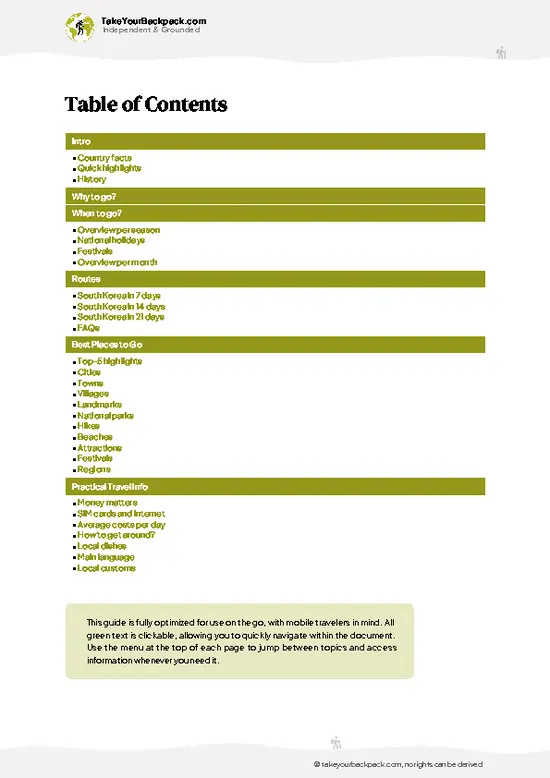
example page 2 from our offline Travel Guide for South Korea
example page 3 from our offline Travel Guide for South Korea
example page 4 from our offline Travel Guide for South Korea
example page 5 from our offline Travel Guide for South Korea
example page 6 from our offline Travel Guide for South Korea
example page 7 from our offline Travel Guide for South Korea
The digital guide (407 pages) contains:
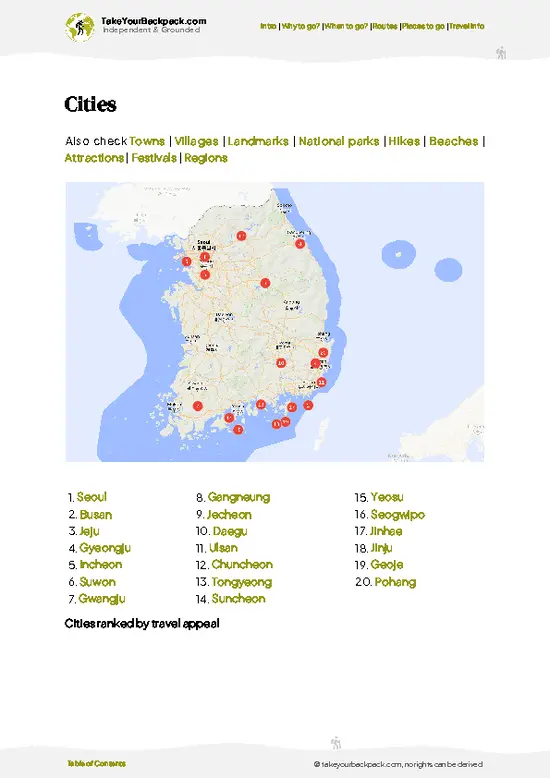
115 highlights, ranked by travel appeal
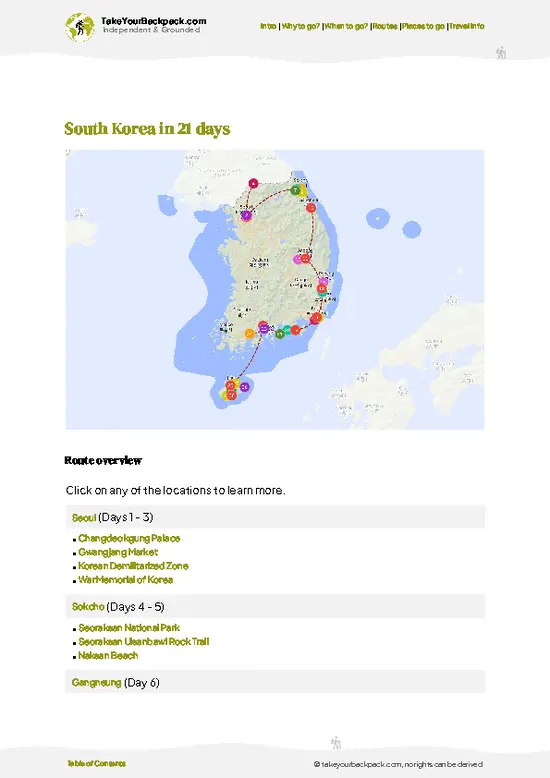
Optimized 7, 14 & 21-day travel routes
Cities, national parks, landmarks, beaches
How to get around
Offline-friendly for travel without Wi-Fi
👉 Click to see all 30+ guide features

📅 Plan smarter in minutes, not weeks
Month by month travel advice
Festivals & national holidays
Budget expectations

🗺️ Go to the right places, skip the overrated ones
Honest pros & cons of destinations
Top hikes, parks & viewpoints
Lesser-known places most travelers miss
Clear “worth it vs skip it” guidance

🛏️ Travel smoothly without rookie mistakes
Best areas to stay
Transport systems explained simply
Common scams & safety advice
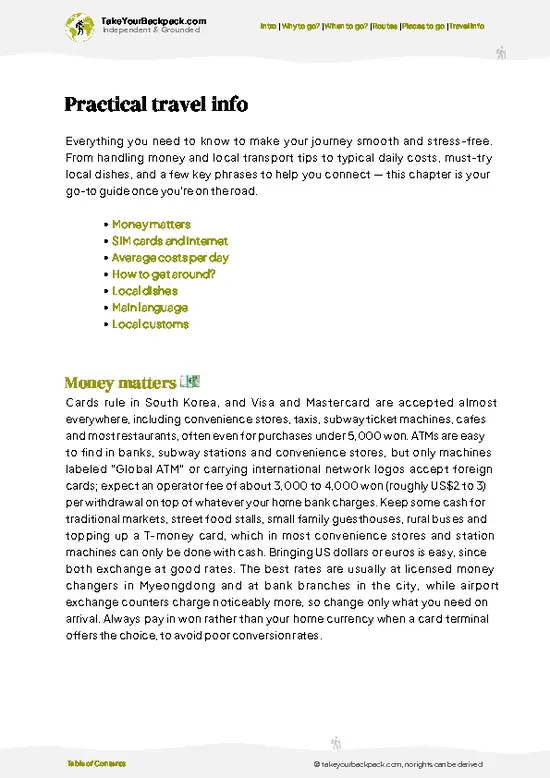
SIM cards, money & practical tips

🌍 Understand the country, not just visit it
Culture & traditions
52 Essential phrases & customs
Festivals worth planning around
Traveler-friendly historical context
Insights that make places more meaningful

📱 Built for real travel conditions
Fully downloadable PDF
Works completely offline
Optimized for phone use
Useful in remote areas & buses
Everything in one place
Save weeks of stressful planning
Get instant access to your full guide. 30‑day money-back guarantee.


By proceeding you agree to our terms.
Sent to your inbox immediately after payment • 100% Secure Checkout
Best Backpacking Travel Advisor 2025 tourism awardBest Backpacking
Travel Advisor
2025
What others say about Take Your Backpack Guides:
⭐⭐⭐⭐⭐
Fantastic, amazing amount of information!
⭐⭐⭐⭐⭐
My goodness this is amazing, it's what I've been looking for hats off too you!
⭐⭐⭐⭐⭐
I think this is absolutely BRILLIANT
⭐⭐⭐⭐
Very complete and informative. It's still missing places, but I gotta to commend you
⭐⭐⭐⭐⭐
This is truly amazing, thank you, can't wait to explore it with my kids!
⭐⭐⭐⭐⭐
Awesome resource, thank you!
⭐⭐⭐⭐⭐
This is amazing! Can't wait to explore the ones I haven't seen
⭐⭐⭐⭐
I love this! Well done, great idea.
⭐⭐⭐⭐⭐
Thanks for taking the time to make this gem!
⭐⭐⭐⭐⭐
This might be the best website I've ever seen.
⭐⭐⭐⭐⭐
Congratulations, and thank you so much for your work; it's incredibly valuable.
⭐⭐⭐⭐
In all seriousness I think you did a great job pointing out the important spots
⭐⭐⭐⭐⭐
10/10 very good
⭐⭐⭐⭐⭐
As someone who's only just starting to visit regularly this is awesome, thank you.
⭐⭐⭐⭐
Thank you very much! I'm going to visit my dad, it's going to be very useful!
⭐⭐⭐⭐⭐
This is really cool! We'll be travelling for the first time and this definitely come in handy.
⭐⭐⭐⭐⭐
You are now our minister of culture, congratulations 👨‍💼
⭐⭐⭐⭐⭐
Just wanted to tell you that this is a pearl! Going to follow your recommendations.
⭐⭐⭐⭐⭐
This is so cool. I'll definitely be using the resource for my travels soon.
⭐⭐⭐⭐⭐
This is very impressive! Good work.
⭐⭐⭐⭐⭐
This is an amazing and informative site. Very well done!

🛏️ Where to stay?Best areas to stay in South Korea

The National Theatre of Korea sits in the heart of Seoul’s vibrant Jung-gu district, but don’t get it twisted—this isn’t a quiet, tucked-away cultural spot. It’s smack in the middle of a bustling cityscape, which means crowds and noise are part of the deal. For backpackers craving safety, social vibes, and budget-friendly digs, the nearby neighborhoods of Myeongdong and Chungmuro are your best bets. Myeongdong is a hive of activity with endless street food, shops, and fellow travelers to meet, while Chungmuro offers a slightly quieter, artsy feel with easy access to the theatre. Both areas have … read more 👉
The National Theatre of Korea sits in the heart of Seoul’s vibrant Jung-gu district, but don’t get it twisted—this isn’t a quiet, tucked-away cultural spot. It’s smack in the middle of a bustling cityscape, which means crowds and noise are part of the deal. For backpackers craving safety, social vibes, and budget-friendly digs, the nearby neighborhoods of Myeongdong and Chungmuro are your best bets. Myeongdong is a hive of activity with endless street food, shops, and fellow travelers to meet, while Chungmuro offers a slightly quieter, artsy feel with easy access to the theatre. Both areas have solid public transit links, so you’re never far from the action or a late-night snack.

👛 Costs (as of 16 March 2026)Typical daily expenses

Tickets for performances at the National Theater of Korea range from approximately €15 to €50, depending on the show and seating. Additional costs may include parking fees, which are around €3 for up to 5 hours for performance ticket holders. Discounts are available for NTOK members, with up to a 20% reduction. For the most accurate and current pricing, please refer to the official website.

source: ntok.go.kr
⚠️ Prices can change and everyone travels differently, so take this as a rough guide. Hope it helps you plan your adventure!

Other South Korean attractions near National Theatre of Korea

Explore more nearby:


💡 Not sure where to go next?
Create a personalized itinerary for South Korea including National Theatre of Korea and the places that fit your trip.

Generate my itinerary

👉 Discover all attractions

Or checkout all South Korea has to offer (think cities, towns, villages, national parks, hikes, beaches, festivals)
Country photo of South Korea

We 💚 feedbackKey takeaways before you go

The National Theatre of Korea isn’t your flashy tourist hotspot—it’s a place where tradition and raw emotion hit you in the chest. Sure, it can get crowded during big shows, and tickets aren’t always cheap, but that’s part of the deal when you’re witnessing centuries-old art performed live, not just on Instagram. The real magic? The way the performers’ passion fills the room, making you forget you’re in a modern city. If you want a genuine cultural jolt, this is it—just come ready to soak it all in, no shortcuts.

✍️ Help improve this page!
The information on this page is based on in-depth research, insights shared by experienced travelers, and feedback from the local travel community in South Korea. While every effort is made to keep the information accurate and current, conditions can change — so if you spot anything incorrect or outdated, please get in touch.


🙋‍♂️ Give feedback

👋 Meet the founderWho’s Behind Take Your Backpack?

Johan, backpacker and founder of TakeYourBackpackHi, I’m Johan (Netherlands 🇳🇱), the creator of TakeYourBackpack. Over the past decade, I’ve backpacked through 80+ countries across six continents, gaining extensive experience with independent travel, long-term trips, and overland routes.

This site is built on a combination of firsthand travel experience and carefully curated insights from other backpackers. Many guides are based on places I’ve personally visited, while others bring together tips, observations, and practical advice shared by trusted travelers I’ve met along the way.

The goal is to provide realistic, experience-driven guidance — not generic itineraries — so you can explore destinations with better context, clearer expectations, and more confidence.

Get full country guide •
Instant download • 115 highlights • Full Offline guide