×

South Korea🇰🇷 | landmarksSuncheon BayCoastal wetlands, reed fields, migratory birds | things to do and best time to go

Explore Oedo BotaniaExplore Dodamsambong

Backpacking in Suncheon Bay
👍 Recommendedunique site ranked #5
By Johan Kruseman 🇳🇱 | Updated October 15, 2026

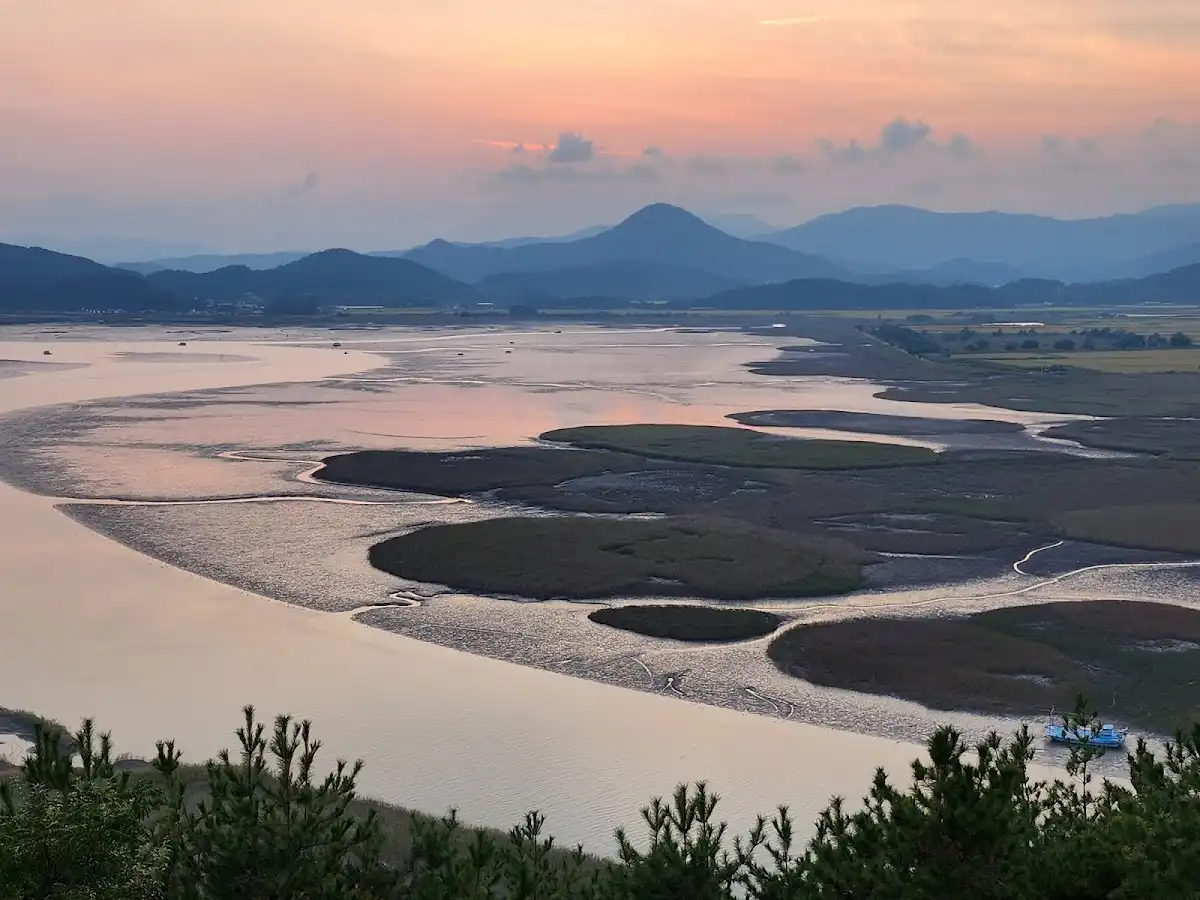
Most people online sell Suncheon Bay as a quiet “hidden” wetland, but here’s the twist: on weekends it can feel more like a theme park for Korean day-trippers than a meditative nature escape. Suncheon Bay sits on the south coast of South Korea, in Jeollanam-do, a few hours by bus or train from Busan or Gwangju. For backpackers, it’s a weird but rewarding mix: you pay a modest entrance fee, shuffle along boardwalks with selfie-stick armies, and still get hit with that jaw-drop moment when the reed fields glow gold at sunset and the S-curve of the tidal creek looks unreal. It’s easy to reach, well-signed, and very photogenic, but not wild or remote. Think curated nature, light on deep history, heavy on scenery and couples’ photos, with just enough raw mudflat and birdlife to feel like the real world sneaking through the filters.

Discover everything you want to know in the 📖 South Korea Travel Guide.


example page 0 from our offline Travel Guide for South Korea
example page 1 from our offline Travel Guide for South Korea
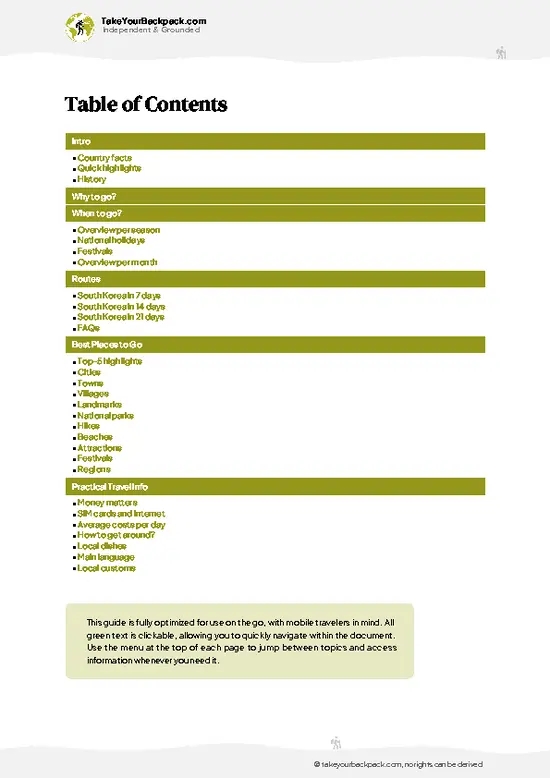
example page 2 from our offline Travel Guide for South Korea
example page 3 from our offline Travel Guide for South Korea
example page 4 from our offline Travel Guide for South Korea
example page 5 from our offline Travel Guide for South Korea
example page 6 from our offline Travel Guide for South Korea
example page 7 from our offline Travel Guide for South Korea
Loading the map 🌍
CLICK TO FILTER
cities
towns
villages
landmarks
national parks
hikes
beaches
attractions
festivals
regions
SHOW COUNTRY’S BESTSHOW ALL

✨ Why go?
Ranked #5 unique site in South Korea
Why visitors keep coming back

Suncheon Bay isn’t just another pretty spot for your Instagram feed; it’s a real experience that backpackers rave about. Sure, you’ll encounter crowds, especially during peak seasons, but don’t let that deter you. The vast wetlands and unique ecosystem are home to migratory birds and rare plants, making it a nature lover’s paradise.

The cost? Minimal. Entry fees are low, and you can easily explore the area on foot or by bike. This isn’t a place that demands your wallet to enjoy its beauty. Plus, it fits seamlessly into a broader route through South Korea. If you’re hitting Jeonju or Gwangju, Suncheon Bay is a natural stopover.

What sets it apart is the authenticity of the experience. You can stroll along the boardwalks, breathe in the fresh air, and soak in the tranquility that feels worlds … read more 👉
Suncheon Bay isn’t just another pretty spot for your Instagram feed; it’s a real experience that backpackers rave about. Sure, you’ll encounter crowds, especially during peak seasons, but don’t let that deter you. The vast wetlands and unique ecosystem are home to migratory birds and rare plants, making it a nature lover’s paradise.

The cost? Minimal. Entry fees are low, and you can easily explore the area on foot or by bike. This isn’t a place that demands your wallet to enjoy its beauty. Plus, it fits seamlessly into a broader route through South Korea. If you’re hitting Jeonju or Gwangju, Suncheon Bay is a natural stopover.

What sets it apart is the authenticity of the experience. You can stroll along the boardwalks, breathe in the fresh air, and soak in the tranquility that feels worlds away from the bustling cities. It’s not just about the views; it’s about connecting with nature and the local culture. That’s the real magic.

💡 HighlightsThe experiences that define the visit

  • Suncheon Bay Wetland Reserve — a protected coastal wetland where tidal mudflats, salt marshes and shallow waters meet. It’s one of Korea’s best-preserved wetlands and a living classroom for how coastal ecosystems actually function.
  • Towering reed fields — miles of tall reeds that ripple in the wind and smell like the sea; wander the raised wooden paths and you’ll understand why photographers and poets both show up at sunrise.
  • Birdwatching and migratory flocks — the bay is a major stopover for migratory birds, so you’ll see cranes, shorebirds and a huge variety of waders. Bring binoculars or use the viewing hides and towers for close-but-respectful views.
  • Sunset over the mudflats — low tide + setting sun = painted mudflats and brilliant reflections. It’s the most atmospheric time to be
… read more 👉
  • Suncheon Bay Wetland Reserve — a protected coastal wetland where tidal mudflats, salt marshes and shallow waters meet. It’s one of Korea’s best-preserved wetlands and a living classroom for how coastal ecosystems actually function.
  • Towering reed fields — miles of tall reeds that ripple in the wind and smell like the sea; wander the raised wooden paths and you’ll understand why photographers and poets both show up at sunrise.
  • Birdwatching and migratory flocks — the bay is a major stopover for migratory birds, so you’ll see cranes, shorebirds and a huge variety of waders. Bring binoculars or use the viewing hides and towers for close-but-respectful views.
  • Sunset over the mudflats — low tide + setting sun = painted mudflats and brilliant reflections. It’s the most atmospheric time to be out on the boardwalk — crowds thin, light gets golden, and the place goes quiet.
  • Suncheonman Bay National Garden — the manicured counterpart to the wild wetlands, this large themed garden (born from the international garden expo) offers easy walking paths, designed landscapes and photo-ready spots—nice contrast if you want both nature and neat gardens in one visit.
  • Ecology center and observation towers — small visitor exhibits explain the bay’s ecology, plus a few elevated towers give panoramic views of the mudflats and reed sea so you can spot birds and tidal channels from above.
  • Naganeupseong Folk Village (nearby) — not inside the wetlands but a short trip away: a well-preserved walled Joseon-era village with thatched roofs, old-school crafts and seasonal performances that add historical and cultural color to a nature-focused visit.
Spotted a mistake or missing something? Contact us.

Things to do near Suncheon Bay

Ratings based on Tripadvisor reviews. When you book through this link, you support our work at no extra cost to you.

🌤️ When to go?Best time to visit Suncheon Bay

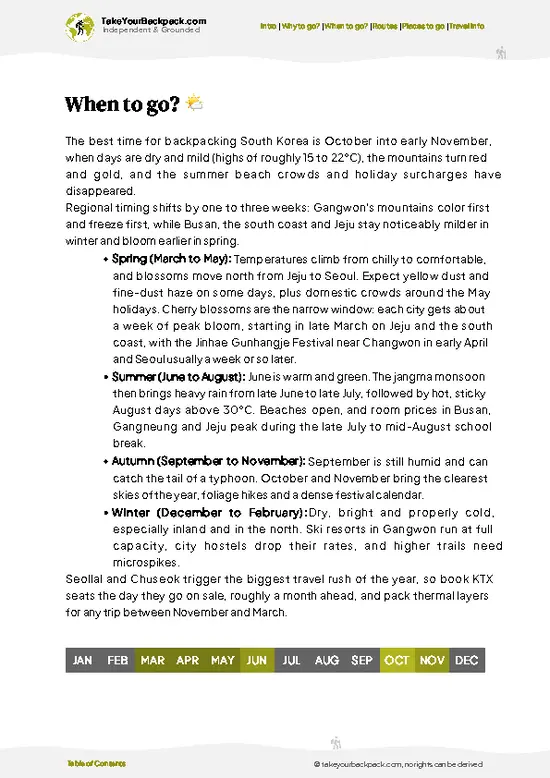
  • Weather: Spring (April to June) and autumn (September to November) bring the most comfortable weather. Expect mild temperatures around 15-22°C (59-72°F), avoiding the sweltering summer heat and the bitter cold of winter.
  • Temperature: Summer can spike to 28-30°C (82-86°F), sticky and humid, while winter drops below freezing, often hovering around -5°C (23°F). Not ideal for long walks through the wetlands.
  • Daylight Hours: Longer days in late spring and early autumn give you 12-14 hours of light, perfect for exploring the vast tidal flats and reed fields without rushing.
  • Crowds: Peak tourist season hits in October during the Suncheon Bay International Garden Expo and migratory bird season. Expect busier trails and higher prices. Off-peak months like May or early November offer more breathing
… read more 👉
  • Weather: Spring (April to June) and autumn (September to November) bring the most comfortable weather. Expect mild temperatures around 15-22°C (59-72°F), avoiding the sweltering summer heat and the bitter cold of winter.
  • Temperature: Summer can spike to 28-30°C (82-86°F), sticky and humid, while winter drops below freezing, often hovering around -5°C (23°F). Not ideal for long walks through the wetlands.
  • Daylight Hours: Longer days in late spring and early autumn give you 12-14 hours of light, perfect for exploring the vast tidal flats and reed fields without rushing.
  • Crowds: Peak tourist season hits in October during the Suncheon Bay International Garden Expo and migratory bird season. Expect busier trails and higher prices. Off-peak months like May or early November offer more breathing room.
  • Seasonal Activities: Autumn is prime for birdwatching, with thousands of migratory birds arriving. Spring showcases blooming wildflowers and fresh greenery, making it a photographer’s playground.
  • Price Fluctuations: Accommodation and transport costs spike during festivals and peak birdwatching season. Booking ahead in these months is essential to avoid inflated rates.
Pro-tip: Aim for late April or early November to dodge crowds and enjoy crisp, clear days—Suncheon Bay’s raw beauty shines brightest when you have space to breathe it all in.


source: climatestotravel.comJANJanuary: below average for travelingFEBFebruary: below average for travelingMARMarch: good for travelingAPRApril: excellent for travelingMAYMay: highly recommended for travelingJUNJune: highly recommended for travelingJULJuly: fair for travelingAUGAugust: fair for travelingSEPSeptember: highly recommended for travelingOCTOctober: excellent for travelingNOVNovember: highly recommended for travelingDECDecember: fair for traveling
south-korea-unique-site-suncheon-bay
© Google |

✈️ The backpacker research shortcutSouth Korea Travel Guide

An offline-friendly backpacking guide with optimized travel routes, ranked highlights, transport advice, and the best areas to stay.
example page 0 from our offline Travel Guide for South Korea
example page 1 from our offline Travel Guide for South Korea
example page 2 from our offline Travel Guide for South Korea
example page 3 from our offline Travel Guide for South Korea
example page 4 from our offline Travel Guide for South Korea
example page 5 from our offline Travel Guide for South Korea
example page 6 from our offline Travel Guide for South Korea
example page 7 from our offline Travel Guide for South Korea
The digital guide (419 pages) contains:
✅ 117 highlights, ranked by travel appeal
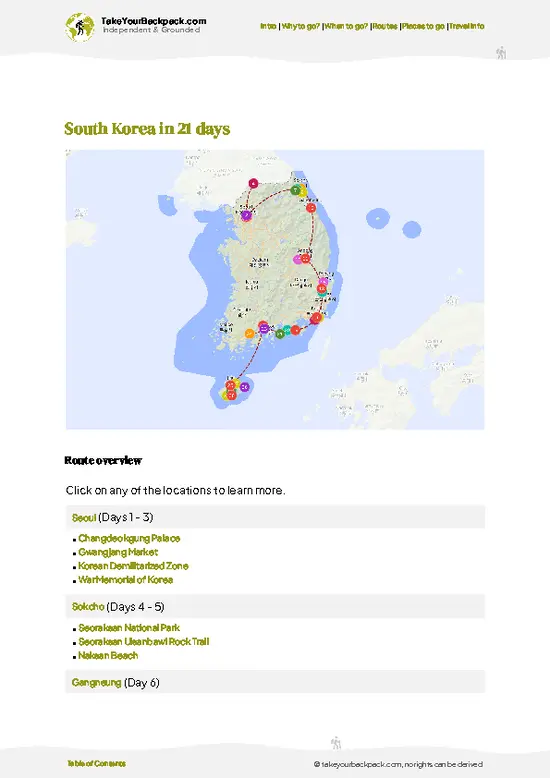
✅ Optimized 7, 14 & 21-day travel routes
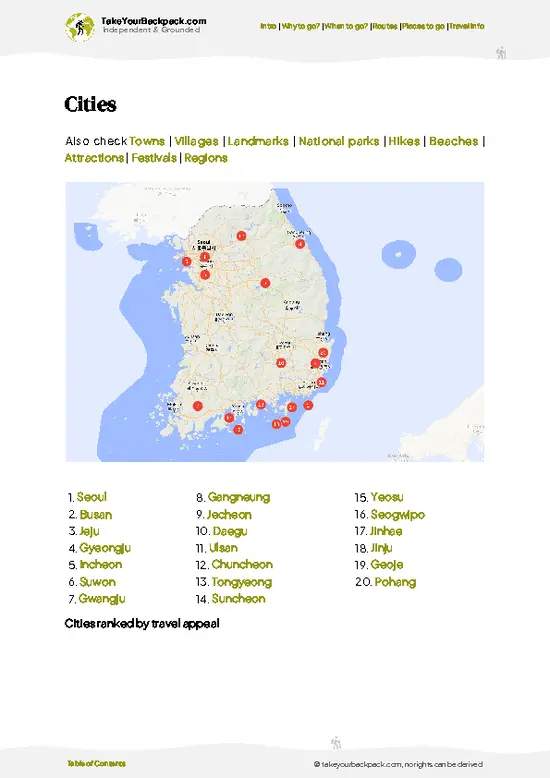
✅ Cities, national parks, landmarks, beaches
✅ How to get around
✅ Offline-friendly for travel without Wi-Fi
👉 Click to see all 30+ guide features

📅 Plan smarter in minutes, not weeks
✅ Month by month travel advice
✅ Festivals & national holidays
✅ Budget expectations

🗺️ Go to the right places, skip the overrated ones
✅ Honest pros & cons of destinations
✅ Top hikes, parks & viewpoints
✅ Lesser-known places most travelers miss
✅ Clear “worth it vs skip it” guidance

🛏️ Travel smoothly without rookie mistakes
✅ Best areas to stay
✅ Transport systems explained simply
✅ Common scams & safety advice
✅ SIM cards, money & practical tips

🌍 Understand the country, not just visit it
✅ Culture & traditions
✅ 52 Essential phrases & customs
✅ Festivals worth planning around
✅ Traveler-friendly historical context
✅ Insights that make places more meaningful

📱 Built for real travel conditions
✅ Fully downloadable PDF
✅ Works completely offline
✅ Optimized for phone use
✅ Useful in remote areas & buses
✅ Everything in one place
Stop searching, start planning
Get instant access to your full guide. 30‑day money-back guarantee.
+ Add another guide for just

By proceeding you agree to our terms.
Sent to your inbox immediately after payment • 100% Secure Checkout
Best Backpacking Travel Advisor 2025 tourism awardBest Backpacking
Travel Advisor
2025
What others say about Take Your Backpack Guides:
⭐⭐⭐⭐⭐
Fantastic, amazing amount of information!
⭐⭐⭐⭐⭐
My goodness this is amazing, it's what I've been looking for hats off too you!
⭐⭐⭐⭐⭐
I think this is absolutely BRILLIANT
⭐⭐⭐⭐
Very complete and informative. It's still missing places, but I gotta to commend you
⭐⭐⭐⭐⭐
This is truly amazing, thank you, can't wait to explore it with my kids!
⭐⭐⭐⭐⭐
Awesome resource, thank you!
⭐⭐⭐⭐⭐
This is amazing! Can't wait to explore the ones I haven't seen
⭐⭐⭐⭐
I love this! Well done, great idea.
⭐⭐⭐⭐⭐
Thanks for taking the time to make this gem!
⭐⭐⭐⭐⭐
This might be the best website I've ever seen.
⭐⭐⭐⭐⭐
Congratulations, and thank you so much for your work; it's incredibly valuable.
⭐⭐⭐⭐
In all seriousness I think you did a great job pointing out the important spots
⭐⭐⭐⭐⭐
10/10 very good
⭐⭐⭐⭐⭐
As someone who's only just starting to visit regularly this is awesome, thank you.
⭐⭐⭐⭐
Thank you very much! I'm going to visit my dad, it's going to be very useful!
⭐⭐⭐⭐⭐
This is really cool! We'll be travelling for the first time and this definitely come in handy.
⭐⭐⭐⭐⭐
You are now our minister of culture, congratulations 👨‍💼
⭐⭐⭐⭐⭐
Just wanted to tell you that this is a pearl! Going to follow your recommendations.
⭐⭐⭐⭐⭐
This is so cool. I'll definitely be using the resource for my travels soon.
⭐⭐⭐⭐⭐
This is very impressive! Good work.
⭐⭐⭐⭐⭐
This is an amazing and informative site. Very well done!

🛏️ Where to stay?How to pick the right area

Suncheon Bay is a stunning slice of nature, but let’s get real: it’s also a magnet for tourists. If you want to experience the area without getting swallowed by the crowds, focus on staying in the Suncheon city center or the nearby Suncheon Bay Ecological Park area.

The city center is buzzing with energy. You’ll find budget-friendly guesthouses and hostels that cater to solo travelers. It’s a great spot to meet fellow backpackers, swap stories, and maybe even find a hiking buddy. Plus, you’re just a bus ride away from the bay.

If you prefer a quieter vibe, consider accommodations near the Ecological … read more 👉
Suncheon Bay is a stunning slice of nature, but let’s get real: it’s also a magnet for tourists. If you want to experience the area without getting swallowed by the crowds, focus on staying in the Suncheon city center or the nearby Suncheon Bay Ecological Park area.

The city center is buzzing with energy. You’ll find budget-friendly guesthouses and hostels that cater to solo travelers. It’s a great spot to meet fellow backpackers, swap stories, and maybe even find a hiking buddy. Plus, you’re just a bus ride away from the bay.

If you prefer a quieter vibe, consider accommodations near the Ecological Park. This area is less commercialized, offering a more authentic experience. You can wake up to the sounds of nature and enjoy the peaceful surroundings.

Both areas are safe and have easy access to local eateries, where you can dive into authentic Korean cuisine without breaking the bank. The real magic of Suncheon Bay lies in its wetlands and the vibrant birdlife, so make sure you carve out time to explore the trails and soak in the scenery.

👛 Costs (as of 15 October 2026)What things cost and how to budget

Visiting Suncheon Bay in South Korea can be a rewarding experience, but it’s essential to know what to expect in terms of costs.
  • Entrance Fee: The entrance fee to Suncheon Bay National Garden is around 5,000 to 10,000 KRW (approximately $4 to $8 USD). This fee grants you access to the stunning gardens and wetlands, where you can explore diverse ecosystems and beautiful landscapes.
  • Transportation: Getting to Suncheon Bay typically involves a train or bus ride. A train from Seoul to Suncheon costs about 50,000 to 70,000 KRW ($40 to $56 USD) one way. Local buses are cheaper, around 1,500 to 3,000 KRW ($1.20 to $2.40 USD), but they may take longer. Consider the convenience versus cost when planning your trip.
  • Food: Dining options vary widely. Street food can be as low as 3,000 to 5,000 KRW ($2.40
… read more 👉
Visiting Suncheon Bay in South Korea can be a rewarding experience, but it’s essential to know what to expect in terms of costs.
  • Entrance Fee: The entrance fee to Suncheon Bay National Garden is around 5,000 to 10,000 KRW (approximately $4 to $8 USD). This fee grants you access to the stunning gardens and wetlands, where you can explore diverse ecosystems and beautiful landscapes.
  • Transportation: Getting to Suncheon Bay typically involves a train or bus ride. A train from Seoul to Suncheon costs about 50,000 to 70,000 KRW ($40 to $56 USD) one way. Local buses are cheaper, around 1,500 to 3,000 KRW ($1.20 to $2.40 USD), but they may take longer. Consider the convenience versus cost when planning your trip.
  • Food: Dining options vary widely. Street food can be as low as 3,000 to 5,000 KRW ($2.40 to $4 USD) for a quick snack, while a sit-down meal at a local restaurant may range from 8,000 to 15,000 KRW ($6.40 to $12 USD). If you want to splurge on a nice meal, expect to pay around 20,000 to 30,000 KRW ($16 to $24 USD).
  • Accommodation: Options range from budget hostels at about 20,000 to 40,000 KRW ($16 to $32 USD) per night to mid-range hotels costing 70,000 to 150,000 KRW ($56 to $120 USD). Luxury stays can exceed 200,000 KRW ($160 USD) per night. Booking in advance can help secure better rates.
  • Activities: While walking and exploring the bay is free, guided tours or special activities may cost extra. Expect to pay around 10,000 to 30,000 KRW ($8 to $24 USD) for guided experiences that enhance your visit.

Understanding these costs will help you budget effectively for your adventure at Suncheon Bay, allowing you to focus on the real magic of the experience.


source: english.visitkorea.or.kr
⚠️ Prices can change and everyone travels differently, so take this as a rough guide. Hope it helps you plan your adventure!

FAQTraveler FAQ

Suncheon Bay is a coastal wetland reserve in South Korea known for its vast reed fields, mudflats, and diverse bird species, including migratory cranes. It covers approximately 28.7 square kilometers and is one of the world's top five coastal wetlands. The area is protected for its ecological importance and offers scenic walking trails and observation decks.
You need about half a day to a full day to visit Suncheon Bay thoroughly. This allows time to explore the reed fields, mudflat trails, and the Suncheon Bay Ecological Park. Visiting during the migratory bird season, from October to March, can enhance the experience.
To get to Suncheon Bay, take a train or bus to Suncheon City, which is about 330 kilometers south of Seoul. From Suncheon City, local buses or taxis can take you directly to the bay, approximately 15 kilometers away. The nearest major train station is Suncheon Station, connected by KTX and regional trains.
⚠️ Things can change over time, so always validate details locally before you go.

Other South Korean landmarks near Suncheon Bay

Explore more nearby:

  • Oedo Botania—Island gardens, subtropical plants, sculpted terraces| 111 km away
  • Haeinsa Temple—Tripitaka Koreana, mountain monastery, Buddhist relics| 114 km away
  • Gaya Tumuli—Ancient burial mounds, earthen tombs, Gaya Confederacy| 116 km away

💡 Not sure where to go next?
Create a personalized itinerary for South Korea including Suncheon Bay and the places that fit your trip.

Generate my itinerary

👉 Discover all landmarks

Or checkout all South Korea has to offer (think cities, towns, villages, national parks, hikes, beaches, festivals)
Country photo of South Korea

We 💚 feedbackSumming up the experience

Suncheon Bay can feel like a crowded Instagram hotspot, but don’t let that fool you. The real magic lies in the quiet moments—like watching the sun dip behind the reeds while the tide rolls in. The best surprise? The local food scene. Grab some fresh seafood at a nearby market; it’s a game-changer. Just a heads-up: weekends can be packed. If you can swing a weekday visit, you’ll find a more authentic vibe. Trust me, it’s worth it.

✍️ Help improve this page!
The information on this page is based on in-depth research, insights shared by experienced travelers, and feedback from the local travel community in South Korea. While every effort is made to keep the information accurate and current, conditions can change — so if you spot anything incorrect or outdated, please get in touch.


🙋‍♂️ Give feedback

👋 Meet the founderWho’s Behind Take Your Backpack?

Johan, backpacker and founder of TakeYourBackpackHi, I’m Johan (Netherlands 🇳🇱), the creator of TakeYourBackpack. Over the past 3 decades, I’ve backpacked through 90+ countries across six continents, gaining extensive experience with independent travel, long-term trips, and overland routes.

This site is built on a combination of firsthand travel experience and carefully curated insights from other backpackers. Many guides are based on places I’ve personally visited, while others bring together tips, observations, and practical advice shared by trusted travelers I’ve met along the way.

The goal is to provide realistic, experience-driven guidance — not generic itineraries — so you can explore destinations with better context, clearer expectations, and more confidence.