×

South Korea🇰🇷 | townsTaebaekcoal mining history, highland plateaus, snow festivals | things to do and best time to go

Explore UljinExplore Changdeokgung Palace Complex

Backpacking in Taebaek
👀 For curious travelerstown ranked #13
By Johan Kruseman 🇳🇱 | Updated July 21, 2026

Years ago Taebaek felt like a coal town catching its breath: gray dust on windowsills, miners’ bars, trains full of workers. Today, when you step off the bus in this high-elevation corner of Gangwon-do in eastern South Korea, you get crisp mountain air, quiet streets, and a town that’s more gateway than destination. For backpackers, Taebaek works best as a base for nearby hikes and scenic drives, or as a calm overnight between busier spots like Gangneung, Donghae, or Andong. The center is compact and walkable, but spread-out suburbs and trailheads mean you’ll use local buses or short taxis if you’re chasing viewpoints or Taebaeksan National Park. Nights are subdued: a few cafés, barbecue joints, convenience-store beers, almost no hostel scene, and you’re unlikely to bump into many other foreigners. That keeps costs reasonable and the vibe safe and low-key, but if you want nightlife or trendy food, you’re better off treating Taebaek as a practical, cool-air mountain stop rather than a long-stay hub.

Discover everything you want to know in the 📖 South Korea Travel Guide.
Loading the map 🌍
CLICK TO FILTER
cities
towns
villages
landmarks
national parks
hikes
beaches
attractions
festivals
regions
SHOW COUNTRY’S BESTSHOW ALL

✨ Why go?
Ranked #13 town in South Korea
What makes it a must-see town

Backpackers flock to Taebaek for its strategic location amid stunning hikes and cultural sites. Nestled in the mountains, it serves as a gateway to trails like the Taebaeksan National Park, where the air is crisp and the views stretch endlessly. The small-scale hostels and guesthouses offer a cozy, intimate vibe, perfect for solo travelers or small groups looking to connect. Streets are walkable, lined with local eateries serving hearty dishes that warm you up after a day outdoors. While some pass through quickly, others linger for a few days, soaking in the friendly atmosphere and sharing stories with fellow adventurers. If you’re a slow traveler or a hiker, Taebaek’s charm lies in its simplicity and the chance to recharge before the next leg of your journey.
Want to include Taebaek in your South Korea route?
Create a personalized South Korea itinerary that includes Taebaek and the places that fit your trip — based on your travel style, budget, and available time. Get your route in seconds.

Generate my trip

💡 HighlightsTop highlights of Taebaek

Taebaeksan Mountain Provincial Park
This is the soul of Taebaek—mist curling through ancient yew forests, the air sharp with pine and stone. The climb up to Cheonjedan Altar is a ritual in itself, especially in winter when rime ice transforms the trees into a frozen cathedral. The sunrise from the summit is a local pilgrimage. Go at dawn for the full effect. Entry is free, but budget ₩5,000-₩10,000 for bus or taxi from town. Allow 3-5 hours for a proper hike and summit loop.

Taebaek Coal Museum
Coal built this city, and the museum doesn’t sugarcoat it. Descend into a recreated mine shaft—damp, echoing, and a little claustrophobic—then emerge into galleries that chart the rise and fall of Taebaek’s mining era. The scent of old machinery and coal dust lingers. Open year-round, closed Mondays. … read more 👉
Taebaeksan Mountain Provincial Park
This is the soul of Taebaek—mist curling through ancient yew forests, the air sharp with pine and stone. The climb up to Cheonjedan Altar is a ritual in itself, especially in winter when rime ice transforms the trees into a frozen cathedral. The sunrise from the summit is a local pilgrimage. Go at dawn for the full effect. Entry is free, but budget ₩5,000-₩10,000 for bus or taxi from town. Allow 3-5 hours for a proper hike and summit loop.

Taebaek Coal Museum
Coal built this city, and the museum doesn’t sugarcoat it. Descend into a recreated mine shaft—damp, echoing, and a little claustrophobic—then emerge into galleries that chart the rise and fall of Taebaek’s mining era. The scent of old machinery and coal dust lingers. Open year-round, closed Mondays. Entry ₩3,000. Plan for 1-2 hours.

Hwangji Pond
This spring-fed pond is the literal source of the Nakdong River. Locals come for the cool air and the sound of water trickling through stone channels. Early morning is best, when mist rises and the city is quiet. Free, always open. A slow lap takes 30-45 minutes.

Taebaek Market (Taebaek Jungang Market)
Not a tourist trap—this is where miners’ families have shopped for generations. The air is thick with the scent of grilled squid and medicinal herbs. Try the local buckwheat pancakes or a bowl of gamja-ongshimi (potato dumpling soup). Open daily, busiest before noon. Free to browse, ₩5,000-₩10,000 for a meal. Give yourself an hour to wander.

Taebaek Snow Festival (seasonal)
If you’re here in late January or early February, the city transforms. Snow sculptures tower over the square, and the whole town feels giddy with winter energy. There’s sledding, ice slides, and street food stalls. Free entry, but bring cash for snacks. 1-2 hours is plenty unless you’re traveling with kids.

For day trips, the dramatic limestone caves of Hwanseongul, the high-altitude wildflower meadows of Yongyeon Cave, and the historic mining village of Sabuk are all within easy reach and worth the extra effort.
Spotted a mistake or missing something? Contact us.

Things to do near Taebaek

Ratings based on Tripadvisor reviews. When you book through this link, you support our work at no extra cost to you.

🏘️ NeighborhoodsNeighborhood guide to Taebaek

Taebaek is a hidden treasure in South Korea, where the mountains meet a rich cultural tapestry. Each neighborhood offers a unique flavor, making it essential for backpackers to choose wisely.

Downtown Taebaek: This is the heart of the city, buzzing with energy. You’ll find affordable eateries and local shops. The walkability is excellent, making it easy to explore on foot. Nightlife is low-key, perfect for winding down after a day of hiking. Ideal for short stays, it’s close to transport links for day trips.

Seonbong-dong: Known for its serene atmosphere, this area is a breath of fresh air. It’s quieter, with cozy guesthouses and parks. The scent of pine trees fills the air, inviting you to unwind. Great for longer stays, it’s a bit farther from the main transport hubs but offers a peaceful … read more 👉
Taebaek is a hidden treasure in South Korea, where the mountains meet a rich cultural tapestry. Each neighborhood offers a unique flavor, making it essential for backpackers to choose wisely.

Downtown Taebaek: This is the heart of the city, buzzing with energy. You’ll find affordable eateries and local shops. The walkability is excellent, making it easy to explore on foot. Nightlife is low-key, perfect for winding down after a day of hiking. Ideal for short stays, it’s close to transport links for day trips.

Seonbong-dong: Known for its serene atmosphere, this area is a breath of fresh air. It’s quieter, with cozy guesthouses and parks. The scent of pine trees fills the air, inviting you to unwind. Great for longer stays, it’s a bit farther from the main transport hubs but offers a peaceful retreat after a day of adventure.

Taebaek Mountain Area: If you’re here for the trails, this is your base. The vibe is rugged and adventurous, with easy access to hiking paths. Accommodations range from budget hostels to mid-range lodges. Perfect for those looking to immerse themselves in nature, it’s less suited for nightlife but rich in outdoor experiences.

⌛️ 1 dayA smart one-day plan

Taebaek, South Korea, is a town where the mountains meet the spirit of the people. Known for its stunning landscapes and rich coal mining history, it offers a unique blend of nature and culture that feels both authentic and inviting.

Start your morning at the Taebaek Coal Museum. The scent of aged wood and the echoes of history surround you as you explore the exhibits. It’s not just about coal; it’s about the lives shaped by it. Afterward, take a leisurely stroll through the nearby Taebaek Mountain National Park. The crisp mountain air fills your lungs, and the vibrant greens of the trees contrast beautifully with the blue sky.

For lunch, head to the local market in the Donghae neighborhood. Here, the sizzling sounds of street food vendors fill the air. Try some hotteok, a sweet pancake … read more 👉
Taebaek, South Korea, is a town where the mountains meet the spirit of the people. Known for its stunning landscapes and rich coal mining history, it offers a unique blend of nature and culture that feels both authentic and inviting.

Start your morning at the Taebaek Coal Museum. The scent of aged wood and the echoes of history surround you as you explore the exhibits. It’s not just about coal; it’s about the lives shaped by it. Afterward, take a leisurely stroll through the nearby Taebaek Mountain National Park. The crisp mountain air fills your lungs, and the vibrant greens of the trees contrast beautifully with the blue sky.

For lunch, head to the local market in the Donghae neighborhood. Here, the sizzling sounds of street food vendors fill the air. Try some hotteok, a sweet pancake filled with brown sugar and nuts. It’s a treat that warms you from the inside out.

In the afternoon, visit the serene O2 Resort. This spot is often overlooked by tourists but offers breathtaking views of the surrounding peaks. Take a short hike to the observation deck; the panoramic vistas are worth every step.

As evening falls, make your way to the Taebaek City Hall area. The streets come alive with locals enjoying dinner. Grab a bowl of kalguksu, handmade noodle soup, at a cozy eatery. The warmth of the broth and the laughter around you create a perfect end to your day.

Taebaek isn’t just a stop; it’s a journey into the heart of South Korea’s natural beauty and community spirit.
Turn your Taebaek visit into an South Korea adventure
Build a complete South Korea route with Taebaek, hidden gems, must-see destinations, and realistic travel times included.

Generate my trip

🌤️ When to go?Seasonal considerations and timing


  • Weather: Taebaek’s mountain air is crisp and clean, but winters dive below freezing, often hitting -10°C (14°F), making trails icy and less accessible. Spring and fall offer mild, dry days perfect for hiking without sweating buckets or shivering.

  • Temperature: Summer can climb to 25-30°C (77-86°F), but the elevation keeps it cooler than Seoul, a refreshing escape from the city heat. Early fall drops to a comfortable 10-20°C (50-68°F), ideal for long treks.

  • Daylight Hours: Longer days from May to September mean more time on the trails, with up to 14 hours of light. Winter’s short days limit exploration to 9-10 hours, squeezing your adventure window.

  • Crowds: Peak tourist flow hits during the Taebaek Snow Festival in January and the fall foliage season in October. Visiting just before
read more 👉

  • Weather: Taebaek’s mountain air is crisp and clean, but winters dive below freezing, often hitting -10°C (14°F), making trails icy and less accessible. Spring and fall offer mild, dry days perfect for hiking without sweating buckets or shivering.

  • Temperature: Summer can climb to 25-30°C (77-86°F), but the elevation keeps it cooler than Seoul, a refreshing escape from the city heat. Early fall drops to a comfortable 10-20°C (50-68°F), ideal for long treks.

  • Daylight Hours: Longer days from May to September mean more time on the trails, with up to 14 hours of light. Winter’s short days limit exploration to 9-10 hours, squeezing your adventure window.

  • Crowds: Peak tourist flow hits during the Taebaek Snow Festival in January and the fall foliage season in October. Visiting just before or after these spikes means quieter trails and more authentic local encounters.

  • Seasonal Activities: Winter’s Snow Festival transforms the town into a frosty playground, but it’s cold and crowded. Fall’s vibrant leaves create a natural spectacle, rewarding early risers with golden light filtering through the pines.

  • Price Fluctuations: Accommodation and transport costs rise during festivals and peak foliage weekends. Booking in shoulder seasons like late spring or early fall can save money and secure better lodging options.


Pro-tip: Aim for late September to early October—cool air, extended daylight, fewer crowds, and the landscape painted in fiery autumn hues make every step worth it.


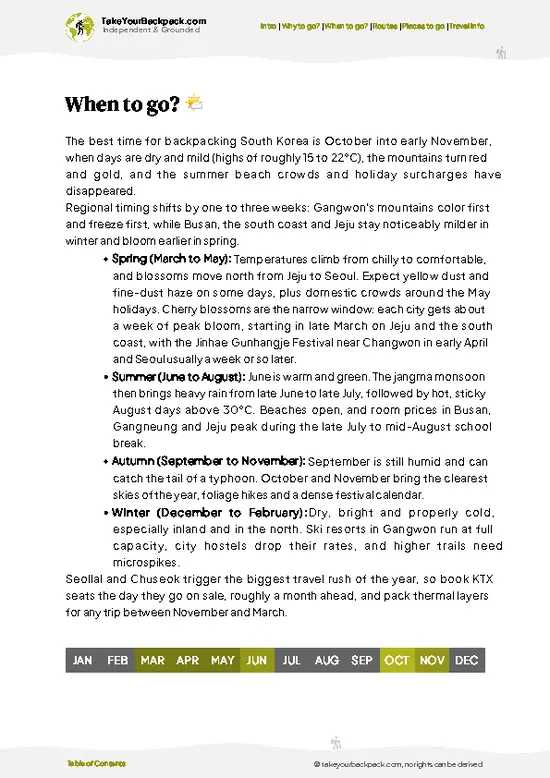
source: climatestotravel.comJANJanuary: good for travelingFEBFebruary: fair for travelingMARMarch: highly recommended for travelingAPRApril: highly recommended for travelingMAYMay: excellent for travelingJUNJune: excellent for travelingJULJuly: highly recommended for travelingAUGAugust: highly recommended for travelingSEPSeptember: excellent for travelingOCTOctober: excellent for travelingNOVNovember: highly recommended for travelingDECDecember: fair for traveling
when-to-go

✈️ The backpacker research shortcutSouth Korea Travel Guide

An offline-friendly backpacking guide with optimized travel routes, ranked highlights, transport advice, and the best areas to stay.
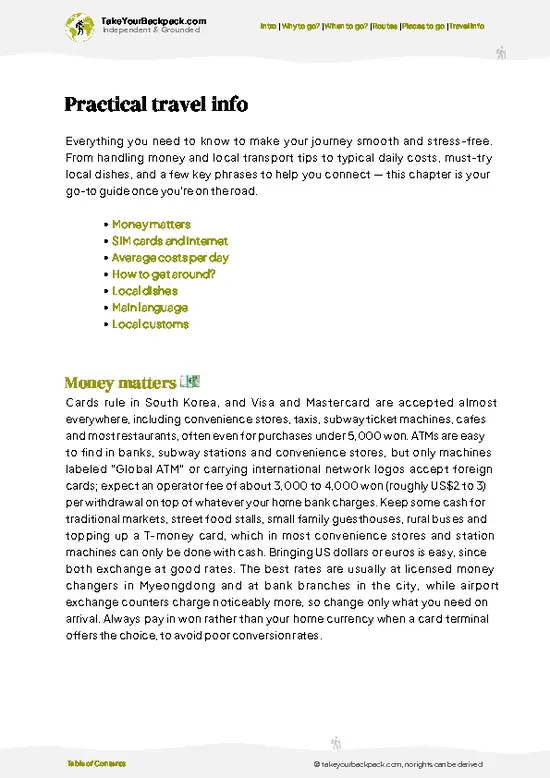
example page 0 from our offline Travel Guide for South Korea
example page 1 from our offline Travel Guide for South Korea
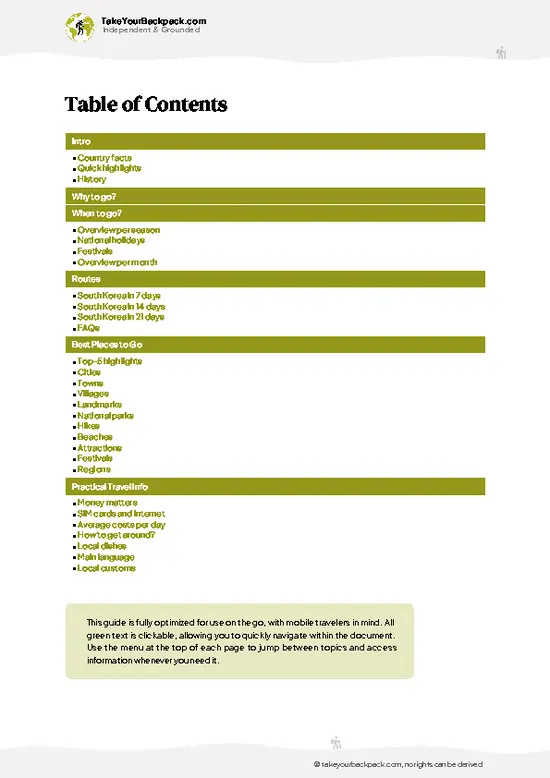
example page 2 from our offline Travel Guide for South Korea
example page 3 from our offline Travel Guide for South Korea
example page 4 from our offline Travel Guide for South Korea
example page 5 from our offline Travel Guide for South Korea
example page 6 from our offline Travel Guide for South Korea
example page 7 from our offline Travel Guide for South Korea
The digital guide (439 pages) contains:
124 highlights, ranked by travel appeal
Optimized 7, 14 & 21-day travel routes
Cities, national parks, landmarks, beaches
How to get around
Offline-friendly for travel without Wi-Fi
👉 Click to see all 30+ guide features

📅 Plan smarter in minutes, not weeks
Month by month travel advice
Festivals & national holidays
Budget expectations

🗺️ Go to the right places, skip the overrated ones
Honest pros & cons of destinations
Top hikes, parks & viewpoints
Lesser-known places most travelers miss
Clear “worth it vs skip it” guidance

🛏️ Travel smoothly without rookie mistakes
Best areas to stay
Transport systems explained simply
Common scams & safety advice
SIM cards, money & practical tips

🌍 Understand the country, not just visit it
Culture & traditions
52 Essential phrases & customs
Festivals worth planning around
Traveler-friendly historical context
Insights that make places more meaningful

📱 Built for real travel conditions
Fully downloadable PDF
Works completely offline
Optimized for phone use
Useful in remote areas & buses
Everything in one place
Save weeks of stressful planning
Get instant access to your full guide. 30‑day money-back guarantee.


By proceeding you agree to our terms.
Sent to your inbox immediately after payment • 100% Secure Checkout
Best Backpacking Travel Advisor 2025 tourism awardBest Backpacking
Travel Advisor
2025
What others say about Take Your Backpack Guides:
⭐⭐⭐⭐⭐
Fantastic, amazing amount of information!
⭐⭐⭐⭐⭐
My goodness this is amazing, it's what I've been looking for hats off too you!
⭐⭐⭐⭐⭐
I think this is absolutely BRILLIANT
⭐⭐⭐⭐
Very complete and informative. It's still missing places, but I gotta to commend you
⭐⭐⭐⭐⭐
This is truly amazing, thank you, can't wait to explore it with my kids!
⭐⭐⭐⭐⭐
Awesome resource, thank you!
⭐⭐⭐⭐⭐
This is amazing! Can't wait to explore the ones I haven't seen
⭐⭐⭐⭐
I love this! Well done, great idea.
⭐⭐⭐⭐⭐
Thanks for taking the time to make this gem!
⭐⭐⭐⭐⭐
This might be the best website I've ever seen.
⭐⭐⭐⭐⭐
Congratulations, and thank you so much for your work; it's incredibly valuable.
⭐⭐⭐⭐
In all seriousness I think you did a great job pointing out the important spots
⭐⭐⭐⭐⭐
10/10 very good
⭐⭐⭐⭐⭐
As someone who's only just starting to visit regularly this is awesome, thank you.
⭐⭐⭐⭐
Thank you very much! I'm going to visit my dad, it's going to be very useful!
⭐⭐⭐⭐⭐
This is really cool! We'll be travelling for the first time and this definitely come in handy.
⭐⭐⭐⭐⭐
You are now our minister of culture, congratulations 👨‍💼
⭐⭐⭐⭐⭐
Just wanted to tell you that this is a pearl! Going to follow your recommendations.
⭐⭐⭐⭐⭐
This is so cool. I'll definitely be using the resource for my travels soon.
⭐⭐⭐⭐⭐
This is very impressive! Good work.
⭐⭐⭐⭐⭐
This is an amazing and informative site. Very well done!

🛏️ Where to stay?Best areas and accommodation options

In Taebaek, the best spot for backpackers is the area around Taebaek Station and the nearby downtown stretch. This neighborhood hums with a quiet energy—safe streets lined with small eateries and convenience stores where locals grab quick bites. Staying here means you’re plugged into the town’s pulse without the hassle of long commutes. Hostels cluster near the station, offering simple, budget-friendly beds that make it easy to meet fellow travelers swapping stories over instant noodles or local soju. The air carries a faint scent of pine from the nearby mountains, grounding you in the rugged … read more 👉
In Taebaek, the best spot for backpackers is the area around Taebaek Station and the nearby downtown stretch. This neighborhood hums with a quiet energy—safe streets lined with small eateries and convenience stores where locals grab quick bites. Staying here means you’re plugged into the town’s pulse without the hassle of long commutes. Hostels cluster near the station, offering simple, budget-friendly beds that make it easy to meet fellow travelers swapping stories over instant noodles or local soju. The air carries a faint scent of pine from the nearby mountains, grounding you in the rugged landscape that defines Taebaek. Compared to the quieter residential zones or the more industrial outskirts, this area balances accessibility with a social vibe, making it the go-to for solo backpackers who want to feel part of the community while gearing up for mountain trails or winter festivals.

🚌 Getting aroundTransportation options and practical tips

Taebaek moves at a pace that feels carved from the mountain air itself—cool, crisp, and deliberate. It’s not a place where you’ll find the frantic pulse of a city rushing to the next appointment. Instead, the rhythm here is patient, shaped by the steady climb of the peaks and the slow unfurling of mist over pine forests. The town’s flow is a mix of quiet mornings punctuated by the occasional rumble of a bus or the clatter of footsteps on stone streets. You’ll want to sync with this natural cadence rather than fight it. That means planning your transit with a bit of foresight, because services don’t run every minute, but when they do, they’re reliable and straightforward.


  • Walking: Taebaek’s compact downtown is best explored on foot. The air smells faintly of pine and earth, and the gentle
read more 👉
Taebaek moves at a pace that feels carved from the mountain air itself—cool, crisp, and deliberate. It’s not a place where you’ll find the frantic pulse of a city rushing to the next appointment. Instead, the rhythm here is patient, shaped by the steady climb of the peaks and the slow unfurling of mist over pine forests. The town’s flow is a mix of quiet mornings punctuated by the occasional rumble of a bus or the clatter of footsteps on stone streets. You’ll want to sync with this natural cadence rather than fight it. That means planning your transit with a bit of foresight, because services don’t run every minute, but when they do, they’re reliable and straightforward.


  • Walking: Taebaek’s compact downtown is best explored on foot. The air smells faintly of pine and earth, and the gentle incline keeps your pace measured. Most attractions and eateries cluster within a 20-minute walk, making this the cheapest and most immersive way to get around.


  • Local Bus: Buses run from early morning around 6:30 AM until about 9 PM. A single ride costs roughly 1,200 KRW. They’re slow but steady, threading through residential areas and connecting you to the outskirts. Perfect if you want to stretch your legs but need to cover more ground than walking allows.


  • Intercity Bus Terminal: For trips beyond Taebaek, the terminal offers buses to nearby cities like Gangneung and Wonju. Departures start early, around 6 AM, with tickets under 10,000 KRW. These buses are comfortable and punctual, ideal for day trips or onward travel without the hassle of taxis.


  • Taxi: Taxis are available but not abundant. The base fare is about 3,800 KRW, and drivers expect cash. Use taxis for early mornings or late nights when buses aren’t running, or if you’re hauling gear up steep hills. They’re quick but pricier, so reserve for convenience over cost.

👛 Costs (as of 3 April 2026)How expensive it really is

Backpacking in Taebaek, South Korea, offers a straightforward, no-frills experience where costs stay modest but the mountain air and local culture add real texture to your trip.
  • Dorm Accommodation: Expect to pay around $15 to $25 per night for a bed in a guesthouse or hostel dorm. These places are simple but clean, often with shared bathrooms and basic heating—essential when the mountain chill sets in.
  • Meals: Local eateries serve up hearty Korean staples like bibimbap or spicy stews for about $4 to $7 per meal. Street food snacks, like hotteok (sweet pancakes), run around $1 to $2, perfect for quick fuel between hikes or exploring.
  • Local Transport: Taebaek is compact, but buses and taxis are your go-to. Bus rides cost roughly $1 to $2, while short taxi trips hover around $5. Walking is
read more 👉
Backpacking in Taebaek, South Korea, offers a straightforward, no-frills experience where costs stay modest but the mountain air and local culture add real texture to your trip.
  • Dorm Accommodation: Expect to pay around $15 to $25 per night for a bed in a guesthouse or hostel dorm. These places are simple but clean, often with shared bathrooms and basic heating—essential when the mountain chill sets in.
  • Meals: Local eateries serve up hearty Korean staples like bibimbap or spicy stews for about $4 to $7 per meal. Street food snacks, like hotteok (sweet pancakes), run around $1 to $2, perfect for quick fuel between hikes or exploring.
  • Local Transport: Taebaek is compact, but buses and taxis are your go-to. Bus rides cost roughly $1 to $2, while short taxi trips hover around $5. Walking is often the best way to soak in the crisp mountain air and quiet streets.
  • Basic Activities/Entry Fees: Most natural attractions, like Taebaek Mountain National Park, have minimal or no entry fees, usually under $3. If you want to visit local museums or cultural sites, budget about $2 to $5.
  • Miscellaneous Expenses: Think bottled water, snacks, or occasional coffee—these add up to around $3 to $7 daily. Wi-Fi is generally free in guesthouses, so no extra cost there.

All told, you’re looking at roughly $25 to $45 a day to cover essentials without cutting corners. This budget lets you breathe in the mountain air, eat well, and move around comfortably, making the rugged charm of Taebaek feel accessible rather than a stretch.


source: english.visitkorea.or.kr
⚠️ Prices can change and everyone travels differently, so take this as a rough guide. Hope it helps you plan your adventure!

🚌 Day tripsExploring the surroundings

Taebaek is a fantastic launchpad for day trips that blend adventure with cultural immersion. The surrounding mountains and valleys offer a rich tapestry of experiences, each with its own unique flavor.

Seoraksan National Park
Just an hour away by bus, Seoraksan is a must for any nature lover. The park boasts jagged peaks and lush forests, with trails ranging from easy strolls to challenging hikes. The air is crisp, and the scent of pine fills your lungs as you ascend. Aim for early morning to beat the crowds and catch the sunrise painting the mountains in hues of orange and pink. A round-trip bus ticket costs around 6,000 KRW, and the park entrance fee is about 3,000 KRW. Fall is particularly stunning here, with foliage transforming the landscape into a fiery palette. First-timers often … read more 👉
Taebaek is a fantastic launchpad for day trips that blend adventure with cultural immersion. The surrounding mountains and valleys offer a rich tapestry of experiences, each with its own unique flavor.

Seoraksan National Park
Just an hour away by bus, Seoraksan is a must for any nature lover. The park boasts jagged peaks and lush forests, with trails ranging from easy strolls to challenging hikes. The air is crisp, and the scent of pine fills your lungs as you ascend. Aim for early morning to beat the crowds and catch the sunrise painting the mountains in hues of orange and pink. A round-trip bus ticket costs around 6,000 KRW, and the park entrance fee is about 3,000 KRW. Fall is particularly stunning here, with foliage transforming the landscape into a fiery palette. First-timers often underestimate the trail lengths, so plan your route wisely.
👉 Explore Seoraksan National Park

Odaesan National Park
A short 30-minute bus ride takes you to Odaesan, where tranquility reigns. This park is less crowded than Seoraksan but equally beautiful, featuring serene temples and ancient trees. The trails are well-marked, and the atmosphere is peaceful, perfect for reflection. You can easily spend a few hours wandering the paths, soaking in the sounds of nature. The total cost is about 5,000 KRW for the bus and 3,000 KRW for park entry. Spring is ideal for wildflowers, but avoid weekends to escape the local crowds.
👉 Explore Odaesan National Park

Taebaek Coal Museum
For a dose of history, the Taebaek Coal Museum is a quick 10-minute bus ride away. This spot dives into the region’s mining heritage, showcasing artifacts and interactive exhibits. The smell of coal lingers in the air, and the stories of miners bring the past to life. Entry is free, making it a budget-friendly option. Aim for a weekday visit to avoid school groups. This trip adds a cultural layer to your adventure, reminding you of the area’s industrial roots.


Jangtaesan Recreational Forest
Just 40 minutes from Taebaek, this forest is a hidden treasure for those seeking a peaceful escape. The trails are lined with vibrant wildflowers in summer, and the gentle sound of a nearby stream enhances the experience. A round-trip bus fare is about 4,000 KRW, and the entrance fee is around 2,000 KRW. Bring a picnic to enjoy in one of the designated areas. Many first-timers miss out on the forest’s hidden paths, so take the time to explore beyond the main trails.
Want to know what more South Korea offers?
The South Korea Travel Guide describes 124 highlights, from cities to national parks, from beaches to hikes

Get the Travel Guide -

🛡️ SafetyScams, Hazards, and Annoyances

Taebaek is generally safe, but a few practical tips can enhance your experience. Stay alert in crowded areas, especially around markets where pickpockets might lurk. If you’re solo, avoid wandering too far from well-lit streets at night; the quiet can feel eerie, but sticking to main roads keeps you in the flow of local life.

Watch for overly friendly strangers offering help; it’s rare, but some may try to steer you toward shops with inflated prices. Carry yourself confidently, and don’t hesitate to say no. The town’s charm lies in its authenticity, so embrace the little annoyances—like the occasional language barrier—as part of the adventure.

Other South Korean towns near Taebaek

Explore more nearby:

  • Uljin—hot springs, rocky coast, seafood harbors| 42 km away
  • Yeongwol—river bends, literary sites, quiet valleys| 46 km away
  • Pyeongchang—alpine meadows, ski resorts, Buddhist temples| 57 km away

💡 Not sure where to go next?
Create a personalized itinerary for South Korea including Taebaek and the places that fit your trip.

Generate my itinerary

👉 Discover all towns

Or checkout all South Korea has to offer (think cities, towns, villages, national parks, hikes, beaches, festivals)
Country photo of South Korea

We 💚 feedbackFinal thoughts on visiting Taebaek

Taebaek has a raw, unfiltered vibe that feels like stepping into the heart of Korea’s natural beauty. The crisp mountain air carries the scent of pine, and the trails are often quiet, allowing you to soak in the solitude. Just be ready for sudden weather changes; a sunny morning can turn into a chilly downpour. Embrace it—it adds to the adventure.

✍️ Help improve this page!
The information on this page is based on in-depth research, insights shared by experienced travelers, and feedback from the local travel community in South Korea. While every effort is made to keep the information accurate and current, conditions can change — so if you spot anything incorrect or outdated, please get in touch.


🙋‍♂️ Give feedback

👋 Meet the founderWho’s Behind Take Your Backpack?

Johan, backpacker and founder of TakeYourBackpackHi, I’m Johan (Netherlands 🇳🇱), the creator of TakeYourBackpack. Over the past decade, I’ve backpacked through 80+ countries across six continents, gaining extensive experience with independent travel, long-term trips, and overland routes.

This site is built on a combination of firsthand travel experience and carefully curated insights from other backpackers. Many guides are based on places I’ve personally visited, while others bring together tips, observations, and practical advice shared by trusted travelers I’ve met along the way.

The goal is to provide realistic, experience-driven guidance — not generic itineraries — so you can explore destinations with better context, clearer expectations, and more confidence.

Get full country guide •
Instant download • 124 highlights • Full Offline guide