×

South Korea🇰🇷 | best townsThe 10 Top towns in South Korea

In South Korea, towns are more than just dots on a map; they embody distinct regional cultures and lifestyles that shape your travel experience. From the bustling streets of Seoul to the serene landscapes of Jeju, each town offers a unique vibe influenced by seasonal changes and local traditions.

Choosing the right town can significantly impact your backpacking journey. For instance, coastal towns like Busan provide a laid-back atmosphere perfect for beach lovers, while historic towns like Gyeongju immerse you in ancient culture. The walkability of these towns varies, affecting how easily you can explore local markets, temples, and street food stalls.

Budget considerations also play a role; smaller towns often offer more affordable accommodations and dining options, enhancing your overall experience. Safety and ease of travel are generally high across the country, but understanding local nuances can unlock deeper cultural immersion. By selecting the right town, you’re not just visiting; you’re engaging with the heart of South Korea.

By Johan Kruseman 🇳🇱 | Updated September 4, 2026
Explore the best villages in South Korea

Why go?Key Factors That Shape the Experience

In South Korea, towns are not just waypoints; they are vibrant ecosystems of culture, history, and daily life. Each town offers a unique lens through which to understand the country’s rich tapestry. The local charm is palpable, from traditional markets bustling with vendors to serene temples that echo centuries of history. This is where the pace of life slows, allowing travelers to engage with the community in a way that larger cities often don’t permit.

The cultural highlights are significant. South Korea’s culinary scene thrives in its towns, where regional specialties reflect local ingredients and traditions. This is a country where food is a communal experience, and each town has its own flavor profile. The culinary diversity is a compelling reason to explore beyond the urban centers, … read more 👉
In South Korea, towns are not just waypoints; they are vibrant ecosystems of culture, history, and daily life. Each town offers a unique lens through which to understand the country’s rich tapestry. The local charm is palpable, from traditional markets bustling with vendors to serene temples that echo centuries of history. This is where the pace of life slows, allowing travelers to engage with the community in a way that larger cities often don’t permit.

The cultural highlights are significant. South Korea’s culinary scene thrives in its towns, where regional specialties reflect local ingredients and traditions. This is a country where food is a communal experience, and each town has its own flavor profile. The culinary diversity is a compelling reason to explore beyond the urban centers, as each dish tells a story of the land and its people.

Geographically, South Korea is compact, making it feasible to cluster towns in an itinerary. However, this comes with trade-offs. While travel time between towns is relatively short, the depth of exploration can be compromised if the focus is solely on ticking off locations. Immersive experiences often require a slower pace, allowing for deeper connections with the local culture and environment.

Infrastructurally, South Korea excels with its efficient transport system, but accessibility can vary. Some towns may require more effort to reach, which can deter casual travelers but reward those willing to venture off the beaten path. The climatic factors also play a role; seasonal variations can enhance or detract from the experience, making timing crucial for those seeking specific cultural festivals or natural beauty.

Understanding these dynamics empowers travelers to make informed decisions, balancing travel time with the richness of experience. In South Korea, the towns matter not just for their sights, but for the stories they tell and the connections they foster.
Behind the Scenes of Selection
The list of best towns in South Korea is created based on charm, local culture, atmosphere, hidden gems, and visitor appeal. If you feel a town is missing in this list, please let us know.

When to go?Optimal Periods for Travel

Seasonality and Local Life


Understanding the rhythm of South Korean towns requires a grasp of seasonality. Each season brings distinct weather patterns and local events that shape the experience.

Spring, from March to May, is marked by mild temperatures and blooming cherry blossoms. This season attracts visitors eager to witness the vibrant colors and partake in festivals. However, it also means larger crowds, especially during peak bloom periods. Planning visits in early spring can offer a quieter experience, but the weather can still be unpredictable.

Summer, from June to August, introduces heat and humidity. While some towns may feel stifling, this is also when local festivals and outdoor markets thrive. Travelers should be prepared for sudden rain showers, particularly in July and … read more 👉

Seasonality and Local Life


Understanding the rhythm of South Korean towns requires a grasp of seasonality. Each season brings distinct weather patterns and local events that shape the experience.

Spring, from March to May, is marked by mild temperatures and blooming cherry blossoms. This season attracts visitors eager to witness the vibrant colors and partake in festivals. However, it also means larger crowds, especially during peak bloom periods. Planning visits in early spring can offer a quieter experience, but the weather can still be unpredictable.

Summer, from June to August, introduces heat and humidity. While some towns may feel stifling, this is also when local festivals and outdoor markets thrive. Travelers should be prepared for sudden rain showers, particularly in July and August. The trade-off here is the lively atmosphere against the discomfort of heat.

Autumn, from September to November, is often considered the most pleasant time to visit. The weather cools, and the foliage transforms into a stunning display of reds and golds. This season is popular for hiking and outdoor activities, but it also draws tourists, leading to busier towns. Visiting in early autumn can provide a balance of beautiful scenery and manageable crowds.

Winter, from December to February, brings cold temperatures and occasional snow. While some towns may slow down, winter festivals and traditional markets offer unique cultural experiences. Travelers should consider the trade-off between fewer crowds and the chill in the air.

Shoulder seasons, particularly late spring and early fall, often present the best of both worlds. They combine moderate weather with lower costs and fewer tourists. However, travelers should remain flexible, as weather can vary significantly. Understanding these seasonal dynamics allows for strategic planning, ensuring a more enriching experience in South Korea’s charming towns.

town hoppingSuggested Travel Strategies

Regional Clustering
To maximize your South Korean adventure, think in terms of regions. The country’s layout allows for efficient travel when towns are grouped by proximity. For instance, the vibrant cities of Busan and Gyeongju are a natural pair. They offer a mix of coastal charm and historical depth. This clustering minimizes travel time and maximizes exploration.

Direction of Travel
Consider starting in the northwest with Seoul, then moving southward. This route leads through towns like Incheon and Suwon before reaching the southern coast. Each stop offers unique flavors and experiences. This directional flow helps maintain momentum and keeps fatigue at bay.

Optimal Sequencing
Plan your stops based on the experiences you seek. If cultural immersion is the goal, prioritize towns known … read more 👉
Regional Clustering
To maximize your South Korean adventure, think in terms of regions. The country’s layout allows for efficient travel when towns are grouped by proximity. For instance, the vibrant cities of Busan and Gyeongju are a natural pair. They offer a mix of coastal charm and historical depth. This clustering minimizes travel time and maximizes exploration.

Direction of Travel
Consider starting in the northwest with Seoul, then moving southward. This route leads through towns like Incheon and Suwon before reaching the southern coast. Each stop offers unique flavors and experiences. This directional flow helps maintain momentum and keeps fatigue at bay.

Optimal Sequencing
Plan your stops based on the experiences you seek. If cultural immersion is the goal, prioritize towns known for their festivals or historical sites. For a more relaxed pace, intersperse busier towns with quieter ones. This balance allows for deeper engagement without overwhelming your senses.

Time Management
Allocate a realistic amount of time for each stop. A day or two in each town is often sufficient to soak in the local atmosphere. For larger cities, consider extending your stay. This pacing prevents burnout and allows for spontaneous discoveries.

Common Planning Mistakes
Avoid cramming too many towns into a short timeframe. This leads to rushed visits and missed experiences. Instead, focus on quality over quantity. Be flexible; plans may change, and that’s part of the adventure.

Trade-offs and Constraints
Every choice comes with trade-offs. Speed may compromise depth, while comfort might stretch your budget. Weigh these factors carefully. Prioritize what matters most to you, whether it’s comfort, cost, or the richness of experience. This strategic approach transforms logistics into a satisfying game, enhancing the journey through South Korea’s diverse towns.

The ListTop towns of South Korea

1 Jeonju Hanok Village

hanok houses, street food, artisan workshops

Stay in traditional wooden homes, taste local specialties, and watch craftspeople at work in a preserved neighborhood at the city’s heart.

2 Bukchon Hanok Village

traditional alleys, tiled rooftops, city views

Wander narrow lanes lined with historic homes, glimpse Seoul’s skyline, and observe daily life in a living heritage district.

3 Sokcho

seafood markets, coastal boardwalks, national park gateway

Sample fresh catch at dawn, stroll beside the East Sea, and use the town as a base for exploring Seoraksan’s granite peaks.

4 Pyeongchang

alpine meadows, ski resorts, Buddhist temples

Experience highland air, seasonal sports, and quiet temple stays in a region where mountain culture and rural traditions shape daily rhythms.

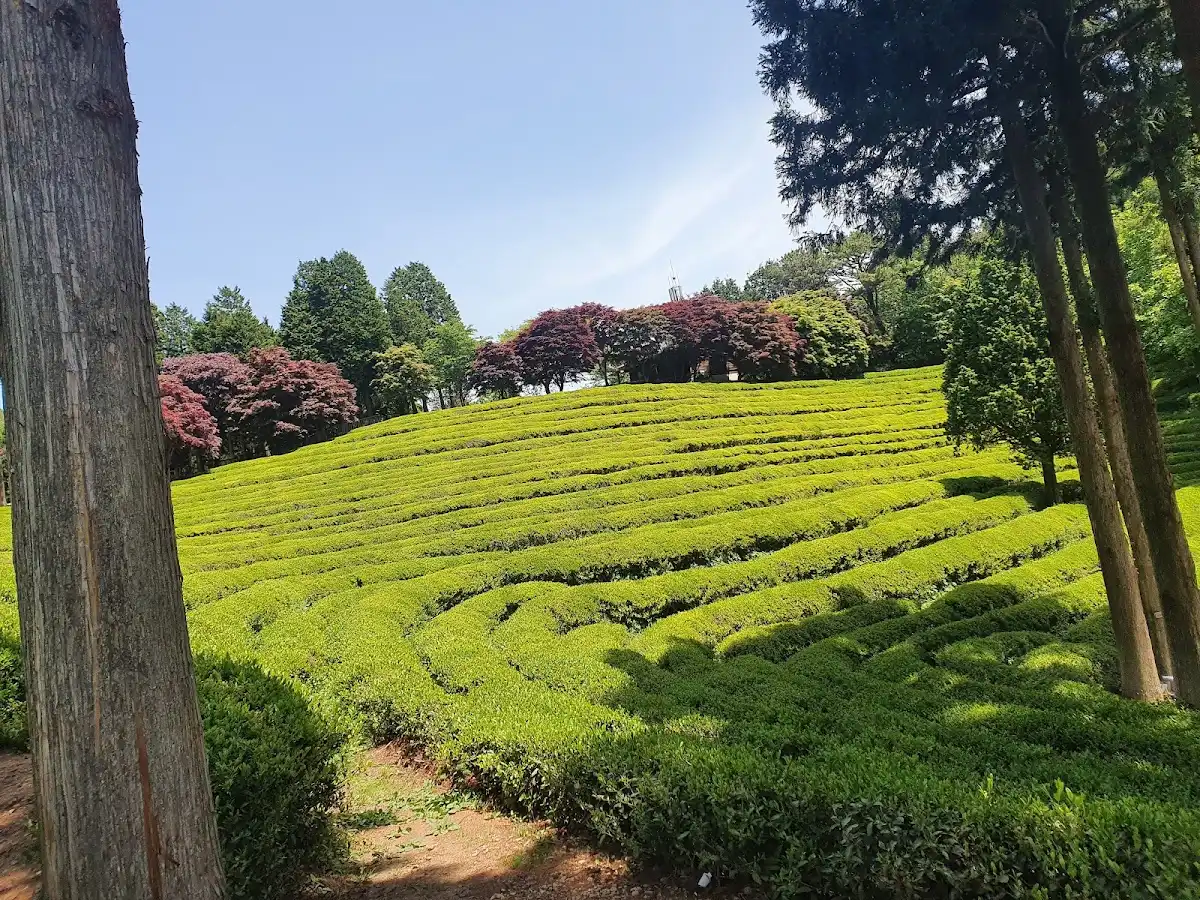
5 Boseong

green tea fields, misty hills, tea houses

Walk through terraced plantations, watch morning fog roll over the hills, and sip fresh brews in a landscape shaped by tea farming.

south-korea-city-boseong
© Google |

6 Damyang

bamboo groves, slow food, riverside cycling

Wander shaded bamboo forests, sample regional dishes, and follow quiet bike paths along the river for a restorative break.

7 Yangyang

surf beaches, pine groves, seafood shacks

Catch waves on sandy shores, relax under coastal pines, and eat grilled fish steps from the water in a laid-back seaside town.

south-korea-city-yangyang
© Google |

8 Namhae

island bridges, terraced fields, German village

Drive across sweeping causeways, hike among rice paddies, and discover a hillside community built by Korean-Germans overlooking the sea.

9 Yangdong

Confucian academies, tiled-roof villages, folk heritage

Step into a preserved settlement where stone lanes, old academies, and rural customs reveal layers of Korea’s past.

south-korea-city-yangdong
© Google |

10 Muju

mountain park, firefly festival, traditional markets

Hike forested trails, time your visit for glowing summer nights, and browse local produce in a town surrounded by protected nature.

11 Inje

whitewater rafting, pine forests, mountain lodges

Challenge fast rivers, sleep in rustic cabins, and explore dense woods in a region known for outdoor adventure and crisp air.

12 Yeongwol

river bends, literary sites, quiet valleys

Follow winding waterways, visit poet memorials, and find solitude in a landscape favored by writers and artists seeking inspiration.

13 Taebaek

coal mining history, highland plateaus, snow festivals

Trace the legacy of mining, walk windswept ridges, and visit during winter for local celebrations in Korea’s highest-elevation city.

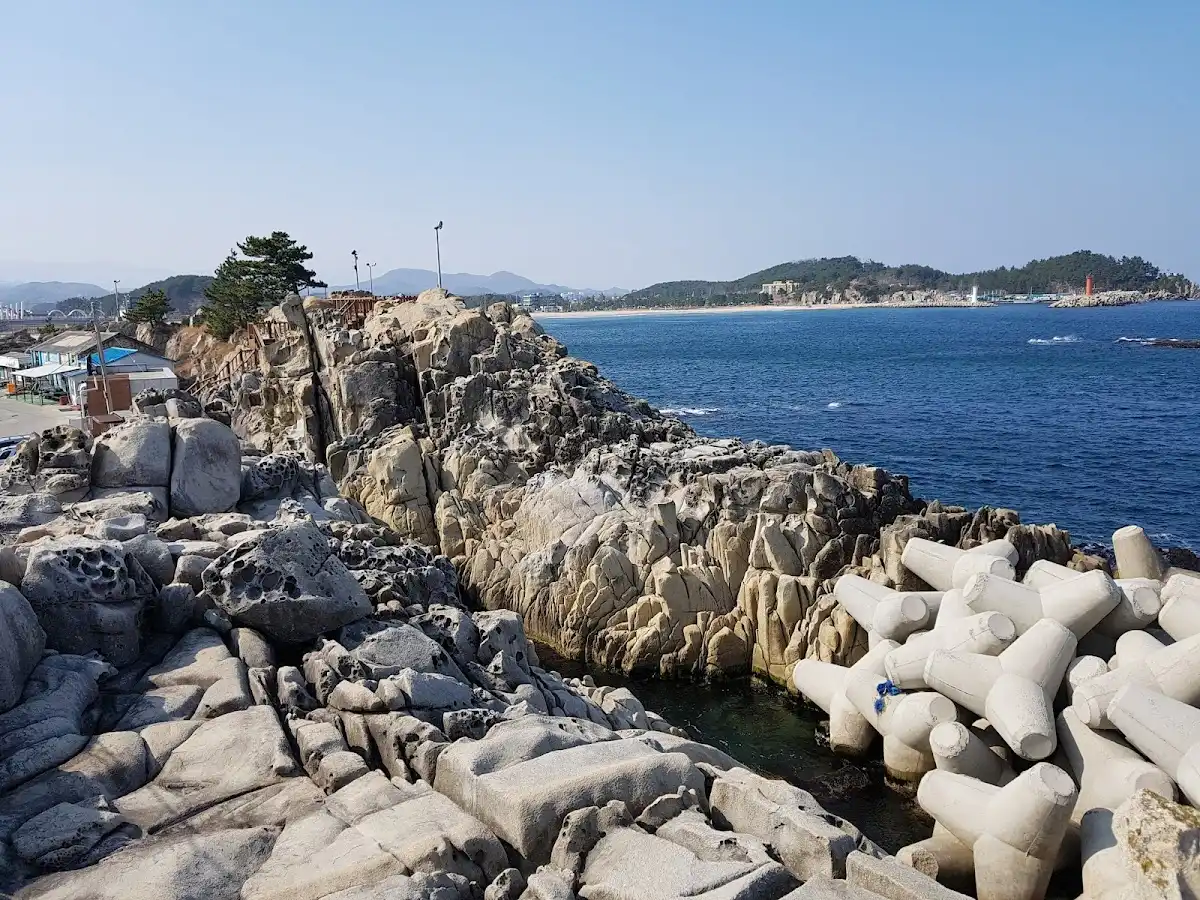
14 Uljin

hot springs, rocky coast, seafood harbors

Soak in mineral baths, explore rugged shorelines, and watch fishing boats unload the day’s haul in a town shaped by the sea.

15 Sancheong

herbal medicine, mountain trails, rural festivals

Learn about healing traditions, trek quiet paths, and join seasonal gatherings in a town where wellness and nature are closely linked.

Think you know South Korea?

Prove you’re a true local — uncover 5 lesser-known towns in South Korea that locals tend to keep to themselves.
Loading the map 🌍

Expert viewTips and Advice from Travelers

Understanding Regional Clusters
South Korea’s towns are often clustered into regions that reflect distinct cultural identities and historical narratives. When planning your journey, consider visiting three to five towns within a single region to fully immerse yourself in local customs and flavors. This approach not only deepens your experience but also minimizes travel time. For instance, the southern coast offers a rich tapestry of fishing villages and historical sites, while the mountainous interior is dotted with towns that celebrate traditional crafts and cuisine. The trade-off here is that while you gain depth in one area, you may miss out on the diversity of experiences found in other regions.

Travel Rhythm and Timing
Timing your visits is crucial. South Korea’s towns come alive … read more 👉
Understanding Regional Clusters
South Korea’s towns are often clustered into regions that reflect distinct cultural identities and historical narratives. When planning your journey, consider visiting three to five towns within a single region to fully immerse yourself in local customs and flavors. This approach not only deepens your experience but also minimizes travel time. For instance, the southern coast offers a rich tapestry of fishing villages and historical sites, while the mountainous interior is dotted with towns that celebrate traditional crafts and cuisine. The trade-off here is that while you gain depth in one area, you may miss out on the diversity of experiences found in other regions.

Travel Rhythm and Timing
Timing your visits is crucial. South Korea’s towns come alive during festivals, which can enhance your experience but also lead to crowded conditions. If you aim to catch a local festival, plan your trip around it, but be prepared for higher accommodation prices and limited availability. Conversely, visiting during off-peak seasons can provide a more intimate experience, allowing you to engage with locals without the hustle. The ideal rhythm often involves a mix of bustling urban centers and quieter towns, giving you a balanced perspective on life in South Korea.

Local Charm and Infrastructure
Each town has its unique charm, shaped by local traditions and the surrounding landscape. However, infrastructure varies significantly. Some towns are well-connected by public transport, while others may require a rental car or a willingness to navigate local buses. Understanding this can save you time and frustration. For example, towns in the Gyeongju area are easily accessible via train, making it simple to hop between historical sites. On the flip side, more remote towns may offer fewer transport options, necessitating careful planning. Always check local transport schedules ahead of time to avoid surprises.

Budgeting for Experiences
Budget considerations can vary widely depending on the towns you choose. While some areas are known for affordable street food and budget accommodations, others may lean towards higher-end dining and boutique stays. Prioritize your spending based on what experiences matter most to you. If you’re keen on culinary adventures, allocate more of your budget to food experiences, perhaps even splurging on a cooking class in a town renowned for its cuisine. The trade-off here is that while you might save on lodging, you could end up spending more on experiences that resonate with you.

Prioritizing Towns
When prioritizing which towns to visit, consider what aspects of Korean culture intrigue you most. Are you drawn to historical sites, natural beauty, or culinary delights? This focus will guide your choices. For example, if you’re passionate about history, prioritize towns with rich heritage sites, but be aware that these towns may be busier during peak tourist seasons. Conversely, if you seek tranquility, look for lesser-known towns that offer stunning landscapes but may lack some tourist amenities. The key is to align your interests with the towns that best reflect them, ensuring a more fulfilling experience.

Safety and Cultural Considerations
South Korea is generally safe for travelers, but cultural nuances are essential to navigate smoothly. Understanding local etiquette, such as bowing when greeting and removing shoes when entering homes, can enhance your interactions. Additionally, be mindful of local customs during religious or cultural events. While most towns are welcoming, some may have specific traditions that require respect and understanding. The trade-off is that while you may feel more comfortable in tourist-heavy areas, stepping into smaller towns can yield richer, more authentic experiences if you approach them with an open mind.

Logistical Constraints
Finally, consider logistical constraints like language barriers and access to information. While major towns often have English signage and speakers, smaller towns may not. Downloading translation apps can be a game-changer, allowing you to communicate more effectively and navigate menus or signs. Additionally, having a flexible itinerary can help you adapt to unexpected changes, whether that’s a local festival you didn’t know about or a transport delay. The trade-off here is that while a rigid plan can feel secure, flexibility often leads to serendipitous discoveries that enrich your journey.

By understanding these interconnected elements, you can navigate South Korea’s towns with confidence and purpose. Each decision you make, from the towns you choose to the timing of your visit, contributes to a more rewarding experience. Embrace the journey, and let the rhythm of South Korea guide you.

✈️ The backpacker research shortcutSouth Korea Travel Guide

An offline-friendly backpacking guide with optimized travel routes, ranked highlights, transport advice, and the best areas to stay.
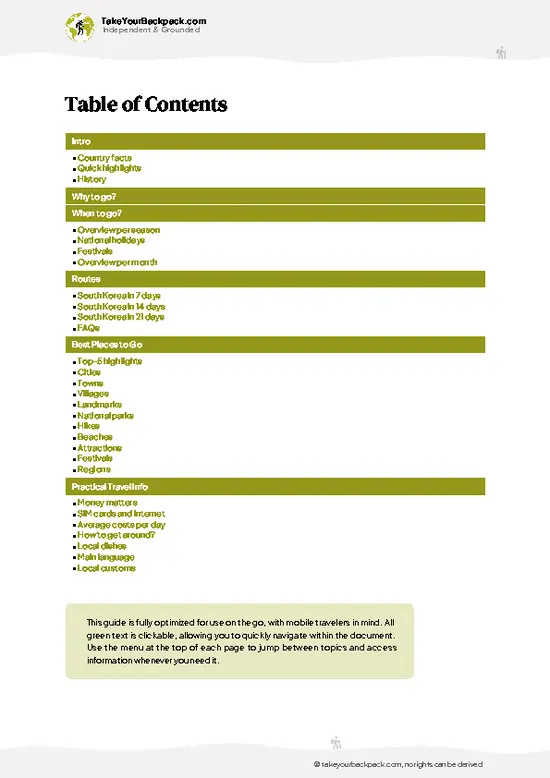
example page 0 from our offline Travel Guide for South Korea
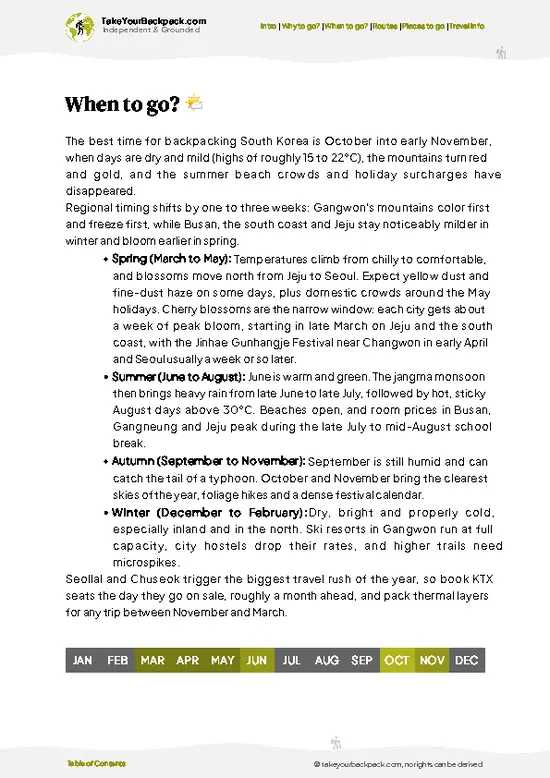
example page 1 from our offline Travel Guide for South Korea
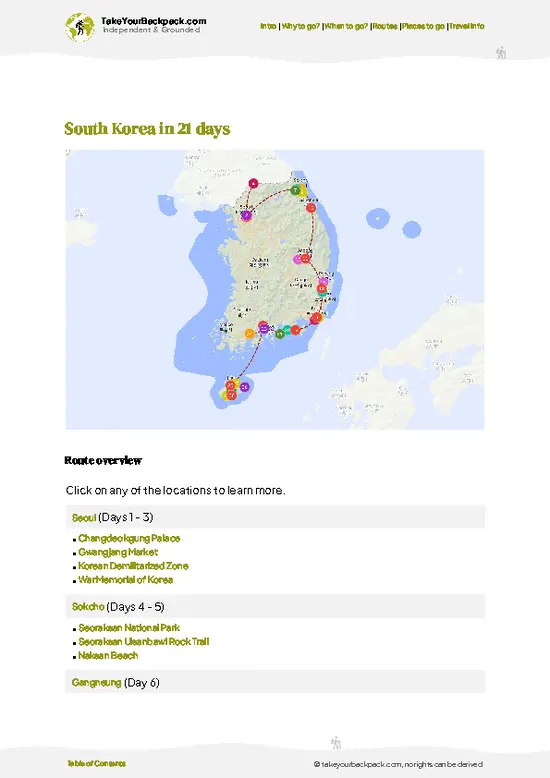
example page 2 from our offline Travel Guide for South Korea
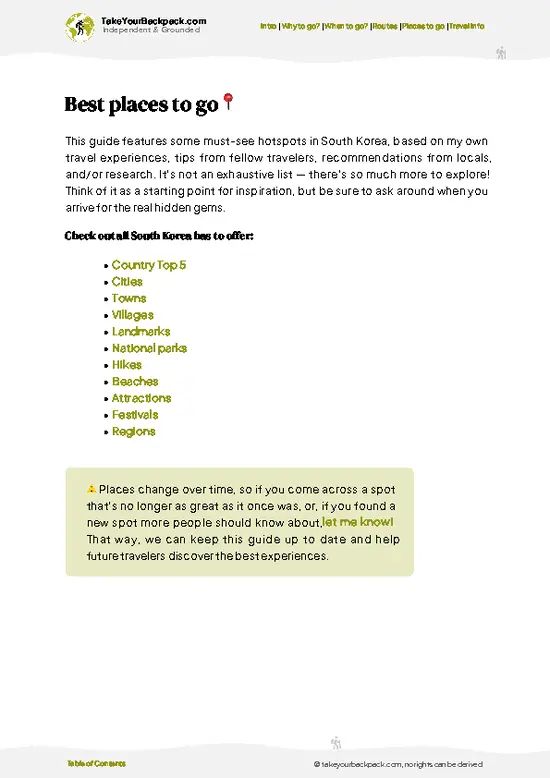
example page 3 from our offline Travel Guide for South Korea
example page 4 from our offline Travel Guide for South Korea
example page 5 from our offline Travel Guide for South Korea
example page 6 from our offline Travel Guide for South Korea
example page 7 from our offline Travel Guide for South Korea
The digital guide (439 pages) contains:
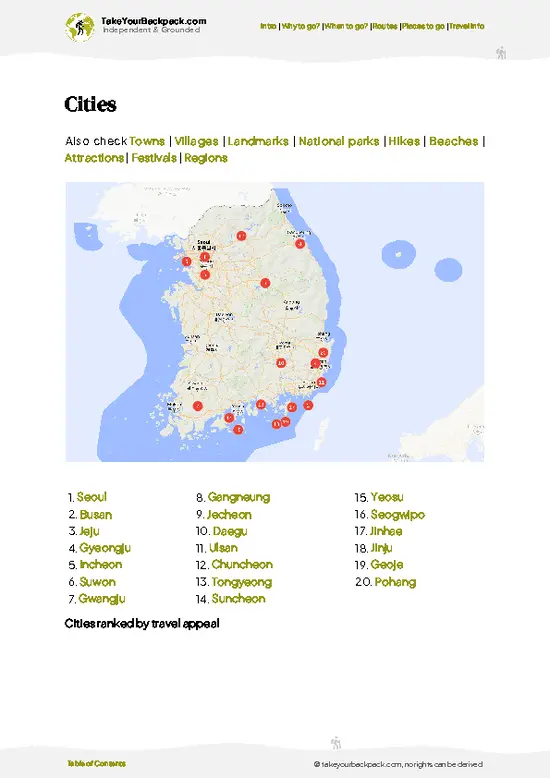
124 highlights, ranked by travel appeal
Optimized 7, 14 & 21-day travel routes
Cities, national parks, landmarks, beaches
How to get around
Offline-friendly for travel without Wi-Fi
👉 Click to see all 30+ guide features

📅 Plan smarter in minutes, not weeks
Month by month travel advice
Festivals & national holidays
Budget expectations

🗺️ Go to the right places, skip the overrated ones
Honest pros & cons of destinations
Top hikes, parks & viewpoints
Lesser-known places most travelers miss
Clear “worth it vs skip it” guidance

🛏️ Travel smoothly without rookie mistakes
Best areas to stay
Transport systems explained simply
Common scams & safety advice
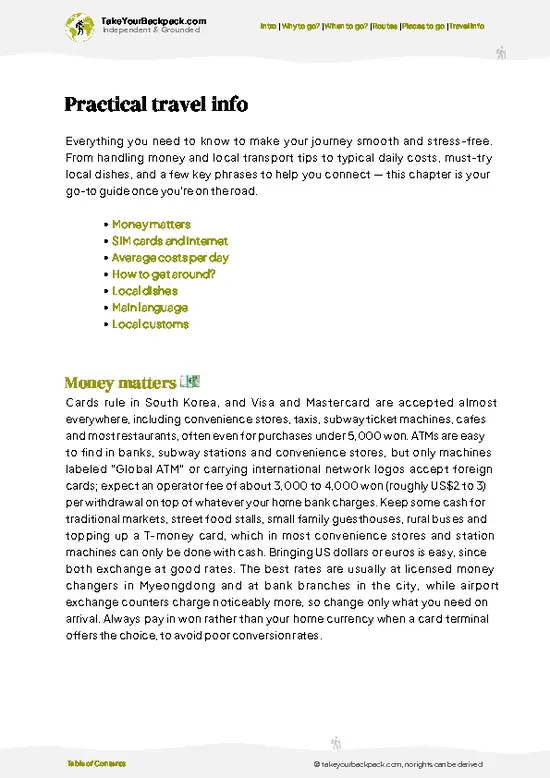
SIM cards, money & practical tips

🌍 Understand the country, not just visit it
Culture & traditions
52 Essential phrases & customs
Festivals worth planning around
Traveler-friendly historical context
Insights that make places more meaningful

📱 Built for real travel conditions
Fully downloadable PDF
Works completely offline
Optimized for phone use
Useful in remote areas & buses
Everything in one place
Save weeks of stressful planning
Get instant access to your full guide. 30‑day money-back guarantee.
+ Add another guide for just US$7.80

By proceeding you agree to our terms.
Sent to your inbox immediately after payment • 100% Secure Checkout
Best Backpacking Travel Advisor 2025 tourism awardBest Backpacking
Travel Advisor
2025
What others say about Take Your Backpack Guides:
⭐⭐⭐⭐⭐
Fantastic, amazing amount of information!
⭐⭐⭐⭐⭐
My goodness this is amazing, it's what I've been looking for hats off too you!
⭐⭐⭐⭐⭐
I think this is absolutely BRILLIANT
⭐⭐⭐⭐
Very complete and informative. It's still missing places, but I gotta to commend you
⭐⭐⭐⭐⭐
This is truly amazing, thank you, can't wait to explore it with my kids!
⭐⭐⭐⭐⭐
Awesome resource, thank you!
⭐⭐⭐⭐⭐
This is amazing! Can't wait to explore the ones I haven't seen
⭐⭐⭐⭐
I love this! Well done, great idea.
⭐⭐⭐⭐⭐
Thanks for taking the time to make this gem!
⭐⭐⭐⭐⭐
This might be the best website I've ever seen.
⭐⭐⭐⭐⭐
Congratulations, and thank you so much for your work; it's incredibly valuable.
⭐⭐⭐⭐
In all seriousness I think you did a great job pointing out the important spots
⭐⭐⭐⭐⭐
10/10 very good
⭐⭐⭐⭐⭐
As someone who's only just starting to visit regularly this is awesome, thank you.
⭐⭐⭐⭐
Thank you very much! I'm going to visit my dad, it's going to be very useful!
⭐⭐⭐⭐⭐
This is really cool! We'll be travelling for the first time and this definitely come in handy.
⭐⭐⭐⭐⭐
You are now our minister of culture, congratulations 👨‍💼
⭐⭐⭐⭐⭐
Just wanted to tell you that this is a pearl! Going to follow your recommendations.
⭐⭐⭐⭐⭐
This is so cool. I'll definitely be using the resource for my travels soon.
⭐⭐⭐⭐⭐
This is very impressive! Good work.
⭐⭐⭐⭐⭐
This is an amazing and informative site. Very well done!

🛏️ Where to stay?Where to Stay in South Korea

Yes — hostels and budget accommodation are widely available across South Korea, concentrated in Seoul (Hongdae, Myeongdong, Itaewon, Gangnam), Busan (Haeundae, Seomyeon) and Jeju City.
Hongdae: very cheap and packed with nightlife but noisy late; Myeongdong: central, excellent transport and shopping yet touristy and slightly pricier; Itaewon: international food and late-night scene but can be rowdy; Gangnam: modern, well-connected and safer-feeling, though higher-priced and fewer traditional hostels; Haeundae: beach access and many guesthouses but crowded in summer; Seomyeon: transport hub with lots of budget options but busy and urban; Jeju City: best base for island travel and quieter off-season … read more 👉
Yes — hostels and budget accommodation are widely available across South Korea, concentrated in Seoul (Hongdae, Myeongdong, Itaewon, Gangnam), Busan (Haeundae, Seomyeon) and Jeju City.
Hongdae: very cheap and packed with nightlife but noisy late; Myeongdong: central, excellent transport and shopping yet touristy and slightly pricier; Itaewon: international food and late-night scene but can be rowdy; Gangnam: modern, well-connected and safer-feeling, though higher-priced and fewer traditional hostels; Haeundae: beach access and many guesthouses but crowded in summer; Seomyeon: transport hub with lots of budget options but busy and urban; Jeju City: best base for island travel and quieter off-season though hostel choices are fewer and some attractions require longer travel.

If you enjoy meeting fellow travelers, consider choosing hostels with high ratings for atmosphere. On the other hand, if you prefer having your own space, a hotel might be a better option.

South KoreaMore of South Korea

👋 Meet the founderWho’s Behind Take Your Backpack?

Johan, backpacker and founder of TakeYourBackpackHi, I’m Johan (Netherlands 🇳🇱), the creator of TakeYourBackpack. Over the past decade, I’ve backpacked through 80+ countries across six continents, gaining extensive experience with independent travel, long-term trips, and overland routes.

This site is built on a combination of firsthand travel experience and carefully curated insights from other backpackers. Many guides are based on places I’ve personally visited, while others bring together tips, observations, and practical advice shared by trusted travelers I’ve met along the way.

The goal is to provide realistic, experience-driven guidance — not generic itineraries — so you can explore destinations with better context, clearer expectations, and more confidence.

Get full country guide •
Instant download • 124 highlights • Full Offline guide