×

South Sudan🇸🇸 | citiesAweilDinka cattle camps, Lol River banks, railway station, permit checks | things to do and best time to go

Explore Malakal StadiumExplore Juba

Backpacking in Aweil
👌 Worth visitingcity ranked #9
By Johan Kruseman 🇳🇱 | Updated November 2, 2026

Aweil is a trading town where Dinka cattle culture, the old railway line and the road to Sudan meet, and that is why people bother with it at all. The overlooked part is paperwork. Foreigners need a valid visa, and movement permits and registration with local authorities are routinely checked, because security rules here are enforced by officials rather than posted anywhere. Carry copies and ask your host to introduce you. You will find Aweil in the north of South Sudan, in Northern Bahr el Ghazal state. Skip hunting for sights, since there are few formal ones. The markets, the cattle camps and the people are worth your time. Day one: register, walk the main market in the morning, rest through the midday heat, then meet locals at a tea stall.

Discover everything you want to know in the 📖 South Sudan Travel Guide.
Safety warning

The current risk level for South Sudan is high. Check the advice before going.


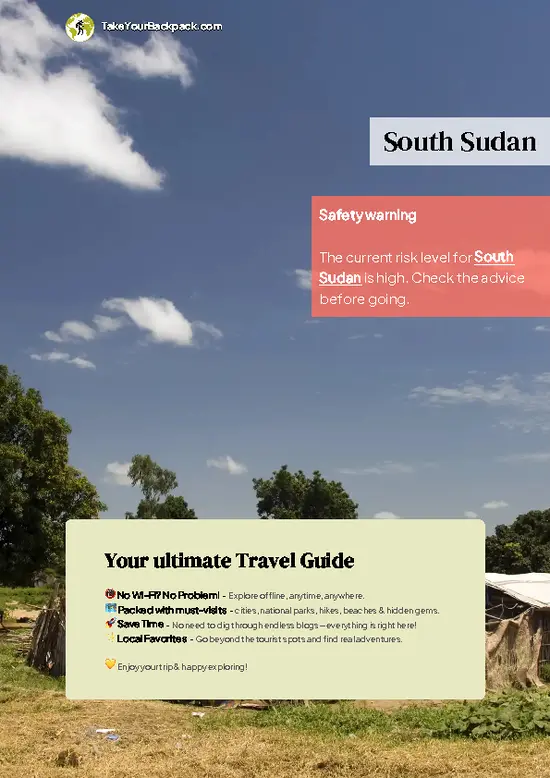
example page 0 from our offline Travel Guide for South Sudan
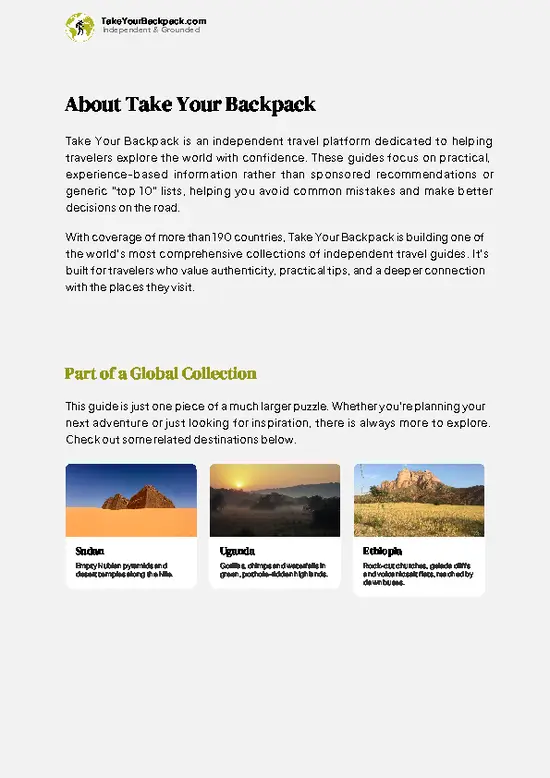
example page 1 from our offline Travel Guide for South Sudan
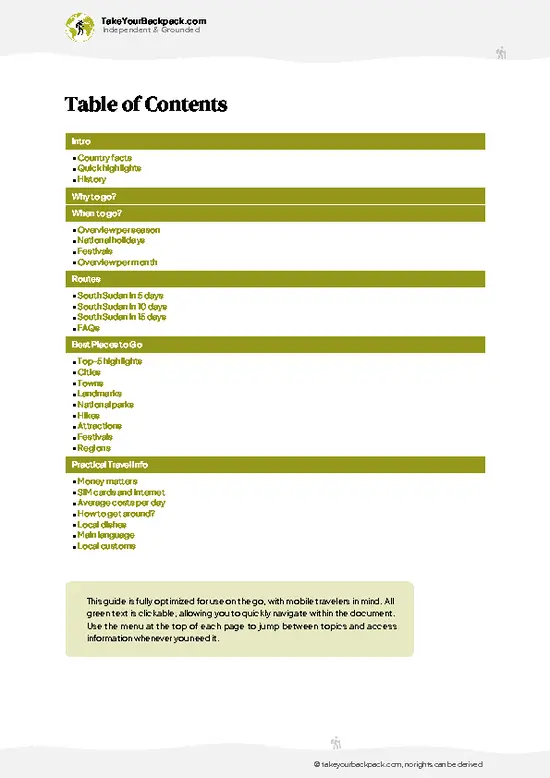
example page 2 from our offline Travel Guide for South Sudan
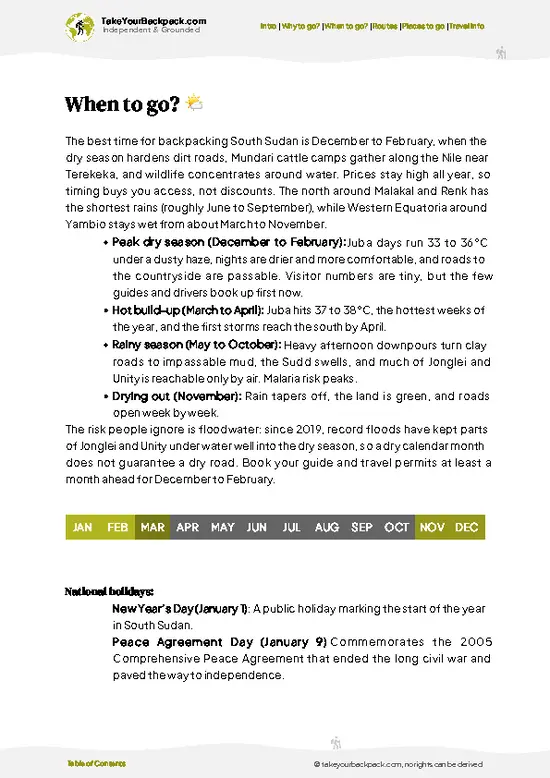
example page 3 from our offline Travel Guide for South Sudan
example page 4 from our offline Travel Guide for South Sudan
example page 5 from our offline Travel Guide for South Sudan
example page 6 from our offline Travel Guide for South Sudan
example page 7 from our offline Travel Guide for South Sudan
Loading the map 🌍
CLICK TO FILTER
cities
towns
landmarks
national parks
hikes
attractions
festivals
regions
SHOW COUNTRY’S BESTSHOW ALL

✨ Why go?
Ranked #9 city in South Sudan
Why visitors keep coming back

Aweil earns a place on a route for the cultural access, not for a checklist. It is the main town of the Northern Bahr el Ghazal region, and it gives you a look at Dinka cattle culture that the capital cannot match. Traders move goods between here and the border, so the Aweil market is where you see what the region actually buys and sells. Accommodation is limited to a handful of guesthouses and compounds run by aid agencies and churches, so plan beds ahead and expect basic comfort. Food is simple, mostly grilled meat, beans, rice and sorghum porridge. Nightlife barely exists. Onward travel is hard, with rough roads and flights that depend on the season. Come if you want a rare, slow look at a working regional town and have time and local contacts. Treat it as a short, purposeful stop if you do not.

💡 HighlightsDon't-miss highlights and experiences

  1. Aweil Main Market: The commercial heart of the town, with stalls of grain, dried fish, cloth, phone credit and goods trucked in from the north. Go in the morning when stock arrives, and allow 1 to 2 hours. Entry is free, and ask before taking photos.
  2. Cattle camps near town: Dinka herders tend decorated cattle and burn dung fires to keep off insects. Visits need a local guide or host and permission from the community. Go early morning or late afternoon, 2 to 3 hours, with a small gift or fee of roughly US$5 to 10 for your guide.
  3. Lol River banks: A quiet spot to watch women washing, boys fishing and cattle drinking. It is best in the cooler morning and takes about an hour. It is free, but check the water level and local advice before walking far.
  4. Local church services: Sunday worship is a loud,
… read more 👉
  1. Aweil Main Market: The commercial heart of the town, with stalls of grain, dried fish, cloth, phone credit and goods trucked in from the north. Go in the morning when stock arrives, and allow 1 to 2 hours. Entry is free, and ask before taking photos.
  2. Cattle camps near town: Dinka herders tend decorated cattle and burn dung fires to keep off insects. Visits need a local guide or host and permission from the community. Go early morning or late afternoon, 2 to 3 hours, with a small gift or fee of roughly US$5 to 10 for your guide.
  3. Lol River banks: A quiet spot to watch women washing, boys fishing and cattle drinking. It is best in the cooler morning and takes about an hour. It is free, but check the water level and local advice before walking far.
  4. Local church services: Sunday worship is a loud, joyful affair with choirs and drums. Visitors are welcomed if they dress modestly. Plan for 2 to 3 hours and bring a small donation of US$1 to 2.
  5. Roadside tea stalls: Sweet spiced tea and flatbread beside the main road, where drivers and traders trade news. It is the easiest way to meet people. Allow an hour, and expect to pay under US$1.
  6. Aweil railway station area: The line heading toward Wau has seen little regular service for years, but the station and sidings are a memorable look at the town’s past. Visit by day, with permission, for about 30 minutes.
From Aweil, day trips go to the villages and cattle areas around Northern Bahr el Ghazal, and with permits toward the Kiir Adem border crossing and the Wau area, depending on road conditions. For a first visit, the main market gives the clearest picture of how the town works.
Spotted a mistake or missing something? Contact us.

🏘️ NeighborhoodsUnderstanding the local layout

Aweil is small enough that you can grasp its layout in one afternoon, and the areas differ mostly by function. Distances are short, but heat and sandy tracks make even a 2 km walk slow by midday, so plan stops accordingly.
  • Market area: The main market and the roads around it are where you buy food, phone credit and basics, and where you eat grilled meat, beans and sweet tea at roadside stalls. It is crowded and loud, which is why you go in the morning, before the heat builds.
  • Administrative and NGO district: Offices, compounds and a few guesthouses sit on the quieter streets. There is nothing to see, but it is where you register, ask about road conditions and find reliable internet. Go for errands only.
  • Riverside and outskirts: The edges of town fade into farmland and small villages where Dinka
… read more 👉
Aweil is small enough that you can grasp its layout in one afternoon, and the areas differ mostly by function. Distances are short, but heat and sandy tracks make even a 2 km walk slow by midday, so plan stops accordingly.
  • Market area: The main market and the roads around it are where you buy food, phone credit and basics, and where you eat grilled meat, beans and sweet tea at roadside stalls. It is crowded and loud, which is why you go in the morning, before the heat builds.
  • Administrative and NGO district: Offices, compounds and a few guesthouses sit on the quieter streets. There is nothing to see, but it is where you register, ask about road conditions and find reliable internet. Go for errands only.
  • Riverside and outskirts: The edges of town fade into farmland and small villages where Dinka cattle camps and fields shape the day. Walking here is pleasant and shows you more than any monument does, but hire a local guide so you are not wandering into private land.
  • Bus and transport yards: This is where minibuses and trucks gather toward Wau and the Sudan border road. Skip it unless you are leaving. Nothing here is worth lingering over.

⌛️ 1 day1-day itinerary for Aweil

7:00 AM: Aweil Main Market
The day is paced on foot in the cool hours, then by motorbike taxi (boda-boda) for longer hops, with a long break in the shade when the heat peaks around midday. Start at the central market while the stalls are being set up. Sacks of sorghum, dried fish, groundnuts and secondhand clothes fill the lanes, and you can buy sweet tea and fried dough from the women near the entrance. Wander for an hour, then ask before you photograph anyone.

9:00 AM: Tea Stop by the Roadside
Walk toward the main road and sit at a tea stall, where drivers, traders and officials swap news. It is the easiest way to get local advice on that day's conditions and where the boda-boda riders are waiting.

10:30 AM: Cattle Camps at the Edge of Town
Hire a boda-boda to the outskirts, where Dinka herders … read more 👉
7:00 AM: Aweil Main Market
The day is paced on foot in the cool hours, then by motorbike taxi (boda-boda) for longer hops, with a long break in the shade when the heat peaks around midday. Start at the central market while the stalls are being set up. Sacks of sorghum, dried fish, groundnuts and secondhand clothes fill the lanes, and you can buy sweet tea and fried dough from the women near the entrance. Wander for an hour, then ask before you photograph anyone.

9:00 AM: Tea Stop by the Roadside
Walk toward the main road and sit at a tea stall, where drivers, traders and officials swap news. It is the easiest way to get local advice on that day's conditions and where the boda-boda riders are waiting.

10:30 AM: Cattle Camps at the Edge of Town
Hire a boda-boda to the outskirts, where Dinka herders keep long-horned cattle and burn dung fires to keep insects off. This is well off the usual path and worth the trip, but go only with a local guide or host who can introduce you and confirm it is fine to visit. Allow an hour.

12:30 PM: Midday Rest
Return to town and eat grilled goat or fish with flatbread or porridge at a simple restaurant. Stay indoors or under a tree until the worst heat passes.

3:30 PM: Lol River Bank
Take a short boda-boda ride to the riverside, where women wash clothes and boys herd animals to water. Walk the bank slowly for an hour and watch the light soften across the floodplain.

5:30 PM: Evening in the Center
Head back for a drink at a hotel garden or tea house and watch the market winding down. Finish before dark and take a boda-boda to your bed.

🌤️ When to go?When to go for the best experience

Aweil has a long dry season from about November to March, and that is when roads are firm and travel is easiest.
  • Dry Season (Nov to Mar): Days reach 35 to 40°C (95 to 104°F), nights fall to about 18 to 22°C (64 to 72°F). Roads are passable, dust is common and transport prices are steady.
  • Hot Transition (Apr to May): The hottest weeks, often above 40°C (104°F). First storms start, and shade becomes the main concern.
  • Rainy Season (Jun to Oct): Highs of 28 to 33°C (82 to 91°F). Dirt roads turn to mud, floods cut off villages, and fares and delays rise. Daylight stays close to even all year.
Aim for December or January, when mornings are cool and roads are firmest.

source: climatestotravel.comJANJanuary: highly recommended for travelingFEBFebruary: excellent for travelingMARMarch: excellent for travelingAPRApril: excellent for travelingMAYMay: fair for travelingJUNJune: fair for travelingJULJuly: fair for travelingAUGAugust: fair for travelingSEPSeptember: fair for travelingOCTOctober: fair for travelingNOVNovember: highly recommended for travelingDECDecember: highly recommended for traveling
when-to-go

✈️ The backpacker research shortcutSouth Sudan Travel Guide

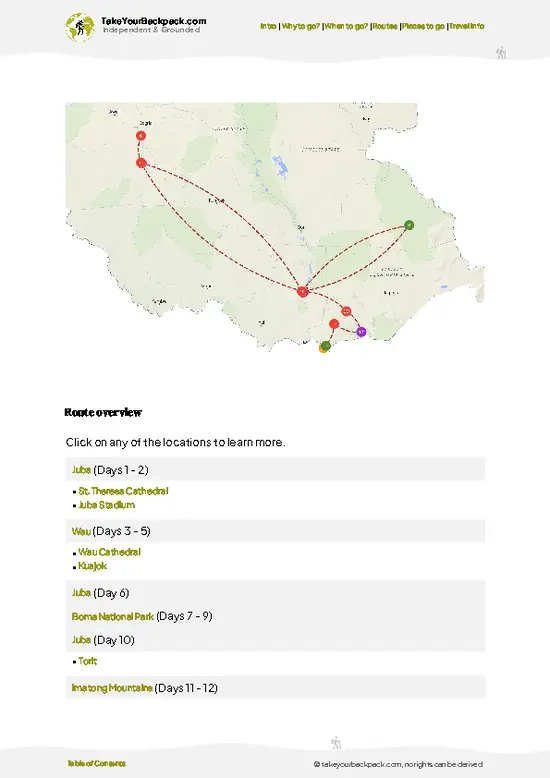
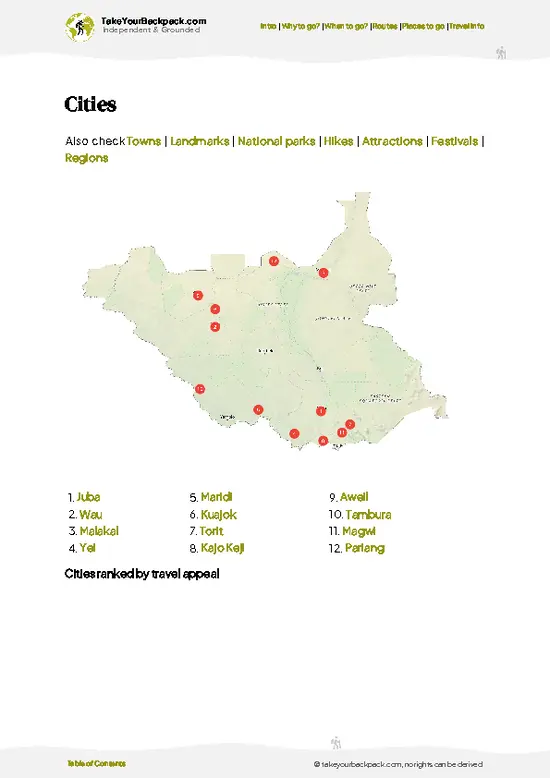
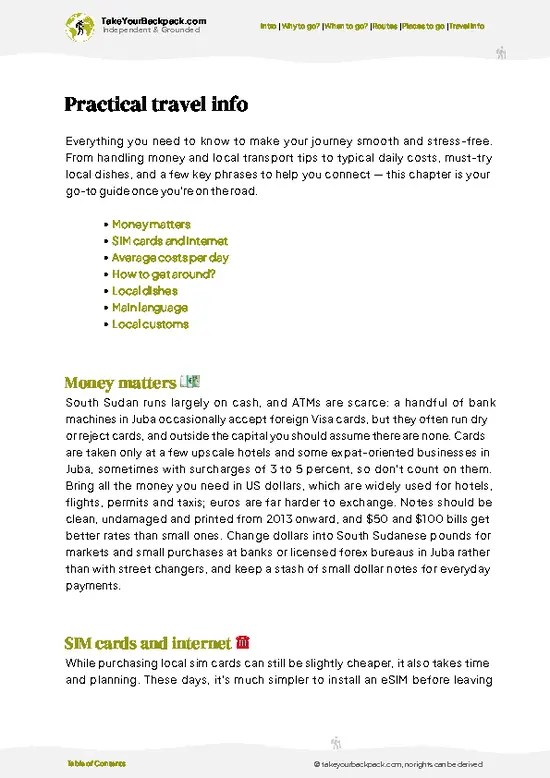
An offline-friendly backpacking guide with optimized travel routes, ranked highlights, transport advice, and the best areas to stay.
example page 0 from our offline Travel Guide for South Sudan
example page 1 from our offline Travel Guide for South Sudan
example page 2 from our offline Travel Guide for South Sudan
example page 3 from our offline Travel Guide for South Sudan
example page 4 from our offline Travel Guide for South Sudan
example page 5 from our offline Travel Guide for South Sudan
example page 6 from our offline Travel Guide for South Sudan
example page 7 from our offline Travel Guide for South Sudan
The digital guide (195 pages) contains:
✅ 53 highlights, ranked by travel appeal
✅ Optimized 5, 10 & 15-day travel routes
✅ Cities, national parks, landmarks, beaches
✅ How to get around
✅ Offline-friendly for travel without Wi-Fi
👉 Click to see all 30+ guide features

📅 Plan smarter in minutes, not weeks
✅ Month by month travel advice
✅ Festivals & national holidays
✅ Budget expectations

🗺️ Go to the right places, skip the overrated ones
✅ Honest pros & cons of destinations
✅ Top hikes, parks & viewpoints
✅ Lesser-known places most travelers miss
✅ Clear “worth it vs skip it” guidance

🛏️ Travel smoothly without rookie mistakes
✅ Best areas to stay
✅ Transport systems explained simply
✅ Common scams & safety advice
✅ SIM cards, money & practical tips

🌍 Understand the country, not just visit it
✅ Culture & traditions
✅ 52 Essential phrases & customs
✅ Festivals worth planning around
✅ Traveler-friendly historical context
✅ Insights that make places more meaningful

📱 Built for real travel conditions
✅ Fully downloadable PDF
✅ Works completely offline
✅ Optimized for phone use
✅ Useful in remote areas & buses
✅ Everything in one place
Stop searching, start planning
Get instant access to your full guide. 30‑day money-back guarantee.
+ Add another guide for just

By proceeding you agree to our terms.
Sent to your inbox immediately after payment • 100% Secure Checkout
Best Backpacking Travel Advisor 2025 tourism awardBest Backpacking
Travel Advisor
2025
What others say about Take Your Backpack Guides:
⭐⭐⭐⭐⭐
Fantastic, amazing amount of information!
⭐⭐⭐⭐⭐
My goodness this is amazing, it's what I've been looking for hats off too you!
⭐⭐⭐⭐⭐
I think this is absolutely BRILLIANT
⭐⭐⭐⭐
Very complete and informative. It's still missing places, but I gotta to commend you
⭐⭐⭐⭐⭐
This is truly amazing, thank you, can't wait to explore it with my kids!
⭐⭐⭐⭐⭐
Awesome resource, thank you!
⭐⭐⭐⭐⭐
This is amazing! Can't wait to explore the ones I haven't seen
⭐⭐⭐⭐
I love this! Well done, great idea.
⭐⭐⭐⭐⭐
Thanks for taking the time to make this gem!
⭐⭐⭐⭐⭐
This might be the best website I've ever seen.
⭐⭐⭐⭐⭐
Congratulations, and thank you so much for your work; it's incredibly valuable.
⭐⭐⭐⭐
In all seriousness I think you did a great job pointing out the important spots
⭐⭐⭐⭐⭐
10/10 very good
⭐⭐⭐⭐⭐
As someone who's only just starting to visit regularly this is awesome, thank you.
⭐⭐⭐⭐
Thank you very much! I'm going to visit my dad, it's going to be very useful!
⭐⭐⭐⭐⭐
This is really cool! We'll be travelling for the first time and this definitely come in handy.
⭐⭐⭐⭐⭐
You are now our minister of culture, congratulations 👨‍💼
⭐⭐⭐⭐⭐
Just wanted to tell you that this is a pearl! Going to follow your recommendations.
⭐⭐⭐⭐⭐
This is so cool. I'll definitely be using the resource for my travels soon.
⭐⭐⭐⭐⭐
This is very impressive! Good work.
⭐⭐⭐⭐⭐
This is an amazing and informative site. Very well done!

🛏️ Where to stay?How to pick the right area

The most practical area for a budget stay in Aweil is near the market and central streets, where guesthouses and basic lodges cluster within walking distance of food and transport. Dorm hostels do not really exist here, so expect simple private rooms, often with a fan and shared bathroom, at roughly US$15 to 40 a night. Noise is the cost: generators, traffic and early market activity start before dawn, so bring earplugs.
The second option is the quieter administrative and NGO area, which has somewhat better security with walled compounds, steadier power and a calmer night. Rooms cost more, often … read more 👉
The most practical area for a budget stay in Aweil is near the market and central streets, where guesthouses and basic lodges cluster within walking distance of food and transport. Dorm hostels do not really exist here, so expect simple private rooms, often with a fan and shared bathroom, at roughly US$15 to 40 a night. Noise is the cost: generators, traffic and early market activity start before dawn, so bring earplugs.
The second option is the quieter administrative and NGO area, which has somewhat better security with walled compounds, steadier power and a calmer night. Rooms cost more, often US$40 to 80, but you sleep better and can ask staff to arrange transport. It is a short boda-boda ride from the market. Whichever you choose, book ahead by phone where you can, ask whether the generator runs at night and confirm there is water, since both fail often.

🚌 Getting aroundHow to get around Aweil

Aweil’s center is compact enough to cover on foot in 15 to 20 minutes, from the market to the main road and the government offices, and walking stops making sense once you head for the outskirts, the airstrip or the river areas. Paved roads are few, the sun is strong, and the rainy season turns dirt tracks into mud. Public transport as a schedule does not exist. Vehicles leave when they are full, so you plan around that and keep a flexible day.
  • Walking: Free, and the best way to see the market, the main road and the nearby neighborhoods. Go in the cooler morning, carry water, and skip walking in the middle of the day. In the rains, plan on muddy side streets and wear shoes that can get wet.
  • Boda-boda (motorbike taxi): The default for anything beyond walking distance. A short ride costs roughly
… read more 👉
Aweil’s center is compact enough to cover on foot in 15 to 20 minutes, from the market to the main road and the government offices, and walking stops making sense once you head for the outskirts, the airstrip or the river areas. Paved roads are few, the sun is strong, and the rainy season turns dirt tracks into mud. Public transport as a schedule does not exist. Vehicles leave when they are full, so you plan around that and keep a flexible day.
  • Walking: Free, and the best way to see the market, the main road and the nearby neighborhoods. Go in the cooler morning, carry water, and skip walking in the middle of the day. In the rains, plan on muddy side streets and wear shoes that can get wet.
  • Boda-boda (motorbike taxi): The default for anything beyond walking distance. A short ride costs roughly US$0.50 to 1.50, and longer ones to the edge of town US$2 to 3. There are no meters, so agree on the price before you climb on, and ask a hotel or shop owner what the going rate is. Helmets are rare, so ask the rider to go slowly.
  • Shared minibuses and trucks: These link Aweil with nearby towns and villages and are the cheapest option, often US$3 to 10 depending on distance and road condition. They depart when full, usually in the morning, and breakdowns in the wet season can add hours. Arrive early at the station or roadside stop.
  • Private hire vehicle: Usually a 4x4 arranged through your accommodation or an NGO contact. Expect about US$80 to 150 a day including driver. It is not worth it for getting around town, but it makes sense for remote areas where public vehicles are unreliable.
Carry small bills, since drivers rarely have change for large notes. Dollars are widely understood for larger deals, though everyday rides are paid in local currency, so keep a little on hand. Avoid traveling by road after late afternoon, because visibility is poor and checkpoints are easier to deal with in daylight.

👛 Costs (as of 2 November 2026)What things cost and how to budget

Aweil costs a backpacker about US$45 a day in high season, and prices run higher than in most of East Africa because goods arrive by long, rough roads. Travelers pay in South Sudanese pounds, though US dollars are widely accepted for larger payments. Hostels are rare, so a dorm bed here means a basic guesthouse bed or shared room.
CategoryBudget RangeLocal Reality
Dorm accommodation (high season)US$15 to 20Shared room in a basic guesthouse, often with a fan and a bucket shower.
Dorm accommodation (off-season)US$10 to 15Rainy months see less demand, so bargaining works.
MealsUS$8 to 12Beans, stews, grilled fish or goat with flatbread or porridge at simple local eateries.
Local transportUS$2 to 4Motorbike taxis (boda-bodas) for short hops across town.
City transport passNot availableNo pass exists;
… read more 👉
Aweil costs a backpacker about US$45 a day in high season, and prices run higher than in most of East Africa because goods arrive by long, rough roads. Travelers pay in South Sudanese pounds, though US dollars are widely accepted for larger payments. Hostels are rare, so a dorm bed here means a basic guesthouse bed or shared room.
CategoryBudget RangeLocal Reality
Dorm accommodation (high season)US$15 to 20Shared room in a basic guesthouse, often with a fan and a bucket shower.
Dorm accommodation (off-season)US$10 to 15Rainy months see less demand, so bargaining works.
MealsUS$8 to 12Beans, stews, grilled fish or goat with flatbread or porridge at simple local eateries.
Local transportUS$2 to 4Motorbike taxis (boda-bodas) for short hops across town.
City transport passNot availableNo pass exists; you pay per ride.
Basic activities/entry feesUS$0 to 3Market wandering and riverside walks cost nothing; occasional small fees apply.
Miscellaneous expensesUS$3 to 6Bottled water, phone credit, a cold soda.
Total Daily BudgetUS$46 to 55Based on high-season accommodation.
To save money, buy bottled water by the case or refill from a trusted source, and negotiate a fixed boda-boda fare before you climb on.


source: numbeo.com
⚠️ Prices can change and everyone travels differently, so take this as a rough guide. Hope it helps you plan your adventure!

🚌 Day tripsWhere to go beyond the main area

Aweil works as a base for rural day trips, but options are few and need a local guide or driver, since there are no organized tours.
Village and Cattle Camp Visits:
The farmland around Aweil is home to Dinka communities whose daily life revolves around cattle, and a morning out here shows more than any town sight. Allow 30 to 60 minutes each way by boda-boda or car, and budget US$10 to 40 including a guide. Go in the dry season, and always ask permission before photographing. First-timers often arrive without a local introduction, which closes doors.

Wau:
The larger city of Wau has a cathedral, a bigger market and more services. It is a long day by road, typically 4 to 7 hours each way in the dry season, so leave at dawn and return the same day only with a hired car, around US$100 to 200. … read more 👉
Aweil works as a base for rural day trips, but options are few and need a local guide or driver, since there are no organized tours.
Village and Cattle Camp Visits:
The farmland around Aweil is home to Dinka communities whose daily life revolves around cattle, and a morning out here shows more than any town sight. Allow 30 to 60 minutes each way by boda-boda or car, and budget US$10 to 40 including a guide. Go in the dry season, and always ask permission before photographing. First-timers often arrive without a local introduction, which closes doors.

Wau:
The larger city of Wau has a cathedral, a bigger market and more services. It is a long day by road, typically 4 to 7 hours each way in the dry season, so leave at dawn and return the same day only with a hired car, around US$100 to 200. Rainy season makes it unrealistic. Many first-timers underestimate the road and get stuck.
👉 Explore Wau
Lol River Banks:
The river area near Aweil offers fishing scenes and green stretches, and is an easy half day. Costs run US$5 to 20 by boda-boda with a guide. Late dry season water is lower, while the rains bring higher flows and muddy tracks.

🍲 FoodEating & Drinking in Aweil

Food in Aweil leans on what the northern Bahr el Ghazal region grows and herds. Look for sorghum porridge with sour milk or a spiced stew, and grilled goat or beef sold at roadside stands, smoky and salted. Fresh fish from nearby waterways appears fried or in stews, and groundnut sauce with greens is common and filling. Dairy matters here because cattle matter, so ask for fresh or soured milk, though only where you trust the source.
Backpackers mostly eat at market stalls and small local canteens, where a plate costs about US$2 to 5. Sweet tea and coffee from street vendors cost under US$1 and are good places to chat. Alcohol is available in some places, but it is low key and mostly local brews, so ask your host. Eat food that is cooked hot in front of you, and drink bottled or treated water.

🛡️ SafetySafety Tips and Common Scams in Aweil

Aweil is calmer than much of South Sudan, but conditions can change, so check with your guesthouse or an aid organization before moving beyond town. Carry copies of your passport, visa and travel permit, because police and soldiers do check papers, and a polite attitude settles most stops. Photography of government buildings, soldiers and bridges can cause trouble, so ask first. Avoid walking alone after dark, as streets are unlit and power cuts are routine. Petty theft happens in the market, so keep phones and cash in front pockets. Overcharging of foreigners is the everyday annoyance, which a fixed price agreed ahead handles. Malaria is a real risk, so bring a net and repellent.

FAQTraveler FAQ

Two to three days is enough for Aweil itself, which has a market, riverside walks and nearby villages. Add a day if you plan a trip toward Wau, which is 4 to 7 hours by road in the dry season. Rainy months can stretch any plan, so leave a spare day.
Aweil is calmer than many parts of South Sudan, but solo travel here needs preparation and local contacts. Carry copies of your permits, avoid walking alone after dark, and expect checkpoint stops. A guesthouse room costs about US$15 to 80 a night, and your host can usually advise on current conditions.
Aweil is known as the main town of northern Bahr el Ghazal, with Dinka cattle-keeping communities and a busy regional market. It sits on the road toward the Sudan border and Wau. Farming of sorghum and groundnuts shapes the local food, and meals at market stalls cost roughly US$2 to 5.
⚠️ Things can change over time, so always validate details locally before you go.

Other South Sudanese cities near Aweil

Explore more nearby:

  • Kuajok—Warrap capital, Jur River, horned herds, Dinka market| 82 km away
  • Wau—Brick cathedral, idle railway terminus, Jur River shade, grain market| 134 km away
  • Pariang—Border-region trade, sorghum stalls, no tourist layer, checkpoint paperwork| 311 km away

💡 Not sure where to go next?
Create a personalized itinerary for South Sudan including Aweil and the places that fit your trip.

Generate my itinerary

👉 Discover all cities

Or checkout all South Sudan has to offer (think cities, towns, villages, national parks, hikes, beaches, festivals)
Country photo of South Sudan

We 💚 feedbackKey takeaways before you go

Give Aweil two or three days, not one. The first goes on introductions and permissions, and the rest is when people open up. Bring small notes, copies of your documents and patience, and say yes to invitations to tea.

✍️ Help improve this page!
The information on this page is based on in-depth research, insights shared by experienced travelers, and feedback from the local travel community in South Sudan. While every effort is made to keep the information accurate and current, conditions can change — so if you spot anything incorrect or outdated, please get in touch.


🙋‍♂️ Give feedback

👋 Meet the founderWho’s Behind Take Your Backpack?

Johan, backpacker and founder of TakeYourBackpackHi, I’m Johan (Netherlands 🇳🇱), the creator of TakeYourBackpack. Over the past 3 decades, I’ve backpacked through 90+ countries across six continents, gaining extensive experience with independent travel, long-term trips, and overland routes.

This site is built on a combination of firsthand travel experience and carefully curated insights from other backpackers. Many guides are based on places I’ve personally visited, while others bring together tips, observations, and practical advice shared by trusted travelers I’ve met along the way.

The goal is to provide realistic, experience-driven guidance — not generic itineraries — so you can explore destinations with better context, clearer expectations, and more confidence.