×

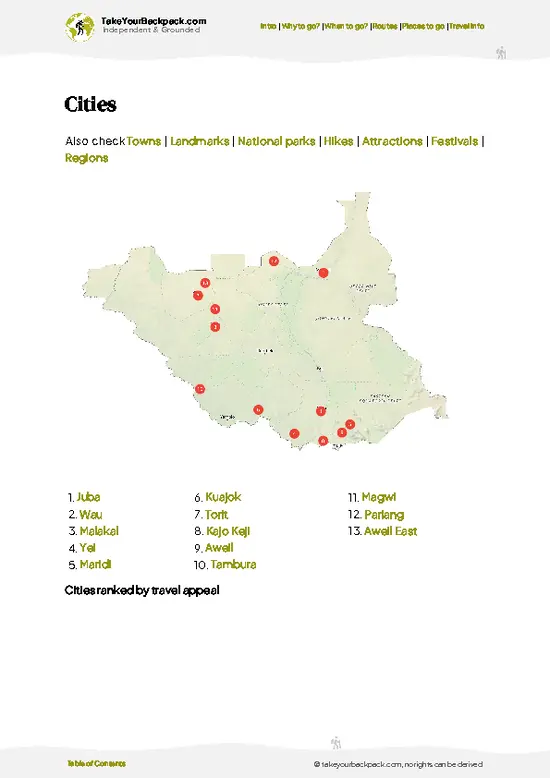
South Sudan🇸🇸 | citiesJubaNile riverfront, bustling markets, government district, expat enclaves | things to do and best time to go

Explore AweilExplore Kajo Keji

Backpacking in Juba
🏆 Top pickcity ranked #1
By Johan Kruseman 🇳🇱 | Updated September 23, 2026

A decade ago, Juba felt like a frontier outpost—dusty, raw, and pulsing with the energy of a country just born. Today, it’s still rough around the edges, but the city has grown into a place where the stakes are higher and the contrasts sharper. Juba sits on the banks of the White Nile, deep in the heart of South Sudan, and it’s the kind of destination that tests your appetite for adventure. For backpackers, Juba is not about comfort or convenience; it’s about witnessing history in motion. The John Garang Mausoleum and the bustling Konyo Konyo Market are as real as it gets—no curated tourist gloss, just daily life unfolding. Costs are high for what you get, and safety is a constant calculation, with movement often limited after dark. You won’t find a backpacker scene here, and meeting other travelers is rare. Compared to Wau or Malakal, Juba is bigger, busier, and more unpredictable—equal parts challenge and reward. The vibe? Intense, unvarnished, and undeniably alive.

Discover everything you want to know in the 📖 South Sudan Travel Guide.
Safety warning

The current risk level for South Sudan is high. Check the advice before going.


Get your South Sudan guide
68 ranked highlights, routes & tips, works offline (270 pages)
Loading the map 🌍
CLICK TO FILTER
cities
towns
landmarks
national parks
hikes
attractions
festivals
regions
SHOW COUNTRY’S BESTSHOW ALL

✨ Why go?
Ranked #1 city in South Sudan
The unique appeal for travelers

Juba, the capital of South Sudan, is a strategic stop for backpackers navigating East Africa. It’s not just about the highlights; it’s about what Juba offers as a basecamp. The city has a unique charm that’s hard to ignore. You’ll find a handful of hostels that cater to budget travelers, providing a cozy spot to recharge after a day of exploration.

The food scene is a delightful mix of local and international flavors, making it easy to refuel without breaking the bank. Juba’s walkability is a bonus; you can easily stroll through the city, soaking in the atmosphere and connecting with locals.

For those looking to dive deeper into South Sudan, Juba serves as a launchpad for day trips to nearby attractions, allowing you to experience the country’s rich culture and landscapes without the hassle … read more 👉
Juba, the capital of South Sudan, is a strategic stop for backpackers navigating East Africa. It’s not just about the highlights; it’s about what Juba offers as a basecamp. The city has a unique charm that’s hard to ignore. You’ll find a handful of hostels that cater to budget travelers, providing a cozy spot to recharge after a day of exploration.

The food scene is a delightful mix of local and international flavors, making it easy to refuel without breaking the bank. Juba’s walkability is a bonus; you can easily stroll through the city, soaking in the atmosphere and connecting with locals.

For those looking to dive deeper into South Sudan, Juba serves as a launchpad for day trips to nearby attractions, allowing you to experience the country’s rich culture and landscapes without the hassle of constant travel.

Nightlife here is low-key but engaging, with a few spots where you can unwind and meet fellow travelers. If you’re on a broader backpacking route, Juba is a worthwhile stop—offering a blend of comfort, culture, and convenience that makes it more than just a fleeting visit.
Want to include Juba in your South Sudan route?
Create a personalized South Sudan itinerary that includes Juba and the places that fit your trip — based on your travel style, budget, and available time. Get your route in seconds.

Generate my trip

💡 HighlightsKey sights and experiences for travelers

  • John Garang Mausoleum — The most important modern monument in Juba: a simple hilltop memorial to the leader of South Sudan’s independence struggle. Visiting gives real context to recent history and good views over the city if you climb the grounds.
  • Konyo Konyo (Central) Market — A chaotic, colorful market where you’ll find everything from local produce and dried fish to phone SIMs and second-hand clothes. It’s the best place to feel the city’s pulse and watch daily life up close (go with a local and keep valuables discreet).
  • Bahr el Jebel / Nile riverbank and port area — The Nile is Juba’s spine. Walk the banks at sunset, watch fishermen, boarding longboats to Mongalla, and see how the river shapes trade and social life. Boat trips are possible from the jetties if conditions and security
… read more 👉
  • John Garang Mausoleum — The most important modern monument in Juba: a simple hilltop memorial to the leader of South Sudan’s independence struggle. Visiting gives real context to recent history and good views over the city if you climb the grounds.
  • Konyo Konyo (Central) Market — A chaotic, colorful market where you’ll find everything from local produce and dried fish to phone SIMs and second-hand clothes. It’s the best place to feel the city’s pulse and watch daily life up close (go with a local and keep valuables discreet).
  • Bahr el Jebel / Nile riverbank and port area — The Nile is Juba’s spine. Walk the banks at sunset, watch fishermen, boarding longboats to Mongalla, and see how the river shapes trade and social life. Boat trips are possible from the jetties if conditions and security allow.
  • All Saints’ Cathedral — One of Juba’s longstanding church buildings and a focal point for the Anglican community. The interior and adjacent grounds offer insight into religious life and community networks that helped sustain the city through hard years.
  • University of Juba (main campus) — A worthwhile stroll through campus life: students, informal cafés, and often public lectures or events. The university played a big part in political and cultural life, so a guided walk helps unpack that history.
  • Juba National Stadium — More than sporting infrastructure: stadium days are social events and a place to watch football, local music, and national celebrations. If there’s a match, the atmosphere is lively and revealing of local passions.
  • Gudele market and neighborhood — Less touristy than the central market, Gudele shows everyday residential and trading life: local food stalls, small craft workshops, and neighborhood commerce. Good for low-key wandering and talking to vendors.
  • Mundari and Bari riverside landing sites — Along the Nile within the city limits you’ll find small landing beaches and community spots used by local Bari and Mundari people for fishing, boat repairs and cattle watering. These are great places to observe traditional livelihoods—ask a local fixer to introduce you respectfully.
  • Late-colonial / administrative quarter (around Tombura Road) — A compact area with old government buildings, embassy compounds, and colonial-era architecture. Walking this section (with permission where needed) helps show how Juba’s administrative and political geography evolved.
  • Street food lanes and coffee stalls — Not a single address, but pin down the lively stretches near the market and river where small vendors sell nshima, grilled fish, roasted maize and strong coffee. Eating here is the quickest route to tasting the everyday city and meeting people.
A few real day-trip highlights outside Juba worth considering: Nimule and Nimule National Park (wildlife and scenery toward the Uganda border), Mongalla (riverine wetlands, hippos and birdlife reachable by boat), and Terekeka (Mundari cattle camps and cultural visits north of the city).
Spotted a mistake or missing something? Contact us.
🏘️ NeighborhoodsKey areas and districts to know

Juba, the capital of South Sudan, is a city where the pulse of the nation beats strong. Understanding its neighborhoods can help you maximize your experience, balancing time, money, and comfort.

Juba Town: This is the heart of the city. It’s bustling with markets, shops, and local eateries. The vibe is energetic, perfect for those wanting to dive into daily life. Prices here are generally lower, making it budget-friendly. Walkability is decent, but be cautious of traffic. Nightlife is lively, with bars and music venues. Ideal for short stays to soak in the local culture.

Gudele: A bit quieter, Gudele offers a more residential feel. It’s less touristy, which can be a plus for those seeking authenticity. Costs are moderate, and the area is walkable, though public transport is limited. This … read more 👉
Juba, the capital of South Sudan, is a city where the pulse of the nation beats strong. Understanding its neighborhoods can help you maximize your experience, balancing time, money, and comfort.

Juba Town: This is the heart of the city. It’s bustling with markets, shops, and local eateries. The vibe is energetic, perfect for those wanting to dive into daily life. Prices here are generally lower, making it budget-friendly. Walkability is decent, but be cautious of traffic. Nightlife is lively, with bars and music venues. Ideal for short stays to soak in the local culture.

Gudele: A bit quieter, Gudele offers a more residential feel. It’s less touristy, which can be a plus for those seeking authenticity. Costs are moderate, and the area is walkable, though public transport is limited. This neighborhood is better for longer stays, allowing you to connect with locals and explore at a leisurely pace.

Jebel Kujur: Nestled in the hills, this area provides stunning views and a more relaxed atmosphere. It’s pricier due to its appeal, but the comfort level is high. Walkability is good, but you might want to rely on taxis for longer distances. Nightlife is subdued, making it suitable for those looking to unwind. Great for both short and extended visits.

Malakal: Known for its vibrant community, Malakal is a hub for expatriates and NGOs. The vibe is cosmopolitan, with a mix of cultures. Costs can vary, but you’ll find options for every budget. Walkability is excellent, and public transport is accessible. This area is perfect for short stays, especially if you want to network or engage in community activities.

⌛️ 1 day1-day itinerary for Juba

Juba, the capital of South Sudan, is a city where the pulse of a new nation beats strong. It’s a place where the scars of conflict meet the vibrant energy of resilience. You’ll find a mix of bustling markets, riverside views, and a community eager to share its story. Spend a day here, and you’ll uncover layers of culture and history that are both raw and inspiring.

Start your morning at the vibrant Juba Market. The air is thick with the scent of spices and fresh produce. Here, you can sip on a cup of locally brewed coffee while watching vendors barter. It’s a sensory overload in the best way. Afterward, take a stroll along the banks of the Nile. The river is a lifeline for many, and you’ll see fishermen casting nets and families enjoying the cool breeze.

As the sun climbs higher, head to … read more 👉
Juba, the capital of South Sudan, is a city where the pulse of a new nation beats strong. It’s a place where the scars of conflict meet the vibrant energy of resilience. You’ll find a mix of bustling markets, riverside views, and a community eager to share its story. Spend a day here, and you’ll uncover layers of culture and history that are both raw and inspiring.

Start your morning at the vibrant Juba Market. The air is thick with the scent of spices and fresh produce. Here, you can sip on a cup of locally brewed coffee while watching vendors barter. It’s a sensory overload in the best way. Afterward, take a stroll along the banks of the Nile. The river is a lifeline for many, and you’ll see fishermen casting nets and families enjoying the cool breeze.

As the sun climbs higher, head to the nearby Nyakuron Cultural Center. This spot is often overlooked by tourists but offers a glimpse into South Sudanese traditions through music and dance. If you’re lucky, you might catch a rehearsal or even join in. It’s a chance to connect with locals and understand their rich heritage.

In the afternoon, make your way to the South Sudan National Museum. While it’s small, it’s packed with artifacts that tell the story of a nation finding its footing. The museum’s staff are often eager to share insights, making it a worthwhile stop.

As evening approaches, find a local eatery in the Jebel neighborhood. Try some traditional dishes like kisra or grilled fish while mingling with residents. The atmosphere is relaxed, and you’ll likely leave with new friends and stories to tell.

Juba may not be on every traveler’s radar, but spending a day here reveals a city full of life and potential. Embrace the experience, and you’ll walk away with more than just memories; you’ll gain a deeper understanding of a place on the rise.
Turn your Juba visit into an South Sudan adventure
Build a complete South Sudan route with Juba, hidden gems, must-see destinations, and realistic travel times included.

Generate my trip

🌤️ When to go?Choosing the right time of year

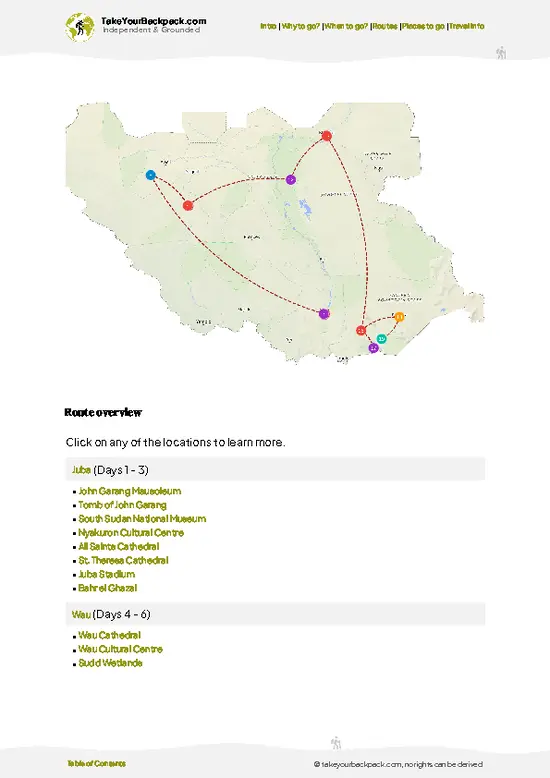
  • Topic: Weather and Temperature - Juba’s climate is a classic tropical savanna, with a scorching dry season from December to February where highs hit around 38°C (100°F). The rainy season from April to October cools things down to a more bearable 28-32°C (82-90°F), but expect heavy afternoon storms that can disrupt plans.
  • Topic: Daylight Hours - Near the equator, Juba enjoys roughly 12 hours of daylight year-round. Sunrise hovers around 6:00 AM and sunset near 6:00 PM, so your trekking and exploring windows stay consistent, no matter the month.
  • Topic: Crowds - Tourism here is minimal year-round, so you won’t be battling crowds. However, local holidays and festivals, especially around December, can bring a lively buzz and more activity in town.
  • Topic: Seasonal Activities - The dry season
… read more 👉
  • Topic: Weather and Temperature - Juba’s climate is a classic tropical savanna, with a scorching dry season from December to February where highs hit around 38°C (100°F). The rainy season from April to October cools things down to a more bearable 28-32°C (82-90°F), but expect heavy afternoon storms that can disrupt plans.
  • Topic: Daylight Hours - Near the equator, Juba enjoys roughly 12 hours of daylight year-round. Sunrise hovers around 6:00 AM and sunset near 6:00 PM, so your trekking and exploring windows stay consistent, no matter the month.
  • Topic: Crowds - Tourism here is minimal year-round, so you won’t be battling crowds. However, local holidays and festivals, especially around December, can bring a lively buzz and more activity in town.
  • Topic: Seasonal Activities - The dry season is prime for outdoor adventures like river trips on the White Nile and wildlife spotting. The wet season, while lush and green, can limit access to some trails and rural areas due to mud and flooding.
  • Topic: Price Fluctuations - Accommodation and transport costs tend to rise slightly during the dry season when conditions are ideal for travel. The rainy season sees lower prices but comes with the trade-off of less reliable logistics.
Pro-tip: Aim for the shoulder months of March or November to balance manageable heat, fewer storms, and better prices—giving you a strategic edge in comfort and cost.


source: climatestotravel.comJANJanuary: good for travelingFEBFebruary: good for travelingMARMarch: highly recommended for travelingAPRApril: good for travelingMAYMay: fair for travelingJUNJune: fair for travelingJULJuly: fair for travelingAUGAugust: fair for travelingSEPSeptember: fair for travelingOCTOctober: good for travelingNOVNovember: highly recommended for travelingDECDecember: good for traveling

✈️ The backpacker research shortcutSouth Sudan Travel Guide

An offline-friendly backpacking guide with optimized travel routes, ranked highlights, transport advice, and the best areas to stay.
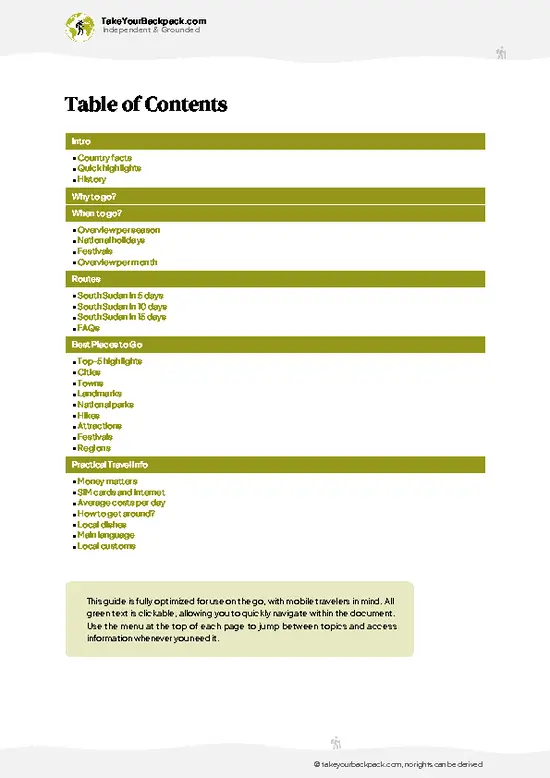
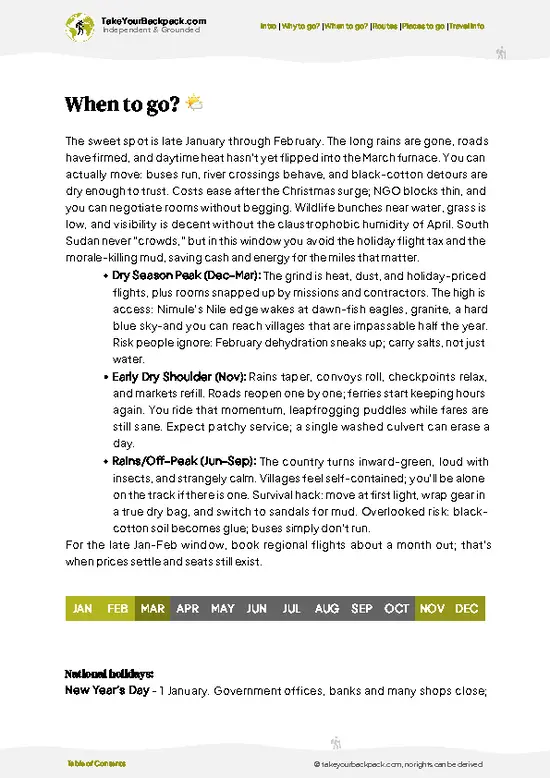
example page 0 from our offline Travel Guide for South Sudan
example page 1 from our offline Travel Guide for South Sudan
example page 2 from our offline Travel Guide for South Sudan
example page 3 from our offline Travel Guide for South Sudan
example page 4 from our offline Travel Guide for South Sudan
example page 5 from our offline Travel Guide for South Sudan
example page 6 from our offline Travel Guide for South Sudan
example page 7 from our offline Travel Guide for South Sudan
The digital guide (270 pages) contains:
✅ 68 highlights, ranked by travel appeal
✅ Optimized 5, 10 & 15-day travel routes
✅ Cities, national parks, landmarks, beaches
✅ How to get around
✅ Offline-friendly for travel without Wi-Fi
👉 Click to see all 30+ guide features

📅 Plan smarter in minutes, not weeks
✅ Month by month travel advice
✅ Festivals & national holidays
✅ Budget expectations

🗺️ Go to the right places, skip the overrated ones
✅ Honest pros & cons of destinations
✅ Top hikes, parks & viewpoints
✅ Lesser-known places most travelers miss
✅ Clear “worth it vs skip it” guidance

🛏️ Travel smoothly without rookie mistakes
✅ Best areas to stay
✅ Transport systems explained simply
✅ Common scams & safety advice
✅ SIM cards, money & practical tips

🌍 Understand the country, not just visit it
✅ Culture & traditions
✅ 52 Essential phrases & customs
✅ Festivals worth planning around
✅ Traveler-friendly historical context
✅ Insights that make places more meaningful

📱 Built for real travel conditions
✅ Fully downloadable PDF
✅ Works completely offline
✅ Optimized for phone use
✅ Useful in remote areas & buses
✅ Everything in one place
Save weeks of stressful planning
Get instant access to your full guide. 30‑day money-back guarantee.
+ Add another guide for just

By proceeding you agree to our terms.
Sent to your inbox immediately after payment • 100% Secure Checkout
Best Backpacking Travel Advisor 2025 tourism awardBest Backpacking
Travel Advisor
2025
What others say about Take Your Backpack Guides:
⭐⭐⭐⭐⭐
Fantastic, amazing amount of information!
⭐⭐⭐⭐⭐
My goodness this is amazing, it's what I've been looking for hats off too you!
⭐⭐⭐⭐⭐
I think this is absolutely BRILLIANT
⭐⭐⭐⭐
Very complete and informative. It's still missing places, but I gotta to commend you
⭐⭐⭐⭐⭐
This is truly amazing, thank you, can't wait to explore it with my kids!
⭐⭐⭐⭐⭐
Awesome resource, thank you!
⭐⭐⭐⭐⭐
This is amazing! Can't wait to explore the ones I haven't seen
⭐⭐⭐⭐
I love this! Well done, great idea.
⭐⭐⭐⭐⭐
Thanks for taking the time to make this gem!
⭐⭐⭐⭐⭐
This might be the best website I've ever seen.
⭐⭐⭐⭐⭐
Congratulations, and thank you so much for your work; it's incredibly valuable.
⭐⭐⭐⭐
In all seriousness I think you did a great job pointing out the important spots
⭐⭐⭐⭐⭐
10/10 very good
⭐⭐⭐⭐⭐
As someone who's only just starting to visit regularly this is awesome, thank you.
⭐⭐⭐⭐
Thank you very much! I'm going to visit my dad, it's going to be very useful!
⭐⭐⭐⭐⭐
This is really cool! We'll be travelling for the first time and this definitely come in handy.
⭐⭐⭐⭐⭐
You are now our minister of culture, congratulations 👨‍💼
⭐⭐⭐⭐⭐
Just wanted to tell you that this is a pearl! Going to follow your recommendations.
⭐⭐⭐⭐⭐
This is so cool. I'll definitely be using the resource for my travels soon.
⭐⭐⭐⭐⭐
This is very impressive! Good work.
⭐⭐⭐⭐⭐
This is an amazing and informative site. Very well done!

🛏️ Where to stay?Best areas and accommodation options

In Juba, the backpacker’s sweet spot is the central business district and its immediate surroundings. This area strikes a rare balance between safety, accessibility, and social buzz—key for solo travelers who want to plug into the city without wandering into sketchy zones. The streets here are more patrolled and populated, which naturally ups the comfort level without inflating costs.

Hostel options are limited but tend to cluster around this core, offering a mix of dorm-style and budget private rooms. The vibe is pragmatic rather than party-centric, so expect a quieter, more reflective atmosphere … read more 👉
In Juba, the backpacker’s sweet spot is the central business district and its immediate surroundings. This area strikes a rare balance between safety, accessibility, and social buzz—key for solo travelers who want to plug into the city without wandering into sketchy zones. The streets here are more patrolled and populated, which naturally ups the comfort level without inflating costs.

Hostel options are limited but tend to cluster around this core, offering a mix of dorm-style and budget private rooms. The vibe is pragmatic rather than party-centric, so expect a quieter, more reflective atmosphere where you can swap stories with fellow travelers over a simple meal or a local brew. It’s not about nightlife chaos but about connection and practical comfort.

Venture outside this zone, and you quickly hit neighborhoods that are either too residential and isolated or too commercial and expensive, neither of which suits the backpacker’s need for community and wallet-friendly stays. The outskirts can feel disconnected and less secure, making them a poor trade-off if you value ease of movement and social opportunities.

In essence, the central district is your strategic base: safe enough to relax, social enough to meet people, and budget-friendly enough to keep your trip sustainable. It’s the logical choice when you’re playing the travel game smart, balancing time, money, and comfort without sacrificing any one element too heavily.

🚌 Getting aroundHow to get from A to B

Juba moves at its own rhythm—somewhere between the pulse of a bustling market and the slow simmer of a city still finding its feet. There’s no strict timetable here, no ironclad schedule that everyone follows. Instead, it’s a dance of intuition and improvisation, where waiting is part of the journey and flexibility is your best friend. The city’s flow is shaped by the unpredictability of infrastructure and the resilience of its people, so your travel choices become a strategic game of balancing time, money, and comfort.
  • Walking: The most reliable and cost-free way to get around central Juba. Streets can be uneven and dusty, so sturdy shoes are a must. Walking lets you absorb the city’s texture but expect slower progress—plan for 20-30 minutes to cover a few kilometers. It’s your baseline
… read more 👉
Juba moves at its own rhythm—somewhere between the pulse of a bustling market and the slow simmer of a city still finding its feet. There’s no strict timetable here, no ironclad schedule that everyone follows. Instead, it’s a dance of intuition and improvisation, where waiting is part of the journey and flexibility is your best friend. The city’s flow is shaped by the unpredictability of infrastructure and the resilience of its people, so your travel choices become a strategic game of balancing time, money, and comfort.
  • Walking: The most reliable and cost-free way to get around central Juba. Streets can be uneven and dusty, so sturdy shoes are a must. Walking lets you absorb the city’s texture but expect slower progress—plan for 20-30 minutes to cover a few kilometers. It’s your baseline for comfort and zero expense, but time is the currency you pay.
  • Local Minibuses: These are the workhorses of Juba’s transit scene. They run roughly from dawn until early evening, but don’t expect a fixed timetable—minibuses leave when full. Fares hover around 100-200 SSP (South Sudanese Pounds), making them the cheapest motorized option. They’re cramped and hot, with no air conditioning, so comfort is minimal, but they get you where you need to go faster than walking.
  • Motorcycle Taxis (Boda Bodas): For a quick hop across town, boda bodas are your go-to. They operate 24/7, offering unmatched speed through traffic and narrow streets. Prices vary widely—always negotiate upfront, but expect around 200-400 SSP for short rides. Comfort is low, and safety standards are variable, but if you’re pressed for time, they’re unbeatable. Just weigh the risk-reward carefully.
  • Private Taxis: More comfortable and faster than minibuses, private taxis offer door-to-door service. They’re pricier—expect to pay 1,000 SSP or more for typical city trips. Availability depends on your negotiation skills and time of day. If you value comfort and time over money, this is your best bet, especially during the heat or rainy season when walking and waiting become less appealing.
  • Shared 4x4s: For longer distances or trips outside the city, shared 4x4 vehicles are common. They run irregularly and require some local intel to catch. Prices are higher, around 2,000 SSP or more, but they offer better protection from the elements and rough roads. Time savings are significant compared to walking or minibuses, but comfort is still basic—think rugged and functional, not plush.

Understanding Juba’s transit options is about recognizing the trade-offs: you can save money by walking or hopping on a minibus, but you’ll spend more time and sacrifice comfort. Opting for boda bodas or private taxis buys you speed and ease but at a premium and with some risk. The city’s flow rewards those who read its cues and choose their moves like a chess player—each decision a calculated step toward a richer, more efficient experience.

👛 Costs (as of 23 September 2026)How expensive it really is

Backpacking in Juba, South Sudan, demands a clear-eyed understanding of costs because the city’s infrastructure and services are still developing, which means prices can be surprisingly high for what you get. Here’s how the daily expenses typically break down for an independent traveler navigating this unique environment:
  • Dorm Accommodation (High Season): Expect to pay around $25 to $40 per night. Options are limited, and the few guesthouses catering to budget travelers often spike prices during peak months due to demand and scarcity.
  • Dorm Accommodation (Off-Season): Prices drop to roughly $15 to $25 per night. Even then, the quality and availability remain inconsistent, so booking ahead or confirming in person is crucial.
  • Meals: Local eateries offer meals for $3 to $7 each. Street food
… read more 👉
Backpacking in Juba, South Sudan, demands a clear-eyed understanding of costs because the city’s infrastructure and services are still developing, which means prices can be surprisingly high for what you get. Here’s how the daily expenses typically break down for an independent traveler navigating this unique environment:
  • Dorm Accommodation (High Season): Expect to pay around $25 to $40 per night. Options are limited, and the few guesthouses catering to budget travelers often spike prices during peak months due to demand and scarcity.
  • Dorm Accommodation (Off-Season): Prices drop to roughly $15 to $25 per night. Even then, the quality and availability remain inconsistent, so booking ahead or confirming in person is crucial.
  • Meals: Local eateries offer meals for $3 to $7 each. Street food is cheaper but less reliable in terms of hygiene. Western-style or hotel restaurants push prices up to $10 or more per meal, so balancing local spots with occasional splurges is smart.
  • Local Transport: Minibuses and shared taxis cost about $0.50 to $1 per trip within the city. They’re basic and often crowded, but they get you where you need to go if you’re patient and flexible.
  • City Transport Pass: There is no formal city transport pass system in Juba. Transport remains informal, so budgeting per trip is necessary.
  • Basic Activities/Entry Fees: Cultural or historical sites are few and often free or charge a nominal fee around $1 to $3. Organized tours or special excursions can run $20 to $50, but these are less common and usually arranged through hotels or NGOs.
  • Miscellaneous Expenses: Budget $5 to $10 for essentials like bottled water, SIM cards, and occasional tips. Imported goods and internet access can be pricier than expected, so factor that in.

Overall, you’re looking at a daily budget ranging from about $30 on the leanest days to $70 if you want a bit more comfort and flexibility. Juba isn’t cheap by typical backpacker standards, but understanding these trade-offs lets you plan smartly—balancing time, money, and comfort without surprises.
⚠️ Prices can change and everyone travels differently, so take this as a rough guide. Hope it helps you plan your adventure!

🚌 Day tripsShort trips worth adding

Juba is a surprisingly strategic base for day trips that dive into South Sudan’s rich culture and stunning landscapes. Here’s how to make the most of your time while keeping costs in check.

Nimule National Park
Just a two-hour drive from Juba, Nimule National Park offers a taste of South Sudan’s wildlife and natural beauty. You can spot elephants, antelopes, and a variety of birds while wandering along the banks of the Nile. The park entrance fee is around $10, and you can easily share a ride with fellow travelers to keep costs low. The best time to visit is during the dry season from November to March when wildlife is more active. A common mistake is underestimating the time needed for the drive; plan for potential road conditions.
👉 Explore Nimule National Park

Kajo Keji
About three … read more 👉
Juba is a surprisingly strategic base for day trips that dive into South Sudan’s rich culture and stunning landscapes. Here’s how to make the most of your time while keeping costs in check.

Nimule National Park
Just a two-hour drive from Juba, Nimule National Park offers a taste of South Sudan’s wildlife and natural beauty. You can spot elephants, antelopes, and a variety of birds while wandering along the banks of the Nile. The park entrance fee is around $10, and you can easily share a ride with fellow travelers to keep costs low. The best time to visit is during the dry season from November to March when wildlife is more active. A common mistake is underestimating the time needed for the drive; plan for potential road conditions.
👉 Explore Nimule National Park

Kajo Keji
About three hours from Juba, Kajo Keji is a charming town known for its lush hills and vibrant local markets. This trip is perfect for immersing yourself in the local culture, with opportunities to taste traditional dishes and engage with friendly locals. Expect to spend around $15 on transport and food. The rainy season can make the roads tricky, so aim for the dry months. Many first-timers miss out on the market days, so check the schedule before you go.
👉 Explore Kajo Keji

Terekeka
Just an hour away, Terekeka is a great spot for a quick escape. The area is known for its beautiful landscapes and the chance to visit local villages. You can take a guided tour for about $20, which often includes a meal. The best time to visit is during the cooler mornings. A common pitfall is not bringing enough water; it can get hot quickly, and you’ll want to stay hydrated while exploring.
👉 Explore Terekeka

Luri River
A short drive from Juba, the Luri River offers a perfect day of relaxation and adventure. You can swim, fish, or simply enjoy a picnic by the water. The trip costs around $10 for transport and snacks. The dry season is ideal for this outing, as the river is more accessible. Many backpackers overlook this spot, thinking it’s too close to Juba, but it’s a refreshing break from the city hustle.


Bor
Roughly a four-hour journey, Bor is a town rich in history and culture. You can explore the local markets and learn about the Dinka people. Expect to spend about $20 for transport and meals. The dry season is best for visiting, as roads can become impassable during rains. First-timers often miss the chance to engage with locals, so don’t hesitate to strike up conversations.
Want to know what more South Sudan offers?
The South Sudan Travel Guide describes 68 highlights, from cities to national parks, from beaches to hikes

Get the Travel Guide -

🍲 FoodLocal Cuisine & Drinks

In Juba, the food scene is a vibrant tapestry of flavors that tells the story of its people. You can’t miss trying lamb or goat stew, often simmered with spices that pack a punch. Pair it with kisra, a fermented flatbread that’s both chewy and comforting. Street vendors serve up samosas bursting with spiced potatoes or meat, perfect for a quick snack while exploring the bustling markets.

The drinking culture is equally engaging. Locals often sip on ajon, a traditional beer made from sorghum, which has a slightly sour taste that grows on you. If you’re in the mood for something stronger, look for local spirits distilled from sugarcane, often enjoyed in small gatherings.

Backpackers will find their best bites at markets where the air is thick with the aroma of grilled meats and fresh vegetables. … read more 👉
In Juba, the food scene is a vibrant tapestry of flavors that tells the story of its people. You can’t miss trying lamb or goat stew, often simmered with spices that pack a punch. Pair it with kisra, a fermented flatbread that’s both chewy and comforting. Street vendors serve up samosas bursting with spiced potatoes or meat, perfect for a quick snack while exploring the bustling markets.

The drinking culture is equally engaging. Locals often sip on ajon, a traditional beer made from sorghum, which has a slightly sour taste that grows on you. If you’re in the mood for something stronger, look for local spirits distilled from sugarcane, often enjoyed in small gatherings.

Backpackers will find their best bites at markets where the air is thick with the aroma of grilled meats and fresh vegetables. Casual eateries dot the streets, offering a chance to mingle with locals. Don’t shy away from sharing a table; it’s common to engage in lively conversations over meals.

Etiquette is straightforward: eat with your right hand, and don’t be surprised if you’re offered a taste from someone else’s plate. It’s all about community here, making every meal a shared experience.

🛡️ SafetyScams, Hazards, and Annoyances

Juba is generally safe for travelers, but awareness is your best ally. Stick to well-trodden areas, especially around the city center, where most amenities are located. Solo travelers should be cautious at night; it’s best to avoid wandering alone after dark. If you need to be out, consider arranging a ride through a trusted local contact or your accommodation.

Scams are not rampant, but be mindful of overly friendly strangers offering unsolicited help. Politely decline and keep your belongings close. Street vendors can be persistent, so a firm “no, thank you” is often enough to deter them.

Always negotiate prices upfront, whether for taxis or souvenirs. This not only saves you money but also sets clear expectations. Carry a small amount of cash for everyday purchases, as card acceptance … read more 👉
Juba is generally safe for travelers, but awareness is your best ally. Stick to well-trodden areas, especially around the city center, where most amenities are located. Solo travelers should be cautious at night; it’s best to avoid wandering alone after dark. If you need to be out, consider arranging a ride through a trusted local contact or your accommodation.

Scams are not rampant, but be mindful of overly friendly strangers offering unsolicited help. Politely decline and keep your belongings close. Street vendors can be persistent, so a firm “no, thank you” is often enough to deter them.

Always negotiate prices upfront, whether for taxis or souvenirs. This not only saves you money but also sets clear expectations. Carry a small amount of cash for everyday purchases, as card acceptance can be hit or miss. By staying aware and engaged, you’ll navigate Juba with confidence and enjoy the experience without unnecessary stress.

FAQFrequently asked questions about Juba

2 to 3 days is sufficient to explore Juba. Key sites include the Juba Market, the Nile River banks, and the South Sudan National Museum. This timeframe allows for cultural immersion and basic city exploration.
No, Juba is generally not safe for solo backpackers due to ongoing political instability and crime risks. Travelers should avoid walking alone, especially after dark, and use trusted transportation. Security conditions can change rapidly, so local advice is essential.
Juba is known for being the capital and largest city of South Sudan, serving as the political and economic hub. It is also recognized for its vibrant markets and proximity to the White Nile. The city reflects a mix of traditional cultures and modern development.
⚠️ Things can change over time, so always validate details locally before you go.

Other South Sudanese cities near Juba

Explore more nearby:

  • Kajo Keji—borderland hills, farming villages, forest edges| 111 km away
  • Magwi—farming settlements, Acholi communities, rolling hills| 113 km away
  • Torit—Imatong foothills, local markets, farming center| 120 km away

💡 Not sure where to go next?
Create a personalized itinerary for South Sudan including Juba and the places that fit your trip.

Generate my itinerary

👉 Discover all cities

Or checkout all South Sudan has to offer (think cities, towns, villages, national parks, hikes, beaches, festivals)
Country photo of South Sudan

We 💚 feedbackSumming up the experience

Juba has a raw energy that’s hard to shake off. You’ll find a mix of bustling markets and quiet riverside spots where locals gather. The best surprise? The warmth of the people; they’re genuinely curious about you. But don’t underestimate the heat—stay hydrated and pace yourself. Street food is tempting, but stick to busy vendors for safety. Embrace the chaos, and you’ll leave with stories that stick with you long after you’re gone.

✍️ Help improve this page!
The information on this page is based on in-depth research, insights shared by experienced travelers, and feedback from the local travel community in South Sudan. While every effort is made to keep the information accurate and current, conditions can change — so if you spot anything incorrect or outdated, please get in touch.


🙋‍♂️ Give feedback

👋 Meet the founderWho’s Behind Take Your Backpack?

Johan, backpacker and founder of TakeYourBackpackHi, I’m Johan (Netherlands 🇳🇱), the creator of TakeYourBackpack. Over the past decade, I’ve backpacked through 80+ countries across six continents, gaining extensive experience with independent travel, long-term trips, and overland routes.

This site is built on a combination of firsthand travel experience and carefully curated insights from other backpackers. Many guides are based on places I’ve personally visited, while others bring together tips, observations, and practical advice shared by trusted travelers I’ve met along the way.

The goal is to provide realistic, experience-driven guidance — not generic itineraries — so you can explore destinations with better context, clearer expectations, and more confidence.

Get full country guide •
Instant download • 68 highlights • Full Offline guide