×

South Sudan🇸🇸 | regionsBahr el Ghazalseasonal floodplains, cattle camps, acacia woodlands, remote villages | things to do and best time to go

Explore Lantoto National ParkExplore Kapoeta

Backpacking in Bahr el Ghazal
🏆 Top pickregion ranked #1
By Johan Kruseman 🇳🇱 | Updated September 4, 2026

Most travelers think Bahr el Ghazal is just a blank spot on the map—too remote, too risky, or simply not worth the hassle. That’s lazy thinking. Tucked in the northwest of South Sudan, this region is where the White Nile fans out into wild floodplains and the air feels thick with possibility. Bahr el Ghazal is not for the comfort-seeker or the Instagrammer chasing easy likes. It’s for those who want to see Africa raw and unscripted. You’ll find zero crowds, no polished eco-lodges, and transport that’s more “shared pickup” than “luxury coach.” But you get landscapes that shift from endless grasslands to tangled riverbanks, and towns like Wau, where the market buzzes with Dinka and Fertit languages and the Catholic cathedral looms like a misplaced European relic. Compared to the Equatoria region’s relative accessibility and Juba’s expat bubble, Bahr el Ghazal is pure, unfiltered adventure—high on authenticity, low on convenience, and absolutely not overrun.

Discover everything you want to know in the 📖 South Sudan Travel Guide.
Safety warning

The current risk level for South Sudan is high. Check the advice before going.


Get your South Sudan guide
68 ranked highlights, routes & tips, works offline (270 pages)
Loading the map 🌍
CLICK TO FILTER
cities
towns
landmarks
national parks
hikes
attractions
festivals
regions
SHOW COUNTRY’S BESTSHOW ALL

✨ Why go?
Ranked #1 region in South Sudan
Why Bahr el Ghazal should be on your travel list

Bahr el Ghazal is a backpacker’s playground, and here’s why savvy travelers are drawn to this region. First off, the variety of landscapes is astounding. You’ve got everything from vast savannahs to lush wetlands, all within a short distance. This means you can soak in diverse scenery without the hassle of constant relocation.

Then there’s the transport flexibility. Local transport options, like matatus and motorbikes, let you explore at your own pace. You can hop from one village to another, experiencing the rhythm of daily life, without feeling rushed.

What really sets Bahr el Ghazal apart is the chance to mix nature and culture seamlessly. You can trek through stunning landscapes and then dive into local traditions, all in one trip. Slow travel here isn’t just a buzzword; it’s a way … read more 👉
Bahr el Ghazal is a backpacker’s playground, and here’s why savvy travelers are drawn to this region. First off, the variety of landscapes is astounding. You’ve got everything from vast savannahs to lush wetlands, all within a short distance. This means you can soak in diverse scenery without the hassle of constant relocation.

Then there’s the transport flexibility. Local transport options, like matatus and motorbikes, let you explore at your own pace. You can hop from one village to another, experiencing the rhythm of daily life, without feeling rushed.

What really sets Bahr el Ghazal apart is the chance to mix nature and culture seamlessly. You can trek through stunning landscapes and then dive into local traditions, all in one trip. Slow travel here isn’t just a buzzword; it’s a way to connect deeply with the land and its people.

So, if you’re looking for high-value experiences that blend adventure with authenticity, Bahr el Ghazal is your ticket. You’ll leave with stories that go beyond the usual tourist fare, feeling like you’ve truly tasted the essence of South Sudan.
Want to include Bahr el Ghazal in your South Sudan route?
Create a personalized South Sudan itinerary that includes Bahr el Ghazal and the places that fit your trip — based on your travel style, budget, and available time. Get your route in seconds.

Generate my trip

💡 HighlightsThe experiences that define the visit

  • Wau waterfront and Jur River reedbeds — The stretch of river running through Wau is where town life meets wide seasonal waterways: dugout canoes, reed-cutters, shore fishermen and dramatic sunsets. It’s the best way to feel the rhythm of Bahr el Ghazal’s flood pulse without needing a safari truck.
  • Wau Central Market — A hectic, colorful market where traders from surrounding villages sell smoked fish, dried sorghum, leatherwork and secondhand clothes. Great for watching daily life, sampling local snacks and finding simple locally made crafts.
  • Aweil Market and Lol River floodplain — Aweil’s market is more low-key than Wau’s but equally authentic; combine a morning market visit with an afternoon walk onto the nearby Lol floodplain to see shorebirds, seasonal oxbow pools and pastoralists moving
read more 👉
  • Wau waterfront and Jur River reedbeds — The stretch of river running through Wau is where town life meets wide seasonal waterways: dugout canoes, reed-cutters, shore fishermen and dramatic sunsets. It’s the best way to feel the rhythm of Bahr el Ghazal’s flood pulse without needing a safari truck.
  • Wau Central Market — A hectic, colorful market where traders from surrounding villages sell smoked fish, dried sorghum, leatherwork and secondhand clothes. Great for watching daily life, sampling local snacks and finding simple locally made crafts.
  • Aweil Market and Lol River floodplain — Aweil’s market is more low-key than Wau’s but equally authentic; combine a morning market visit with an afternoon walk onto the nearby Lol floodplain to see shorebirds, seasonal oxbow pools and pastoralists moving their cattle.
  • Rumbek’s shallow lakes and fishing camps — Around Rumbek you’ll find scattered, shallow lakes and reed villages where small-scale fishing happens from dugouts. Visiting a fishing camp in a canoe gives you a quiet, intimate look at livelihoods shaped by seasonal water.
  • Tonj cattle plains and Dinka pastoral life — Tonj and its surrounding grazing lands are classic Dinka country: mobile cattle camps, herders with decorated cattle and big open plains. The rhythms here — milking, camp-building, the importance of the herd — are central to the region’s identity.
  • Kuajok and Gogrial grazing belts — These towns sit on wide grassy corridors used for seasonal grazing and long cattle treks. Visiting during market day or a cattle congregation gives a window into exchange networks and traditional livestock culture that you won’t easily see elsewhere.
  • (Hidden gem) River islands and fishing hamlets near Wau — Small inhabited islands in the river channels are mostly visited by locals; if you can arrange a canoe trip they’re peaceful, authentic places to see riverside houses, reed craft and everyday river life up close.
  • (Hidden gem) Baobab groves around Aweil — Scattered groves of old baobabs and big shade trees outside town are quiet meeting points for village life, with carved trunks, fruit collectors and simple pastoral rituals. Low-key, photogenic and often empty of other visitors.
  • (Hidden gem) Lol River oxbow pools for birding — Away from the main towns, the oxbow pools that form where the Lol meanders are rich for waterbirds and seasonal wildlife. Locals know the best pools; they’re small-scale, easy to walk into and hugely rewarding for a calm morning with a guide.
  • Seasonal floodplain walks and roadside village visits — The real highlight of Bahr el Ghazal isn’t a single monument but the way villages, cattle camps and seasonal wetlands interplay. Taking slow walks between roadside settlements — stopping for tea, listening to storytelling, watching women weave — gives the kind of local encounters this region does best.
Spotted a mistake or missing something? Contact us.

⌛️ 5 daysHow to make the most of Bahr el Ghazal

Day 1: Juba
Your journey begins in Juba, the capital. This bustling city is your gateway to Bahr el Ghazal. Spend the day acclimatizing and gathering supplies. The transport network here is basic but functional. Grab a local SIM card for connectivity and chat with locals about transport options. You’ll want to know the best times to travel, as roads can be unpredictable.

Day 2: Juba to Wau
Catch an early flight to Wau. This is a game-changer. The road journey can take ages, but a flight cuts hours off your travel time. Wau is a vibrant hub, rich in culture. Spend the afternoon exploring the local market. The energy is infectious, and you’ll find unique crafts and food.

Day 3: Wau to Aweil
Travel by road to Aweil. This is where the real adventure begins. The journey takes about three … read more 👉
Day 1: Juba
Your journey begins in Juba, the capital. This bustling city is your gateway to Bahr el Ghazal. Spend the day acclimatizing and gathering supplies. The transport network here is basic but functional. Grab a local SIM card for connectivity and chat with locals about transport options. You’ll want to know the best times to travel, as roads can be unpredictable.

Day 2: Juba to Wau
Catch an early flight to Wau. This is a game-changer. The road journey can take ages, but a flight cuts hours off your travel time. Wau is a vibrant hub, rich in culture. Spend the afternoon exploring the local market. The energy is infectious, and you’ll find unique crafts and food.

Day 3: Wau to Aweil
Travel by road to Aweil. This is where the real adventure begins. The journey takes about three hours, but the landscape is captivating. You’ll see traditional villages and vast stretches of land. Aweil is less touristy, offering a genuine glimpse into local life. Engage with the community; they’re welcoming and eager to share their stories.

Day 4: Aweil to Kuajok
Head to Kuajok, a short drive away. This leg is crucial for understanding the region’s dynamics. The roads can be rough, so brace yourself. But the payoff is worth it. Kuajok has a unique charm, with local customs and traditions on full display.

Day 5: Off-Path Reward: Visit the Dinka Cattle Camps
Take a detour to the Dinka cattle camps. This is a rare opportunity to witness a way of life that’s been preserved for centuries. The experience is immersive, and you’ll gain insights into the Dinka culture that few outsiders see.

The must-do day? Day 2 in Wau. The combination of culture, market life, and the ease of travel makes it the highlight of your trip. Embrace the chaos and charm; it’s what makes Bahr el Ghazal unforgettable.
Turn your Bahr el Ghazal visit into an South Sudan adventure
Build a complete South Sudan route with Bahr el Ghazal, hidden gems, must-see destinations, and realistic travel times included.

Generate my trip

🌤️ When to go?Weather, crowds, and seasonal trade-offs


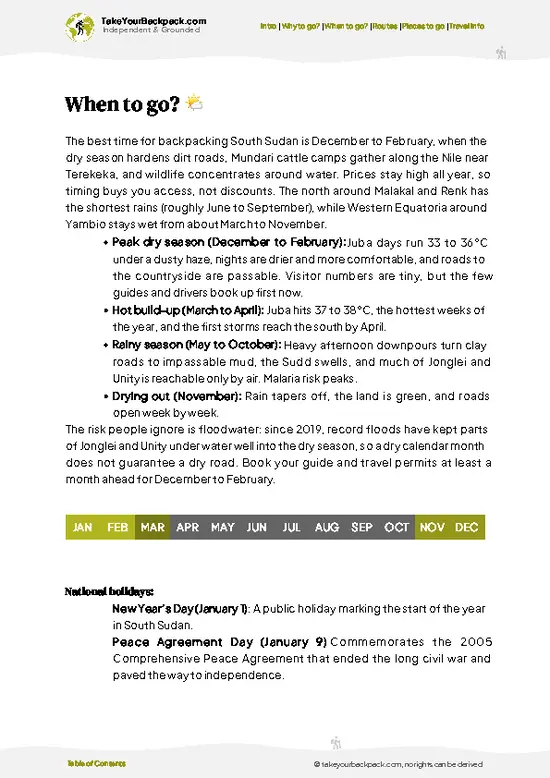
  • Weather: Bahr el Ghazal’s climate swings between a scorching dry season and a wet season that can turn roads into mud traps. The dry season, from November to April, offers clear skies and manageable humidity, making trekking and exploring far easier.

  • Temperature: Expect daytime highs around 35-40°C (95-104°F) in the dry months, cooling to a more bearable 25-30°C (77-86°F) during the wet season. Nights can drop to 15°C (59°F) in the dry season, so pack a light jacket.

  • Daylight Hours: Daylight stays pretty steady year-round, roughly 11 to 12 hours. Early mornings and late afternoons are your best bets for outdoor activities to avoid the midday heat.

  • Crowds: This region isn’t exactly a tourist hotspot, so crowds are minimal year-round. However, local festivals and market days during
read more 👉

  • Weather: Bahr el Ghazal’s climate swings between a scorching dry season and a wet season that can turn roads into mud traps. The dry season, from November to April, offers clear skies and manageable humidity, making trekking and exploring far easier.

  • Temperature: Expect daytime highs around 35-40°C (95-104°F) in the dry months, cooling to a more bearable 25-30°C (77-86°F) during the wet season. Nights can drop to 15°C (59°F) in the dry season, so pack a light jacket.

  • Daylight Hours: Daylight stays pretty steady year-round, roughly 11 to 12 hours. Early mornings and late afternoons are your best bets for outdoor activities to avoid the midday heat.

  • Crowds: This region isn’t exactly a tourist hotspot, so crowds are minimal year-round. However, local festivals and market days during the dry season can add a lively buzz worth timing your visit for.

  • Seasonal Activities: The dry season is prime for wildlife spotting and river excursions, while the wet season brings lush landscapes and bird migrations but can limit access to remote areas.

  • Price Fluctuations: Expect slightly higher prices during the dry season when travel is easiest and demand peaks. The wet season offers bargains but comes with logistical headaches.


Pro-tip: Aim for late dry season (March-April) — you’ll catch the tail end of good weather, fewer bugs, and better prices before the rains roll in.


source: climatestotravel.comJANJanuary: excellent for travelingFEBFebruary: excellent for travelingMARMarch: excellent for travelingAPRApril: highly recommended for travelingMAYMay: fair for travelingJUNJune: fair for travelingJULJuly: below average for travelingAUGAugust: below average for travelingSEPSeptember: fair for travelingOCTOctober: good for travelingNOVNovember: highly recommended for travelingDECDecember: excellent for traveling
when-to-go

✈️ The backpacker research shortcutSouth Sudan Travel Guide

An offline-friendly backpacking guide with optimized travel routes, ranked highlights, transport advice, and the best areas to stay.
example page 0 from our offline Travel Guide for South Sudan
example page 1 from our offline Travel Guide for South Sudan
example page 2 from our offline Travel Guide for South Sudan
example page 3 from our offline Travel Guide for South Sudan
example page 4 from our offline Travel Guide for South Sudan
example page 5 from our offline Travel Guide for South Sudan
example page 6 from our offline Travel Guide for South Sudan
example page 7 from our offline Travel Guide for South Sudan
The digital guide (270 pages) contains:
68 highlights, ranked by travel appeal
Optimized 5, 10 & 15-day travel routes
Cities, national parks, landmarks, beaches
How to get around
Offline-friendly for travel without Wi-Fi
👉 Click to see all 30+ guide features

📅 Plan smarter in minutes, not weeks
Month by month travel advice
Festivals & national holidays
Budget expectations

🗺️ Go to the right places, skip the overrated ones
Honest pros & cons of destinations
Top hikes, parks & viewpoints
Lesser-known places most travelers miss
Clear “worth it vs skip it” guidance

🛏️ Travel smoothly without rookie mistakes
Best areas to stay
Transport systems explained simply
Common scams & safety advice
SIM cards, money & practical tips

🌍 Understand the country, not just visit it
Culture & traditions
52 Essential phrases & customs
Festivals worth planning around
Traveler-friendly historical context
Insights that make places more meaningful

📱 Built for real travel conditions
Fully downloadable PDF
Works completely offline
Optimized for phone use
Useful in remote areas & buses
Everything in one place
Save weeks of stressful planning
Get instant access to your full guide. 30‑day money-back guarantee.
+ Add another guide for just JP¥1170

By proceeding you agree to our terms.
Sent to your inbox immediately after payment • 100% Secure Checkout
Best Backpacking Travel Advisor 2025 tourism awardBest Backpacking
Travel Advisor
2025
What others say about Take Your Backpack Guides:
⭐⭐⭐⭐⭐
Fantastic, amazing amount of information!
⭐⭐⭐⭐⭐
My goodness this is amazing, it's what I've been looking for hats off too you!
⭐⭐⭐⭐⭐
I think this is absolutely BRILLIANT
⭐⭐⭐⭐
Very complete and informative. It's still missing places, but I gotta to commend you
⭐⭐⭐⭐⭐
This is truly amazing, thank you, can't wait to explore it with my kids!
⭐⭐⭐⭐⭐
Awesome resource, thank you!
⭐⭐⭐⭐⭐
This is amazing! Can't wait to explore the ones I haven't seen
⭐⭐⭐⭐
I love this! Well done, great idea.
⭐⭐⭐⭐⭐
Thanks for taking the time to make this gem!
⭐⭐⭐⭐⭐
This might be the best website I've ever seen.
⭐⭐⭐⭐⭐
Congratulations, and thank you so much for your work; it's incredibly valuable.
⭐⭐⭐⭐
In all seriousness I think you did a great job pointing out the important spots
⭐⭐⭐⭐⭐
10/10 very good
⭐⭐⭐⭐⭐
As someone who's only just starting to visit regularly this is awesome, thank you.
⭐⭐⭐⭐
Thank you very much! I'm going to visit my dad, it's going to be very useful!
⭐⭐⭐⭐⭐
This is really cool! We'll be travelling for the first time and this definitely come in handy.
⭐⭐⭐⭐⭐
You are now our minister of culture, congratulations 👨‍💼
⭐⭐⭐⭐⭐
Just wanted to tell you that this is a pearl! Going to follow your recommendations.
⭐⭐⭐⭐⭐
This is so cool. I'll definitely be using the resource for my travels soon.
⭐⭐⭐⭐⭐
This is very impressive! Good work.
⭐⭐⭐⭐⭐
This is an amazing and informative site. Very well done!

🛏️ Where to stay?Best areas to stay in South Sudan

In Bahr el Ghazal, South Sudan, your choices shape your experience. Let’s break down the best spots for backpackers, where safety, social vibes, and budget-friendliness collide.

Start in Wau, the region’s bustling hub. It’s a melting pot of cultures, and you’ll find locals eager to share stories. The market scene is vibrant, filled with the scent of spices and the sound of bargaining. Grab a local meal and soak in the atmosphere. It’s a great place to meet fellow travelers and exchange tips.

Next, consider Aweil. This town has a laid-back charm, perfect for those wanting a slower pace. The community … read more 👉
In Bahr el Ghazal, South Sudan, your choices shape your experience. Let’s break down the best spots for backpackers, where safety, social vibes, and budget-friendliness collide.

Start in Wau, the region’s bustling hub. It’s a melting pot of cultures, and you’ll find locals eager to share stories. The market scene is vibrant, filled with the scent of spices and the sound of bargaining. Grab a local meal and soak in the atmosphere. It’s a great place to meet fellow travelers and exchange tips.

Next, consider Aweil. This town has a laid-back charm, perfect for those wanting a slower pace. The community is welcoming, and you can easily connect with locals. Explore the nearby landscapes, where the sunsets are a sight to behold. It’s a good spot for those who want to blend adventure with relaxation.

Lastly, Rumbek offers a unique blend of history and culture. The town is known for its traditional ceremonies and vibrant community life. You’ll find it easier to navigate and connect with others here. Plus, the surrounding nature is stunning, making it a perfect base for day trips.

Each of these spots offers a different flavor of Bahr el Ghazal, allowing you to choose what fits your travel style. Prioritize social interactions and local experiences, and you’ll leave with stories worth telling.

🚌 Getting aroundHow to get around Bahr el Ghazal

Bahr el Ghazal is a land where time feels elastic, stretching and contracting like the ebb and flow of the Nile. Schedules? Forget about them. Here, the rhythm is dictated by the sun and the whims of the locals. You might find yourself waiting for a ride that’s “on its way” or hopping into a vehicle that’s just about to leave, with no real timetable in sight. It’s chaotic, yes, but that’s part of the charm. Embrace the unpredictability, and you’ll discover the true essence of South Sudanese life.


  • Matatus: These shared minibuses are the lifeblood of local transport. They typically run from dawn until dusk, with fares around 100-200 SSP (South Sudanese Pounds) for short distances. Expect a bumpy ride, but they’re a great way to mingle with locals and soak in the atmosphere.


  • Boda Bodas: Motorbike
read more 👉
Bahr el Ghazal is a land where time feels elastic, stretching and contracting like the ebb and flow of the Nile. Schedules? Forget about them. Here, the rhythm is dictated by the sun and the whims of the locals. You might find yourself waiting for a ride that’s “on its way” or hopping into a vehicle that’s just about to leave, with no real timetable in sight. It’s chaotic, yes, but that’s part of the charm. Embrace the unpredictability, and you’ll discover the true essence of South Sudanese life.


  • Matatus: These shared minibuses are the lifeblood of local transport. They typically run from dawn until dusk, with fares around 100-200 SSP (South Sudanese Pounds) for short distances. Expect a bumpy ride, but they’re a great way to mingle with locals and soak in the atmosphere.


  • Boda Bodas: Motorbike taxis are everywhere, zipping through the streets like a swarm of bees. Prices vary based on distance, usually between 300-500 SSP. They’re fast and can navigate through traffic, but hold on tight; it’s a wild ride! Perfect for short hops when you’re in a hurry.


  • Private Hire Vehicles: If you’re looking for a bit more comfort, consider hiring a car with a driver. Rates start around 5,000 SSP for a day. This option gives you flexibility and a chance to explore off-the-beaten-path locations, but it’s pricier. Ideal for groups or when you want to travel at your own pace.


  • Walking: Don’t underestimate the power of your own two feet. Many towns are small enough to explore on foot, and it’s a fantastic way to connect with the local culture. Just be mindful of the heat and stay hydrated!


  • Air Travel: For longer distances, consider domestic flights. Prices can be steep, often exceeding 200 USD, but they save you hours on the road. Check schedules in advance, as they can be erratic.


Here’s a tactical tip: always negotiate your fare before hopping into a vehicle, especially with boda bodas and private hires. It’s part of the game here. And if you can, travel with a local or someone who knows the ropes; they’ll help you navigate the nuances and avoid getting overcharged. Embrace the chaos, and you’ll find that the journey is just as rewarding as the destination.

🍲 FoodWhat to Eat & Drink

In Bahr el Ghazal, food is a vibrant tapestry of flavors and traditions. You’ll want to dive into kisra, a fermented flatbread that’s a staple here. Pair it with sorghum porridge or a hearty stew made from goat or chicken, simmered with local spices that dance on your palate. Don’t miss out on malakwang, a rich, leafy dish that embodies the essence of South Sudanese cooking.

For drinks, seek out ajon, a local brew made from fermented sorghum. It’s a bit sour, but it’s the kind of drink that brings people together. You’ll find it at bustling markets or among the lively chatter of street vendors. These spots are where the real magic happens—grab a seat on a low bench, and you’ll feel the pulse of the community.

Dining customs here are relaxed but meaningful. Sharing food is a sign of friendship, … read more 👉
In Bahr el Ghazal, food is a vibrant tapestry of flavors and traditions. You’ll want to dive into kisra, a fermented flatbread that’s a staple here. Pair it with sorghum porridge or a hearty stew made from goat or chicken, simmered with local spices that dance on your palate. Don’t miss out on malakwang, a rich, leafy dish that embodies the essence of South Sudanese cooking.

For drinks, seek out ajon, a local brew made from fermented sorghum. It’s a bit sour, but it’s the kind of drink that brings people together. You’ll find it at bustling markets or among the lively chatter of street vendors. These spots are where the real magic happens—grab a seat on a low bench, and you’ll feel the pulse of the community.

Dining customs here are relaxed but meaningful. Sharing food is a sign of friendship, so don’t be surprised if someone offers you a taste from their plate. When you eat, use your right hand; it’s a sign of respect.

Embrace the chaos of the local markets, where the aroma of spices mingles with laughter and conversation. This is where you’ll find the heart of Bahr el Ghazal—food that tells stories and connects people.

FAQCommon questions from travelers

5 to 7 days are sufficient to explore Bahr el Ghazal, allowing time to visit key towns like Wau and Raga and experience local culture and wildlife. Travel conditions can be challenging, so plan extra time for delays.
Without a car, you can get around Bahr el Ghazal by using local minibuses, motorcycle taxis (boda-bodas), or hitchhiking. Distances between towns can be long, so expect travel times to be slow and variable.
Bahr el Ghazal is known for its vast wetlands, diverse wildlife including elephants and hippos, and its cultural diversity with multiple ethnic groups. It is also notable for being a historically significant region in South Sudan.
⚠️ Things can change over time, so always validate details locally before you go.

Where to go next

Bahr el Ghazal isn’t the only highlight in South Sudan. Explore all what South Sudan has to offer.
Country photo of South Sudan

We 💚 feedbackKey takeaways before you go

Bahr el Ghazal is raw and real. The vibe? A mix of resilience and warmth that pulls you in. You’ll find yourself sharing stories over a cup of strong tea with locals who’ve seen it all. The best surprise? The stunning sunsets over the Nile—nothing like it. Just a heads-up: the roads can be rough, so don’t rush. Embrace the slow pace; it’s part of the charm. You’re not just visiting; you’re experiencing life as it unfolds.

✍️ Help improve this page!
The information on this page is based on in-depth research, insights shared by experienced travelers, and feedback from the local travel community in South Sudan. While every effort is made to keep the information accurate and current, conditions can change — so if you spot anything incorrect or outdated, please get in touch.


🙋‍♂️ Give feedback

👋 Meet the founderWho’s Behind Take Your Backpack?

Johan, backpacker and founder of TakeYourBackpackHi, I’m Johan (Netherlands 🇳🇱), the creator of TakeYourBackpack. Over the past decade, I’ve backpacked through 80+ countries across six continents, gaining extensive experience with independent travel, long-term trips, and overland routes.

This site is built on a combination of firsthand travel experience and carefully curated insights from other backpackers. Many guides are based on places I’ve personally visited, while others bring together tips, observations, and practical advice shared by trusted travelers I’ve met along the way.

The goal is to provide realistic, experience-driven guidance — not generic itineraries — so you can explore destinations with better context, clearer expectations, and more confidence.

Get full country guide •
Instant download • 68 highlights • Full Offline guide