×

South Sudan🇸🇸 | best regionsDiscover the 2 Best regions Across South Sudan

Regions in South Sudan are defined by distance, rainfall and security more than by sights. The green, hilly south around Juba is the only part with reliable roads, guesthouses and a working visa and permit system. It is also pricey, with beds at US$60 to 150 a night. Central and western areas are flat, wet and thinly served, and the northern wetlands are reachable mostly by flight or river. Crowds are not a factor anywhere, because independent travel here is rare and logistics decide everything. Skip any region you cannot reach with a local contact and a permit. Back the south for a first attempt, and treat the rest as add-ons for experienced overlanders.

By Johan Kruseman 🇳🇱 | Updated October 23, 2026
Explore the best cities in South Sudan

Why go?Key Factors That Shape the Experience

South Sudan suits regional travel in one way only: its geographic range is real. Mountains over 3,000 meters, vast seasonal floodplains, savanna and rainforest sit inside one country, and each area has its own peoples, languages and cattle-keeping or farming customs. That variety is the reason to come. It is not a reason to expect an easy trip.

The country gained independence in 2011 and has lived through conflict since 2013, so infrastructure is minimal. Very little of the road network is paved, bridges and ferries are few, and fuel and cash are unreliable. Rain turns dirt tracks to mud for months, which means the map is smaller than it looks. Do not plan around distances on paper.

Before choosing South Sudan, know that most governments advise against all travel here, and insurance is hard … read more 👉
South Sudan suits regional travel in one way only: its geographic range is real. Mountains over 3,000 meters, vast seasonal floodplains, savanna and rainforest sit inside one country, and each area has its own peoples, languages and cattle-keeping or farming customs. That variety is the reason to come. It is not a reason to expect an easy trip.

The country gained independence in 2011 and has lived through conflict since 2013, so infrastructure is minimal. Very little of the road network is paved, bridges and ferries are few, and fuel and cash are unreliable. Rain turns dirt tracks to mud for months, which means the map is smaller than it looks. Do not plan around distances on paper.

Before choosing South Sudan, know that most governments advise against all travel here, and insurance is hard to obtain. You need a visa, a yellow fever certificate, registration with the authorities and usually a local host, tour operator or NGO contact to arrange permits, transport and safe lodging. Independent hopping between regions on public transport is not realistic, and trying it wastes time and money. Prices are set in US dollars and run far above neighboring Uganda or Kenya for the same standard. Go only if you accept that trade, and only with current security advice.
Our Approach to Ranking
The list of best regions in South Sudan is created based on landscapes, local culture, attractions, vibes, and overall appeal. If you feel a region is missing in this list, please let us know.

When to go?Seasonal Guide to Visiting

Best months: The best months are December to February, the heart of the dry season, when dirt roads are firm, flooding has receded and flights run most reliably.

Weather that matters: Daytime highs reach 33 to 40°C, and March is often the hottest and dustiest month before the rains. Nights are cooler, around 18 to 24°C, and in the highlands of the far south they can drop lower. The rains come roughly April to October, with annual rainfall of about 900 to 1,500 mm in the south and a drier north. In the southern Equatoria area the wet season is longest and the greenery is thickest. In the flat northern lowlands, floodwater cuts roads for months and makes overland travel pointless.

Shoulder periods and prices: November and March are workable shoulder months, but expect sudden storms and slower … read more 👉
Best months: The best months are December to February, the heart of the dry season, when dirt roads are firm, flooding has receded and flights run most reliably.

Weather that matters: Daytime highs reach 33 to 40°C, and March is often the hottest and dustiest month before the rains. Nights are cooler, around 18 to 24°C, and in the highlands of the far south they can drop lower. The rains come roughly April to October, with annual rainfall of about 900 to 1,500 mm in the south and a drier north. In the southern Equatoria area the wet season is longest and the greenery is thickest. In the flat northern lowlands, floodwater cuts roads for months and makes overland travel pointless.

Shoulder periods and prices: November and March are workable shoulder months, but expect sudden storms and slower roads, and plan buffer days. May to September is not worth the time for multi-region travel: tracks become impassable, flights are canceled and costs for vehicle hire climb. There is no tourist high season, so crowds never affect timing. Prices barely shift, though December holidays can fill Juba hotels with aid workers and returning families, so book lodging ahead. Local Christian holidays like Christmas and Easter slow services for a few days.

region hoppingOptimizing Your Multi-Stop Itinerary

Trip length: A trip combining several regions needs 10 to 14 days, and even that assumes at least two buffer days for flight and road delays.

Grouping and direction: Only regions linked to Juba group well, because it is the main hub for flights and road transport. Start with the south-centered stops reachable by road in a few hours, then fly out to farther areas, and return to Juba before your international departure. Do not zigzag. Overland links between distant regions are long and unreliable. Allow 3 to 4 days per stop for permits, security briefings and getting around, since a single day trip often takes most of a day by road. Typical drives from Juba run 3 to 8 hours on the better routes, and small charter or scheduled flights to other hubs take 1 to 2 hours when they operate.

Planning … read more 👉
Trip length: A trip combining several regions needs 10 to 14 days, and even that assumes at least two buffer days for flight and road delays.

Grouping and direction: Only regions linked to Juba group well, because it is the main hub for flights and road transport. Start with the south-centered stops reachable by road in a few hours, then fly out to farther areas, and return to Juba before your international departure. Do not zigzag. Overland links between distant regions are long and unreliable. Allow 3 to 4 days per stop for permits, security briefings and getting around, since a single day trip often takes most of a day by road. Typical drives from Juba run 3 to 8 hours on the better routes, and small charter or scheduled flights to other hubs take 1 to 2 hours when they operate.

Planning mistakes: The biggest mistake is packing in too many regions. Cut the list to two. The second is booking tight connections: flights depend on weather and security, so leave a spare day before any onward commitment. The third is starting on rain-affected roads, which can turn a 5-hour drive into a two-day wait. Confirm conditions with your host the day before. Finally, do not assume permits cover every area. Check that each stop is cleared before you leave Juba.

The ListThe Best regions of South Sudan

1 Bahr el Ghazal

Wau cathedral, Jur River banks, rusting railway terminus, Dinka heartland

Cross the Jur River into Wau for choir-filled Sunday services, riverside tea and railway ruins, then push north to Aweil and its cattle crossings.

2 Aweil East

Dinka cattle camps, Lol floodplain, border trade tracks, thatched compounds

Spend mornings among herders and cooking-fire smoke, then follow grain and dried fish through Aweil market and out across seasonal wetlands with a local host.

Loading the map 🌍

Expert viewInsights from Locals and Experts

How many regions: Visit one or two. Three is the limit even for experienced travelers. Permits, security briefings and unpredictable transport swallow days, and each extra region adds a separate cost and risk layer. Two lets you compare without burning your budget on repositioning.

Which kind to prioritize: First-timers and anyone short on time should pick the most accessible, best-connected area, where lodging, medical help and communications exist. Wildlife and nature travelers should choose a protected-area region and accept a guide and vehicle cost. Culture-focused travelers should choose areas where a trusted host can make introductions. Skip remote regions with no vetted local contact. They are not worth the risk or the money.

What it costs: Plan US$150 to 300 a day for a realistic … read more 👉
How many regions: Visit one or two. Three is the limit even for experienced travelers. Permits, security briefings and unpredictable transport swallow days, and each extra region adds a separate cost and risk layer. Two lets you compare without burning your budget on repositioning.

Which kind to prioritize: First-timers and anyone short on time should pick the most accessible, best-connected area, where lodging, medical help and communications exist. Wildlife and nature travelers should choose a protected-area region and accept a guide and vehicle cost. Culture-focused travelers should choose areas where a trusted host can make introductions. Skip remote regions with no vetted local contact. They are not worth the risk or the money.

What it costs: Plan US$150 to 300 a day for a realistic independent budget, and more if you need private vehicles. Guesthouses run US$60 to 150 a night, simple meals US$8 to 20, and a hired 4x4 with driver and fuel US$150 to 250 a day. The visa costs about US$100, and expect permit and photo fees of tens of dollars per region. Park entry and ranger fees add roughly US$20 to 50 a day where they apply. Domestic flights can reach US$150 to 400 a leg. Bring clean, recent US dollar notes, because cards rarely work and torn or old bills are refused. Cash machines are unreliable, so carry the whole budget plus a reserve.

Safety and cultural points: Register with your embassy, carry copies of every permit, and expect many checkpoints. Do not travel at night, and do not photograph soldiers, police, government buildings, airports or bridges without written permission. Photography of people needs a clear yes first. Stay on known tracks, because landmines and unexploded ordnance remain in some areas. Dress modestly, shake hands with a greeting before any request, and accept that hosts often set the schedule. Cattle are central to wealth and identity in many communities, so show respect around herds and camps.

Costs and delays to avoid: The most expensive mistake is arriving without arranged transport, which leaves you paying inflated last-minute rates. Another is ignoring the rains: a canceled flight or washed-out road can add US$100 to 200 a day. Skip malaria and yellow fever prevention at your peril, since clinics outside the capital are basic. Buy medical evacuation cover that explicitly includes South Sudan, and keep a satellite phone or messenger. Finally, change plans when your host says so. A day lost is cheaper than a bad decision.

✈️ The backpacker research shortcutSouth Sudan Travel Guide

An offline-friendly backpacking guide with optimized travel routes, ranked highlights, transport advice, and the best areas to stay.
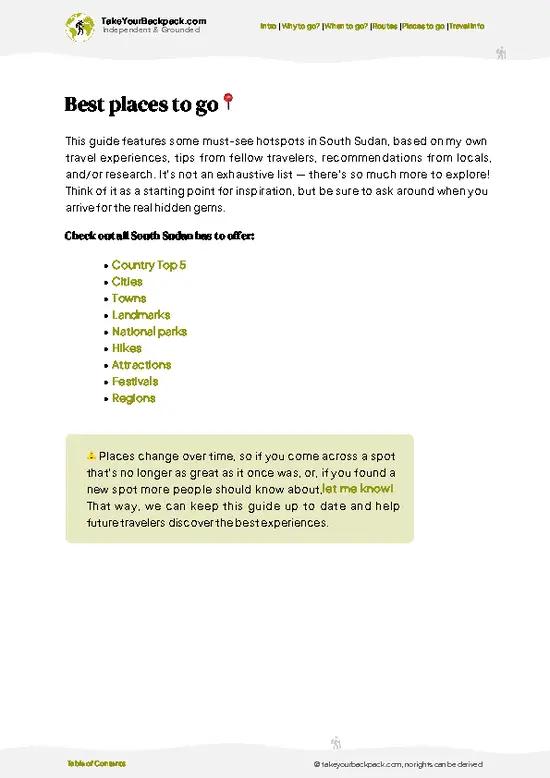
example page 0 from our offline Travel Guide for South Sudan
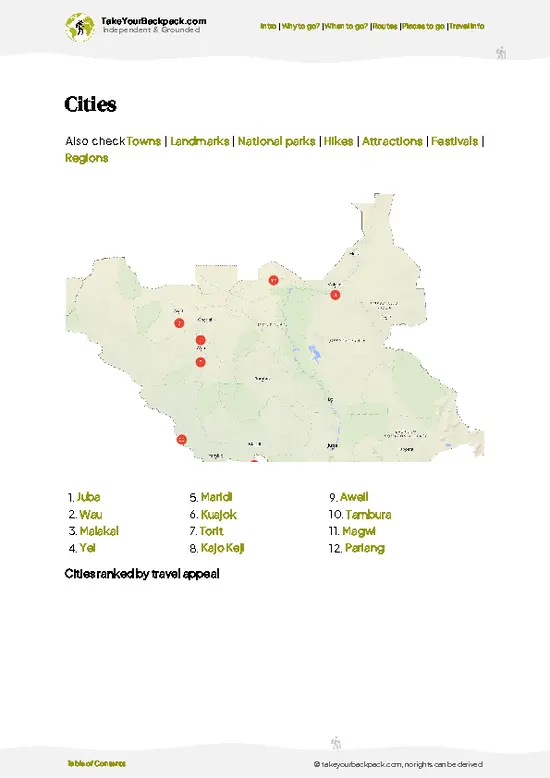
example page 1 from our offline Travel Guide for South Sudan
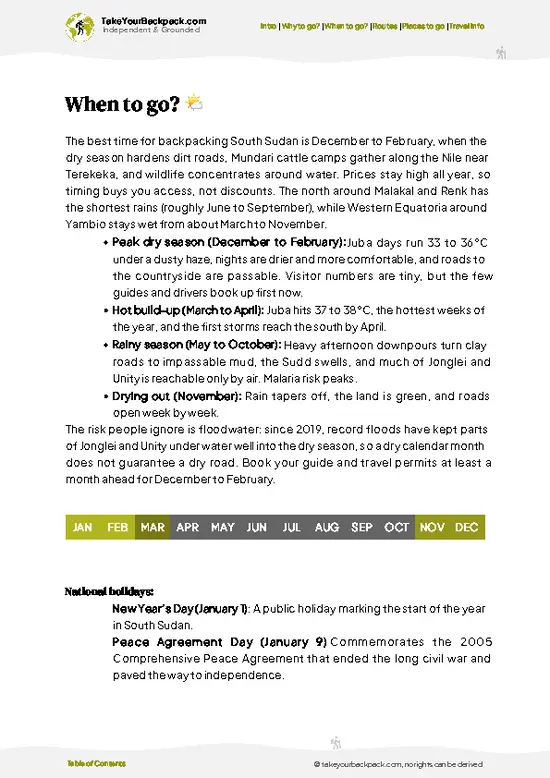
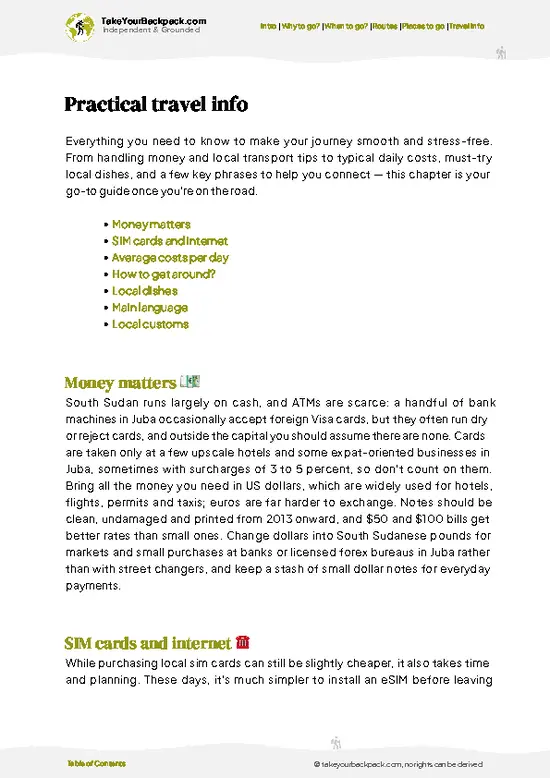
example page 2 from our offline Travel Guide for South Sudan
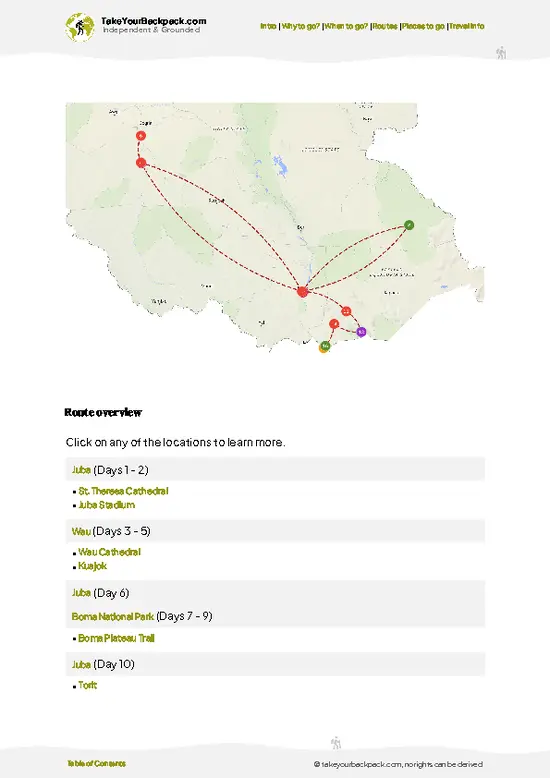
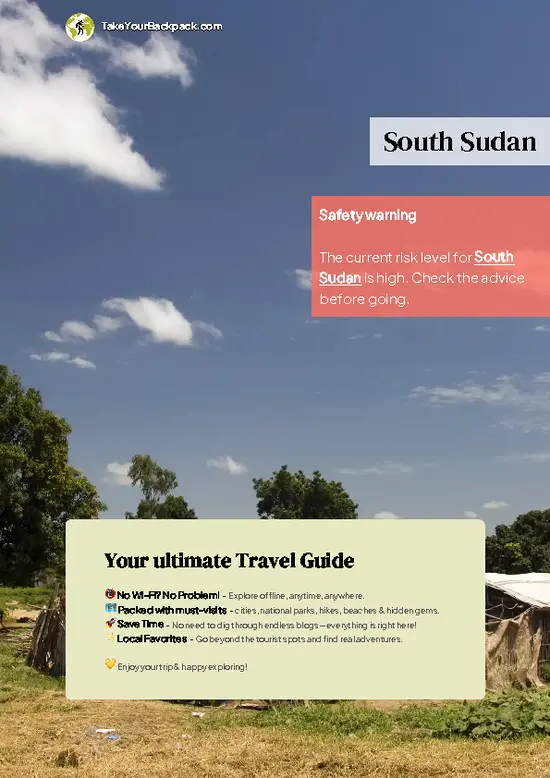
example page 3 from our offline Travel Guide for South Sudan
example page 4 from our offline Travel Guide for South Sudan
example page 5 from our offline Travel Guide for South Sudan
example page 6 from our offline Travel Guide for South Sudan
example page 7 from our offline Travel Guide for South Sudan
The digital guide (242 pages) contains:
✅ 57 highlights, ranked by travel appeal
✅ Optimized 5, 10 & 15-day travel routes
✅ Cities, national parks, landmarks, beaches
✅ How to get around
✅ Offline-friendly for travel without Wi-Fi
👉 Click to see all 30+ guide features

📅 Plan smarter in minutes, not weeks
✅ Month by month travel advice
✅ Festivals & national holidays
✅ Budget expectations

🗺️ Go to the right places, skip the overrated ones
✅ Honest pros & cons of destinations
✅ Top hikes, parks & viewpoints
✅ Lesser-known places most travelers miss
✅ Clear “worth it vs skip it” guidance

🛏️ Travel smoothly without rookie mistakes
✅ Best areas to stay
✅ Transport systems explained simply
✅ Common scams & safety advice
✅ SIM cards, money & practical tips

🌍 Understand the country, not just visit it
✅ Culture & traditions
✅ 52 Essential phrases & customs
✅ Festivals worth planning around
✅ Traveler-friendly historical context
✅ Insights that make places more meaningful

📱 Built for real travel conditions
✅ Fully downloadable PDF
✅ Works completely offline
✅ Optimized for phone use
✅ Useful in remote areas & buses
✅ Everything in one place
Stop searching, start planning
Get instant access to your full guide. 30‑day money-back guarantee.
+ Add another guide for just

By proceeding you agree to our terms.
Sent to your inbox immediately after payment • 100% Secure Checkout
Best Backpacking Travel Advisor 2025 tourism awardBest Backpacking
Travel Advisor
2025
What others say about Take Your Backpack Guides:
⭐⭐⭐⭐⭐
Fantastic, amazing amount of information!
⭐⭐⭐⭐⭐
My goodness this is amazing, it's what I've been looking for hats off too you!
⭐⭐⭐⭐⭐
I think this is absolutely BRILLIANT
⭐⭐⭐⭐
Very complete and informative. It's still missing places, but I gotta to commend you
⭐⭐⭐⭐⭐
This is truly amazing, thank you, can't wait to explore it with my kids!
⭐⭐⭐⭐⭐
Awesome resource, thank you!
⭐⭐⭐⭐⭐
This is amazing! Can't wait to explore the ones I haven't seen
⭐⭐⭐⭐
I love this! Well done, great idea.
⭐⭐⭐⭐⭐
Thanks for taking the time to make this gem!
⭐⭐⭐⭐⭐
This might be the best website I've ever seen.
⭐⭐⭐⭐⭐
Congratulations, and thank you so much for your work; it's incredibly valuable.
⭐⭐⭐⭐
In all seriousness I think you did a great job pointing out the important spots
⭐⭐⭐⭐⭐
10/10 very good
⭐⭐⭐⭐⭐
As someone who's only just starting to visit regularly this is awesome, thank you.
⭐⭐⭐⭐
Thank you very much! I'm going to visit my dad, it's going to be very useful!
⭐⭐⭐⭐⭐
This is really cool! We'll be travelling for the first time and this definitely come in handy.
⭐⭐⭐⭐⭐
You are now our minister of culture, congratulations 👨‍💼
⭐⭐⭐⭐⭐
Just wanted to tell you that this is a pearl! Going to follow your recommendations.
⭐⭐⭐⭐⭐
This is so cool. I'll definitely be using the resource for my travels soon.
⭐⭐⭐⭐⭐
This is very impressive! Good work.
⭐⭐⭐⭐⭐
This is an amazing and informative site. Very well done!

🛏️ Where to stay?Top Places to Consider Staying

South Sudan has no real backpacker hostel scene, so budget travel means basic guesthouses and prefab container-room camps in Juba, typically US$50 to 100 a night, with mid-range hotels running US$120 to 250. Tongping, by the airport, has the densest cluster of guesthouses, restaurants and bars, plus some of the city’s better security. Hai Amarat and Hai Cinema are quieter and have good places to eat, the riverside camps along the White Nile are pleasant at sundown but a ride from everything, and the cheaper rooms around Juba Town and Konyo Konyo market sit beside the action but are noisier and rougher after dark.

If you enjoy meeting fellow travelers, consider choosing hostels with high ratings … read more 👉
South Sudan has no real backpacker hostel scene, so budget travel means basic guesthouses and prefab container-room camps in Juba, typically US$50 to 100 a night, with mid-range hotels running US$120 to 250. Tongping, by the airport, has the densest cluster of guesthouses, restaurants and bars, plus some of the city’s better security. Hai Amarat and Hai Cinema are quieter and have good places to eat, the riverside camps along the White Nile are pleasant at sundown but a ride from everything, and the cheaper rooms around Juba Town and Konyo Konyo market sit beside the action but are noisier and rougher after dark.

If you enjoy meeting fellow travelers, consider choosing hostels with high ratings for atmosphere. On the other hand, if you prefer having your own space, a hotel might be a better option.

South SudanMore Places Across South Sudan

👋 Meet the founderWho’s Behind Take Your Backpack?

Johan, backpacker and founder of TakeYourBackpackHi, I’m Johan (Netherlands 🇳🇱), the creator of TakeYourBackpack. Over the past 3 decades, I’ve backpacked through 90+ countries across six continents, gaining extensive experience with independent travel, long-term trips, and overland routes.

This site is built on a combination of firsthand travel experience and carefully curated insights from other backpackers. Many guides are based on places I’ve personally visited, while others bring together tips, observations, and practical advice shared by trusted travelers I’ve met along the way.

The goal is to provide realistic, experience-driven guidance — not generic itineraries — so you can explore destinations with better context, clearer expectations, and more confidence.