×

South Sudan🇸🇸 | regionsAweil EastDinka cattle camps, Lol floodplain, border trade tracks, thatched compounds | things to do and best time to go

Explore Bahr el GhazalExplore Kapoeta

Backpacking in Aweil East
👍 Recommendedregion ranked #13
By Johan Kruseman 🇳🇱 | Updated October 22, 2026

Aweil East is a county of Northern Bahr el Ghazal, not a tourist region, so there is no hostel circuit or sightseeing infrastructure to plug into. It sits in the northwest of South Sudan, near the Sudan border, in flat savanna and seasonal floodplain. Travel here depends on road access and local contacts, because the rains turn dirt tracks to mud and few services exist, so go with an aid or local host and carry cash. Skip a checklist of attractions; spend time on cattle camps, markets and Dinka village life. Mornings start with smoke from cooking fires and lowing cattle.

Discover everything you want to know in the 📖 South Sudan Travel Guide.
Safety warning

The current risk level for South Sudan is high. Check the advice before going.


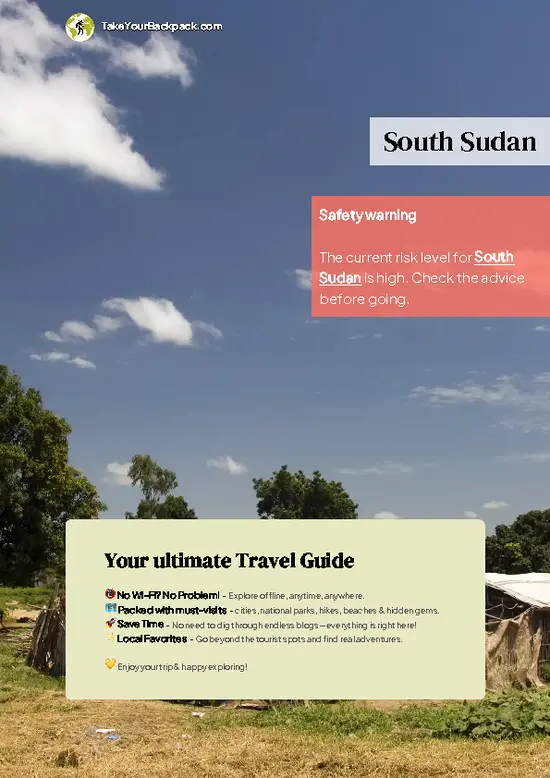
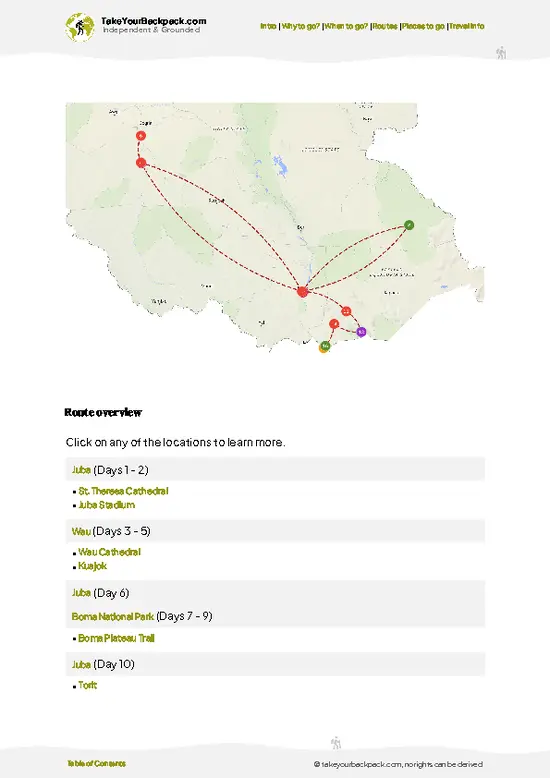
example page 0 from our offline Travel Guide for South Sudan
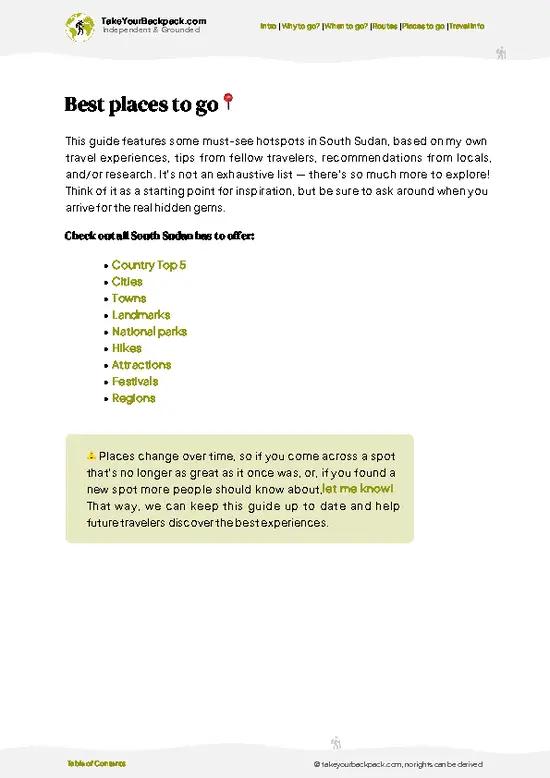
example page 1 from our offline Travel Guide for South Sudan
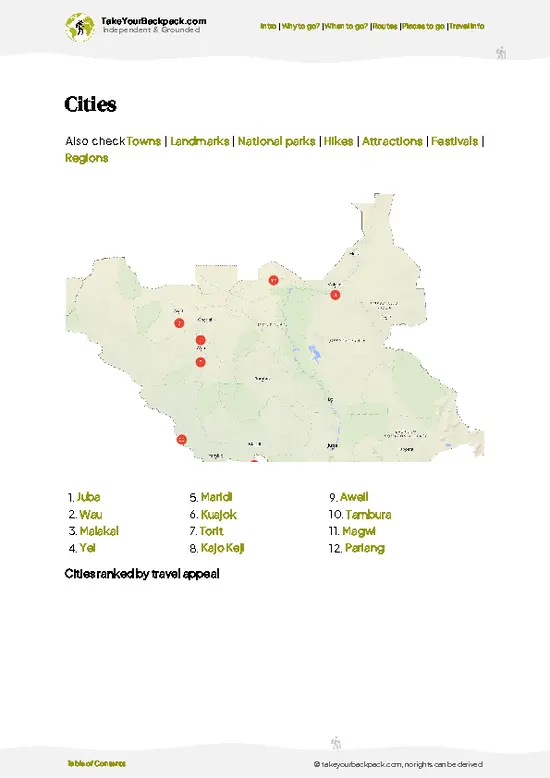
example page 2 from our offline Travel Guide for South Sudan
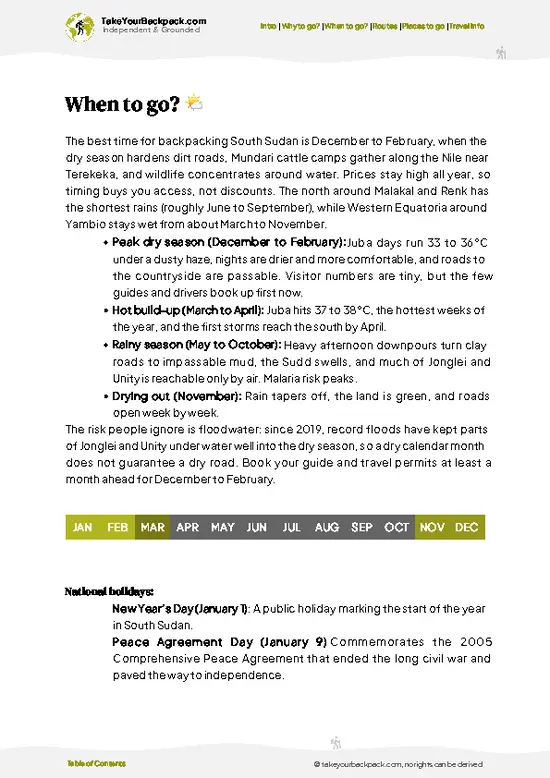
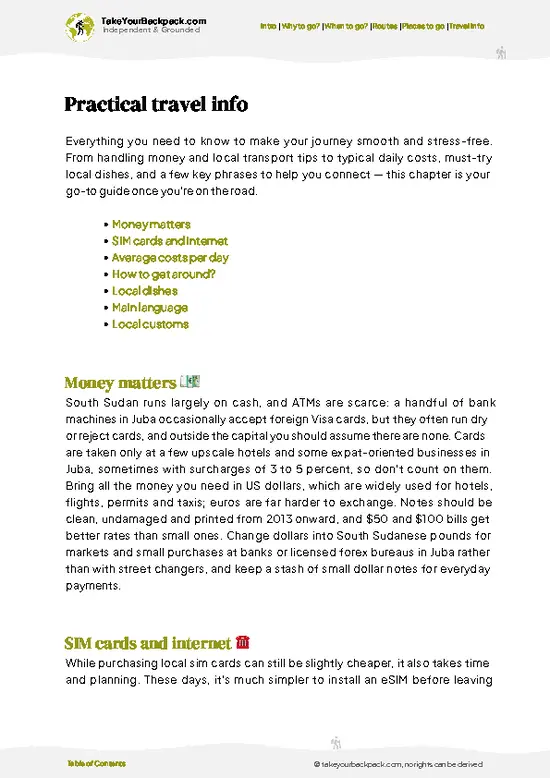
example page 3 from our offline Travel Guide for South Sudan
example page 4 from our offline Travel Guide for South Sudan
example page 5 from our offline Travel Guide for South Sudan
example page 6 from our offline Travel Guide for South Sudan
example page 7 from our offline Travel Guide for South Sudan
Loading the map 🌍
CLICK TO FILTER
cities
towns
landmarks
national parks
hikes
attractions
festivals
regions
SHOW COUNTRY’S BESTSHOW ALL

✨ Why go?
Ranked #13 region in South Sudan
What makes this region worth visiting

Aweil East gives you a part of South Sudan that almost no outsider sees, and that is the whole reason to go. The first draw is the Dinka cattle culture, where herds define wealth, song and daily routine, and you can see it up close without a crowd. The second is the flat Sahel-edge savanna, with huge skies, acacia and seasonal wetlands that change sharply between rains and dry months. The third is slow travel: with few vehicles, you spend long days in one area, talk with people over tea and learn how communities cope with floods, trade and border life. It suits experienced travelers with patience and a trusted local guide.

💡 HighlightsDon't-miss highlights and experiences

  1. Aweil Town Market: The commercial heart of the wider area, where grain, dried fish, cloth and goods from across the Sudan border change hands.
  2. Dinka Cattle Camps: Seasonal camps where herders tend long-horned cattle, rub ash on animals and sing to them at dawn. Visit only with a local host.
  3. Lol River Floodplain: Wide wet-season grasslands and channels with egrets, storks and fishing, changing sharply by month.
  4. Village Compounds of Aweil East: Round thatched homes, granaries on stilts and shaded gathering trees show how families live here.
  5. Border Trade Routes: Traders move goods north toward Sudan along dusty tracks, a window into the local economy.
  6. Community Water Points: Boreholes where people gather each morning; they are a good place to meet locals and understand daily life.
  7. Local Church Services:
… read more 👉
  1. Aweil Town Market: The commercial heart of the wider area, where grain, dried fish, cloth and goods from across the Sudan border change hands.
  2. Dinka Cattle Camps: Seasonal camps where herders tend long-horned cattle, rub ash on animals and sing to them at dawn. Visit only with a local host.
  3. Lol River Floodplain: Wide wet-season grasslands and channels with egrets, storks and fishing, changing sharply by month.
  4. Village Compounds of Aweil East: Round thatched homes, granaries on stilts and shaded gathering trees show how families live here.
  5. Border Trade Routes: Traders move goods north toward Sudan along dusty tracks, a window into the local economy.
  6. Community Water Points: Boreholes where people gather each morning; they are a good place to meet locals and understand daily life.
  7. Local Church Services: Sunday singing and drumming in village churches are lively, welcoming and lasting a few hours.
  8. Roadside Tea Stalls: Sweet spiced tea under tarps, where news travels faster than vehicles.
  9. Savanna Bird Walks: Acacia scrub around settlements holds hornbills, rollers and weavers at first light.
  10. Dry-Season Wrestling Gatherings: Young men compete in Dinka-style matches with drums and crowds, when community events are held.
Aweil East is easiest to enjoy by pairing a dawn visit to a cattle camp with the afternoon at Aweil Town Market.
Spotted a mistake or missing something? Contact us.

🏘️ NeighborhoodsWhere things are and how it's laid out

Aweil East offers a unique blend of culture and community, perfect for backpackers seeking authentic experiences.

Central Market: This bustling area is the heartbeat of Aweil East. The vibrant atmosphere buzzes with local vendors selling everything from fresh produce to handmade crafts. It’s walkable and lively, making it ideal for short stays. Nightlife is minimal, but the market’s energy is infectious during the day.

Residential Quarter: A quieter vibe prevails here, with friendly locals and a more laid-back pace. It’s less touristy, offering a genuine glimpse into daily life. While transport options are limited, the area is perfect for longer stays if you want to immerse yourself in the culture.

Riverfront: This scenic area provides a peaceful escape. The gentle flow of the river creates … read more 👉
Aweil East offers a unique blend of culture and community, perfect for backpackers seeking authentic experiences.

Central Market: This bustling area is the heartbeat of Aweil East. The vibrant atmosphere buzzes with local vendors selling everything from fresh produce to handmade crafts. It’s walkable and lively, making it ideal for short stays. Nightlife is minimal, but the market’s energy is infectious during the day.

Residential Quarter: A quieter vibe prevails here, with friendly locals and a more laid-back pace. It’s less touristy, offering a genuine glimpse into daily life. While transport options are limited, the area is perfect for longer stays if you want to immerse yourself in the culture.

Riverfront: This scenic area provides a peaceful escape. The gentle flow of the river creates a serene backdrop, ideal for relaxation. It’s a bit farther from the main hustle, but worth it for those seeking tranquility after a day of exploration.

⌛️ 5 daysHow to make the most of Aweil East

Day 1: Aweil Town: Start early at the market, because trading is busiest in the cool morning and you can arrange a local host and transport before roads fill with heat and dust. Roads here dictate everything: there is little public transport, so you move when vehicles move and keep days short.
Day 2: Village Compounds: Head out to nearby villages in the morning, then rest through the hot midday and join evening tea. Short hops keep you safe and flexible if rain closes a track.
Day 3: Cattle Camp: Go at dawn with a host to see herds being tended, then return before afternoon heat. This is the day that justifies the entire trip, because the song, smoke and cattle at first light are impossible to see anywhere else.
Day 4: Lol River Floodplain: Spend the day on birds and wetland edges, going slowly … read more 👉
Day 1: Aweil Town: Start early at the market, because trading is busiest in the cool morning and you can arrange a local host and transport before roads fill with heat and dust. Roads here dictate everything: there is little public transport, so you move when vehicles move and keep days short.
Day 2: Village Compounds: Head out to nearby villages in the morning, then rest through the hot midday and join evening tea. Short hops keep you safe and flexible if rain closes a track.
Day 3: Cattle Camp: Go at dawn with a host to see herds being tended, then return before afternoon heat. This is the day that justifies the entire trip, because the song, smoke and cattle at first light are impossible to see anywhere else.
Day 4: Lol River Floodplain: Spend the day on birds and wetland edges, going slowly and leaving buffer time for muddy ground.
Day 5: Border Trade Detour: Take a day out along a trade route toward the border to watch goods move, then return to town without needing to change your base.

🌤️ When to go?Seasonal considerations and timing

Aweil East has a long dry season from about November to March, and that is when a backpacker should plan to arrive.
  • Dry Season (Nov to Mar): Days run 32 to 38°C (90 to 100°F), nights drop to 18 to 22°C (64 to 72°F) in December and January. Dust haze hangs in the air, roads are firm, and daylight is steady near 11 to 12 hours.
  • Early Rains (Apr to Jun): Heat peaks at 38 to 40°C (100 to 104°F) before storms break. Dirt tracks begin to soften.
  • Peak Rains (Jul to Oct): Highs of 28 to 33°C (82 to 91°F). Flooding cuts roads, transport prices climb and trips stall.
Arrive in December or January, when roads are passable and nights are cool enough to sleep well.

source: climatestotravel.comJANJanuary: excellent for travelingFEBFebruary: excellent for travelingMARMarch: good for travelingAPRApril: fair for travelingMAYMay: below average for travelingJUNJune: below average for travelingJULJuly: below average for travelingAUGAugust: below average for travelingSEPSeptember: below average for travelingOCTOctober: fair for travelingNOVNovember: highly recommended for travelingDECDecember: excellent for traveling
when-to-go

✈️ The backpacker research shortcutSouth Sudan Travel Guide

An offline-friendly backpacking guide with optimized travel routes, ranked highlights, transport advice, and the best areas to stay.
example page 0 from our offline Travel Guide for South Sudan
example page 1 from our offline Travel Guide for South Sudan
example page 2 from our offline Travel Guide for South Sudan
example page 3 from our offline Travel Guide for South Sudan
example page 4 from our offline Travel Guide for South Sudan
example page 5 from our offline Travel Guide for South Sudan
example page 6 from our offline Travel Guide for South Sudan
example page 7 from our offline Travel Guide for South Sudan
The digital guide (242 pages) contains:
✅ 57 highlights, ranked by travel appeal
✅ Optimized 5, 10 & 15-day travel routes
✅ Cities, national parks, landmarks, beaches
✅ How to get around
✅ Offline-friendly for travel without Wi-Fi
👉 Click to see all 30+ guide features

📅 Plan smarter in minutes, not weeks
✅ Month by month travel advice
✅ Festivals & national holidays
✅ Budget expectations

🗺️ Go to the right places, skip the overrated ones
✅ Honest pros & cons of destinations
✅ Top hikes, parks & viewpoints
✅ Lesser-known places most travelers miss
✅ Clear “worth it vs skip it” guidance

🛏️ Travel smoothly without rookie mistakes
✅ Best areas to stay
✅ Transport systems explained simply
✅ Common scams & safety advice
✅ SIM cards, money & practical tips

🌍 Understand the country, not just visit it
✅ Culture & traditions
✅ 52 Essential phrases & customs
✅ Festivals worth planning around
✅ Traveler-friendly historical context
✅ Insights that make places more meaningful

📱 Built for real travel conditions
✅ Fully downloadable PDF
✅ Works completely offline
✅ Optimized for phone use
✅ Useful in remote areas & buses
✅ Everything in one place
Stop searching, start planning
Get instant access to your full guide. 30‑day money-back guarantee.
+ Add another guide for just

By proceeding you agree to our terms.
Sent to your inbox immediately after payment • 100% Secure Checkout
Best Backpacking Travel Advisor 2025 tourism awardBest Backpacking
Travel Advisor
2025
What others say about Take Your Backpack Guides:
⭐⭐⭐⭐⭐
Fantastic, amazing amount of information!
⭐⭐⭐⭐⭐
My goodness this is amazing, it's what I've been looking for hats off too you!
⭐⭐⭐⭐⭐
I think this is absolutely BRILLIANT
⭐⭐⭐⭐
Very complete and informative. It's still missing places, but I gotta to commend you
⭐⭐⭐⭐⭐
This is truly amazing, thank you, can't wait to explore it with my kids!
⭐⭐⭐⭐⭐
Awesome resource, thank you!
⭐⭐⭐⭐⭐
This is amazing! Can't wait to explore the ones I haven't seen
⭐⭐⭐⭐
I love this! Well done, great idea.
⭐⭐⭐⭐⭐
Thanks for taking the time to make this gem!
⭐⭐⭐⭐⭐
This might be the best website I've ever seen.
⭐⭐⭐⭐⭐
Congratulations, and thank you so much for your work; it's incredibly valuable.
⭐⭐⭐⭐
In all seriousness I think you did a great job pointing out the important spots
⭐⭐⭐⭐⭐
10/10 very good
⭐⭐⭐⭐⭐
As someone who's only just starting to visit regularly this is awesome, thank you.
⭐⭐⭐⭐
Thank you very much! I'm going to visit my dad, it's going to be very useful!
⭐⭐⭐⭐⭐
This is really cool! We'll be travelling for the first time and this definitely come in handy.
⭐⭐⭐⭐⭐
You are now our minister of culture, congratulations 👨‍💼
⭐⭐⭐⭐⭐
Just wanted to tell you that this is a pearl! Going to follow your recommendations.
⭐⭐⭐⭐⭐
This is so cool. I'll definitely be using the resource for my travels soon.
⭐⭐⭐⭐⭐
This is very impressive! Good work.
⭐⭐⭐⭐⭐
This is an amazing and informative site. Very well done!

🛏️ Where to stay?Choosing the right base

Aweil town is the one practical base for backpackers around Aweil East, because it has the region’s guesthouses, markets, mobile coverage and the transport links that reach the rest of the area. Rooms in basic guesthouses run about US$20 to 50 a night, and some include a generator or fan. Staying near the central market puts you within walking distance of food, money changers and the minibus stops, which matters when vehicles leave at dawn. Social life is thin compared with backpacker routes elsewhere, so expect to meet aid workers, local traders and officials rather than other budget travelers. … read more 👉
Aweil town is the one practical base for backpackers around Aweil East, because it has the region’s guesthouses, markets, mobile coverage and the transport links that reach the rest of the area. Rooms in basic guesthouses run about US$20 to 50 a night, and some include a generator or fan. Staying near the central market puts you within walking distance of food, money changers and the minibus stops, which matters when vehicles leave at dawn. Social life is thin compared with backpacker routes elsewhere, so expect to meet aid workers, local traders and officials rather than other budget travelers. Villages around Aweil East are better visited with a local contact or driver than used as overnight stops, since formal lodging is rare. Ask permission from local authorities before staying anywhere rural, and register your presence if required.

🚌 Getting aroundHow to get from A to B

Aweil East sits in northern Bahr el Ghazal, and from the market area in Aweil town, a motorbike taxi gets you to the center in 5 to 10 minutes for about US$0.50 to 1. Walking works too, since the built-up area is compact, but midday heat of 35°C or more makes it a poor choice between 11 am and 3 pm. Most travelers move around by motorbike and shared minibus on dirt roads, and reliability depends entirely on the season. In the rains, expect delays or no service at all.
  • Boda-boda (motorbike taxi): Costs US$0.50 to 2 for local hops. They are everywhere because they handle mud and potholes that stop cars. Agree on the fare first and wear a helmet if the rider has one.
  • Shared minibus or pickup: Runs toward Aweil town and neighboring areas, usually leaving only when full. Fares are roughly US$5 to
… read more 👉
Aweil East sits in northern Bahr el Ghazal, and from the market area in Aweil town, a motorbike taxi gets you to the center in 5 to 10 minutes for about US$0.50 to 1. Walking works too, since the built-up area is compact, but midday heat of 35°C or more makes it a poor choice between 11 am and 3 pm. Most travelers move around by motorbike and shared minibus on dirt roads, and reliability depends entirely on the season. In the rains, expect delays or no service at all.
  • Boda-boda (motorbike taxi): Costs US$0.50 to 2 for local hops. They are everywhere because they handle mud and potholes that stop cars. Agree on the fare first and wear a helmet if the rider has one.
  • Shared minibus or pickup: Runs toward Aweil town and neighboring areas, usually leaving only when full. Fares are roughly US$5 to 15 depending on distance. Expect 2 to 6 hours with breakdowns. Arrive early because vehicles fill at dawn.
  • Hired 4x4 with driver: Costs US$100 to 200 per day with fuel. It is worth it for remote villages, because fuel is scarce and public transport does not go there.
  • Walking: Fine inside town for short errands. Do not attempt long walks between settlements, since distances are great and shade is rare.
Skip any trip in the rainy months unless you have slack of several days. Ask drivers about road conditions the day before, and carry extra water and cash in small US dollar notes, as change is hard to find.

👛 Costs (as of 22 October 2026)Typical daily expenses

Backpacking in Aweil East, South Sudan, demands a practical approach to budgeting, reflecting the town’s developing infrastructure and limited tourist services. Here’s a breakdown of what you can expect to spend daily:
  • Dorm Accommodation: Options are sparse and basic, often guesthouses or local lodges rather than formal hostels. Expect to pay around $5 to $10 USD per night for a simple shared room. Facilities might be rudimentary, with intermittent electricity and basic bedding.
  • Meals: Food is straightforward and locally sourced. Street food or small eateries offer meals for about $2 to $5 USD. Staples include sorghum, beans, and occasionally fish or meat, often cooked with local spices. Eating out is cheap but expect simple flavors and limited variety.
  • Local Transport: Transport options
… read more 👉
Backpacking in Aweil East, South Sudan, demands a practical approach to budgeting, reflecting the town’s developing infrastructure and limited tourist services. Here’s a breakdown of what you can expect to spend daily:
  • Dorm Accommodation: Options are sparse and basic, often guesthouses or local lodges rather than formal hostels. Expect to pay around $5 to $10 USD per night for a simple shared room. Facilities might be rudimentary, with intermittent electricity and basic bedding.
  • Meals: Food is straightforward and locally sourced. Street food or small eateries offer meals for about $2 to $5 USD. Staples include sorghum, beans, and occasionally fish or meat, often cooked with local spices. Eating out is cheap but expect simple flavors and limited variety.
  • Local Transport: Transport options are minimal and mostly informal—motorbike taxis or shared pickups. A typical short ride costs around $1 to $3 USD. Distances are short, but roads can be rough, so travel times may stretch beyond what the map suggests.
  • Basic Activities/Entry Fees: Tourist infrastructure is almost non-existent, so paid activities are rare. Visiting local markets or cultural sites is usually free, but small community contributions or tips of $1 to $2 USD might be appreciated.
  • Miscellaneous Expenses: This covers essentials like bottled water, SIM cards, and occasional phone credit top-ups. Budget around $1 to $3 USD daily. Keep cash handy, as card payments are not common.

In total, a realistic daily budget for backpacking in Aweil East ranges from about $10 to $23 USD. This modest sum covers the essentials but requires flexibility and a readiness to embrace simplicity. The payoff is an authentic experience far from the usual tourist routes, where every dollar spent supports local communities directly.
⚠️ Prices can change and everyone travels differently, so take this as a rough guide. Hope it helps you plan your adventure!

🚌 Day tripsShort trips worth adding

Aweil East is a vibrant hub for exploring the heart of South Sudan, offering a unique blend of culture and adventure. Here are some day trips that will elevate your experience.

Lake No Adventure
Just a short drive from Aweil East, Lake No is a serene escape. The journey takes about an hour, and the sight of the sun reflecting off the water is worth every bump in the road. Bring a packed lunch to enjoy by the lakeside, where you can watch local fishermen at work. Costs are minimal—around $5 for transport and snacks. The best time to visit is during the dry season, when the roads are more navigable. A common mistake is underestimating the need for water; pack extra to stay hydrated.


Aweil Market Day
Immerse yourself in local life by visiting the bustling Aweil Market. Open on Saturdays, … read more 👉
Aweil East is a vibrant hub for exploring the heart of South Sudan, offering a unique blend of culture and adventure. Here are some day trips that will elevate your experience.

Lake No Adventure
Just a short drive from Aweil East, Lake No is a serene escape. The journey takes about an hour, and the sight of the sun reflecting off the water is worth every bump in the road. Bring a packed lunch to enjoy by the lakeside, where you can watch local fishermen at work. Costs are minimal—around $5 for transport and snacks. The best time to visit is during the dry season, when the roads are more navigable. A common mistake is underestimating the need for water; pack extra to stay hydrated.


Aweil Market Day
Immerse yourself in local life by visiting the bustling Aweil Market. Open on Saturdays, it’s a sensory overload of colors and scents. Spend a few hours wandering through stalls filled with fresh produce, handmade crafts, and local delicacies. It’s free to enter, but budget around $10 for snacks and souvenirs. Arrive early to beat the crowds and experience the market at its liveliest. Many first-timers miss the chance to engage with vendors—don’t hesitate to ask questions!


Wau Cultural Experience
A day trip to Wau, about two hours away, offers a glimpse into the rich cultural tapestry of South Sudan. The journey is filled with stunning landscapes, and once there, you can visit local villages and participate in traditional dances. Expect to spend around $15 on transport and a small fee for village entry. The dry season is ideal for this trip, as the roads can be tricky during the rains. A common oversight is not checking local customs; a little research goes a long way in making connections.
👉 Explore Wau

🍲 FoodLocal Cuisine & Drinks

Eating in Aweil East means sorghum and millet, usually cooked into a thick porridge called asida and dipped into stews. Look for kisra flatbread, groundnut sauce, okra stew (bamia) and grilled tilapia or goat, smoky and salted. Sweet milky tea and strong sugary coffee come in small glasses from roadside stalls, and local brews from fermented grain exist but vary widely in strength.

Backpackers eat at the central market and in simple tea shops, where a plate of beans, bread or stew costs about US$1 to 3 and a grilled fish meal US$3 to 6. Stock up on fruit and bread before a long trip.

Eat with your right hand and wait for elders to start. Sharing from one dish is normal, so wash your hands first. Alcohol is sold but not everywhere, so ask quietly. Always drink bottled or treated water.

🛡️ SafetyTraveler Safety Guide

In Aweil East, safety is generally manageable, but awareness is key. Stick to well-lit areas after dark; the streets can feel empty, and it’s wise to travel in groups if possible. Solo travelers should exude confidence—walk with purpose and avoid displaying valuables.

While scams are rare, be cautious of overly friendly locals who may ask for money or favors. A firm but polite “no” usually suffices. Embrace the local atmosphere, but stay grounded; a little vigilance goes a long way in ensuring a smooth experience.

FAQTraveler FAQ

Two to three days is enough for Aweil East, and most travelers pair it with a stop in Aweil town, the state capital of Northern Bahr el Ghazal. One day covers the markets and the cattle camps on the edge of the settlements, and a second lets you travel out to nearby villages with a local contact. Add a third day only if road conditions or permit checks slow you down, which happens often in the rainy months from roughly May to October.
Without a car, Aweil East is covered by motorbike taxis (boda-boda), which cost roughly US$1 to 4 for a short hop and up to US$10 to 15 for a longer village run, plus walking inside the main settlements. Shared minibuses and trucks run on the main roads toward Aweil town, usually leaving when full, so allow a half day for a trip of 50 to 100 kilometers on dirt tracks. In the rains many tracks turn to mud and boda-boda are often the only vehicles that get through, so agree on the fare before you climb on.
Aweil East is known for its Dinka cattle-keeping culture, where herds shape daily life, song and social standing, and for farmland growing sorghum, groundnuts and sesame on the flat plains of Northern Bahr el Ghazal. Weekly and daily markets bring in traders from across the state, and dried fish, grain and goats change hands there. The area also sits close to the Sudan border, and it has a history of trade and displacement tied to the railway line that once ran to Wau, so local guidance matters before any trip.
⚠️ Things can change over time, so always validate details locally before you go.

Where to go next

Aweil East isn’t the only highlight in South Sudan. Explore all what South Sudan has to offer.
Country photo of South Sudan

We 💚 feedbackWhat to keep in mind

Aweil East rewards four to five days, no fewer, since the first day goes on arranging hosts and transport. I would stay longer only if you have a trusted contact, and I would carry plenty of small cash, water and patience when rain closes roads.

✍️ Help improve this page!
The information on this page is based on in-depth research, insights shared by experienced travelers, and feedback from the local travel community in South Sudan. While every effort is made to keep the information accurate and current, conditions can change — so if you spot anything incorrect or outdated, please get in touch.


🙋‍♂️ Give feedback

👋 Meet the founderWho’s Behind Take Your Backpack?

Johan, backpacker and founder of TakeYourBackpackHi, I’m Johan (Netherlands 🇳🇱), the creator of TakeYourBackpack. Over the past 3 decades, I’ve backpacked through 90+ countries across six continents, gaining extensive experience with independent travel, long-term trips, and overland routes.

This site is built on a combination of firsthand travel experience and carefully curated insights from other backpackers. Many guides are based on places I’ve personally visited, while others bring together tips, observations, and practical advice shared by trusted travelers I’ve met along the way.

The goal is to provide realistic, experience-driven guidance — not generic itineraries — so you can explore destinations with better context, clearer expectations, and more confidence.